
Wool Blend Caps: Manufacturing, Sourcing and Buyer Specifications (2026 Update)
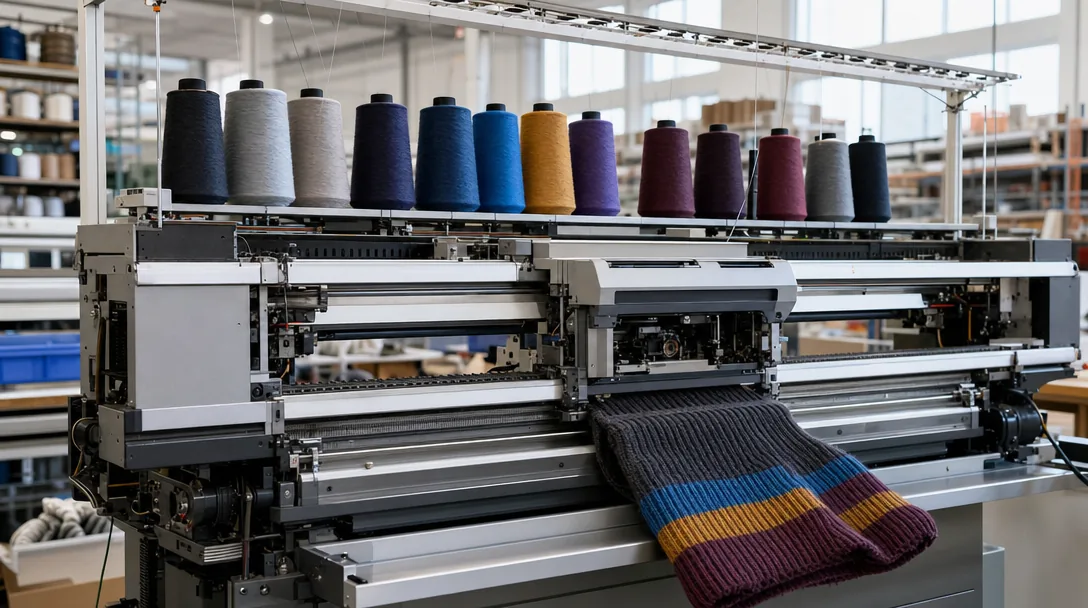
Every week, our sales team answers detailed questions about wool blend caps: manufacturing, sourcing and buyer specifications (2026 update). We wrote this guide so that wholesalers, streetwear brands, corporate buyers and promotional resellers can compare options with full information, and avoid the traps that show up only after production has started.
The three dominant wool-blend cap fabrics
80/20 acrylic-wool still owns volume because it is the easiest fabric to buy repeatedly without surprises in shade, blocking, or embroidery performance. In cap programs, the commercial sweet spot is usually 360-420 gsm in melton, melton-look twill, or brushed twill, often laminated with a lightweight tricot fusible or backed with 2x1 cotton twill scrim on the front panels to hold crown shape after 6,000-10,000 stitches. The acrylic is doing more than cutting cost: it stabilizes raw-material pricing, reduces lot-to-lot shade drift, and makes it realistic to hold color within Delta-E 1.5-2.0 to the approved lab dip, especially on Pantone TCX-matched black, charcoal, and navy. On Barudan and Tajima heads, this blend also behaves better than wool-rich cloth during dense fills and satin columns, with less tunneling, flagging, and edge grin when wrapping PE boards on structured 6-panels. If a buyer asks a wool blend cap manufacturer for the market-default fabric, this is usually the answer because it balances price and process control better than anything else. At 1,000 pieces, a standard FOB China cost is typically $2.60-$4.20 per cap for a 6-panel snapback, and that spread is usually explained by embroidery stitch count, closure hardware, visor board grade, seam tape printing, undervisor material, and whether the factory is using domestic acrylic-wool or a cleaner Korea- or Vietnam-sourced cloth. It is not a luxury hand feel, but it is the least troublesome fabric when you need repeat orders across multiple colorways and delivery windows.
100% wool melton only makes sense when the factory has the discipline to manage shrinkage, moisture, and pressing; otherwise the premium is wasted fast. Cap-grade melton typically runs 380-460 gsm, heavily fulled and close-sheared, which gives fitteds and minimal-logo strapbacks a denser face and deeper color saturation than any acrylic blend can fake. The tradeoff is sensitivity: wool can move hard under steam, distort after cutting if rolls are not relaxed for 12-24 hours, and glaze under needle heat or aggressive top pressing. On the floor, competent factories test warp and weft shrinkage by batch before spreading, monitor shop humidity around 55%-65% RH, and reject any lot that cannot stay dimensionally stable through fusing, sewing, and final blocking. Expect fabric cost roughly 25%-45% above 80/20, pushing clean retail builds into the $4.80-$7.50 FOB range with satin lining, woven labels, and AQL 2.5 final inspection. The practical third fabric is usually 70/30 wool-polyester, especially for team issue, outdoor retail, and colder-weather programs where abrasion resistance matters more than a fully wool hand. Most workable cap fabrics in this category sit around 320-380 gsm with a tighter weave and faster dry-back after sweat or light rain, and they generally recover better after compression in export cartons or 25-35 day ocean transit. They also tolerate heavier decoration more reliably, holding panel shape under 8,000-12,000 stitches and repeated visor flexing better than softer meltons. Buyers should still ask for real test data before approving bulk: Martindale abrasion, pilling grade, dry and wet crocking, seam slippage, and colorfastness after pressing. If a mill cannot provide that paperwork consistently, the blend ratio on the spec sheet is not worth much.
Why 80/20 acrylic-wool dominates baseball cap retail
80/20 acrylic-wool keeps winning at retail because it hits the price-performance sweet spot better than 100% wool. In real factory costing, a standard 16 oz melton at 80/20 usually lands around 15% to 30% cheaper than a comparable pure wool melton, depending on fiber origin and dye lot minimums. That matters when a six-panel structured cap already carries buckram, sweatband, visor board, eyelets, embroidery time, and freight on top of shell fabric. Buyers also get fewer consumer complaints: the acrylic content improves dimensional stability after light hand washing, reduces surface fuzzing, and lowers the chance of dramatic shade shift between crown panels and button. For a wool blend cap manufacturer, this blend is the default answer when a customer wants the classic MLB hand feel without taking on the higher cost and care sensitivity of pure wool.
Embroidery is another reason 80/20 became the long-term standard for baseball caps. Pure wool can look rich, but on high-density front logos it tends to raise more nap around the stitch path, especially after steaming and brushing. An 80/20 face gives a cleaner platform for 5,000 to 12,000 stitch logos on Tajima or Barudan heads, with less flagging and more consistent edge definition on satin borders. That matters for retail programs using raised 3D puff, flat felt appliqué, or direct embroidery with tight registration. A good melton wool cap factory will also see better panel yield during cutting because the blend is less temperamental under heat pressing and crown forming, which helps keep size, profile, and seam alignment inside tolerance. That is why an acrylic wool snapback still outsells many trend fabrics when brands want a reliable heritage look.
The retail market has been trained on this fabric for decades because it looks premium enough on shelf while staying practical in wear. Consumers want a cap that feels substantial in cold weather but does not pill up after a month of commuting, stadium use, or light abrasion from jacket collars. An 80/20 shell, typically paired with a 100% polyester or poly-cotton sweatband and a PE visor core, holds shape well and usually passes basic colorfastness and crocking expectations more comfortably than lower-grade wool-rich fabrics. Our standard practice is to lab-dip against Pantone TCX targets and hold bulk fabric within a workable Delta-E tolerance before cutting, since heathered charcoal, navy, and black are the core shades for this category. For any wool baseball cap supplier or winter wool hat manufacturer serving licensed sports, college, or streetwear accounts, 80/20 remains the safest commercial specification because it balances margin, appearance, and production consistency.
Melton wool: premium retail and heritage brands
True Melton still earns its place in heritage and premium-retail caps because it gives you something wool-look blends cannot fake in bulk production: dense handfeel, a short brushed face, and stable crown geometry after steam forming. For caps, the usable benchmark is usually 20–24 oz fabric, about 430–520 gsm after milling and finishing, with enough body to keep a structured 6-panel clean through front-panel blocking. The giveaway on inferior substitutions is not the lab dip; it is how the fabric behaves on the sewing floor. A 15/85 or 20/80 wool-poly cloth with a raised nap may pass as “melton” on a hanger, but once sewn it shows more side-panel flutter, brighter synthetic sheen under store lighting, and a flatter seam profile after pressing. Any wool blend cap manufacturer can list melton on a quotation sheet, but the real checkpoint is verified fiber content, milling consistency, and how the cloth recovers around buckram after heat forming. Genuine wool Melton cuts cleaner, resists glazing better, and keeps a more matte, saturated face after repeated steaming.
The cost jump is real, and buyers should budget for it early instead of negotiating it away at PP sample stage. At 300–500 pieces per color, 100% wool Melton commonly adds $1.50–$2.00 per cap over a standard wool-poly body fabric FOB, and matched plaids or directional heathers can increase waste another 3–6% because marker efficiency drops. Decoration also needs adjustment. On Tajima or Barudan embroidery heads, dense felted surfaces usually require stitch density reduced by around 10–15% versus cotton twill; otherwise small lettering fills in and borders sink. In most cases, a satin outline in 40 wt rayon or trilobal polyester reads sharper than a heavy tatami fill. Buyers paying for Melton should also specify Pantone TCX reference, lot-to-lot Delta-E tolerance, and test data for pilling, dimensional stability, and dry/wet crocking before bulk approval. Our standard practice is to approve from strike-offs plus post-press measurements, because wool can shift more under steam, crown blocking, and visor setting than polyester-rich blends.
Pilling: which blend resists best?
The blend ratio drives pilling more than buyers expect. A 15% to 30% acrylic content usually outperforms 100% wool in abrasion tests because the synthetic fiber stabilizes the yarn surface and reduces loose fiber migration. On cap bodies, I see this most clearly in Melton constructions around 380 to 450 gsm, where a pure wool face can start fuzzing quickly at the brim edge, front panel fold, and sweatband seam after repeated handling. For a retail-grade acrylic wool snapback, a 80/20 or 70/30 wool-acrylic blend is often the practical sweet spot: still warm, still structured, but noticeably cleaner after rub testing. Any wool blend cap manufacturer claiming "no pilling" without a Martindale or random tumble result is overselling it.
If the target market is premium fashion rather than promo, modal-based moisture treatment can materially improve the surface after washing. The treatment helps fibers stay smoother and reduces friction points, especially on brushed Melton and boiled-wool-like finishes that otherwise raise hair quickly. In sourcing, I would ask the melton wool cap factory for both untreated and treated lab dips, then compare pilling at grade 3 to 4 versus 4 to 5 after standard wash simulation. Color also matters: deep black and navy shades make pills more visible, so keep shade approval tight to Pantone TCX and hold fabric lot variation within Delta-E 1.5 to avoid a patchy look after wear. At CrownsForge, our standard practice is to position treated blends for higher-end private label programs, not entry-price caps.
Bulk approval should never be based on handfeel alone. Before signing off a wool cap custom order, run 3 to 5 test-wash cycles on finished caps, not just flat yardage, because seam tension, embroidery penetration, and buckram stiffness all affect how the fabric face breaks. I also recommend checking the cap after dry rubbing at the underbill edge and around any 3D embroidery stitched on Tajima or Barudan heads, since dense stitch count can pull neighboring fibers loose. A serious wool baseball cap supplier or winter wool hat manufacturer should be able to issue a fabric spec sheet, pilling grade target, and replacement standard in the PO. For most buyers, I would write minimum acceptance as pilling grade 3.5 or above after agreed test cycles, then inspect finished goods to AQL 2.5 before shipment.
Dye consistency in wool blends
Shade split is the wool-blend defect buyers miss until bulk arrives. Wool absorbs acid dyes faster and to a deeper depth than acrylic or polyester, so a nominally solid 80/20 wool-acrylic or 70/30 wool-poly fabric can still show a visible two-tone cast after finishing. On dark shades like Black 19-4007 TCX, Navy 19-3921 TCX, or Forest Night 19-0414 TCX, I routinely see the wool face read about Delta-E 1.0-2.0 deeper than the synthetic component under D65, and the gap often widens after steaming, blocking, and fusing. That is how a cap passes as a clean lab dip on flat yardage, then looks heathered, muddy, or brownish on a formed crown. Any experienced wool blend cap manufacturer should flag this before sampling, because the root cause is fiber chemistry, blend ratio, dye class compatibility, and finishing sequence—not embroidery, cutting, or sewing variance. The risk gets worse on dense, brushed constructions where light scatter changes across the crown: 16-18 oz melton, 450-550 gsm wool-blend twill, and laminated materials for high-profile snapbacks are the usual problem fabrics. Nap direction and crown curvature can make front panels read darker than side panels even when the fabric roll was within tolerance. A single visual approval in daylight is not enough. Bulk fabric should be signed off against a sealed standard under at least D65 and TL84, with shade bands retained from the approved dye lot. For dark programs, I would not promise a dead-flat "solid black" equivalent to polyester twill unless the mill is set up for cross-dyeing and the buyer accepts the added cost and lead time.
Cross-dyeing is the only dependable fix when the brief calls for a tighter, cleaner shade. The mill dyes the wool and synthetic portions in sequence, controlling pH, temperature ramp, leveling agent, and dwell time so both fiber families land closer to the same target. On wool-blend cap fabric, that usually adds about $0.12-$0.28 per cap at 1,200-3,000 pieces, plus 3-5 extra days for lab dips, shade-band approval, and colorfastness checks. If the fabric is yarn-dyed, the surcharge can climb further because matching has to happen before weaving; if it is piece-dyed, correction is simpler but still not cheap on deep shades. When a supplier quotes dark wool-blend caps with no premium for cross-dye, they are usually accepting visible tonal split and hoping the buyer does not challenge it. Buyer specifications should be written tighter than "black wool blend." Call out the exact fiber ratio, fabric weight, Pantone TCX reference, approval light source, and color tolerance—Delta-E 1.0-1.5 to the approved bulk standard is realistic for premium retail, while looser promotional programs may accept 1.5-2.0. For dark colors, specify whether cross-dye is mandatory and whether slight wool-face tonality is acceptable on curved panels. I also recommend stating minimum test results: dry crocking grade 4, wet crocking grade 3-4, perspiration fastness grade 4, and light fastness grade 4 on the ISO scale. Heavy dye loads that are under-cured will bleed onto sweatbands, seam tape, and top buttons after wear, which means the real failure shows up in use—not at final AQL 2.5 inspection.
Sourcing certified wool: RWS, Mulesing-free
For EU and UK retail, RWS and mulesing-free are now gatekeeping requirements, not merchandising extras. Most buyers verify certification before they approve crown shape, visor board, or embroidery spec, and the biggest mistake is assuming the spinner’s paperwork is enough for the finished cap. It is not. If you want to sell the product as an RWS-certified cap, chain of custody has to stay intact from farm to topmaker, spinner, weaving mill, dye house, and final cut-and-sew factory, with transaction certificates matching lot number, net weight, fiber composition, and shipped quantity. Miss one handoff and the claim usually drops from “RWS-certified product” to “made with certified-origin wool,” which many retail compliance teams will reject on pack copy and carton markings. Any wool blend cap manufacturer handling private-label programs should verify TC scope before sampling, because once bulk fabric is woven and cut, missing certification documents are rarely recoverable.
Mulesing-free language also needs tighter evidence than a generic supplier declaration. UK department stores and EU importers increasingly ask for batch-level support tied to the exact fabric rolls used in cutting: mulesing-free statements, origin records, mill invoices, internal roll numbers, dye-lot traceability, and composition test reports. That matters most on common cap fabrics such as 50/50 wool-acrylic melton at 380-420 gsm, 60/40 wool-poly twill at 320-360 gsm, and brushed wool-viscose blends where hand feel is prioritized over abrasion performance. Buyers also need to define the claim boundary in writing. Felt appliqué, sweatband backing, seam tape, fusible buckram, and visor underlayers are often outside certified-fiber scope, which is exactly where audits fail.
Australia and New Zealand remain the cleanest sourcing bases for certified wool, mainly because documentation discipline is stronger and replenishment shade consistency is better. On navy, charcoal, and black bodies, milling, steaming, and pressing can shift face shade enough to create panel mismatch, so bulk approval should be set against Pantone TCX under D65 light with a Delta-E tolerance around 1.5-2.0 before spreading. The cost impact is real but manageable: on orders of 3,000-10,000 pieces, RWS-compliant wool blends usually add about $0.18-$0.45 per cap versus conventional equivalents, depending on wool ratio, gsm, lining package, and whether the style is an unstructured 6-panel, a buckram-front snapback, or a heavier winter cap. Buyers who lock certification scope at RFQ stage avoid the usual failure mode: lab-dip approval and pre-production samples pass, then the PO stalls because the compliance file cannot support the final claim.
Frequently Asked Questions
What logo decoration techniques do you offer?
3D puff embroidery, flat embroidery, woven patch, leather patch, PVC patch, screen printing, sublimation, applique and laser etching, all in-house with no subcontracting.
What file format should I send for my logo?
Vector files (AI, EPS, PDF) are ideal. High-resolution PNG or JPG at 300 dpi on transparent background works as a fallback. Provide Pantone color references for accurate reproduction.
How long does production take?
Sampling takes 7 to 12 days. Bulk production runs 20 to 30 days depending on quantity, fabric availability and decoration complexity. Inspection and packing adds another 3 to 5 days before shipment.
Do you support sustainability certifications?
Yes. We work with GOTS organic cotton, GRS-certified recycled polyester, OEKO-TEX Standard 100 fabrics, and are BSCI and Sedex audited. Certification documentation can be provided per order.
Which shipping methods do you support?
We support FOB, CIF and DDP shipping. Air express for samples and small orders, sea LCL for 100 to 500 pieces, sea FCL for 5,000+ pieces. Door-to-door DDP available for US, EU, UK, Canada and Australia.
What's the MOQ for custom embroidered baseball caps no minimum?
When evaluating custom embroidered baseball caps no minimum, the key considerations are construction quality, decoration capability, MOQ flexibility and lead time. 80/20 acrylic-wool (sports/streetwear standard), 100% wool melton (premium retail), 70/30 wool-polyester (cold-climate athletic). Cheaper than pure wool, more washable, less pilling, takes embroidery cleanly. The MLB-style cap standard for decades.
How does ordering custom embroidered snapback hat work?
When evaluating custom embroidered snapback hat, the key considerations are construction quality, decoration capability, MOQ flexibility and lead time. 80/20 acrylic-wool (sports/streetwear standard), 100% wool melton (premium retail), 70/30 wool-polyester (cold-climate athletic). Cheaper than pure wool, more washable, less pilling, takes embroidery cleanly. The MLB-style cap standard for decades.
What should I know about wholesale baseball caps made in usa?
When evaluating wholesale baseball caps made in usa, the key considerations are construction quality, decoration capability, MOQ flexibility and lead time. 80/20 acrylic-wool (sports/streetwear standard), 100% wool melton (premium retail), 70/30 wool-polyester (cold-climate athletic). Cheaper than pure wool, more washable, less pilling, takes embroidery cleanly. The MLB-style cap standard for decades.
How does ordering custom flat bill hat embroidery work?
When evaluating custom flat bill hat embroidery, the key considerations are construction quality, decoration capability, MOQ flexibility and lead time. Cheaper than pure wool, more washable, less pilling, takes embroidery cleanly. The MLB-style cap standard for decades. 80/20 acrylic-wool (sports/streetwear standard), 100% wool melton (premium retail), 70/30 wool-polyester (cold-climate athletic).
Ready to start your custom hat project?
Send us your tech-pack, sketch or even just an inspiration photo. We will respond with a detailed quotation and digital mock-up within 24 hours.
Request a free quoteRelated guides
Kids' & Children's Cap Manufacturing: CPSIA Compliance and Sizing
Read article →
Custom Rope Hats: Manufacturing, Materials and Bulk Pricing - 2026 Buyer's Guide
Read article →
Custom Hats for Men: A 2026 B2B Sourcing Guide - Cost & MOQ Breakdown
Read article →Sourcing custom hats does not have to be complicated. With the right manufacturing partner, clear specifications and a small upfront investment in sampling, you can launch a retail-quality product in 30 to 45 days.