
US Tariff Section 301 on Chinese Caps: Import Cost Planning for 2026
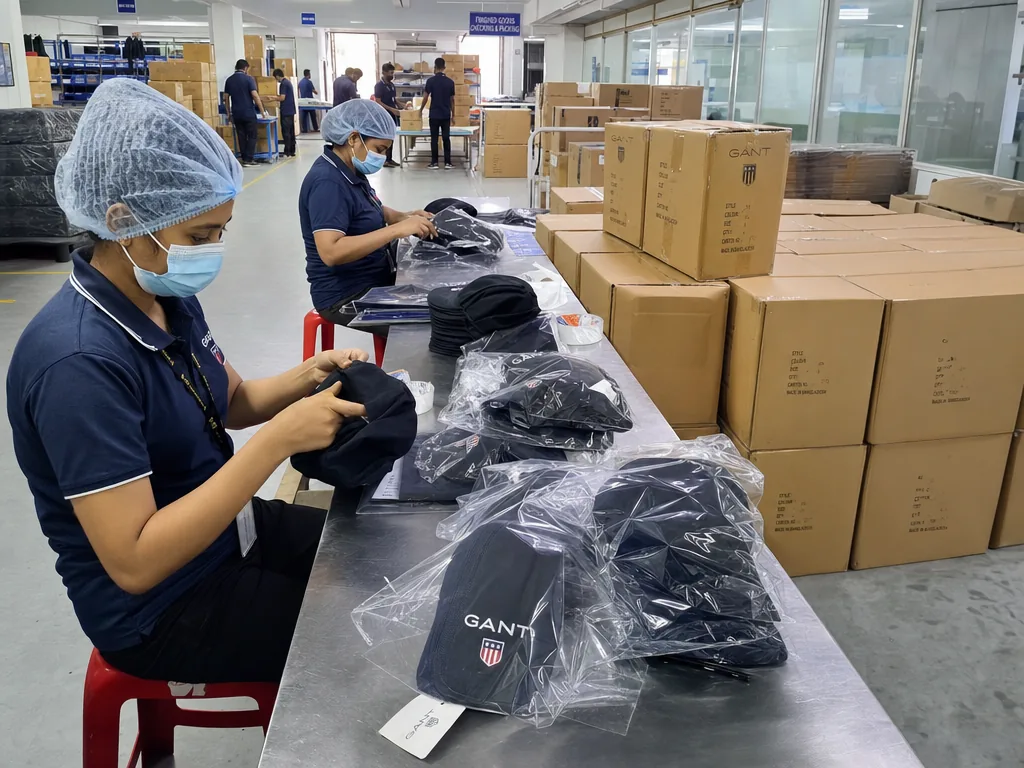
For brand owners, wholesalers and procurement teams entering the custom headwear category, us tariff section 301 on chinese caps: import cost planning for 2026 is one of the highest-leverage decisions you will make. Get it right and your unit economics, retail story and reorder cycle all improve. Get it wrong and you carry the cost for years.
The Section 301 landscape and 2026 updates
For 2026 planning, the key point is that most hat categories coming from China are still exposed to Section 301 duties on top of the normal MFN rate, and that is what makes US tariff Chinese caps a cash-flow problem rather than just a line item. Baseball caps, trucker caps, knit beanies, and visors generally sit under HTS headings in Chapter 65, with the exact duty outcome depending on shell fabric, construction, and whether the crown is textile, knit, or coated. In practice, import duty caps US is usually a stacking issue: base customs duty plus the Section 301 add-on, and sometimes additional fees if your entry value, origin marking, or fiber composition is misdeclared. The tariff list itself has been revised several times since 2018, but for hats the market assumption in 2026 should still be “treat China-origin caps as tariff-exposed until the USTR says otherwise,” not “hope for a reset.”
The problem with Section 301 hats is not just the rate; it is that many buyers underestimate how small design changes can move a style into a different HTS line and change the landed cost. A 5-panel cotton twill cap, a structured foam-front trucker, and a 100% polyester sports cap can all price differently once you factor in country of origin rules, decoration, and whether the cap is sold blank or finished with embroidery, patches, or heat transfer. For china wholesale hats and caps, I always tell buyers to cost the order using the actual tariff line, not a generic cap assumption. If you are building a custom cap import strategy for 2026, the safe approach is to request a broker review before sampling, confirm the likely HTS code in writing, and model duty at the worst-case tariff stack so your margin does not evaporate when the freight forwarder files the entry.
For sourcing teams, the 2026 outlook is still “watch and plan, but do not bet the business on relief.” The Section 301 review process can create noise, exclusions can appear and expire, and political pressure can change the tone, but hat importers should assume continuity unless there is a formal removal from the applicable tariff list. Our standard practice is to compare China-origin pricing against alternate origins early, because the cheapest ex-factory quote can become the most expensive landed cost once you add Section 301, MPF, HMF, inland trucking, and U.S. drayage. If the program depends on low-volume replenishment, the extra duty often hurts more than the fabric cost itself. In real terms, a few dollars of tariff per cap can wipe out the savings from a one-cent cheaper thread or a lower FOB quote, so the planning question for 2026 is not whether Section 301 exists, but how much exposure you are willing to carry in your inventory model.
HTS code 6505 explained
HTS code 6505 is the base tariff bucket for most hats and caps, and the duty rate depends on fiber content and construction, not on whether the product is branded or custom. For cotton caps, the usual U.S. duty sits around 7.5% to 7.9% ad valorem under the normal column 1 rate, while wool or wool-blend caps can land in a similar or slightly different band depending on the exact fiber split and whether the shell is woven, knitted, or felted. Synthetic caps, especially polyester or nylon styles, are often in the same general range but must be classified carefully because a small change in fabric structure can move the line under a different subheading. If you are planning US tariff Chinese caps for 2026, the first mistake is treating “cap” as one duty rate; customs does not work that way.
For import duty caps US planning, the practical step is to match the style to the correct 10-digit HTS before you talk landed cost. A 100% cotton 6-panel dad cap, a wool baseball cap, and a polyester mesh trucker cap may all look similar in a sales photo, but the duty outcome can differ once Customs looks at shell fabric, lining, visor construction, and whether the crown is cut-and-sewn or knitted. Section 301 hats from China can add an extra 7.5% or 25% depending on the applicable product list and current exclusion status, so a seemingly ordinary cap can jump from a modest duty line to a painful one fast. That is why a good customs broker will ask for fabric composition, woven labels, closure type, and a real sample before giving you a number.
A workable custom cap import strategy starts with cost modeling at the HTS level, not after production is finished. On a $2.20 FOB cap, a 7.5% base duty plus Section 301 can add $0.33 to $0.72 per piece before ocean freight, customs bond, MPF, and inland delivery, which changes your margin more than most buyers expect. The China hat tariff 2026 picture is still policy-driven, so buyers sourcing china wholesale hats and caps should keep two options open: a China program for speed and consistency, and a non-China fallback if tariff exposure makes the landed price uncompetitive. In our standard practice, we advise clients to classify by sample and spec sheet early, because once the PO is placed, changing fabric weight, fiber content, or crown construction to chase a lower duty often causes more cost than it saves.
Duty calculation example for a 1,000-piece order
For a 1,000-piece order, the duty math is only useful if you separate product cost from the freight and brokerage charges that people often lump together. Say you buy 1,000 cotton twill dad caps at $2.35 FOB Ningbo each, with embroidery included, and the commercial invoice total is $2,350. If the HTS classification lands in a tariff line carrying a 12% base duty plus a 25% Section 301 layer, the landed duty starts at $822.50 before you add any MPF or HMF. For a cartonized hat shipment, customs will not care what your target retail price is; they only care about declared value, country of origin, and whether the caps are correctly classified as 100% cotton, mixed fiber, or synthetic panel construction. That is why US tariff Chinese caps planning should start with the SKU spec sheet, not the sales forecast.
Now add the fees that usually get missed in a first-pass model. Merchandise Processing Fee is 0.3464% of value with the typical minimum and maximum bracket, so on $2,350 the MPF is only about $8.14; Harbor Maintenance Fee is 0.125% if the cargo enters by ocean, or about $2.94 on the same invoice value. Customs broker fee for a standard entry might run $85 to $150, and ISF filing is often another $35 to $50. If your freight forwarder quotes $1,450 for LCL ocean freight, the true import duty caps US landed cost is not $2.35 plus duty; it is closer to $4.73 to $5.10 per unit once you spread freight, documentation, and local delivery across the carton count. For Section 301 hats, that gap is exactly where margin disappears if the buyer only models FOB plus duty.
A practical custom cap import strategy is to run three scenarios before you place the PO: standard duty only, duty plus 25% Section 301, and duty plus Section 301 plus a 5% currency swing. On the same 1,000-piece order, that can move landed cost by several hundred dollars and change whether you should ship by air, LCL, or consolidate with china wholesale hats and caps from other styles. My rule in factory planning is simple: treat China hat tariff 2026 exposure as a line item, not a surprise, and verify the final HTS code with your broker before production starts. If your cap is made with structured crown panels, visor board, sweatband composition, and embroidery coverage that could shift classification, you want that resolved on paper, because correcting a misfiled entry after arrival is far more expensive than paying for a proper pre-shipment review.
First-Sale-for-Export and other optimization strategies
The cleanest way to reduce dutiable value legally is to understand what Customs will actually accept as the transaction value, not what a supplier wants to put on a proforma invoice. Under the first-sale-for-export rule, the duty base can sometimes be the factory-to-middleman price instead of the higher resale price, but only when the paper trail is tight: a real sale for export to the U.S., documented payment, and evidence that the goods were clearly destined for the American buyer at the first sale. If any link in that chain looks staged, CBP can reject it and revalue the shipment. For US tariff Chinese caps, that difference can be meaningful on a $1.80 factory cap versus a $2.75 trading-company price, especially when Section 301 hats and base customs duty are stacked together. The mistake I see most often is buyers chasing a low declared value without matching purchase orders, packing lists, and bank records; that invites a customs value challenge, not savings.
A better custom cap import strategy is to optimize the commercial structure, not play games with the invoice. If you buy directly from the actual exporter, keep the sale terms clean, and separate non-dutiable charges correctly, you may lower the landed base legally. For example, inland freight after export release, U.S. domestic labeling, or separately itemized post-import services should not be mixed into the customs value if they are truly outside the sale for export. The same logic applies to china wholesale hats and caps bought through agents: if the agent is taking title in China, the first sale must be real, not just paperwork. On a 50,000-piece order, a $0.18 reduction in dutiable value can save about $9,000 before even considering the China hat tariff 2026 risk environment, but only if the structure survives a CBP review.
There are also practical limits: style engineering and supplier consolidation matter more than people admit. A cap with a 3D puff logo, woven label, carton insert, and individual polybag can shift value fast, so you want to separate packaging, testing, and optional branding charges from the core cap price wherever the rules allow. Our standard practice is to document those line items early, because once a shipment is underexamined for import duty caps US valuation issues, retroactive fixes are painful. The right answer is usually a documented first-sale file plus disciplined Incoterms, not aggressive under-declaration. If a buyer is serious about US tariff Chinese caps planning for 2026, the best move is to build a valuation file before production starts, then have customs broker and supplier agree on the invoice structure, proof of export, and country-of-origin paperwork before a single carton leaves the factory.
Should you diversify outside of China?
If you are trying to reduce exposure to US tariff Chinese caps in 2026, diversification makes sense, but only if you understand what you are actually buying: lower duty risk on paper versus higher execution risk in production. Vietnam can work well for basic six-panel dad caps and unstructured cotton caps, especially when you are doing larger volumes with simple artwork and stable trim packages. Bangladesh is attractive for labor-intensive headwear only if your program can tolerate longer development cycles and tighter fabric constraints. Cambodia is usually the weakest of the three for true cap specialization, so it tends to fit simpler promotional runs rather than technical streetwear or licensed team programs. For Section 301 hats, the tariff math is only one line item; pattern accuracy, embroidery density, and carton-level consistency are what decide whether the move actually saves money. Lead time is where many importers underestimate the cost. A China hat tariff 2026 scenario may push you to split sourcing, but shifting to another country often adds 2 to 5 weeks before production even starts because trims, sweatbands, and front panels are not as standardized as buyers expect. In Vietnam, factories often have decent sewing capacity but limited specialty hardware, so custom buckram shapes, laser-cut patches, and precise sandwich-visor work can slow the line. Bangladesh can be cost-competitive on labor, but the fabric supply chain is less flexible for small-batch custom cap import strategy work, so MOQs can jump to 3,000 to 5,000 pieces per colorway. Cambodia usually needs even more handholding on spec control. If your calendar is tight, the real question is not which country is cheapest; it is whether the supplier can hit the same panel symmetry, crown height, and closure spec without three rounds of sampling. The best answer for import duty caps US is usually not a full exit from China but a split portfolio. Keep complex, high-touch SKUs in China where embroidery digitizing, wash testing, and finish control are stronger, and move only repetitive basics to alternative countries once you have verified fabric shade, stitch quality, and carton yield. That approach also protects you from the hidden cost of chasing the lowest FOB while absorbing rework, airfreight, and claim deductions. For buyers already sourcing china wholesale hats and caps, I usually advise comparing landed cost across at least two lanes: one China lane and one non-China lane, both built on the same spec sheet and AQL 2.5 targets. Otherwise you are not comparing sourcing options; you are comparing different products.
If you are trying to reduce exposure to US tariff Chinese caps in 2026, diversification makes sense, but only if you understand what you are actually buying: lower duty risk on paper versus higher execution risk in production. Vietnam can work well for basic six-panel dad caps and unstructured cotton caps, especially when you are doing larger volumes with simple artwork and stable trim packages. Bangladesh is attractive for labor-intensive headwear only if your program can tolerate longer development cycles and tighter fabric constraints. Cambodia is usually the weakest of the three for true cap specialization, so it tends to fit simpler promotional runs rather than technical streetwear or licensed team programs. For Section 301 hats, the tariff math is only one line item; pattern accuracy, embroidery density, and carton-level consistency are what decide whether the move actually saves money.
Lead time is where many importers underestimate the cost. A China hat tariff 2026 scenario may push you to split sourcing, but shifting to another country often adds 2 to 5 weeks before production even starts because trims, sweatbands, and front panels are not as standardized as buyers expect. In Vietnam, factories often have decent sewing capacity but limited specialty hardware, so custom buckram shapes, laser-cut patches, and precise sandwich-visor work can slow the line. Bangladesh can be cost-competitive on labor, but the fabric supply chain is less flexible for small-batch custom cap import strategy work, so MOQs can jump to 3,000 to 5,000 pieces per colorway. Cambodia usually needs even more handholding on spec control. If your calendar is tight, the real question is not which country is cheapest; it is whether the supplier can hit the same panel symmetry, crown height, and closure spec without three rounds of sampling.
The best answer for import duty caps US is usually not a full exit from China but a split portfolio. Keep complex, high-touch SKUs in China where embroidery digitizing, wash testing, and finish control are stronger, and move only repetitive basics to alternative countries once you have verified fabric shade, stitch quality, and carton yield. That approach also protects you from the hidden cost of chasing the lowest FOB while absorbing rework, airfreight, and claim deductions. For buyers already sourcing china wholesale hats and caps, I usually advise comparing landed cost across at least two lanes: one China lane and one non-China lane, both built on the same spec sheet and AQL 2.5 targets. Otherwise you are not comparing sourcing options; you are comparing different products.
Why China still wins on small-batch custom orders
For small-batch custom work, China still wins because the real cost is not the tariff line item; it is the cost of rework, delays, and weak supplier discipline. On a 300-piece run with 4-color embroidery, a factory running Tajima or Barudan heads, proper digitizing, and controlled thread tension will usually beat a cheaper source that needs two sample rounds to get the crown shape, visor curve, and logo density right. Even after Section 301 hats duties are added, a clean 12- to 18-day production cycle with stable color matching to Pantone TCX and low defect rates often lands better for high-mix buyers than chasing the lowest FOB quote elsewhere. That is the practical side of US tariff Chinese caps planning: the cheapest unit price is irrelevant if the first bulk run fails AQL 2.5 or misses your launch date.
The other reason China still dominates is flexibility. A buyer can move from brushed cotton twill to 100 percent polyester performance fabric, switch from flat embroidery to 3D puff, add woven labels, and adjust crown structure without rebuilding the supply chain. That matters for import duty caps US planning because many orders are not one SKU; they are 8 to 15 colorways, mixed closure types, and different pack-outs for retail and promo channels. In that environment, a factory that can handle BOM changes, sample comments in 24 to 48 hours, and color tolerance within Delta-E 2.0 is worth more than a few points of tariff difference. A strong custom cap import strategy depends on process control, not just landed-cost math.
For 2026, buyers should assume the China hat tariff 2026 conversation will stay noisy, but the sourcing logic does not change much for small runs. China wholesale hats and caps suppliers with mature compliance, sedex-audit-cap-supplier-guide.html">BSCI 2.0 or Sedex SMETA 4-Pillar readiness, and real QC on stitching, sweatband attachment, and carton packing still reduce hidden costs. Our standard practice is to price tariffs separately from factory cost, then compare landed cost against a three-sample baseline, not a brochure quote. That usually shows why experienced importers stay with China for custom headwear: better embroidery registration, fewer missed spec points, and more predictable lead times, even when the tariff stack is ugly.
Frequently Asked Questions
What logo decoration techniques do you offer?
3D puff embroidery, flat embroidery, woven patch, leather patch, PVC patch, screen printing, sublimation, applique and laser etching, all in-house with no subcontracting.
How long does production take?
Sampling takes 7 to 12 days. Bulk production runs 20 to 30 days depending on quantity, fabric availability and decoration complexity. Inspection and packing adds another 3 to 5 days before shipment.
Do you support sustainability certifications?
Yes. We work with GOTS organic cotton, GRS-certified recycled polyester, OEKO-TEX Standard 100 fabrics, and are BSCI and Sedex audited. Certification documentation can be provided per order.
What file format should I send for my logo?
Vector files (AI, EPS, PDF) are ideal. High-resolution PNG or JPG at 300 dpi on transparent background works as a fallback. Provide Pantone color references for accurate reproduction.
What is the minimum order quantity (MOQ) for custom hats?
Our standard MOQ is 100 pieces per design and color, with sampling available from 1 piece. For complex multi-color logos or premium fabric upgrades, the MOQ can be lowered with a small per-piece surcharge.
What should I know about wholesale baseball caps made in usa?
When evaluating wholesale baseball caps made in usa, the key considerations are construction quality, decoration capability, MOQ flexibility and lead time. Standard duty rates for cotton, wool, synthetic caps. Tariff list status and outlook for hat HTS codes.
How does ordering custom made trucker hat work?
When evaluating custom made trucker hat, the key considerations are construction quality, decoration capability, MOQ flexibility and lead time. Tariff list status and outlook for hat HTS codes. Standard duty rates for cotton, wool, synthetic caps.
How does ordering baseball cap custom embroidery work?
When evaluating baseball cap custom embroidery, the key considerations are construction quality, decoration capability, MOQ flexibility and lead time. Speed, embroidery quality, supplier flexibility outweigh tariff differential for high-mix orders. Tariff list status and outlook for hat HTS codes.
How does ordering custom embroidered baseball caps work?
When evaluating custom embroidered baseball caps, the key considerations are construction quality, decoration capability, MOQ flexibility and lead time. Standard duty rates for cotton, wool, synthetic caps. Tariff list status and outlook for hat HTS codes.
Need a low-MOQ test order?
We help emerging brands launch with as few as 100 pieces. Premium fabric, in-house embroidery, retail-ready packaging.
Start a small orderRelated guides
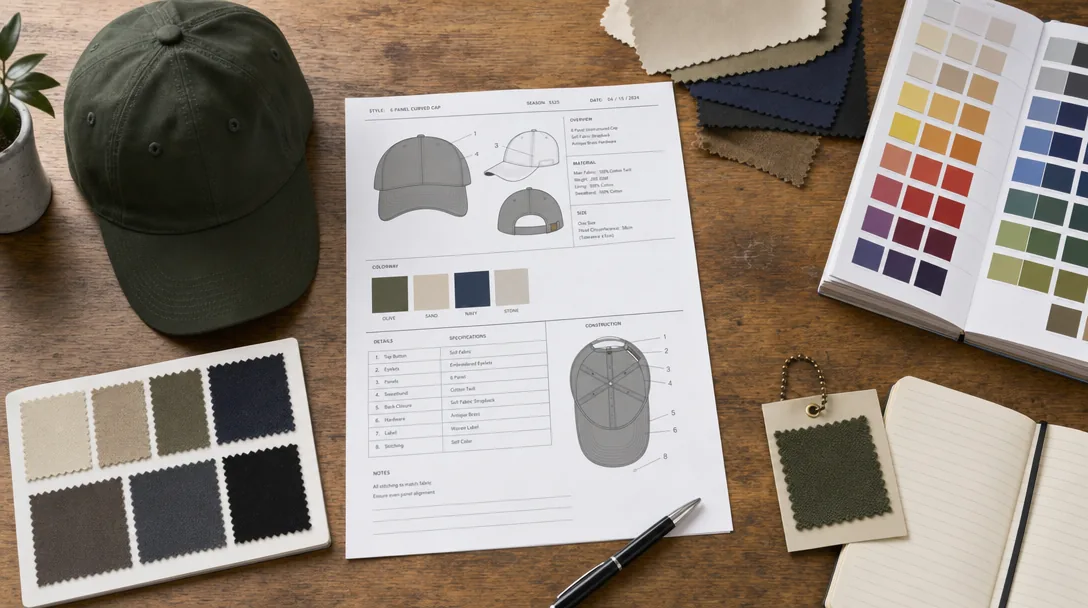
Hat Quality Inspection Checklist: 32 Points Every Importer Should Verify
Read article →
Refreshing a Hat Collection: A Repeat-Order Playbook for Established Brands
Read article →
Custom Cap MOQ Explained: How Small Brands Can Order in Bulk Without Wasting Capital
Read article →If you are ready to take the next step on us tariff section 301 on chinese caps: import cost planning for 2026, our team can put a tailored quotation and digital mock-up in your inbox within 24 hours. Send the inquiry form on our contact page or message us directly on WhatsApp.