
Switching Hat Manufacturers Mid-Program Without Losing Quality (2026 Update)
For brand owners, wholesalers and procurement teams entering the custom headwear category, switching hat manufacturers mid-program without losing quality (2026 update) is one of the highest-leverage decisions you will make. Get it right and your unit economics, retail story and reorder cycle all improve. Get it wrong and you carry the cost for years.
Why brands switch manufacturers (real reasons)
Most brands switch hat manufacturer because margin erosion shows up quietly across repeat POs, not because of one dramatic quote hike. The pattern is line-item creep with no spec change: 3D embroidery +$0.08 per cap, 280 gsm brushed cotton twill +$0.10, woven loop label +$0.03, HDPE snap closure +$0.02, export carton upgrade +$0.07. A 6-panel snapback that was FOB $4.85 can land at $5.32 with no approved tech pack revision. A legitimate factory can tie increases to cotton index moves, RMB swings, Zhejiang wage adjustments, or resin costs. A weak one just hand-waves. Once the supplier stops reconciling deltas against the original bill of materials, the problem is usually not “market conditions” — it is poor cut planning, hidden subcontracting, low marker efficiency, or a factory betting the account is too sticky to challenge. At that point, switching becomes a control decision, not a pricing negotiation.
Quality drift is more dangerous because it compounds invisibly. The first bulk may hit Delta-E 1.0-1.5 on dyed panels, keep crown height within ±3 mm, and hold embroidery registration within 0.8 mm on Tajima or Barudan heads. By the third or fourth reorder, the same program starts showing softer buckram, visor curve variance, satin-stitch underlay bleed, sweatband print crocking below Grade 4, or panel skew that only shows once the cap is on head. None of those failures always triggers an immediate reject, but together they change silhouette, hand feel, and shelf appearance enough to hurt sell-through. Serious buyers compare every repeat lot to the original golden sample, not the last shipment, and they inspect to AQL 2.5 because drift normalizes fast when the factory treats small misses as acceptable variance. If a supplier cannot hold the same cap across multiple POs, it is not a spec issue anymore; it is process drift.
Capacity failure is the third reason brands switch hat manufacturer mid-program, especially when volume jumps from 5,000 pieces to 20,000 or the required lead time drops below 40 days ex-factory. A shop that runs fine with 8 embroidery heads and one finishing line can fall apart at scale: WIP piles up between cutting and sewing, QC gets delayed until carton packing, and lead times slide from 35 days to 52. One corrective air shipment can add $0.90-$1.40 per cap and erase a full season of FOB savings. The smart move is not a panic transfer; it is a controlled migration to a factory with real capacity, inline QC, stable Pantone TCX color control, and current sedex-audit-cap-supplier-guide.html">BSCI 2.0 or Sedex SMETA 4-Pillar records. Our standard practice is simple: if a supplier cannot prove repeatable output under load, cannot keep color within tolerance, and cannot pass final inspection at AQL 2.5, the switching cost is already lower than the risk of staying put.
The tech-pack handoff protocol
When you switch hat manufacturer mid-program, the failure point is usually the handoff, not the sewing line. A real transfer pack needs four pieces, not one PDF: the latest tech pack with revision history, one sealed preproduction sample for every active colorway, current lab reports and compliance files, and a tolerance sheet tied to measurable checkpoints. For caps, that means crown height in millimeters, visor length and curve, body fabric weight in gsm, buckram grade, sweatband width, closure pull-force, stitch count, thread brand, thread sheen, and the approved needle set for each operation where appearance matters. Send every live color, not just the hero SKU. Black hides seam grin and puckering that khaki exposes, while dark green often shows the worst shade drift unless the body fabric is locked to a Pantone TCX reference with a defined Delta-E limit, usually 1.5 to 2.0 for production approval.
Physical samples matter because a competent factory can still miss details the drawing never captured. On a 6-panel structured cap, the incoming team needs to inspect front-panel seam impression, underbill board thickness, binding width, stitch SPI, top-button wrap tension, eyelet diameter, and whether the logo sits on 2 mm or 3 mm EVA foam. On embroidery, a Tajima, Barudan, or ZSK operator can only match the original look if they can study the stitch path, fill angle, underlay, pull compensation, and total stitch count; otherwise the sample may be clean but still look wrong next to stock already in market. Include one worn field sample if the style has been running more than a season. That shows visor memory loss, sweatband crocking, snapback resin brittleness, fusible delamination, and edge fray that a sealed sample hides.
The tolerance sheet is what keeps a move from turning into an accidental redesign. Put hard numbers on every visual standard: fabric shade within Delta-E 1.5 of the approved standard, embroidery placement within plus or minus 2 mm, crown height within plus or minus 3 mm, visor length within plus or minus 2 mm, and finished circumference within plus or minus 5 mm after 24-hour conditioning at standard room conditions. If the style includes youth product for the U.S., attach CPSIA lead and phthalates limits; if the retailer has its own restricted-substance list, include the current revision, not a note buried in the PO. OEKO-TEX Standard 100, colorfastness, crocking, and sweat resistance reports should travel with the style, not live in a separate compliance folder nobody opens during sampling. That is the cleanest way to switch hat manufacturer without letting each factory interpret quality through its own sample-room habits.
Color reference transfer is the hardest part
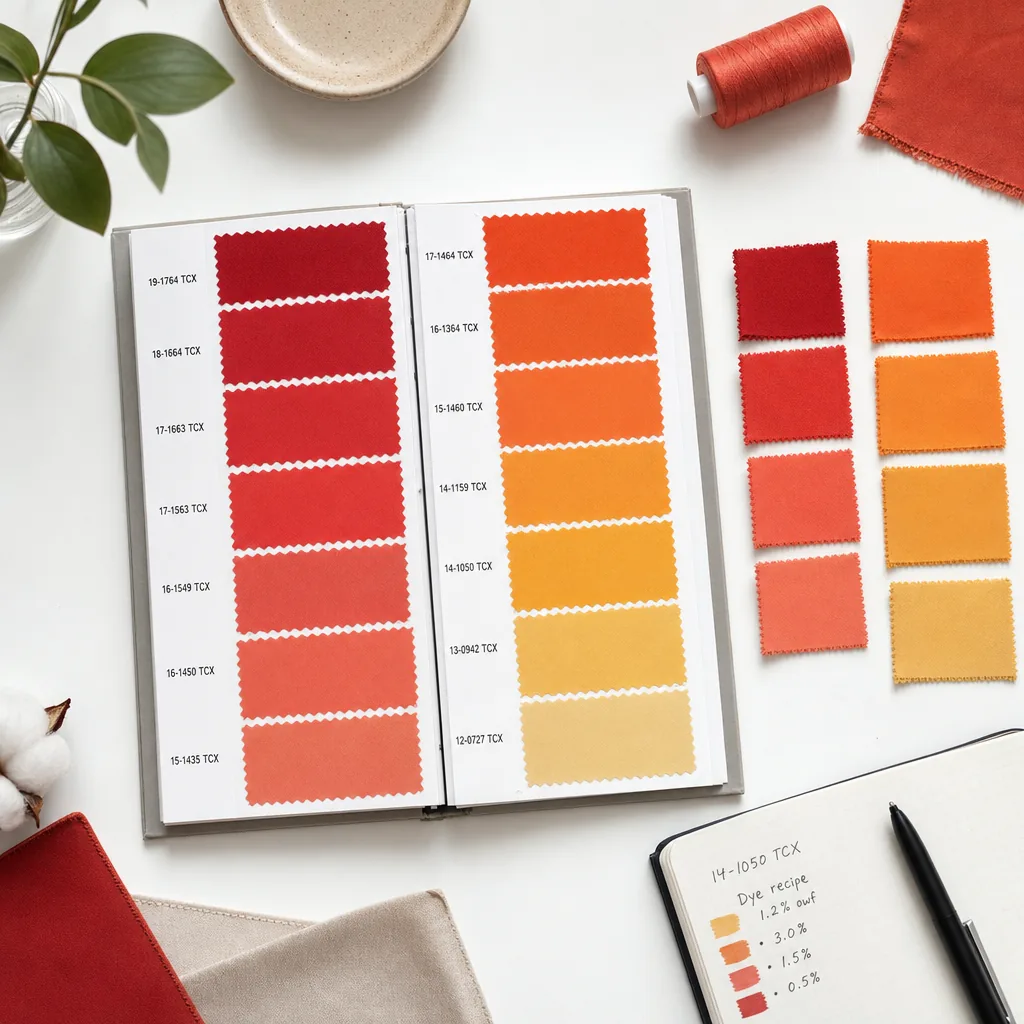
Color drift is usually the first visible failure when you switch hat manufacturer, and Pantone alone will not save you. A Pantone TCX or TPG number is only a reference point for dyeing; it is not a process spec for 10x10 brushed cotton twill, 12 wale corduroy, 600D rPET, or an 80/20 wool-acrylic blend after scouring, heat setting, enzyme wash, or C0 water-repellent finishing. I have seen two mills hit Pantone 19-1524 TCX in the lab and still miss by Delta-E 3.0-plus once the cap was assembled because the yarn count, resin finish, and optical brightener package were different. The mismatch gets worse when the previous factory used piece-dyed shell fabric but sourced pre-dyed seam tape, button wrap, sweatband, and underbill from separate trim vendors, each running its own tolerance band and dye lot history. If you need to switch hat manufacturer without resetting expectations, the only credible master is a sealed approval sample from the last accepted production lot, marked with date code, fabric composition, trim BOM, wash recipe, and finishing notes.
Expect two or three lab-dip rounds before bulk approval, sometimes four for black, navy, khaki, or vintage off-white. Do not sign off on a strike-off under office LEDs; check body fabric, trims, and embroidery thread under D65 and TL84, and decide in advance whether approval is visual, spectrophotometer-based, or both. For most cap programs, Delta-E 1.5 to 2.0 is achievable on the main shell fabric, but contrast parts need separate limits because polyester sweatbands, recycled webbing, and underbill boards often read differently than the crown. Embroidery adds another variable: Madeira, Gunold, and Coats thread lots can shift enough to make logos look warmer or duller even when the fabric passes. Our standard transfer pack includes a sealed salesman sample, lab-dip card, hand-feel swatch, trim color matrix, thread codes for Tajima or Barudan production, gsm, and controlled-light photos with a gray card. Let both old and new caps rest flat for 24 hours before comparison; steamed panels cool down, tension relaxes, and the perceived shade can move enough to trigger a false approval or rejection.
Sample-matching deliverables checklist
Treat the first sample from a replacement factory as an equivalency trial, not a creative review. When you switch hat manufacturer mid-program, lock pass/fail criteria before greige fabric is booked, fusing is laminated, or crown panels are cut. For structured caps, compare against the approved production sample first and the tech pack second; the old sample tells you how the cap actually wore after the original factory’s pattern, sewing tension, and finishing all interacted. Measure crown circumference on a fixed head form and hold it to ±0.3 cm, then check front-center crown height, side-panel breakpoints, and visor width to ±2 mm. Brim shape should be verified with a profile jig or calipers at the centerline and both outer thirds; a 3 mm visor lift is enough to change perceived fit and resale acceptance. Condition shell fabric for 24 hours at standard atmosphere before testing, then hold finished weight within ±5% gsm and verify composition if the hand feel drifts. A nominal 270 gsm cotton twill can land at 257-283 gsm; 245 gsm is not tolerance, it is a substitution. Freeze buckram grade, fuse gsm, sweatband width, seam tape placement, and button wrap method, because those hidden inputs are what make two visually similar hats wear like different products.
Embroidery is where matching usually breaks down, because buyers approve the look and miss the digitizing changes underneath. Require the incoming factory to submit the machine file settings with the sample: stitch count within ±5% of legacy production, same underlay type, similar density, pull compensation, trim sequence, and thread brand or an approved equivalent. If the original front logo ran 11,800 stitches and the new file is 13,400, expect a stiffer hand, more puckering on cotton twill, and higher thread-break frequency on Tajima, Barudan, or ZSK heads during bulk. Color approval should be instrument-based, not visual-only. Hold shell fabric, visor sandwich, seam tape print, and embroidery thread to Delta-E below 2.0 versus the sealed standard under D65 lighting; Pantone TCX is only a reference, not a pass result. The approval pack must let QC reject bulk without argument: sealed golden sample, signed measurement sheet, BOM, fabric and color test reports, embroidery spec, closure specification, and standardized light-box photos. Do not skip small trims: snapback peg count, hook-and-loop length, buckle finish, eyelet diameter, sweatband overlap, seam tape print position, and carton pack-out. Our standard practice is to sign by style number, colorway, revision, and approval date, then tie inspection to AQL 2.5 major / 4.0 minor unless the program is tighter.
Dual-sourcing strategy: when to keep both
The safest way to switch hat manufacturer is usually not a hard cutover. Keep the incumbent on legacy SKUs, replenishment colorways, and anything with proven sell-through, then let the new factory take seasonal drops, development samples, and overflow. That gives you a real comparison on crown height, visor curve, embroidery pull, and wash shrinkage without risking the full line. In practice, a 70/30 split for the first 2 to 3 production cycles is common; if defect rate, shade variation, and fit stay within spec, brands often move toward 50/50 after 6 to 12 months. This matters most on styles with different panel geometry, stitch counts, or sweatband construction, where one bad assumption can turn a simple switch hat manufacturer decision into a warehouse problem.
Dual sourcing only works if both factories are working from the same frozen spec, not “equivalent” paperwork. Lock Pantone TCX references, allowable Delta-E, crown depth, seam allowance, thread brand and ticket, closure type, carton pack-out, and inspection standard — usually AQL 2.5 for major defects and 4.0 for minor cosmetic issues. The incumbent becomes your live benchmark for embroidery registration, label placement, and color consistency, while the new source has to prove lead time, repeatability, and reorder response. It also lowers the real cost of changing suppliers because you avoid recutting panels, thread charts, woven labels, and carton masters on day one; the only way to make that work is separate POs under one spec set so drift shows up in in-line checks and final inspection, not at the warehouse dock.
The mistake is treating dual sourcing as a temporary patch instead of a controlled operating model. If one factory gets hit by fabric shortages, a Barudan head failure, a failed BSCI 2.0 audit, or a bad dye lot, the second source keeps the calendar alive. It also gives you pricing leverage: the incumbent knows volume can move, and the new supplier knows it has to earn the next 10,000 to 20,000 units with on-time delivery and clean QC. For steady reorders, this is the least risky way to switch hat manufacturer midstream because you preserve continuity while pressure-testing capacity, workmanship, and compliance. The overhead is real — more PO tracking, more color approvals, more carton control — but that is still cheaper than one missed shipment or a full quality reset after a single bad handoff.
What the old factory will and won't share
When you switch hat manufacturer mid-program, draw a clean line between what the buyer paid for and what the old factory considers its internal know-how. You should expect release of the approved tech pack, BOM, point-of-measure sheet with tolerances, trim card, carton marks, and every paid sample stage: prototype, size set, pre-production sample, and sealed golden sample. The same goes for execution files made for your style: native Adobe Illustrator art, PDF placement maps, embroidery DST or EMB files, appliqué cut paths, woven-label layouts, and Pantone references, usually TCX for textiles and C for print. Ask for editable files, not screenshots. A proper handoff also includes crown height, visor length and curl spec, eyelet diameter, sweatband width, closure part code, buckram type, fabric composition, gsm, and logo placement coordinates measured off center front and seam lines. Without that level of specificity, the new factory is guessing at fit, symmetry, and repeatability.
Do not expect the old factory to hand over the playbook that makes its line efficient. Internal SOPs, sewing line balance sheets, operator skill matrices, in-line QC checkpoints, machine parameter libraries, preventive-maintenance logs for Tajima, Barudan, or ZSK embroidery heads, and blocker or heat-press settings are factory IP. The same applies to dye recipes, wash chemistry, pressing dwell times, needle selection, thread-tension tables, and calibration methods used to hold logo color within Delta-E 1.5 to 2.0 against an approved Pantone target. A replacement supplier does not need those files to reproduce a cap; it needs the approved output standard and enough measured data to hit it. If you ask for proprietary settings when you switch hat manufacturer, you usually lose time, damage leverage, and still get nothing useful.
The practical move is to collect output data that can be verified on the product. Get the sealed sample, top and underbill swatches, sweatband and closure specs, carton pack ratio, barcode or shipping-mark files, prior strike-offs, and defect photos with written approval comments. If you paid for third-party testing, request the reports: colorfastness to rubbing, perspiration, and light; azo and lead compliance; needle-detection records; and any CPSIA or REACH paperwork tied to the program. Do not assume social-audit files or corrective-action plans from BSCI 2.0 or Sedex SMETA 4-Pillar will transfer; those belong to the audited site, not the brand. Our standard practice is to rebuild the control plan from the approved sample, issue a fresh BOM, verify color under D65 light, run new strike-offs, and lock bulk against AQL 2.5 with explicit major and minor defect definitions. That is how you switch hat manufacturer without importing somebody else’s undocumented process risk.
First repeat order signals
The first repeat PO, usually 45 to 75 days after onboarding, tells you whether you actually managed to switch hat manufacturer or just approved a sample-room performance under ideal supervision. Judge reorder one against the sealed approval set, graded spec, and first bulk inspection record—not against memory. On structured caps, repeatability should be tight: crown height within ±2 mm, visor arc left-to-right variance under 2 mm, front panel centerline deviation under 1.5 to 2 mm, and eyelet spacing held within 1 mm. For embroidery, compare stitch count, underlay coverage, and edge runout to the digitized file; satin columns drifting more than 0.2 mm usually show immediately on serif letters and narrow outlines. Fabric shade should stay within Delta-E 1.0 to 1.5 under D65 lighting, especially on black, navy, and Pantone athletic reds where lot drift is obvious. Also recheck sweatband gsm, buckram stiffness, seam tape placement, snapback plating color, and carton pack-out count. When reorder one moves on several of these points at once, it is almost never random variation; it means process control has not settled.
The usual failure mode is operational, not cosmetic: first bulk run goes through the senior line, then the repeat order gets moved to a different sewing group or quietly outsourced when capacity tightens before Chinese New Year, back-to-school, or Q4 promo season. That is why any team trying to switch hat manufacturer needs repeatability data, not a single “golden” lot. On reorder one, verify the embroidery program is running with the same pull compensation and thread spec across Tajima, Barudan, or ZSK heads; rayon sheen and bobbin tension inconsistency will show before major defects do. Confirm the shell fabric is still the approved construction—for example 12 oz cotton twill at 280 to 300 gsm or 600D polyester with the same PU backing, denier, and hand feel—and that visor sandwich, top button centering, and closure alignment match lot one. AQL 2.5 alone is too blunt here. Our standard practice is to inspect 20 to 32 units per style, log defects by category, photograph inside construction, and compare ex-factory timing against the promise; if shipment slips more than 3 to 5 days and minor defect rates climb, the factory is not stable enough to scale.
Frequently Asked Questions
What logo decoration techniques do you offer?
3D puff embroidery, flat embroidery, woven patch, leather patch, PVC patch, screen printing, sublimation, applique and laser etching, all in-house with no subcontracting.
Do you support sustainability certifications?
Yes. We work with GOTS organic cotton, GRS-certified recycled polyester, OEKO-TEX Standard 100 fabrics, and are BSCI and Sedex audited. Certification documentation can be provided per order.
What is the minimum order quantity (MOQ) for custom hats?
Our standard MOQ is 100 pieces per design and color, with sampling available from 1 piece. For complex multi-color logos or premium fabric upgrades, the MOQ can be lowered with a small per-piece surcharge.
How long does production take?
Sampling takes 7 to 12 days. Bulk production runs 20 to 30 days depending on quantity, fabric availability and decoration complexity. Inspection and packing adds another 3 to 5 days before shipment.
Can I order a sample before bulk production?
Yes. We strongly recommend approving a pre-production sample before mass production. Samples are charged at 35 to 60 USD each plus express shipping, fully refundable against confirmed bulk orders over 500 pieces.
What should buyers know about cotton twill army cap kangol?
When evaluating cotton twill army cap kangol, the key considerations are construction quality, decoration capability, MOQ flexibility and lead time. Even with identical Pantone TCX references, dyeing chemistry, fabric blend and finishing process produce different results at different factories. Send a physical cap from the old production as the target. Expect 2-3 lab dip iterations before new factory matches old within Delta-E 2.0. Most common: pricing creep over multiple orders, quality drift on repeats, capacity…
How does ordering custom snapback new era work?
When evaluating custom snapback new era, the key considerations are construction quality, decoration capability, MOQ flexibility and lead time. Don't just email the old tech-pack to the new factory. Build a 'matching brief' that includes: original tech-pack, physical samples from the existing production (one from each colorway), test reports (OEKO-TEX, CPSIA if applicable), and a list of pre-approved tolerances. Treats matching as a calibration problem, not a re-design. Even with identical Pantone TCX references,…
How does ordering best custom baseball cap work?
When evaluating best custom baseball cap, the key considerations are construction quality, decoration capability, MOQ flexibility and lead time. Even with identical Pantone TCX references, dyeing chemistry, fabric blend and finishing process produce different results at different factories. Send a physical cap from the old production as the target. Expect 2-3 lab dip iterations before new factory matches old within Delta-E 2.0. Most common: pricing creep over multiple orders, quality drift on repeats, capacity…
How do I find a reliable baseball cap manufacturers usa?
When evaluating baseball cap manufacturers usa, the key considerations are construction quality, decoration capability, MOQ flexibility and lead time. Even with identical Pantone TCX references, dyeing chemistry, fabric blend and finishing process produce different results at different factories. Send a physical cap from the old production as the target. Expect 2-3 lab dip iterations before new factory matches old within Delta-E 2.0. Most common: pricing creep over multiple orders, quality drift on repeats, capacity…
Ready to start your custom hat project?
Send us your tech-pack, sketch or even just an inspiration photo. We will respond with a detailed quotation and digital mock-up within 24 hours.
Request a free quoteRelated guides
Sports Team Caps & Uniform Headwear: Bulk Manufacturing for Clubs and Schools
Read article →
Buckram vs Foam vs Unstructured: Cap Crown Construction Compared
Read article →Custom Trucker Hats: The 2026 Sourcing & Manufacturing Playbook
Read article →We hope this guide demystifies switching hat manufacturers mid-program without losing quality (2026 update) and helps you move forward with confidence. If you have questions specific to your project, our English-speaking sales engineers are one message away.