
Sustainable Custom Hats: Eco-Friendly Materials, Recycled Fabrics & Certifications - 2026 Buyer's Guide
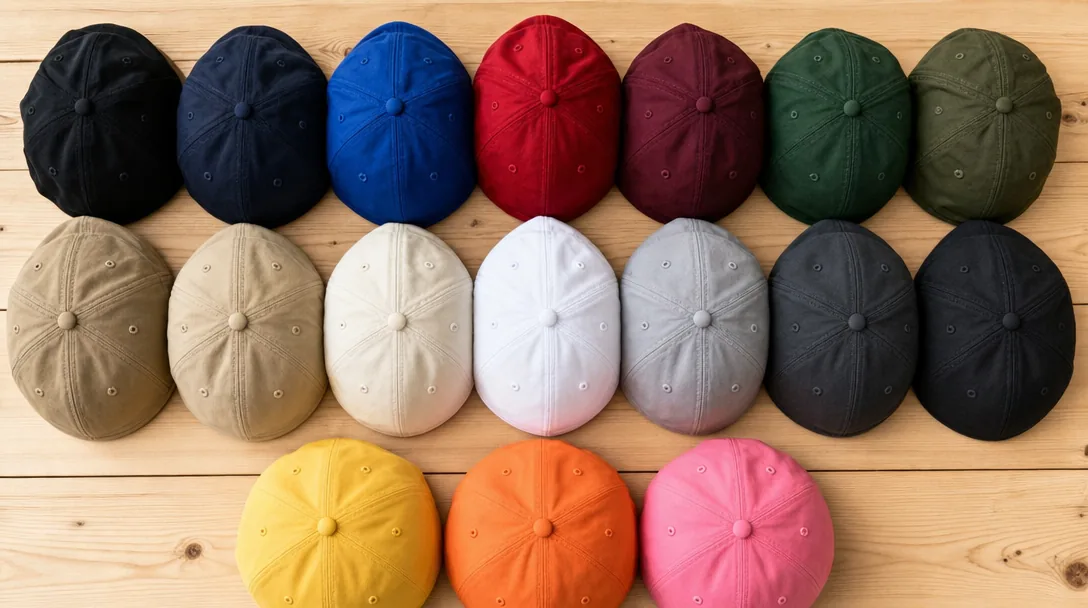
For brand owners, wholesalers and procurement teams entering the custom headwear category, sustainable custom hats: eco-friendly materials, recycled fabrics & certifications - 2026 buyer's guide is one of the highest-leverage decisions you will make. Get it right and your unit economics, retail story and reorder cycle all improve. Get it wrong and you carry the cost for years.
Why sustainability matters in headwear
Sustainability in headwear is no longer a soft brand story; it is a pass-fail sourcing filter. U.S. retailers, EU importers, and licensed-program buyers now ask for recycled-content declarations, REACH SVHC screening, and current sedex-audit-cap-supplier-guide.html">BSCI 2.0 or Sedex SMETA 4-Pillar audit reports before they approve even a salesman sample. That scrutiny lands at component level, where most programs break down. A six-panel cap usually carries 8 to 10 separate inputs: shell fabric, buckram, sweatband, seam tape, visor insert, closure, embroidery thread, labels, hangtags, and polybag. If one of those parts cannot be tied back to a valid document set, the sustainability claim starts to collapse. A line sold as sustainable custom hats will not survive a compliance review if the crown uses GRS-certified recycled polyester but the peak board is virgin PE, the print uses high-VOC solvent ink, or the paper trims have no FSC chain-of-custody support. Buyers know exactly where those weak points are now, and their compliance teams check bills of materials line by line.
The commercial case is just as hard-edged. Sustainability affects retail acceptance, margin protection, and claims risk at the same time, because vague “eco” language does not hold up in a buyer meeting. Procurement teams want to know whether the recycled polyester comes from post-consumer PET bottle flake or pre-consumer industrial waste, whether the cotton is backed by GOTS scope certificates, and whether the cap still passes sweat, crocking, wash, and UV-colorfastness requirements after decoration. On the factory floor, better specs usually cost more up front but generate fewer complaints later: a 210 gsm organic cotton 3/1 twill generally dyes and pigments more evenly than a weak 180 gsm plain weave, while 75D to 150D recycled polyester microfiber gives more stable moisture management and color retention for golf, team, and outdoor programs. Details like Pantone TCX matching within Delta-E 1.5 to 2.0, azo-free dyes, OEKO-TEX Standard 100 trim reports, and AQL 2.5 final inspection are what make sustainable custom hats credible to both sourcing managers and end customers.
Regulation is now pushing the market faster than branding ever did, especially on Europe-bound orders. Buyers are tightening fiber selection and documentation before artwork approval because unsupported green claims can create customs delays, retail chargebacks, or forced relabeling. In practice, the decision tree has to be set early: whether the order needs a GRS transaction certificate for recycled blends, GOTS-certified organic cotton, FSC-certified paper packaging, or only a recycled-content declaration backed by mill test data. Each route changes MOQ, sampling logic, and lead time. On a standard custom cap program, traceable materials and certificate alignment typically add about $0.18 to $0.65 per piece, with another 7 to 15 days if labels, sweatbands, and packaging all need matching paperwork. Our standard practice is to treat sustainability like any other production control point: verify lot-by-lot shade consistency, track thread and fabric usage across Tajima or Barudan embroidery runs, and close shipment only when documents and physical goods match. That discipline is what turns a claim into a commercially workable program.
Organic cotton options
Chain-of-custody is what makes organic cotton credible; a swing tag means nothing if the paperwork breaks at any step. For sustainable custom hats, GOTS only stands up when the ginner, spinner, knitting or weaving mill, dyehouse, and cut-make-trim factory each hold a valid scope certificate, and the transaction certificate covers the exact lot and quantity on the PO. That is where many “organic” programs collapse: certified sewing room, non-certified fabric, or a TC issued for bulk fabric that does not match the actual cut order. The safest constructions are still simple ones with stable yield and fewer mixed trims: 100% organic cotton twill at 210-280 gsm for structured 6-panels, brushed chino at 230-250 gsm for softer retail caps, and canvas around 180-220 gsm for unstructured dad hats and bucket hats. On the floor, organic cotton twill generally behaves better than recycled cotton/poly blends. It fuses more evenly, distorts less during binding, and embroiders with less puckering and tunneling on Tajima and Barudan heads, especially when front logos exceed 6,000 stitches or use 3 mm foam for raised work.
Color control and costing are where buyers usually underestimate organic programs. GOTS-approved dye chemistry is narrower than conventional reactive systems, so deep blacks, neons, and saturated athletic shades often need two or three lab dips before approval, with realistic bulk tolerance around Delta-E 1.5-2.0 under D65 lighting. Muted shades such as stone, washed navy, olive, tobacco, and ecru are easier to keep consistent through wash testing, dry and wet crocking, and light exposure. If the cap includes contrast panels, self-fabric closure straps, or a matching underbrim, those parts should come from the same dye lot; two approved organic mills can still hit the same Pantone TCX with visibly different undertones. Cost is not dramatic, but it is real. Compared with conventional cotton, GOTS organic typically adds 15%-35% to fabric cost and about $0.40-$1.20 FOB per cap at 1,000 pieces. A standard 6-panel brushed twill cap that might run $2.20-$3.20 FOB in conventional cotton usually lands closer to $2.80-$4.10 in certified organic, with small runs pushed up by segregated storage, TC administration, and audit-ready traceability. Fiber claims should sit alongside BSCI 2.0 or Sedex SMETA 4-Pillar records, because organic content alone tells you nothing about production discipline.
Recycled polyester (rPET, REPREVE®)
rPET is only a compromise when the yarn spec is lazy. In sustainable custom hats, recycled polyester in the 75D to 150D range runs nearly the same as virgin poly if the mill controls filament evenness, heat-setting, and dye uptake. On lightweight 5-panel camp caps, 120 to 140 gsm rPET microfiber feeds cleanly through Juki DDL lockstitch and Pegasus overlock lines with line-speed loss usually under 3%. For structured baseball caps, 210D to 300D rPET twill or oxford holds crown shape well once you pair it with the right front support—typically 0.6 to 0.8 mm buckram and a stable fusible backing. The real factory risk is visual consistency, not tensile strength. Cheap recycled yarn shows slub, streaky luster, and lot-to-lot shade drift that becomes obvious on optic white, light heather gray, and saturated Pantone TCX matches where buyers expect Delta-E under 1.0 to 1.5.
Certification is where buyers get burned. GRS is the baseline because it covers recycled content claims and chain of custody through spinning, weaving, dyeing, and cut-and-sew; if the supplier cannot provide a valid scope certificate plus a transaction certificate linked to your PO and fabric lot, “made from bottles” means nothing in a compliance audit. REPREVE® helps when U.S. retail teams want a recognized trademark, but name recognition is not traceability. Our standard practice is to reconcile each bulk fabric lot against the mill invoice, dye lot, packing list, and transaction certificate before cutting, because that is what keeps a Sedex SMETA or retailer document review from turning into relabeling costs. In 2026, certified rPET shell fabric usually costs 8% to 18% more than commodity virgin polyester, and REPREVE® programs can add another $0.10 to $0.35 per hat for branded labels, hangtags, and approval steps. Also check the exclusions: shell fabric may be recycled while the sweatband, closure tape, visor board, and woven label are still conventional inputs, which weakens the sustainability claim fast.
Hemp and natural fiber blends
Hemp blends are one of the few materials that can make sustainable custom hats feel meaningfully different from standard RPET caps, but only if the fabric spec is controlled at the mill level. For cap-grade use, 220 to 300 gsm is the safe window: under 200 gsm, hemp-rich cloth loses body on a 6-panel crown and telegraphs buckram lines; over 320 gsm, it sews like light utility canvas and fights the visor curve. The blends that run cleanest in production are typically 55/45 hemp-cotton canvas, 30/70 hemp-organic cotton twill, and 20/30/50 hemp/RPET/cotton when abrasion resistance and shape retention matter. Pure hemp sounds good on paper but is usually a bad headwear substrate because the yarn hairiness raises friction, frays at the cut edge, and creates unstable topstitch tension around the brim seam and front panel joins. Color control also needs a reality check. Hemp-rich fabrics show more slub and more lot-to-lot shade movement than combed cotton twill; in bulk, Delta-E under 2.0 is realistic, while 1.0 to 1.5 usually requires pre-blended yarns, controlled enzyme washing, and a mill that can document lab dip approval against Pantone TCX standards.
The best use case is casual product where surface variation reads as texture, not defect: washed dad caps, soft-structured 5-panels, camp caps, and bucket hats consistently outperform high-gloss retail silhouettes. If embroidery is required, keep hemp content on the face fabric below roughly 40%. On Tajima or Barudan heads, satin columns under 2.5 mm tend to wobble on hemp-heavy weaves, and fill stitches sink unless the design is re-digitized with lower density, a longer edge-run underlay, and often a 75/11 needle instead of the standard 80/12. Shrinkage is the other frequent failure point. Natural fiber blends can move 3% to 5% after washing or finishing if pre-shrink control is weak, which is enough to twist side panels, distort front crown symmetry, or misregister printed seam tape. Our standard practice is to run a wash-and-block test on the pilot lot before bulk cutting because hemp performance varies more by mill than most cotton buyers expect. On compliance, ask for GOTS for the organic cotton portion, GRS if recycled fibers are included, and OEKO-TEX Standard 100 for dyes and trims; for social compliance, serious buyers usually also want BSCI 2.0 or Sedex SMETA 4-Pillar. Expect pricing about 12% to 25% above standard cotton twill, with low-MOQ dyed fabric commonly landing around $4.20 to $6.80 per yard depending on gsm, finish, and certificate scope.
Trims and packaging
Trims are where sustainable custom hats usually fail an audit of common sense. Buyers approve recycled shell fabric, then load the cap with virgin POM snaps, PVC patches, polyester labels with EVA heat-seal backing, and mixed-fiber tabs that cannot be separated in any real waste stream. The practical fix is a line-by-line trim BOM review before sampling. For snapbacks, recycled POM or post-consumer recycled polyamide is now available from several trim suppliers; expect a premium of roughly $0.04 to $0.09 per cap on a 10,000-piece run. For strapbacks, 0.8 to 1.2 mm recycled nylon webbing, stainless sliders, and D-rings with declared recycled content above 30% are workable specifications. Replacing molded PVC badges with damask woven labels made from recycled polyester, recycled TPU patches, or direct embroidery on Tajima or Barudan heads usually has less cost impact than buyers assume.
The production risk is not supply availability; it is consistency. Recycled black trims are notorious for gloss shift, gate marks, and slight tone drift between lots, especially on injection-molded closures. I would lock a sealed approval sample and define visual tolerance under D65 lighting before bulk release, with a practical Delta-E limit for any color-matched trim. Packaging is easier to clean up, but only if the paperwork is real. FSC-certified hangtags require valid chain-of-custody documents from the printer, not an FSC logo dropped into the artwork. In practice, 350 to 400 gsm FSC kraft or SBS board works well for cap tags, printed with water-based or soy-based inks and finished with cotton cord or recycled paper twine instead of polyester string and staples. At CrownsForge, we freeze hangtags, insert cards, carton marks, and pack notes to one approved spec because last-week substitutions are where sustainable claims quietly fall apart.
Polybags are still the hardest decision because they protect shape, dust, and humidity during ocean transit, especially FOB shipments moving through Ningbo or Shanghai in July and August. Compostable films based on PLA or PBAT blends can suit retail-ready programs, but they generally have lower tear strength and weaker heat stability than standard LDPE, which becomes a real issue in hot containers and non-climate-controlled warehouses. I only recommend compostable bags when the importer can verify the end-of-life stream and the film is certified to EN 13432 or ASTM D6400. Otherwise, a thinner-gauge recycled PE bag with clear resin identification and declared recycled content is usually the more honest specification for sustainable custom hats.
Outer cartons should stay boring and strong. Recycled kraft 5-ply export cartons are standard, with board strength typically in the 125 to 150 psi range depending on stack height, cap profile, and whether the style is structured or unstructured. Carton dimensions should be tight enough to prevent crown collapse but not so tight that brims deform under compression. I would also check moisture resistance, adhesive performance, and drop durability, because packaging failure erases every sustainability talking point the moment goods arrive crushed. If the brand palette matters on uncoated packaging, define an acceptable Delta-E target when matching Pantone references; kraft stock shifts far more than coated board, especially on natural or undyed programs.
Certifications and audits
For sustainable custom hats, the fastest way to separate real compliance from greenwashing is to split paperwork into two buckets: chain-of-custody certifications and factory audits. GRS and GOTS answer different questions. GRS verifies recycled input, chemical restrictions, and traceability through each certified handoff; GOTS covers organic fiber content plus processing criteria, with product labels typically requiring at least 70% organic fibers and the strongest retail claims tied to higher thresholds. OEKO-TEX Standard 100 is narrower than many buyers assume. It tests components against restricted substances such as azo dyes, formaldehyde, extractable heavy metals, PFAS categories where applicable, and certain plasticizers, but it does not prove recycled content, organic origin, or low carbon impact. In cap production, the failure point is rarely the shell fabric alone. The misses usually sit in sweatbands, buckram, visor inserts, woven labels, embroidery backing, heat-transfer films, snap closures, and patch adhesives sourced outside the main fabric mill. The common buyer error is accepting a PDF certificate without checking scope, expiry date, certifier database status, and transaction traceability for the exact shipment. A mill certificate for recycled twill is not enough if the cut-and-sew factory cannot issue a valid GRS transaction certificate covering the finished, decorated style packed for export. The same gap appears on organic programs: a fabric may be GOTS-certified, but the claim can break when sewing thread, seam tape, cotton twill tape, or contrast binding sits outside scope. On recycled polyester caps, I also watch lot consistency hard because 300D to 600D RPET, recycled mesh, and brushed recycled microfibers tend to drift more than virgin yarn in both shade and hand feel. A realistic tolerance for main panels is Delta-E 1.0 to 1.5 against the approved Pantone TCX lab dip; if the style uses mélange, garment wash, or heather effects, that wider tolerance needs written sign-off before bulk.
Social audits matter, but buyers should stop treating BSCI, Sedex SMETA, and WRAP as interchangeable badges. BSCI 2.0 is strong on labor conditions, working hours, remuneration, occupational health and safety, and management systems; Sedex SMETA 4-Pillar adds environment and business ethics in a format many multinational sourcing teams already use; WRAP remains common in U.S.-linked apparel and licensed headwear programs. None of these certifies sustainable custom hats in material terms. What they do show is whether the production site has enough discipline to control subcontracting, worker records, chemical handling, and peak-season overtime. In headwear, weak factory discipline usually appears first in trims, decoration, and packing, not in the crown panels buyers spend all their time approving. On a real factory floor, I look past the audit score and check the controls behind it: needle logs for embroidery lines running Tajima or Barudan heads, MSDS and secondary containment in printing and washing areas, locked chemical rooms, clear fire-exit access, dormitory standards, and timecard integrity during sports launches and Q4 promo spikes. Our standard practice is to tie audit review to production controls that buyers can measure: AQL 2.5 final inspection, in-line workmanship checks, carton drop testing, barcode and carton-mark verification, and metal detection when a retailer manual requires it. If a factory cannot reconcile subcontractors, trim receipts, and packing records to one PO, it also cannot defend recycled-content claims when customs, marketplace compliance teams, or brand legal asks for evidence six months after shipment.
Telling the sustainability story to retail buyers
Retail buyers do not pay extra for a green headline; they pay for a claim file that can clear compliance, legal, and merchandising without being rewritten three times. For sustainable custom hats, that file starts at PO level: fiber-content declarations by component, mill invoices, lot-linked transaction certificates, dyehouse test reports, and a BOM that identifies shell, sweatband, visor insert, closure, labels, and packaging separately. A recycled-poly cap should not be sold with a vague “GRS material” PDF. Serious accounts want a valid GRS scope certificate plus transaction certificates tied to the actual fabric lot, often down to roll numbers. Organic programs get even tighter. Buyers know the gap between GOTS and OCS immediately, especially once sewing thread, buckram, woven labels, and sweatbands are conventional rather than certified. Color is part of the sustainability story too, because failed approvals create waste fast; branded programs commonly lock shade to Pantone TCX with Delta-E tolerance around 1.0 to 1.5, then require lab dips and bulk fabric approval before cutting.
Traceability only becomes credible when it survives the messy reality of production: split lots, trim shortages, subcontract embroidery, and late substitutions. If a 210 gsm organic cotton twill crown is paired with a 150D recycled polyester lining, recycled HDPE visor board, and nickel-free brass buckle, the factory should be able to show receiving records, in-line inspection, stock issuance, and consumption against order quantity. Better retail buyers now ask for ERP screenshots, carton coding, and the names of any outside processes, especially embroidery, washing, heat transfer, or screen print. If the logos run on Tajima or Barudan heads at a secondary workshop, that site needs to sit inside the declared compliance chain and carry current BSCI 2.0 or Sedex SMETA 4-Pillar records. AQL 2.5 inspection data matters here because rejected goods are where unauthorized material replacement usually appears. Our standard practice is to keep the retail-facing story brutally simple: exact fiber percentages, certification by component, country of origin, packaging specs, and claim language that would survive FTC-style environmental marketing scrutiny without qualifiers buried in footnotes.
Frequently Asked Questions
Which shipping methods do you support?
We support FOB, CIF and DDP shipping. Air express for samples and small orders, sea LCL for 100 to 500 pieces, sea FCL for 5,000+ pieces. Door-to-door DDP available for US, EU, UK, Canada and Australia.
Can I order a sample before bulk production?
Yes. We strongly recommend approving a pre-production sample before mass production. Samples are charged at 35 to 60 USD each plus express shipping, fully refundable against confirmed bulk orders over 500 pieces.
What logo decoration techniques do you offer?
3D puff embroidery, flat embroidery, woven patch, leather patch, PVC patch, screen printing, sublimation, applique and laser etching, all in-house with no subcontracting.
How long does production take?
Sampling takes 7 to 12 days. Bulk production runs 20 to 30 days depending on quantity, fabric availability and decoration complexity. Inspection and packing adds another 3 to 5 days before shipment.
What file format should I send for my logo?
Vector files (AI, EPS, PDF) are ideal. High-resolution PNG or JPG at 300 dpi on transparent background works as a fallback. Provide Pantone color references for accurate reproduction.
How does ordering custom hat trucker work?
When evaluating custom hat trucker, the key considerations are construction quality, decoration capability, MOQ flexibility and lead time. Consumer demand, retailer requirements, brand storytelling, regulatory direction. GOTS-certified cotton supply chain, color limitations, premium pricing.
How does ordering baseball cap custom work?
When evaluating baseball cap custom, the key considerations are construction quality, decoration capability, MOQ flexibility and lead time. Consumer demand, retailer requirements, brand storytelling, regulatory direction. GOTS-certified cotton supply chain, color limitations, premium pricing.
How does ordering beanie hats custom work?
When evaluating beanie hats custom, the key considerations are construction quality, decoration capability, MOQ flexibility and lead time. Consumer demand, retailer requirements, brand storytelling, regulatory direction. GOTS-certified cotton supply chain, color limitations, premium pricing.
How does ordering custom embroidered baseball caps work?
When evaluating custom embroidered baseball caps, the key considerations are construction quality, decoration capability, MOQ flexibility and lead time. Consumer demand, retailer requirements, brand storytelling, regulatory direction. GOTS-certified cotton supply chain, color limitations, premium pricing.
Looking for a reliable hat manufacturer in China?
CrownsForge has produced custom hats for 800+ brands across 40 countries. From 100-piece launches to 100,000-piece retail programs, we deliver on time and on spec.
Get in touchRelated guides
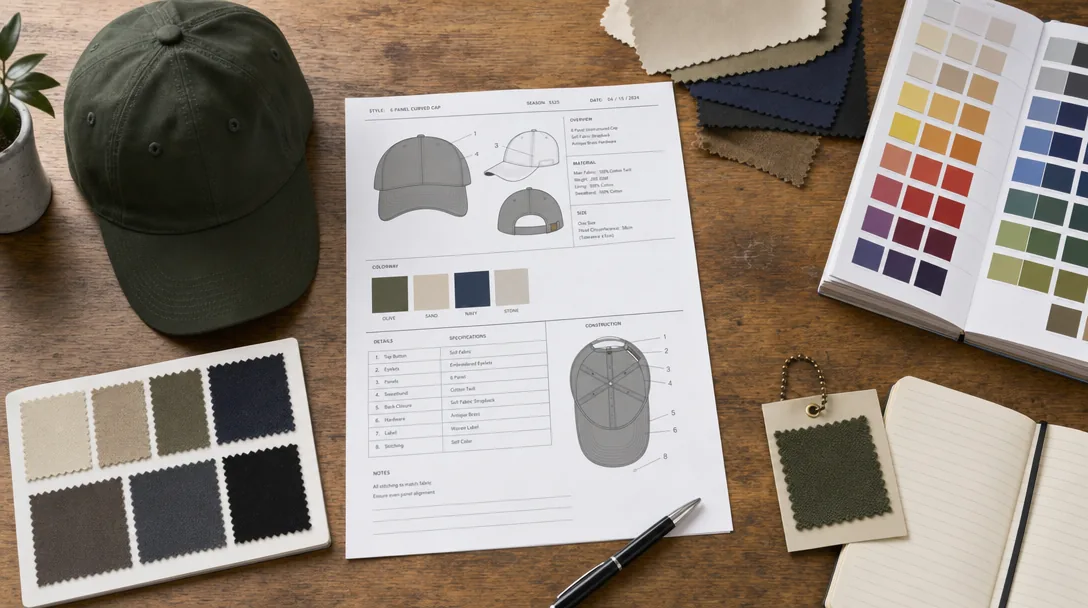
Performance & Athletic Caps: Moisture-Wicking, UPF and Buyer Specs - Cost & MOQ Breakdown - 2026 Buyer's Guide
Read article →
Fedora Hats For Men Export Shipping Checklist for Custom Hat Buyers
Read article →
Hat With Patch Retail Packaging Guide for Custom Hat Buyers
Read article →Sourcing custom hats does not have to be complicated. With the right manufacturing partner, clear specifications and a small upfront investment in sampling, you can launch a retail-quality product in 30 to 45 days.