
Snapback vs Fitted vs Adjustable: Cap Closure Systems Compared (2026 Update) - 2026 Buyer's Guide
Snapback vs Fitted vs Adjustable: Cap Closure Systems Compared (2026 Update) - 2026 Buyer's Guide is one of the most-asked questions we receive from international buyers, and for good reason. With dozens of factories competing for your order and an alphabet soup of technical terms in every supplier quote, even experienced importers can feel lost. This guide consolidates what we have learned producing custom hats for clients in 40+ countries.
The five closure systems in commercial production
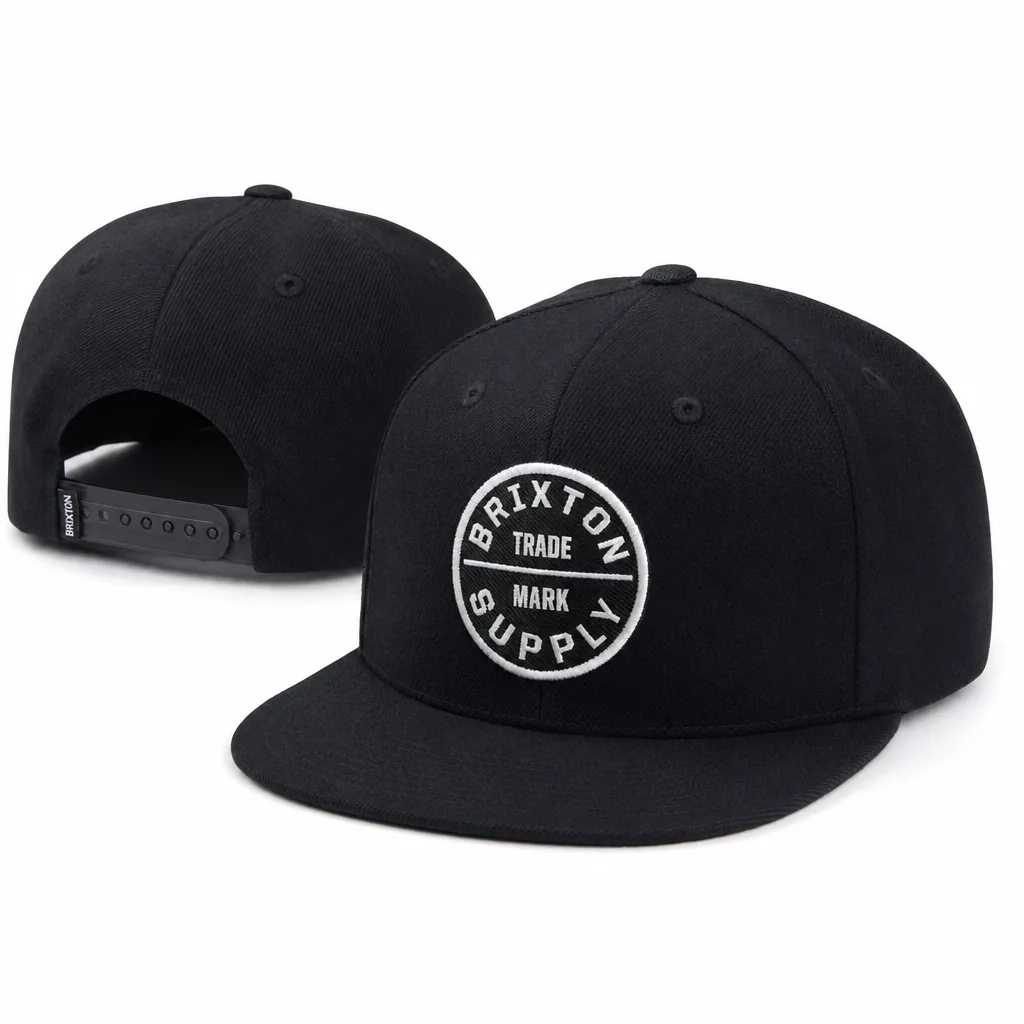
Closure choice changes the economics faster than almost any front-panel decoration decision. In real commercial production, the five systems that matter are plastic snap, self-fabric strap with slide buckle, tuck strap, hook-and-loop, and fitted with no rear opening. In a snapback vs fitted program, the first question is not style but size architecture. A standard snapback usually covers about 58–62 cm head circumference in one SKU, so factories can run 144 pcs per colorway efficiently with low fragmentation. Fitted caps require a full size curve—typically 6 7/8 through 7 5/8 in 1/8 increments—and each size needs enough units to justify cutting, sewing, blocking, and packing. Below roughly 24–48 pcs per size, line efficiency drops and carton assortments become messy, so total MOQ per color is more realistically 192–288 pcs. That closure decision also affects tolerance control and back decoration. Plastic snaps are usually injection-molded PP with 7-hole or 8-hole pegs; they are inexpensive, familiar at retail, and forgiving in warehouse inventory. The downside is color accuracy: dyed fabric can usually be controlled to Pantone TCX within Delta-E 1.0–1.5 under D65, while molded snaps often drift more, especially on custom-matched tones. Strap systems push the cap more premium visually. Self-fabric straps in 10–12 oz cotton twill, washed canvas, nylon webbing, or microfiber suede pair with brass or zinc-alloy slide buckles, and plating quality should survive at least basic salt-spray checks. Tuck straps earn their keep by eliminating loose-tail exposure near back arch embroidery, woven loop labels, or heat-transfer branding, which is where cheap executions start to look sloppy fast.
Hook-and-loop and fitted sit at opposite ends of the practicality spectrum. Hook-and-loop still wins in golf, event merchandise, workwear, and performance headwear because one size can cover the widest user range and retail staff can adjust it in seconds. But it has the shortest perceived lifespan. We typically specify 20 mm or 25 mm tape with edge-to-edge stitching on both sides; otherwise the corners curl, the hook face loads with lint, and peel strength drops after repeated cycles. On lightweight 75D–150D polyester or warp-knit mesh, poorly cut hook tape will also abrade adjacent fabric. Those are visible shelf defects, so they should be checked at inline and final inspection under AQL 2.5, not downgraded as harmless cosmetics. Fitted caps deliver the cleanest rear profile and the most authentic on-field silhouette, but in snapback vs fitted buying, fitted is really an inventory-risk decision wearing a style label. Without a rear opening, every issue in blocking, sweatband recovery, crown seam alignment, and post-steam shrinkage shows up directly in finished circumference. Good factories hold finished size to about +/-3 mm by size after steaming, cooling, and 24-hour conditioning; weaker operations let carton-to-carton drift creep in. That is why fitted programs need a disciplined size curve built from sell-through data, not intuition, because dead stock piles up first at the smallest and largest ends. Our standard practice is to review size ratio, sweatband elasticity, and body fabric shrinkage before bulk. Expect fitted to add roughly $0.20–$0.60 per cap in manufacturing cost before freight, with the real premium coming from inventory complexity rather than sewing time alone.
Plastic snap (snapback) economics
The real money in a plastic snap is SKU compression, not the trim itself. In a snapback vs fitted program, one adjustable shell typically covers about 54-62 cm head circumference with a 7-hole or 8-hole PP snap, replacing a fitted size curve that might run 6 7/8, 7, 7 1/8, 7 1/4, 7 3/8, 7 1/2, and 7 5/8. That collapses inventory risk, carton complexity, and replenishment planning into one SKU instead of six or seven. On the line, it also removes size-specific sweatband cuts, blocking variation, and pack-out errors at final inspection. For retail, licensed, or promo orders below roughly 5,000 pcs, that simplification usually matters more to margin than saving a few cents on fabric weight or visor board. The snap set is inexpensive and operationally forgiving. A standard PP or HDPE closure in stock colors normally adds about $0.04-$0.07 per cap versus an open-back sewn finish, while staying $0.10-$0.25 cheaper than a metal buckle strapback once hardware and labor are counted. Installation is fast: after rear seam closing, the snap halves are fixed before finishing, with minimal labor delta on a structured acrylic-wool cap, cotton twill dad cap, or 5-panel foam trucker. That is why plastic snap remains the default for high-volume programs where sell-through and size simplicity beat exact grading. In practical snapback vs fitted economics, fitted wins on precision, but snapback usually wins the P&L because dead stock in the wrong size is far more expensive than a plastic closure.
Buyers get into trouble when they assume adjustable means universally wearable. A snapback solves circumference only; it does nothing for crown depth, rear opening geometry, front panel stiffness, or how the band sits over the occipital bone. That is the real fit divide in snapback vs fitted. A fitted cap blocked correctly will deliver a more consistent silhouette across the size curve, while a snapback can still feel wrong if the crown is too shallow or the back arch bites into the head. On the factory floor, we reject more wear-test samples for shallow crown, poor back-arch comfort, or distorted top button position than for actual snap failure. QC on plastic snaps is simple but should not be casual. Stock colors are usually black, white, navy, red, royal, gray, khaki, and brown; custom Pantone matching is feasible, but trim suppliers typically ask for 500-1,000 sets per color and 12-18 days lead time. If the closure is exposed against a fashion body color, hold Delta-E below 1.5 under 4000K-5000K retail lighting or the mismatch will read immediately. Our standard practice at CrownsForge is inline engagement testing on male-female lock force, plus finished-goods audit to AQL 2.5, because weak retention creates returns that visual inspection misses. On better programs, we also check snap alignment to the center-back seam within about +/-1.5 mm; anything sloppier looks cheap even before it fails.
Fabric strap with metal buckle (dad hat aesthetic)
A fabric strap with a metal slide buckle is the right closure when the brief is washed, low-profile, and deliberately understated. On a true dad hat, the strap is usually 16-20 mm wide, cut either from self fabric with a folded edge or from 12-14 oz cotton twill tape, then run through a single-slot slider, double-slot slider, or side-release buckle in antique brass, brushed nickel, matte black, or gunmetal. A properly engineered strapback should cover roughly 54-62 cm head circumference while keeping the tail controlled under a keeper or cleanly tucked into the back opening; the loose, protruding tab common on cheap retail caps is almost always a patterning or assembly problem, not an unavoidable feature. In the snapback vs fitted discussion, this closure sits in its own lane: less size-specific than fitted, quieter than a molded PP snap, and visually correct on washed chino twill, 210-260 gsm brushed cotton, pigment-dyed canvas, 8-12 wale corduroy, and even soft velvet where plastic hardware looks out of place.
The cost adder is modest, but the workmanship has to be tighter than buyers assume. In bulk production, a metal buckle strapback typically adds $0.12-$0.22 per cap versus a basic tuck strap, and $0.08-$0.18 versus hook-and-loop, depending on plating quality, tape reinforcement, and whether the strap is self fabric or twill tape. The real risk is not hardware price; it is rear-opening distortion, weak bartacks, and hardware color drift. On enzyme-washed cotton below about 220 gsm, the back arch can torque after washing if the opening is not stabilized with seam tape or lightweight fusible. Our standard practice is to hold strap width tolerance to ±1 mm, keep buckle centering within 2 mm, check plating under D65 light against approved trim swatches, and test bartack pull strength before packing. Mixed hardware lots are another common failure point: one supplier's matte black can shift toward blue-black, and on premium streetwear programs that mismatch is obvious as soon as the cartons are opened.
Velcro (lowest cost, widest range)
Hook-and-loop is still the lowest-cost cap closure, and it covers the broadest usable size range with the fewest fit complaints. On a standard adult 6-panel, a 20 mm tape set usually fits about 54-63 cm head circumference; youth programs often drop to 16 mm and still cover roughly 50-58 cm. At 1,000 pieces, commodity nylon hook-and-loop typically adds only $0.03-0.05 per cap FOB, versus $0.06-0.10 for an injection-molded PE snap set and $0.12-0.18 for a metal buckle with tuck strap. That spread matters when buyers are weighing snapback vs fitted for school orders, event merchandise, or price-sensitive promos: fitted looks cleaner but multiplies size SKUs, while snapback carries better retail recognition but still cannot match Velcro on one-size tolerance. On the line, it also reduces reject risk at final AQL 2.5 because there are no cracked studs, short male posts, or off-shade resin parts to sort out. The real weakness is perceived value. Velcro reads utilitarian the moment the cap is on a shelf, which is why it struggles in licensed sports, streetwear, and most programs targeting $18-30 retail. Exposed hook tape picks up lint, the rear opening can pucker if the sweatband tension is not balanced, and the closure breaks the look of better body fabrics like 15-18 oz melton wool, brushed acrylic-wool blends, or heather suiting. Our standard practice is 100% nylon hook-and-loop rated to at least 1,000 open-close cycles, sewn with 301 lockstitch at 9-10 SPI and bartacked at both tape ends to control edge lift after repeated wash and wear. It makes the most sense on 260-280 gsm brushed cotton twill, ripstop, and cadet silhouettes where utility is part of the design language, not something you are trying to hide.
Velcro is strongest in orders where inventory simplicity matters more than shelf appeal. In the 500-5,000 piece range, one adjustable size can replace multiple fitted SKUs and usually cuts misfit claims, especially in youth baseball, promotional sandwich caps, cadet caps, and uniform distributor programs. It is also forgiving in production: tape placement tolerance is wider than on a snap closure, and there is no need to color-match molded resin against body fabric within a tight Delta-E target. A snapback placed 2 mm off center is obvious; a hook-and-loop tab with the same variance is rarely a sellable issue. That difference shows up in both repair time and final inspection fallout. The commercial conclusion is straightforward. If the brief is broad fit, low return risk, and hard cost control, hook-and-loop beats most adjustable systems on pure function. If the buyer is seriously comparing snapback vs fitted because perceived value is part of the sale, Velcro is usually the wrong visual answer even when the economics are attractive. Spending an extra $0.03-0.10 per cap for a snap or buckle often buys back more at retail than it costs at FOB. For giveaways, team issue, field uniforms, and utility headwear, Velcro is rational; for collectible or style-led product, it usually prices cheap before the customer even touches the crown.
Fitted: why some brands accept the operational cost
Fitted caps are expensive to run because each size behaves like its own product. A standard size curve starts at 6 7/8 and steps through 7, 7 1/8, 7 1/4, 7 3/8, and 7 1/2; for North America, licensed sports, and larger streetwear fits, 7 5/8 and 7 3/4 are usually non-optional. That turns one colorway into 6 to 8 SKUs across cutting, embroidery bundling, sweatband labeling, carton assorting, and replenishment. A factory might quote a 144-piece MOQ for a structured 6-panel in 80/20 wool-acrylic melton or 300 gsm cotton twill, but that number is misleading for fitted. Once you spread units across a commercially usable curve, most programs need 864 to 1,008 pieces per colorway to avoid dead sizes and stockouts on core heads. In snapback vs fitted decisions, this is the real issue: not the closure cost, but the inventory risk, cash tied in slow sizes, and the forecasting discipline required to support replenishment.
Brands still absorb that operational drag when fit accuracy and category authenticity are part of the product promise. On-field and licensed headwear buyers expect a true fitted silhouette: no plastic snap, no hook-and-loop, no self-fabric strap breaking the back profile or distorting rear embroidery placement. That clean rear arch also helps sewing balance on structured crowns, especially when you are running dense 3D front embroidery on Tajima or Barudan heads and need consistent crown tension through steaming and final pressing. Retail economics can justify it. Premium streetwear and licensed fitteds often land at $34 to $48 retail, versus roughly $26 to $38 for comparable adjustables, but only if the size curve is planned intelligently. Even splits are usually a mistake; a practical starting ratio is 1:2:3:3:2:1 across six sizes, weighted into 7 1/8, 7 1/4, and 7 3/8, then corrected by channel and region after first-season sell-through.
QC is harsher on fitted because the customer cannot compensate for a bad block with an adjustable closure. Circumference tolerance should stay within plus or minus 3 mm, the sweatband join cannot create a pressure ridge, and crown grading has to remain consistent across the full curve, not just on the salesman sample. Under AQL 2.5, one mixed-size inner pack or wrong size sticker is not a minor packing defect; for major retail it can trigger chargebacks that wipe out the margin premium fast. Material choice also changes fit outcome more than many buyers expect. Wool-blend melton, 260 to 320 gsm brushed cotton twill, and poly-spandex performance fabrics all react differently in blocking, steaming, and rebound after pressing, so the same pattern will not fit identically across materials. At CrownsForge, the safest practice is to lock the graded pattern from an approved 7 1/4 and verify measurement spread before bulk, because in snapback vs fitted programs, consistency across the size curve is what separates a premium fitted from an expensive returns problem.
MOQ implications by closure type compared
MOQ is where the snapback vs fitted decision turns from styling into inventory math. Adjustable closures usually let a factory run 100-144 pcs per colorway because one back closure covers about 54-61 cm head circumference, so the buyer carries one SKU instead of five or six sizes. In practical terms, a 6-panel snapback in 270 gsm brushed cotton twill or 16 oz acrylic-wool blend, with a standard PP snap, flat embroidery, and woven main label, is commonly quoted around $4.30-$6.60 FOB Ningbo at 144 pcs; add 3D front embroidery, contrast undervisor, custom molded snap, woven seam tape, and you are more realistically at $7.00-$8.40. Packing is also cleaner: one barcode, one carton mark, one assortment, and fewer size-mix failures during final inspection at AQL 2.5. Buyers underestimate that last point until a warehouse receives cartons with broken size ratios and chargebacks start. Fitted caps are almost never a true 100-piece program, even when the first quote makes them look close. The real MOQ sits in the size curve: many factories need 60-100 pcs per size to keep cutting yield, sweatband joining, blocking, and finishing efficient, so a basic run in 7, 7 1/8, 7 1/4, 7 3/8, and 7 1/2 quickly becomes 300-500 pcs before reserves. Every size needs its own care label, size label, carton marking, and often a separate metal block or at least tighter blocking control, usually within about +/- 2 mm on internal circumference if you want consistent wear. Embroidery on Tajima or Barudan heads does not care whether the cap is 7 or 7 1/2, but the sewing line does: poor grading shifts crown profile, distorts visor proportion, and creates fit complaints that no amount of logo quality can rescue.
For that reason, newer brands and promo buyers usually test with adjustable product first, then graduate into fitted once reorder data is stable. A 120-144 pc snapback run is enough to validate logo scale, side hit placement, undervisor color, fabric hand, and Pantone-matched trim without locking cash into six slow-moving size SKUs. If a color underperforms, you liquidate one SKU; if a fitted size curve is wrong, the dead stock sits in the wrong head sizes and cannot be rebalanced without markdowns. That is the ugly side of snapback vs fitted that does not show up on a mood board: fitted inventory risk is structural, not cosmetic. Our standard practice at CrownsForge is to quote fitted only after the buyer gives a channel-specific size curve, because DTC, event merch, and promotional resale all behave differently. E-commerce streetwear might justify a 10/20/30/25/15 split across five sizes, while team retail can skew heavily to 7 1/4 and 7 3/8. Fitted starts to make commercial sense when annual volume is high enough to reorder in the same curve repeatedly, usually 500-1,000 pcs per style minimum, and when the factory can lock materials lot-to-lot so color stays within acceptable Delta-E tolerance on repeat runs. Without that demand history, adjustable closures are simply the cheaper mistake to make.
How to spec the right closure for your retail positioning
Set closure by economics first, not by mood board. In snapback vs fitted, the real decision is inventory efficiency versus size-specific sell-through. A 7-hole polyethylene snap covers roughly 55-61 cm and usually adds only $0.10-$0.18 ex-factory on a 6-panel 80/20 acrylic-wool or 100% polyester shell, so one SKU can absorb a wide demand curve. That matters when you are launching DTC, servicing tour merch, or supplying promotional retail where reorder signals are noisy. A self-fabric strapback costs more—typically $0.28-$0.55 for brushed cotton twill, washed canvas, or 8-wale corduroy—because the trim package includes buckle plating, strap construction, and often a tuck-in tunnel. If the buckle needs to pass a 24-48 hour salt-spray test, cost moves again. The payoff is visual: on softer 210-260 gsm fabrics, the back closure becomes part of the perceived value, not just a fit device.
Fitted is not a premium switch you flip at the end; it is a different operating model. Once you open sizes in 1/8 increments, usually 6 7/8 through 7 5/8, your MOQ, carton ratio, and return exposure all expand immediately. Tolerance has to be tighter as well. On fitted programs we watch finished circumference within about +/-3 mm, because on wool serge or 300-340 gsm pro-weight polyester, a cap labeled 7 1/4 that wears like 7 3/8 gets rejected by consumers fast. Sweatband attachment, back seam alignment, and visor-to-crown balance all have to stay consistent through sewing and blocking. That is why fitted belongs in licensed sports, on-field replica, and collector assortments where the size system itself carries value. For most mixed retail lines, the healthier structure is adjustable for 70-80% of units, with fitted reserved for proven hero SKUs supported by size-level sell-through data.
Closure also has to match the cap body, or the product reads confused at shelf. Snapbacks work best on higher-profile crowns, flatter visors, and bolder front embroidery—typically 6,000-12,000 stitches run on Tajima or Barudan heads—because the silhouette already signals sport and street. Strapbacks read more elevated on low-profile dad-cap blocks with enzyme wash, softer buckram, and hardware finishes matched across buckle, eyelets, and back label rivets; if plating color drifts beyond a visible Delta-E mismatch against other trims, buyers notice. Hook-and-loop is usually the wrong answer for fashion retail, but it is still practical for youth 52-56 cm programs, school packs, and event uniforms where fit complaints and packing complexity matter more than aesthetics. Our standard practice is simple: snapback for broad unisex volume, fitted for authenticity-driven statements, fabric strap for casual premium tiers, and hook-and-loop only when operational utility outweighs resale presentation.
Frequently Asked Questions
What file format should I send for my logo?
Vector files (AI, EPS, PDF) are ideal. High-resolution PNG or JPG at 300 dpi on transparent background works as a fallback. Provide Pantone color references for accurate reproduction.
Can I order a sample before bulk production?
Yes. We strongly recommend approving a pre-production sample before mass production. Samples are charged at 35 to 60 USD each plus express shipping, fully refundable against confirmed bulk orders over 500 pieces.
How long does production take?
Sampling takes 7 to 12 days. Bulk production runs 20 to 30 days depending on quantity, fabric availability and decoration complexity. Inspection and packing adds another 3 to 5 days before shipment.
Which shipping methods do you support?
We support FOB, CIF and DDP shipping. Air express for samples and small orders, sea LCL for 100 to 500 pieces, sea FCL for 5,000+ pieces. Door-to-door DDP available for US, EU, UK, Canada and Australia.
What logo decoration techniques do you offer?
3D puff embroidery, flat embroidery, woven patch, leather patch, PVC patch, screen printing, sublimation, applique and laser etching, all in-house with no subcontracting.
What should buyers know about cotton twill baseball cap?
When evaluating cotton twill baseball cap, the key considerations are construction quality, decoration capability, MOQ flexibility and lead time. Universal sizing 54-62cm with 8 snap positions. Single SKU per design covers most adults. Adds ~$0.05 per cap for hardware. Industry-standard for retail snapback hats, trucker caps, casual baseball caps. Available in 8 stocked colors; custom Pantone-matched snaps at 500+ pieces. Plastic snap (snapback), fabric strap with metal slide buckle, fabric strap with tuck-buckle,…
What should buyers know about flat bill hats snapback?
When evaluating flat bill hats snapback, the key considerations are construction quality, decoration capability, MOQ flexibility and lead time. Universal sizing 54-62cm with 8 snap positions. Single SKU per design covers most adults. Adds ~$0.05 per cap for hardware. Industry-standard for retail snapback hats, trucker caps, casual baseball caps. Available in 8 stocked colors; custom Pantone-matched snaps at 500+ pieces. Plastic snap (snapback), fabric strap with metal slide buckle, fabric strap with tuck-buckle,…
How does ordering custom flat bill hat embroidery work?
When evaluating custom flat bill hat embroidery, the key considerations are construction quality, decoration capability, MOQ flexibility and lead time. Universal sizing 54-62cm with 8 snap positions. Single SKU per design covers most adults. Adds ~$0.05 per cap for hardware. Industry-standard for retail snapback hats, trucker caps, casual baseball caps. Available in 8 stocked colors; custom Pantone-matched snaps at 500+ pieces. Soft fabric strap (1.5-2cm wide) with antique brass slide buckle. Fits 54-63cm. Adds ~$0.15 per…
What should buyers know about baseball hats women?
When evaluating baseball hats women, the key considerations are construction quality, decoration capability, MOQ flexibility and lead time. Universal sizing 54-62cm with 8 snap positions. Single SKU per design covers most adults. Adds ~$0.05 per cap for hardware. Industry-standard for retail snapback hats, trucker caps, casual baseball caps. Available in 8 stocked colors; custom Pantone-matched snaps at 500+ pieces. Plastic snap (snapback), fabric strap with metal slide buckle, fabric strap with tuck-buckle,…
Are snapbacks better than fitted?
Fitted hats are a great choice if you know your size and want to build a collection of caps for casual wear, while snapback caps are ideal for streetwear fashion enthusiasts and make a bold statement. Both hats come in a range of colors and designs, so the right choice for you all comes down to your own personal style.
Do baseball players wear snapbacks or fitted?
The snaps are usually plastic even if the cap is made of wool, cotton, or other material. Popularized by New Era, the official hat supplier to the MLB, the snapback cap is de rigueur for Major League baseball players.
What does it mean if a hat is fitted?
Fitted hats are called “fitted” because they're designed to fit the wearer's head snugly without adjustable snaps or straps. That means these hats are sized specifically to the wearer's head, ensuring a natural fit. This modern-day baseball cap comes in 20 sizes to fit nearly any head shape or size.
Do fitted hats look better?
The seamless design without a closure in the back is much sleeker with a fitted hat. It's not that snapback hats don't look as good, but you can wear a fitted hat in nearly any setting. Because fitted hats look so sleek, they're a better choice for an elevated look.
Is a fitted hat a snapback?
Snapbacks have an adjustable snap closure, usually made from plastic, that you can use to adjust the size of the cap to fit your head perfectly. A fitted cap is just a hat, with no adjustable sizing. The snapback design is bolder, with a more structured high crown and a flat brim.
Need a low-MOQ test order?
We help emerging brands launch with as few as 100 pieces. Premium fabric, in-house embroidery, retail-ready packaging.
Start a small orderRelated guides
Custom Logo Hats: When to Use It, Costs, and What to Ask Your Factory (2026 Update)
Read article →
Custom Hat Embroidery: The 2026 Sourcing & Manufacturing Playbook
Read article →Festival Bucket Hats Reorder Planning Guide for Custom Hat Buyers
Read article →We hope this guide demystifies snapback vs fitted vs adjustable: cap closure systems compared (2026 update) - 2026 buyer's guide and helps you move forward with confidence. If you have questions specific to your project, our English-speaking sales engineers are one message away.