
Snapback vs Fitted vs Adjustable: Cap Closure Systems Compared (2026 Update) - 2026 Buyer's Guide - 2026 Buyer's Guide (2026 Update)
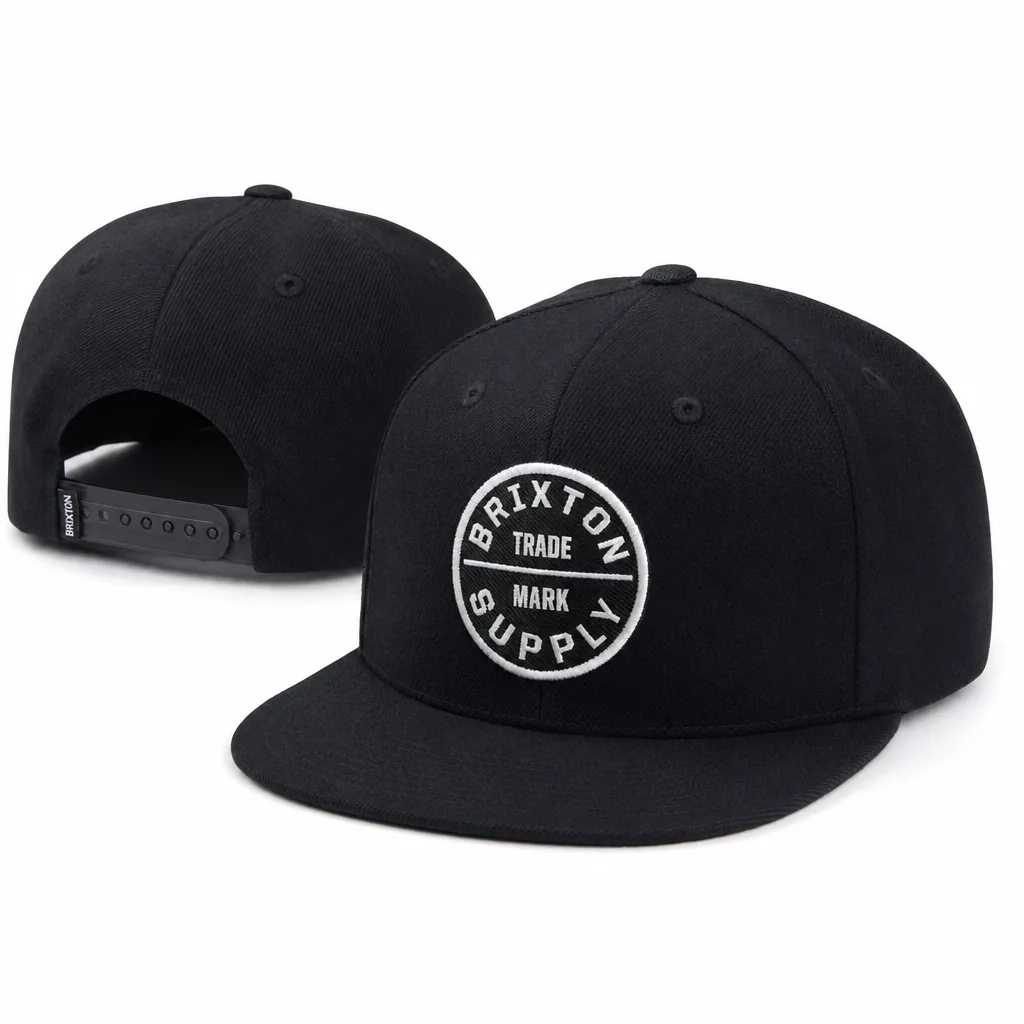
Snapback vs Fitted vs Adjustable: Cap Closure Systems Compared (2026 Update) - 2026 Buyer's Guide - 2026 Buyer's Guide (2026 Update) is one of the most-asked questions we receive from international buyers, and for good reason. With dozens of factories competing for your order and an alphabet soup of technical terms in every supplier quote, even experienced importers can feel lost. This guide consolidates what we have learned producing custom hats for clients in 40+ countries.
The five closure systems in commercial production
Fabric tuck strap is the cleanest adjustable option for washed cotton, dad caps, golf caps, and premium promotional programs. The strap hides into a rear tunnel and usually uses a brass, antique nickel, or matte black slider; buyers like it because the back panel still looks finished and private-label woven tabs can sit near the opening. Metal slide buckle is similar but more exposed, with a lower labor cost and faster sewing time, so it works well for casual cotton twill caps in the $2.20–$3.80 FOB Yiwu range depending on fabric and decoration. Hook-and-loop is the most practical closure for kids’ caps, uniforms, workwear, school programs, and low-cost events, but it is not a premium retail signal. Nylon hook tape can snag polyester mesh, RPET interlock, brushed cotton, and loose satin-stitch embroidery, so straps should be closed before polybagging. Our standard practice at CrownsForge is final circumference measurement at ±0.5 cm tolerance, with closure function and appearance inspected under AQL 2.5 for major defects.
Plastic snap (snapback) economics
SKU compression is the real reason plastic snap still dominates commercial cap programs. A standard 8-peg polypropylene snap usually covers about 54-62 cm, so one adult body can replace a fitted size run from roughly 6 7/8 to 7 5/8. In any serious snapback vs fitted decision, that collapses forecasting risk. Fitted orders force demand into a size curve, and if one size misses, you can easily trap 8-12 percent of the PO in dead inventory while core sizes sell out in week one. For e-commerce, one-size snapbacks also cut listing complexity, lower warehouse pick errors, and usually reduce size-based returns by 20-30 percent versus fitted caps. That advantage is even bigger for event merchandise, campus stores, and licensed fanwear where replenishment windows are short and consumers do not always know their exact fitted size.
The trim cost is small; the quality risk is not. In China bulk production, a stock PP snap set typically adds $0.04-$0.07 per cap, with custom molded color adding another $0.01-$0.03 and about 5-7 extra days on trim lead time. I would not squeeze pennies here. Snap failures almost never start with raw tensile strength alone; they come from brittle resin, poor peg definition, mold flash, misaligned posts, or weak bartack reinforcement at the rear opening. Our standard practice is to check peg alignment inline, then cycle-test closures 20-30 open-close actions during final QC to catch whitening, loose engagement, or pop-off before packing. Color control needs the same discipline: molded plastic is harder to match than cotton twill or poly mesh, so if the cap body is approved to a Pantone TCX standard, ask for a physical snap chip and keep Delta-E under 2.0 on visible back-view programs. Final inspection should stay practical: AQL 2.5, rear-opening symmetry, crack resistance after shaping, and fit checks on actual head forms, especially when heavy 3D embroidery from Tajima or Barudan heads shifts crown balance.
Fabric strap with metal buckle (dad hat aesthetic)
A fabric strap with a metal slider is the right closure when the cap is supposed to read soft, washed, and low-profile. On an unstructured 6-panel dad hat, the strap is typically 16-18 mm finished width, made from self-fabric or cotton herringbone tape, paired with a zinc-alloy or brass slider in brushed nickel, antique brass, or matte black. In practical fit terms, a well-patterned buckle-back usually covers roughly 54-62 cm head circumference, so in any real snapback vs fitted comparison it sits in the middle: far more forgiving than fixed fitted sizes, but visually quieter than a 7-hole plastic snap. That matters on 280-320 gsm chino twill, peach-finish brushed cotton, and pigment-washed caps, where a bulky closure looks out of character with the relaxed crown profile. Most failures come from bad strap construction, not from the buckle hardware itself. If the strap tip is left raw or only single-folded, it will fray quickly after enzyme wash or repeated adjustment; we normally spec a light fusible insert, 6-8 mm turn-back, and edge stitch set at 1.5-2.0 mm, plus a bartack or compact box stitch where the strap joins the back arch. Puckering around the rear opening is another chronic defect, usually caused by poor feed control or excessive needle tension on multi-layer twill. In inline inspection, closure sewing faults often create more rework than front embroidery, even in factories running Tajima or Barudan heads cleanly on the logo operation, so buckle-back symmetry and arch shape need to be checked before final pressing.
The cost difference versus a basic plastic snap is real but not dramatic. On a 1,000-piece order, a standard metal slider and the extra sewing steps usually add about $0.12-$0.22 per cap FOB, assuming standard zinc-alloy hardware, no custom mold, and no engraved branding. Costs climb fast when buyers ask for laser-etched logos, rubber-dip color coating, or higher corrosion resistance for humid markets. Matte black is the finish I trust least; lot-to-lot plating variation is easy to see next to black rear embroidery or black eyelets, so hardware should be checked under D65 light and rejected if the shade drift is obvious. “Close enough” on black plating is how mixed lots end up in cartons. From a line-building standpoint, this closure belongs on dad hats, resort caps, coffee-brand merch, and elevated streetwear, not on a true pro-shape team cap where the snap tab is part of the silhouette. That is the useful commercial split inside snapback vs fitted and adjustable buying: snapbacks sell structure and attitude, fitteds sell exact sizing, and buckle-backs sell refinement with simpler inventory control. One buckle-back SKU can cover most adult customers without carrying the full 6 7/8 to 7 5/8 size run. At CrownsForge, the critical QC points are strap symmetry, rear opening geometry, plating consistency, and stitch density at the arch, because a cheap-looking back closure will downgrade the entire cap no matter how good the front embroidery looks.
Velcro (lowest cost, widest range)
Velcro is still the cheapest adjustable closure on a cap, and the savings are real only when the program values fit range more than shelf appeal. A 20 mm or 25 mm hook-and-loop strap will typically cover roughly 54-63 cm head circumference, which is wider than most 7-post plastic snap closures and far more forgiving than any fixed-size fitted run. On Zhejiang FOB orders, the closure cost is usually just $0.02-$0.06 per cap above a clean cut-back opening, depending on whether the visible tab is self-fabric brushed cotton twill, 600D polyester, or nylon webbing, and whether the tape is generic knit loop or branded woven hook-and-loop. That tiny BOM difference matters when a buyer is trying to keep a finished promo cap inside a $2.10-$3.60 landed window at 1,000-5,000 pieces. In a snapback vs fitted comparison, Velcro wins on operational simplicity: fewer size SKUs, less split-carton complexity, and almost no risk of being stuck with dead sizes at season end.
The tradeoff is obvious the moment a buyer handles the cap. Cheap loop tape pills, traps lint, and loses a clean face after a few hundred open-close cycles; on factory floor tests, low-grade 210D-style tape degrades much faster than dense woven hook-and-loop from reliable mills. That is why Velcro remains common in ad-specialty caps, youth team orders, cadet shapes, school programs, and field-use workwear, where replacement cost matters more than perceived value. Once the target retail moves past about $18-$25, the closure usually hurts the cap faster than it helps margin. In snapback vs fitted discussions, Velcro belongs at the functional end of the range, not the fashion end.
Execution determines whether the closure feels merely basic or outright cheap. Our standard practice is 301 lockstitch assembly with bartacks at both strap ends, reinforcement at the sweatband join, and back-opening alignment held within 2-3 mm at final inspection under AQL 2.5, because a skewed closure is visible immediately on dark shells and structured buckram fronts. Strap embroidery also needs restraint: dense satin stitching can stiffen the overlap and reduce usable adjustment, especially on 8-10 oz cotton twill. For clean branding, a woven label, silicone transfer, or low-profile heat transfer usually performs better than heavy fill embroidery on the tab. If the buyer is choosing between fitted vs adjustable for giveaways or uniform issue, Velcro is the lowest-risk answer. If the cap needs to compete with premium snapback silhouettes at retail, it is usually the wrong closure.
Fitted: why some brands accept the operational cost
Fitted caps cost more to run because each size is effectively its own SKU with its own yield, trims, and QC risk. A standard adult range is usually 6 7/8 to 7 1/2, with 7 5/8 and 7 3/4 added for U.S. sports and streetwear, so one style can turn into 6 to 8 live size buckets before you even talk replenishment. In a snapback vs fitted decision, buyers often focus on the total MOQ and ignore the harder number: most factories need roughly 40 to 60 pieces per size to keep cutting markers efficient and sewing flow stable. Drop below that and you start wasting fabric on the crown panels, breaking sweatband rolls inefficiently, and creating avoidable labor at finishing because size labels, carton marks, barcode stickers, and pack ratios all have to be separated by size. On fitted, assortments are where margin leaks, not at the embroidery head.
The bigger operational risk is forecast accuracy. Adjustable styles pool demand into one wearable size range; fitted forces the brand to guess the size curve months ahead, and bad forecasting leaves dead stock in slow sizes like 6 7/8 while core sizes such as 7 1/8 and 7 3/8 sell out early. That problem gets worse when measurement control is loose. On the factory floor, a 2 to 3 mm shift at the sweatband join or back seam can materially change perceived fit, especially in heavier shells like 80/20 acrylic-wool serge, melton wool, or 300 gsm brushed cotton twill where seam bulk increases internal pressure. Our standard practice is to approve a graded size set before bulk, hold finished inside circumference to about ±3 mm, and inspect by size ratio under AQL 2.5 instead of only by total units. If the hat is tied to licensed team colors, the underbrim, top button, eyelets, and sweatband should also stay within roughly Delta-E 1.0 to 1.5 of the approved Pantone reference.
Brands still accept that complexity because fitted carries a different product signal than adjustable. In licensed sports, a clean closed back reads closer to on-field headwear, and consumers expect exact sizing rather than one-size-fits-most convenience. In premium streetwear, fitted also supports a more deliberate build: structured 6-panel crown, buckram front, gray undervisor, satin seam tape, woven size label, and 3D embroidery running 6,000 to 8,000 stitches on Tajima, Barudan, or ZSK heads. Side by side in snapback vs fitted, the snapback is easier to replenish and safer for broad ecommerce demand, but fitted usually protects full-price sell-through better when the brand has enough density by size. The FOB math reflects that. A mid-tier fitted in China with standard embroidery and polybag packing typically lands around $6.20 to $8.80 FOB at 600 to 1,200 units total, while metallic thread, side patches, or custom seam tape can push it past $9.50 fast because setup and inspection repeat across every size bucket.
MOQ implications by closure type compared
MOQ is where snapback vs fitted stops being a design call and becomes a cash-flow decision. For adult caps, adjustable closures—plastic snap, nylon strap clip, self-fabric strap with tri-glide, or hook-and-loop—normally sit at 100 to 144 pieces per colorway because one body fits the core 56-60 cm head range. That means one SKU, one barcode, one sweatband spec, and one finished-goods lot inspected at AQL 2.5. Fitted caps blow up that efficiency immediately. A workable size curve is usually five sizes—7, 7 1/8, 7 1/4, 7 3/8, 7 1/2—and most Zhejiang factories want at least 24 to 48 pieces per size to justify separate markers, size tape, visor stickers, and carton assortments. So a quoted MOQ of 120 pieces rarely survives contact with production; in practice, fitted lands closer to 240-300 pieces minimum, and some suppliers push 360 pieces if they require 72 per size.
The price delta follows the same logic. On a standard 6-panel structured cap in 380 gsm wool blend or 270 gsm brushed cotton twill, with 3D front embroidery run on Tajima or Barudan heads, adjustable usually comes in around $2.90-$4.10 FOB Ningbo. Fitted more often lands at $4.70-$6.60 FOB before freight, mainly because every size creates its own sub-lot through cutting, sewing, blocking, labeling, and packing. Size tolerance is also less forgiving: if a fitted 7 1/8 runs 2-3 mm oversize at the sweatband, buyers will reject it, while an adjustable cap can absorb more variation. Our standard practice is to lock the size ratio before cutting because dead stock almost always accumulates at the curve edges; 7 and 7 1/2 sit in cartons while 7 1/4 sells through first.
For newer brands, adjustable is usually the only sensible MOQ strategy. A 120-piece snapback test order lets you validate embroidery, color, and sell-through without carrying a broken size run. A 300-500 piece fitted buy is a real inventory bet, especially once you add split-carton fulfillment, separate FNSKU labels by size, and more detailed final inspection of inner size tape, stickers, and carton ratios. The hidden cost is not just unsold units; it is operational drag across ERP setup, pick-pack accuracy, and DDP consolidation. In practical snapback vs fitted buying, fitted starts to make commercial sense only after you have reorder data by size, not just by style, and can repeat at volume with confidence. Until then, MOQ math heavily favors adjustable closures.
How to spec the right closure for your retail positioning
Spec the closure from the sales model first, because it decides SKU count, fit risk, and the price story before decoration does. In snapback vs fitted planning, a 7-hole PE or recycled PP snap normally covers 54–61 cm head circumference; with a softer elastic sweatband you may stretch to 62 cm, but don’t promise that on a stiff buckram crown. One OSFM snapback SKU per color is very different from a fitted run in 6 7/8, 7, 7 1/8, 7 1/4, 7 3/8, 7 1/2, and 7 5/8. For a high-profile 6-panel in 380–420 gsm acrylic twill, wool-blend serge, or polyester performance twill, snapback supports the squared athletic look and usually belongs in an $18–$35 retail lane. If the positioning is golf, resort, outdoor, or vintage retail, use a self-fabric tuck strap, 20–25 mm nylon webbing, or leather strap with antique brass, matte black, or nickel hardware. That only reads premium if the body fabric, sweatband, visor board, and embroidery density are upgraded as a system.
Promotional, event, and corporate orders should prioritize adjustment range, carton behavior, and complaint rate over fashion preference. On 5,000–50,000 piece runs, a plastic snap commonly adds $0.10–$0.18 per cap versus basic hook-and-loop, but it looks more retail-adjacent and survives repeated fitting, repacking, and warehouse handling better. Hook-and-loop still makes sense for youth caps, school giveaways, and safety programs because it adjusts quickly and avoids loose strap tails; specify low-profile molded hook tape if hair snagging is a concern. For e-commerce, adjustable closures cut fit-related returns because the customer does not need to translate US fitted sizing into centimeters. Bad fitted size charts can push exchanges above 8%, especially in export markets where buyers measure head circumference but brands list only 7 1/8 or 7 3/8. Do not put a plastic snap on a washed dad hat unless you want promo optics. On 8 oz brushed chino, pigment-dyed cotton, washed canvas, or 14-wale corduroy, a self-fabric strap with brass slide or tri-glide is the correct construction language.
Fitted caps still make sense when authenticity is the product, not convenience. Licensed sports, team-shop, and on-field-inspired styles need a true size run with grading in crown panels, buckram height, sweatband length, visor curve, and rear seam tension; buyers can feel when a factory simply removes the closure from an adjustable blank. The cost is inventory depth: seven sizes across four colors becomes 28 SKUs before embroidery variants, and each size should be checked under AQL 2.5 for circumference tolerance, seam symmetry, and crown collapse after steaming. Our standard practice is to use snapback for core colors, events, and giftable drops, then reserve fitted construction for hero SKUs where forecast data and margin can absorb slower turns. Snapback vs strapback segmentation is usually straightforward: snapback reads younger, athletic, logo-forward, and better for bold front embroidery on Tajima, Barudan, or ZSK heads; strapback reads lifestyle, golf, travel, and fashion. If the brief says “classic team-shop snapback,” do not overbuild it into a fitted architecture.
Frequently Asked Questions
How long does production take?
Sampling takes 7 to 12 days. Bulk production runs 20 to 30 days depending on quantity, fabric availability and decoration complexity. Inspection and packing adds another 3 to 5 days before shipment.
What file format should I send for my logo?
Vector files (AI, EPS, PDF) are ideal. High-resolution PNG or JPG at 300 dpi on transparent background works as a fallback. Provide Pantone color references for accurate reproduction.
Can I order a sample before bulk production?
Yes. We strongly recommend approving a pre-production sample before mass production. Samples are charged at 35 to 60 USD each plus express shipping, fully refundable against confirmed bulk orders over 500 pieces.
What is the minimum order quantity (MOQ) for custom hats?
Our standard MOQ is 100 pieces per design and color, with sampling available from 1 piece. For complex multi-color logos or premium fabric upgrades, the MOQ can be lowered with a small per-piece surcharge.
Which shipping methods do you support?
We support FOB, CIF and DDP shipping. Air express for samples and small orders, sea LCL for 100 to 500 pieces, sea FCL for 5,000+ pieces. Door-to-door DDP available for US, EU, UK, Canada and Australia.
What should buyers know about cotton twill baseball cap?
When evaluating cotton twill baseball cap, the key considerations are construction quality, decoration capability, MOQ flexibility and lead time. Universal sizing 54-62cm with 8 snap positions. Single SKU per design covers most adults. Adds ~$0.05 per cap for hardware. Industry-standard for retail snapback hats, trucker caps, casual baseball caps. Available in 8 stocked colors; custom Pantone-matched snaps at 500+ pieces. Plastic snap (snapback), fabric strap with metal slide buckle, fabric strap with tuck-buckle,…
What should buyers know about flat bill hats snapback?
When evaluating flat bill hats snapback, the key considerations are construction quality, decoration capability, MOQ flexibility and lead time. Universal sizing 54-62cm with 8 snap positions. Single SKU per design covers most adults. Adds ~$0.05 per cap for hardware. Industry-standard for retail snapback hats, trucker caps, casual baseball caps. Available in 8 stocked colors; custom Pantone-matched snaps at 500+ pieces. Plastic snap (snapback), fabric strap with metal slide buckle, fabric strap with tuck-buckle,…
How does ordering custom flat bill hat embroidery work?
When evaluating custom flat bill hat embroidery, the key considerations are construction quality, decoration capability, MOQ flexibility and lead time. Universal sizing 54-62cm with 8 snap positions. Single SKU per design covers most adults. Adds ~$0.05 per cap for hardware. Industry-standard for retail snapback hats, trucker caps, casual baseball caps. Available in 8 stocked colors; custom Pantone-matched snaps at 500+ pieces. Soft fabric strap (1.5-2cm wide) with antique brass slide buckle. Fits 54-63cm. Adds ~$0.15 per…
What should buyers know about baseball hats women?
When evaluating baseball hats women, the key considerations are construction quality, decoration capability, MOQ flexibility and lead time. Universal sizing 54-62cm with 8 snap positions. Single SKU per design covers most adults. Adds ~$0.05 per cap for hardware. Industry-standard for retail snapback hats, trucker caps, casual baseball caps. Available in 8 stocked colors; custom Pantone-matched snaps at 500+ pieces. Plastic snap (snapback), fabric strap with metal slide buckle, fabric strap with tuck-buckle,…
Are snapbacks better than fitted?
Fitted hats are a great choice if you know your size and want to build a collection of caps for casual wear, while snapback caps are ideal for streetwear fashion enthusiasts and make a bold statement. Both hats come in a range of colors and designs, so the right choice for you all comes down to your own personal style.
Do baseball players wear snapbacks or fitted?
The snaps are usually plastic even if the cap is made of wool, cotton, or other material. Popularized by New Era, the official hat supplier to the MLB, the snapback cap is de rigueur for Major League baseball players.
What does it mean if a hat is fitted?
Fitted hats are called “fitted” because they're designed to fit the wearer's head snugly without adjustable snaps or straps. That means these hats are sized specifically to the wearer's head, ensuring a natural fit. This modern-day baseball cap comes in 20 sizes to fit nearly any head shape or size.
Do fitted hats look better?
The seamless design without a closure in the back is much sleeker with a fitted hat. It's not that snapback hats don't look as good, but you can wear a fitted hat in nearly any setting. Because fitted hats look so sleek, they're a better choice for an elevated look.
Is a fitted hat a snapback?
Snapbacks have an adjustable snap closure, usually made from plastic, that you can use to adjust the size of the cap to fit your head perfectly. A fitted cap is just a hat, with no adjustable sizing. The snapback design is bolder, with a more structured high crown and a flat brim.
Need a low-MOQ test order?
We help emerging brands launch with as few as 100 pieces. Premium fabric, in-house embroidery, retail-ready packaging.
Start a small orderRelated guides
Custom Hat Embroidery: The 2026 Sourcing & Manufacturing Playbook (2026 Update)
Read article →
Bucket Hat Corduroy Decoration QC Checklist for Custom Hat Buyers - Cost & MOQ Breakdown (2026 Update)
Read article →
BSCI vs Sedex vs WRAP vs WCA: Compliance Audit Standards Compared - Supplier Checklist - Supplier Checklist - Cost & MOQ Breakdown
Read article →If you are ready to take the next step on snapback vs fitted vs adjustable: cap closure systems compared (2026 update) - 2026 buyer's guide - 2026 buyer's guide (2026 update), our team can put a tailored quotation and digital mock-up in your inbox within 24 hours. Send the inquiry form on our contact page or message us directly on WhatsApp.