
Performance & Athletic Caps: Moisture-Wicking, UPF and Buyer Specs - Supplier Checklist - 2026 Buyer's Guide - 2026 Buyer's Guide - Supplier Checklist
Every week, our sales team answers detailed questions about performance & athletic caps: moisture-wicking, upf and buyer specs - supplier checklist - 2026 buyer's guide - 2026 buyer's guide - supplier checklist. We wrote this guide so that wholesalers, streetwear brands, corporate buyers and promotional resellers can compare options with full information, and avoid the traps that show up only after production has started.
What makes a cap 'performance' vs 'standard'
A cap is only “performance” when the build is engineered for sweat, heat, and motion; switching from cotton twill to generic polyester is not enough. Standard promo caps usually run 220 to 280 gsm in cotton twill or brushed chino and finish around 95 to 120 grams per piece. A true running, golf, or training cap is normally cut from 100% polyester microfiber, interlock, mini-ripstop, or mechanical-stretch woven fabric at 110 to 160 gsm, with finished cap weight closer to 55 to 80 grams depending on visor length and whether it is a 5-panel or 6-panel shell. That weight gap matters on head. Heavy buckram, thick seam tape, and rigid 1.8 to 2.0 mm PE visor inserts trap heat and slow dry-down, especially in direct sun. A competent performance cap manufacturer also changes the internal architecture: unstructured or lightly fused front panels, lower-bulk seam joins, soft binding at the sweatband seam, and closures that do not bounce under movement, usually hook-and-loop, elastic loop, or 12 to 15 mm lightweight webbing with a plastic adjuster.
The sweat-contact package is where many so-called athletic caps fail. Brushed cotton sweatbands absorb salt, stay wet, and odor up faster; better specs use polyester-spandex or polyester-coolmax blends around 180 to 240 gsm, sometimes with an antimicrobial finish, so recovery and drying remain stable after repeated wear and wash. Stitch density around the inner circumference, seam allowance trimming, and visor edge thickness are small production details, but they decide whether the cap feels clean on a 10K run or starts rubbing after 30 minutes. UPF is another real divider, but only when verified by AATCC 183 or an equivalent lab method. Polyester microfiber fabrics can achieve UPF 30 or UPF 50+, yet the result depends on yarn denier, construction density, shade depth, and finishing chemistry, not marketing copy. Serious buyers should ask for the actual fabric-lot test report, plus practical bulk controls like shade approval to Pantone TCX and a reasonable Delta-E tolerance before cutting. Laser-cut perforations, bonded eyelets, mesh inserts, and low-mass trims further separate a genuine performance cap from a standard baseball cap dressed up in athletic branding.
UPF ratings: what's actually meaningful
A UPF claim means nothing unless it is tied to a test method, fabric code, colorway, and finished construction. UPF 30 transmits 3.3% of UV radiation; UPF 50 transmits 2.0%; UPF 50+ under AATCC 183 or AS 4399 means the measured transmission stays at or below that threshold under the applicable protocol. Buyers routinely treat those numbers like interchangeable marketing tiers, but on the factory floor the gap is real and the variables are obvious: cover factor, aperture size, stretch, and shade depth. A tightly woven 120-160 gsm polyester shell in black, navy, or saturated Pantone TCX colors will often hit UPF 30 without any UV-absorbing finish. A 95-110 gsm micro-perforated running fabric can fail the same target even at 100% polyester because the open area is simply too high. If you are sourcing from a performance cap manufacturer, ask for the actual report, not a recycled hangtag claim, and make sure the tested sample matches the cap’s fabric lot, gsm, and color.
Most athletic cap programs do not need an expensive chemical finish to reach a commercially sound UV spec. Standard 75D-150D polyester interlock, dobby, or stretch woven polyester/spandex commonly tests in the UPF 20-40 range, which is adequate for golf, teamwear, and most promotional performance programs. The cost and risk start when the brief demands guaranteed UPF 50+ on white, heather, pastel, laser-perforated, or mesh-mapped styles. At that point the mill usually has to tighten the construction, raise the gsm, or apply a certified UV finish, which typically adds $0.12-$0.35 per cap and can force a separate 800-1,500 meter fabric MOQ. The bigger procurement mistake is approving roll-fabric data and assuming the sewn cap performs identically. Sweat saturation, crown curvature, side mesh, rear arches, and die-cut ventilation all affect transmission. In practice, an honestly tested UPF 30 running cap with better airflow is often the smarter spec than forcing UPF 50+ and ending up with a hotter, stiffer hat.
Sweatband construction for athletic use
Most athletic caps fail at the sweatband before the crown fabric shows any weakness. A basic 100% cotton terry band is acceptable on low-cost promo headwear, but it is the wrong build for running, golf, tennis, and sideline training because it absorbs sweat, swells, and stays wet against the skin. In factory wear trials, that usually shows up as forehead heat, salt mapping along the front seam, and a noticeably heavier feel after 25 to 30 minutes. If you are qualifying a performance cap manufacturer, treat the sweatband as a primary spec, not a trim detail. A solid starting point is a warp-knit or circular-knit polyester-elastane band at 180 to 220 gsm with 8% to 15% spandex, using a brushed jersey or mini-pique face on the skin side. Mechanical wicking yarn structures are more reliable than cheap topical finishes because they continue to spread moisture after repeated laundering instead of washing out after five to ten home cycles. The construction method matters as much as the yarn. A proper athletic sweatband should use a 2-layer knit or light laminated build, then be attached with a low-bulk overlock or clean coverstitch so the seam does not create pressure points during head movement. We normally look for stretch recovery above 85% after cyclic extension testing; once recovery drops below that level, bands start to bag out, roll, or twist near the rear opening. If odor control is part of the brief, specify whether the chemistry is silver-based or zinc-based and require retention after at least 20 home launderings, not just a mill claim on day one. On the purchase order, do not accept vague wording like “sports sweatband.” List exact fiber content, gsm tolerance, stretch percentage, colorfastness grade, and dry-time claim. A shell made from 110 gsm recycled micro-ripstop with laser perforation and Pantone approval within Delta-E 1.5 still underperforms if the inner band is commodity cotton.
Reflective trim, vented panels, and other athletic features
Reflective trim needs to be specified as a functional component, not a styling extra added after sampling. On running and cycling caps, the placements that actually earn their keep are the brim edge, rear opening, and top-center back seam, because those zones stay visible when the wearer’s head is angled forward. In the tech pack, call out construction and test thresholds: microprismatic or glass-bead reflective tape, 5-8 mm width, initial retroreflectivity of 100-300 cd/lx/m², lockstitch or edge-stitch attachment, and no cracking, peel, or major loss of brightness after 10 home-laundry cycles at 30°C. If you are using a curved sandwich brim, cheap heat-transfer reflective film is a false economy; unless the supplier has validated press temperature, dwell time, and brim curvature, cracking usually starts at the folded edge after only a few wear-test cycles. A capable performance cap manufacturer will qualify reflective trims by zone, because a tape that survives on a rear tab can fail fast on a brim edge exposed to constant flex, sweat salt, carton abrasion, and repeated packing compression.
Laser-cut venting only performs well when the fabric, hole pattern, and sewing sequence are matched properly. For high-output training caps, 4-way stretch polyester/spandex at 130-160 gsm generally perforates cleaner than loose plain-weave microfiber, with hole diameters around 1.0-1.5 mm and center spacing no tighter than 2.5-3.0 mm if you want to avoid seam grin and crown distortion. Move the perforation map too close to front seams, eyelets, or the top button and lightweight 5-panel or unstructured 6-panel caps start twisting during sewing. On factory lines that cut vents before embroidery or finishing on Tajima or Barudan equipment, the real QC failures are heat-yellowing, fused hole edges, panel warping, and print misregistration on sublimated shells, so buyers should ask whether perforation happens before or after printing and whether the supplier has a sealing standard for edge melt. Mesh inserts are still lower risk for golf and general warm-weather programs: warp-knit polyester mesh at 75-120 gsm gives stable airflow with less snagging than open athletic mesh, but any open area needs to be checked against the UPF claim, because a crown fabric tested at UPF 50+ does not mean the finished cap still meets that level once vent zones are introduced.
Color and design considerations for athletic positioning
Athletic caps read premium when the palette is disciplined and the color tolerance is tighter than standard promo headwear. The safest spec is still one shell color with a tonal or near-tonal mark: flat embroidery in trilobal polyester thread, matte silicone heat transfer, or a molded 0.8-1.2 mm TPU badge kept inside the same Pantone TCX family as the crown fabric. For serious athletic positioning, I would write bulk approval at Delta-E 1.0-1.5 under a D65 light box, not the sloppier tolerance many low-end vendors accept. That matters on 120-160 gsm recycled polyester, 75D-150D microfiber, and stretch woven shells because bright contrast logos exaggerate needle penetration, seam grin, and panel puckering after wash, perspiration, and blocking. A capable performance cap manufacturer should push back when a buyer wants hard white-on-black artwork across a curved 6-panel running cap or unstructured golf silhouette; the sample may look clean on the table, but once the crown is shaped and worn, every distortion shows.
Color has to perform after UV, sweat, sunscreen, and repeat laundering, not just at sample review. In running, golf, and training programs, navy, graphite, black heather, stone, and muted olive consistently outwear optic pastels because they hide salt marks, forehead grime, and transfer from SPF products. If glare reduction is part of the brief, a black or dark charcoal undervisor is usually the right call; a light underbrim should only survive the spec if the visual direction matters more and the fabric has already passed colorfastness to crocking, perspiration, and light, plus UPF verification where claimed. Buyers usually get a cleaner line by keeping crown, visor, closure, and sandwich trim in one master shade, then separating SKUs with reflective piping, laser-cut vent tape, undervisor print, or internal seam branding. On the factory floor, that cuts mismatch risk across woven polyester, elastic binding, hook-and-loop, and sweatband tape, which rarely hit the same Pantone reference without multiple lab dips.
The spec sheet is where athletic product stays premium or slips into promo. For any cap sold as performance, the color-and-decoration page should lock fabric code, weight, denier, Pantone TCX callout, logo method, placement tolerance, reflective requirement, and test standard before bulk cutting. I like front logo placement held within plus or minus 2 mm, shade approved to a signed standard under D65 lighting, and decoration tested on the actual bulk fabric rather than a substitute swatch. On lightweight ripstop, brushed performance twill, or microfiber shells, even a small shade drift becomes obvious once the visor is curved and the panels are blocked. Our standard practice is to challenge extra exterior color panels unless they add a real function, because one more cut part means more sewing complexity, more shade liability, and a higher chance the finished cap looks like a promotional item with athletic trims instead of a proper performance piece.
Pricing: performance fabric costs vs standard cotton
Shell fabric is where athletic caps get more expensive; trims rarely move the needle by themselves. A standard 100% cotton brushed twill at 200–240 gsm typically consumes about $0.55–$0.80 of fabric per cap, depending on marker efficiency, visor length, and whether the crown is low-profile or full-depth. A real performance shell—75D/144F micro-denier polyester, 100–140 gsm mechanical-stretch woven, or moisture-management interlock—usually adds $0.40–$0.80 per cap before decoration. That premium jumps again when the spec calls for laser-perforated side panels, bonded seams, or ultralight 5-panel running construction, because yield loss, cutting complexity, and handling time all increase. When comparing quotes from a performance cap manufacturer, the first question should be whether the fabric has built-in wicking and air permeability or is just polyester twill with a topical finish; both can look similar on a hanger, but after 20 home-laundry cycles they do not perform the same. UPF is usually cheaper than buyers expect, but the rating source matters. If protection comes from yarn construction, cover factor, and fabric density, the added cost is often negligible. If it depends on a chemical finish, budget roughly $0.20–$0.30 per cap and ask for mill reports to AATCC 183 or AS/NZS 4399, not just a generic “sun protection” claim. Suppliers should specify whether the shell is tested to UPF 30, 40, or 50+, and whether light and dark shades were validated separately, since white, stone, and pastel programs often test lower than navy or black in the same base cloth. On piece-dyed orders matched to Pantone TCX, a Delta-E below 1.5 is achievable, but some UV finishes shift reflectance and hand feel enough to create problems on licensed teamwear, especially where the body fabric sits next to contrast mesh, reflective tape, or heat-transfer logos.
The best comfort upgrade per dollar is usually the sweatband, not the crown fabric. Moving from a basic poly-cotton sweatband to a quick-dry mesh, Coolmax-type knit, or perforated antimicrobial band typically adds only $0.10–$0.20 per cap, yet it changes perceived comfort more than most shell upgrades on golf, training, and running styles. On the factory floor, low-end athletic caps are returned more often for heat retention and sweat saturation than for shell failure, which is why serious costing should break out the sweatband as its own line item. Once buyers see the number clearly, they tend to trade that upgrade against MOQ, vent placement, or logo method more rationally. At FOB level, the gap is real but not dramatic. A structured 6-panel cap in standard cotton generally runs about $2.20–$3.10 at 3,000 pieces, while the same silhouette in performance polyester with a UPF finish and upgraded sweatband usually lands around $2.90–$4.20 before decoration. After that, embellishment can overtake the fabric premium very quickly: reflective heat transfers, molded silicone badges, TPU patches, water-based prints, or high-density embroidery on Tajima or Barudan machines can add $0.35 to well over $1.00 per cap, depending on stitch count and application method. That is why clean quote analysis matters. Shell fabric, sweatband, closure, and decoration should be costed separately, or buyers end up negotiating a $0.25 fabric upgrade buried inside a $0.70 logo package.
Frequently Asked Questions
What is the minimum order quantity (MOQ) for custom hats?
Our standard MOQ is 100 pieces per design and color, with sampling available from 1 piece. For complex multi-color logos or premium fabric upgrades, the MOQ can be lowered with a small per-piece surcharge.
What logo decoration techniques do you offer?
3D puff embroidery, flat embroidery, woven patch, leather patch, PVC patch, screen printing, sublimation, applique and laser etching, all in-house with no subcontracting.
How long does production take?
Sampling takes 7 to 12 days. Bulk production runs 20 to 30 days depending on quantity, fabric availability and decoration complexity. Inspection and packing adds another 3 to 5 days before shipment.
What file format should I send for my logo?
Vector files (AI, EPS, PDF) are ideal. High-resolution PNG or JPG at 300 dpi on transparent background works as a fallback. Provide Pantone color references for accurate reproduction.
Do you support sustainability certifications?
Yes. We work with GOTS organic cotton, GRS-certified recycled polyester, OEKO-TEX Standard 100 fabrics, and are BSCI and Sedex audited. Certification documentation can be provided per order.
How does ordering baseball cap custom logo work?
When evaluating baseball cap custom logo, the key considerations are construction quality, decoration capability, MOQ flexibility and lead time. Performance polyester adds roughly $0.40-$0.80 per cap vs standard cotton. UPF treatment adds another $0.20-$0.30. Sweatband upgrade adds $0.10-$0.20. Moisture-wicking fabric (typically polyester with wicking finish), moisture-wicking sweatband (usually polyester-elastane blend), lightweight construction (under 80g), and often UPF treatment.
What should buyers know about branded bills performance hat?
When evaluating branded bills performance hat, the key considerations are construction quality, decoration capability, MOQ flexibility and lead time. UPF 30 blocks ~97% of UV. UPF 50+ blocks 98%+. Most performance polyester fabric reaches UPF 30 naturally without chemical treatment. UPF 50+ usually requires treated fabric, which adds cost. Performance polyester adds roughly $0.40-$0.80 per cap vs standard cotton. UPF treatment adds another $0.20-$0.30. Sweatband upgrade adds $0.10-$0.20.
How much does branded bills custom hat cost typically cost?
When evaluating branded bills custom hat cost, the key considerations are construction quality, decoration capability, MOQ flexibility and lead time. UPF 30 blocks ~97% of UV. UPF 50+ blocks 98%+. Most performance polyester fabric reaches UPF 30 naturally without chemical treatment. UPF 50+ usually requires treated fabric, which adds cost. Moisture-wicking fabric (typically polyester with wicking finish), moisture-wicking sweatband (usually polyester-elastane blend), lightweight construction (under 80g), and often UPF…
How does ordering custom logo bucket hat work?
When evaluating custom logo bucket hat, the key considerations are construction quality, decoration capability, MOQ flexibility and lead time. Moisture-wicking fabric (typically polyester with wicking finish), moisture-wicking sweatband (usually polyester-elastane blend), lightweight construction (under 80g), and often UPF treatment. UPF 30 blocks ~97% of UV. UPF 50+ blocks 98%+. Most performance polyester fabric reaches UPF 30 naturally without chemical treatment. UPF 50+ usually requires treated fabric, which…
Need a low-MOQ test order?
We help emerging brands launch with as few as 100 pieces. Premium fabric, in-house embroidery, retail-ready packaging.
Start a small orderRelated guides
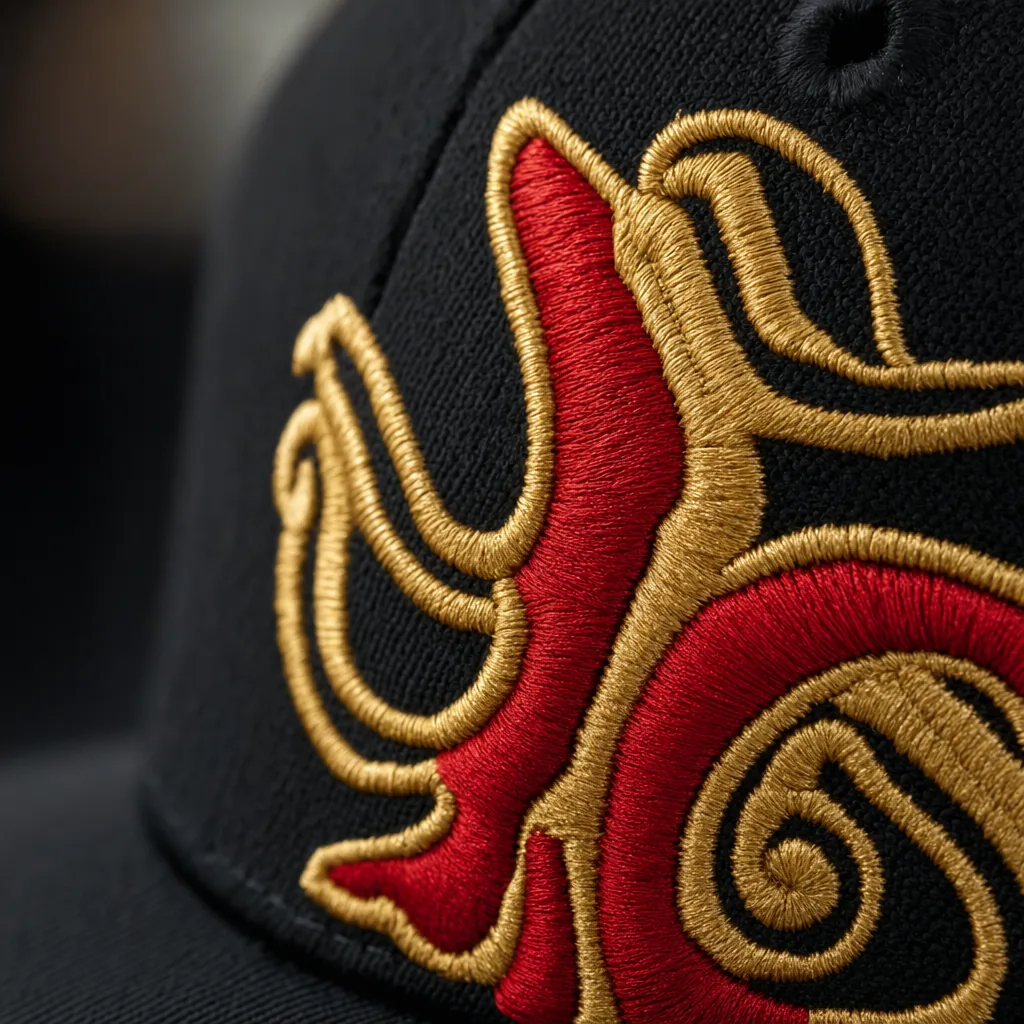
Custom Embroidered Patches: When to Use It, Costs, and What to Ask Your Factory (2026 Update)
Read article →
Custom Made Trucker Hat: The 2026 Sourcing & Manufacturing Playbook (2026 Update) (2026 Update) - 2026 Buyer's Guide (2026 Update) - Cost & MOQ Breakdown
Read article →
Private Label vs White Label Caps: Which Model Fits Your Brand? - Cost & MOQ Breakdown
Read article →Sourcing custom hats does not have to be complicated. With the right manufacturing partner, clear specifications and a small upfront investment in sampling, you can launch a retail-quality product in 30 to 45 days.