
Pantone Color Matching for Custom Caps: A Manufacturer's Reference - Cost & MOQ Breakdown
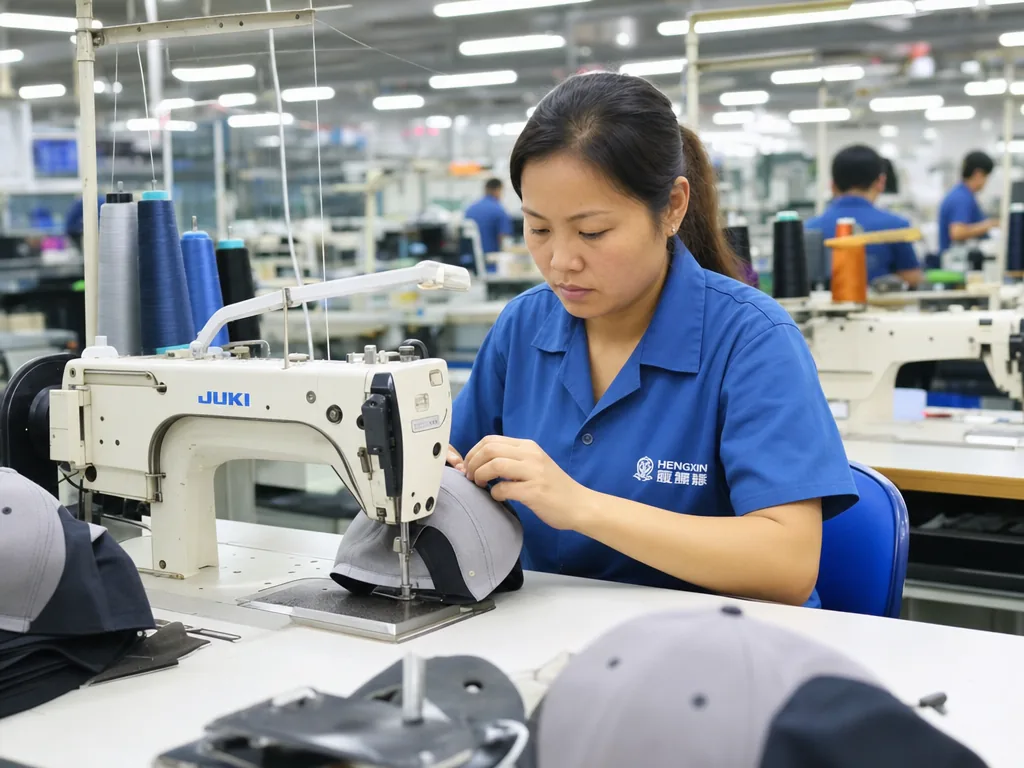
Every week, our sales team answers detailed questions about pantone color matching for custom caps: a manufacturer's reference - cost & moq breakdown. We wrote this guide so that wholesalers, streetwear brands, corporate buyers and promotional resellers can compare options with full information, and avoid the traps that show up only after production has started.
Pantone TCX vs TPX — which reference do hat factories actually use?
TCX is the reference that actually matters once a cap order hits the dye house. Pantone FHI TCX chips are dyed on textile substrate, so they behave much closer to real cap materials than the old TPX paper chips ever did. If you are matching brushed cotton twill, chino twill, canvas, peach-washed cotton, or pigment-dyed shells, a TCX code gives the mill a usable target; TPX is still acceptable for early artwork, tech packs, and CAD mockups, but it is a weak control for bulk color approval. In a real pantone matching hat workflow, most factories in China will accept TPX at concept stage, then convert to TCX or, better, to a signed fabric swatch before lab dips are approved. That is because substrate changes the reading: a color that looks balanced on paper under 3000K office LEDs can shift warmer, duller, or slightly green when dyed onto 10x10 cotton twill and checked correctly under D65 or TL84 in a light box. The practical split is simple: use TPX for print-adjacent items and use TCX for dyed textile parts. On the factory floor, that means shell fabric, matching underbill, self-fabric strap, sweatband tape, and wrapped button should all be judged against the same textile standard, not a paper chip. On cotton programs, a Delta-E of 1.0 to 1.5 versus the approved standard is tight control; up to 2.0 is usually still commercially acceptable, depending on shade depth and finish. If the buyer starts with TPX only, the conversion gap can consume most of that tolerance before dyeing even begins. That is why experienced factories do not treat TPX and TCX as interchangeable, even when the numeric Pantone family appears close on screen or in a swatch book.
The TCX-versus-TPX issue gets more critical once the cap body is not basic cotton. Recycled polyester twill, acrylic-wool melton, suede microfiber, and 210D or 420D nylon all reflect color differently because fiber chemistry, yarn denier, resin coating, and surface sheen change how the eye reads the shade. A nominal Pantone can come out darker on melton, cleaner on polyester, or more muted on coated nylon even when the dye house follows the recipe correctly. A competent supplier should ask whether the fabric is stock-dyed or custom-dyed, whether trims must match the shell within the same Delta-E tolerance, and whether approval will be based on a TCX chip, a prior bulk sample, or a buyer-signed cutting. Without that clarification, any promise of a perfect pantone matching hat result is guesswork. If a buyer sends only a TPX number, expect a conversion sample before bulk fabric is locked. For runs below roughly 300 to 500 pieces per color, many factories will not open a custom dye lot because the economics are poor: one lab dip typically costs about $80 to $150, and small-lot dyeing can add another $200 to $400 once minimum kettle charges are included. In that volume band, the factory usually sources the nearest stock fabric and controls color by visual approval under D65, then inspects finished goods to AQL 2.5 rather than chasing an instrument-perfect match to a paper chip. If brand color is critical, write the TCX code into the PO, require light-box evaluation, and approve the lab dip or strike-off before cutting starts.
Delta-E: what tolerance should you specify?
Put the Delta-E tolerance in the PO and tie it to the sales channel; “match as closely as possible” is not a usable spec on a cap line. For a retail, licensed, or on-field program, I would write Delta-E 1.5 max on the crown fabric against the approved standard, with 2.0 max on supporting trims if they are not directly butted against the shell. If the cap merchandises beside other branded soft goods, 2.0 is still a sensible ceiling; for promotional runs where budget outranks shade precision, 3.0 is usually acceptable. Once you get above 4.0, panel-to-panel variation and trim mismatch become obvious under 4000K to 6500K store lighting, especially on navy, red, and charcoal. Just as important, state the reference standard: Pantone FHI TCX for textiles, Pantone Solid Coated only for printed components, or an approved physical lab dip with lot ID. If the factory cannot tell you exactly what instrument reading the so-called pantone matching hat is being judged against, the color claim is not controlled.
Caps drift because they are built from mixed substrates, and each substrate reflects light differently even when everyone is chasing the same Pantone code. A 260 gsm brushed cotton twill crown, 150D polyester seam tape, recycled poly sweatband, PVC or TPU patch, and 40 wt rayon thread on a Tajima or Barudan head will not all land at the same visual shade because fiber type, luster, absorbency, and surface texture change the read. The right practice is to approve shell lab dips and Madeira or Gunold thread cards in a D65 light box, then verify incoming bulk with a spectrophotometer before cutting; checking after 2,000 caps are sewn is how you end up negotiating claims instead of preventing them. CrownsForge standard practice is to specify tolerance by component when the risk is high: for example, shell fabric Delta-E 1.5 max, embroidery thread 2.0 max, and closure strap or seam tape 2.5 max. Trying to force sub-1.0 Delta-E across every material on one pantone matching hat usually means more lab dips, stricter dye-lot segregation, longer approvals, and added cost without much commercial upside.
Dye-lot batch consistency for repeat orders
Repeat-order shade drift usually starts at the mill, not in sewing. A lab dip approved on the first PO is not a lifetime color standard if the reorder is cut from a different greige lot, dyed with a new dyestuff batch, or finished on another calendar setting. On brushed cotton twill, washed chino, and pigment-dyed cotton, a mill can release a repeat lot at Delta-E 1.0 to 1.8 from the prior bulk and still call it commercially acceptable. That is a normal textile tolerance, but buyers see the shift immediately when old and new caps sit side by side under D65, TL84, or even common 4000K retail LEDs. In a pantone matching hat program using fashion-sensitive shades such as Pantone 19-3921 TCX or 14-4102 TCX, that amount of movement is visible long before a factory would classify the fabric as defective. The practical fix is to define repeat-order color control before the first booking: seal the approved standard, record the substrate and finish, and treat color continuity as a traceability issue tied to mill lot, dye lot, and cutting allocation, not just a visual approval.
The lowest-risk method is to book continuity up front. If the season forecast is 2,000 to 5,000 caps, have the mill dye the full shell-fabric requirement in one lot or at minimum reserve the same greige roll series for later dyeing. On 108x56 cotton twill at 260 to 280 gsm, that typically adds $0.12 to $0.28 per cap equivalent in storage and cash-carry cost, which is cheap compared with a redye, trim re-match, and missed vessel cutoff. If continuity is not pre-booked, then the repeat spec has to read like an engineering document: Pantone TCX reference, approved substrate, viewing condition, and a measurable tolerance window such as finished shell fabric under D65 at Delta-E ≤1.2 to the sealed standard, with panel-to-panel variation on the same cap ≤0.8. A disciplined factory should also retain shade bands, lab dips, and production off-cuts from the first run, because judging a reorder against a phone photo is how claims turn into arguments. Embroidery thread needs its own control standard as well; Madeira and Gunold polyester often read cleaner or darker than the shell even when the cap body is still within tolerance.
The five-color trap: when too many Pantones blow up your unit cost
Five or six custom body Pantones usually break the budget before sewing does. On the fabrics most cap factories actually buy—10 oz brushed cotton twill, 8 to 10 oz chino twill, recycled polyester woven, or 70D to 210D nylon taslon—each colorway triggers its own lab dip, dye-lot booking, approval round, and MOQ. For standard twill, mills commonly ask for 200 to 300 yards per Pantone; coated ripstop, WR-finished taslon, or PU-backed performance fabric often starts at 500 yards. A 6-panel cap only uses about 0.28 to 0.35 yard of shell fabric, so 144 to 288 hats per shade barely consumes the minimum dyed lot. That is why a buyer chasing a perfect pantone matching hat sees cut-and-sew stay almost unchanged while shell-fabric cost jumps from roughly $1.10 to $1.40 per cap on stock colors to $2.00 to $3.20 on custom dye lots. The trap gets worse when the whole cap has to align to one reference, not just the crown. Matching visor top cloth, underbill, sandwich piping, self-fabric strap, and even button-wrap to the same Pantone TCX multiplies waste because leftover material cannot be safely cross-used if one lot is even slightly off. Once side-to-center shading or lot-to-lot drift becomes visible, the factory has to split cutting lays, isolate bundles, or reject fabric entirely. In practice, the fifth colorway is usually where the unit economics turn ugly: more dead stock, more carton splitting, more trim inventory, and more capital tied up in fabric that may never be reordered.
The real cost driver is control, not dye alone. A factory doing credible pantone matching hat production should approve lab dips under D65 light, retain signed standards, and test bulk rolls for side shading, lot variance, and Delta-E drift before spreading. On body fabric, a reasonable bulk target is Delta-E 1.5 to 2.0 versus the approved standard; tighter than that sounds nice on paper but often fails in real cap production, especially across brushed and coated surfaces. Embroidery adds another layer: polyester or rayon thread from Madeira, Gunold, or similar brands reflects light differently than dyed twill, so a logo digitized for 3D puff on a Tajima or Barudan head can look off even when the thread card says it matches the same Pantone. Buyers usually notice the mismatch first on front logos, visor stitch lines, and rope trims. The practical fix is to cap custom-dyed body shades at three or four hero colors, then create variation with stock-fabric underbrims, contrast eyelets, rope, snapbacks, or embroidery thread changes. Below about 250 pieces per color, nearest-stock fabric is usually the smarter buy; from 500 pieces per color upward, custom dyeing starts to make sense; at 1,000-plus per shade, the color-control overhead is much easier to absorb. CrownsForge normally advises clients to spend their Pantone budget on the panels buyers read first—the crown and visor—rather than forcing exact matches on every low-visibility component where the cost impact is high and the commercial upside is negligible.
What to send your factory for first-time color matching
Start with a physical Pantone Fashion, Home + Interiors chip, not a screenshot and not a coated paper swatch. For a first-run pantone matching hat, TCX or TPG is the only useful master for crown fabric, underbill, visor sandwich, embroidery thread, woven label ground, and seam tape because those substrates behave nothing like ink on Pantone C stock. Brushed cotton twill at 260 gsm, recycled polyester twill at 180 gsm, nylon taslon, 14-wale corduroy, and 80/20 acrylic-wool blends all shift color differently under D65 light. A competent factory should log the exact Pantone code, chip edition, substrate, approval date, and target tolerance, then verify lab dips with an X-Rite Ci64 or Datacolor spectrophotometer. If you want repeatable retail color, define tolerance before sampling: Delta-E 1.5 max for premium crown fabric and 2.0 for promotional programs is realistic; anything wider becomes visible when two production lots are merchandised side by side. Send the chip together with a component list, because one Pantone rarely lands identically across every material on a cap. Embroidery thread from Madeira, Gunold, or Coats may need the nearest stock shade unless you are willing to pay for custom dyeing and a 20-40 cone minimum. The same Pantone can also read darker in high-density satin stitches on a Tajima or Barudan head than on flat woven tape, and brushed surfaces can appear lighter because of nap direction. Our standard practice is to build a material map covering crown panels, visor top, underbill, top button, eyelets, closure strap, sweatband, seam tape, woven label, and all thread colors, then approve each against the chip under D65 and TL84. That avoids the common mistake of approving one “overall navy” while three components are actually different by eye.
If you do not have the Pantone chip, send an approved physical cap and state exactly which part is the master reference. That is second-best, but still far safer than relying on a phone image because the factory can inspect the real substrate under controlled lighting, assess sheen, pile, and wash effect, and see how construction changes perception. A washed cotton dad cap, a peach-finished microfiber 5-panel, and a heather jersey snapback can all look “right” in photos while measuring differently in the lab. Mark the priority component clearly: crown fabric, underbill, logo embroidery, visor edge, or closure tape. If the cap has mixed materials, note what must match visually and what can sit within commercial tolerance. This matters because reactive-dyed cotton, disperse-dyed polyester, and stock thread do not absorb color the same way, even when the Pantone target is identical. Use digital images only as directional support, never as final approval. Smartphone cameras routinely shift dark navy toward black, oversaturate red, and flatten forest green under office LEDs; compressed WhatsApp files often lose the ICC profile entirely. If digital is all you have at the quotation stage, send at least three references: daylight photos, indoor 5000-6500K white-light photos, and a close-up that shows texture and sheen. Include fabric composition, yarn content, weight in gsm, and finish if known—260 gsm cotton twill, 150D polyester, sand-washed canvas, enzyme wash, PU backing, and so on. Those details save several days in lab-dip revision and can prevent expensive mistakes like re-dyeing 300 meters of fabric or remaking 500 visors because the first approval was based on an uncalibrated screen.
Sustainable dyeing: can you Pantone-match recycled fabric?
Yes, recycled fabric can work for a pantone matching hat program, but the tolerance has to be written honestly. On virgin cotton twill or standard polyester microfiber, I am comfortable approving bulk at Delta-E 1.5-2.5 against the Pantone TCX reference; on recycled cotton, rPET, or a 35/65 recycled cotton-recycled polyester twill, the practical window is more like Delta-E 2.5-3.5 under D65 lighting with a calibrated spectrophotometer and light box cross-check. The reason is not vague “eco inconsistency”; it is feedstock variation, shorter recycled cotton staple length, higher nep visibility, and a less stable base shade before dyeing. Dark shades like Black 6 C, navy, charcoal, and forest usually hold well. Stone, oatmeal, blush, mint, and other low-chroma pastels expose recycled-fiber irregularity immediately, especially on brushed twill where surface fuzz scatters light and makes the shade read dirtier than the lab dip.
The paper chip is only the target; approval has to happen on the exact bulk construction. If the cap will run in 210 gsm recycled cotton twill, 180-220 gsm recycled brushed twill, or 150-160 gsm rPET microfiber, lab dips need to be submitted on that same fabric, not on a cleaner surrogate. Standard practice is 2-3 lab dips per color, then a sealed control swatch signed before PO release and reused at inline and final inspection. That matters because shade drift often shows up between crown panels, brim wrap, top button, self-fabric strap, and sandwich piping even when the shell fabric looks acceptable in isolation. Custom dyeing on recycled cloth usually starts around 300-500 meters per shade, enough for roughly 700-1,300 six-panel caps depending on fabric width, marker efficiency, and brim waste. Budget about $80-$180 for lab dips and pilot dyeing, plus an added $0.12-$0.35 per cap over an in-stock recycled color, with CrownsForge typically holding AQL 2.5 while checking shade continuity across all cut parts, not just the roll face.
Frequently Asked Questions
Do you support sustainability certifications?
Yes. We work with GOTS organic cotton, GRS-certified recycled polyester, OEKO-TEX Standard 100 fabrics, and are BSCI and Sedex audited. Certification documentation can be provided per order.
Can I order a sample before bulk production?
Yes. We strongly recommend approving a pre-production sample before mass production. Samples are charged at 35 to 60 USD each plus express shipping, fully refundable against confirmed bulk orders over 500 pieces.
What is the minimum order quantity (MOQ) for custom hats?
Our standard MOQ is 100 pieces per design and color, with sampling available from 1 piece. For complex multi-color logos or premium fabric upgrades, the MOQ can be lowered with a small per-piece surcharge.
How long does production take?
Sampling takes 7 to 12 days. Bulk production runs 20 to 30 days depending on quantity, fabric availability and decoration complexity. Inspection and packing adds another 3 to 5 days before shipment.
What logo decoration techniques do you offer?
3D puff embroidery, flat embroidery, woven patch, leather patch, PVC patch, screen printing, sublimation, applique and laser etching, all in-house with no subcontracting.
How does ordering best custom baseball cap work?
When evaluating best custom baseball cap, the key considerations are construction quality, decoration capability, MOQ flexibility and lead time. A physical Pantone TCX chip is best. A printed cap with the approved color, sent in the post, is second-best. A digital image is least reliable — monitor color casts and lighting both distort the reference. TCX (Textile Cotton) is the fabric standard; TPX (Textile Paper) is the printer-friendly version. Most cap factories dye to TCX. Buyers who supply only TPX often…
How does ordering bucket hat custom work?
When evaluating bucket hat custom, the key considerations are construction quality, decoration capability, MOQ flexibility and lead time. TCX (Textile Cotton) is the fabric standard; TPX (Textile Paper) is the printer-friendly version. Most cap factories dye to TCX. Buyers who supply only TPX often discover small but visible color drift between paper proof and finished cap fabric. Delta-E quantifies the perceived color difference between target and actual. Under 1.5 is excellent (most observers cannot see the…
How does ordering custom hat embroidery near me work?
When evaluating custom hat embroidery near me, the key considerations are construction quality, decoration capability, MOQ flexibility and lead time. TCX (Textile Cotton) is the fabric standard; TPX (Textile Paper) is the printer-friendly version. Most cap factories dye to TCX. Buyers who supply only TPX often discover small but visible color drift between paper proof and finished cap fabric. Delta-E quantifies the perceived color difference between target and actual. Under 1.5 is excellent (most observers cannot see the…
How does ordering custom baseball cap motorcycle helmet work?
When evaluating custom baseball cap motorcycle helmet, the key considerations are construction quality, decoration capability, MOQ flexibility and lead time. TCX (Textile Cotton) is the fabric standard; TPX (Textile Paper) is the printer-friendly version. Most cap factories dye to TCX. Buyers who supply only TPX often discover small but visible color drift between paper proof and finished cap fabric. A physical Pantone TCX chip is best. A printed cap with the approved color, sent in the post, is second-best. A digital image is…
What does Pantone match mean?
You've probably heard the word PMS, which stands for the Pantone Matching System, a proprietary numbering system for colors used in graphic design.
Ready to start your custom hat project?
Send us your tech-pack, sketch or even just an inspiration photo. We will respond with a detailed quotation and digital mock-up within 24 hours.
Request a free quoteRelated guides
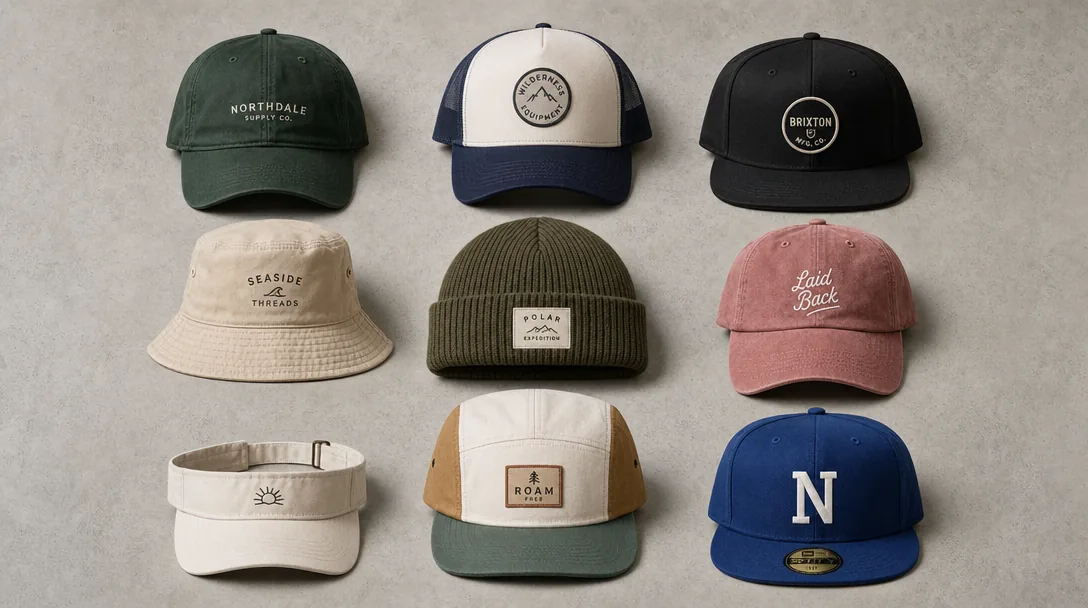
Launching a Hat Brand: Marketing Playbook for the First 12 Months
Read article →
Embroidery Hats Machine: When to Use It, Costs, and What to Ask Your Factory
Read article →Custom Hats for Corporate, Business and Branded Merchandise Programs - Cost & MOQ Breakdown
Read article →Sourcing custom hats does not have to be complicated. With the right manufacturing partner, clear specifications and a small upfront investment in sampling, you can launch a retail-quality product in 30 to 45 days.