
Merino Wool Beanie: Properties, Costs and How to Spec It Right - Supplier Checklist - 2026 Buyer's Guide - Cost & MOQ Breakdown
For brand owners, wholesalers and procurement teams entering the custom headwear category, merino wool beanie: properties, costs and how to spec it right - supplier checklist - 2026 buyer's guide - cost & moq breakdown is one of the highest-leverage decisions you will make. Get it right and your unit economics, retail story and reorder cycle all improve. Get it wrong and you carry the cost for years.
Acrylic Beanie
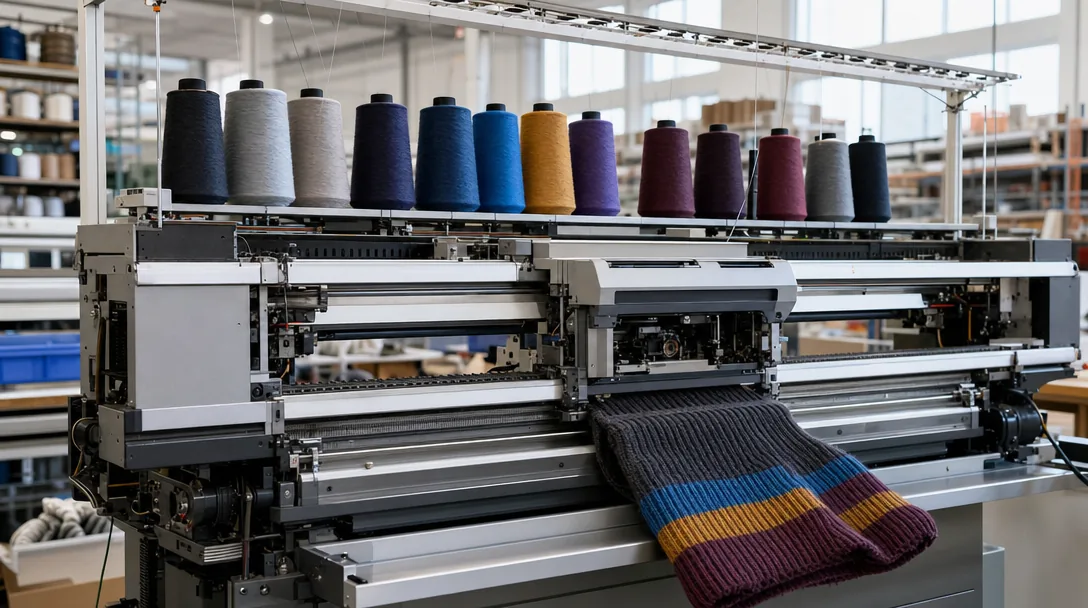
An acrylic beanie is usually the easiest winter headwear to source because the yarn supply is stable, the knit cycle is fast, and you avoid the fiber variability that comes with wool. Most programs are built on 1x1 rib or 2x2 rib on computerized flat knitting machines, then linked, steam-set, trimmed, and finished with embroidery, a woven label, or a TPU patch. For a basic 100% acrylic beanie, specify yarn count, gauge, finished weight in grams, crown closure method, fold-over depth, and post-wash shrinkage. If you want a handfeel closer to a merino wool beanie, ask for anti-pilling acrylic, brushed acrylic, or an acrylic-wool blend, but be direct about the tradeoff: acrylic can look clean and cost less, yet it does not match merino for moisture buffering, odor resistance, or thermal regulation.
MOQ is driven more by yarn inventory and color risk than by knitting complexity. Stock yarn colors often start at 300 to 500 pieces per color, while 1,000 pieces per color is more realistic if you need Pantone TCX matching, jacquard graphics, private-label packaging, or a custom woven fold label. FOB pricing for a plain acrylic beanie commonly sits around USD 1.20 to 2.80 per piece, depending on yarn weight, stitch density, and finishing; once you add multi-color jacquard, dense embroidery, or a heavier 120 to 180 gsm equivalent build, USD 2.80 to 5.50 is a more honest range. Those economics do not track with a corduroy hat or bucket hat program, where cutting, panel sewing, and brim structure add labor and material cost that knitwear simply does not carry.
The defects to inspect are usually visible in first samples if you know where to look. Check for pilling after abrasion, uneven rib tension, twisted side seams, loose top linking, color drift between lots, and wash distortion in length and width. A serious supplier should quote AQL 2.5 for final inspection, keep Delta-E under 2.0 for core colors, and document needle count, gauge, and size tolerance in millimeters; for black and navy, lint contamination and stray white fibers matter more than buyers expect. On a merino wool beanie program, the same discipline applies, but the technical focus shifts to fiber fineness, shrink control, and handfeel. Define the spec tightly, approve a sealed sample, and make the factory prove lot-to-lot consistency before you release volume.
Cotton Beanie
A cotton beanie is usually the low-cost knit cap in a factory lineup, but “cotton” is not a usable spec. Buyers need to separate combed cotton, ring-spun cotton, organic cotton, and cotton-acrylic blends before they can talk price or hand feel. For a cleaner surface and less pilling, combed ring-spun yarn in the 32s/2 to 40s/2 range is the normal starting point; open-end yarn is cheaper, but it carries more lint, weaker fiber alignment, and a fuzzier face after a few wash cycles. Most factories knit cotton beanies on flatbed machines at 12G to 16G, with 12G giving a denser, more structured body and 16G reading lighter and more fashion-driven. Compared with a merino wool beanie, cotton is easier to source and less exposed to wool price volatility, but it gives up warmth per gram, odor resistance, and elastic recovery.
The spec sheet has to lock down the numbers that actually move the quote: yarn count, fiber content tolerance, gauge, finished size after wash, cuff height, rib structure, shrinkage limit, and color target. Pantone TCX is the right reference for dyed cotton, but buyers should also ask for post-wash Delta-E control, because a match straight off the machine can drift after scouring and reactive dye fixation. A pre-production sample should be built in the exact stitch density and construction, then approved again as a TOP sample after washing and pressing. Our standard practice is to quote only after confirming single-layer rib, double-layer cuff, or fully lined construction, because those three choices change yarn consumption and sewing time more than most buyers expect. Decoration needs the same discipline: a dense logo that works on a rigid cap panel can pucker or warp on a stretch beanie body.
For stock cotton beanies, MOQs are often 300 to 500 pieces per color, but once you want custom yarn-dyed shades, private labels, or branded packaging, 1,000 pieces is the practical floor. In China, basic FOB pricing usually lands around $1.20 to $2.20 at 500 to 1,000 pieces, then rises to roughly $2.50 to $4.00 with heavier yarn, embroidery, woven patches, or better finishing. The defects that matter are uneven tension, seam twist, shrinkage above 5 percent, yarn contamination, and color mismatch between dye lots. Inspect to AQL 2.5 for appearance and critical measurements, and measure after a wash cycle, not just out of the polybag. Buyers comparing a cotton beanie or a merino wool beanie should use the same discipline: the real cost is yarn quality, decoration complexity, and rejection risk, not the base fiber name on the quote.
Black Beanie Hat
A black beanie hat looks basic until you spec it correctly. For a proper merino wool beanie, the factory needs the yarn count, knit gauge, finished weight, crown construction, cuff depth, and a black shade target before sampling starts. In export production, 12-gauge fine knit and 7-gauge winter bodies are the usual options, with finished fabric around 90 to 140 gsm for single-layer styles and 140 to 220 gsm for folded-cuff builds. If you want 100 percent merino, state the micron range at 17.5 to 19.5 microns, plus a wash shrinkage limit, pilling grade, and colorfastness to wash and rub. Black is unforgiving: a Delta-E above 1.0 versus the approved lab dip is often visible in daylight, and weak sulfur blacks can brown out after a few washes. Keep this spec separate from an acrylic beanie or corduroy hat; wool needs tighter control on dyeing, shrinkage, and hand feel than trim-heavy styles like a bucket hat women or a camouflage bucket hat.
MOQ and pricing get clearer once you stop guessing. For a black beanie hat in merino wool, most factories will quote 300 to 500 pieces per color per style on a first order, with sample fees around USD 30 to 80 when custom knitting, embroidery, or linked crown shaping is involved. At 500 to 1,000 pieces, a plain folded-cuff merino style usually lands around USD 4.20 to 7.80 FOB, depending on yarn origin, gauge, and whether the logo is direct-knit or embroidered; recycled polyester or acrylic beanie programs can run roughly half that. Add USD 0.15 to 0.60 per unit for a leather patch, woven label, or custom hangtag. Branded cartons, polybags, and DDP delivery typically push landed cost up another 8 to 18 percent. I would not force the MOQ too low on black, because small dye lots are where shade drift and lot-to-lot inconsistency show up fastest.
The inspection list should be measurable, not cosmetic. Check back-seam alignment, cuff width within plus or minus 0.5 cm, consistent yarn tension so the knit does not flare, and hand feel so the merino wool beanie is not scratchy enough to trigger returns. Pull random samples for dimensional stability after a 30 C wash, verify no oil stains, needle marks, or dropped stitches, and inspect the crown where ZSK, Tajima, or Barudan embroidery heads can distort the knit if the backing is too stiff. For bulk orders, use AQL 2.5 for major defects and approve the black shade under the same light box or D65 standard used across the rest of the range. If the black beanie hat sits inside a larger winter program, keep the merino wool beanie as the premium thermal option and use the lower-cost acrylic beanie for volume; that usually preserves margin while keeping hand feel and retail positioning coherent.
Slouchy Beanie
A slouchy beanie is defined by crown length and recovery, not just a looser knit. For a merino wool beanie, lock the structure first: 1x1 or 2x2 rib on a 12G, 7G, or 5G circular machine, or flat-knit panels if the factory is cutting and sewing. Specify yarn count, blend ratio, finished weight in gsm, cuff height, body length, and the crown drop from the top of head to the lowest point of the slouch. The difference between 100% merino at 17.5 to 18.5 micron and a 70/30 merino-acrylic blend is not cosmetic; it changes pilling, rebound, and hand feel. Ask for wash shrinkage after one domestic cycle, target shade under Pantone TCX, and a graded fit set with 2 cm body-length steps so you can check drape on a head form and on-wear, not just flat.
MOQ usually follows yarn control. If the mill has stock merino yarn in a standard shade, 300 to 500 pieces per color is realistic for a custom slouchy beanie. Once you move to custom-dyed yarn, 800 to 1,500 pieces is more typical because dye-lot yield, minimum dye-house runs, and yarn loss stop being negotiable. In 2026, a basic acrylic beanie usually lands around USD 3.80 to 6.50 FOB, a merino-acrylic blend around USD 6.50 to 11.00, and a higher-grade merino wool beanie with woven label, care label, and carton packing around USD 9.50 to 16.00 FOB. Add USD 0.25 to 0.60 for embroidery or a woven patch, more for a leather badge or metal trim. Knit headwear saves on hard trims, but shape retention is unforgiving; cheap yarn or weak rib recovery will wipe out the margin.
The failures I see most are pilling after abrasion, crown length drifting by more than 1.5 cm between batches, Delta-E above 1.5, and rib recovery loss after a single day of wear. Merino shows weak stitching and needle damage faster than acrylic, so inspect top joining, side seam density, label attachment, and pull strength before you approve bulk. Use a pre-production sample, then run a 10-point check on measurement, shade, gauge, linting, shrinkage, and recovery before release. For a real production run, CrownsForge’s standard practice is to hold the spec against a wash test, stretch recovery test, and random carton audit before shipment. The real sourcing test is whether the factory can repeat the same silhouette and fabric behavior on reorder; that is what separates a dependable merino wool beanie program from a sample that only works once.
Cotton Beanie Men
A cotton beanie men program is usually the lowest-cost knit headwear to source, but it is also the easiest to mis-spec if you only compare quoted price. A plain 100% cotton beanie is normally made on a flat-bed knitting machine in 1x1 rib or 2x2 rib, then crown-linked, scoured or garment-washed, dried, and finished with a woven label, embroidery, or a PVC patch after trim inspection. Ask for yarn count in Ne or Nm, fiber form such as combed, ring-spun, or open-end, stitch gauge, finished weight in gsm, and post-wash shrinkage. Those numbers matter more than words like soft or premium, because a 95 gsm loose rib cap behaves very differently from a 180 gsm dense knit. Compared with a merino wool beanie, cotton is more predictable on raw material cost, but it gives you less natural recovery and less insulation, so construction has to carry more of the performance load.
For a basic cotton beanie men style, MOQ is usually 300 to 500 pieces per color when the factory is using stock yarn, and 800 to 1,200 pieces if you need custom-dyed yarn, jacquard, or branded packaging such as a printed polybag and size sticker set. In China wholesale terms, a clean EXW price often lands around USD 1.10 to 2.20 per piece for a blank stock item, with another USD 0.20 to 0.60 for a woven label, small embroidery, or simple patching; custom dyeing and individual packing push it up quickly. Put shrinkage under 5 percent, pilling at 3-4 or better after Martindale or equivalent abrasion testing, and colorfastness to washing and rubbing in the spec sheet. CrownsForge’s standard practice is to lock the wash test before sampling, because a cotton knit that passes on the table can still lose shape after one hot wash if loop tension is too loose.
The defects that actually matter are rib collapse, crown puckering, uneven dye lots, loose linked seams, and oil marks from the knitting machine. Inspect under AQL 2.5 for measurement drift, visible seam faults, and shade variation, then run a 30 C wash test if the beanie is going to retail rather than sit in a promo box. Cotton is a useful benchmark when you are also sourcing a merino wool beanie, because it shows what the market will accept on handfeel, price, and packaging without paying for fiber claims that the construction cannot support. Merino only earns its premium when the spec proves better insulation, odor control, and recovery; if those are not documented, the buyer is just paying for a more expensive yarn.
100 Acrylic Beanie
A 100% acrylic beanie is still the lowest-cost knit cap in most sourcing programs, but the quote means nothing until you lock yarn count, gauge, and finishing. In practice, factories knit it on single-cylinder or double-cylinder flat machines, then link the crown, steam-set the body, and add a woven label, TPU patch, or embroidery panel after knitting. For a usable bulk spec, call out 100% acrylic yarn in the 1/15NM to 2/28NM range, 7-gauge to 12-gauge construction, and a finished fabric weight around 80 to 140 gsm, depending on whether you want a light slouch or a denser winter handfeel. Typical MOQ is 300 to 500 pieces per color for a plain cap, but jacquard, intarsia, or multi-position decoration usually pushes that to 500 to 1,000 pieces. At 1,000 pieces, ex-factory pricing in China often lands around USD 1.20 to 2.80, with embroidery, custom woven branding, and enzyme or washed finishes adding cost fast.
The defects buyers miss are mechanical, not cosmetic. Cheap acrylic pills early at the forehead and rear seam, and loose tension control shows up as uneven ribbing, a spiraled side seam, or a crown that twists after steam-setting. Color stability also needs to be written into the spec, because dyed acrylic can shift after heat exposure or show visible shade mismatch between stripes, cuffs, and body panels. On inspection, I would check yarn breaks, skipped needles, needle marks, oil stains, and stitch-density drift greater than one course over 10 cm. A practical tech pack should list circumference, body height, cuff depth, acceptable stretch recovery, and shrinkage after three wash cycles; many buyers use AQL 2.5 for visual defects and keep a separate tolerance for measurement drift. That level of control matters just as much on a merino wool beanie as it does here, because the margin loss usually starts with vague instructions, not the knitting itself.
Compared with a merino wool beanie, acrylic wins on cost, shade consistency, and lead time, but it loses on moisture management, thermal balance, and perceived value. Merino typically costs several dollars more per piece, yet it brings better odor resistance, a softer next-to-skin feel, and stronger sell-through in premium retail or cold-weather performance programs. If you are building a mixed line, acrylic belongs on the volume SKU and merino belongs on the item where touch and story justify the higher FOB. For lower-ticket programs such as a basic knit cap, acrylic is the rational choice if the spec is tight and the inspection plan is enforced. For a premium drop, the merino wool beanie earns its place because customers feel the difference immediately, which is usually the whole argument in retail.
Working with CrownsForge for merino wool beanie programs
For a merino wool beanie program, the real question is whether the factory can hold fiber content, gauge, and decoration within repeatable tolerances, not whether it can make one clean sample. A usable spec is 100 percent merino for premium handfeel, or an 80/20 merino-nylon blend when you need better abrasion resistance and shape recovery. In knit terms, most retail merino wool beanie styles sit around 12G to 7G, with finished fabric weights roughly 180 to 260 gsm depending on single- or double-layer construction. Build the timeline around real steps: 7 to 10 days for yarn sourcing, lab dip, knit proto, and color approval, then another 5 to 7 days if embroidery digitizing, woven labels, or wash-test revisions are required. Compared with an acrylic beanie, the value is not only price. Merino gives better odor control, less static, and cleaner drape, but only if yarn lot variation, knit tension, and finishing wash are controlled from the start.
Minimum order quantity should follow construction complexity, not a factory slogan. For a simple rib-knit merino wool beanie with one color and no trim change, 200 to 300 pieces per colorway is a normal working range; once you add jacquard patterning, folded woven labels, custom inside taping, or mixed decoration, the floor moves up because each SKU adds setup time and yarn loss. Buyers should lock Pantone TCX references, shrinkage tolerance, and size grading before PO release, then verify wash performance after finishing, because a 2 percent shrink and a 0.5 cm crown deviation are enough to alter fit on a beanie that already has limited stretch. This discipline matters across headwear: a corduroy hat, a corduroy hat men's style, or a camouflage bucket hat all get expensive fast when the spec is vague and the SKU count creeps.
Decoration on merino needs restraint. Fine-gauge knit telegraphs poor decisions fast, so satin columns should usually stay around 1.8 to 2.2 mm and dense fill areas need to stay small or they will flatten the rib and show puckering after wear. Tajima, Barudan, and ZSK heads can all produce clean logos, but the digitizing has to match fabric density; on soft merino, underlay, pull compensation, and stitch direction matter more than thread count. The compliance package should be current, not aspirational: sedex-audit-cap-supplier-guide.html">BSCI 2.0 or Sedex SMETA 4-Pillar if the buyer needs social audit coverage, plus fiber-content declarations, pilling results, and basic colorfastness to rubbing and washing. Our standard practice is inline inspection at AQL 2.5, pre-production sample signoff, and carton photo checks before shipment. A merino wool beanie program usually fails in small ways first, so the job is to catch yarn variance, label drift, and packing mistakes before they stack up into a reject batch.
Frequently Asked Questions
What logo decoration techniques do you offer?
3D puff embroidery, flat embroidery, woven patch, leather patch, PVC patch, screen printing, sublimation, applique and laser etching, all in-house with no subcontracting.
Do you support sustainability certifications?
Yes. We work with GOTS organic cotton, GRS-certified recycled polyester, OEKO-TEX Standard 100 fabrics, and are BSCI and Sedex audited. Certification documentation can be provided per order.
What is the minimum order quantity (MOQ) for custom hats?
Our standard MOQ is 100 pieces per design and color, with sampling available from 1 piece. For complex multi-color logos or premium fabric upgrades, the MOQ can be lowered with a small per-piece surcharge.
How long does production take?
Sampling takes 7 to 12 days. Bulk production runs 20 to 30 days depending on quantity, fabric availability and decoration complexity. Inspection and packing adds another 3 to 5 days before shipment.
Can I order a sample before bulk production?
Yes. We strongly recommend approving a pre-production sample before mass production. Samples are charged at 35 to 60 USD each plus express shipping, fully refundable against confirmed bulk orders over 500 pieces.
What should buyers know about black bucket hat men?
When evaluating black bucket hat men, the key considerations are construction quality, decoration capability, MOQ flexibility and lead time. Cover everything buyers ask about black beanie hat: how it's manufactured, what specs to request from a factory, typical MOQ and pricing, common quality issues to inspect for, and how this ties back to the broader merino wool beanie sourcing decision. Cover everything buyers ask about cotton beanie men: how it's manufactured, what specs to request from a factory, typical…
What should buyers know about kangol bucket hat mens?
When evaluating kangol bucket hat mens, the key considerations are construction quality, decoration capability, MOQ flexibility and lead time. Cover everything buyers ask about black beanie hat: how it's manufactured, what specs to request from a factory, typical MOQ and pricing, common quality issues to inspect for, and how this ties back to the broader merino wool beanie sourcing decision. Cover everything buyers ask about acrylic beanie: how it's manufactured, what specs to request from a factory, typical MOQ…
What should buyers know about corduroy hat womens?
When evaluating corduroy hat womens, the key considerations are construction quality, decoration capability, MOQ flexibility and lead time. Cover everything buyers ask about black beanie hat: how it's manufactured, what specs to request from a factory, typical MOQ and pricing, common quality issues to inspect for, and how this ties back to the broader merino wool beanie sourcing decision. Cover everything buyers ask about acrylic beanie: how it's manufactured, what specs to request from a factory, typical MOQ…
What should buyers know about acrylic beanie hat?
When evaluating acrylic beanie hat, the key considerations are construction quality, decoration capability, MOQ flexibility and lead time. Cover everything buyers ask about acrylic beanie: how it's manufactured, what specs to request from a factory, typical MOQ and pricing, common quality issues to inspect for, and how this ties back to the broader merino wool beanie sourcing decision. Cover everything buyers ask about black beanie hat: how it's manufactured, what specs to request from a factory, typical MOQ…
Are merino beanies worth it?
If you value sustainability, comfort, durability, and superior thermal performance, a merino wool beanie is a smart and stylish investment. Despite the higher upfront cost, the long-term benefits—including shape retention, moisture management, and odour resistance—make it a practical addition to your wardrobe.
Is merino good for a beanie?
Made for all your outdoor adventures, merino is soft on skin, easy to layer and naturally temperature regulating and odour resistant. A fitted beanie, it's perfect for wearing under hoods or helmets while out hiking, climbing, skiing or mountain biking.
Are merino wool beanies worth it?
A: Yes, Merino wool is excellent for hats because it is breathable, quick drying, and temperature-regulating, providing comfort in various weather conditions.
Is merino yarn good for beanies?
Additionally, wool has a certain level of stretch to it, making it great for beanies. However, there are different types of wool you can choose from: - Merino wool comes from merino sheep and is known to be very fine and soft. It can be used for anything from socks to hats.
Is a merino wool beanie itchy?
Merino wool is finer and softer than other kinds of wool, which makes it less itchy. Its fibers are very short in length and smaller in diameter, which makes it a whole lot softer and gentler on the skin.
Ready to start your custom hat project?
Send us your tech-pack, sketch or even just an inspiration photo. We will respond with a detailed quotation and digital mock-up within 24 hours.
Request a free quoteRelated guides
Acrylic Beanie: Properties, Costs and How to Spec It Right
Read article →
Custom Hat Design: The 2026 Sourcing & Manufacturing Playbook
Read article →
Bucket Hat Corduroy Retail Packaging Guide for Custom Hat Buyers
Read article →We hope this guide demystifies merino wool beanie: properties, costs and how to spec it right - supplier checklist - 2026 buyer's guide - cost & moq breakdown and helps you move forward with confidence. If you have questions specific to your project, our English-speaking sales engineers are one message away.