
Men's Bucket Hat: A Vertical-Specific Sourcing Guide (2026 Update)
Every week, our sales team answers detailed questions about men's bucket hat: a vertical-specific sourcing guide (2026 update). We wrote this guide so that wholesalers, streetwear brands, corporate buyers and promotional resellers can compare options with full information, and avoid the traps that show up only after production has started.
Baseball Hats for Men
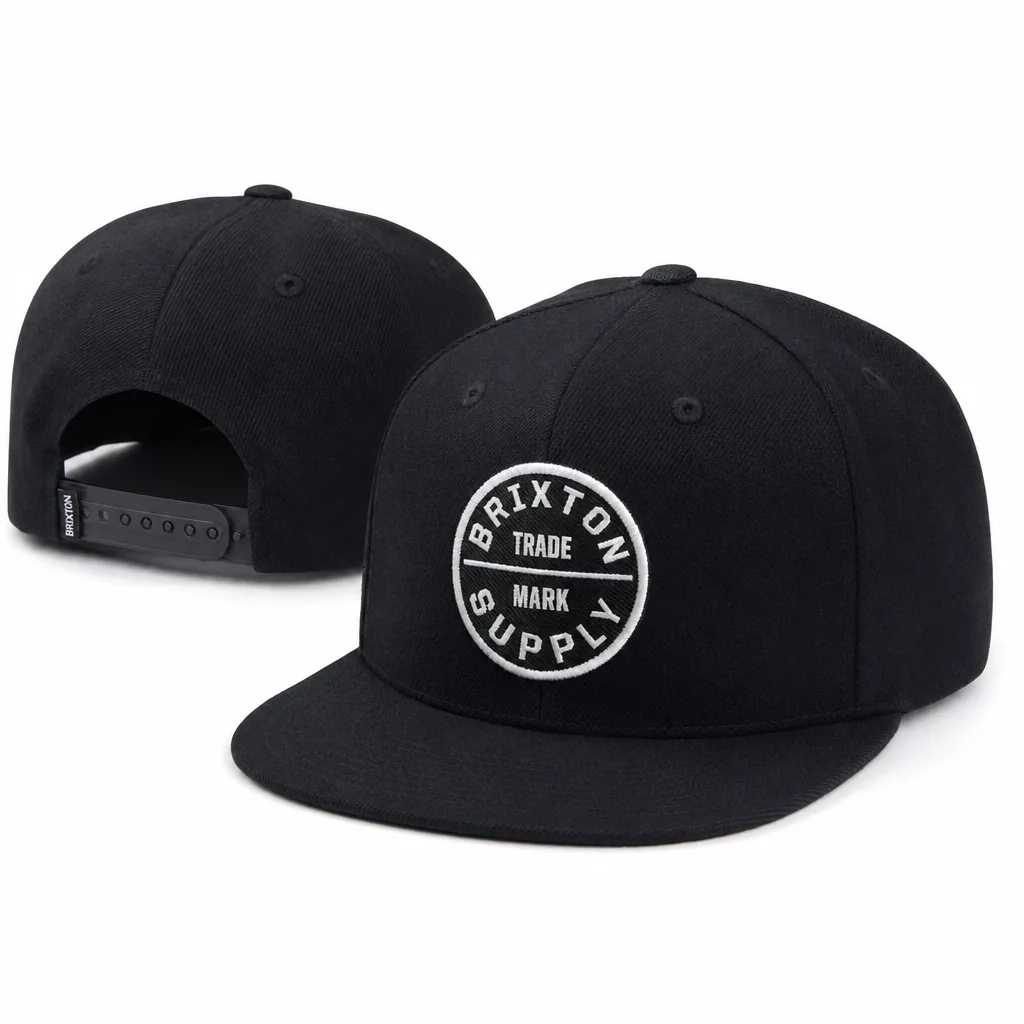
A baseball cap is simpler on the shelf than a men's bucket hat, but it is usually less forgiving in production. A fitted 6-panel cap has six crown panels, a pre-curved or flat visor built on PE board or board-stitched buckram, eyelets, a sweatband, seam tape, a top button, and no adjustable closure to hide grading error. That means separate patterns by size, tighter control of the crown band, and real measurement discipline: finished head circumference should stay within ±0.5 cm, visor width within ±0.2 cm, and front-logo centering within 2 mm. The weak point is the front panel; if the buckram is too soft or embroidery density is too high, the face will ripple after pressing. A proper tech pack needs panel count, crown height, visor curve radius, shell fabric gsm, sweatband composition, seam-tape spec, top-button diameter, closure type if adjustable, and Pantone TCX references for shell and thread. For color-critical programs, lab dips should land under Delta-E 1.5.
Cost and MOQ move faster on size splits and decoration than on fabric alone. A plain adjustable cap in 260-280 gsm brushed cotton twill with flat embroidery is often workable at 144-300 pcs per colorway, while fitted runs usually need 300-500 pcs because each size ratio adds marker loss, WIP segregation, and carton complexity. A realistic 2026 FOB China range is $2.20-$3.40 for a basic adjustable cap and $4.80-$8.50 for a wool-blend or polyester-spandex fitted style with raised embroidery, woven flag label, interior taping, and a shaped visor. Add applique, 3D puff, sublimated undervisor print, or moisture-wicking sweatbands and you add machine time on Tajima or Barudan heads plus more hand trimming. Defect control is where the baseball cap program gets expensive: check visor symmetry, seam roping, skipped stitches, eyelet puckering, off-center logos, loose underbill binding, sweatband twisting, and size-mix carton errors. AQL 2.5 is standard, but licensed retail programs should tighten logo-placement tolerance and lock carton segregation by size ratio before shipment.
Designer Bucket Hats
A designer men's bucket hat fails or succeeds on pattern control, not on whatever trim package gets added at the end. Treat it like a shaped headwear program, not a cheap promo fisherman hat. A commercial premium build is typically 8 to 12 components: crown top, sidewall, brim upper, brim under, sweatband, seam binding, care/content label, main label, and often a full lining to clean up the inside. The geometry has to be frozen early in the tech pack: brim width at 55 to 70 mm, crown height at 80 to 95 mm, top diameter at 165 to 180 mm, brim stitch rows at 6 to 10, and seam allowance usually 6 mm. You also need to specify whether the brim should collapse naturally or hold a sharper edge with 35 to 70 gsm hidden fusible. That one decision changes the silhouette more than buyers expect, especially after washing and packing compression. Fabric selection drives sewing behavior and fit retention. A 240 gsm brushed cotton twill will absorb topstitching and produce a denser hand, while 170 gsm nylon taslon wants tighter needle control and will show torque if the brim layers are not balanced. Corduroy is worse: a 14-wale shell can look great, but pile direction mismatch across brim panels is an immediate first-quality failure. For a men's bucket hat sitting next to fitted caps or cut-and-sew streetwear, shell, lining, sweatband, and internal branding should be matched to Pantone TCX with an agreed Delta-E tolerance, typically under 1.5 to 2.0 under D65 lighting. If the shell reads warm black and the inside trims read blue black, the collection looks like it was split across suppliers even when the sewing is clean.
The fastest way to lose margin on a designer men's bucket hat is vague specification language. "Premium" means nothing on a factory floor; SPI, seam type, and test standards do. A usable spec should call out shell and lining fiber content, sweatband width and composition, eyelet material and finish, brim depth tolerance of plus or minus 3 mm, stitch density at 7 to 9 SPI for twill or 9 to 11 SPI for lightweight nylon, and color approval against Pantone TCX or TPX with bulk tolerance defined. Add wash or crocking requirements if the style uses dark pigment dye, enzyme wash, or contrast lining, because brim edge grin-through and shade migration are common failure points. Our standard practice is to inspect bucket hats to AQL 2.5, with special attention to brim symmetry, crown roundness, and topstitch spacing drift around the full circumference. Logo application should be decided with construction in mind. Flat embroidery is usually run before assembly on Tajima, Barudan, or ZSK heads; once the sidewall is closed, hooping space tightens and puckering near the seam becomes the first defect buyers complain about. For stock fabric programs, MOQ is commonly 300 to 500 pieces per colorway, but custom-dyed shell, printed lining, woven main label, branded seam tape, and bespoke packaging push realistic MOQ to 800 to 1,000. In 2026, FOB China pricing for a clean 100% cotton twill men's bucket hat generally lands at $3.20 to $5.80. A lined fashion version with embroidery, custom labels, and tighter shade control is more often $5.90 to $8.50 FOB, excluding garment wash, metal trims, and retail-ready inserts or boxes. Buyers asking for sedex-audit-cap-supplier-guide.html">BSCI 2.0 or Sedex SMETA 4-Pillar compliance should also expect slightly less flexibility on rush timelines during peak audit windows.
Cool Bucket Hats for Guys
A cool men's bucket hat sells on proportion and fabric behavior, not on graphic treatment alone. Lock the geometry before sampling: 4-panel or 6-panel crown, finished crown height, brim width, top-button spec, eyelet material, seam binding, and whether the style is reversible. For fashion programs, a 5.5-6.5 cm brim usually reads cleaner; outdoor and fishing silhouettes often push to 7.0-8.0 cm and need stronger brim recovery after washing. Fabric specs have to be exact because 240 gsm cotton twill, 210 gsm enzyme-washed chino, 150D recycled polyester taslan, and 8 oz denim all cut, shrink, and drape differently. If brand color matters, call out Pantone TCX or TPX, require lab-dip approval under D65 lighting, and hold shade tolerance to Delta-E 1.5-2.0. Without that discipline, the same men's bucket hat can look sharp in SMS photos and still arrive with a limp brim, wrong crown profile, or a washed-out branded color.
Construction tolerance is where weak factories get exposed. A bucket hat has no buckram or sweatband structure to hide sloppy sewing, so every seam and topstitch line stays visible to the customer. I would write 9-11 SPI on crown seams, 1.0 cm seam allowance at major joins, and 6-8 brim stitch rows spaced about 6-8 mm depending on fabric bulk and finished width. Grain direction between brim layers must match; if one layer is cut off-grain, twisting after wash is almost guaranteed. Embroidery should be digitized for curved panels and run pre-assembly on Tajima, Barudan, or ZSK heads, otherwise you see hoop burn, tunneling, and logos running off-level at the side seam. For bulk QC, inspect the defects buyers actually get claims on: wavy brim edge, brim-to-sidewall seam mismatch, off-center top button, uneven crown height, grommet puckering, and shade variation from mixed dye lots. AQL 2.5 major / 4.0 minor is a workable baseline, with brim width held to +/-0.3 cm and head opening to +/-0.5 cm, checked both flat and on a former before PPS sign-off.
Funny Bucket Hats
A funny men’s bucket hat is still a standard bucket build; the humor lives in execution, and sloppy execution kills the joke faster than a bad slogan. Start with the right shell: 100% cotton twill at 200–240 gsm for mainstream retail, washed chino around 180–220 gsm for a softer hand, nylon taslan 110–160 gsm for outdoor use, or polyester peach skin at 120–150 gsm when price matters more than texture. For all-over graphics, use reactive print on cotton and sublimation on polyester; pigment print is cheaper but less crisp on saturated novelty artwork. If you need repeatable color, call out Pantone TCX references for fabric, Pantone Solid Coated for print ink, and hold approval samples to Delta-E below 2.0 under D65 lighting. Decorative options should be chosen by substrate, not trend: flat embroidery at 8,000–12,000 stitches for clean linework, woven patches with merrow or laser-cut edges for cartoon motifs, and molded PVC badges only when the design can tolerate extra weight and a stiffer hand.
The spec sheet needs to control proportion in millimeters, because bucket hats look forgiving until bulk production starts drifting. Lock crown height at 8.5–9.5 cm, brim width at 5.5–6.5 cm, brim topstitch rows at 6–8 lines, eyelet count at 4 or 6, sweatband width at 2.5–3.0 cm, and artwork placement from center front and crown seam. A basic men’s bucket hat with one front embroidery usually prices around USD 2.30–3.90 EXW at 300–500 pcs per colorway in Zhejiang; add all-over print, enzyme wash, contrast piping, woven labels, or multi-position appliqué, and you are realistically at USD 4.80–6.80 with MOQs closer to 800–1,000 pcs. QC should focus on the defects that actually create claims: embroidery skew over 3 mm, brim waviness from uneven fusing, puckering on lightweight fabric, seam mismatch in printed panels, and post-wash shrinkage above 3%. I would require a pre-production sample, print strike-off, thread card, and final inspection at AQL 2.5, with measurement tolerances of ±0.5 cm on crown and brim. Our standard practice is to approve artwork placement before cutting, because an 8 mm shift on a front joke graphic is enough to turn sellable stock into markdown inventory.
Bucket Hats Festival
Festival sell-through depends on recovery, colorfastness, and brim geometry long before anyone cares whether a factory calls the hat “premium.” A men’s bucket hat for a three-day outdoor event is mechanically simpler than a six-panel cap, but the spec sheet needs to be tighter because the product gets crushed into sling bags, saturated with sweat, and left in UV for hours. For retail-grade programs, 220-260 gsm cotton twill, cotton-nylon blend twill, or enzyme-washed cotton is the reliable band. Once you drop below 200 gsm, the brim usually loses shape after packing unless you add a 70-100 gsm fusible interlining or build a double-layer brim. Low-cost promo versions often use 160-180 gsm polyester or 210D woven poly; that saves roughly $0.20-$0.40 FOB, but the handfeel gets slicker and heat-set creasing becomes a repeat claim. Put measurable tolerances in the tech pack instead of vague language like “festival quality.” Brim width should be locked at 5.5-6.5 cm with a tolerance of +/-0.3 cm, crown depth 8.5-9.5 cm, seam allowance 1.0 cm, and topstitch spacing 6-8 mm with visual alignment at side seams. If color continuity matters across repeat POs, specify Pantone TCX and cap Delta-E at 1.5-2.0 against the approved lab dip; otherwise one reorder can drift noticeably, especially on washed cotton. I also recommend shrinkage under 3 percent after wash, perspiration colorfastness at grade 3-4 minimum, and UPF claims only if the fabric has actual test backing rather than a sales note from the mill.
MOQ moves the moment you leave stock greige or stock-dyed fabric. In Yiwu, 300-500 pieces per colorway is realistic for a basic men’s bucket hat in stock twill with a woven label, screen print, or flat embroidery. Start adding custom reactive dye, all-over print lining, contrast underbrim, or a specialty wash, and the true floor usually jumps to 800-1,000 pieces because the mill, washing house, and print supplier each impose their own minimums. Current FOB for a standard cotton twill bucket is typically $1.20-$2.20; washed cotton, cotton-nylon, or sublimated polyester sits more in the $1.80-$3.50 range. Front embroidery on Tajima or Barudan heads generally adds $0.18-$0.45 depending on stitch count, thread changes, and whether the logo needs edge-walk plus fill rather than simple satin. The defects that actually trigger rework are predictable: crooked brim topstitching, drifting brim width, side-seam puckering, sweatband bleed, and crown-to-brim mismatch that makes the hat sit oval instead of round on-head. Those are not cosmetic nitpicks at festival retail; they show immediately in fit checks and social content. Our standard practice is AQL 2.5 final inspection with measurement points on brim width, crown height, head opening, and circumference, plus a fold-recovery check after 24 hours under pack pressure. For embroidery, thread tension and backing selection matter more than buyers think; a soft bucket shell can pucker if the digitizing is too dense or the backing is too stiff. I would also require carton-drop review on the pre-production sample, because an otherwise clean bucket can arrive with permanently broken brim lines if the pack-out is wrong.
Festival Bucket Hat
Comfort and decoration failures are what sink a festival men’s bucket hat, so lock fabric and construction before you argue about artwork. For mass-event merch, the safest shell is 100% cotton twill at 210–260 gsm or enzyme-washed cotton canvas at 240–300 gsm; both keep a clean brim line, take satin or fill embroidery without excessive puckering, and hide grime better than 160 gsm fashion weights. If the brief calls for quick-dry, use 75D or 100D recycled polyester at 120–160 gsm with a mesh or brushed tricot sweatband, but accept the tradeoff: a slicker hand feel, more visible seam grin, and higher strike-through risk on dense embroidery. Sublimation belongs on white polyester only. On cotton blends, you usually get muddy color, unstable registration, and side-seam misalignment that no final pressing will hide. Standard festival specs are a 4-panel or 6-panel crown, 5.5–6.5 cm brim, 6–8 rows of brim stitching, and deburred metal eyelets or self-fabric eyelets depending on the price point.
MOQ is driven more by decoration route than by sewing capacity. In Yiwu and Dongguan, plain-dyed men’s bucket hat programs usually start at 300–500 pcs per colorway; add flat embroidery, reactive print, applique, or engineered sublimation and most factories push the floor to 500 pcs because setup loss, thread changes, and reject risk rise immediately. At 500 pcs, a basic cotton twill hat with woven main label and care label typically lands around $2.10–$3.20 FOB China; flat embroidery moves it to roughly $2.80–$4.20, while seam-matched sublimation on 100% polyester is closer to $3.50–$5.00. Buyers should freeze brim width tolerance at ±0.3 cm, panel symmetry within 2 mm, SPI by operation, brim interlining weight in gsm, and Pantone TCX references for shell, underbrim, and trim. Reject criteria are predictable: wavy brim quilting, uneven brim drop, off-center print placement, eyelets with burrs, color migration onto light sweatbands, and embroidery strike-through on low-gsm shells. I would inspect to AQL 2.5 major and 4.0 minor, then check brim width at four compass points, crown height, head opening, and Delta-E against the approved lab dip after a wash and crocking test.
Working with CrownsForge for men's bucket hat programs
The costliest failure in a men's bucket hat program is not capacity; it is shape drift between proto, PPS, and bulk. A line can push 4,000 to 6,000 units per day and still ship the wrong silhouette if crown depth, brim sweep, topstitch count, and grain direction are not locked before cutting. Stock-fabric prototypes in 210-240 gsm cotton twill or brushed chino usually take 5-7 working days; add custom-dyed shell, enzyme wash, reactive wash, Pantone-matched woven labels, or printed seam tape, and the timeline moves to 10-14 working days because lab dips, trim approvals, and wash-handfeel confirmation become the critical path. The practical sequence is three gates, not one: technical review within 24 hours, a fit-and-material proto, then a sealed PPS made with production-intent embroidery, labels, and stitch density. That extra week is cheaper than reworking a full lot with brim collapse after laundering, crown panels cut off-grain, or embroidery puckering on 180-220 gsm twill. Retail buyers should freeze measurable tolerances instead of approving “overall look.” For a men's bucket hat, I would write crown height at ±3 mm, brim width at ±2 mm, head circumference at ±5 mm, and topstitch spacing at ±1 mm, with the brim stitch count called out by size. Brim construction also needs to be specified: shell and under-brim fabric weight, fused or unfused build, interlining type, and seam allowance at the brim join. CrownsForge standard practice is to seal these points at PPS with photos, flat measurements, and a wash-tested reference, because a bucket hat that passes first appearance can still fail after one domestic wash if the brim interlining shrinks at a different rate than the shell. If embroidery is near the brim break, digitizing density and underlay should be approved from the actual production fabric, not from a generic swatch.
MOQ only makes sense after you identify the real setup losses. A basic men's bucket hat in stock 210-240 gsm twill can run efficiently from about 144 pieces per colorway, but the true factory breakpoint jumps to 300-500 pieces once you add custom pigment-print lining, all-over sublimation on polyester, multi-position embroidery, or Pantone-matched trims. The extra cost is not theoretical: screen setup, embroidery digitizing, thread changes, machine downtime, added inline QC, and more rejects at the brim join all stack up fast on small runs. Buyers often try to combine bucket hats with 6-panel caps to soften minimums; that only works when shell fabric, sweatband, labels, hangtags, and packaging are shared, because bucket hats use different cutting markers, brim assembly, blocking, and edge finishing than a structured baseball cap. Decoration and compliance need to be matched to fabric behavior, not chosen from a line sheet. Tajima, Barudan, and ZSK heads handle direct embroidery cleanly, but I would avoid dense 3D foam and heavy satin fills near the brim seam on washed cotton because laundering can distort the needle field and telegraph puckering. For color control, shell fabric lab dips should be signed against Pantone TCX with Delta-E under 1.5 under D65 lighting; for inspection, inline plus final AQL 2.5 is a usable baseline, not a premium add-on. Factory-level social compliance should be current BSCI 2.0 or Sedex SMETA 4-Pillar, and the testing package for a men's bucket hat sold into the US or EU should cover azo dyes, formaldehyde, lead, cadmium, colorfastness to crocking and perspiration, and dimensional stability after washing. Weekly WIP photos by process stage catch more preventable mistakes than any promised ship date.
Frequently Asked Questions
What logo decoration techniques do you offer?
3D puff embroidery, flat embroidery, woven patch, leather patch, PVC patch, screen printing, sublimation, applique and laser etching, all in-house with no subcontracting.
Can I order a sample before bulk production?
Yes. We strongly recommend approving a pre-production sample before mass production. Samples are charged at 35 to 60 USD each plus express shipping, fully refundable against confirmed bulk orders over 500 pieces.
What is the minimum order quantity (MOQ) for custom hats?
Our standard MOQ is 100 pieces per design and color, with sampling available from 1 piece. For complex multi-color logos or premium fabric upgrades, the MOQ can be lowered with a small per-piece surcharge.
How long does production take?
Sampling takes 7 to 12 days. Bulk production runs 20 to 30 days depending on quantity, fabric availability and decoration complexity. Inspection and packing adds another 3 to 5 days before shipment.
What file format should I send for my logo?
Vector files (AI, EPS, PDF) are ideal. High-resolution PNG or JPG at 300 dpi on transparent background works as a fallback. Provide Pantone color references for accurate reproduction.
How does ordering custom new era 59fifty fitted hats work?
When evaluating custom new era 59fifty fitted hats, the key considerations are construction quality, decoration capability, MOQ flexibility and lead time. Cover everything buyers ask about baseball hats for men: how it's manufactured, what specs to request from a factory, typical MOQ and pricing, common quality issues to inspect for, and how this ties back to the broader men's bucket hat sourcing decision. Cover everything buyers ask about designer bucket hats: how it's manufactured, what specs to request from a factory,…
How does ordering custom baseball hats for men work?
When evaluating custom baseball hats for men, the key considerations are construction quality, decoration capability, MOQ flexibility and lead time. Cover everything buyers ask about baseball hats for men: how it's manufactured, what specs to request from a factory, typical MOQ and pricing, common quality issues to inspect for, and how this ties back to the broader men's bucket hat sourcing decision. Cover everything buyers ask about designer bucket hats: how it's manufactured, what specs to request from a factory,…
What should buyers know about bucket hat men?
When evaluating bucket hat men, the key considerations are construction quality, decoration capability, MOQ flexibility and lead time. Cover everything buyers ask about baseball hats for men: how it's manufactured, what specs to request from a factory, typical MOQ and pricing, common quality issues to inspect for, and how this ties back to the broader men's bucket hat sourcing decision. Cover everything buyers ask about designer bucket hats: how it's manufactured, what specs to request from a factory,…
What should buyers know about nike bucket hats for men?
When evaluating nike bucket hats for men, the key considerations are construction quality, decoration capability, MOQ flexibility and lead time. Cover everything buyers ask about baseball hats for men: how it's manufactured, what specs to request from a factory, typical MOQ and pricing, common quality issues to inspect for, and how this ties back to the broader men's bucket hat sourcing decision. Cover everything buyers ask about designer bucket hats: how it's manufactured, what specs to request from a factory,…
Looking for a reliable hat manufacturer in China?
CrownsForge has produced custom hats for 800+ brands across 40 countries. From 100-piece launches to 100,000-piece retail programs, we deliver on time and on spec.
Get in touchRelated guides
Mesh Caps Wholesale: Trucker Cap Manufacturing Specifications and Pricing (2026 Update)
Read article →Festival Bucket Hats Decoration QC Checklist for Custom Hat Buyers
Read article →
Blank Trucker Cap Wholesale Bulk: A 2026 B2B Sourcing Guide
Read article →Sourcing custom hats does not have to be complicated. With the right manufacturing partner, clear specifications and a small upfront investment in sampling, you can launch a retail-quality product in 30 to 45 days.