
Kids' & Children's Cap Manufacturing: CPSIA Compliance and Sizing - Supplier Checklist
Every week, our sales team answers detailed questions about kids' & children's cap manufacturing: cpsia compliance and sizing - supplier checklist. We wrote this guide so that wholesalers, streetwear brands, corporate buyers and promotional resellers can compare options with full information, and avoid the traps that show up only after production has started.
Sizing tiers for kids' headwear
Get the size architecture right first, because a 2 cm miss in children’s headwear turns into returns, bad fit feedback, and rework. The cleanest split is by finished inside circumference measured on the sweatband seam, not by flat pattern width or an unblocked shell: infant 38-44 cm, toddler 46-50 cm, kids 52-56 cm, and youth 54-58 cm. Those ranges should be written into the tech pack with a target and tolerance, usually +/-0.5 cm on circumference and +/-0.3 cm on brim length. A capable kids custom cap manufacturer will also account for fabric behavior: brushed cotton twill can relax 0.5-1.0 cm after blocking and wear, while 75D-150D polyester or microfiber with fused buckram stays closer to nominal size. Age labels are only a guide for merchandising; actual fit shifts with crown depth, hair volume, and whether the cap is worn bare-headed or over a thin layer in colder months. For export programs, one physical fit sample per size tier is more dependable than approving a graded sheet alone.
Most factories that mainly build adult caps get exposed in the pattern room, not on the sewing line. Infant and toddler styles need a lower crown height, shorter front panels, and reduced brim projection so the cap sits on the head instead of perching above it. As a reference point, a standard adult baseball cap brim is about 7.0 cm; toddler brims usually land around 5.0-5.5 cm, with infant versions often shorter depending on silhouette and compliance needs. Each size break should have its own paper pattern, brim die, and head form, because scaling down an adult block distorts panel angle, closure position, and balance. Safety ties directly to sizing as well: infant and toddler caps should avoid oversized top buttons, loose cords, and hard trims that can create pressure points or fail pull tests. Put the acceptance criteria in the tech pack and make the supplier name the exact head forms, brim molds, and closure lengths used at each tier. If they cannot do that, they are probably shrinking adult caps instead of engineering true children’s sizes.
CPSIA lead and phthalate testing — when required
Treat any cap designed or marketed for children 12 and under as a children’s product at the quoting stage, not after the PO lands. Under CPSIA, the trigger is age grading and intended use, not whether the silhouette just happens to be small. Youth sizing, 2T-4T and 4-7 labels, school programs, cartoon artwork, licensed sports programs, and retail packaging aimed at kids usually put the item into third-party testing territory before U.S. sale. For lead, the hard limits are 90 ppm in surface coatings and 100 ppm in substrate materials. On caps, the real exposure is usually in printed logos, painted eyelets, coated buckles, plated snaps, metallic inks, and decorative hardware, not the cotton twill or polyester shell. A kids custom cap manufacturer that only checks the crown fabric is looking in the wrong place; most failures come from trims, finishes, and cheap metal parts.
Phthalate testing matters when the cap contains plasticized components that can carry restricted plasticizers. The usual suspects are PVC patches, soft-touch labels, rubber badges, heat transfers, coated synthetic trims, piping, plastic snapback straps, and wipe-clean or rain-resistant finishes. For children’s products, the CPSIA limit is 0.1 percent, or 1,000 ppm, for each regulated phthalate. Supplier declarations are useful for screening, but they are not compliance evidence. The defensible route is testing through a CPSC-accepted, ISO/IEC 17025-accredited lab, either on homogeneous components or on the finished cap, depending on the BOM. Testing is not necessarily repeated on every reorder, but it has to be in place before the goods enter U.S. commerce unless a specific material exemption applies. Once you add pigment print, coated labels, metallic embroidery thread, silicone badges, or decorative hardware, any easy assumption about “low risk” disappears.
The practical way to manage this is trim-by-trim BOM control, not broad promises from a vendor. Ask for material specifications down to the finish level: plating type, coating chemistry, PVC content, ink system, adhesive, and any flame- or water-resistant treatment. Keep each homogeneous component identified so the lab sample matches what is actually in production, because a finished cap can contain several distinct compliance risks in one unit. If you are sourcing at scale, lock the same approved components across repeats; changing a snap supplier or patch vendor can invalidate prior results even when the cap style looks identical. CrownsForge’s standard practice is to treat the bill of materials as the compliance record, then verify only the parts that can move lead or phthalate results. That is cheaper than rebuilding a failed shipment after customs or a retailer requests proof and the paperwork does not line up with the goods.
Small-parts inspection: what passes, what fails
For caps age-graded under 36 months, the pass-fail line is brutally simple: any component that detaches and fits fully inside the CPSC small parts cylinder, 31.7 mm diameter by 57.1 mm depth, is a failure. That makes loose metal studs, hanging charms, detachable hook-and-loop badges, press-fit ornaments, and most glued logo pieces bad ideas before prototyping, not after. A top button is only acceptable if it survives use-and-abuse testing without loosening, cracking, or creating a sharp point or edge; in practice, glued trims and light press-fit hardware do not belong in an under-3 CPSIA program. The real risk is not the tech pack sketch but attachment integrity after laundering, tension, torque, and compression. Any serious kids custom cap manufacturer should be able to produce an age-graded trim BOM by SKU, pull-test and torque records for bulk materials, and lab reports tied to the actual factory lot, not a hand-built salesman sample.
What passes consistently is soft construction integrated into the cap itself: direct embroidery run on Tajima or Barudan heads, woven labels caught into a seam, self-fabric tabs sewn into the panel, and applique with a full satin edge stitch instead of edge glue. Closures are where teams usually need to redesign. On infant and toddler caps, plastic snapbacks are high-risk because cracked pegs or bridge sections can become accessible small parts after abuse testing, and the rear opening is uncomfortable in strollers and car seats. Safer specs are a self-fabric tuck strap, covered elastic back, or rounded-corner hook-and-loop with full box-stitching and clean cut edges. Inspection should start at incoming trim, continue during sewing, and finish at final audit under AQL 2.5 because most failures come from weak attachment, not concept approval. Common bulk rejects are PU patch corners lifting after wash, a pom separating at the stitch line, a badge shifting under pull, or a closure cracking at the bridge. For children’s caps sold to ages 12 and under, require CPSIA screening through a CPSC-accepted lab before packing approval.
EU REACH and toy safety standards for kids' caps
For kids’ caps sold into the EU, REACH compliance fails at the trim level far more often than in the shell fabric. Treat the cap as a multi-material article: 210 gsm cotton twill or 150D recycled polyester, PE brim board, sweatband, fusible seam tape, embroidery backing, hook-and-loop closure, woven labels, heat-transfer inks, PVC or silicone badges, and any plated metal in buckles, eyelets, or snap parts. The repeat offenders are not theoretical. Labs routinely catch restricted phthalates in soft PVC logos, azo amines from dark dyestuffs, SCCPs in water-repellent finishes, organotin residues in plastisol or silicone prints, and nickel release from decorative hardware over the EN 1811 limit. A reliable kids custom cap manufacturer should collect REACH Annex XVII and SVHC declarations for every component, but paperwork alone is not enough once substitutions start on the factory floor.
The real commercial exposure is that one bad trim can block the entire shipment at Rotterdam or Hamburg even if stitching, fit, and color are perfect. Color approval and chemical approval are separate gates; a shell held to Pantone TCX within Delta-E 1.0 still fails if the print system or closure hardware misses Annex XVII. The practical control method is disciplined BOM locking by material code, dye lot, trim PO, and plating source, then ISO 17025-accredited finished-product testing whenever artwork, coating, badge material, or hardware changes. Buyers should ask for SGS, Intertek, or TÜV reports tied to the exact BOM and production date, not a generic test report from a similar style six months earlier.
EN 71 only enters the picture when the cap crosses from apparel into something a child is meant to play with. A standard six-panel cap with direct embroidery, sewn twill patches, and fixed labels is usually a straight REACH item. Add detachable ears, plush tails, spinning propellers, squeeze features, or dangling novelty trims, and you need an EN 71 review, starting with EN 71-1 mechanical and physical properties, then potentially EN 71-2 flammability and EN 71-3 migration of certain elements. On the factory floor, the test is blunt: can a component detach under tension, torque, bite, or drop conditions, and if detached, does it fit the small-parts cylinder? For infant and toddler programs, I would spec beyond the legal floor: no glued ornaments, no brittle PS novelty parts, nickel-safe hardware only, and direct embroidery or lockstitched patches in place of applied badges. Our standard practice is to flag any interactive feature at sample stage, because a supplier that understands CPSIA lead and phthalate limits for the U.S. can still miss EU toy-scope hazards and REACH obligations.
Decoration techniques safe for kids' caps
Flat embroidery is the safest default for children’s caps because it adds no detachable trim and is easy to audit against objective workmanship limits. On a 6-panel brushed cotton twill cap for age grade 3+, I would keep logo density moderate, run 40 wt polyester thread with 75D or 120D bobbin on Tajima or Barudan heads, and use a soft 1.5-2.0 oz cutaway backing trimmed flush so the inside crown does not abrade the forehead. Jump stitches should stay under 3 mm, thread tails need to be heat-cut clean, and any backing edge near the sweatband seam is a reject. For toddler programs, I would rule out 3D puff, sequins, metal emblems, rhinestones, and sewn-on badges entirely; they create pressure points and increase detachable-part risk after laundering, abrasion, and repeated flexing. A capable kids custom cap manufacturer should also show broken-needle logs, reconciliation records, and a written needle policy, because decoration safety is not just chemistry under CPSIA—it is mechanical control on the factory floor. Inspection has to go beyond “looks good.” For children’s headwear, I would write pull and appearance criteria directly into the PO: no loose trims, no exposed monofilament, no skipped stitches across critical outlines, and no underside knots large enough to irritate skin. If the artwork includes small lettering under 4 mm height, embroidery often turns unreadable and overly dense, so switch to a print or woven label only if the label is fully captured in the seam and does not create a scratchy edge. Our standard practice is to inspect decorated caps at AQL 2.5 with tightened attention on sharp points, thread contamination, panel puckering, and inside-crown comfort. That matters more than brochure claims. A cap can pass lead and phthalate screening and still fail real-world child use if the decoration cracks, sheds, or rubs against the wearer after ten wash cycles.
PVC patches and heat transfers can work on kids’ caps, but only when the whole finished decoration—not just the raw material declaration—is controlled and tested. For soft PVC, I want third-party results for CPSIA phthalates on the accessible plasticized component, because the color layer, topcoat, and adhesive are often where compliance falls apart. In production, molded PVC patches typically add about $0.18-$0.45 per piece FOB depending on size, relief depth, and color count; the edge radius should feel smooth, Shore A hardness should stay soft enough to avoid a rigid hand, and the attachment needs to survive wash, sweat, and flex testing without corner lift. I would avoid PVC altogether for under-3 programs unless the application is exceptionally well validated, and I would never accept thick, hard patches on the front crown of a small-size cap where forehead contact is more direct. Heat-transfer graphics are acceptable for age 3+ if the ink system and fabric behavior are specified correctly. On lightweight polyester, low-migration transfers are mandatory to prevent dye bleed; on cotton twill, a water-based or certified child-safe system usually gives a softer hand than heavier plastisol builds. Sublimation is cleaner on polyester because the dye penetrates the fiber, but dimensional stability is much better on 200-240 gsm interlock than on 140 gsm jersey, which can torque under heat and throw off registration. Put decoration controls into the purchase order in plain language: age grade, CPSIA test scope, Pantone TCX reference where applicable, Delta-E tolerance if brand color matters, and AQL 2.5 limits for peeling, cracking, misregistration, edge lift, and sharp-edge defects. If a kids custom cap manufacturer cannot convert those points into in-line and final inspection checkpoints, the process is not under control.
What a kids'-cap buyer's compliance pack contains
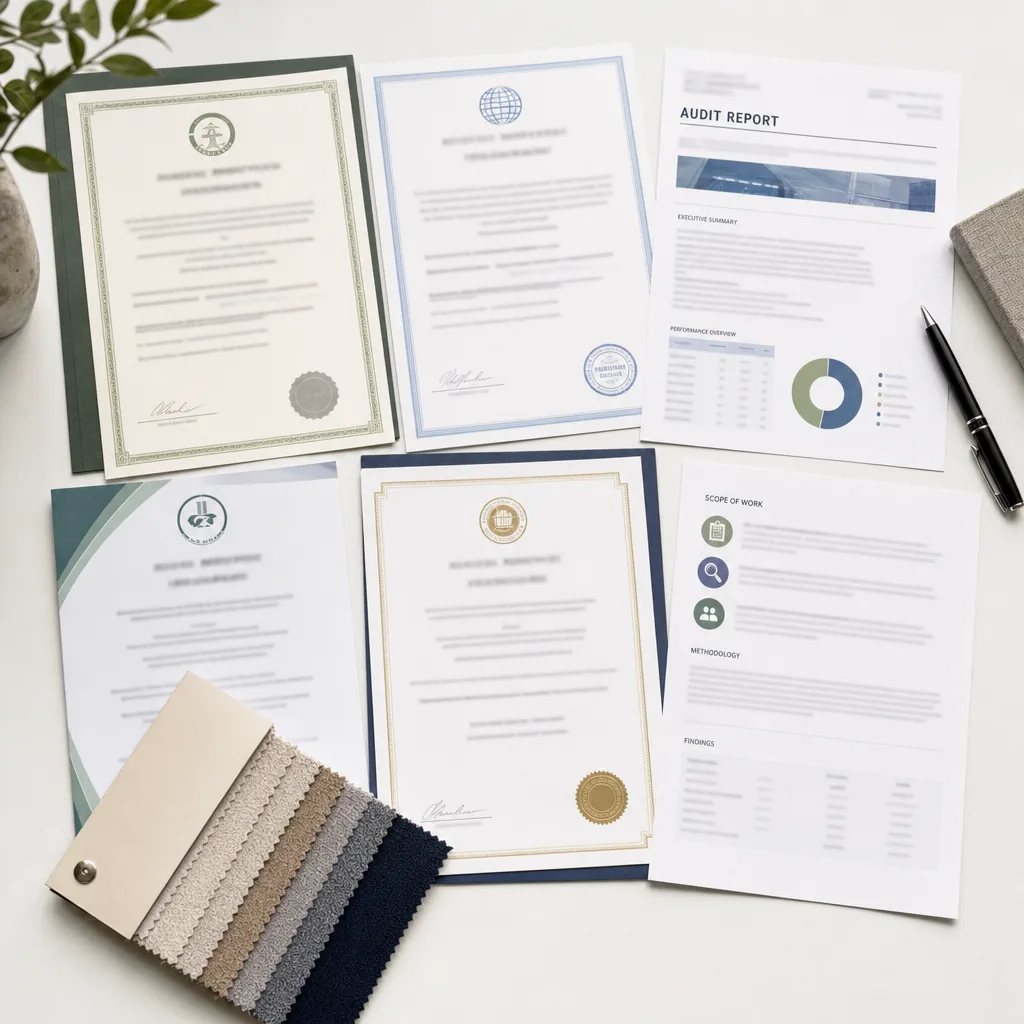
A real compliance pack starts with style-specific CPSIA evidence, not a generic pass report from a nearby SKU. Any kids custom cap manufacturer should be able to show test reports that match the exact bill of materials on the PO: crown fabric, visor board, sweatband, seam tape, closure, eyelets, top button, thread, care label, and every decorative component that adds ink, PVC, TPU, silicone, metal, or adhesive. For U.S. programs, buyers should expect reports from SGS, Intertek, or Bureau Veritas dated within the last 12 months, with results for total lead in substrates, lead in surface coatings, and phthalates where plasticized parts are present. If the cap uses a silicone patch, heat-transfer film, rubber badge, metallic print, or a PP snapback, each item should appear as a separately identified tested component. The common failure I see is a lab report that only covers the 100% cotton twill shell while the trim package changed after sample approval. The pack should also tie approved Pantone TCX or coated references to the tested trims, because a color swap can mean a new ink system and a new compliance risk.
The second block is mechanical and traceability documentation tied to the finished cap, not loose warehouse parts. For infant and toddler headwear, buyers should ask for small-parts and sharp-edge evaluation by age grade, plus attachment records for any button, badge, pom, stud, or appliqué that could detach under tension or torque. A usable file states the test method, lab, sample description, and pass/fail result; better factories also keep internal pull-test records showing attachment method, stitch count, and reinforcement details before goods ever go to the lab. On the production floor, exposed snap prongs, burrs on metal buckles, and brittle low-temperature plastics are immediate hold points because they show up again in AQL 2.5 final inspection.
The paperwork buyers ignore until Customs or retailer QA asks for it is usually what delays shipment. The pack should include fiber-content confirmation, country-of-origin labeling, care instruction format, and the tracking label layout required under CPSIA, with manufacturer or importer identity plus production-date traceability such as factory code and month/year. A cap can pass chemistry and still be noncompliant if the permanent labeling is wrong or if traceability only exists on a removable hangtag. Most mass retail, licensed, and Amazon programs also require current social compliance evidence, typically a sedex-audit-cap-supplier-guide.html">BSCI 2.0 audit or Sedex SMETA 4-Pillar report, alongside the Children's Product Certificate issued against the tested style. Our standard practice is to place the tracking reference on the inner seam label or sweatband print and to cross-check that placement against packing approval, because once labels are buried in bulk production, relabeling 5,000 units is slow and expensive.
Frequently Asked Questions
What is the minimum order quantity (MOQ) for custom hats?
Our standard MOQ is 100 pieces per design and color, with sampling available from 1 piece. For complex multi-color logos or premium fabric upgrades, the MOQ can be lowered with a small per-piece surcharge.
Do you support sustainability certifications?
Yes. We work with GOTS organic cotton, GRS-certified recycled polyester, OEKO-TEX Standard 100 fabrics, and are BSCI and Sedex audited. Certification documentation can be provided per order.
How long does production take?
Sampling takes 7 to 12 days. Bulk production runs 20 to 30 days depending on quantity, fabric availability and decoration complexity. Inspection and packing adds another 3 to 5 days before shipment.
What logo decoration techniques do you offer?
3D puff embroidery, flat embroidery, woven patch, leather patch, PVC patch, screen printing, sublimation, applique and laser etching, all in-house with no subcontracting.
Can I order a sample before bulk production?
Yes. We strongly recommend approving a pre-production sample before mass production. Samples are charged at 35 to 60 USD each plus express shipping, fully refundable against confirmed bulk orders over 500 pieces.
What's the MOQ for custom embroidered baseball caps no minimum?
When evaluating custom embroidered baseball caps no minimum, the key considerations are construction quality, decoration capability, MOQ flexibility and lead time. Anything that can fit through a 31.7 mm small-parts cylinder fails for kids under 3. That means: no decorative beads, no detachable patches, no plastic snap closures on infant caps. Use Velcro or fabric strap. EU treats kids' apparel under REACH; toys (with structural play function) under EN 71. Embroidered logos, sewn-on patches, fabric straps — all REACH. Hats with…
How does ordering high quality custom baseball caps work?
When evaluating high quality custom baseball caps, the key considerations are construction quality, decoration capability, MOQ flexibility and lead time. Anything that can fit through a 31.7 mm small-parts cylinder fails for kids under 3. That means: no decorative beads, no detachable patches, no plastic snap closures on infant caps. Use Velcro or fabric strap. Infant (0-12 months, 38-44 cm), toddler (1-3 years, 46-50 cm), kids (4-12 years, 52-56 cm), youth (12-16 years, 54-58 cm). Manufacturing tooling differs at each tier.
How does ordering baseball cap with custom logo work?
When evaluating baseball cap with custom logo, the key considerations are construction quality, decoration capability, MOQ flexibility and lead time. CPSIA test report (current, under 12 months old), small-parts inspection certificate, fabric content label confirmation, BSCI/Sedex social audit, tracking-label compliance (CPSIA requires manufacturer + production date on the cap). Infant (0-12 months, 38-44 cm), toddler (1-3 years, 46-50 cm), kids (4-12 years, 52-56 cm), youth (12-16 years, 54-58 cm). Manufacturing tooling…
What's the MOQ for custom hat embroidery no minimum?
When evaluating custom hat embroidery no minimum, the key considerations are construction quality, decoration capability, MOQ flexibility and lead time. Flat embroidery is universally safe. PVC patches must be phthalate-tested. Heat-transfer print must use water-based ink (not solvent-based) for the under-3 segment. Sublimation is fine. Infant (0-12 months, 38-44 cm), toddler (1-3 years, 46-50 cm), kids (4-12 years, 52-56 cm), youth (12-16 years, 54-58 cm). Manufacturing tooling differs at each tier.
Ready to start your custom hat project?
Send us your tech-pack, sketch or even just an inspiration photo. We will respond with a detailed quotation and digital mock-up within 24 hours.
Request a free quoteRelated guides
Refreshing a Hat Collection: A Repeat-Order Playbook for Established Brands
Read article →
Ball Caps for Women: A 2026 Sourcing Playbook for International Buyers - 2026 Buyer's Guide
Read article →
Festival Bucket Hats Reorder Planning Guide for Custom Hat Buyers
Read article →We hope this guide demystifies kids' & children's cap manufacturing: cpsia compliance and sizing - supplier checklist and helps you move forward with confidence. If you have questions specific to your project, our English-speaking sales engineers are one message away.