
Launching a Hat Brand: Marketing Playbook for the First 12 Months - Supplier Checklist
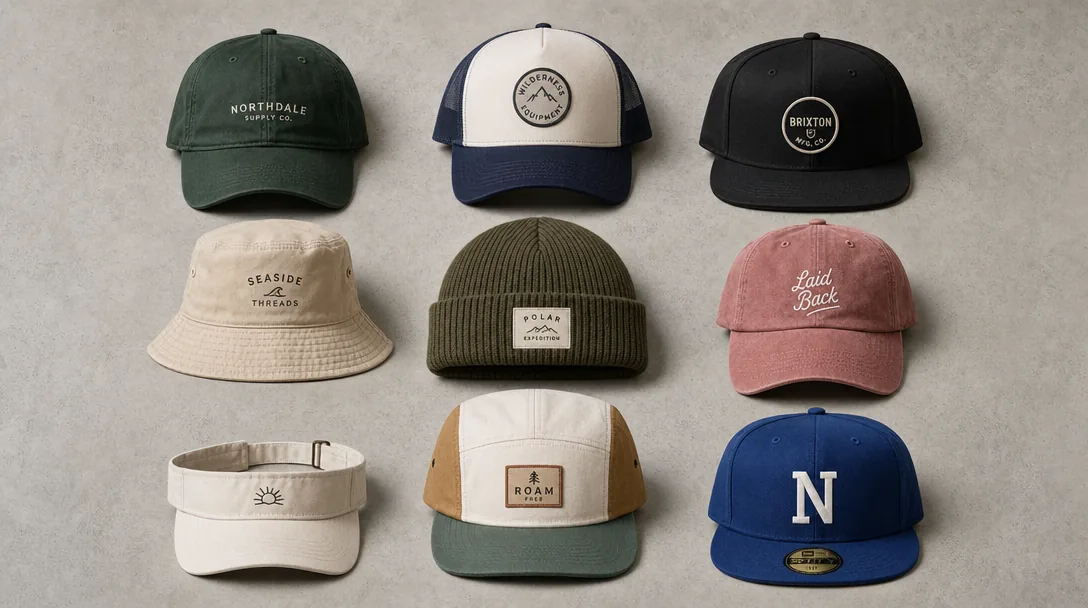
For brand owners, wholesalers and procurement teams entering the custom headwear category, launching a hat brand: marketing playbook for the first 12 months - supplier checklist is one of the highest-leverage decisions you will make. Get it right and your unit economics, retail story and reorder cycle all improve. Get it wrong and you carry the cost for years.
The first 90 days: brand identity + photo assets
The first 90 days usually fail on two basics: the brand standard is too vague to manufacture consistently, and the image library is too thin to sell. Before you spend a dollar on Meta ads or influencer seeding, lock a usable identity system: vector logo files in AI/EPS/SVG, a one-page voice guide, three to five approved colors referenced to Pantone C or Pantone FHI/TCX, and panel-by-panel decoration rules. On caps, that means front logo width in millimeters, side and back placements, embroidery minimum line thickness of 0.8 mm, minimum negative space of 1.0 mm, and thread color approvals under a D65 light box. I have seen founders burn $1,500 to $3,000 on a Shopify setup and then launch with mismatched forest green hex codes, one unapproved puff embroidery file, and six phone photos. That is not hat brand marketing; that is expensive confusion. If your supplier is sewing cotton twill, brushed canvas, and 600D performance polyester, the same logo can read differently unless you control stitch density, underlay, and acceptable shade variance.
Photo assets are the actual fuel for first-quarter hat brand marketing, and 30 images is a floor, not a stretch goal. A practical first set is 8 to 10 white-background e-commerce shots, 8 on-head lifestyle frames, 6 macro detail shots of embroidery, seam taping, sweatband, eyelets, and closure hardware, plus 6 to 8 wider brand images for homepage banners, email headers, line sheets, and marketplace listings. Schedule 2 to 3 shoot days around your first approved samples, not after launch, and name every file by SKU, colorway, and view type so assets stay usable when you add styles. Edited exports should cover web-ready JPEG at 2000 to 3000 px on the long side, with layered TIFF or PSD masters for print. Use a gray card and calibrated monitor because navy regularly drifts purple and black often opens charcoal online. Buyers and consumers both zoom in; they will notice puckering, loose trims, off-center top buttons, visor asymmetry, and sloppy stitch count before they read your copy.
Product photography: spec, lighting, and turnaround
Inconsistent images erode trust faster than a cheap camera body, so lock the shot list before the sample carton closes. For effective hat brand marketing, you need three formats at minimum: 1:1 pure-white e-commerce frames for Shopify, Amazon, and distributor sheets; 4:5 on-model or mannequin images for Meta ads and Instagram; and one 16:9 hero crop that clearly shows crown profile, visor curve, embroidery density, stitch direction, and fabric hand. Specify panel count, closure type, visor shape, and exact color references up front—Pantone TCX for textiles, Pantone C for coated print standards—because a black brushed-cotton dad cap and a black 600D polyester snapback will not meter or reflect the same way. If the design uses optic white thread, Pantone Black C, neon shades, or tonal embroidery, require correction against the sealed approval sample under D65 lighting, with a Delta-E tolerance of 2.0 or better. If you skip that step, the listing image drifts warmer or flatter than bulk reality, and buyers start questioning whether the shipment matches the approved sample.
Lighting should follow fabric behavior, not a mood-board aesthetic. Brushed cotton twill around 240-280 gsm absorbs light and needs broad frontal fill to keep seam definition on the front panels, while taslon nylon, microfiber peach, and PU-coated performance fabrics throw specular highlights unless the photographer uses a large diffusion source, side flagging, and negative fill to control glare. For detail shots, a 90-105 mm macro lens is the practical range to show satin stitch coverage, 3D puff height, merrowed patch edge, woven-label legibility, and defects buyers actually care about, like tunneling, puckering, or pull on lightweight buckram-free fronts. The shot list should go beyond a basic front view: straight-on, 30-degree angle, rear closure, underbill, interior sweatband, and one inside frame if seam taping, printed labels, or private branding matters. Factory-side photography is usually most efficient during sampling, with realistic pricing around US$8-US$15 per flat-lay frame, US$15-US$30 for retouched detail images, and US$40-US$80 for lifestyle shots. Send editable AI, EPS, or PDF logo files, specify minimum output like 3000 px on the long edge, and note must-capture features such as laser-perforated panels, clasp engraving, or underbill print so the photographer is not guessing.
Instagram + TikTok: organic growth in headwear
Instagram and TikTok should not run the same creative if you want early hat brand marketing to produce sales instead of vanity metrics. Instagram is the cleaner platform for product clarity, so treat the grid like a technical sell sheet: front, side, back, underbill, sweatband, closure, interior taping, and on-head fit should all be visible within a 12- to 14-post window. Flat-lays and macro shots usually outperform vague lifestyle images because buyers want to judge crown height, brim curve, logo scale, stitch density, and fabric texture before they click through. A half-day shoot typically costs $300 to $800 and should use daylight-balanced lighting around 5500K, a gray card, and one consistent focal length so your 6-panel structured snapback does not look like three different caps across the feed. If color is a selling point, match shell fabric to Pantone TCX under D65 light and hold visible variance around Delta-E 1.5 to 2.0; otherwise your content promises a shade your repeat bulk lot may not hit.
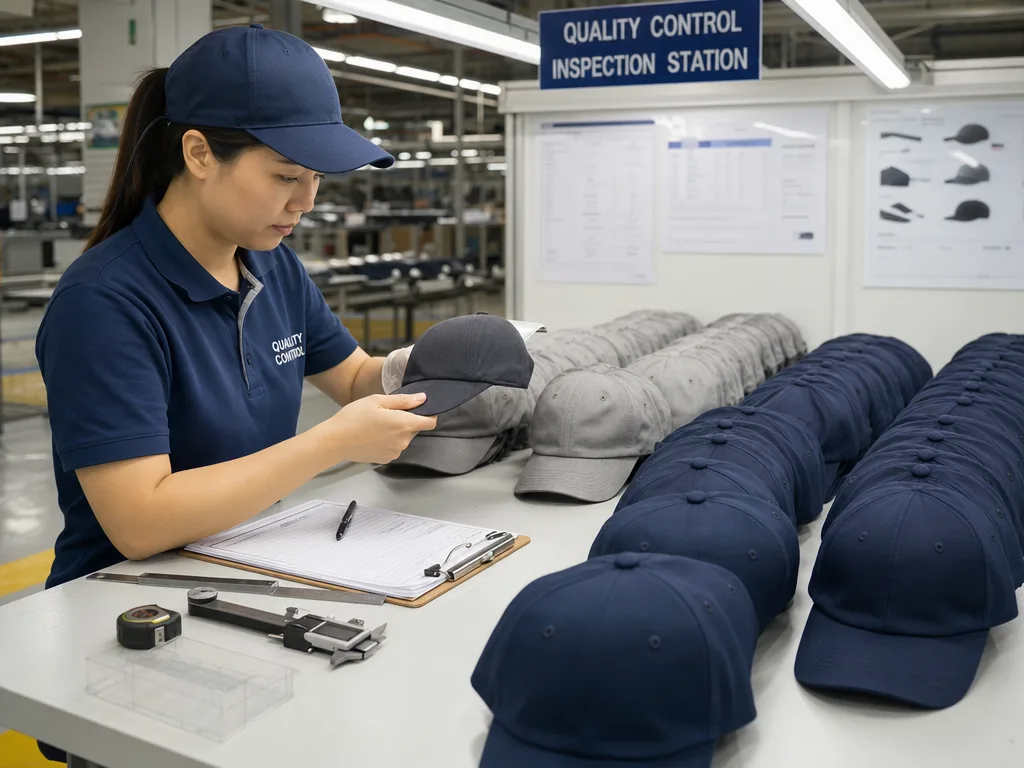
Behind-the-scenes content only works when it proves something measurable. Show a Tajima or Barudan head running a 6 mm satin stitch, a PVC or silicone patch heat-applied at the correct dwell time, or QC checking seam alignment, visor symmetry, top-button centering, and embroidery placement to AQL 2.5. Those clips tell buyers there is an actual production system behind the brand, not just mockups and captions. On TikTok, speed matters more than polish: keep most posts in the 8- to 18-second range, open with the strongest visual in the first second, and answer fit, fabric, closure, and ship date with text overlays before the viewer has to dig in comments. Assembly edits, embroidery strike-offs, trim approvals, first-wear reactions, and final carton packing usually outperform cinematic montages because they compress quality, urgency, and proof into one quick decision. For lean hat brand marketing budgets, batch 20 to 30 clips from one production run and reuse the best performers on product pages, email drops, wholesale decks, and creator seeding; three useful posts a week generally beat one expensive hero edit every three weeks.
Wholesale outreach: who to email and what to send
Go after accounts that can reorder, not accounts that want to co-design. In the first 12 months, the healthiest wholesale targets are independent skate shops, surf stores, music-merch boutiques, resort gift stores, festival operators, and regional streetwear retailers with one to five doors. A practical filter is buyers willing to place 48 to 144 units per SKU on standard terms, usually Net 30 after the first prepaid order, without asking for six custom samples, split shipments, or exclusive trims. Build the list from Instagram geotags, Google Maps, Faire category pages, and exhibitor directories from Agenda, Surf Expo, Outdoor Retailer, PGA Show gift exhibitors, and regional resort shows. Segment the list by floor economics, not aesthetics. Skate and surf accounts typically need landed-wholesale equivalents around $7.50 to $12.00 on 5-panel nylon taslan, 210 gsm chino twill, or brushed cotton dad caps, while better fashion boutiques can accept $12.00 to $18.00 if the cap supports a $32 to $48 MSRP with convincing trim value. Strong hat brand marketing at wholesale level is really assortment math. Buyers want to see whether your silhouettes, margins, and reorder logic fit their fixture. Show a tight opening range: for example, one unstructured 6-panel, one foam trucker, one 5-panel camp, and one premium wool-blend snapback, each with two to four colorways. If a store sells through logo product in under 60 days, they care more about repeatability than brand story. That means your outreach should make wholesale terms obvious: MOQ by style/color, case pack, lead time, and reorder threshold. At CrownsForge, our standard practice is to discourage founders from pitching broad seasonal concepts before they can prove stable ex-factory lead times, carton consistency, and color repeat tolerance. Wholesale buyers read those signals faster than they read mood boards.
The outreach pack should be reviewable on a phone in under 90 seconds. Send one linesheet PDF under 3 MB, three sharp images, and a wholesale sheet that answers operational questions without back-and-forth. Every style needs style number, silhouette, fabrication, crown profile, visor shape, closure, decoration method, wholesale, and MSRP in one row. Use factory language, not brand poetry: 280 gsm garment-washed cotton twill, 70D nylon taslan, Pantone Black 6 C reference, matching PP snapback, direct embroidery at 6,000 stitches on Tajima or Barudan heads, or woven patch with 0.8 mm merrow edge. Include one line with hard terms such as “72 pcs per style/color, 30 to 35 days ex-factory after PP sample approval, carton pack 24 pcs, AQL 2.5 final inspection.” Buyers who know headwear immediately assess receiving, ticketing, fixture density, and landed margin, so carton dimensions, net/gross weight, country of origin, and realistic Delta-E 1.5 to 2.0 color tolerance belong in the pack. Cold email underperforms when the assets look pretty but useless. A reasonable benchmark is 18% to 25% open rate and 3% to 6% reply rate, and most of that performance comes from clarity. Subject lines like “Wholesale caps for [Store Name] | SS25 linesheet” beat slogans because they tell the buyer exactly what is inside. Keep file names clean: “SS25_Wholesale_Linesheet_v3.pdf” reads organized; “final-final2.pdf” reads amateur. Your image set should do three jobs: one clean front view, one side or rear closure detail, and one merchandising shot showing fit and fixture presence. After a positive reply, send the second package the same day: available stock by colorway, sample policy, reorder MOQ, MAP if applicable, embroidery or patch construction notes, and any proven sell-through by door type. “Black/stone sold 18 units per door in 45 days at $36 MSRP” is better hat brand marketing than generic social proof because it answers the real wholesale questions: margin, speed, and whether the delivered cap matches the linesheet under retail lighting.
Paid ads vs organic: what works for a $50K launch budget?
A $50,000 launch budget disappears fast if you expect Meta to profit on first purchase for a $32 to $42 cap. In hat brand marketing, paid social works best early as a testing and audience-building channel, not the main revenue engine. For U.S. streetwear or lifestyle audiences, Meta CPMs typically sit around $9 to $17, CTR often lands near 0.8% to 1.5%, and cold-traffic CPA can easily reach $38 to $65 when the brand is unknown and the landing page is thin. That math breaks quickly once you subtract landed cost, Section 301 duty where applicable, 3PL pick-pack at roughly $3 to $5, card fees near 3%, and returns. On many first runs, true contribution margin is only $10 to $18 per unit. The better move is to use Meta for creative validation and list growth: test whether the 5-panel, dad cap, or snapback gets the strongest thumb-stop rate, build retargeting pools, and acquire email or SMS opt-ins in the $1.80 to $4.50 range before you scale inventory or commit to the next MOQ.
Google Search and Shopping usually deserve the largest paid share because buyer intent is already there. Queries like "corduroy 5-panel hat," "black snapback streetwear," or "nylon dad cap" tend to produce CPCs around $0.90 to $2.70; broad terms like "hats" burn cash and pull low-intent traffic. In practice, tightly grouped campaigns with silhouette-specific landing pages often convert 2x to 4x better than cold social because the shopper already knows what they want. Send "rope golf cap" traffic to a rope-cap page with crown height, fabric, closure, sweatband, and embroidery detail—not the homepage. A disciplined split for a $50,000 first-year launch is 55% to 65% on Search and Shopping, 20% to 25% on Meta prospecting plus retargeting, and 15% to 20% on organic assets such as technical SEO, creator seeding, Klaviyo flows, and UGC built from every sample round. Organic is slower, but by month 12 it should be lowering blended CAC while paid search keeps harvesting intent.
The first wholesale account: what to expect
Treat the first wholesale account as a live operational test, not validation that the market is solved. Most opening orders from boutiques, team dealers, and promo resellers land at 48 to 144 units across 3 to 6 SKUs, usually with one conservative colorway carrying 60% to 70% of the volume. The buyer is measuring sell-through, fill rate, and whether you can follow a line sheet without errors, so your payment terms should stay tight. In practice, that means charging sample and pre-production costs up front, then requiring 100% payment before shipment on the first bulk PO; Net-30 only makes sense after the order arrives complete and any carton-count, barcode, or ticketing claim is closed. If you subsidize freight, put a hard ceiling on it: FOB Ningbo with a freight credit capped at $150 to $200, or DDP only for 2 to 3 cartons under about 0.25 CBM. On hats with ex-factory costs around $3.20 to $6.80 per piece, one vague freight promise or relabeling mistake can erase the profit on the entire order. Strong hat brand marketing at wholesale level is not mood-board language; it is presenting style codes, MOQ by color, carton pack, lead time, and claim terms in writing before the PO is issued.
The second order is the only result that counts. For an early wholesale program, a 30% to 40% reorder rate within 90 to 120 days is healthy; below that, the usual causes are bloated assortments, no structured reorder follow-up, or the best-selling SKU being out of stock when the buyer is ready. Track every test order at style level: crown profile, panel count, fabric weight, closure, visor shape, and decoration method. A mid-profile 5-panel in 228T nylon taslan with 3D puff embroidery may outperform a 260 gsm brushed cotton dad cap even if your DTC store says the opposite, because retail accounts optimize for turn, not brand narrative. What wins the repeat PO is boring precision: Pantone TCX approvals logged before bulk, color variance held within Delta-E 1.5 against the approved standard, embroidery files digitized cleanly for Tajima or Barudan heads, and reorder forms that match the wholesale portal exactly. Buyers do not need more storytelling after the first delivery. They need confidence that style CF-241 in black/khaki will ship again with the same hand feel, stitch density, carton marks, and packing ratio.
Frequently Asked Questions
What file format should I send for my logo?
Vector files (AI, EPS, PDF) are ideal. High-resolution PNG or JPG at 300 dpi on transparent background works as a fallback. Provide Pantone color references for accurate reproduction.
What logo decoration techniques do you offer?
3D puff embroidery, flat embroidery, woven patch, leather patch, PVC patch, screen printing, sublimation, applique and laser etching, all in-house with no subcontracting.
Which shipping methods do you support?
We support FOB, CIF and DDP shipping. Air express for samples and small orders, sea LCL for 100 to 500 pieces, sea FCL for 5,000+ pieces. Door-to-door DDP available for US, EU, UK, Canada and Australia.
How long does production take?
Sampling takes 7 to 12 days. Bulk production runs 20 to 30 days depending on quantity, fabric availability and decoration complexity. Inspection and packing adds another 3 to 5 days before shipment.
Do you support sustainability certifications?
Yes. We work with GOTS organic cotton, GRS-certified recycled polyester, OEKO-TEX Standard 100 fabrics, and are BSCI and Sedex audited. Certification documentation can be provided per order.
How does ordering baseball cap embroidered custom work?
When evaluating baseball cap embroidered custom, the key considerations are construction quality, decoration capability, MOQ flexibility and lead time. Meta ads work for cold-traffic awareness but underperform for direct conversion on a $30-40 cap. Google Search ads on long-tail keywords ('custom snapback wholesale', 'streetwear cap brand') convert better. Hat content on Instagram clusters around: outfit-style flat-lays, behind-the-scenes manufacturing, customer wearing, and 'cap drop' announcement videos. TikTok favors…
How does ordering custom embroidered trucker hat work?
When evaluating custom embroidered trucker hat, the key considerations are construction quality, decoration capability, MOQ flexibility and lead time. Hat content on Instagram clusters around: outfit-style flat-lays, behind-the-scenes manufacturing, customer wearing, and 'cap drop' announcement videos. TikTok favors quick assembly / unboxing edits. Meta ads work for cold-traffic awareness but underperform for direct conversion on a $30-40 cap. Google Search ads on long-tail keywords ('custom snapback wholesale',…
What's the MOQ for custom embroidered baseball caps no minimum?
When evaluating custom embroidered baseball caps no minimum, the key considerations are construction quality, decoration capability, MOQ flexibility and lead time. Meta ads work for cold-traffic awareness but underperform for direct conversion on a $30-40 cap. Google Search ads on long-tail keywords ('custom snapback wholesale', 'streetwear cap brand') convert better. Logo, brand voice, three core colors, and 30 photos. Without 30 photos you cannot launch a website, populate Instagram, or seed wholesale buyers. Plan 2-3 days of…
How does ordering custom flat brim hat work?
When evaluating custom flat brim hat, the key considerations are construction quality, decoration capability, MOQ flexibility and lead time. Hat content on Instagram clusters around: outfit-style flat-lays, behind-the-scenes manufacturing, customer wearing, and 'cap drop' announcement videos. TikTok favors quick assembly / unboxing edits. Flat-lay (white background, 1:1 aspect), lifestyle (model wearing, 4:5 aspect), detail shot (logo close-up, 16:9 hero). We can do all three at our facility with your sample…
Are hat brands profitable?
A well-run hat business typically achieves profit margins between 10-30% of revenue after all expenses. Direct-to-consumer brands focusing on premium products can reach 40%+ margins, while wholesale-focused businesses generally operate at 15-25% net profit.
Are hats good advertising?
Branded hats are another great promotional merch idea for the following reasons: Eye-Level Advertising: The logo or design on a promotional hat is often positioned at eye-level, making the branding easily noticeable and once again turning the wearer into a “walking billboard” for your brand.
Need a low-MOQ test order?
We help emerging brands launch with as few as 100 pieces. Premium fabric, in-house embroidery, retail-ready packaging.
Start a small orderRelated guides
BSCI vs Sedex vs WRAP vs WCA: Compliance Audit Standards Compared (2026 Update)
Read article →
Primark Bucket Hat: A Vertical-Specific Sourcing Guide
Read article →
Custom Hat Embroidery: The 2026 Sourcing & Manufacturing Playbook - Supplier Checklist
Read article →We hope this guide demystifies launching a hat brand: marketing playbook for the first 12 months - supplier checklist and helps you move forward with confidence. If you have questions specific to your project, our English-speaking sales engineers are one message away.