
Launching a Hat Brand: Marketing Playbook for the First 12 Months - Cost & MOQ Breakdown
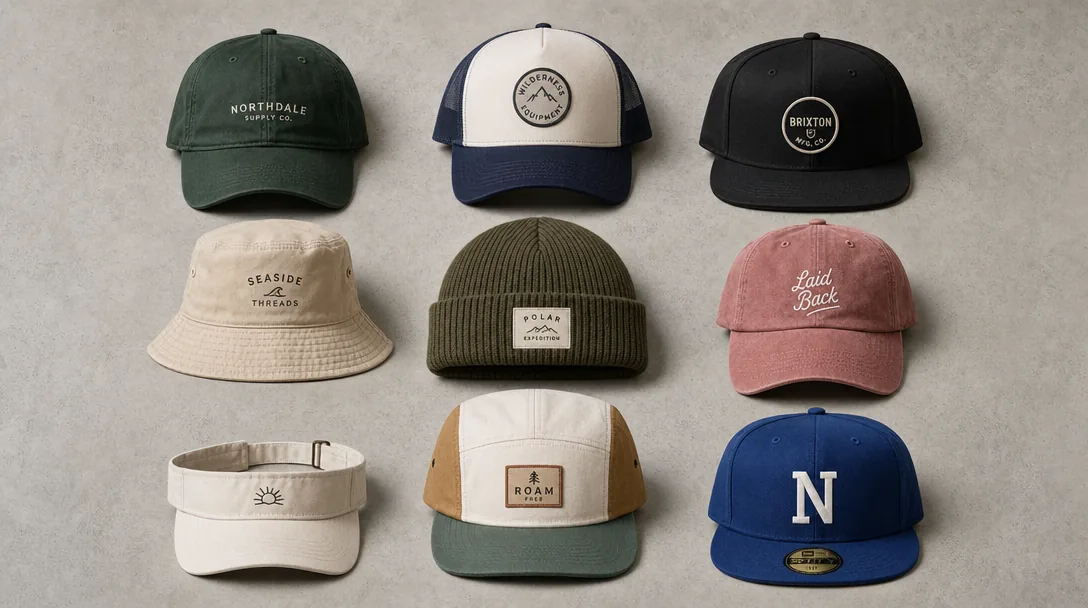
For brand owners, wholesalers and procurement teams entering the custom headwear category, launching a hat brand: marketing playbook for the first 12 months - cost & moq breakdown is one of the highest-leverage decisions you will make. Get it right and your unit economics, retail story and reorder cycle all improve. Get it wrong and you carry the cost for years.
The first 90 days: brand identity + photo assets
In the first 90 days, lock two things before you spend on traffic: a brand system that survives production, and a photo library that can carry wholesale and DTC. The minimum viable identity is not a mood board; it is a usable spec pack for creative and factory teams. That means one primary wordmark, one embroidery-safe logo redraw, one simplified icon, a short voice guide, and three core colors tied to Pantone TCX or TPX references with numeric tolerances. I tell founders to hold woven labels, swing tags, sticker packs, and cartons to Delta-E 2.0 to 3.0 where practical, because color drift across trims makes a young brand look disorganized fast. The logo also needs to work across 3D puff, flat embroidery, woven patches, satin stitch appliqué, DTF transfers, and 32-pixel digital use without a last-minute redraw because a column stitch is too narrow or a serif collapses. Good hat brand marketing starts here: if the identity cannot survive Tajima or Barudan execution, the campaign will overpromise before the first reorder lands.
Your launch photo set should be built for conversion, not vanity. Thirty edited images is a realistic floor for 2 to 3 opening styles: 10 clean ecommerce frames on white or light gray, 10 lifestyle shots for fit and scale, 5 construction or material macros, and 5 brand-story images covering trims, packaging, or process. That set should include front, left, right, back, underbill, closure, sweatband, seam tape, interior label, and fabric texture on each hero SKU. If your first sample round is only 24 to 48 pcs, schedule the shoot as soon as PPS samples are approved, while crown shape, visor curve, and fabric finish still look crisp. In most U.S. markets, a lean commercial shoot runs about $800 to $2,500 per day, with basic retouching at $150 to $400; that is still cheaper than rebuilding weak assets after Meta spend starts.
The camera will expose every shortcut, so do not photograph samples before a basic QC check against the approved spec. Buyers claiming they want “premium” will zoom into thread trims, embroidery registration, brim binding, crown symmetry, eyelet spacing, back-strap alignment, and hardware plating. A sample sewn well enough for a fit meeting can still fail in macro if the puff underlay is uneven, stitch density is too aggressive, or push-pull compensation leaves the logo slightly distorted. Our standard practice is to approve photography samples only after checking logo placement, visor profile, sweatband finish, closure function, and overall make against AQL 2.5 visual expectations. That discipline keeps hat brand marketing honest: the product page, line sheet, and paid ad all show the same quality level the buyer will actually receive.
Product photography: spec, lighting, and turnaround
Product photos usually move first-purchase conversion more than an extra round of paid traffic, so they belong inside hat brand marketing from day one, not as post-launch cleanup. For a new SKU, the minimum set that actually works is three formats with fixed specs: a 1:1 white-background image at 3000 x 3000 px for Shopify, Faire, and Amazon-style listing grids; a 4:5 on-model frame at 2160 x 2700 px for Instagram, Meta, and TikTok ads; and a 16:9 campaign or detail image at 2400 x 1350 px for homepage banners, lookbooks, and wholesale decks. Color control needs to reference the approved lab dip or Pantone TCX chip, with a retouched Delta-E target under 2.0, because pigment-washed cotton twill, acrylic-wool blends, and 420D nylon taslon all react differently under mixed light. One hero shot and one flat lay are not enough. Buyers want to judge crown height, visor curvature, front-panel alignment, back opening shape, and how the logo sits once the cap is actually worn.
Lighting has to match the cap construction or the product will read cheaper than it is. Structured 6-panel snapbacks with buckram fronts need broad lateral fill and controlled overhead light so the crown profile stays defined without blowing out satin stitch or metallic thread, while unstructured dad hats usually need a slightly higher key and more negative fill to keep the visor seam, eyelets, self-fabric strap, and sweatband edge from collapsing into shadow. For detail frames, a 90 mm or 100 mm macro lens with cross-polarized lighting is the correct setup for TPU patches, raised 3D embroidery, high-density fills, and reflective transfers; otherwise glare hides stitch registration, edge finish, and texture. The close-ups that matter are the ones buyers inspect in hand: seam taping, undervisor fabric, snapback gate marks, bartack density, interior label sewing, and whether embroidery coverage stays clean without puckering or thread trims.
Turnaround is fastest when photography is tied to the approved pre-production sample instead of waiting for bulk output or forwarding pieces to a separate studio. The practical factory-side method is to shoot the exact PPS that already cleared fit, color, logo placement, and trim approvals, so the visual reference stays tied to the signed-off fabric lot and avoids another freight cycle. Realistic pricing in China is typically $8 to $15 per white-background frame, $20 to $40 for a macro detail, and $35 to $80 for a lifestyle image depending on model cost, steaming, prop styling, and retouch depth. A nine-image set for one SKU usually lands around $180 to $420, with raw selects ready in 2 to 3 working days and finals in 4 to 7. That speed matters because it lets founders publish PDPs, alt text, launch emails, and wholesale PDFs as soon as sample approval is done, instead of burning another 10 to 14 days on studio booking and courier transit.
Instagram + TikTok: organic growth in headwear
Organic growth usually breaks on bad creative discipline, not lack of ad spend. In early hat brand marketing, Instagram only needs four repeatable post types: flat-lays, process footage, on-head customer shots, and release posts with a fixed drop date. Four good posts per week is enough; posting 10 to 14 weak ones just teaches the feed to down-rank you. Product images have to read like production, not mood-board content. If your shell fabric is Pantone 19-0303 TCX black or your visor sandwich is a tight custom contrast, visible color shift past about Delta-E 3 makes buyers question consistency before they ask about MOQ or lead time. A usable setup is straightforward: neutral gray backdrop, two LED panels at 5000K to 5600K with CRI 95+, a 50mm equivalent lens, and side lighting strong enough to show crown profile, brim curve, topstitch count, eyelet finish, seam tape, and closure hardware. Most startups can build that station for $300 to $800; a U.S. freelance product shoot usually lands around $250 to $700 for 15 to 40 edited images.
TikTok works when the cap feels physical and immediate, not polished to death. The clips that move for new headwear labels are usually 8 to 20 seconds: a Tajima or Barudan head running a 6,000 to 12,000 stitch front logo, buckram shaping, sweatband attachment, sticker peel, carton opening, and first-on-head try-ons in daylight. That footage does what mockups cannot: it shows stitch density, panel alignment, brim rebound, profile depth, and whether the fit actually suits the wearer. If you are making 144 to 300 pieces per colorway, ask the factory for vertical clips during sampling, embroidery, trimming, and final packing; in practice it adds little or no cost if requested with the PO and shot alongside inline QC. Instagram should act as the catalog layer, with pinned posts for the hero style, fit guide, and launch calendar, while TikTok handles reach through output volume. A practical first-year cadence is one teaser, one process post, one wear-test or styling post, and one founder explainer each week, then three to five TikTok edits from the same footage. That keeps hat brand marketing content spend around $600 to $1,500 per month in-house while generating enough repetition to test demand before paying creators.
Wholesale outreach: who to email and what to send
Start with accounts that can place a 24- to 96-unit test without routing you through a buying committee: independent skate shops, menswear boutiques, surf retailers, college bookstores, museum stores, and regional promo distributors already moving Richardson 112s, Yupoong 6006s, or local team caps. Those buyers care about turn, margin, and reorder speed, not your origin story. For hat brand marketing, the first useful sales tool is a one-page linesheet capped at 4 to 8 SKUs, each shown front, side, back, and interior with the silhouette labeled correctly: 5-panel pinch front, unstructured dad cap, A-frame trucker, low-profile snapback. List the specs buyers actually compare across vendors: 260 gsm brushed cotton twill versus 280 gsm chino twill, 600D poly, nylon taslon, mesh type, buckram, closure, sweatband composition, visor board, and logo method.
Price the sheet like someone who understands store math. Show wholesale in clean breaks—24 / 48 / 96 pcs—and pair it with a realistic retail band. If a cap lands at $7.40 to $10.80 wholesale, most indie accounts need a $28 to $38 retail to protect keystone-plus margin after freight, markdowns, and card fees. Photography should remove doubt, not inflate the PDF: one white-background image per SKU for merchandising, plus two or three fit shots that clearly show crown height, brim curve, and front-panel shape on an actual head. If color is important, note whether you are matching Pantone TCX or coated references and state the tolerance honestly; on dyed cotton twill, Delta-E under 1.5 is excellent, while under 2.0 is commercially acceptable for repeat bulk. A bloated deck with 18 colorways reads like indecision. A tight range with disciplined pricing reads like a buyer can reorder it.
The outreach email should feel like a purchase option, not a founder memo. Strong subject lines are blunt: “Wholesale A-frame truckers for [Store Name]” or “Spring 5-panel caps, $8.20 wholesale.” In the body, give the silhouette, fabric, target retail, MOQ, and lead time in two or three lines, then link the linesheet and price list. Example: “Structured snapbacks in 280 gsm cotton twill, wholesale $8.10 to $9.40, suggested retail $32, MOQ 24 pcs per style/color, repeat lead time 30 to 35 days.” That is enough for a first pass. On a clean list, 22% to 35% opens and 3% to 8% replies are realistic; below that, the list is stale, the store fit is wrong, or the first sentence wasted the buyer’s time. Attach a price list with decoration type, estimated stitch count, fabric spec, case pack, carton dimensions, sample status, reorder terms, and any MAP policy. If the logo has already been tested on Tajima, Barudan, or ZSK heads with 40 wt Madeira or Gunold thread, note it once. Buyers who have been burned by bad embroidery know exactly how fast small text, satin columns, and heavy fills fail on soft front panels.
Paid ads vs organic: what works for a $50K launch budget?
With a $50,000 launch budget, paid social should buy learning, not pretend to be a profit center. For a $32 to $42 cap, cold Meta traffic typically lands around $12 to $26 CPM, 0.8% to 1.5% CTR, and a sitewide conversion rate under 1.2% unless you already have credible UGC, reviews, and clean PDP photography. If your landed gross margin after duty, 3PL pick-pack, payment fees, and domestic shipping is 58% to 65%, a first-order CAC above $20 starts choking cash flow fast. In practical hat brand marketing, Meta works best as a controlled testing layer: 15 to 20 creative variants, each isolating one detail real buyers care about, such as high-profile versus mid-profile crown, 100% cotton twill versus 380 gsm brushed canvas, 3D puff versus flat embroidery, or plastic snap versus metal buckle closure. If lead capture on email or SMS is holding at $2.50 to $5.50 and retargeting audiences are building, the spend is doing its job. Do not burn $8,000 on cinematic brand film before the store can convert. Cap buyers inspect underbill color, seam tape, eyelet alignment, closure hardware plating, and embroidery edge run; they will punish weak product pages faster than apparel buyers because hats are judged on construction details. Put $3,000 to $5,000 into conversion assets first: front, side, rear, and inside views, macro shots that show fill density and stitch count, plus six to eight UGC try-on clips under consistent CRI 95+ lighting so black does not drift to charcoal. Our standard practice is to push founders toward factual visuals over mood content because three disciplined product photo sets usually generate more usable feedback than one polished reel. Paid social should identify which SKU story earns inventory depth, not subsidize a vanity launch.
Search usually produces the first efficient orders because intent is already present. For a new hat label, allocating $8,000 to $12,000 into Google Search and Shopping is often more rational than trying to scale cold social. Exact and phrase match around commercial terms like “5 panel snapback,” “rope hat,” “fitted cap blanks,” “dad hat,” and “streetwear cap” can run at roughly $0.90 to $2.40 CPC in niche segments, with focused landing pages converting around 2.5% to 4.8%. That is materially stronger than broad social prospecting. If average order value is $38 and contribution margin is $22 to $25, you need first-order CAC closer to $12 to $18 to keep room for returns, discount leakage, and repeat-purchase lag. Paying $28 to $35 CAC on cold Meta for a first-time buyer is not scale; it is market research. The year-one split that usually works is 55% to 60% into organic and owned channels, 25% to 30% into Search and Shopping, and 10% to 15% into paid social. Organic is slower but compounds: collection-page SEO, fit guides comparing low-profile, trucker, and unstructured shapes, founder-led TikToks about sample revisions, and email flows segmented by style preference keep working after spend stops. Good hat brand marketing also depends on visual accuracy and product truth. If you claim Pantone Black 6 C on the hangtag but your PDP photography reads warm, buyers feel the mismatch immediately, the same way a Delta-E miss gets flagged during bulk approval. Use Meta to amplify proof you already have; use search to harvest demand that already exists; use owned channels to keep the margin you fought to build.
The first wholesale account: what to expect
Your first wholesale account is usually won on terms and execution, not on brand narrative. Expect a retailer packet that asks for a W-9, resale certificate, vendor setup form, routing guide, EDI requirements if they use them, and payment terms of Net-30 from receipt; regional chains often push Net-45, and some specialty stores still pay only after their intake check clears. That matters because most cap factories still require 30% to 50% deposit to start bulk, with the balance due before shipment on FOB terms or before release on DDP programs. If you are building a real hat brand marketing plan, model that cash gap before you quote a single unit. A modest opening order of 144 caps across 6 to 8 SKUs can tie up $1,500 to $3,500 in salesman samples, woven labels, Pantone TCX-matched hangtags, freight, and launch content before your receivable clock even starts.
Treat samples as risk control, not as a free courtesy. Six to twelve salesman samples with retail-ready trims, barcode stickers, and a basic line sheet usually cost $900 to $2,200 depending on fabric, decoration, and whether you are showing stock blanks or custom bodies. Free freight on the first PO only works when it is priced into the structure: U.S. parcel delivery on 48 to 144 caps typically adds $70 to $240 by zone and carton dimensions, while a pallet to a DC can jump once appointment, lift-gate, or re-delivery fees are added. Founders lose margin when they quote a brushed cotton twill 6-panel at $9.50 landed, then absorb outbound freight, compliance labeling, and account setup on top. Set a freight-included threshold, make reorder MOQ explicit, and tie lead time to decoration: roughly 12 to 18 days for standard flat embroidery on Tajima or Barudan heads, 18 to 28 days if you add woven patches, appliques, or custom trims with Delta-E-controlled color matching. Assume only 30% to 40% of first wholesale accounts will reorder quickly, so schedule follow-up before delivery: check-in at day 7 to 10, sell-through review at day 30, reorder push at day 45.
Frequently Asked Questions
What file format should I send for my logo?
Vector files (AI, EPS, PDF) are ideal. High-resolution PNG or JPG at 300 dpi on transparent background works as a fallback. Provide Pantone color references for accurate reproduction.
What logo decoration techniques do you offer?
3D puff embroidery, flat embroidery, woven patch, leather patch, PVC patch, screen printing, sublimation, applique and laser etching, all in-house with no subcontracting.
Which shipping methods do you support?
We support FOB, CIF and DDP shipping. Air express for samples and small orders, sea LCL for 100 to 500 pieces, sea FCL for 5,000+ pieces. Door-to-door DDP available for US, EU, UK, Canada and Australia.
How long does production take?
Sampling takes 7 to 12 days. Bulk production runs 20 to 30 days depending on quantity, fabric availability and decoration complexity. Inspection and packing adds another 3 to 5 days before shipment.
Do you support sustainability certifications?
Yes. We work with GOTS organic cotton, GRS-certified recycled polyester, OEKO-TEX Standard 100 fabrics, and are BSCI and Sedex audited. Certification documentation can be provided per order.
How does ordering baseball cap embroidered custom work?
When evaluating baseball cap embroidered custom, the key considerations are construction quality, decoration capability, MOQ flexibility and lead time. Meta ads work for cold-traffic awareness but underperform for direct conversion on a $30-40 cap. Google Search ads on long-tail keywords ('custom snapback wholesale', 'streetwear cap brand') convert better. Hat content on Instagram clusters around: outfit-style flat-lays, behind-the-scenes manufacturing, customer wearing, and 'cap drop' announcement videos. TikTok favors…
How does ordering custom embroidered trucker hat work?
When evaluating custom embroidered trucker hat, the key considerations are construction quality, decoration capability, MOQ flexibility and lead time. Hat content on Instagram clusters around: outfit-style flat-lays, behind-the-scenes manufacturing, customer wearing, and 'cap drop' announcement videos. TikTok favors quick assembly / unboxing edits. Meta ads work for cold-traffic awareness but underperform for direct conversion on a $30-40 cap. Google Search ads on long-tail keywords ('custom snapback wholesale',…
What's the MOQ for custom embroidered baseball caps no minimum?
When evaluating custom embroidered baseball caps no minimum, the key considerations are construction quality, decoration capability, MOQ flexibility and lead time. Meta ads work for cold-traffic awareness but underperform for direct conversion on a $30-40 cap. Google Search ads on long-tail keywords ('custom snapback wholesale', 'streetwear cap brand') convert better. Logo, brand voice, three core colors, and 30 photos. Without 30 photos you cannot launch a website, populate Instagram, or seed wholesale buyers. Plan 2-3 days of…
How does ordering custom flat brim hat work?
When evaluating custom flat brim hat, the key considerations are construction quality, decoration capability, MOQ flexibility and lead time. Hat content on Instagram clusters around: outfit-style flat-lays, behind-the-scenes manufacturing, customer wearing, and 'cap drop' announcement videos. TikTok favors quick assembly / unboxing edits. Flat-lay (white background, 1:1 aspect), lifestyle (model wearing, 4:5 aspect), detail shot (logo close-up, 16:9 hero). We can do all three at our facility with your sample…
Are hat brands profitable?
A well-run hat business typically achieves profit margins between 10-30% of revenue after all expenses. Direct-to-consumer brands focusing on premium products can reach 40%+ margins, while wholesale-focused businesses generally operate at 15-25% net profit.
Are hats good advertising?
Branded hats are another great promotional merch idea for the following reasons: Eye-Level Advertising: The logo or design on a promotional hat is often positioned at eye-level, making the branding easily noticeable and once again turning the wearer into a “walking billboard” for your brand.
Need a low-MOQ test order?
We help emerging brands launch with as few as 100 pieces. Premium fabric, in-house embroidery, retail-ready packaging.
Start a small orderRelated guides
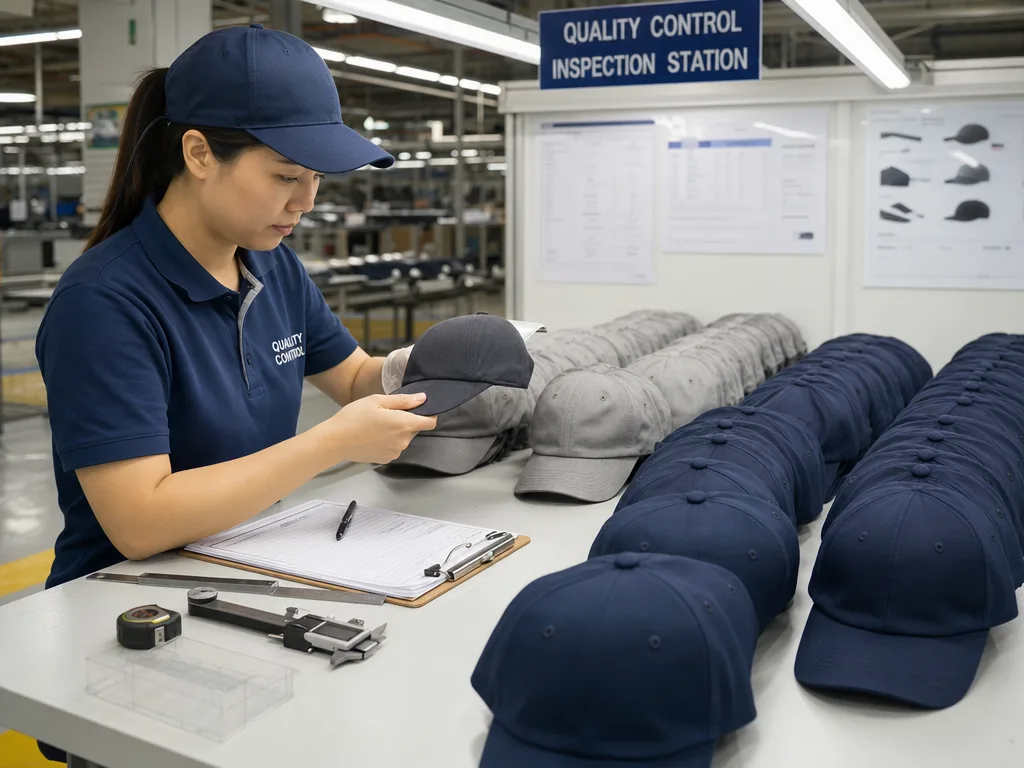
BSCI vs Sedex vs WRAP vs WCA: Compliance Audit Standards Compared (2026 Update)
Read article →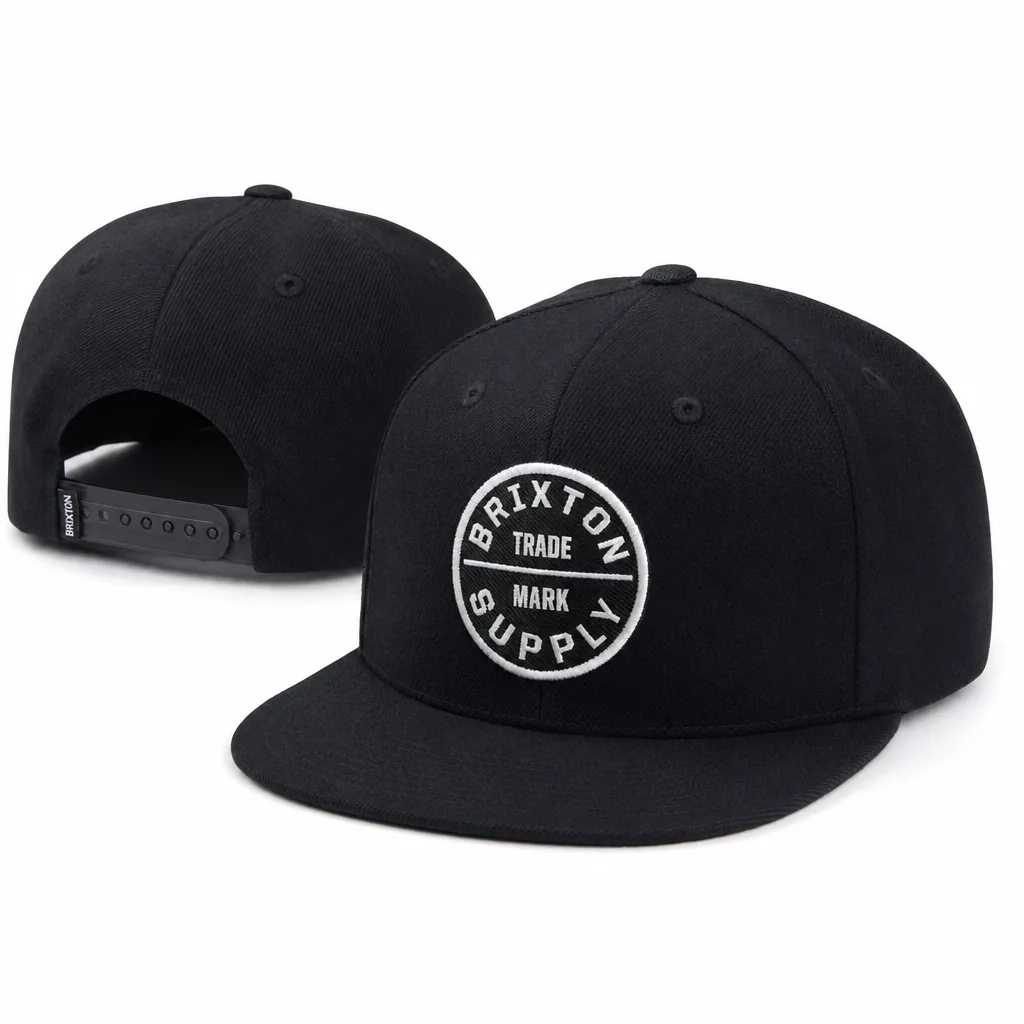
Primark Bucket Hat: A Vertical-Specific Sourcing Guide
Read article →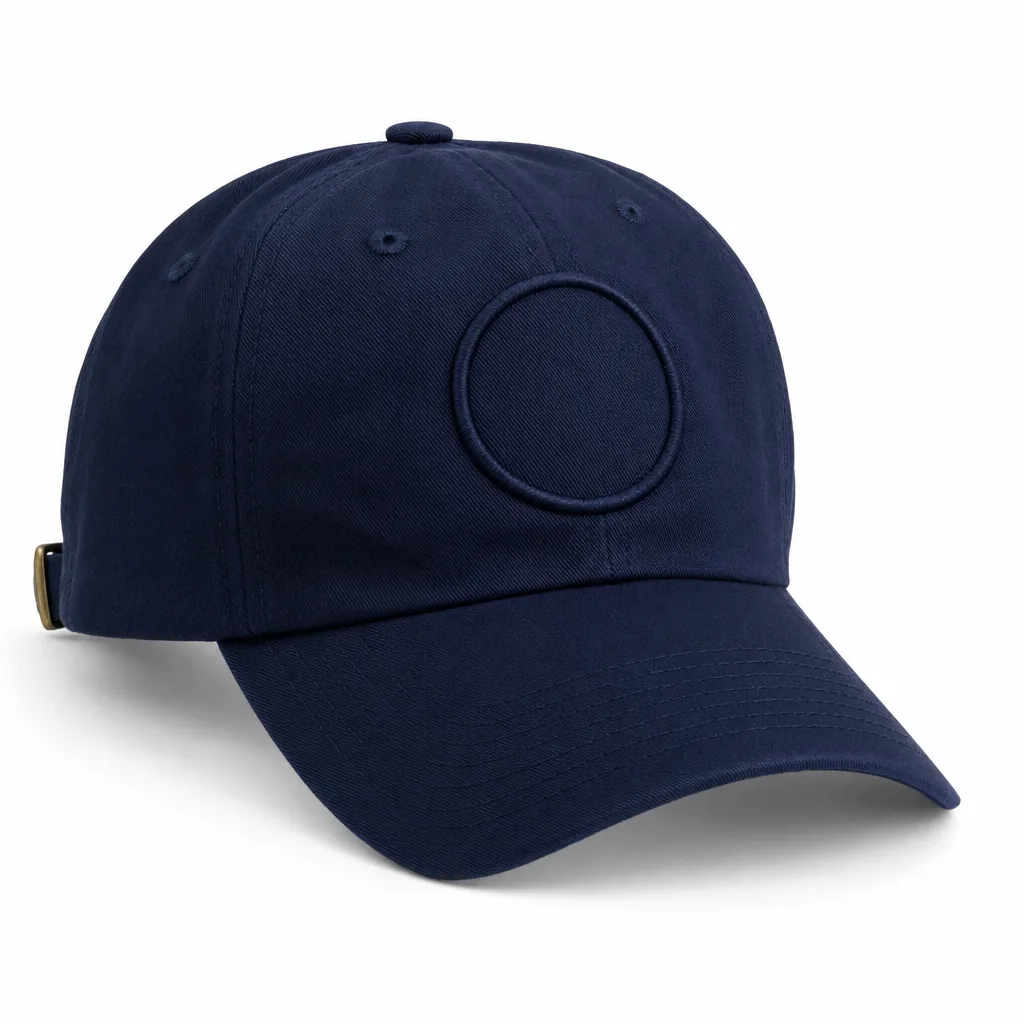
Custom Hat Embroidery: The 2026 Sourcing & Manufacturing Playbook - Supplier Checklist
Read article →We hope this guide demystifies launching a hat brand: marketing playbook for the first 12 months - cost & moq breakdown and helps you move forward with confidence. If you have questions specific to your project, our English-speaking sales engineers are one message away.