
Custom Made Trucker Hat: The 2026 Sourcing & Manufacturing Playbook (2026 Update) (2026 Update)
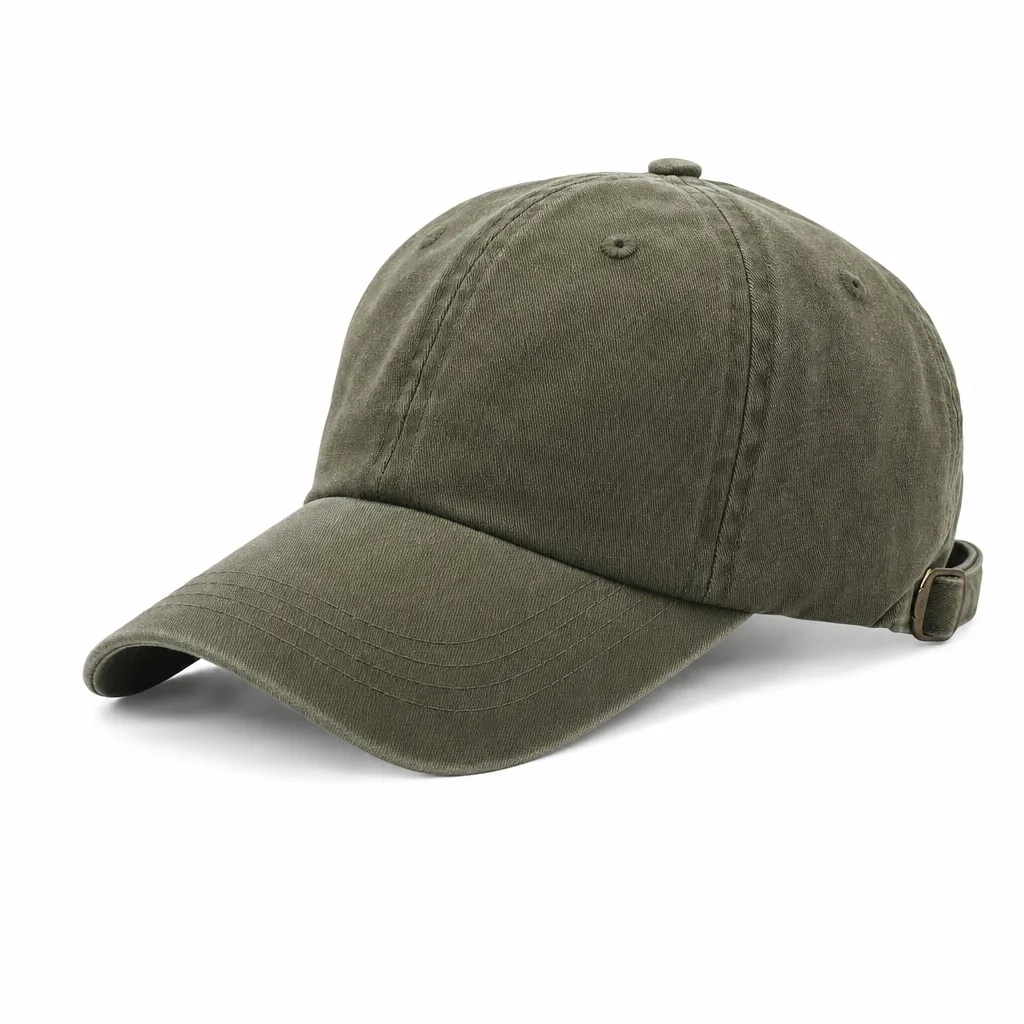
Every week, our sales team answers detailed questions about custom made trucker hat: the 2026 sourcing & manufacturing playbook (2026 update) (2026 update). We wrote this guide so that wholesalers, streetwear brands, corporate buyers and promotional resellers can compare options with full information, and avoid the traps that show up only after production has started.
Custom Embroidered Hats
Embroidery is what separates a custom made trucker hat that looks like licensed retail from one that looks like a promo throwaway, and the difference is usually decided in digitizing, not on the sewing line. A trucker front panel needs a cap-specific file built for cap frame travel, front-seam distortion, buckram stiffness, and foam height; reusing a flat-file program is the fastest way to get blown satin columns, wandering borders, and poor registration across the center seam. The buyer should lock five inputs before sampling: vector art, Pantone reference, finished logo size in millimeters, front-panel material, and execution method—flat embroidery, 3D puff, appliqué, or mixed technique—because each one changes underlay, pull compensation, and stitch density. On Tajima, Barudan, and ZSK cap machines, a clean 3D puff run usually sits around 0.35 to 0.45 mm stitch spacing with a controlled capping stitch, while unstructured cotton fronts need lower density to prevent tunneling and panel collapse. If copy is under 4 mm high or counters are too tight, embroidery is the wrong decoration; woven patches, HD silicone transfers, or simplified artwork hold detail better and create fewer rejects.
The RFQ should freeze body spec and decoration spec together, because crown profile, front fabric, mesh denier, visor curve, snapback resin grade, sweatband construction, embroidery window, and stitch count all affect sewability and cost. In current China sourcing, a basic 5-panel polyester-foam custom made trucker hat with a single front flat embroidery generally lands around $2.30 to $3.90 FOB at 144 to 300 pieces per color, while 3D puff, side and back hits, woven loop labels, and printed seam tape can push the same build to roughly $4.10 to $6.40 FOB depending on stitch count, thread changes, and carton efficiency. Digitizing usually runs $25 to $60 per logo, and a PP sample is commonly $40 to $85 before courier. Our standard practice is to approve against actual thread cards and final logo height, because a 2 mm reduction can materially change satin coverage and expose foam edges.
Most embroidery failures are predictable and should be written into QC before bulk starts: center-out misalignment, uneven puff height, hoop burn on lightweight polyester, bobbin grin along satin edges, seam-side puckering, and thread shade drift when a factory mixes lots without traceability. I check the logo first at roughly 50 cm viewing distance, which is close to the shelf read in retail; if fills look hairy, borders break, or small letters merge until you inspect the hat in hand, the execution is already wrong. For bulk inspection, logo placement should stay within plus or minus 3 mm, there should be zero tolerance for skipped stitches or visible bobbin on the face, and backing must be trimmed clean with no thread nests caught under the sweatband. Use AQL 2.5 across multiple cartons, not just top-layer picks, because foam thickness drift and thread lot variance often show up deeper into the run after the first several hundred units.
Custom Hat Embroidery
Embroidery is the first thing buyers notice on a custom made trucker hat, so it needs to be specified like a controlled process, not treated as surface decoration. On 5-panel truckers, the logo file should be digitized for the actual substrate: a 3 mm EVA foam front behaves very differently from structured 100% cotton twill with buckram. Most factories in Zhejiang will run front logos on Tajima, Barudan, or ZSK multi-head machines using 120D/2 polyester thread for standard work, while satin-heavy fills, tatami coverage, or 3D puff require different underlay, pull compensation, and speed settings to avoid edge collapse. If your artwork includes text below 4 mm cap height, strokes under 0.8 mm, or tight negative space, the factory should simplify it before sampling; otherwise the sew-out may look acceptable on a strike-off but fail once the crown is curved and worn. A usable tech pack should go beyond a JPEG and logo size. Send width and height in millimeters, approved Pantone reference for each thread color, target stitch count range, backing requirement, 3D foam thickness, placement point, and center-front tolerance; for embroidery on trucker fronts, I rarely accept more than plus or minus 2 mm. Also define whether the embroidery is done pre-assembly or post-assembly, because seam interference, crown angle, and sweatband tension all affect registration. At CrownsForge, we normally embroider foam-front panels before crown assembly so the backing, thread tension, and cap frame setup can be controlled before the panel is shaped.
The commercial gap is where many programs lose margin. For a standard custom made trucker hat using stock thread colors and one front location, MOQ is commonly 144 to 300 pieces per style-color, though some factories will agree to 48 to 72 pieces with a setup surcharge if matching mesh, visor, and snapback components are already in production. In practical FOB terms, straightforward flat embroidery on a 5-panel mesh cap usually adds about $0.18 to $0.45 per piece at volume, while dense fills, 3D puff, metallic thread, side hits, and back arch logos can push embroidery cost into the $0.60 to $1.20 range because machine time, thread trims, and hand cleaning go up fast. Buyers should ask exactly how the quote is built: stitch-count bracket, logo locations, digitizing fee, tape ownership, revision charges, and whether trimming and de-fluffing are included. Inspection should focus on wear-relevant defects, not sample-table cosmetics. The failures that actually downgrade a trucker program are color-to-color misregistration, looping top thread, inconsistent fill density, crushed foam on puff logos, needle cuts on lighter twill fronts, and puckering from poor hooping or weak backing. I recommend checking front logos under D65-equivalent lighting, comparing thread color to approved Pantone references with a practical Delta-E target below 2.0 for critical brand shades, and applying AQL 2.5 as the shipment baseline. For licensed retail or team programs, tighten the visual standard on center-front appearance even further, because a 3 mm crooked logo will trigger claims long before anyone notices a minor sewing issue on the inside sweatband.
Custom Trucker Hat
A custom made trucker hat exposes weak process control faster than almost any other cap style because the bill of materials pulls in opposite directions: a rigid front panel for decoration, elastic mesh that wants to skew during sewing, and a visor that must hold its curve after 24 to 36 pieces are compressed in export cartons. The most reliable commercial build is still a 5-panel high-profile or 6-panel mid-profile crown with a buckram-backed foam or cotton-twill front, polyester mesh in the 110 to 140 gsm range, a PE snap closure, and a pre-curved visor built on 1.6 to 2.0 mm HDPE board. If the logo is embroidery-heavy, decoration should happen before crown assembly. Once the mesh side and back panels are joined, panel tension shifts and registration becomes less forgiving, especially on large center-front art. 3D puff is where inexperienced suppliers usually fail. A usable digitized file is not just a scaled-up flat logo; it has to account for foam height, underlay angle, satin density, stitch sequence, and pull compensation on Tajima, Barudan, or ZSK multi-head machines. When that setup is wrong, you see tunneling, split satin edges, exposed foam, or crushed puff after packing. The common failures on a custom made trucker hat are not dramatic factory-floor defects but slow commercial problems: front-panel collapse after transit, wavy mesh seams from off-grain cutting, and visor memory loss after ocean freight through hot containers that can exceed 50°C.
A serious tech pack for a custom made trucker hat should read like a control document, not a mood board. Lock the crown height in centimeters, visor length and width, panel count, front-panel substrate, mesh hole pattern, snap model, sweatband fiber content, seam tape color, top button finish, brim stitch-row count, logo size in millimeters, and carton pack quantity. If color consistency matters, specify Pantone TCX or TPX references and set a realistic Delta-E tolerance of 1.5 to 2.0 for dyed textiles, while understanding that polyester mesh, cotton twill, embroidery thread, and molded plastic rarely match perfectly without separate approvals. MOQ also changes fast with customization: stock materials usually start around 144 to 300 pieces per colorway, but custom-dyed mesh, molded branded closures, woven labels, or printed seam tape typically push the order into the 500 to 1,000 piece range. Quality control should focus on the four failure points that actually trigger claims: front seam alignment, embroidery execution, visor symmetry, and snapback durability. Inline, I would reject center-front seam drift beyond 3 mm, puckering where mesh meets the front panel, visible foam strikes, or left-right brim curvature that fails a flat gauge check. Cheap PE snaps often stress-whiten or crack after 20 to 30 flexes, especially after winter transit, so closure resin quality is not a small detail. Finished inspection should run at AQL 2.5 with measurements for head circumference, crown height, visor length, and logo placement from center front. In our standard practice at CrownsForge, we lock a sealed approval sample against embroidery density, visor curve, closure spec, and packing method before bulk cutting; that control point prevents more disputes than any last-minute final inspection.
Custom Trucker Hats
Front-panel construction is what makes or breaks a custom made trucker hat at retail. The common failure is not the artwork itself; it is crown collapse after embroidery, foam puckering, or mesh that stays crushed after carton compression. For a dependable baseline, specify either a 5-panel foam trucker with 2.5-3.0 mm PU foam laminated to polyester tricot, or a 6-panel build with 10x10 cotton twill or 65/35 poly-cotton twill on the front and 75D-150D polyester mesh in the back. If the design needs a clean embroidery field, the tech pack should call out front-panel backing material, finished crown height in millimeters, visor curl radius, sweatband composition, snapback resin grade, and tolerance for embroidery tunneling. On the factory floor, the gap between a $2.40 FOB cap and a $4.80 one is usually visible in foam density, mesh memory, brim-board flatness, stitch consistency, and whether the embroidery is running on Tajima or Barudan heads at a speed that does not distort the face fabric.
Most trucker-cap tech packs are still too vague to control production. A usable spec sheet should list panel count, shell composition, seam tape width, visor sandwich construction, top-button material, closure type, artwork size in millimeters, thread brand, carton ratio, and polybag rules. MOQ for stock materials is often 144-300 pieces per colorway, but the real minimum usually jumps to 500 or 1,000 once you add dyed-to-match snaps, printed mesh, underbill print, custom seam tape, or proprietary camouflage because trim vendors and cutting yield set the floor. In the current market, a promotional-grade custom made trucker hat with stock mesh and flat embroidery generally lands around $2.20-$3.20 FOB China at 300-500 units, while a retail build with rope, woven label, chain stitch, suede patch, or upgraded sweatband is more typically $4.50-$7.50 FOB. At CrownsForge, we lock the PP sample to Pantone references, measured crown and visor tolerances, and approved artwork placement before bulk sewing, because vague terms like 'mid-profile' or 'slight curve' cause more chargebacks than actual embroidery defects.
Most failures are cheap to catch before packing if the supplier runs proper in-line checks and a real final inspection instead of only trimming threads. The repeat defects are predictable: mesh tearing at the rear seam, warped PE brim boards, off-center embroidery, uneven top-button placement, snap tabs that crack in low-temperature flex, and foam-front rippling caused by poor digitizing or stitch density that is too aggressive for the substrate. For branded programs, I want color checked under D65 light, Delta-E below 1.5 on critical trims and below 2.0 on secondary components, and AQL 2.5 final inspection with attention on logo centering, visor symmetry, assortment accuracy, and carton count. Trucker caps look simple, but they are less forgiving than brushed cotton baseball caps because mesh exposes bad sewing, foam magnifies embroidery mistakes, and weak closures fail in transit. If a supplier cannot explain mesh denier tradeoffs, brim supplier options, compression recovery after master-carton loading, and current sedex-audit-cap-supplier-guide.html">BSCI 2.0 or Sedex SMETA 4-Pillar status, they are probably only assembling caps, not controlling the process.
Hat Trucker Custom
The fastest way to lose control of a custom made trucker hat program is to quote from a mood-board image instead of a measured tech pack. A trucker is a mixed-material build, and small spec gaps create obvious shape differences on the sewing line. Front panels are usually 210-260 gsm cotton twill, brushed canvas, or 100% polyester; rear mesh is often 120-160 gsm polyester with noticeable variation in aperture, rebound, and hand feel; high-profile crowns normally rely on PE or EVA foam in the front panels; and visor fill can be PE board or recycled board, pre-curved or flat. If crown height, front panel angle, visor length, visor width, mesh hole size, sweatband composition, snapback grade, and carton pack-out are not fixed on the sheet, two factories can quote the same hat and ship visibly different results. On the floor, sequence matters more than most buyers realize: logo embroidery or patch application is done before crown assembly, then panel joining, seam taping, sweatband setting, visor attachment, back strap installation, shaping, thread trimming, needle control, and metal detection when metal eyelets or hardware are present.
Specs need tighter tolerances than most importers write. For color, call out Pantone TCX for fabric, Madeira or Gunold thread references for embroidery, and Delta-E below 1.5 under D65 light if the brim, front panel, and button must match for retail. For measurements, plus or minus 3 mm is a sensible tolerance on crown and visor checkpoints, while visor topstitch count, seam tape width, sweatband fold width, and logo placement tolerance should be written in millimeters, not left to factory habit. Clean front embroidery on a custom made trucker hat usually runs on Tajima, Barudan, or ZSK multi-head machines, but 3D puff only holds up if the digitizing controls satin density, pull compensation, underlay, and foam coverage; otherwise the edge splits and foam flashes after carton compression. If you use patches, specify merrow border or laser-cut edge, twill weight, backing type, stitch-down method, and exact placement. CrownsForge standard practice is to seal a counter sample before bulk because crown ratio and logo scale cause more chargebacks than obvious sewing defects.
MOQ and cost are driven more by trim and decoration than by the shell itself. In China, 300-500 pieces per colorway is still the practical MOQ for a fully custom made trucker hat; offers at 144 pieces usually mean stock mesh, stock snaps, limited Pantone control, and fewer size or trim options. In 2026, a basic ex-factory trucker with stock polyester mesh and flat embroidery at 500 pieces typically lands around $2.20-$3.50. Add foam front construction, woven or TPU patch, custom inside taping, woven main label, swing tag, barcode sticker, and individual polybag, and the same cap moves to roughly $4.50-$6.90 ex works. Recycled polyester mesh, specialty camo, or certified yarn traceability usually adds another $0.20-$0.60 per unit depending on mill MOQ. Inspection failures are predictable: uneven crown height, twisted visor alignment, mesh puckering, skipped topstitching, logo off-centering beyond 2-3 mm, weak snap engagement, abrasive sweatbands above about 120 gsm polyester, and shade variation between brim wrap and crown fabric. Use AQL 2.5 for major defects and AQL 4.0 for minor, then add headwear-specific checks for embroidery registration, visor symmetry, profile retention after 24 hours of carton compression, and shade review under both cool white and daylight light boxes.
Trucker Custom Hat
A custom made trucker hat lives or dies on sequencing, because you are joining dissimilar materials that react differently under needle heat, seam tension, and packing pressure. The standard build is 5-panel high-profile foam or 6-panel twill front, paired with polyester or nylon mesh typically 110 to 140 gsm; front panels usually take 0.35 to 0.45 mm buckram, while foam fronts are laminated at roughly 3 to 5 mm. Good factories embroider the front panels before crown assembly, then set sweatband, visor, top button, closure, and mesh body in that order so the logo stays centered and the crown keeps its intended pitch. If you are specifying 3D puff, ask whether the file was digitized for foam height, pull compensation, and stitch angle on Tajima, Barudan, or ZSK heads; generic flat-logo digitizing is why puff letters collapse after a 30-day ocean shipment. Your tech pack should lock down profile, front-panel height, visor curve radius, seam tape color, eyelet method, snapback style, and finished tolerances of ±3 mm on critical points such as crown height, logo placement, and visor width.
Most sourcing mistakes get baked into the spec sheet, not the sewing line. For a custom made trucker hat, require fabric composition, twill weight, mesh hex size, buckram thickness, sweatband material, visor board type, closure resin grade, embroidery thread brand, Pantone TCX reference, and approved logo dimensions in millimeters. Color control needs to be explicit: Delta-E under 1.5 is achievable on dyed twill, while mesh usually needs a wider tolerance around 2.0 because open-grid polyester does not take dye like a solid woven shell. MOQ follows material setup and trim complexity more than stitching difficulty. A standard stock-material program is commonly 144 to 300 pieces per colorway, while custom-dyed shell fabrics, woven labels, printed seam tape, or molded closure tabs usually push the opening MOQ to 500 to 1,000 pieces. In 2026, realistic FOB China pricing is about $2.20 to $3.40 for a basic foam-front cap with flat embroidery, $3.60 to $5.80 for a better twill-and-mesh build with 3D puff and inside branding, and $6.50-plus once you add TPU patches, undervisor print, or GRS-certified recycled inputs.
Inspection should target wear failures, not just cosmetic defects on the packing table. The repeat issues on trucker caps are asymmetric crown shape, warped PE visor board, puckering where mesh joins the front body, uneven 301 lockstitch topstitching, brittle snapback pegs, and embroidery registration drifting more than 2 mm off center. Mesh recovery matters more than many buyers realize: low-grade 20 x 16 or 18 x 14 polyester mesh can bag out after a few weeks of summer use, especially when the cap is overpacked in export cartons. Foam-front styles also need compression and carton-drop checks before shipment, because a 25 to 35 day sea transit will expose weak front-panel lamination fast. Final inspection should hold at least to AQL 2.5 for majors, with measurement checks on circumference, crown height, visor curvature, logo position, seam security, loose thread, needle detection, and carton assortment accuracy. Our standard practice is to compare the approved pre-production sample against pieces pulled from the first, middle, and last cartons, because consistency across the run is what separates a reliable custom made trucker hat supplier from a factory that only photographs well.
Working with CrownsForge for custom made trucker hat programs
A custom made trucker hat program usually fails before bulk sewing starts, because buyers treat it like a stock blank with a logo added later. The real risk sits in the build spec: whether the front uses 3 to 5 mm EVA or PU foam and how that density rebounds after embroidery, whether the mesh is a soft 120 to 140 gsm polyester or a harsher open-hole knit that collapses at the side seam, whether crown height stays within +/-2 to 3 mm from sample to production, and whether the PE brim board holds shape after container pressure and inland trucking. Sweatband choice matters more than many first-time buyers expect; a 180 to 200 gsm poly-cotton band can hide seam irregularity, but poor fold consistency will still pucker once a front logo hits 8,000 to 12,000 stitches. Our standard sampling path is 7 to 10 calendar days for a photo sample and 12 to 18 days for a true pre-production sample using approved shell, mesh, snap, labels, and packing method. For a standard 5-panel foam custom made trucker hat, a realistic MOQ is 144 to 300 pieces per colorway, with better material efficiency once total volume reaches 300 to 500 pieces across shared body materials.
Cost is driven less by the word “custom” and more by labor minutes, trim count, and decoration risk. At 1,000 pieces, a basic polyester-foam custom made trucker hat with plastic snap, woven loop label, cotton sweatband, and one front embroidery typically lands around $2.10 to $3.40 EXW; add a braided rope, woven patch with merrow edge, printed seam tape, inside label set, sticker, hangtag, and retail box, and factory cost can move into the $4.80 to $7.50 range before freight. Decoration control is where capable factories separate themselves. On Tajima, Barudan, or ZSK embroidery heads, reliable 3D puff on foam fronts usually means satin columns above 2.5 mm, controlled underlay, and digitizing that anticipates foam compression after packing; if that setup is wrong, the foam gets sliced, edges feather, and letterforms wash out. Good factories also lock shade before cutting, checking twill, mesh, and binding tape against Pantone TCX references with a practical Delta-E target of 1.0 to 1.5 under D65 or 4000K light. The safe workflow is to freeze the BOM and master order sheet before material release, including stitch count, snap color, barcode placement, carton assortment, and AQL 2.5 checkpoints, backed by current BSCI 2.0 or Sedex SMETA 4-Pillar records, needle logs, and final packed-carton metal detection.
Frequently Asked Questions
Which shipping methods do you support?
We support FOB, CIF and DDP shipping. Air express for samples and small orders, sea LCL for 100 to 500 pieces, sea FCL for 5,000+ pieces. Door-to-door DDP available for US, EU, UK, Canada and Australia.
What logo decoration techniques do you offer?
3D puff embroidery, flat embroidery, woven patch, leather patch, PVC patch, screen printing, sublimation, applique and laser etching, all in-house with no subcontracting.
Do you support sustainability certifications?
Yes. We work with GOTS organic cotton, GRS-certified recycled polyester, OEKO-TEX Standard 100 fabrics, and are BSCI and Sedex audited. Certification documentation can be provided per order.
Can I order a sample before bulk production?
Yes. We strongly recommend approving a pre-production sample before mass production. Samples are charged at 35 to 60 USD each plus express shipping, fully refundable against confirmed bulk orders over 500 pieces.
What file format should I send for my logo?
Vector files (AI, EPS, PDF) are ideal. High-resolution PNG or JPG at 300 dpi on transparent background works as a fallback. Provide Pantone color references for accurate reproduction.
How does ordering custom hat trucker work?
When evaluating custom hat trucker, the key considerations are construction quality, decoration capability, MOQ flexibility and lead time. Cover everything buyers ask about custom embroidered hats: how it's manufactured, what specs to request from a factory, typical MOQ and pricing, common quality issues to inspect for, and how this ties back to the broader custom made trucker hat sourcing decision. Cover everything buyers ask about custom hat embroidery: how it's manufactured, what specs to request from a…
How does ordering custom embroidered trucker hats work?
When evaluating custom embroidered trucker hats, the key considerations are construction quality, decoration capability, MOQ flexibility and lead time. Cover everything buyers ask about custom embroidered hats: how it's manufactured, what specs to request from a factory, typical MOQ and pricing, common quality issues to inspect for, and how this ties back to the broader custom made trucker hat sourcing decision. Cover everything buyers ask about custom trucker hats: how it's manufactured, what specs to request from a…
How does ordering custom made hats for men work?
When evaluating custom made hats for men, the key considerations are construction quality, decoration capability, MOQ flexibility and lead time. Cover everything buyers ask about custom embroidered hats: how it's manufactured, what specs to request from a factory, typical MOQ and pricing, common quality issues to inspect for, and how this ties back to the broader custom made trucker hat sourcing decision. Cover everything buyers ask about custom trucker hats: how it's manufactured, what specs to request from a…
How does ordering high quality custom trucker hats work?
When evaluating high quality custom trucker hats, the key considerations are construction quality, decoration capability, MOQ flexibility and lead time. Cover everything buyers ask about custom embroidered hats: how it's manufactured, what specs to request from a factory, typical MOQ and pricing, common quality issues to inspect for, and how this ties back to the broader custom made trucker hat sourcing decision. Cover everything buyers ask about custom trucker hats: how it's manufactured, what specs to request from a…
Looking for a reliable hat manufacturer in China?
CrownsForge has produced custom hats for 800+ brands across 40 countries. From 100-piece launches to 100,000-piece retail programs, we deliver on time and on spec.
Get in touchRelated guides
Hat With Patch Supplier Audit Checklist for Custom Hat Buyers
Read article →
Pantone Color Matching for Custom Caps: A Manufacturer's Reference - 2026 Buyer's Guide
Read article →
Custom Hats for Corporate, Business and Branded Merchandise Programs
Read article →If you are ready to take the next step on custom made trucker hat: the 2026 sourcing & manufacturing playbook (2026 update) (2026 update), our team can put a tailored quotation and digital mock-up in your inbox within 24 hours. Send the inquiry form on our contact page or message us directly on WhatsApp.