
Custom Made Trucker Hat: The 2026 Sourcing & Manufacturing Playbook - 2026 Buyer's Guide
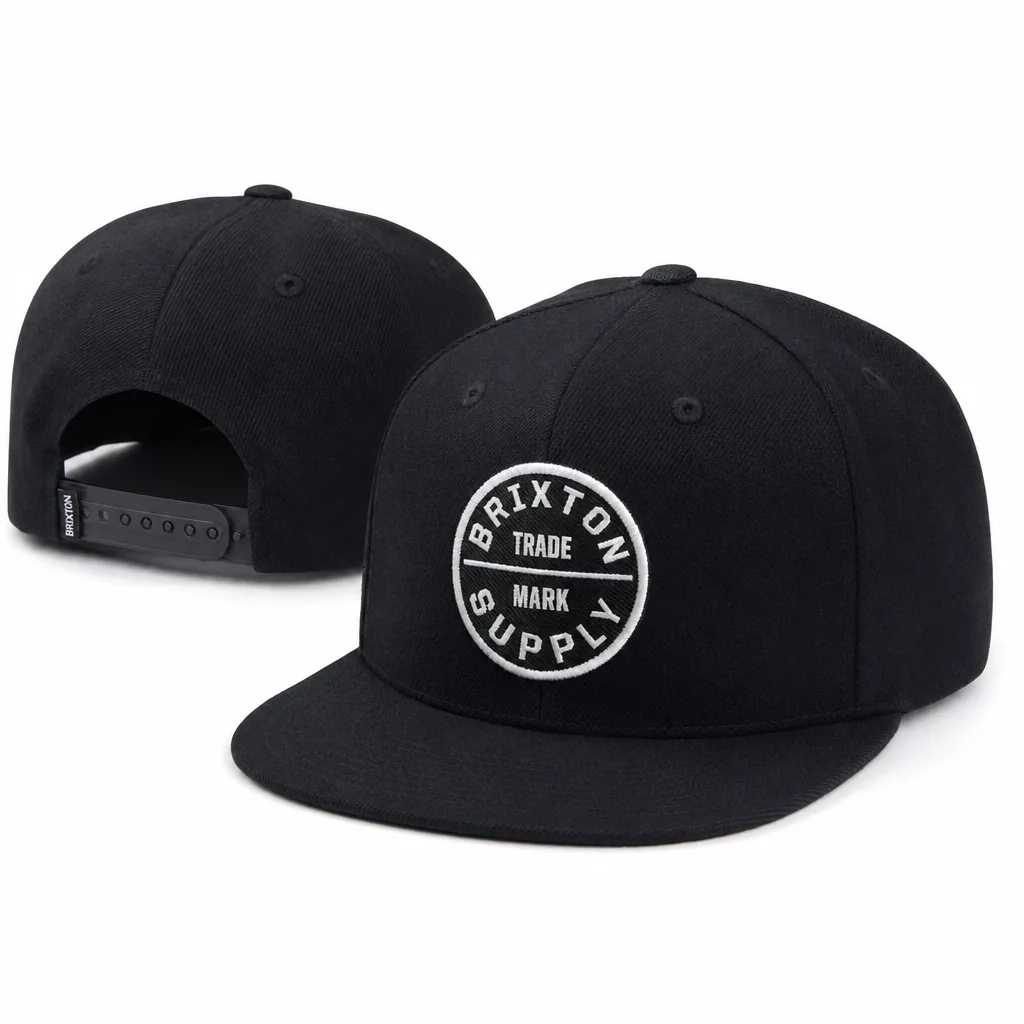
For brand owners, wholesalers and procurement teams entering the custom headwear category, custom made trucker hat: the 2026 sourcing & manufacturing playbook - 2026 buyer's guide is one of the highest-leverage decisions you will make. Get it right and your unit economics, retail story and reorder cycle all improve. Get it wrong and you carry the cost for years.
Custom Embroidered Hats
Embroidery is still the cleanest premium decoration for a custom made trucker hat, but the file has to be built for the cap body, not for the Illustrator mockup. On a 5-panel foam trucker, excessive density will perforate the EVA or PU foam, flatten the crown, and create visible tunneling around fills; on a 6-panel cotton twill or poly-cotton front, the more common problem is stitch sink from weak underlay or no topping film. A competent factory should digitize against the actual front-panel material and crown profile, then run a sew-out on Tajima, Barudan, or ZSK heads using 120D polyester thread, typically with 75/11 or 80/12 needles. Ask for the embroidery size in millimeters, stitch count, underlay structure, backing weight, and technique callout—flat stitch, 3D puff, or mixed. A 9,000-stitch flat fill on 270 gsm brushed twill behaves nothing like a 6,500-stitch puff logo on foam, even when the artwork is identical. The spec sheet should remove operator judgment before sampling starts. Lock thread colors to Pantone TCX or C references, define logo placement at ±2 mm from center front, and specify crown height, visor length, visor curve, mesh composition, snap closure type, sweatband content, and seam tape color. For dyed trims, an acceptable Delta-E of 1.5 to 2.0 is realistic on fabric and plastic parts, but embroidery thread is usually matched visually rather than lab-dipped. MOQ for direct factory production is commonly 144 to 300 pieces per colorway; 48 to 100 pieces is possible, but unit cost rises because digitizing, machine setup, and line balancing do not scale well. In Yiwu or Dongguan, a standard embroidered trucker typically lands around $2.20 to $4.80 FOB China, while 3D puff, metallic thread, side embroidery, or back arch embroidery usually adds $0.15 to $0.90 per cap, with digitizing often billed separately at $25 to $80 per logo unless volume absorbs it.
Most embroidery complaints come from avoidable execution errors, not from the trucker hat shell itself. The failures I see most often are loose trims inside satin columns, top-thread looping, color-layer misregistration, crushed puff foam, off-center placement, and needle damage where side-logo embroidery runs too close to polyester mesh. Curved embroidery is another trap: text can look straight in the hoop and then warp once the front panel is formed, packed in a master carton, and the snapback is closed. That is why approval should be based on a sealed production sample, not only on the tech pack rendering or the first flat sew-out. For bulk inspection, AQL 2.5 is a sensible visual standard, but embroidery still needs checkpoint-specific criteria: edge sharpness, fill coverage, thread tension consistency, foam height retention, and placement tolerance should all be written into the QC sheet. Our standard practice is to inspect embroidery both before cap forming and again after final packing because shape memory changes how the logo reads on a finished crown. Lead time for embroidered orders is usually 12 to 18 days for production after sample approval, but heavy puff, mixed techniques, or multiple logo positions can add 3 to 5 days and increase reject risk. That is the real sourcing issue with a custom made trucker hat: embroidery cost, throughput, and defect rate all change with substrate stability, crown construction, and digitizing quality.
Custom Hat Embroidery
Digitizing decides whether embroidery on a custom made trucker hat looks premium or amateur; approval photos from a sales rep do not. On foam-front trucker caps, the cleanest process is front-panel embroidery after fusing and before crown assembly, run on Tajima, Barudan, or ZSK multi-heads with cap-specific digitizing. Embroidering a completed crown on a cap frame is faster for some factories, but it increases seam deflection and top-corner distortion, especially on 5-panel silhouettes with a tall center front. In practical terms, the safe embroidery field is usually about 110 x 58 mm on a 3 mm EVA foam front and closer to 105 x 55 mm on structured 10x10 cotton twill because curvature eats the upper corners. Buyers should ask for the actual stitch count, run time in seconds, underlay plan, pull compensation, thread brand, and artwork size in millimeters. “Big front logo” is not a production spec. Color control is another place buyers make avoidable mistakes. If the art starts from Pantone, lock the nearest Madeira Classic, Madeira Polyneon, or Gunold match during sampling and approve against the actual sew-out under D65 light. Embroidery thread is not piece-dyed fabric, so you cannot manage it with the same Delta-E expectation used for lab-dipped textiles. For that reason, our standard practice is to define an approved physical thread cone or strike-off and note acceptable visual variance in the tech pack. If your logo relies on subtle gradients, hairline serifs, or critical brand colors, embroidery may be the wrong decoration for the front of a trucker cap; a woven patch, printed twill patch, or molded TPU badge will usually hold detail more honestly than forcing a digitizer to simplify the art on the machine.
A usable embroidery spec sheet needs numbers, not adjectives. Call out thread type, finish, target stitch-count range, backing weight, 3D puff thickness, satin column width, minimum text height, and any center-seam crossing. In cap work, 120D/2 rayon gives a richer sheen but fades faster under UV; 120D/2 polyester is the safer choice for teamwear, golf, and outdoor programs because it holds shade and abrasion better. Text below 4.5 mm tall is risky on most front panels, and line widths under 0.8 mm usually force the digitizer to widen shapes just to keep the sew-out from breaking. Flat front embroidery on a custom made trucker hat typically adds about $0.25 to $0.60 per piece at 3,000 to 8,000 stitches; 3D puff is more often $0.45 to $0.90 because of foam setup, slower run speed, and extra trimming. Once the design pushes past roughly 10,000 stitches, machine time starts hurting line efficiency and unit cost climbs quickly. The repeat defects are predictable and should be controlled at pre-production, not argued over at final inspection. Watch for off-center placement, puckering from dense fills, tunneling on wide satins, broken outlines at the center seam, foam exposure on puff, loose jump trims, and logo crush after compression packing. A proper PP sample must use the actual bulk shell material because tension behaves differently on polyester foam, brushed twill, recycled canvas, and heathered blends. At final inspection, AQL 2.5 is a reasonable baseline; measure logo placement to within +/- 2 mm, check thread shade consistency lot to lot, confirm no visible backing from the face, and verify seam alignment where the design bridges the front joint. If the artwork is too intricate, change the decoration method before locking materials and FOB pricing. Forcing embroidery onto unsuitable art often means changing crown height, front stiffness, or even the entire cap profile after the costing is already wrong.
Custom Trucker Hat
The make-or-break variable on a custom made trucker hat is the shell spec, not the logo file. For retail programs, the safest starting point is a 5-panel high-profile body with a laminated foam front, 60/40 cotton-poly twill or 100% polyester facing at 180-220 gsm, and back mesh in 120-150 gsm polyester or 70D-100D nylon. Visor board should be called out as 2.0-2.2 mm PE, because thinner inserts warp after ocean transit and thicker boards fight the curve. Don’t use vague language like “mid crown”; put crown height in millimeters. Most streetwear fits sit at 110-120 mm, while high-volume promo caps are often engineered down to 100-105 mm to cut carton cube and reduce front-panel deformation. If the front panel uses 2-5 mm EVA or PU foam lamination, lock that before sampling, because needle penetration, pull compensation, and stitch density change significantly versus a flat twill front. A workable tech pack needs more than panel count and artwork placement. Specify brim length, undervisor color, mesh color by Pantone TCX, seam tape print, top button finish, sweatband composition, snap grade, and placement tolerance for every decoration zone. On embroidery, bad digitizing shows first in text under 4 mm cap height and satin columns wider than 5 mm, especially on Tajima or Barudan cap frames where registration drift shows on stiff foam fronts. I would also define stitch count range, backing type, and acceptable logo shift at +/-2 mm from the sealed sample. For color-critical builds, ask for lab dips with a Delta-E target below 1.5 on dyed twill and below 2.0 on mesh; off-tone black mesh or a yellow-cast white front panel makes a cap look cheap immediately. Our standard practice is to lock carton pack-out early as well, because over-dense export cartons can crush foam crowns long before goods reach the DC.
Price on a custom made trucker hat moves far more with decoration and trim depth than with the basic cap body. Using a stock shell with standard foam front, existing mesh colors, and flat embroidery, realistic MOQ is usually 144-300 pcs per colorway. Once you add dyed-to-match fabric, custom snap colors, printed seam tape, branded sweatbands, or GRS-certified recycled mesh, MOQ usually jumps to 500-1,000 pcs per style-color because mills and trim suppliers won’t support lower runs efficiently. In 2026 buying terms, a basic 5-panel foam trucker generally lands around FOB Ningbo or Shanghai at USD 2.10-3.40 for 500 pcs. Woven patches, chain stitch, appliqué, silicone heat transfer, or a printed underbrim push that into the USD 3.20-5.80 range, and custom metal trims or private-mold closures typically add another USD 0.20-0.90 per piece. Lead time is where weak suppliers get exposed. A stock-body program can sample in 5-7 days and ship bulk in 18-30 days, but a fully customized build with dyed fabric, buyer-specific trims, and in-house decoration planning usually needs 35-50 days after approvals. Ask directly whether embroidery runs in-house on Tajima, Barudan, or ZSK multi-head machines or gets farmed out to a local workshop; outsourced embroidery is where thread shade drift, missed delivery windows, and registration issues usually start. For bulk QC, AQL 2.5 is the minimum acceptable level, with daylight-balanced visual checks and dimensional tolerances around +/-3 mm on crown height, +/-2 mm on brim length, and +/-2 mm on logo placement. The repeat defects are predictable: foam collapse, mesh puckering, off-center embroidery, exposed bobbin thread, visor edge gaps, and snap misalignment. Those failures are rarely random sewing errors; they usually trace back to low-density mesh, unstable foam lamination, weak PE board, or poor digitizing decisions made before production starts.
Custom Trucker Hats
The make-or-break point on a custom made trucker hat is the crown build, not the artwork. Most programs still run in either a 5-panel high-profile body or a 6-panel mid-profile body, and the wrong front construction causes more chargebacks than a mediocre logo ever will. A standard high-profile trucker typically uses 100% polyester foam-backed front panels at 140 to 180 gsm with 2.5 to 3.0 mm EVA or sponge lamination, 70D to 100D polyester mesh on the side and back panels, a PE visor insert, and a 7-hole PVC snap closure. If the goal is clean embroidery with less panel distortion, 220 to 260 gsm cotton twill or poly-cotton twill fronts usually outperform cheap foam because needle penetration stays more consistent and the surface does not tunnel under dense fills. On Tajima or Barudan heads, 3D puff only works when the digitizing matches foam height, underlay angle, pull compensation, and satin column width; once letter strokes fall under about 5 mm, edge collapse after trimming and steaming becomes common.
A proper tech pack should remove operator guesswork completely. Call out crown height in centimeters, panel count, front fabric composition, mesh denier, visor curve, closure resin type, sweatband material, seam tape color, button material, and Pantone TCX for every visible component. For color-sensitive programs, a practical spec is Delta-E 1.5 or below on solid dyed fabrics and 2.0 or below on mesh, since open mesh scatters light and often reads visibly lighter than the crown even when the lab dip looks matched on paper. Lock decoration size, stitch count, patch border width, carton ratio, and final inspection at AQL 2.5 before sampling. Most repeat failures on custom made trucker hat orders are not dramatic defects; they are mesh shade drift, front-panel torque after embroidery, weak snap studs, visor curves flattening under carton pressure, or needle cuts at the mesh seam.
Price is driven far more by trim package and decoration load than by the trucker silhouette itself. In China, a basic 5-panel foam-front custom made trucker hat generally sits around $2.10 to $3.40 ex-factory at 300 to 500 pieces per colorway with flat embroidery, standard black or white mesh, and stock fabrics. Add woven patches, sublimated under-visors, recycled polyester mesh, specialty camo twill, rope trims, or multi-position embroidery and the realistic range moves to about $3.80 to $6.50. Below 300 pieces, unit cost rises quickly because mesh sourcing, digitizing, cutting loss, and line changeover stop being efficient. CrownsForge normally requires a sealed pre-production sample before bulk cutting for exactly that reason: the expensive problems show up in consistency, not in the first prototype. Inspection should focus on crown symmetry, embroidery registration, bill curvature tolerance, snap pull strength, sweatband stitch security, and compression marking after master-carton stacking.
Hat Trucker Custom
A custom made trucker hat is decided in the bill of materials, not the mockup. Lock the architecture first: 5-panel foam front for the classic high-profile promo shape, or 6-panel buckram-backed twill for cleaner retail embroidery and better panel stability after hooping. Rear mesh should be specified by weight and construction, not just “poly mesh”: 100-130 gsm polyester diamond mesh is the normal baseline, while a nylon/poly blend holds shape better in humid transit but costs more. Front panels typically run 180-220 gsm cotton twill or 210-240 gsm poly-cotton canvas; if you want the old-school tall crown, call out 2.0-2.5 mm laminated foam. For 3D puff, I would not approve anything under 2.5 mm EVA foam, 16.5-18.0 cm crown height, and satin columns wide enough to resist collapse after compression packing. Flat embroidery is still the safest decoration on truckers, especially for small text and long satin runs, and most factories are running Tajima, Barudan, or ZSK heads where stitch density can be controlled consistently.
Most disputes start because buyers sign off artwork before signing off dimensions. A proper spec sheet for a custom made trucker hat should confirm visor length and width, crown height, front-panel width, mesh hole pattern, closure type, sweatband material, seam tape color, top button finish, underbill color, and Pantone reference for every visible component—TCX for textiles, coated only when the trim supplier is actually matching coated ink. Add artwork size in millimeters, stitch-count cap, thread brand such as Madeira or Gunold, brim shape standard, and whether the visor ships flat or pre-curved on a fixed metal mold. These details are not cosmetic; they determine whether 20 cartons arrive with twisted bills, mixed snap colors, or embroidery that sits too high on the crown. Our standard practice is to freeze packaging at the same time: polybag yes/no, barcode position, sticker diameter, carton quantity, and gross weight below 15 kg to reduce warehouse handling damage and courier surcharges.
Pricing only becomes reliable when the spec sheet is technical. In 2026, a stock-body trucker with one-location flat embroidery is still workable at 144-300 pieces per colorway, but a true cut-and-sew custom made trucker hat usually needs 500-1,000 pieces per style because fabric, mesh, visor board, closure, labels, and tape are all bought separately. Realistic FOB China pricing for a structured trucker with stock mesh, PP snapback, and one embroidery location is about $2.30-$3.90 at 300-500 pieces. Add 3D puff, contrast rope, woven wrap label, custom underbrim, printed seam tape, or moisture-wicking sweatband, and the range moves to roughly $4.50-$7.20 FOB. The cost driver buyers miss most often is embroidery runtime: a 12,000-stitch logo can add more cost than switching from standard twill to a slightly better fabric because machine minutes on a Tajima 6-head are finite. Inspection should target trucker-specific defects under AQL 2.5: crown asymmetry, mesh tearing at the back seam, visor twist after compression packing, snapback offset, thread tails, and push-pull distortion on circular logos. For color-critical programs, I would set Delta-E at 1.5-2.0 against the sealed swatch and verify brim curvature, needle detection, and carton drop performance before shipment.
Trucker Custom Hat
A custom made trucker hat only performs if the front panel, mesh back, and decoration method are engineered as one spec, not three separate decisions. Most factories run it on a 5-panel or 6-panel cap line, then swap the rear panels for polyester mesh and finish with a PE snapback, but the front build determines whether the hat looks premium or collapses after one season. For a standard structured front, 8 oz cotton twill or brushed chino at 240-270 gsm is common; for a taller A-frame or old-school high profile, call out laminated buckram or 3-5 mm EVA foam behind the face panel. Buyers should lock crown height, visor length, visor curve, underbill color, mesh hole size, sweatband composition, seam tape color, and closure resin before sampling, because late changes usually force a new pattern or at least a new counter-sample. On decoration-heavy styles, the digitized embroidery file matters more than the vector logo. Tajima, Barudan, and ZSK heads will all sew a clean run, but if the punch file is not compensated for push-pull on foam or buckram, letter counters close up, satin columns pinch, and the front panel starts waving around the logo.
The cleanest RFQ for a custom made trucker hat is brutally measurable. Specify Pantone TCX references for shell fabric and trim, color tolerance of Delta-E under 1.5 on dyed components, Madeira or Gunold thread standard, logo position in millimeters from visor seam and center front, top button finish, carton pack ratio, and final inspection at AQL 2.5. If the factory is working from stock twill and stock mesh, MOQ is typically 144-300 pieces per colorway; a real cut-and-sew program with custom mesh, woven labels, printed seam tape, and branded snapbacks usually starts at 500 pieces. In Yiwu or Dongguan, a blank-based style with flat embroidery generally lands around $2.20-$3.80 FOB China at 300 pieces, while 3D puff, PVC or woven patches, suede visor facing, rPET mesh, barcode sticker labeling, and individual polybags push it closer to $4.50-$7.50 FOB. Most failures are physical, not graphic: brittle mesh, misaligned snap pins, visor sandwich asymmetry, crown-height variance over 3 mm, puckering at the mesh join, or crushed fronts from overpacked cartons. If 5-8% of units arrive with broken snaps or off-center embroidery, the cheapest quote stops being cheap the moment rework, chargebacks, and replacement freight hit the landed cost.
Working with CrownsForge for custom made trucker hat programs
The biggest risk in a custom made trucker hat program is sample-to-bulk drift, not squeezing another $0.20 off FOB. A first proto on a new shape usually needs 7 to 10 calendar days only if the buyer sends complete inputs on day one: vector art, Pantone references, crown height, visor length and curve, closure type, embroidery size, and label placements. If the spec comes in fragments, development slows immediately because the factory is forced to guess on fit-critical details. For a standard 5-panel trucker using 100% polyester mesh, 2.5 mm PE foam, a 7-hole PP snap, and flat front embroidery, sampling is predictable. Add a sublimated patch, custom inside seam tape, woven loop label, or a nonstandard visor mold, and the failure point shifts from sewing speed to repeatability. The first three specs to lock are crown profile, front panel material, and closure, because that is where most claims start: low crown versus mid crown disputes, foam collapse after embroidery, or snaps that feel cheap and loosen after wear. MOQ should follow trim complexity, not optimism. A stock-material custom made trucker hat with one embroidery location, standard mesh, and a black sweatband can often run at 144 to 300 pieces per colorway. Once you move to dyed-to-match fabric, branded taping, custom woven labels, sandwich visor details, and mixed decoration methods, 500 to 1,000 pieces per color is the realistic floor if you want stable unit cost and consistent output. A disciplined pre-production path means tech pack review, digitizing check, one approved PPS, inline inspection, and final audit at AQL 2.5 before booking. That matters more than an aggressive quote, because fixing a bad crown angle, inconsistent visor curve, or mesh shade mismatch after bulk cutting is slow, expensive, and usually visible in the finished carton.
Decoration is where a custom made trucker hat either holds margin or quietly burns it. The foam front panel is the highest-risk area because heavy stitch density, bad underlay, or oversized satin columns can crush the panel and distort the crown. Tajima and Barudan heads will run most logos cleanly, but 3D puff on foam only works when stitch density is controlled, penetration is reduced, and pull compensation is tuned so the top edge does not tunnel. In practice, decoration should be chosen by edge sharpness, stitch count, abrasion exposure, and substrate behavior: direct embroidery for durable mid-detail logos, 3D puff for bold shapes, woven or printed twill patches for fine lines, and TPU or molded badges where the brand wants dimension without overworking the foam. Real costing is not mysterious: flat embroidery often adds $0.18 to $0.45, 3D puff about $0.35 to $0.80, and multilayer patch applications roughly $0.60 to $1.50 depending on attachment method and setup. Scale exposes weak controls fast. A retail-grade program should include artwork validation, thread and patch color approval against Pantone TCX or coated references, agreed shade tolerance such as Delta-E under defined lighting, inline checks, carton drop testing, and final release against a hard ex-factory date rather than a vague ship window. If the hats are going to chain retail, licensed distribution, or major promotional accounts, buyers will also ask for fiber content labeling, needle policy, azo-free dye compliance where required, and current audit records such as sedex-audit-cap-supplier-guide.html">BSCI 2.0 or Sedex SMETA 4-Pillar before PO release. The real efficiency shows up on repeat runs: approved BOMs, embroidery files, visor molds, pack-out ratios, and carton marks are already frozen, so the next 3,000 or 30,000 pieces do not depend on someone remembering how the first order was made. That is how lot-to-lot quality stays tight instead of drifting by the second reorder.
Frequently Asked Questions
Do you support sustainability certifications?
Yes. We work with GOTS organic cotton, GRS-certified recycled polyester, OEKO-TEX Standard 100 fabrics, and are BSCI and Sedex audited. Certification documentation can be provided per order.
What is the minimum order quantity (MOQ) for custom hats?
Our standard MOQ is 100 pieces per design and color, with sampling available from 1 piece. For complex multi-color logos or premium fabric upgrades, the MOQ can be lowered with a small per-piece surcharge.
How long does production take?
Sampling takes 7 to 12 days. Bulk production runs 20 to 30 days depending on quantity, fabric availability and decoration complexity. Inspection and packing adds another 3 to 5 days before shipment.
What logo decoration techniques do you offer?
3D puff embroidery, flat embroidery, woven patch, leather patch, PVC patch, screen printing, sublimation, applique and laser etching, all in-house with no subcontracting.
Can I order a sample before bulk production?
Yes. We strongly recommend approving a pre-production sample before mass production. Samples are charged at 35 to 60 USD each plus express shipping, fully refundable against confirmed bulk orders over 500 pieces.
How does ordering custom hat trucker work?
When evaluating custom hat trucker, the key considerations are construction quality, decoration capability, MOQ flexibility and lead time. Cover everything buyers ask about custom embroidered hats: how it's manufactured, what specs to request from a factory, typical MOQ and pricing, common quality issues to inspect for, and how this ties back to the broader custom made trucker hat sourcing decision. Cover everything buyers ask about custom hat embroidery: how it's manufactured, what specs to request from a…
How does ordering custom embroidered trucker hats work?
When evaluating custom embroidered trucker hats, the key considerations are construction quality, decoration capability, MOQ flexibility and lead time. Cover everything buyers ask about custom embroidered hats: how it's manufactured, what specs to request from a factory, typical MOQ and pricing, common quality issues to inspect for, and how this ties back to the broader custom made trucker hat sourcing decision. Cover everything buyers ask about custom trucker hats: how it's manufactured, what specs to request from a…
How does ordering custom made hats for men work?
When evaluating custom made hats for men, the key considerations are construction quality, decoration capability, MOQ flexibility and lead time. Cover everything buyers ask about custom embroidered hats: how it's manufactured, what specs to request from a factory, typical MOQ and pricing, common quality issues to inspect for, and how this ties back to the broader custom made trucker hat sourcing decision. Cover everything buyers ask about custom trucker hats: how it's manufactured, what specs to request from a…
How does ordering high quality custom trucker hats work?
When evaluating high quality custom trucker hats, the key considerations are construction quality, decoration capability, MOQ flexibility and lead time. Cover everything buyers ask about custom embroidered hats: how it's manufactured, what specs to request from a factory, typical MOQ and pricing, common quality issues to inspect for, and how this ties back to the broader custom made trucker hat sourcing decision. Cover everything buyers ask about custom trucker hats: how it's manufactured, what specs to request from a…
Ready to start your custom hat project?
Send us your tech-pack, sketch or even just an inspiration photo. We will respond with a detailed quotation and digital mock-up within 24 hours.
Request a free quoteRelated guides
Fur Bucket Hat Women: A Vertical-Specific Sourcing Guide
Read article →
Fitted Hats For Men MOQ And Pricing Plan for Custom Hat Buyers
Read article →
5-Panel vs 6-Panel Caps: Construction, Use Cases and Cost Compared
Read article →Sourcing custom hats does not have to be complicated. With the right manufacturing partner, clear specifications and a small upfront investment in sampling, you can launch a retail-quality product in 30 to 45 days.