
Custom Logo Hats: When to Use It, Costs, and What to Ask Your Factory - Supplier Checklist (2026 Update) - 2026 Buyer's Guide
Custom Logo Hats: When to Use It, Costs, and What to Ask Your Factory - Supplier Checklist (2026 Update) - 2026 Buyer's Guide is one of the most-asked questions we receive from international buyers, and for good reason. With dozens of factories competing for your order and an alphabet soup of technical terms in every supplier quote, even experienced importers can feel lost. This guide consolidates what we have learned producing custom hats for clients in 40+ countries.
Custom Embroidered Patches
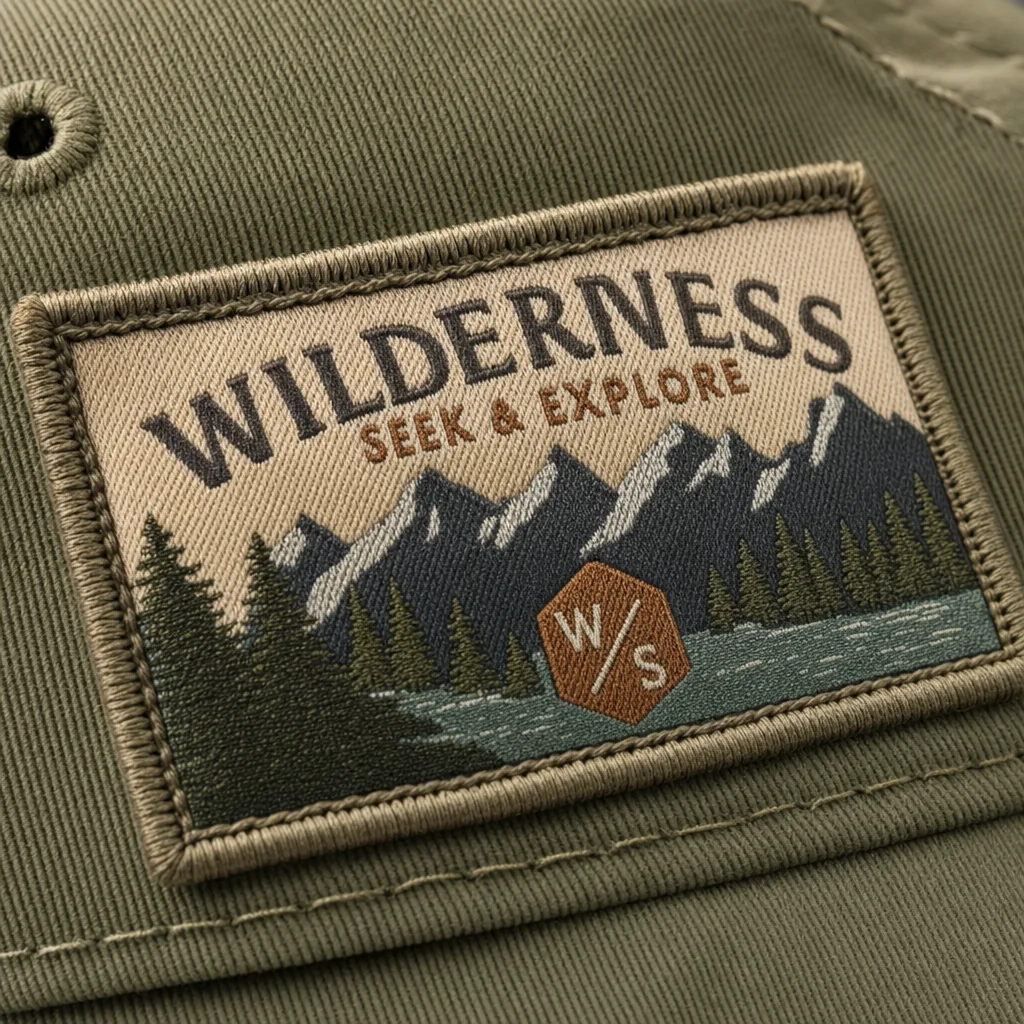
Embroidered patches make sense on custom logo hats when the artwork has a clean outer silhouette, high stitch coverage, or too many colorway splits to justify re-digitizing every front panel. The practical advantage is workflow: you can approve one patch lot before committing 500 cut-and-sewn caps, then apply that same component across snapbacks, dad hats, and 5-panel foam truckers. Most factories run patches on 180-350 gsm twill, wool felt, canvas, or merrowable polyester using Tajima, Barudan, or ZSK multi-heads with 120D/2 polyester thread; rayon looks richer but is less stable on repeated abrasion tests. Cutting is usually laser, heat, or die-cut, with merrow edge, satin border, or raw edge plus heat-seal film. For a dense logo, patching is often cheaper than direct embroidery because the cap sewing line only repeats one attachment step instead of rebuilding front embroidery files for each crown shape and seam geometry.
The spec sheet needs more discipline than most buyers give it. Call out patch size in millimeters, not inches; define border width, backing type, total thickness, and whether the patch crosses a center seam. Put thread colors against Pantone TCX or Pantone C with an agreed Delta-E target under 2.0 for brand-critical shades, and state whether substitutions are allowed. I would also lock stitch density or at least stitch-count tolerance at +/-8%, because a 40% coverage patch and a 75% coverage patch behave very differently once sewn onto buckram-backed cotton twill or acrylic-wool fronts. Text below 4 mm cap height, borders under 1.2 mm, and fills spanning a 5-panel seam are all distortion risks unless the digitizer compensates for pull, push, and seam bulk.
Cost only becomes clear when you separate patch production from cap attachment. In China, a 2.25-3.00 inch embroidered patch at 100-300 pieces per design typically lands around $0.18-$0.60 patch-only; add $0.12-$0.35 to sew it onto the hat, depending on placement difficulty and whether the operator is stitching through buckram, foam, or a curved crown. Heat press can save a few cents, but I only trust it on flat polyester fronts with stable coatings; on brushed twill, corduroy, or textured panels, sewing is slower but materially more reliable. For inspection, hold placement to +/-2 mm from the approved centerline and inspect to AQL 2.5, treating lifting corners, severe puckering, exposed thread tails, backing delamination, and off-center application as major defects. Our standard practice at CrownsForge is to inspect patch quality and hat attachment as separate checkpoints, because a perfect patch can still fail during final assembly.
Custom Hat with Patch
Patch is often the safest way to carry fine artwork on custom logo hats, but the patch format has to match both the logo and the cap body. Woven patches hold the smallest detail: with 50D-75D yarns, you can usually keep linework at 0.4-0.6 mm and negative space near 0.8 mm before fills start closing. Direct embroidery on the crown tends to lose that detail once the file climbs past 8,000-10,000 stitches, especially on curved unstructured fronts. Embroidered patches are better for bold icons, raised satin borders, and athletic programs that want texture, but they add thickness and can telegraph through washed chino dad caps if there is no buckram. PVC or molded rubber patches solve edge fray and wet-weather performance, yet they read heavier and cheaper on heritage or premium streetwear styles unless the brand is intentionally going technical. Placement and attachment are where patch orders fail in bulk. Heat press alone is acceptable for low-wear promo caps, not for retail programs moving through ocean transit and warehouse handling. The safer spec is heat tack plus perimeter stitch, or full sewn application from the start. Ask what machine the factory uses for the patch itself—Tajima, Barudan, or ZSK heads for embroidered patches—and whether finished cap attachment is done on a post-bed or cylinder-bed machine. Flat sewing across a closed crown is how front panels get crushed and patch arcs distort. Our standard practice is to hold front patch placement within plus/minus 3 mm, but that tolerance should be written into the PO, along with patch orientation and edge margin, instead of assumed from the pre-production sample.
Most patch programs break down at the tech pack, not on the sewing floor. “Front custom patch” is not a usable instruction for custom logo hats. The PO should call out patch size in millimeters, border type, merrow or laser-cut edge, backing construction, base fabric, Pantone TCX reference, acceptable Delta-E tolerance if color matching matters, stroke minimums, and crown position tolerance from visor seam and center front. Cap shape matters just as much as artwork. A 5-panel trucker usually carries a 60-70 mm patch cleanly because the front panel is flatter; unstructured dad caps look more balanced at 45-60 mm, and larger patches tend to bridge the crown curve and lift at the edges. Always approve a strike-off at production size, not enlarged, because serif counters and interior gaps that look fine on screen often disappear once woven. Cost moves with cap body, patch process, and attachment labor more than buyers expect. In Yiwu, a sewn woven patch on a cotton chino twill cap or standard polyester trucker usually lands around $2.30-$3.50 FOB China at 300 pieces. Embroidered patches are commonly $2.70-$4.10 because of machine time and border finishing, while PVC patches run about $3.20-$5.20 after spreading mold cost over the order. MOQ is typically 144-300 pieces per colorway; below that, patch yield and color consistency start getting inefficient. For bulk inspection, AQL 2.5 is the right baseline, but check more than logo appearance: centering, edge fray, skipped perimeter stitches, heat-press gloss marks, crown puckering, and patch-to-crown curvature mismatch. A simple peel-and-stitch stress test on 5 units per lot will catch weak adhesion before the cartons leave China.
Custom Patch for Hat
Use a patch when the artwork is too fine or too textured for direct embroidery on a curved cap front. On structured 6-panel custom logo hats, text below 3.0 mm cap height, rules under 0.6 mm, weathered fills, and pseudo-gradients routinely collapse on Tajima or Barudan heads because the buckram face, seam bulk, and stitch density fight the art. In production, the cleanest alternatives are damask woven patches for small detail, twill embroidered patches for a classic raised look, sublimated twill for multicolor graphics, and molded PVC at roughly 0.8-1.2 mm for outdoor or industrial use. Leather and microfiber suede work, but they are less forgiving on color consistency and edge finish than buyers expect. For hats in the common $3.20-$6.80 FOB China range, woven and embroidered patches remain the best value because they improve logo fidelity without pushing the cap into high-novelty pricing. A woven patch will usually hold sharper edge definition than a standard embroidery field, while PVC earns its keep on fishing, marine, and workwear programs where salt spray, sweat, and abrasion would age thread too quickly.
Attachment method matters as much as patch type. Sew-on is still the safest construction for laundering, flex, and long wear, especially on structured crowns where patch corners want to lift over the curve. Heat press alone is risky unless the adhesive film, platen temperature, and dwell time are matched to the substrate; too much heat can telegraph glue through twill, warp PU, or distort foam trucker fronts. The most stable build is usually heat tack plus perimeter stitch, because it locks placement first and then secures the edge mechanically. Pre-assembly application on cut panels gives better centering and cleaner stitch lines than decorating a finished cap, but the factory has to control panel shrinkage and visor seam alignment so the logo stays within about +/-1.5 mm of approved position. Ask your supplier to lock the spec in millimeters: patch size, edge finish, backing, placement from center front and visor seam, and Pantone reference. For printed patches, hold color to Delta-E under 2.0; for thread-based patches, approve against a physical Madeira or Gunold card, not a screen proof.
Patch pricing is driven more by construction and labor path than most buyers realize. At 300 pieces, a standard patch on custom logo hats usually adds about $0.30-$0.85 per cap FOB: roughly $0.18-$0.55 for the patch and $0.12-$0.28 for application, depending on stitch length, shape complexity, and whether the panel is decorated before assembly. Molded PVC, multilayer applique, genuine leather, and die-cut specialty shapes can add another $0.40-$1.20. MOQ is also a real issue because the cap factory and patch vendor often run separate minimums; it is common to have a 144-300 hat MOQ per colorway but a 500-1,000 piece patch minimum per design, which creates dead stock if your size or color plan changes. In inspection, treat front-patch placement as a major visual checkpoint even under AQL 2.5. A patch that is 2 mm off-center is visible immediately at retail. Our standard practice is to inspect for edge lift, skipped stitches, adhesive bleed, merrow fray, puckering on unstructured fronts, and lot-to-lot logo size drift before bulk release.
Custom Patch Hat
Use a patch when the artwork is too fine, too tonal, or too layered for direct embroidery to stay legible on a cap front. On a standard Tajima or Barudan cap frame, text below about 4 mm cap height, negative gaps under 0.6-0.8 mm, and satin borders narrower than 0.8 mm usually start filling in, especially on structured 6-panel crowns where the center seam and buckram create distortion. That is why many licensed badges, vintage crests, script logos with thin outlines, and gradient-heavy artwork land better as woven, embroidered, PVC, leather, felt, or sublimated twill patches. For most custom logo hats, the safest mass-production setup is still a woven or embroidered patch on a 260-300 gsm cotton twill, brushed chino, or poly-cotton body, with a 0.8-1.2 mm backing and either a 2.5-3.5 mm merrow edge or a laser-cut edge locked down by a tight edge stitch. Patches also solve a factory-floor problem buyers often miss: one cap body can carry multiple logo styles without redigitizing each SKU for different stitch counts, underlays, and fabric surfaces. That matters when one design is clean in 3,500 stitches and another needs photo-like detail that embroidery cannot hold. Attachment is not a single method; it is usually stitch-only, heat-film plus stitch, or adhesive-only for certain molded PVC applications. I do not recommend adhesive-only on curved crown panels unless the supplier has passed sweat, compression-pack, and visor-shaping tests, because edge lift and bubbling tend to show up after carton pressure and first wear, not during the sample stage.
Do not approve custom patch hats from a front-view mockup alone. The cap body and the patch have to be specified as separate components: profile, panel count, visor curve, fabric weight, buckram stiffness, sweatband material, closure type, patch material, finished patch size in millimeters, edge finish, backing thickness, attachment method, and Pantone reference. If brand color matters, define tolerance before sampling; for retail programs, Delta-E under 1.5 is controlled, while 2.0 is usually the outer commercial limit. Ask whether the patch is produced in-house or outsourced. Split sourcing commonly adds 3-7 days, and it raises real risk on shade variation, placement drift, and finger-pointing when rework is needed. Cost moves more on patch construction and labor steps than on the logo itself. In China, a realistic 2026 FOB target for a basic 6-panel cotton twill patch cap at 300 pieces is about $3.10-$5.40; real leather patches, molded PVC, wool-blend cap bodies, camouflage yardage, metal buckle closures, or sandwich visors can push that to $6.20-$8.50. MOQ is usually 144-300 pieces per colorway for woven or embroidered patches, while leather and molded PVC more often start at 300-500 because of die charges and setup loss. Inspection should focus on patch attachment and placement, not just appearance: centering within ±2 mm, no edge lift after visor shaping, no puckering over seam intersections, clean needle penetration, and AQL 2.5 visual acceptance before carton sealing. Our standard practice is to treat the patch step as an added QC point, because it typically adds $0.35-$1.20 per cap and another failure mode if the process is not controlled.
Custom Patch Hats
Patch hats are the right call when the artwork will collapse under direct front embroidery. On a curved 6-panel crown, outlines under 1.0 mm, reverse text below roughly 4 pt, soft tonal breaks, and faux-leather branding usually look cleaner as a separate patch than as 9,000-12,000 stitches forced into buckram. For custom logo hats, the patch spec needs to be locked before sampling: finished size in mm, edge type (merrow, laser-cut, turned edge), backing, attachment method, placement from center seam and visor stitch, and acceptable tolerance. If you leave that language loose, many factories default to the cheapest heat-seal backing on the floor, which is exactly where failures start on brushed cotton twill, enzyme-washed canvas, and unstructured dad caps with softer front panels. Woven patches are usually the safest option for linework below 0.8-1.0 mm because they avoid stitch bulk, push distortion, and registration drift. Embroidered patches give more relief and a stronger promotional look, but poor digitizing shows fast: satin borders crack, edge coverage thins, and bobbin exposure appears on tight curves. TPU, PVC, and genuine leather patches can look premium, but they are less forgiving in production; mold depth, grain consistency, and heat dwell time have to be controlled or corners lift after cartons sit at 45-50°C in summer transit. In our standard practice at CrownsForge, patch placement tolerance is held to +/-1.5 mm and dyed ground color should stay within Delta-E 2.0 against the approved lab dip, because patch programs fail more often on off-center application and color drift than on the cap shell itself.
A serious supplier checklist for patch-based custom logo hats should read like a production sheet, not a mood board. Ask for patch base weight, yarn denier or embroidery thread spec, Pantone Coated or Pantone TCX references, adhesive grade, edge construction, and the exact attach method: single-needle sew-down, zigzag, lockstitch perimeter, or heat press plus stitch tack. If the patch is sewn, confirm SPI, needle size, and whether decoration happens pre-assembly or on the finished cap. Finished-cap attachment without a metal jig can drift 2-3 mm off center very easily, especially on low-profile crowns. If the patch is heat-applied, request peel-strength or pull-test data on the actual cap fabric; an adhesive that passes on 210 gsm poly twill can fail badly on textured 12 oz cotton canvas or brushed chino. Cost is driven more by patch construction than by whether the cap is a trucker, snapback, or 5-panel. At 300-500 pcs, a stock cotton twill cap with a sewn embroidered or woven patch usually lands around $2.20-$3.80 FOB China, with woven patches often saving $0.10-$0.25 per unit because loom output is faster and defect rates are lower. Genuine leather, molded TPU, or multi-layer applique typically moves the price into the $4.20-$6.50 FOB range once mold charges, skiving, edge paint, or slower attachment are included. MOQ is commonly 144-300 pcs per colorway on stock bodies, while fully developed styles with custom fabric, tape, labels, and matching patch sets usually start at 500 pcs. On inspection, I would hold finished goods to AQL 2.5 and check patch rotation, merrow fray, glue bleed, topstitch consistency, corner lift after heat exposure, and panel puckering caused by over-tight sew tension.
Hat Patch Custom
Patch decisions need to be locked before the cap shell is cut, because the patch spec affects artwork readability, sewing sequence, and even crown stability. Buyers asking for “patch hats” without defining construction usually lose a week in sampling and still get inconsistent bulk. For custom logo hats, the factory should receive four non-negotiable specs: patch base, edge finish, logo process, and attachment method. Base options are not interchangeable. Polyester/cotton twill at 210-300 gsm is the workhorse for embroidered patches; woven damask handles finer detail down to roughly 0.6-0.8 mm line width; wool-blend felt gives a softer edge but pills faster; molded PVC at 0.8-1.5 mm suits high-contrast logos; leather and PU at 0.9-1.4 mm work for deboss but close up quickly on small text. Merrow borders usually need a minimum 2.5-3.0 mm radius, so sharp-corner rectangles often look cleaner with laser-cut heat seal or turned edge. On leather, raw cut or edge paint is standard; a fake “merrow look” is usually a shortcut that ages badly.
A usable RFQ should read like a production sheet, not a mood board: patch size in millimeters, Pantone TCX or solid coated reference, acceptable Delta-E tolerance, border width, backing type, placement tolerance, and whether the patch is applied pre-assembly or on the finished cap. A practical spec would be: 60 x 25 mm twill patch, merrow border 2.5 mm, 75% thread coverage, under 9,000 stitches, digitized for Tajima or Barudan heads, center-front placement within +/-2 mm. That level of detail prevents avoidable disputes at PP sample stage. Application timing matters more than most buyers realize. On structured 6-panel truckers, sewing after crown assembly is where tunneling, corner puckering, and foam-front collapse start; on brushed cotton and corduroy, pre-assembly attachment usually gives flatter results. Our standard practice is to reject debossed leather artwork with serif text below about 2.2 mm cap height, because counters fill after heat, topcoat recovery, and one compression cycle.
Patch pricing is driven more by trim construction than by the cap shell. At 500 pieces, a sewn embroidered patch typically adds $0.28-0.65 per hat over the blank cap cost; woven patches run $0.22-0.48; debossed PU or genuine leather lands at $0.35-0.90; molded PVC is usually $0.55-1.20 depending on thickness, undercut depth, and color splits. MOQ is often 100-144 pieces for twill or woven patches, but leather dies and PVC molds usually make 300 pieces per design the real floor. Setup charges are normal: about $25-60 for digitizing, $40-120 for woven loom setup, and $80-180 for a PVC mold. Lead time is typically 3-5 days for strike-off approval and 18-28 days for bulk. QC should focus on mechanics, not just appearance: placement over 3 mm off center, uneven merrow width, glue bleed, corner lift, needle cuts, and loose thread trims over 2 mm are the defects that fail final inspection. If heat film is used before sewing, ask for adhesion checks under AQL 2.5 and a 24-hour recovery review on leather for scorch, over-debossing, and finish cracking.
Working with CrownsForge for custom logo hats programs
Lock the sampling route before you argue over FOB. For custom logo hats, the expensive mistakes usually happen in development: wrong crown profile, artwork that closes up in embroidery, visor curve approved from one angle only, or closure hardware swapped in bulk because nobody froze the trim spec. A realistic first-sample timeline for a stock 6-panel brushed cotton twill cap with flat front embroidery is 5 to 7 working days; add 3D puff, rope trim, pigment wash, appliqué, or a molded PVC patch and 7 to 12 working days is the honest range. On stock fabrics, CrownsForge typically starts at 144 pcs per colorway, and an opening order can usually be split across 2 to 4 colorways if shell fabric, sweatband, visor board, seam tape, and back closure stay identical. Below 100 pcs per SKU, unit economics deteriorate fast because digitizing, thread changes, trim loss, carton minimums, and line setup stop amortizing properly. A cheap unit price is meaningless if the development path is underquoted. A custom patch can carry an $80 to $180 mold charge, plus woven label setup, edge-stitch labor, or a sew-and-glue attachment step that adds more real cost than shaving $0.12 off the shell. For a first run, one correct pre-production sample is worth more than two rushed revisions, especially when the unresolved points are crown height, buckram stiffness, seam tape print registration, or antique brass versus matte black closure finish. The factories that manage custom logo hats well do not just sew caps; they control approvals in sequence: vector art check, digitizing proof, material swatch sign-off, PP sample, and only then bulk release.
Decoration capability separates a cap maker from a trim assembler. Any supplier can claim embroidery, but not every floor can hold legible 3.5 mm text, consistent 2 to 3 mm puff height, or a front patch that sits square on a curved crown. In practice, in-house coverage should include flat embroidery, 3D puff, chain stitch, felt appliqué, woven badge attachment, embroidered badge attachment, heat transfer, and selective direct-to-cap printing for polyester shells. Tajima, Barudan, and ZSK heads are all acceptable if the digitizing is disciplined, but machine brand does not rescue bad artwork. We normally reject embroidery files with lines under 0.8 mm or counters that are too tight, because underlay, pull compensation, and steaming will close the detail and create avoidable claims. The right logo method changes both look and cost. For fine typography and crisp vintage edges, a woven patch usually beats direct embroidery; for bold marks with raised borders, embroidery, TPU, or molded PVC gives better presence. A practical cost range is $0.28 to $0.55 per cap for an embroidered badge and about $0.60 to $1.20 for PVC, rubber, or TPU, depending on mold amortization and whether attachment is stitch-down, heat press, or sew-and-glue. Once volume scales past sampling, process control matters more than decoration range: tech pack review, Pantone TCX color approval, Delta-E target under 1.5 where the substrate allows, inline inspection, and final AQL 2.5 should be standard. That is how you prevent patch placement drifting more than 3 mm, visor mismatch between cartons, crown height variation, or mixed snapbacks packed into the same case pack.
Frequently Asked Questions
What file format should I send for my logo?
Vector files (AI, EPS, PDF) are ideal. High-resolution PNG or JPG at 300 dpi on transparent background works as a fallback. Provide Pantone color references for accurate reproduction.
What logo decoration techniques do you offer?
3D puff embroidery, flat embroidery, woven patch, leather patch, PVC patch, screen printing, sublimation, applique and laser etching, all in-house with no subcontracting.
Do you support sustainability certifications?
Yes. We work with GOTS organic cotton, GRS-certified recycled polyester, OEKO-TEX Standard 100 fabrics, and are BSCI and Sedex audited. Certification documentation can be provided per order.
Can I order a sample before bulk production?
Yes. We strongly recommend approving a pre-production sample before mass production. Samples are charged at 35 to 60 USD each plus express shipping, fully refundable against confirmed bulk orders over 500 pieces.
Which shipping methods do you support?
We support FOB, CIF and DDP shipping. Air express for samples and small orders, sea LCL for 100 to 500 pieces, sea FCL for 5,000+ pieces. Door-to-door DDP available for US, EU, UK, Canada and Australia.
How does ordering custom embroidered logo hat work?
When evaluating custom embroidered logo hat, the key considerations are construction quality, decoration capability, MOQ flexibility and lead time. Cover everything buyers ask about custom embroidered patches: how it's manufactured, what specs to request from a factory, typical MOQ and pricing, common quality issues to inspect for, and how this ties back to the broader custom logo hats sourcing decision. Cover everything buyers ask about custom hat with patch: how it's manufactured, what specs to request from a…
How does ordering custom hat leather patch work?
When evaluating custom hat leather patch, the key considerations are construction quality, decoration capability, MOQ flexibility and lead time. Cover everything buyers ask about custom hat with patch: how it's manufactured, what specs to request from a factory, typical MOQ and pricing, common quality issues to inspect for, and how this ties back to the broader custom logo hats sourcing decision. Cover everything buyers ask about custom patch for hat: how it's manufactured, what specs to request from a factory,…
How does ordering custom embroidered baseball hats work?
When evaluating custom embroidered baseball hats, the key considerations are construction quality, decoration capability, MOQ flexibility and lead time. Cover everything buyers ask about custom embroidered patches: how it's manufactured, what specs to request from a factory, typical MOQ and pricing, common quality issues to inspect for, and how this ties back to the broader custom logo hats sourcing decision. Cover everything buyers ask about custom hat with patch: how it's manufactured, what specs to request from a…
What's the MOQ for custom embroidered patches no minimum?
When evaluating custom embroidered patches no minimum, the key considerations are construction quality, decoration capability, MOQ flexibility and lead time. Cover everything buyers ask about custom embroidered patches: how it's manufactured, what specs to request from a factory, typical MOQ and pricing, common quality issues to inspect for, and how this ties back to the broader custom logo hats sourcing decision. Cover everything buyers ask about custom hat with patch: how it's manufactured, what specs to request from a…
Ready to start your custom hat project?
Send us your tech-pack, sketch or even just an inspiration photo. We will respond with a detailed quotation and digital mock-up within 24 hours.
Request a free quoteRelated guides
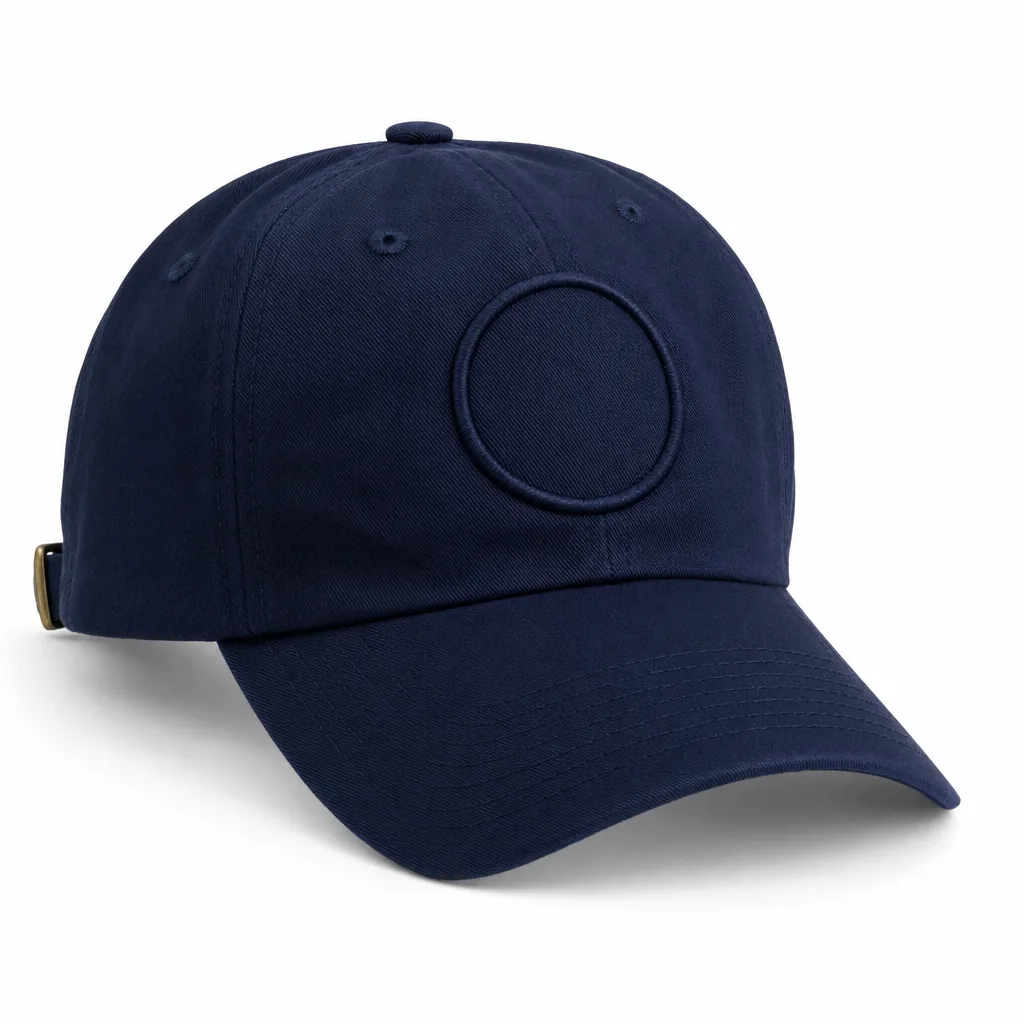
Cap Sweatband Material Selection for Custom Headwear Buyers
Read article →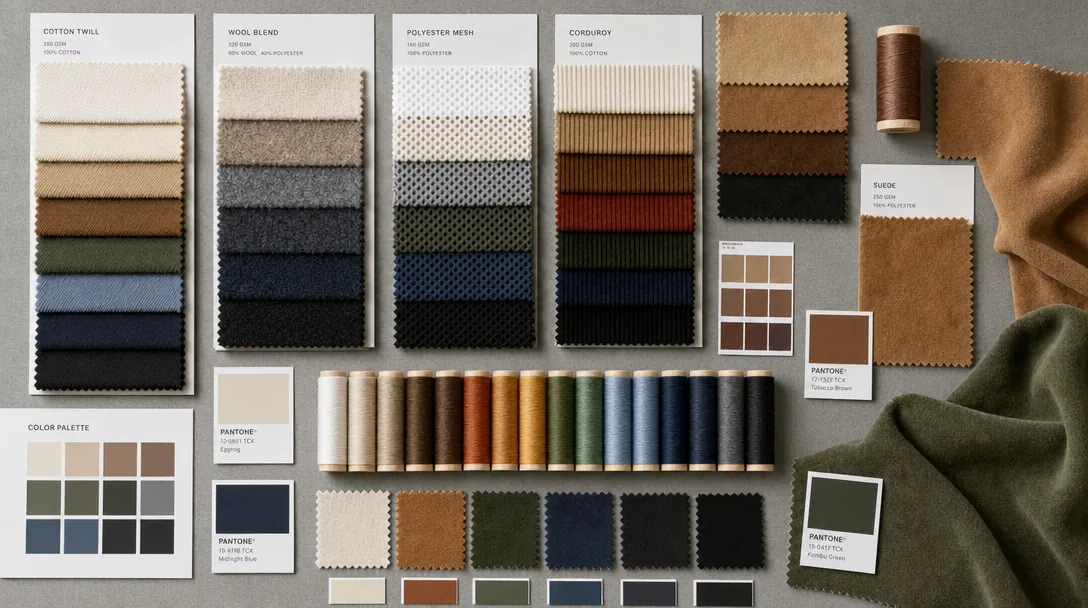
Bucket Hat Women: Properties, Costs and How to Spec It Right (2026 Update)
Read article →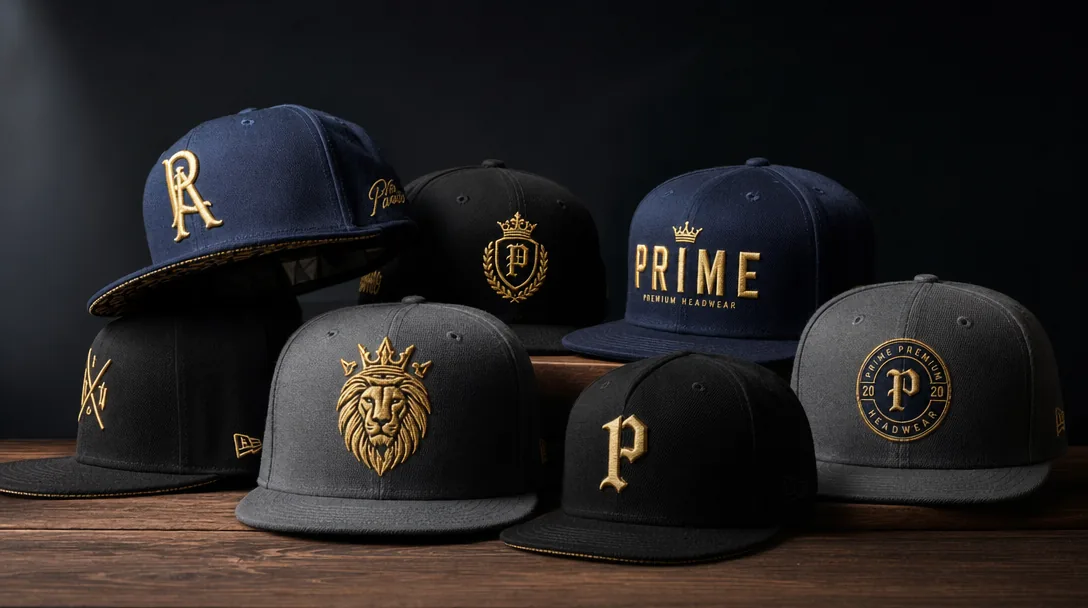
Reflective Trim Running Cap Bulk: A 2026 B2B Sourcing Guide
Read article →We hope this guide demystifies custom logo hats: when to use it, costs, and what to ask your factory - supplier checklist (2026 update) - 2026 buyer's guide and helps you move forward with confidence. If you have questions specific to your project, our English-speaking sales engineers are one message away.