
Custom Hat Patch: When to Use It, Costs, and What to Ask Your Factory - Cost & MOQ Breakdown - Supplier Checklist
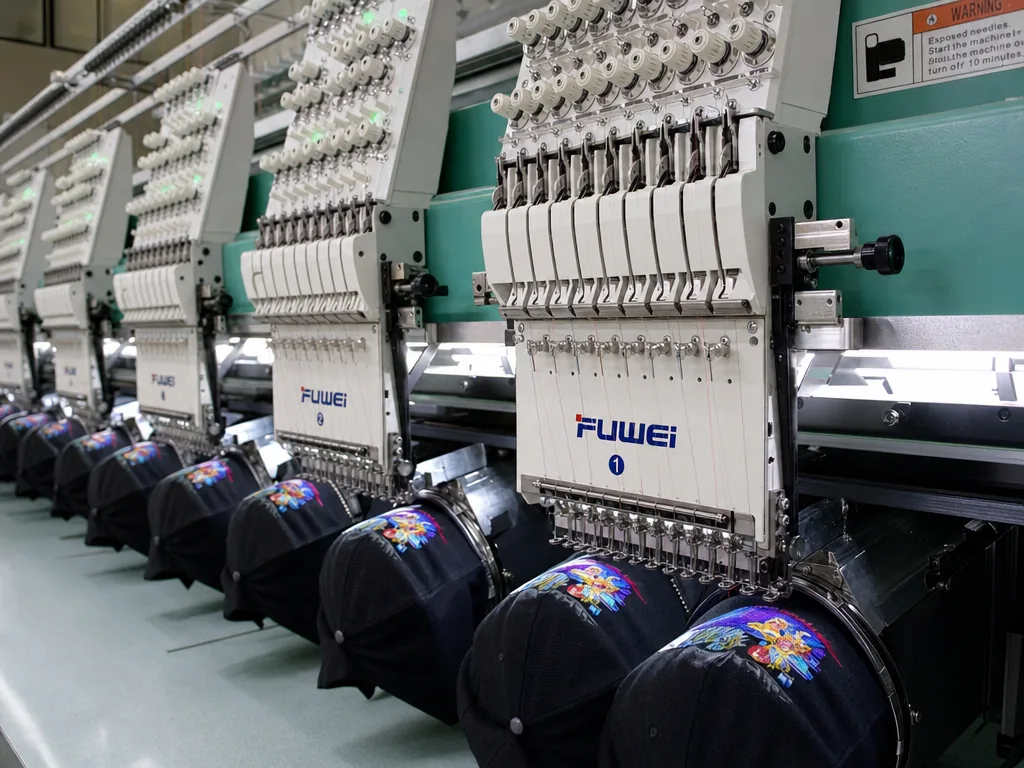
Custom Hat Patch: When to Use It, Costs, and What to Ask Your Factory - Cost & MOQ Breakdown - Supplier Checklist is one of the most-asked questions we receive from international buyers, and for good reason. With dozens of factories competing for your order and an alphabet soup of technical terms in every supplier quote, even experienced importers can feel lost. This guide consolidates what we have learned producing custom hats for clients in 40+ countries.
Custom Logo Hats
The real decision on a custom logo hat is not style; it is process capability. If the artwork is clean and bold, direct embroidery is usually cheaper and more stable than a custom hat patch. On a structured 5-panel or 6-panel cap, a front logo with 1 to 6 solid colors, satin columns above 1.2 mm, and no negative detail below 0.8 mm will typically run well at 5,000 to 12,000 stitches on Tajima or Barudan 12-head machines. Once the art includes distressed texture, serif micro text, tonal gradients, keylines under 0.8 mm, or faux-debossed effects, embroidery starts fighting the substrate; that is where patches outperform it. Woven patches hold fine linework because the detail comes from yarn construction rather than stitch penetration, TPU gives crisp edges and good weather resistance, and printed twill handles multicolor artwork without driving stitch count and rejection rate up. Patch choice also changes how the cap has to be engineered. A merrow-edge woven patch sewn onto a high-profile buckram front has very different behavior from a laser-cut TPU badge heat-applied to brushed cotton twill or polyester performance fabric. Buyers should lock four variables before sampling: patch material, edge finish, backing, and attachment method. If one of those stays open, the sample is almost meaningless because shape retention, puckering, hand feel, and wash performance all shift. On most programs, practical MOQ for stock-body caps with a woven or PU custom hat patch is 144 to 300 pieces per colorway; molded PVC, genuine leather, cork, or custom-dyed components usually push the factory toward 500 pieces because of die cost, leather yield, and material purchasing minimums. At 300 pieces, FOB China is commonly $2.80 to $5.50 for woven or PU patch caps and $4.50 to $7.50 for leather or molded rubber builds.
A workable tech pack for a custom hat patch needs measurement and process data, not just an Illustrator file. Specify crown profile, panel count, visor shape, closure type, shell fabric composition, fabric weight in gsm, buckram grade, sweatband material, seam tape, eyelet construction, and stitch density. Then define the patch itself: finished size in mm, placement tolerance, base material, woven denier or leather thickness, thread brand, edge type, backing, and if it is heat-applied, the adhesive system, press temperature, pressure, and dwell time. For color, use Pantone TCX for textile components and Pantone Solid Coated for printed or molded logo elements. On stable materials like TPU, woven polyester, or PU, a disciplined factory can usually hold Delta-E around 1.5 to 2.0; on garment-washed cotton, lot-to-lot drift will be wider and should be acknowledged before bulk approval. Most failures on patch caps are assembly failures, not patch failures. The common defects are skew over the center seam, uneven topstitch margin, edge lifting after cooling, heat-press glazing on cotton twill, adhesive bleed, and visible color mismatch under D65 light. Front placement should be checked with a hard template, with seam-to-patch centering held to ±2 mm; for symmetrical logos, even ±1.5 mm can matter visually. Heat-applied badges should be pull-tested after 24 hours, not immediately off the press, because some hot-melt films look bonded while warm and then release after full cure. Woven and printed patches should pass tape adhesion, crocking, and edge-fray checks. Final inspection should run at AQL 2.5, but logo legibility, placement, and attachment strength belong in the major-defect column. At CrownsForge, we insist on approving both the loose patch and the assembled pre-production sample because the same patch can look correct alone and still fail once it meets the cap’s seam, curvature, and fabric tension.
Custom Embroidered Patches
An embroidered custom hat patch makes sense when you need texture, a defined edge, and the freedom to use one emblem across different silhouettes without redigitizing for each crown profile. In practice, we run the patch as a separate component, then apply the same badge to trucker caps, unstructured 5-panels, beanies, and bucket hats; that saves setup time and keeps the logo consistent even when front-panel height changes from 55 mm to 90 mm. The most stable grounds are 100% polyester twill around 180-220 gsm and 1.5-2.0 mm wool-blend felt, because both hold satin borders cleanly and resist puckering better than lightweight cotton plain weave. If the art has hairline strokes, micro text, or tight counters, embroidery has hard physical limits: lines below about 1.0 mm, serif text under 4.5-5.0 mm cap height, and negative gaps under 0.8 mm will start to fill in once you account for 40 wt thread, underlay, and pull compensation. That is the point where a woven patch usually gives a cleaner result than a custom hat patch built in thread.
Quotes go wrong when buyers specify only shape and color. A factory needs finished size in millimeters, substrate, border type, backing, attachment method, stitch coverage, and thread count to price accurately. A 65 x 65 mm merrowed patch is a different product from a 70 x 45 mm laser-cut twill patch with satin border: the second one usually carries higher spoilage, slower edge finishing, and tighter placement requirements. On Tajima, Barudan, or ZSK heads, machine brand matters less than digitizing quality; over-dense fill, wrong underlay, or poor sequencing will cause edge distortion, flagging, and color misregistration long before the embroidery head becomes the problem. For branded programs, ask for thread supplier, Pantone reference, and shade tolerance in writing. Thread rarely matches Pantone TCX exactly, but base fabric can usually be controlled to Delta-E 2.0-3.0 if the mill is disciplined.
MOQ is driven by the patch run more than the cap shell. For a straightforward embroidered custom hat patch, 100-200 pieces per design is normal; once you add multiple sizes, 6 or more thread colors, heat-seal backing, or laser cutting, many factories move to 300 pieces because setup, trimming loss, and reject risk climb fast. A practical FOB add-on for a basic 2.25-3.0 inch patch sewn onto the cap is about $0.18-$0.45 per piece. Dense coverage at 75%-100%, specialty backing, or heat-cut and laser-cut edges usually pushes that to $0.50-$0.90 before the hat itself. Inspection should be run at AQL 2.5, with front placement tolerance around plus or minus 2 mm horizontally and plus or minus 3 mm vertically. The failures I see most often on the factory floor are crooked application, missed thread breaks buried inside dense fills, frayed cut edges, and patch curling after pressing because the wrong fusible film was paired with acrylic, nylon taslon, or performance polyester and the press temperature was set too high.
Custom Hat with Patch
A custom hat patch should be specified as a separate component, not treated like a decoration added at the end. The patch changes crown behavior, seam bulk, and sewing difficulty, so the right construction depends first on panel structure. On 5-panel camp caps or unstructured dad hats made in 240-300 gsm cotton twill, lightweight woven patches or low-relief embroidered patches with a satin border are the safest option because they sit flat and do not torque the front panel after topstitching. On foam truckers, buckram-backed 6-panels, or acrylic/wool blend snapbacks, you have enough front-panel support to use 0.8-1.2 mm PU leather, 1.5-2.0 mm soft PVC, or felt-and-chenille patch builds without visible collapse. If the patch crosses the center seam, the cap body needs to be blocked and sewn with that in mind; otherwise you get smiling seams or a patch that bridges instead of sitting flush.
Artwork limits are where most custom hat patch mistakes start. If letter height drops below about 2.0 mm, counters close and satin columns crowd once the file is digitized for Tajima, Barudan, or ZSK heads, especially on textured twill or brushed cotton. As a practical floor rule, embroidered patch line weight should stay above 0.4 mm, and fine serif copy is usually better converted to woven label construction, sublimated twill, or print-on-patch. Cost follows construction more than buyers expect: at 500 pieces, a 60 x 30 mm woven patch usually adds $0.15-$0.35, embroidered $0.18-$0.45, debossed or laser-engraved PU leather $0.28-$0.60, and soft PVC $0.45-$0.90 depending on mold depth, color breaks, and raised areas. Attachment is separate labor, typically $0.12-$0.25 per cap, higher if placement is angled, off-panel, or over buckram. Our standard practice is to lock patch size in millimeters, placement tolerance at +/-2 mm, border type, stitch method, and Pantone reference on the PO, then inspect finished goods to AQL 2.5 for placement drift, puckering, edge lift, and color variance beyond Delta-E 1.5-2.0 where the substrate allows it.
Custom Patch for Hat
The right custom hat patch starts with the substrate, because most failures are baked in before sewing ever starts. In cap production, the practical options are embroidered twill, woven damask, soft PVC, genuine leather, PU leather, and printed patches with merrow, satin-stitch, heat-cut, or laser-cut edges. Embroidered patches are the safest choice for bold logos and fills, but I would not promise readable copy below 1.5 mm stroke width on a curved crown; once the patch is stitched onto a 6-panel front, the thread spread and crown tension close small detail fast. Woven damask holds cleaner definition, typically down to 1.0 to 1.2 mm depending on denier and loom density, but it has a flatter hand and less depth than embroidery. PVC gives the best edge definition and weather resistance, usually at 2.0 to 2.5 mm thickness, but it needs a steel mold that typically runs $80 to $180 per design. Leather looks premium, yet natural hide variation makes Pantone-level matching unrealistic; if the brand requires Delta-E control, leather is usually the wrong material.
A usable custom hat patch tech pack needs finished size in mm, edge construction, backing, attachment method, Pantone reference, and exact placement from center front or side seam. If the factory is also making the cap, specify shell fabric, front panel structure, crown profile, and whether application is pre-sew or post-sew. A patch that sits flat on a buckram-backed 6-panel can bridge or torque badly on an unstructured 280 gsm washed cotton twill dad hat. Sewing is still the most reliable attachment for truckers, 5-panels, and washed caps because it survives laundering, transit heat, and crown curvature better than glue-only application. Realistic FOB China add-on costs at 300 pcs are about $0.25 to $0.60 for embroidered, $0.35 to $0.70 for woven, $0.60 to $1.20 for PVC, and $0.80 to $1.80 for genuine leather before mold, die, or deboss plate charges. At inspection, lock in tolerances: patch size +/-1 mm, placement +/-2 mm, and color standard by Pantone Coated or Pantone TCX where relevant. Our standard practice is to check patch lots under AQL 2.5 for skew, edge fray, adhesive bleed, bubbling after heat press, thread breaks, and distortion after application on the actual cap body, not on a flat table sample.
Custom Patch Hat
A custom hat patch is a production decision, not just a logo treatment, because the patch and cap behave like two separate BOMs that must meet on the same centerline. A 60 × 30 mm woven patch with 75D yarn and heat-cut edge will sit very differently from a 2.0 mm molded PVC badge, a 1.2 mm PU patch, or a 1.8 mm veg-tan leather patch debossed at 130°C. On structured 6-panel caps and truckers, flat stitch-on patches are usually safest before crown closing; after buckram, seam tape, and front-panel curve are set, even a good operator can fight skew and puckering. Foam truckers, dad hats, and unstructured cotton twill caps can accept post-sew application, but only with a metal placement jig, center-front reference marks, and in-line checks every 20–30 pieces—not just final inspection.
Your tech pack for a custom hat patch should specify patch size in millimeters, border type, backing, attachment method, Pantone TCX color, acceptable Delta-E tolerance, and either embroidery stitch count or woven pick density. For embroidered patches on Tajima, Barudan, or ZSK heads, lettering under 3 mm cap height often fills in, and satin columns below 0.8 mm lose definition after washing. Woven patches handle small type better when using 50D–75D yarn at higher density, but cheap coarse yarn makes diagonals and small serifs look broken. For leather, suede microfiber, and PU, call out thickness, grain, edge paint or raw edge, and migration risk; low-grade PU can off-gas in polybags and stain 260 gsm cotton twill during ocean transit. Our standard practice at CrownsForge is to approve both the patch strike-off and the finished cap sample, because a correct patch can still look wrong on the wrong crown shape.
Cost and MOQ are driven more by patch construction than by the cap shell. In China, realistic MOQ is usually 100–144 pieces per colorway for embroidered or woven patch hats when one factory controls both patch sourcing and cap assembly; below that, setup and line changeover inflate the unit price. At 300–500 pieces FOB, a brushed cotton twill cap with stitched embroidered patch typically runs $2.20–$3.80, woven patch styles $2.40–$4.20, leather patch hats $3.20–$5.80, and molded PVC patch caps $3.80–$6.50 depending on mold size, thickness, and sewing versus heat-press attachment. Budget separate tooling: $25–$80 for embroidery digitizing, $40–$120 for woven setup, and $80–$200 for a PVC mold. Inspect bulk to AQL 2.5 for major defects, but hold front-logo alignment tighter—buyers will notice a 3 mm drift immediately.
Custom Patch Hats
A custom hat patch needs to be quoted and controlled as a separate component, not buried under “front logo,” because the patch spec drives both cost and defect risk. Woven patches are the safest choice when copy drops below roughly 2.0 mm stroke width; on most 70D to 100D woven constructions, they hold fine serif text and tight outlines better than standard satin or tatami embroidery. Merrowed embroidered patches add depth, but the overlock edge can fight the curve of a structured 6-panel crown and telegraph bulk through the buckram. PVC, silicone, and TPU patches are better for outdoor, motorsport, and streetwear programs because they resist abrasion and moisture, but they require a mold charge, tighter Pantone approval, and realistic expectations on color drift; I usually hold molded goods to Delta-E under 2.0 against the approved chip, while textile patches can often stay under 1.5. For leather or PU, the variables are grain, thickness, deboss depth, edge paint, and press temperature; low-grade recycled PU regularly darkens or glosses out after heat application above about 135 to 145°C.
The cap body has to be engineered around the patch, or you get avoidable rejects in sewing and pressing. A 70 x 45 mm woven patch stitched onto brushed cotton twill behaves very differently from the same patch heat-applied to 120 gsm nylon or laminated performance polyester. On lightweight shells, heat pressing can leave platen shine, panel distortion, or adhesive read-through; on heavy buckram fronts, stitch-down patches can pucker if the patch base cloth is too stiff or the operator over-tensions the feed. The tech pack should lock size in millimeters, border construction, backing type, attachment method, Pantone TCX or TPX reference, and placement tolerance; for front-center retail caps, I would not accept more than plus or minus 2 mm drift, and for paired left-right placements, symmetry needs to be checked visually and by template. Ask the factory for peel-strength results on heat-applied patches, close-up inside photos after the first 20 pieces, and final inspection to AQL 2.5 major / 4.0 minor. In practice, thread nests, exposed bobbin lines, corner lift, and heat-press shadowing show up early if machine settings are wrong, whether the line is running on Tajima, Barudan, or a basic pneumatic heat press station.
MOQ is usually a two-part problem: the cap line minimum and the patch vendor minimum rarely match. In China, a cut-and-sew cap body often starts at 144 to 300 pieces per colorway, while patch minimums range from about 100 pieces for woven or embroidered to 300 to 500 pieces for molded PVC, silicone, metal, or debossed leather programs. Woven and embroidered patches are the most MOQ-friendly because there is no tooling; molded patches and metal badges typically add a one-time setup charge around $40 to $120 per design, sometimes higher if the cavity is oversized or multi-level. At 300 pieces, a cotton twill cap with a stitch-down woven custom hat patch is commonly in the $2.20 to $3.80 EXW range, while a structured acrylic-wool blend or 110-style cap with molded PVC or genuine leather patch is more often $3.60 to $6.50 EXW before freight, duty, or DDP handling. Do not accept a lump-sum quote. Ask for the cap body, patch unit cost, tooling, sampling, application labor, polybag and carton spec, and carton gross weight broken out separately, because patch type affects not just unit price but also packing efficiency and rework risk in final QC.
Working with CrownsForge for custom hat patch programs
The main failure point in a custom hat patch program is not the patch quote; it is the mismatch between artwork, patch thickness, and crown structure. Our standard practice at CrownsForge is to review the artwork, cap spec, and BOM within 24 hours, issue a patch strike-off with a crown mockup in 2–3 working days, then make a wearable sample in 5–7 working days after materials are approved. That step catches expensive mistakes early: a 1.5 mm PVC badge pulling a low-profile crown out of shape, a merrowed edge looking too bulky on an unstructured dad hat, or satin-stitch borders tunneling on brushed 10 oz cotton twill. Typical sampling runs $25–$40 for woven patches, $35–$60 for embroidered patches, and $80–$150 for molded PVC because mold setup and Pantone TCX matching are involved. For color control, Delta-E under 1.5 is excellent on dyed fabric, but rubber, faux leather, metallic yarn, and mixed-sheen embroidery need a written commercial tolerance before bulk production.
MOQ is driven by construction, not by the word “patch.” A sewn embroidered custom hat patch on stock chino twill or cotton-poly caps can usually start at 100–144 pieces per colorway. A fully custom cut-and-sew cap using proprietary 280 gsm cotton twill, custom taping, private-label sweatband, branded buckle, and multiple decorations is more realistic at 300–500 pieces. Woven, sublimated, and printed twill patches are the safest for small market tests because setup is light and repeatability is stable. Debossed leatherette, chenille, and injection PVC need more volume to absorb mold fees, cutting dies, color setup, and slower attachment labor. If a brand wants to test two logos, I prefer splitting 300 units into 150/150 on the same cap shell instead of forcing 75-piece micro lots, which usually creates unstable labor costing and inconsistent placement. For sewn-on patches, center-front placement tolerance should be written as ±2 mm and checked after crown forming, not only on the flat front panel.
A serious supplier must control patch making, cap sewing, inspection, compliance, and export release as one workflow. Decoration capability should include embroidered, woven, printed twill, sublimation, chenille, TPU/PVC, faux leather, and direct embroidery when a patch is the wrong solution. Tajima and Barudan heads are reliable for dense satin borders; ZSK machines are strong for small lettering and multi-color registration when the digitizing file is clean. QC should be documented under D65 lighting, then inspected to final AQL 2.5 for patch skew, edge lift, loose trims, fray, visor symmetry, top-button alignment, carton assortment, and crocking risk on dark sweatbands. Retail programs may require sedex-audit-cap-supplier-guide.html">BSCI 2.0, Sedex SMETA 4-Pillar, REACH, CPSIA, California Proposition 65, azo dye, phthalate, formaldehyde, or nickel-release checks, especially for rubber badges, faux leather, and metal trims. Realistic lead time is 18–28 days for repeat FOB Ningbo or Shanghai orders, and 30–40 days for first runs involving tooling, lab testing, or new materials.
Frequently Asked Questions
What logo decoration techniques do you offer?
3D puff embroidery, flat embroidery, woven patch, leather patch, PVC patch, screen printing, sublimation, applique and laser etching, all in-house with no subcontracting.
Can I order a sample before bulk production?
Yes. We strongly recommend approving a pre-production sample before mass production. Samples are charged at 35 to 60 USD each plus express shipping, fully refundable against confirmed bulk orders over 500 pieces.
Do you support sustainability certifications?
Yes. We work with GOTS organic cotton, GRS-certified recycled polyester, OEKO-TEX Standard 100 fabrics, and are BSCI and Sedex audited. Certification documentation can be provided per order.
What file format should I send for my logo?
Vector files (AI, EPS, PDF) are ideal. High-resolution PNG or JPG at 300 dpi on transparent background works as a fallback. Provide Pantone color references for accurate reproduction.
Which shipping methods do you support?
We support FOB, CIF and DDP shipping. Air express for samples and small orders, sea LCL for 100 to 500 pieces, sea FCL for 5,000+ pieces. Door-to-door DDP available for US, EU, UK, Canada and Australia.
How does ordering custom leather patch trucker hat work?
When evaluating custom leather patch trucker hat, the key considerations are construction quality, decoration capability, MOQ flexibility and lead time. Cover everything buyers ask about custom logo hats: how it's manufactured, what specs to request from a factory, typical MOQ and pricing, common quality issues to inspect for, and how this ties back to the broader custom hat patch sourcing decision. Cover everything buyers ask about custom embroidered patches: how it's manufactured, what specs to request from a factory,…
What's the MOQ for custom leather patch hats no minimum?
When evaluating custom leather patch hats no minimum, the key considerations are construction quality, decoration capability, MOQ flexibility and lead time. Cover everything buyers ask about custom logo hats: how it's manufactured, what specs to request from a factory, typical MOQ and pricing, common quality issues to inspect for, and how this ties back to the broader custom hat patch sourcing decision. Cover everything buyers ask about custom patch hats: how it's manufactured, what specs to request from a factory, typical MOQ…
How does ordering custom embroidered trucker hats work?
When evaluating custom embroidered trucker hats, the key considerations are construction quality, decoration capability, MOQ flexibility and lead time. Cover everything buyers ask about custom logo hats: how it's manufactured, what specs to request from a factory, typical MOQ and pricing, common quality issues to inspect for, and how this ties back to the broader custom hat patch sourcing decision. Cover everything buyers ask about custom embroidered patches: how it's manufactured, what specs to request from a factory,…
How does ordering custom baseball hats with logo work?
When evaluating custom baseball hats with logo, the key considerations are construction quality, decoration capability, MOQ flexibility and lead time. Cover everything buyers ask about custom logo hats: how it's manufactured, what specs to request from a factory, typical MOQ and pricing, common quality issues to inspect for, and how this ties back to the broader custom hat patch sourcing decision. Cover everything buyers ask about custom patch hats: how it's manufactured, what specs to request from a factory, typical MOQ…
Ready to start your custom hat project?
Send us your tech-pack, sketch or even just an inspiration photo. We will respond with a detailed quotation and digital mock-up within 24 hours.
Request a free quoteRelated guides
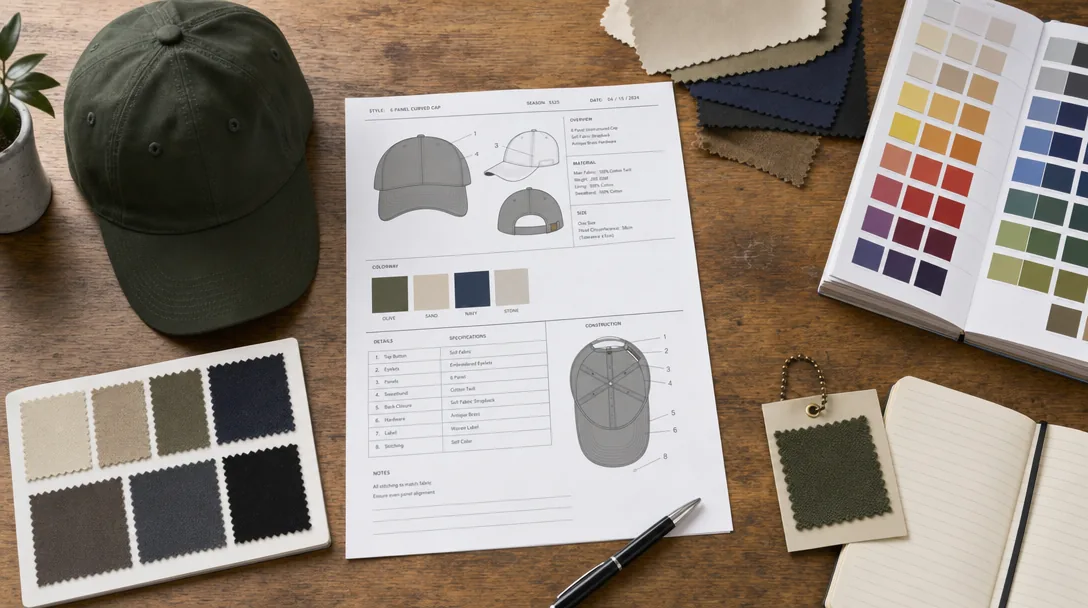
Performance & Athletic Caps: Moisture-Wicking, UPF and Buyer Specs - 2026 Buyer's Guide - 2026 Buyer's Guide
Read article →
Country Trucker Caps: The 2026 Sourcing & Manufacturing Playbook
Read article →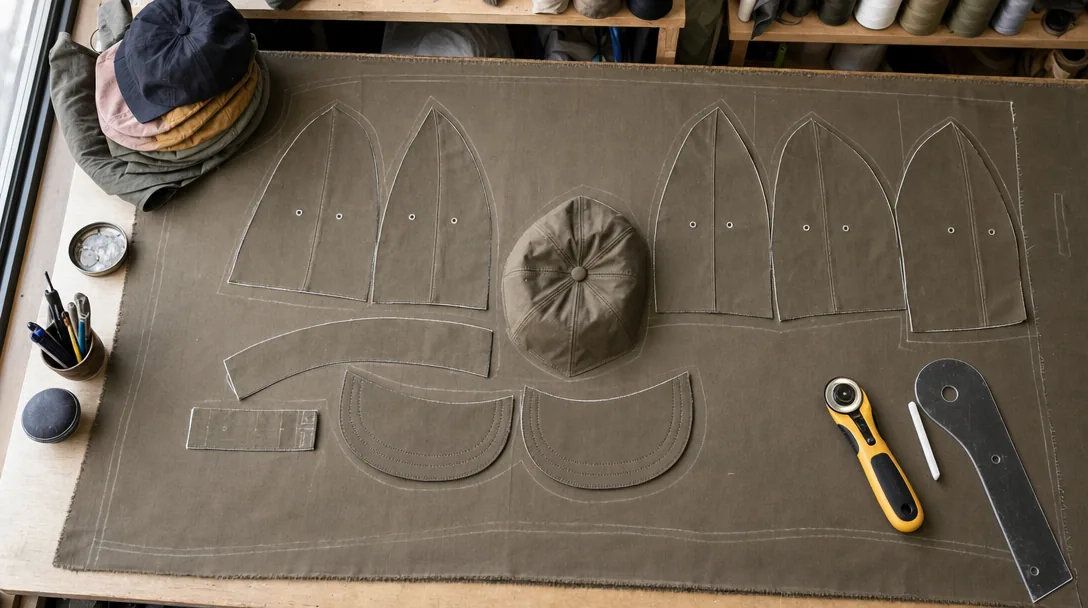
5-Panel vs 6-Panel Caps: Construction, Use Cases and Cost Compared (2026 Update)
Read article →If you are ready to take the next step on custom hat patch: when to use it, costs, and what to ask your factory - cost & moq breakdown - supplier checklist, our team can put a tailored quotation and digital mock-up in your inbox within 24 hours. Send the inquiry form on our contact page or message us directly on WhatsApp.