
Custom Hat Patch: When to Use It, Costs, and What to Ask Your Factory (2026 Update)
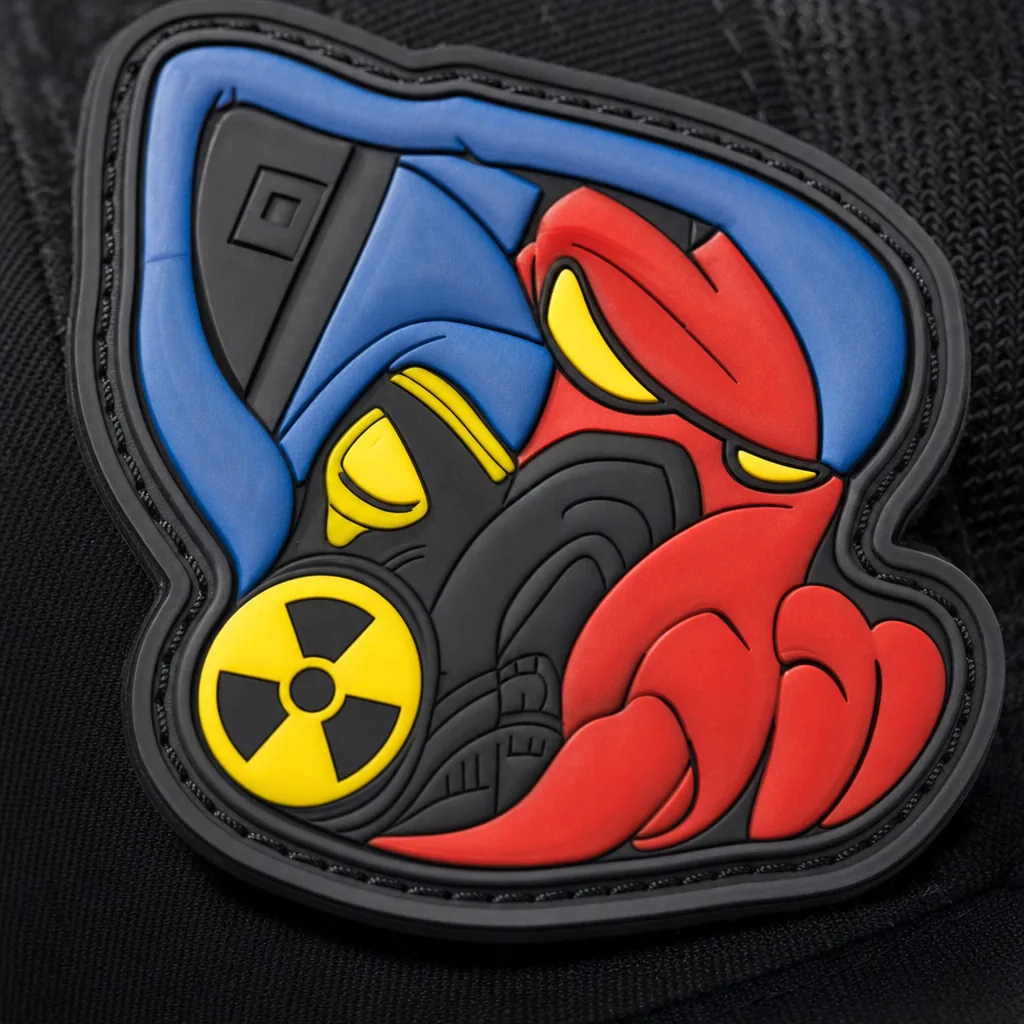
Custom Hat Patch: When to Use It, Costs, and What to Ask Your Factory (2026 Update) is one of the most-asked questions we receive from international buyers, and for good reason. With dozens of factories competing for your order and an alphabet soup of technical terms in every supplier quote, even experienced importers can feel lost. This guide consolidates what we have learned producing custom hats for clients in 40+ countries.
Custom Logo Hats
For most buyers, the first decision on custom logo hats is not the cap body but the decoration method, because that choice drives lead time, minimums, and failure risk. A custom hat patch usually means the logo is produced separately as leather, PU, woven, embroidered, TPU, silicone, or printed twill, then attached by stitch, heat press, or both onto a finished crown panel. On the factory floor, that means two production streams have to match: patch output and cap sewing. If the patch is 65 x 45 mm on a 6-panel structured cap, even a 2 mm placement drift looks amateur once it sits above the seam line. Buyers asking for a custom hat with patch should specify patch material, backing type, attachment method, exact size in millimeters, placement from visor seam, edge finish, logo line thickness, and target color reference such as Pantone TCX or coated PMS. If the artwork has small text under 2.0 mm height, woven or TPU patches generally hold detail better than embroidery patches, which can fill in on Tajima or Barudan heads unless the digitizing is cleaned up first.
The commercial reality is straightforward: patch hats cost more than direct embroidery because there is an extra component, extra handling, and higher reject exposure. In China, a standard MOQ for a single style custom patch for hat program is usually 144 to 300 pcs per colorway, while real leather or molded rubber patch programs often start closer to 300 to 500 pcs because tooling, die cutting, or mold charges have to be amortized. A basic embroidered patch on a cotton twill baseball cap might add about $0.28 to $0.55 per piece over direct embroidery at 300 pcs, while woven label patches are often $0.22 to $0.40, PU patches $0.35 to $0.70, and molded silicone or TPU can run $0.60 to $1.20 depending on thickness, color layers, and mold cost. Setup charges are usually modest for stitch patches but can reach $80 to $150 for emboss dies or $120 to $250 for silicone molds. Our standard practice is to quote cap body and patch as separate cost lines because buyers can then see whether the premium for a custom patch hat is coming from material, attachment labor, or tooling rather than guessing from a bundled FOB number.
Inspection is where many custom patch hats fail, especially when the pre-production sample looked fine but bulk sewing drifts under speed. The defects I see most are crooked placement, puckering around stitch-down borders, weak heat-bond adhesion after carton compression, edge fray on merrow-style patches, cracked PU after cold-weather flexing, and color mismatch between patch and crown fabric when both were approved from different lighting conditions. Buyers should ask the factory for placement tolerance, pull-test standard for heat-applied patches, needle count or stitch density for embroidered borders, and whether bulk is inspected to AQL 2.5 with appearance points focused on patch centering and attachment strength. If you are deciding between direct embroidery and hat patch custom construction, the sourcing question is simple: use patches when you need texture, material contrast, removable branding language, or better small-detail reproduction on difficult fabrics like corduroy, brushed canvas, and 600D poly. If the logo is simple, under 8,000 stitches, and the order is price-sensitive, direct embroidery is usually the cleaner and cheaper choice.
Custom Embroidered Patches
Embroidered patches are still the safest custom hat patch choice when you need texture, decent abrasion resistance, and easy compatibility across 6-panel baseball caps, trucker fronts, and cuff beanies. The price is driven far more by construction than by the artwork itself. A buyer should lock six specs before sampling: finished size in millimeters, base fabric, thread type, stitch coverage, edge finish, and attachment method. A 65 x 45 mm patch on 210 gsm polyester twill at 70% coverage runs cleanly on a Tajima or Barudan head; the same art on 3 mm acrylic felt with 95% coverage, heavy underlay, and a merrow edge behaves like a different product entirely. If the tech pack only says “embroidered patch,” the factory is forced to guess density, pull compensation, border width, backing stiffness, and crown placement, and that is exactly where cost drift and ugly samples start. Material and edge selection decide whether the patch looks crisp after 30 wears or starts fraying and fading. Polyester twill is the most stable base for cap programs because it cuts cleaner than cotton twill and holds shade more consistently lot to lot; felt adds body but softens fine edges; canvas works for vintage styling but is less precise. Merrow borders usually need a simple outer shape and about 2.5 to 3.0 mm border width, so they are a poor fit for sharp corners or narrow tabs. Laser-cut patches with satin borders handle more complex geometry, but edge quality depends on the fabric’s melt behavior and the die or laser settings. For thread, ask for Pantone TCX or coated references and confirm polyester rather than rayon unless sheen is the priority; polyester thread is simply more reliable on hats for UV exposure, sweat, and abrasion.
Sewn attachment is still the most durable way to apply a custom hat patch, especially on brushed cotton twill, chino twill, and 600D polyester fronts. Heat-seal saves labor, but it drops off quickly on enzyme-washed fabric, DWR-coated panels, ribbed knits, or heavily curved crowns. In practical factory terms, MOQ is usually 100 to 300 pieces per design and colorway, with sample lead time around 5 to 7 days once the embroidery file is approved. For a 2.25 to 3.00 inch embroidered patch, patch-only cost in China is commonly $0.18 to $0.60 each; sewing onto the cap adds about $0.20 to $0.55, and center-seam placement costs more because operators need slower alignment and tighter top-stitch control. At CrownsForge, center-seam patch programs also get an extra pre-production placement check because 2 mm drift is obvious on a structured crown. Inspection is where an embroidered custom hat patch either looks premium or immediately reads cheap. The repeat failures are predictable: exposed ground twill from low stitch density, loose jump threads, weak merrow coverage, distorted laser cuts, puckering on unstructured fronts, and patch rotation off spec. Use AQL 2.5 for bulk and write measurable tolerances into the PO: position from visor seam within ±2 mm, rotation within 3 degrees, and dyed base fabric color within an agreed Delta-E, typically under 1.5 for close brand matching. Also check whether the sew line is telegraphing through buckram or collapsing the front panel shape. If the logo has text under 4 mm tall, strokes under 0.8 to 1.0 mm, or tight negative space, embroidery is the wrong patch method; woven or printed patches will reproduce those details more cleanly and with fewer sample rounds.
Custom Hat with Patch
A custom hat patch succeeds or fails on component engineering, not the render. Treat the patch as a second SKU with its own substrate limits, color tolerance, and attachment risk. The common options are embroidered twill, woven damask, molded PVC, printed TPU, PU leather, genuine leather, suede, and sublimated polyester, and they do not behave the same once fixed to a structured crown. Copy below about 2.0 mm, thin serifs, and stacked micro text usually resolve better on high-pick woven labels than on embroidery run on Tajima or Barudan heads, where satin columns start closing up and underlay builds bulk. By contrast, logos with sharp corners, fill blocks, or raised edge definition often hold better in molded PVC than in puff embroidery, especially on 5-panel fronts that flex during shaping. If you want one custom hat patch used across taslon camp caps, brushed cotton unstructured hats, and acrylic snapbacks, freeze the patch spec first; otherwise you end up re-digitizing art, re-approving Pantone references, and changing stitch programs or bonding settings for every silhouette.
Pricing only becomes real when the patch spec is complete. A usable tech pack should list patch size in millimeters, substrate, border finish, backing, attachment method, Pantone TCX or coated reference, placement tolerance, and either thread spec or weave density. For example: 60 x 28 mm embroidered twill patch, merrow edge, 75D polyester thread, black nonwoven backing, sewn center front at +/-2 mm. Woven patches should call out denier and acceptable Delta-E if color accuracy matters; leather and PU need thickness in mm, deboss depth, grain standard, and whether edge paint or laser sealing is required. MOQ usually follows the hardest component, not the cap body: a stock cap with a sewn patch can often start at 100 to 144 pcs per colorway, while molded PVC, die-cut leather, or mixed badge-and-patch builds commonly land at 300 pcs and up. Current FOB China add-on cost for a custom hat patch is typically $0.18 to $0.45 for basic embroidery, $0.28 to $0.60 for woven, $0.45 to $0.95 for PVC, and $0.60 to $1.80 for genuine leather, before mold fees, digitizing, or sample revisions.
Most bulk failures happen after sample approval, during attachment and finishing. The repeat defects are crooked placement, stitch-line puckering, merrow fray, lifted corners after crown shaping, heat-bond delamination, and visible shade drift from approval sample to production lot. Lightweight nylon or poly taslon around 120 to 160 gsm is especially unforgiving: if the backing is too soft, needle density is too high, or press temperature runs hot, the front panel tunnels, glosses, or warps once the cap is curved. Dark shells also expose hoop burn, pressure shine, and needle marks around bonded patches, so inline inspection matters more than a perfect pre-production sample. Inspection needs to match the patch type. Sewn patches should be checked for stitch security, edge coverage, and panel distortion; bonded TPU and PVC need tape-pull and light abrasion testing; leather and suede should be shade-banded by carton because hide variation is normal. Our standard practice is to check patch placement and attachment at inline and final under AQL 2.5, because once operators drift off-template, reject rates can jump from 2% to 8% fast.
Custom Patch for Hat
A custom hat patch is not a single decoration method; it is a component system with very different technical limits. The practical options are embroidered patches with merrow or hot-cut edges, woven patches for copy below roughly 3 mm letter height, PVC patches molded at about 0.6 to 1.2 mm relief, vegetable-tanned leather or PU patches with debossing, chenille for varsity programs, and printed twill when the artwork has gradients or photo detail. The biggest sourcing mistake is choosing from mood-board photos instead of from the logo geometry. Fine serif text that looks sharp on a flat proof can collapse once the patch is sewn over a curved 6-panel crown, especially on structured fronts with buckram or on foam trucker panels that compress under the presser foot. Production normally happens in two operations: the patch is made first, then attached to the cap by edge stitch, satin box stitch, zigzag, hidden tack-down, or heat seal. Each route has its own failure points. A laser-cut woven patch may look cleaner than merrow, but it can fray if the edge sealing temperature is off; PVC gives strong outdoor performance, but excess thickness makes the front panel torque if the badge is too large. For most adult caps, patch sizes above about 65 x 45 mm start to look bulky on low-profile crowns. At CrownsForge, we decide patch type from actual cap construction, artwork stroke width, and wash requirement before quoting, because that usually prevents the expensive re-sampling cycle buyers create by approving the wrong patch family first.
Your tech pack for a custom hat patch should be far tighter than a normal cap spec. Call out patch size in millimeters, center-front placement measured from the visor seam, edge finish, backing type, stitch method, and Pantone reference by material type: Pantone TCX for textile yarns and coated Pantone for printed inks. If artwork has lines under 0.8 mm or text under 3 mm cap height, state whether the factory may simplify during Tajima or Barudan digitizing, or during woven jacquard setup. For leather and PU, specify thickness in mm or ounces, grain, finish, and acceptable color tolerance; for premium retail programs, Delta-E under 2.0 is a realistic target, while promo-grade goods often drift closer to 3.0 to 4.0. Cost is driven more by patch complexity than by the cap shell. In China, patch-applied cap MOQs commonly land at 144 to 300 pieces per colorway, while standalone patch MOQs can start around 100 pieces. At 500 units, a basic embroidered patch usually adds about $0.28 to $0.65 per cap; woven patches run roughly $0.35 to $0.80; PVC is typically $0.60 to $1.20; real leather often reaches $0.90 to $1.80 depending on thickness, edge paint, and deboss depth. Bulk inspection should focus on repeatability, not just appearance: placement tolerance within ±2 mm, no puckering around the sew line, no glue bleed, no broken fill stitches, and no edge fray after handling. For shipment release, AQL 2.5 is standard, but you also want placement checked across different crown profiles because the same custom hat patch can look centered on one block and visibly high or rotated on another.
Custom Patch Hat
A custom patch hat is really two production lines married together: the patch line and the cap line. The patch itself may be woven, embroidered, PVC, leather, faux leather, felt, sublimated twill, or even TPU, and each behaves differently once it is sewn or heat-applied onto a crown panel. Buyers usually focus on the artwork first, but the real manufacturing question is edge construction and attachment method. A merrowed edge patch is durable and forgiving on curved front panels, while a laser-cut woven patch with satin stitch border gives cleaner detail for small text below 4 mm letter height. For a structured 6-panel cap, factories normally make the patch first, approve a strike-off, then attach it during cap assembly or after the body is closed, depending on placement. On the floor, we prefer patch-first approval because a bad patch can ruin an otherwise good run of 1,200 caps. If you are sourcing a custom hat patch program across multiple styles, the patch spec has to be locked before you compare cap quotes, otherwise unit pricing is meaningless.
The spec sheet needs more detail than most buyers send. At minimum, request patch size in millimeters, backing type, border type, stitch density if embroidered, yarn or thread color reference, Pantone TCX or coated Pantone target, placement tolerance, and attachment method: lockstitch sew-on, zigzag, heat press, Velcro hook backing, or adhesive assist plus stitching. For woven patches, ask for denier and weave resolution; for leather or PU patches, ask thickness in mm, deboss depth, and whether the logo is screen printed, embossed, or laser engraved. Standard MOQ in China is often 100 to 300 pieces per colorway for a simple custom patch for hat, but molded PVC or genuine leather usually starts closer to 300 to 500 because tooling and yield loss are higher. A basic embroidered patch on a chino twill cap may add only $0.35 to $0.80 per hat at 500 units, while woven labels cut as front patches are more like $0.28 to $0.60. PVC patches often land around $0.70 to $1.40, and real leather patches can push the total up by $0.90 to $2.20 depending on tanning source and thickness.
Inspection is where most custom patch hats get exposed. The repeat failures are crooked placement, inconsistent border width, puckering around the sew line, loose jump stitches, heat-press glue bleed, and color mismatch between approved artwork and bulk production. For embroidered patches, I check edge coverage, thread trims, and whether the backing has made the front panel too stiff or too wavy. For woven and printed patches, look hard at small letters and fine outlines; if the art requires less than 0.25 mm line weight, bulk goods often lose definition fast. Placement tolerance should be written into the PO, usually within plus or minus 2 mm from centerline, and inspection should follow AQL 2.5 with carton sampling across sizes and colors. A custom patch hat also changes the broader sourcing decision because not every hat factory is a strong patch factory. Some cut and sew shops outsource patches to three different vendors, which creates Delta-E drift, longer lead times, and more blame-shifting when defects appear. That is why buyers should ask who makes the patch, whether strike-offs are physical or photo-only, and whether the factory has handled sedex-audit-cap-supplier-guide.html">BSCI 2.0 or Sedex SMETA 4-Pillar audited production under one system.
Custom Patch Hats
A custom hat patch should be engineered as a separate component, not treated like a logo decoration. The patch is made first, then attached after cap panels are sewn or partially assembled, so its thickness, edge finish, and flexibility have to match the crown shape. A merrowed embroidered patch is forgiving on 260-320 gsm cotton twill, chino, and brushed canvas because the border hides small sewing variation. A laser-cut woven damask patch, TPU badge, or molded PVC patch looks sharper on foam-front truckers, 600D polyester, or nylon taslon, but those cleaner edges also expose bad sewing immediately. On a 5-panel front, even a 3 mm placement drift from center reads crooked at retail distance, and rigid patches that exceed roughly 1.8-2.0 mm finished thickness often create puckering on low-profile crowns. Good factories use hard templates or positioning jigs, not operator eyeballing, and they decide early whether the patch goes on pre-curving or post-curving because visor shape changes how the front panel tensions under the needle.
Your tech pack for a custom hat patch should read like a production control document. Specify finished patch size in millimeters, base material, border finish, backing type, attachment method, Pantone reference, and acceptable color tolerance; for brand-sensitive shades, Delta-E under 1.5 against the approved standard is a realistic bulk target. For embroidered patches, call out rayon or polyester thread, stitch density, fill coverage, and trim cleaning on Tajima, Barudan, or ZSK heads. For woven patches, define denier, weave type, and whether edges are merrowed, heat-cut, or folded. For PU or leather patches, note thickness in mm, grain, and crocking performance. Most China factories quote 144-300 pcs per colorway, but cost efficiency usually starts around 500 pcs: about $1.20-$1.90 FOB for a basic 6-panel cotton twill cap with a small embroidered custom hat patch, $1.80-$2.80 for woven or PU patch versions, and $2.60-$4.20 once you add specialty fabric, interior taping, custom labels, or retail polybag and sticker packing.
Inspection is where patch caps either protect margin or quietly bleed it. The repeat failures are predictable: patch off-center from the front seam, uneven topstitch margin, crown puckering, merrow fray, loose jump stitches, weak hot-melt adhesion, and visible shade drift between the approved patch strike-off and bulk cap fabric. AQL 2.5 is the right finished-goods standard for most orders, but visual packing-line checks are not enough. Measure patch position from center front seam and visor edge, verify stitch count consistency, and recheck samples after 48-72 hours in cartons because compression often reveals edge lift that was not visible inline. If the attachment is heat press or stitch-and-glue, require peel testing after aging; if it is sewn, inspect backside thread security inside the crown so the patch does not loosen in wear. For retail programs, approve both the patch strike-off and a full wear sample, because a perfect patch alone does not guarantee the finished cap will sit clean on the crown.
Working with CrownsForge for custom hat patch programs
Most custom hat patch failures are engineered in the tech pack, not on the sewing line. If the patch construction is not matched to crown structure, fabric weight, and panel geometry, the sample is already compromised. A 0.7 mm woven patch with 1.2-1.5 mm serif strokes can stay crisp on a structured 6-panel cap in 280 gsm brushed cotton twill with 0.45 mm buckram, then wrinkle on an unstructured dad cap in 110 gsm taslon. A 1.8-2.2 mm molded PVC or TPU badge that sits flat on a foam-front trucker can torque a washed canvas bucket hat or show stitch drag near the crown curve. The right review should lock the cap profile, buckram spec, shell gsm, patch substrate, merrow or laser-cut edge, attachment method, and Pantone TCX references before sampling starts. Our standard practice is to check patch size against seam breaks, eyelet clearance, visor line, and finished crown curvature, because a 65 mm patch centered on a flat Illustrator file often lands visually high once the front panel is blocked and sewn.
Lead time depends on process selection more than on how aggressively a merchandiser chases updates. A direct-embroidered emblem or twill appliqué using stock body fabric can usually move from approved art to first sample in 5-7 calendar days. Woven labels, chenille, debossed PU, and custom-molded silicone, TPU, or PVC patches normally need 7-12 days because they require separate strike-offs, mold confirmation, or outside trim scheduling. Buyers get faster, cleaner approvals when they freeze one silhouette and one custom hat patch method first, then open colorways after fit and placement are signed off. MOQ is similar: 48-100 pieces per color may be workable on stock bodies, but FOB efficiency usually starts at 144 or 288 pieces once patch setup, Tajima or Barudan changeover, sewing minutes, and carton density are spread properly. In real numbers, a cotton twill 6-panel with a merrow-border woven patch is commonly $3.20-$4.80 FOB China at 144 pieces, while an 80/20 acrylic-wool snapback with a molded silicone badge, printed seam tape, flag label, and custom inside tape is more like $6.50-$9.00. If the patch vendor is external, add 2-4 days and watch Delta-E closely on black, navy, and dark green grounds.
What de-risks a custom hat patch program at scale is process control, not optimistic sampling. A capable factory should handle woven patches, printed twill, chenille, vegetable-tanned leather, PU debossing, and silicone or TPU badges, then attach them by edge stitch, satin tack-down, heat-seal assist, or hook-and-loop based on use case and wash requirement. Buyers should ask for BSCI 2.0 or Sedex SMETA 4-Pillar audit status, REACH-aligned trim declarations, azo-free dye controls, and an AQL 2.5 final inspection with written tolerances such as patch placement within plus or minus 2 mm, no exposed adhesive bleed, no loose thread tails over 3 mm, and no visible edge fray on the face side. The control flow should also be explicit: approved artwork, pre-production sample, material booking, pilot run, in-line QC, final random inspection, then carton mark and packing-list verification before FOB handover. That discipline matters as much on a 72-piece test drop as it does on a 12,000-piece rollout across multiple SKUs.
Frequently Asked Questions
What file format should I send for my logo?
Vector files (AI, EPS, PDF) are ideal. High-resolution PNG or JPG at 300 dpi on transparent background works as a fallback. Provide Pantone color references for accurate reproduction.
Can I order a sample before bulk production?
Yes. We strongly recommend approving a pre-production sample before mass production. Samples are charged at 35 to 60 USD each plus express shipping, fully refundable against confirmed bulk orders over 500 pieces.
How long does production take?
Sampling takes 7 to 12 days. Bulk production runs 20 to 30 days depending on quantity, fabric availability and decoration complexity. Inspection and packing adds another 3 to 5 days before shipment.
Which shipping methods do you support?
We support FOB, CIF and DDP shipping. Air express for samples and small orders, sea LCL for 100 to 500 pieces, sea FCL for 5,000+ pieces. Door-to-door DDP available for US, EU, UK, Canada and Australia.
What logo decoration techniques do you offer?
3D puff embroidery, flat embroidery, woven patch, leather patch, PVC patch, screen printing, sublimation, applique and laser etching, all in-house with no subcontracting.
How does ordering custom leather patch trucker hat work?
When evaluating custom leather patch trucker hat, the key considerations are construction quality, decoration capability, MOQ flexibility and lead time. Cover everything buyers ask about custom logo hats: how it's manufactured, what specs to request from a factory, typical MOQ and pricing, common quality issues to inspect for, and how this ties back to the broader custom hat patch sourcing decision. Cover everything buyers ask about custom embroidered patches: how it's manufactured, what specs to request from a factory,…
What's the MOQ for custom leather patch hats no minimum?
When evaluating custom leather patch hats no minimum, the key considerations are construction quality, decoration capability, MOQ flexibility and lead time. Cover everything buyers ask about custom logo hats: how it's manufactured, what specs to request from a factory, typical MOQ and pricing, common quality issues to inspect for, and how this ties back to the broader custom hat patch sourcing decision. Cover everything buyers ask about custom patch hats: how it's manufactured, what specs to request from a factory, typical MOQ…
How does ordering custom embroidered trucker hats work?
When evaluating custom embroidered trucker hats, the key considerations are construction quality, decoration capability, MOQ flexibility and lead time. Cover everything buyers ask about custom logo hats: how it's manufactured, what specs to request from a factory, typical MOQ and pricing, common quality issues to inspect for, and how this ties back to the broader custom hat patch sourcing decision. Cover everything buyers ask about custom embroidered patches: how it's manufactured, what specs to request from a factory,…
How does ordering custom baseball hats with logo work?
When evaluating custom baseball hats with logo, the key considerations are construction quality, decoration capability, MOQ flexibility and lead time. Cover everything buyers ask about custom logo hats: how it's manufactured, what specs to request from a factory, typical MOQ and pricing, common quality issues to inspect for, and how this ties back to the broader custom hat patch sourcing decision. Cover everything buyers ask about custom patch hats: how it's manufactured, what specs to request from a factory, typical MOQ…
Need a low-MOQ test order?
We help emerging brands launch with as few as 100 pieces. Premium fabric, in-house embroidery, retail-ready packaging.
Start a small orderRelated guides
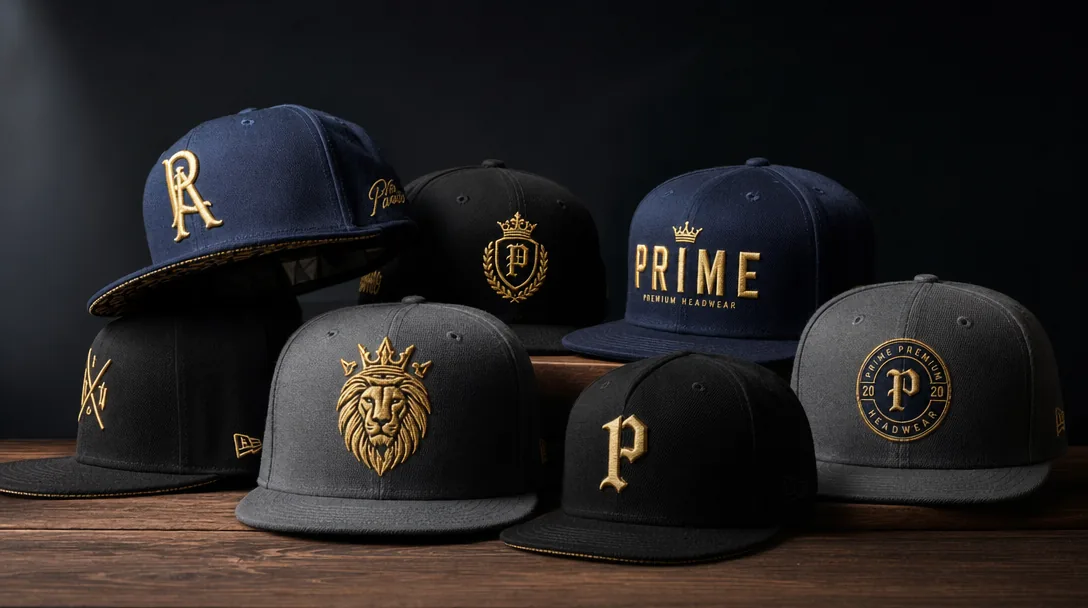
5 Panel Camp Cap Wholesale: A 2026 B2B Sourcing Guide
Read article →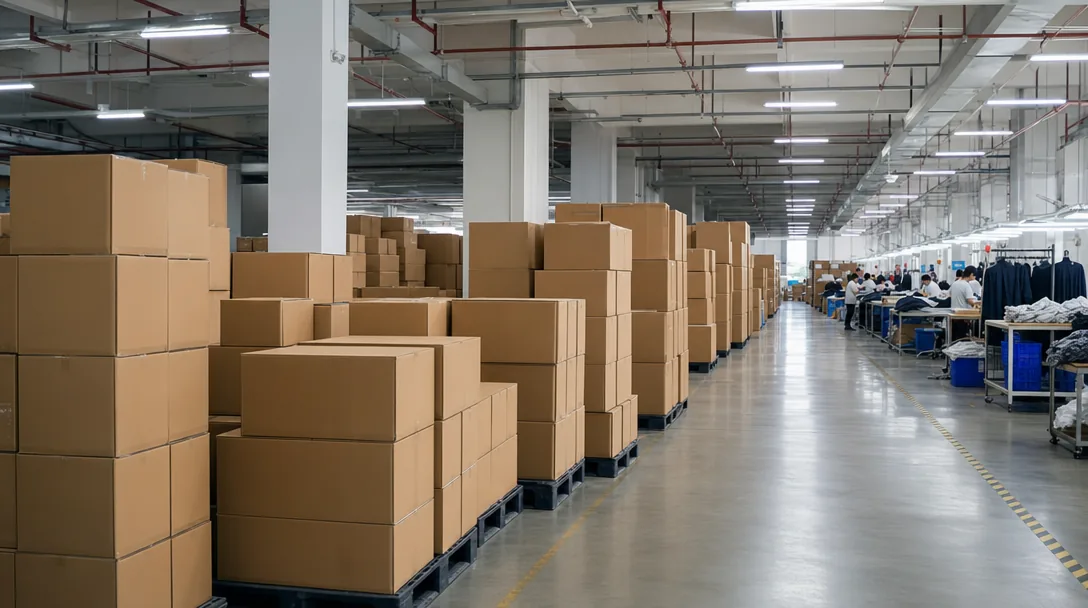
How to Vet a China Hat Manufacturer Before You Wire the Deposit
Read article →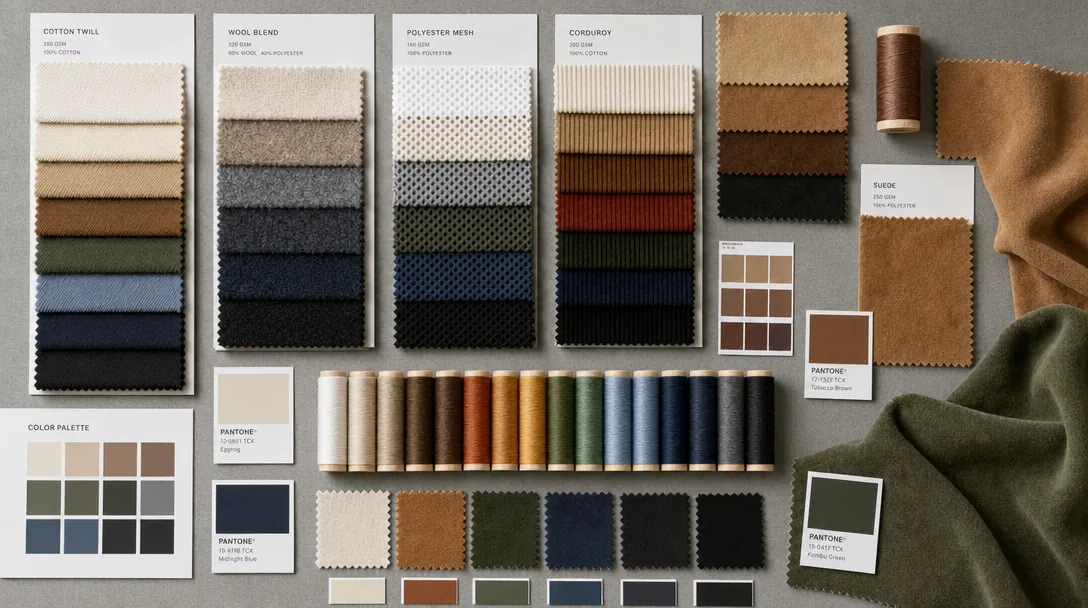
Cotton Twill Baseball Cap: Properties, Costs and How to Spec It Right
Read article →We hope this guide demystifies custom hat patch: when to use it, costs, and what to ask your factory (2026 update) and helps you move forward with confidence. If you have questions specific to your project, our English-speaking sales engineers are one message away.