
Custom Hat Patch: When to Use It, Costs, and What to Ask Your Factory - 2026 Buyer's Guide
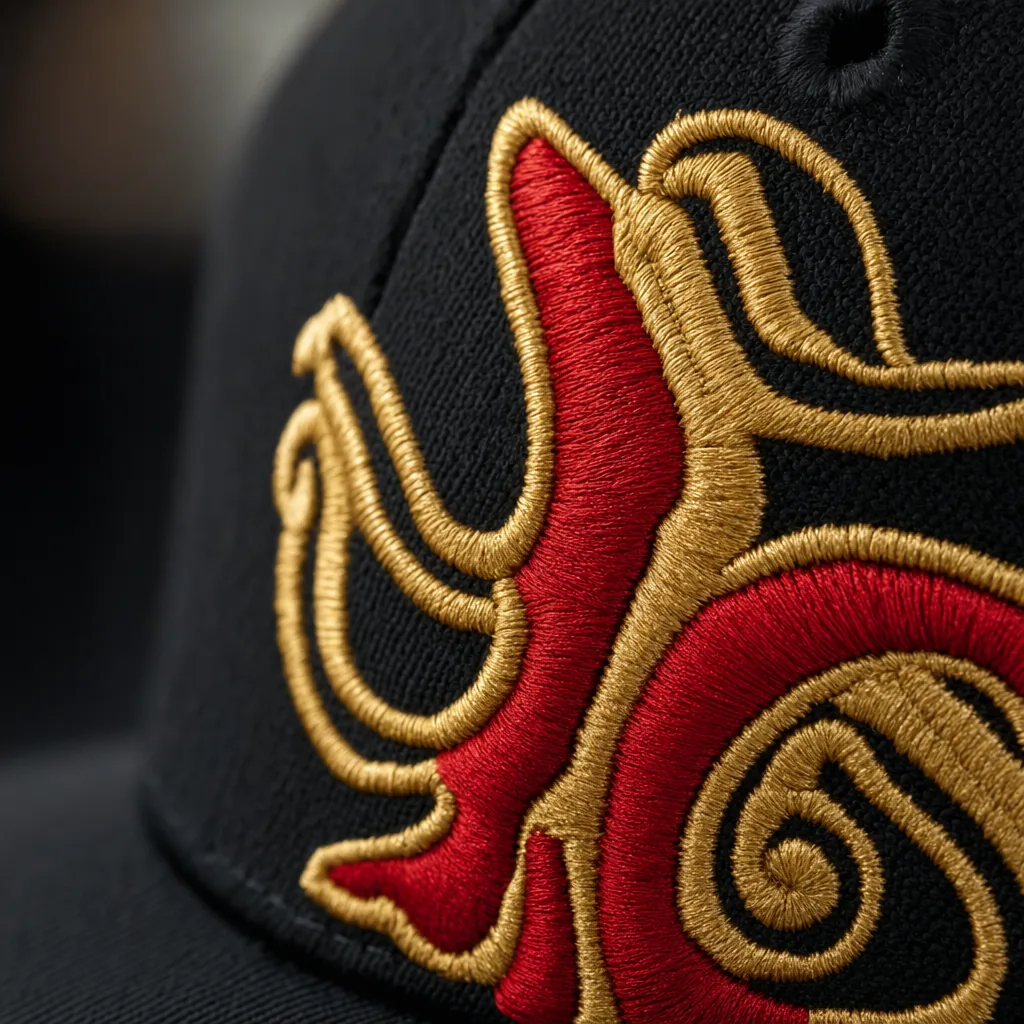
Custom Hat Patch: When to Use It, Costs, and What to Ask Your Factory - 2026 Buyer's Guide is one of the most-asked questions we receive from international buyers, and for good reason. With dozens of factories competing for your order and an alphabet soup of technical terms in every supplier quote, even experienced importers can feel lost. This guide consolidates what we have learned producing custom hats for clients in 40+ countries.
Custom Logo Hats
For most buyers, the first real decision on custom logo hats is not the hat body; it is the decoration method and attachment method. A custom hat patch can be made from woven damask, merrowed twill, molded PVC, debossed leather, microfiber suede, TPU, or direct embroidery, and each one behaves differently on a curved crown. A 2.25 inch by 2.25 inch woven patch with heat-cut edges sits flatter on a 5-panel camp cap than a thick PVC badge, while a 3 mm vegetable-tanned leather patch needs stronger stitch-down support or it will torque on lightweight 110 gsm nylon. On the factory floor, production usually runs in two stages: patch conversion first, then cap assembly and patch application. That means buyers should specify both the patch construction and the base cap spec in one tech pack: crown profile, fabric content, gsm, closure type, sweatband, visor shape, patch size in millimeters, edge finish, backing type, stitch color, placement tolerance, and target Pantone TCX reference for both fabric and logo colors. If the logo is woven or printed, ask for a Delta-E tolerance under 2.0 against approved artwork; if it is embroidered, ask what machine head is used—Tajima, Barudan, and ZSK all handle small lettering differently below 3 mm cap height.
The spec sheet matters because price swings fast once buyers move from a basic custom hat with patch into specialty materials. A standard chino twill dad cap with a sewn woven patch often lands around $2.20 to $3.40 FOB China at 300 to 500 pieces, while a mid-profile snapback in 100 percent cotton twill with a leather patch usually sits around $3.80 to $5.80 FOB depending on hide grade, stitch count, and inner taping. PVC or molded rubber patches push tooling costs upfront—commonly $80 to $150 per mold—but can lower repeat-unit cost on larger runs over 1,000 pieces. MOQ is usually driven by the patch process, not just the hat: woven patches can start at 100 to 200 units per design, embroidered patches are often practical at 144 pieces, and embossed leather or TPU tends to be cleaner at 300 plus because of setup loss and color matching. Our standard practice is to quote patch cost separately from cap cost so buyers can see whether a custom patch for hat is inflating the project through material, labor, or reject risk rather than assuming the whole custom patch hat price is arbitrary.
Inspection is where buyers protect margin, because custom patch hats fail in a few predictable ways. The common defects are off-center placement beyond plus or minus 2 mm, patch rotation on the crown, bubbling after heat press, edge lifting at the corners, skipped stitches on curved application, scorch marks on acrylic blends, and logo inconsistency caused by poor digitizing or low-resolution woven artwork. Leather patches also need crocking and shade checks, especially on dark sweat or rain exposure; if the tannery finish is unstable, the patch can bleed onto pale front panels. For woven or printed badges, inspect edge fray, backing stiffness, and whether the patch tunnels the front panel instead of sitting cleanly. Buyers should request a pre-production sample, then approve against an in-line QC checklist and final AQL 2.5 inspection with carton drop test if shipping DDP to Amazon or retail distribution. That broader sourcing choice matters: a hat patch custom program is not just about picking a nice badge, but about matching patch material, attachment method, cap fabric, and MOQ to the use case so the custom logo hat still looks correct after packing, freight compression, and actual wear.
Custom Embroidered Patches
Embroidered patches are the safest choice when you want a textured, durable custom hat patch without paying direct-embroidery setup on every panel variation. The patch is usually built on a twill or felt base, most commonly 100% polyester twill at 180-220 gsm, then stitched on Tajima, Barudan, or ZSK heads using rayon or polyester thread. For cap work, I strongly prefer 75D or 120D polyester thread because colorfastness is better under sweat and UV than rayon, especially on team caps and outdoor promotions. After embroidery, the patch edge is finished either with a merrow border or a laser-cut satin stitch border; merrow looks classic but needs simpler shapes, while laser cut handles tighter logos and cleaner corners for a custom hat with patch. If the artwork has gradients, tiny type under 4 mm, or more than 9-10 colors, buyers should stop and consider woven or printed patches instead, because embroidery will start filling detail with thread mass rather than rendering it cleanly.
The spec sheet you send the factory matters more than most buyers realize. At minimum, call out finished patch size in millimeters, backing type, border type, attachment method, Pantone TCX or coated Pantone references, stitch coverage, and target placement on the cap panel. If you are ordering a custom patch for hat production, also specify whether the patch will be sewn onto a finished cap, stitched onto the panel before cap assembly, or attached by heat press. Pre-assembly sewing usually gives the cleanest result on 5-panel and 6-panel crowns because the operator can keep the patch flatter and avoid needle deflection near buckram curves. Typical MOQ in China is 100-300 pieces per design for the patch itself, but once you combine it with hats, many factories will quote 144 or 288 caps per colorway. In 2026, a straightforward 2.5 to 3 inch embroidered patch on a basic baseball cap usually adds about $0.28-$0.75 per piece FOB, while a separate loose patch can run $0.18-$0.45 depending on stitch count, border, and backing.
The inspection failures are predictable, and buyers should ask about them before placing the PO. The big ones are loose jump threads on the back, poor edge coverage, distorted circles, puckering after attachment, incorrect placement tolerance, and color mismatch against approved Pantone references. On a good run, patch placement tolerance should stay within plus or minus 2 mm at center front, and thread color should be held within a commercially reasonable Delta-E tolerance once converted from Pantone to thread stock, though exact textile matching is never as tight as ink. Ask the factory what AQL they inspect to; AQL 2.5 is standard for mass caps, but for licensed product I would tighten visual criteria on logo execution even if the lot size stays under normal sampling. At CrownsForge, our standard practice is to approve both a patch strike-off and a sewn cap sample, because a custom patch hat can look perfect as a loose emblem and still fail once sewn onto a curved crown. That is really the sourcing decision: embroidered patches give flexibility and strong perceived value, but only if the factory can control both patch-making and cap attachment as one process, not two disconnected jobs.
Custom Hat with Patch
A good custom hat patch lives or dies on material choice and attachment method, not the artwork file. For small text and fine outlines, woven polyester patches in 50D or 75D yarn usually outperform direct embroidery once letter height drops below about 2.5 mm; raised embroidery gives better loft, but edge definition starts breaking down on tight curves and thin strokes. Material also has to match the cap construction. Molded PVC, TPU, felt, suede microfiber, PU leather, and printed twill each react differently on a curved front panel with buckram behind it. On structured 6-panel caps and truckers, a sewn perimeter with satin edge or lockstitch is still the safest option because adhesive film alone can release after heat pressing, carton compression, or hot-container transit. On washed cotton dad hats, unstructured 5-panels, and lightweight nylon campers, patch thickness matters more than visual bulk; anything too stiff will telegraph through the panel or cause puckering around the stitch line.
Buyers get cleaner quotes when the custom hat patch is written as its own BOM line, not attached as a mood-board image. The tech pack should lock down patch material, finished size in mm, thickness, edge finish, backing, attachment method, placement tolerance, and color standard. If the patch has to visually match the hat body, call out Pantone TCX or Pantone Coated and agree a Delta-E tolerance up front; otherwise the patch can pass separately and still look off against the cap fabric in daylight. You also want to confirm merrow border versus laser-cut edge, embroidery coverage, expected stitch count, and whether the patch is produced loose first or applied after cap assembly. In real Yiwu costing, a sewn woven or embroidered patch usually adds about $0.35-$0.90 per cap, PU or leather-look patches $0.80-$1.80, and molded TPU or PVC patches $1.20-$2.50 before freight and duty. MOQ can be 100-144 pieces on stock blanks, but genuine leather, multi-location patches, or custom molds usually move the workable production floor closer to 300-500 pieces.
Inspection is simple if the factory controls the known failure points before bulk packing. The repeat defects on custom hat patch orders are crooked placement, puckering around the sew line, weak pre-tack on heat-applied patches, frayed laser-cut edges, and color drift between strike-off and production. Embroidered patches need extra attention to trim ends, uneven satin border width, fill gaps, and distorted circles caused by poor hoop tension or unstable settings on Tajima, Barudan, or ZSK heads. Woven and printed patches fail differently: edge sealing can split, outlines below about 0.4 mm get muddy, and factories routinely overstate what stays readable under 3 mm text. Final inspection should measure placement from crown centerline and visor seam, then check to AQL 2.5 with a compression test after carton packing to catch lifting or edge curl in transit. The safest approval route is one loose patch sample plus one finished cap sample, because a clean strike-off only proves the graphic; it does not prove the patch will survive sewing, pressing, packing, and delivery.
Custom Patch for Hat
A custom patch for hat is really two production jobs stitched together: patch making first, cap assembly second. That matters because the failure points change depending on whether you choose woven, embroidered, PVC, TPU, leather, felt, chenille, or sublimated twill. For clean small text under 3 mm height, woven patches usually outperform embroidery because the loom can hold finer edge definition than thread columns on a Tajima or Barudan head. For bold mascots and raised texture, embroidered patches with 30% to 60% fill coverage are still the safest commercial choice. Factories should quote patch size in millimeters, backing type, border finish, attachment method, and target placement tolerance. If a buyer only says custom hat patch without specifying merrow border versus laser-cut edge, heat seal versus sew-on, or front-center versus left-panel placement, the sample room will make assumptions that later become chargeable revisions. The spec sheet should ask for patch width and height, base material, thread brand or equivalent, Pantone TCX or coated reference, edge finish, stitch density, backing, cap fabric, and attachment construction. On better programs we also lock color tolerance at Delta-E under 2.0 against approved lab dips, especially when the patch has to match a garment set. For a custom hat with patch using 3D embroidery plus an applied badge, ask whether the factory runs post-decoration assembly or sews the patch onto a completed crown; the first method gives cleaner seam access and fewer skipped stitches around buckram. Our standard practice is to define patch location tolerance at plus/minus 2 mm on center-front and require pull-test checks on stitched corners so the badge does not lift after carton compression in transit.
MOQ and pricing depend more on patch type and cap body than most buyers expect. A basic embroidered patch on a 100% cotton twill six-panel cap usually starts around 100 to 144 pieces per colorway, because patch machines and cap lines both need efficient batching. In Yiwu and Dongguan, a straightforward 2.25 to 2.75 inch embroidered patch cap often lands around $2.10 to $3.40 FOB China at 300 pieces, while woven patch versions run roughly $2.30 to $3.70 because the patch itself costs more even though sew-down is similar. Leatherette or genuine leather patches with laser engraving can range from $2.80 to $4.80 FOB depending on hide grade, thickness from 0.8 to 1.4 mm, and whether the patch is stitched, riveted, or heat-applied. If you want custom patch hats below 100 units, expect setup charges of $35 to $120 for digitizing, loom cards, or mold/tooling, and sometimes a surcharge of $0.20 to $0.60 per cap. Buyers should also ask whether the quote includes patch wastage, spare units, and replacement policy for off-shade badges. A custom patch hat can look cheap fast if the factory sources the cap from one vendor and the patch from another without controlling shrinkage, colorfastness, and sew compatibility. For example, a heavy PVC badge on brushed cotton can tunnel or pucker unless the stitch path, needle size, and backing support are adjusted; a 75D or 100D woven patch may need a firmer underlay area than a felt patch. Ask for packaging method too, because stacked visors and tight carton loading can crease thick badges. Realistic carton specs are usually 24 to 36 pcs per inner, 144 pcs per export carton, with gross weight kept under about 16 kg to reduce crown crushing and patch edge deformation.
Inspection should focus on the patch-crown interface, not just the patch by itself. The most common defects are off-center placement, uneven topstitch margin, bubbling from bad heat bonding, merrow edge fray, thread trims trapped under the border, and patch corners lifting after flex. On embroidered badges, watch for poor digitizing that causes lettering to close up, especially on satin columns under 1.2 mm width. On woven or printed badges, inspect edge sealing and color migration after heat application. For a custom patch for hat shipment, I would inspect to AQL 2.5 with special attention to visual symmetry at 50 cm viewing distance, seam security, and color matching under D65 light. If the style uses suede, PU, or leather patches, add a crocking test and a smell check because low-grade coatings can transfer or off-gas in sealed cartons. This is why the broader hat patch custom decision should start with end use, not decoration trend. Streetwear brands usually tolerate higher patch cost if edge definition and hand feel are the selling points, while promotional buyers need lower unit cost and tighter repeatability across large runs. Sports licensees often require extra control points: logo approval, needle policy, azo-free chemistry, sedex-audit-cap-supplier-guide.html">BSCI 2.0 or Sedex SMETA 4-Pillar compliance, and traceable material records. If you align patch type, cap fabric, MOQ, and inspection criteria before sampling, you avoid the classic sourcing mistake of approving a nice patch swatch that performs badly once sewn onto a curved crown. That is the real buying decision behind any custom patch hats program in 2026.
Custom Patch Hat
A good custom hat patch is engineered from the badge outward, not added as an afterthought, because patch construction drives readability, hand feel, and bulk failure rate more than the cap shell. The practical choices are embroidered, woven, printed twill, molded PVC, leather or PU, and chenille, and each has hard technical limits. Embroidered patches give the strongest texture, but copy under about 3.0 mm letter height or outlines below 0.5 mm tend to close up once you run 40 wt rayon or polyester on dense fills. Woven patches hold finer typography because the detail is built into the weave, not stacked with satin stitches, so they are the safer option for small text and narrow linework under 1.0 mm; the tradeoff is a flatter, less dimensional look. PVC patches are excellent for sweat, rain, and abrasion, but once thickness reaches roughly 1.5-2.0 mm on a 75 mm wide badge, they start fighting the curve of a low-profile crown and you see corner lift, especially on unstructured 6-panels.
The cleanest custom hat patch result usually comes from making the patch first, laser-cutting or die-cutting it to shape, then attaching it to the front panel before cap assembly. On the floor, that means better placement control, more even stitch tension, and fewer puckering issues than forcing a finished crown back under the needle after seaming. Tajima and Barudan heads are standard for embroidered patches; woven labels come off dedicated loom programs; PVC badges rely on consistent mold depth and clean demolding. Your RFQ should specify patch size in mm, border finish, backing, attachment method, finished thickness, and placement tolerance; for retail-grade work, front-center patch placement should be held to ±2 mm. Also confirm crown structure. A 2.5 mm chenille or PVC badge behaves very differently on a soft dad cap than on a buckram-supported twill cap. In 2026, a basic cotton twill cap with one front woven or embroidered patch typically lands around $2.40-$4.20 FOB China at 300 pcs, while molded PVC, leather, or multilayer appliqué usually runs $3.80-$6.50, with sample charges of about $35-$80 for stitched patches and $80-$150 for PVC tooling samples.
QC problems on a custom hat patch are predictable if the factory inspects the right points instead of just looking at the finished cap from one meter away. The failure list is usually the same: off-center placement, uneven edge stitching, loose merrow threads, curling after heat exposure, adhesive bleed, corner lift, and badges that do not sit flush on the crown. Embroidered and chenille patches need close checks on underlay, satin coverage, and thread-lot shade variation; woven and printed badges need edge integrity after laser cutting and legibility on small copy. If a supplier quotes AQL 2.5, ask what counts as a major defect for patch placement, because a badge that is 4 mm off-center may pass a loose sewing standard but still fail commercially. For color-critical programs, send Pantone TCX for dyed textile patches, Pantone Solid Coated for PVC or printed ink, and lock an acceptable Delta-E target under D65 lighting; premium retail programs usually want visible patch colors within Delta-E 2.0. Serious factories should also be able to show needle control logs, metal detection if your customer requires it, and current BSCI 2.0 or Sedex SMETA 4-Pillar audits. The best-looking approval sample means very little if the patch stiffness, crown shape, and seam clearance were not engineered to repeat in bulk.
Custom Patch Hats
A custom hat patch earns its keep when direct embroidery starts breaking down: serif text under roughly 2.0 mm letter height, outline strokes below 0.8 to 1.0 mm, tonal artwork, or logos that need a material contrast you simply cannot get from flat thread on a curved crown. The patch should be engineered as its own component, not treated as an afterthought. In real production that usually means embroidered patches on 210 to 260 gsm cotton twill, woven damask patches using 50 to 75 denier yarns, 2.0 to 2.5 mm soft PVC, or 0.8 to 1.2 mm PU or full-grain leather, then attached by edge stitch, heat press, or a combined sew-and-bond method. The wrong combination is obvious on the line: a 70 x 50 mm patch can sit cleanly on a structured 6-panel trucker, then tent, pucker, or bridge badly on an unstructured washed chino cap. Lock the spec before sampling or the factory will make assumptions that cost time. A usable tech pack calls out finished patch size in millimeters, corner radius, merrow edge versus laser-cut edge, backing type, stitch count or weave density, exact crown placement, and whether the cap front is buckram-supported. For color, specify whether approval is against Pantone TCX for textile reference or Pantone Solid Coated for branding, then set realistic tolerances; on most programs I would hold Delta-E under 2.0 for the patch ground and under 3.0 for embroidery thread, because rayon and polyester thread do not hit coated Pantones perfectly. At CrownsForge, we also flag when a large patch is being placed over a seam break, because that is where edge lift and crooked topstitching usually start.
The factory questions that actually protect your order are about process capability and cost structure. MOQ is usually 144 to 300 pieces per colorway for embroidered or woven patch caps, while PVC, molded rubber, and leather patches more often start at 300 to 500 pieces because dies, molds, or cutting tools have to be amortized. On FOB China pricing, a stock cap with a basic embroidered custom hat patch usually adds about $0.35 to $0.80 per unit; woven patches often land in a similar range, while leather, PVC, or molded rubber typically add $0.90 to $1.80 depending on patch size, edge finish, and whether attachment is sewn, adhesive-set, or both. If a supplier quotes a large molded patch at embroidery-level cost, they are either downgrading material thickness or hiding attachment risk. Inspection is where weak patch vendors get exposed fast. Common failures are placement drifting more than 3 mm off center, bubbling after heat application, glue bleed on light fabrics, loose merrow stitching, and edge lift after wash testing or carton compression. Each patch type has its own failure mode: woven patches lose legibility below about 2.0 mm text height, PVC molds close up small counters when cavity depth is too shallow, and leather or PU can show uneven deboss fill or over-burned laser edges. AQL 2.5 final inspection should include placement measurement, shade review under a D65 light box, stitch or bond pull testing, and packed-carton checks, because some heat-press defects only show after stacking pressure in export cartons. The right decision is not the patch that looks best in a sample photo; it is the custom hat patch that survives wear, shipping, and the retail price point you are targeting.
Working with CrownsForge for custom hat patch programs
Lock the patch method before you sample the hat body. That choice decides crown distortion, seam clearance, press temperature, and the real FOB cost long before anyone argues about artwork. A custom hat patch in woven damask, merrowed twill, chenille, debossed PU, or molded TPU behaves very differently on a 120 gsm unstructured nylon 5-panel than on a structured acrylic-wool 6-panel with buckram. In practice, stock-body samples with in-house patch application can turn in 3 to 5 working days; once you add a new emboss mold, Pantone TCX lab dip, or fresh digitizing for Tajima or Barudan embroidery heads, lead time usually extends to 7 to 12 working days. Buyers who reverse that sequence usually find the expensive problems late: heat-press tunneling on lightweight crowns, edge lift on coated nylon, or seam creep when the patch crosses the center front join. For first orders, 48 to 144 pieces per colorway is the sensible test range when the factory is using stocked shell fabric, closures, and sweatbands. That volume is large enough to show real production risk without forcing dead stock on an unproven design. Separate the hat MOQ from the patch MOQ, because they are rarely the same. A 50-piece cap run may be feasible, but chenille, PVC, molded silicone, and debossed leather usually carry strike-off charges, mold fees, and higher wastage that change the landed cost. In real terms, a basic custom hat patch application typically adds $0.18 to $0.65 per cap over the blank body, while molded TPU, multilayer embroidery, or hybrid stitch-and-press badges often add $0.80 to $1.80 depending on stitch count, mold amortization, and whether the attachment is sewn, heat transferred, or both.
MOQ flexibility only matters if the factory can show where the setup cost sits. For runs under about 300 units per style, embroidered emblems, printed twill badges, or woven labels converted into patch format are usually the safer choice because setup is lighter, color approval is simpler, and replacement is faster if a badge goes off shade. Once you move past roughly 300 to 500 units, the math often shifts toward high-frequency welded rubber, laser-engraved faux leather, sublimated twill, or molded silicone, especially when the same custom hat patch repeats across multiple colorways and can absorb the mold cost. Ask for four numbers separately: strike-off cost, mold fee, patch wastage allowance, and the replacement policy for rejected badges. If a supplier rolls those into one vague surcharge, the quote is not tight enough to trust. Order control matters more than a polished render. The minimum disciplined workflow is tech pack review, artwork check, material confirmation, strike-off approval, pre-production sample, inline inspection, and final audit to AQL 2.5 before carton sealing. Placement for any custom hat patch should be measured from fixed references such as visor seam, eyelet line, or crown button, with written tolerance—typically ±2 mm on center-front placement—instead of line-floor guesswork. Color should be checked against Pantone under D65 lighting with an agreed Delta-E tolerance, and attachment strength should be verified after stitching or pressing, especially on low-melt synthetics. At CrownsForge, we also check current BSCI 2.0 or Sedex SMETA 4-Pillar audit records and confirm REACH or CPSIA support when PVC, inks, adhesives, or metal trims are involved; that is the difference between a clean 500-piece trial and a costly reorder problem.
Frequently Asked Questions
What logo decoration techniques do you offer?
3D puff embroidery, flat embroidery, woven patch, leather patch, PVC patch, screen printing, sublimation, applique and laser etching, all in-house with no subcontracting.
What file format should I send for my logo?
Vector files (AI, EPS, PDF) are ideal. High-resolution PNG or JPG at 300 dpi on transparent background works as a fallback. Provide Pantone color references for accurate reproduction.
Can I order a sample before bulk production?
Yes. We strongly recommend approving a pre-production sample before mass production. Samples are charged at 35 to 60 USD each plus express shipping, fully refundable against confirmed bulk orders over 500 pieces.
How long does production take?
Sampling takes 7 to 12 days. Bulk production runs 20 to 30 days depending on quantity, fabric availability and decoration complexity. Inspection and packing adds another 3 to 5 days before shipment.
Do you support sustainability certifications?
Yes. We work with GOTS organic cotton, GRS-certified recycled polyester, OEKO-TEX Standard 100 fabrics, and are BSCI and Sedex audited. Certification documentation can be provided per order.
How does ordering custom leather patch trucker hat work?
When evaluating custom leather patch trucker hat, the key considerations are construction quality, decoration capability, MOQ flexibility and lead time. Cover everything buyers ask about custom logo hats: how it's manufactured, what specs to request from a factory, typical MOQ and pricing, common quality issues to inspect for, and how this ties back to the broader custom hat patch sourcing decision. Cover everything buyers ask about custom embroidered patches: how it's manufactured, what specs to request from a factory,…
What's the MOQ for custom leather patch hats no minimum?
When evaluating custom leather patch hats no minimum, the key considerations are construction quality, decoration capability, MOQ flexibility and lead time. Cover everything buyers ask about custom logo hats: how it's manufactured, what specs to request from a factory, typical MOQ and pricing, common quality issues to inspect for, and how this ties back to the broader custom hat patch sourcing decision. Cover everything buyers ask about custom patch hats: how it's manufactured, what specs to request from a factory, typical MOQ…
How does ordering custom embroidered trucker hats work?
When evaluating custom embroidered trucker hats, the key considerations are construction quality, decoration capability, MOQ flexibility and lead time. Cover everything buyers ask about custom logo hats: how it's manufactured, what specs to request from a factory, typical MOQ and pricing, common quality issues to inspect for, and how this ties back to the broader custom hat patch sourcing decision. Cover everything buyers ask about custom embroidered patches: how it's manufactured, what specs to request from a factory,…
How does ordering custom baseball hats with logo work?
When evaluating custom baseball hats with logo, the key considerations are construction quality, decoration capability, MOQ flexibility and lead time. Cover everything buyers ask about custom logo hats: how it's manufactured, what specs to request from a factory, typical MOQ and pricing, common quality issues to inspect for, and how this ties back to the broader custom hat patch sourcing decision. Cover everything buyers ask about custom patch hats: how it's manufactured, what specs to request from a factory, typical MOQ…
Ready to start your custom hat project?
Send us your tech-pack, sketch or even just an inspiration photo. We will respond with a detailed quotation and digital mock-up within 24 hours.
Request a free quoteRelated guides
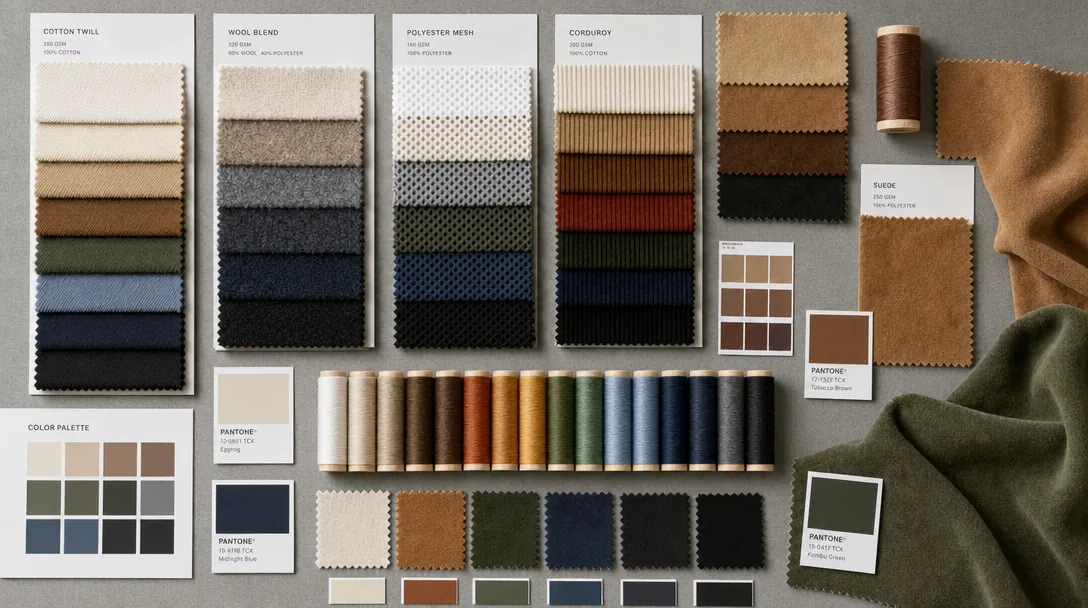
Corduroy Hat Vintage Sample Approval Process for Custom Hat Buyers
Read article →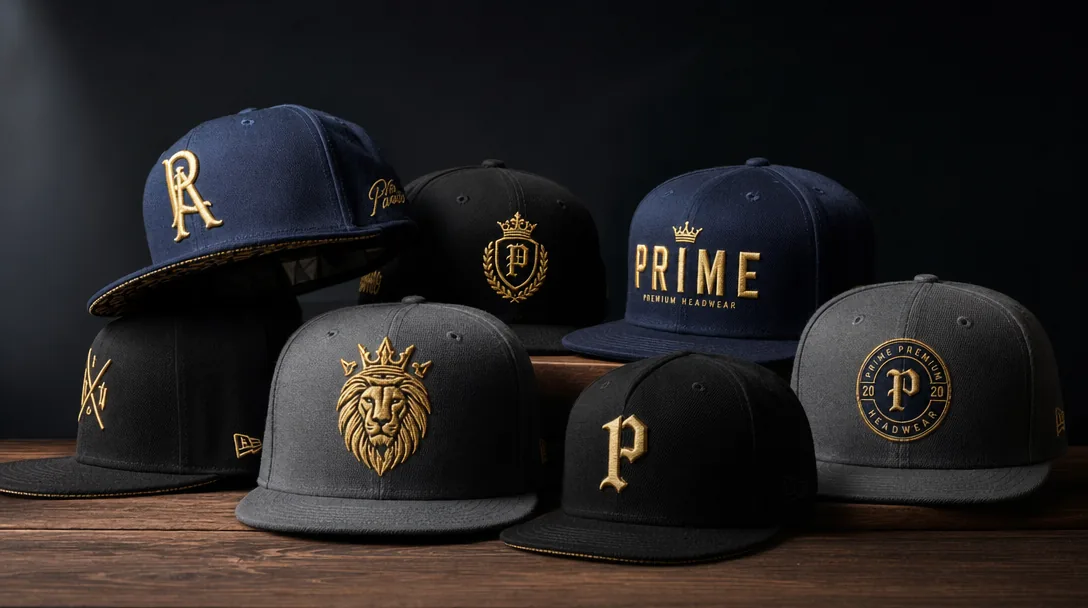
5 Panel Camp Cap Wholesale: A 2026 B2B Sourcing Guide
Read article →
How to Vet a China Hat Manufacturer Before You Wire the Deposit
Read article →Sourcing custom hats does not have to be complicated. With the right manufacturing partner, clear specifications and a small upfront investment in sampling, you can launch a retail-quality product in 30 to 45 days.