
Custom Golf Hats: A Manufacturer's Guide to Performance Headwear - Cost & MOQ Breakdown - Cost & MOQ Breakdown - 2026 Buyer's Guide
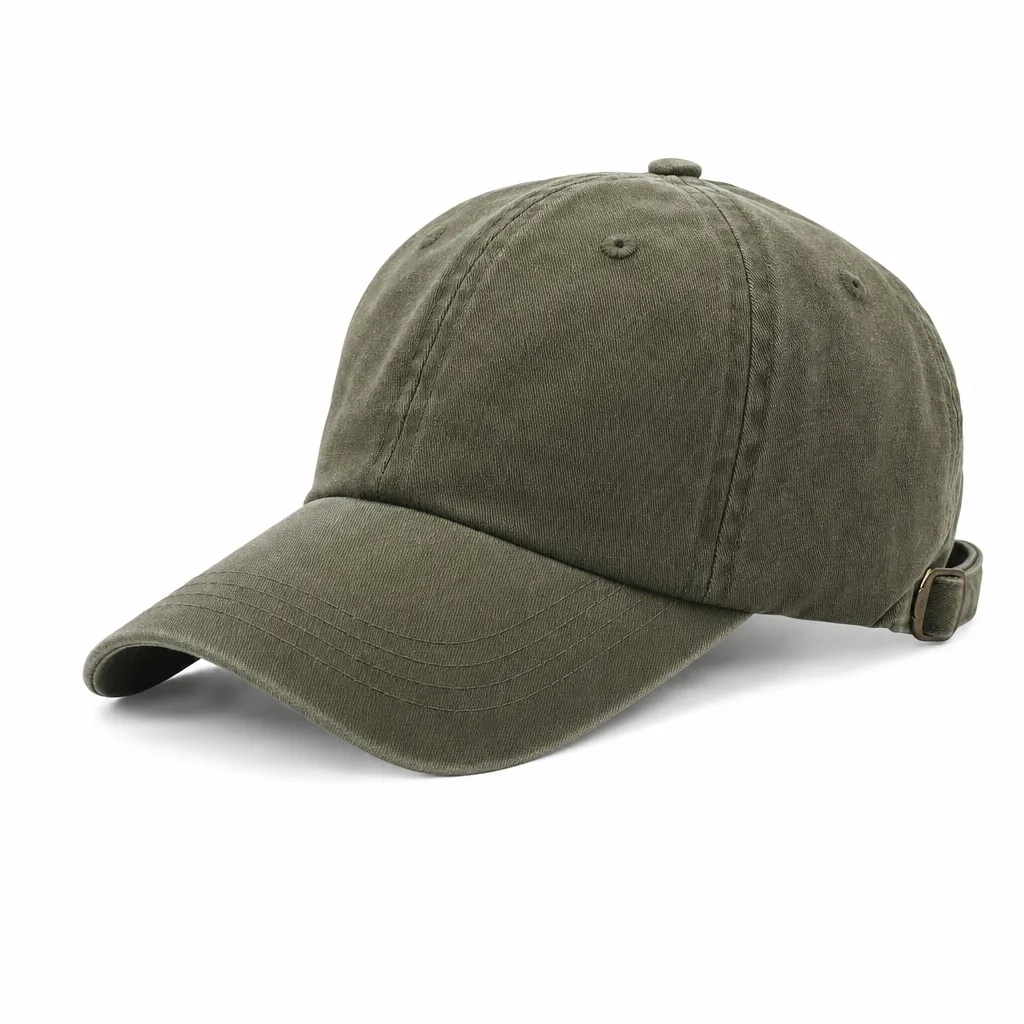
For brand owners, wholesalers and procurement teams entering the custom headwear category, custom golf hats: a manufacturer's guide to performance headwear - cost & moq breakdown - cost & moq breakdown - 2026 buyer's guide is one of the highest-leverage decisions you will make. Get it right and your unit economics, retail story and reorder cycle all improve. Get it wrong and you carry the cost for years.
The golf-specific silhouettes that dominate retail and tournament programs
The silhouette that still does the most units in custom golf hats is the pre-curved 6-panel performance cap, not because it is exciting, but because it works across pro shops, sponsor tournaments, and private-label programs without getting killed on returns. The difference between a cap that survives 30 rounds and one that gets dumped in a tee gift bag is the material stack. For mainstream retail, I would spec either 92/8 polyester-spandex twill at 145-175 gsm for stretch recovery or 100% recycled polyester plain weave at 120-150 gsm with laser-perforated side and back panels. Pair that with a 35-40 mm moisture-management sweatband in poly terry or Coolmax-type knit; cotton bands yellow, salt-stain, and lose hand feel too fast in July conditions. Structured fronts built with 1.8-2.0 mm buckram will hold clean 3D puff or satin-stitch embroidery on Tajima and Barudan heads, while unstructured crowns should stay closer to 10,000 stitches if you want to avoid tunneling and panel distortion. The fastest-moving upgrade shape is the 5-panel low-profile cap and rope hat, especially for resort retail, member-guest events, and younger club brands that do not want a generic corporate silhouette. A proper golf 5-panel uses a seamless front crown and softer buckram, which immediately improves decoration yield for woven patches, TPU badges, silicone transfers, and flat embroidery because there is no center seam fighting the logo. Rope construction is usually a 3-5 mm braided polyester cord set 6-10 mm above the visor seam; that trim only adds about $0.18-$0.45 FOB, but it changes shelf perception enough to justify a higher retail. The failure points are easy to spot on the factory floor: rope tension drifting side to side, front panel blocking going asymmetrical, and patch placement walking off center. Our standard practice is to hold rope placement to +/-2 mm, verify crown symmetry on the block before packing, and match logo color to approved Pantone TCX references under D65 lighting with Delta-E under 2.0 for priority shades. FOB China, tournament-grade custom golf hats in these two dominant silhouettes usually run $3.20-$4.90 at 300-500 units, with metal clasp closures, seam taping, contrast undervisors, and recycled trims adding another $0.20-$0.60 per cap.
Bucket hats and visors are smaller by volume, but they matter in hot-weather assortments, women’s events, caddie kits, and sponsor programs where sun protection or logo visibility matters more than mainstream sell-through. Performance golf buckets should not be built like fashion buckets. The reliable spec is 110-130 gsm microfiber or mini-ripstop polyester with UPF 50+, embroidered or laser eyelets, and a brim interlining that recovers after compression without turning the edge stiff and wavy. Once the brim stitching count or interlining thickness is wrong, rejects climb fast because you cannot hide uneven brim roundness at final inspection. A solid factory target is AQL 2.5 with special attention on brim diameter consistency, crown-to-brim seam puckering, and chin-cord hardware if the style includes one. FOB pricing typically lands around $3.80-$6.20 for 300 pieces because the sewing minutes are materially higher than a standard cap. Visors are still the lowest-cost entry point in custom golf hats, usually $2.10-$3.40 FOB at 300 pieces, but they also fail QC faster than buyers expect. The common defects are uneven band curvature, hook-and-loop misalignment, exposed sweatband seam edges that scratch the forehead, and sandwich brim warping after carton pressure. If the program mixes 6-panel caps, rope hats, buckets, and visors under one launch, buyers should assume the MOQ splits by silhouette rather than by total units. Each style runs on a different block, brim mold, sewing sequence, and trim setup, even when the shell fabric and decoration artwork stay the same. In practice, 300 pieces per style is still the cleanest planning number for stable costing, especially if you need separate men’s and women’s fit blocks or multiple closure types in the same collection.
Why golf demands performance fabric (not cotton twill)
Cotton twill is the wrong starting point for custom golf hats because it absorbs sweat into the yarn bundle and dries slowly under continuous wear. On the factory floor, we usually see brushed cotton twill at 260-300 gsm, which is fine for lifestyle caps but weak for an 18-hole round that runs 4 to 5 hours in direct sun. Once the forehead band saturates, the crown gets heavier, the front panel holds heat, and darker shades show obvious sweat mapping around the seam and visor line. That problem gets worse on structured 6-panel builds with buckram, where trapped heat and reduced air exchange make the hat feel stale by the back nine. A golf player notices that long before they notice embroidery quality. A proper golf shell behaves differently. Fabrics in the 110-140 gsm range, especially polyester microfiber, interlock, or mini-ripstop made from 75D to 150D filament yarns, spread moisture across the fabric face so it can evaporate faster instead of pooling at the sweat zone. Add a moisture-management finish and a lightweight antimicrobial sweatband, and the hat recovers between holes instead of staying wet through the round. That is why performance polyester has become the default spec for serious custom golf hats: lower water pickup, faster dry time, better thermal comfort, and less visible darkening after repeated sweat-dry cycles in summer play.
The best-performing custom golf hats pair the shell fabric with ventilation and decoration choices that actually suit golf use. Laser-perforated side panels, rear mesh quarters at 90-120 gsm, or micro-perf woven polyester all improve airflow, but only if the artwork allows those panels to stay relatively clean. If a buyer wants full embroidery coverage, airflow drops and the benefit of the performance fabric gets partially canceled out. Structure also matters: lighter technical shells need the right crown support, seam balance, and sweatband attachment, otherwise repeated moisture cycling causes edge waviness, seam grin, or front-panel distortion faster than on heavier cotton builds. Embroidery on performance fabric is where inexperienced suppliers get exposed. On Tajima, Barudan, or ZSK heads, the digitizing has to account for lighter fabric tension with cleaner underlay, lower density, and backing matched to shell weight; otherwise logos pucker, tunnels form on satin columns, and perforated panels tear around needle penetration. The cost gap versus cotton is usually modest, around $0.20-$0.45 per cap at entry MOQ, but the performance gap is not modest at all. In a resort pro shop, corporate tournament, or private-label golf line, a cap that feels hot, shows sweat marks, and loses shape after a few rounds reads as a product mistake, not a savings.
UPF sun protection for golf programs
UPF is a fabric specification, not something a cap acquires after sewing, and that distinction matters when sourcing custom golf hats for sun-heavy programs. A lightweight 120-160 gsm polyester interlock, woven microfiber, or fine denier taslon can test anywhere from UPF 15 to 30+ depending on cover factor, yarn count, shade, and finishing. True UPF 50+ usually comes from a specific mill recipe: tighter construction, darker colorways, higher filament density, or a UV-absorber finish validated under AATCC 183 or AS/NZS 4399. Buyers get into trouble when they accept a generic “UV protective” statement without a report tied to the exact fabric code, composition, color, and test date. A navy shell and a white shell made from the same base yarn do not always produce the same result, and neither does a fabric sourced from a different lot without retesting.
Once you specify verified UPF 50+, cost and MOQ shift upstream to the textile mill, not the sewing line. Stock tested shades are the most efficient route because the mill already holds valid reports and repeatable greige-to-finish parameters; that is why white, black, navy, and a few athletic colors usually price cleanly. If you need a custom-dyed shade matched to Pantone TCX within Delta-E 1.5, expect a dye lot minimum around 300-500 meters and another lab run, because dye chemistry and depth can move the UPF rating. On the production side, any shell change, side mesh substitution, laser-perforated panel, or underbill fabric swap can break the original claim. Our standard practice is to freeze fabric before digitizing decoration approvals and keep the UPF report attached to the PO and tech pack. SGS, Intertek, or Bureau Veritas testing typically runs $300-$500 per SKU with 5-7 working days, which is cheap compared with relabeling a resort or school program after a compliance challenge.
Moisture-wicking sweatband: the detail buyers don't notice until summer
On summer-weight custom golf hats, the sweatband does more for wear comfort than the closure or even the visor board. Standard brushed cotton or cotton twill bands absorb fast, then stay wet; in field use above 30°C/86°F and 70% RH, they commonly load up before an 18-hole round is finished. Once saturated, cotton traps sweat against the skin, raises friction at the forehead, and leaves visible salt lines that can shadow through light front panels. A better spec is a 180 to 220 gsm polyester-elastane knit, typically 88/12 or 90/10, with a hydrophilic finish on the outer face and a smoother inner face to move moisture outward. The best-performing bands we see in production are dual-layer knits or waffle-backed constructions that spread sweat laterally instead of letting it pool in one line above the brow. Color is not cosmetic here; it changes complaint rates. White sweatbands look clean in the sample room and terrible after one hot round, especially when sunscreen, foundation, and iron-heavy perspiration are involved. Medium gray, charcoal, or heather black hide staining far better and still pair cleanly with most shell colors. If the shell fabric is tested for crocking or perspiration fastness, that does not protect the band from looking dirty in actual wear. Buyers should also ask for the band to be locked by composition, gsm, stretch range, and color in the tech pack, because vague terms like "sports sweatband" or "performance inner band" are where substitutions happen without being obvious at pre-production sample stage.
The price delta is minor enough that serious buyers should spec the upgrade from the start. At typical China factory volumes, replacing a standard cotton band with a wicking polyester-spandex band usually adds $0.12 to $0.22 per cap at 1,000 to 3,000 pieces; under 500 pieces, or with branded jacquard tape and taped seam joins, the adder can reach $0.28 to $0.35. That is still a cheap fix compared with post-shipment claims, because end users rarely identify the root cause correctly. They report that the custom golf hats feel hot, show sweat through the crown, or get uncomfortable by the back nine. In AQL 2.5 inspection, the sweatband may still pass visual standards while failing the wearer test that actually matters. The band also has to match the shell system. A 75D to 150D mechanical-stretch polyester crown with laser-perforated side panels, fused eyelets, and a 3 mm EVA or memory-foam sweat insert performs well only if the inner band can move moisture at the same rate. Pair a breathable outer shell with an absorbent cotton band and the hat bottlenecks at the skin-contact point. Our standard practice is to write the sweatband into the BOM by fiber content, gsm tolerance, stretch tolerance, approved color, and substitute restrictions, then confirm hand feel and rebound on the pre-production sample. If the factory is using Tajima or Barudan embroidery on the front, that front panel already runs warmer; that makes the sweatband spec even more important, not less.
Rope hats: why this silhouette became the golf hero category
Rope hats took over golf because they broadcast shape and price point before a customer ever reads the logo. The rope sits roughly 6-8 mm above the visor seam and creates a hard visual line that makes a 5-panel crown look cleaner, lower, and more deliberate than a basic sandwich-bill cap. In pro shops, that matters: from 8-10 feet away, the silhouette is often doing more selling than the decoration. That is why custom golf hats shifted sharply toward rope profiles after 2020, especially once fishing, western, and resort headwear started bleeding into golf retail. The style also solves a practical merchandising problem: it looks premium in both tonal executions and loud contrast colorways, so brands can build a tighter assortment without carrying multiple crown shapes. From a decoration standpoint, rope hats are forgiving in the right places and demanding in the right places. A semi-structured front panel with light buckram or 2-3 mm foam will hold flat embroidery, high-density satin, molded TPU, or a merrowed patch without the face looking crowded. The safer spec is a 5-panel crown at 8.5-9.5 cm height with a 65-75 degree pre-curve; a 6-panel version works for retro or country-club programs, but the center seam becomes a real constraint once lettering strokes fall under about 2.5 mm. On the floor, we apply front patches before crown closing for cleaner registration, then run side hits after assembly on Tajima or Barudan cap frames. That sequence reduces distortion and keeps the rope line visually dominant instead of fighting the logo.
The rope category works commercially because the premium signal comes from trim discipline, not expensive construction. Most China factories can start at 100 pcs per colorway if you stay with stock performance fabrics and a standard closure, and FOB on custom golf hats typically lands around $4.20-$6.80 for a braided rope cap with one front embroidery and plastic snapback. Add about $0.35-$0.90 for molded TPU, $0.60-$1.20 for laser-perforated side panels, and $0.18-$0.40 for upgraded woven taping or branded seam tape. The fabric package is what separates a golf hat from promo inventory: 92/8 poly-spandex twill at 180-220 gsm, perforated polyester, or nylon taslon around 120-140 gsm with a moisture-wicking sweatband are the specs I see performing consistently. Where buyers usually get burned is execution, not quoting. A rope hat looks cheap the moment cord tension varies, end tacks drift, or the rope bows at the center front. For white crowns with dark rope contrast, require lab dips to Pantone TCX and hold panel-to-panel color matching within Delta-E 1.5, otherwise the mismatch shows badly in direct sun. Rope placement, brim curvature, and front-panel symmetry should be treated as appearance-critical under AQL 2.5, not as minor cosmetic defects. Our standard practice is to add inline checks for rope alignment and a minimum 7 kgf pull test on rope stitching, because tournament, resort, and DTC buyers will notice carton-to-carton inconsistency faster than they notice a slightly cheaper fabric hand.
Tournament + club merchandise compliance and timing
Tournament merchandise breaks down at approvals, not sewing. For custom golf hats tied to a member-guest, section event, or sponsor-funded charity scramble, 90 to 120 days from PO to delivered goods is the realistic window; 75 days is already tight once you have logo licensing, Pantone approval, PPS revision, and carton routing to a club, resort, or 3PL. A front mark that looks clean on screen can still run 8,000 to 14,000 stitches and need two tape-outs before it sews properly on a structured six-panel performance crown. On Tajima or Barudan heads, script lettering, metallic thread, and low-contrast fills usually require tension changes, underlay edits, and sometimes a needle change to prevent looping or edge bite on lightweight polyester shells. If the event has three sponsors and a host club crest, expect at least one round of hierarchy changes after the first sew-out.
Color control is where premium golf programs get rejected fastest. White, stone, silver, and cool gray fabrics show lot variation immediately under clubhouse LEDs and direct sun, so approval should be against physical Pantone TCX references with an agreed Delta-E tolerance before bulk cutting. Thread sheen can shift the perceived shade by more than the fabric itself, especially on polyester trilobal embroidery thread, and woven labels often read warmer or cooler than the crown fabric if judged separately. Club retail runs on a stricter calendar than tournaments: if a pro shop wants inventory on floor for May through September, January PO placement is the safe move, with February as the latest point for salesman samples or PPS if MSRP, color story, and packaging are still open. For stock-fabric programs, 144 to 288 pieces per colorway is workable; once you add laser-perforated panels, molded silicone patches, custom seam tape, or dyed-to-match closures, 500 to 1,000 pieces per style is the honest MOQ for stable yield and sane unit economics.
Compliance on club and tournament orders is mostly execution discipline, not just audit paperwork. Sponsor placement is often fixed by contract—event logo front, title sponsor wearer-left, year or venue on back arch—and a 2 to 3 mm placement drift can be enough for rejection on premium headwear. The only reliable control is to lock embroidery size, stitch count, thread brand, crown profile, sweatband material, closure construction, and packaging spec before bulk, then run inline and final inspection to AQL 2.5. CrownsForge typically checks logo position with hard templates, verifies carton counts against the pack sheet, and pulls shade panels from bulk for side-by-side review against the approved standard, because most costly claims come from mixed lots and mislabeled assortments rather than catastrophic sewing defects.
Retail compliance also includes UPC labels, hangtags, size stickers, inner polybag warnings where required, assort packs, and master-carton marks that match the buyer's routing guide. Better clubs, licensed programs, and hospitality groups commonly request current sedex-audit-cap-supplier-guide.html">BSCI 2.0 or Sedex SMETA 4-Pillar records, but a clean audit does nothing for a missed launch date. In a normal season, East China to the U.S. runs about 25 to 40 days port-to-port by ocean depending on lane and transshipment, while DDP air usually adds roughly $1.80 to $3.50 per hat based on packed weight, carton density, and destination ZIP. If the event date cannot move, build logistics backward from in-hands date and assume at least one pre-production revision; on custom golf hats, that single assumption is what keeps a compliance issue from turning into a stockout.
Working with CrownsForge on golf programs
The real value in a golf program is process control, not an endless trim menu. For custom golf hats, we start with a narrow material library that has already survived wear trials, wash checks, and production abuse: 110-160 gsm performance polyester, 75D-150D woven microfiber, mechanical-stretch twill, and laser-perforated laminates that still block cleanly on a mid-profile crown. Golf buyers routinely overfocus on logo size and miss color drift; on white rope hats, contrast eyelets, and white undervisors, a Delta-E shift above 1.5 between approved lab dip and bulk lot is visible under retail LED lighting and makes the cap look downgraded immediately. We usually lock body and trim shades to Pantone TCX references before sampling, then keep incoming trim cards and fabric rolls tagged by dye lot so mixed-lot packing never reaches sewing. A 35-40 mm poly-spandex moisture-wicking sweatband with anti-odor finish is standard because cotton terry may feel softer at first touch, but by the back nine it holds moisture, salt, and sunscreen in a way performance programs should avoid.
Most failures on custom golf hats happen at decoration and assembly, especially on light, shallow crowns that show every digitizing mistake. On Tajima and Barudan heads, we generally hold front-logo stitch spacing around 0.35-0.40 mm, cut unnecessary fill, and convert fine copy to roughly 3 mm satin where the artwork permits; otherwise the front panel puckers after blocking and the logo reads muddy from three feet away. Backing selection is just as important as digitizing on unstructured or lightly fused performance poly: too heavy and the panel loses drape, too light and registration walks during a 12-head run. Rope styles are another trap for inexperienced factories because consistency is mechanical, not cosmetic: 5 mm braid diameter, stable rope tension, visor seam centering, snapback hole pitch, and repeatable bill curvature across 2,000-10,000 pieces. At CrownsForge, we would rather reject a run at inline QC than explain away off-center embroidery, twisted rope, or visor mismatch at final inspection.
Testing and scheduling need to be fixed before art approval, not rescued after bulk starts. If a buyer wants sun-performance claims on custom golf hats, ask for third-party verification under AATCC 183 by colorway, and confirm whether the report covers base fabric only or the finished cap after embroidery, laser perforation, heat-transfer film, or bonded patch application. Navy microfiber often clears UPF 50+ easily; light gray perforated panels or mixed-mesh constructions can fall short, and the failure usually appears after the sales sheet is already written. For audited retail, resort, and tournament programs, compliance paperwork should be treated the same way as fit samples: BSCI 2.0 or Sedex SMETA 4-Pillar status, needle control logs, and material traceability should be available before PO release. Lead time is straightforward when trims are locked early: 7-10 days for stock-fabric samples, 12-14 days if custom rope colors, TPU patches, molded rubber badges, or branded seam tape are involved, then roughly 25-32 days ex-factory for 1,200-5,000 pieces after approval. A basic order usually lands around $2.35-$3.10 ex-factory; rope, custom inner taping, retail packaging, and specialty trims add about $0.45-$1.20 per cap, and AQL 2.5 final inspection is cheaper than arguing over defects after shipment.
Frequently Asked Questions
What logo decoration techniques do you offer?
3D puff embroidery, flat embroidery, woven patch, leather patch, PVC patch, screen printing, sublimation, applique and laser etching, all in-house with no subcontracting.
Do you support sustainability certifications?
Yes. We work with GOTS organic cotton, GRS-certified recycled polyester, OEKO-TEX Standard 100 fabrics, and are BSCI and Sedex audited. Certification documentation can be provided per order.
Can I order a sample before bulk production?
Yes. We strongly recommend approving a pre-production sample before mass production. Samples are charged at 35 to 60 USD each plus express shipping, fully refundable against confirmed bulk orders over 500 pieces.
Which shipping methods do you support?
We support FOB, CIF and DDP shipping. Air express for samples and small orders, sea LCL for 100 to 500 pieces, sea FCL for 5,000+ pieces. Door-to-door DDP available for US, EU, UK, Canada and Australia.
What file format should I send for my logo?
Vector files (AI, EPS, PDF) are ideal. High-resolution PNG or JPG at 300 dpi on transparent background works as a fallback. Provide Pantone color references for accurate reproduction.
What's the MOQ for custom embroidered baseball caps no minimum?
When evaluating custom embroidered baseball caps no minimum, the key considerations are construction quality, decoration capability, MOQ flexibility and lead time. Performance baseball cap with curved brim, 5-panel low-profile golf cap, rope hat with rope detail above the brim, performance bucket hat, and visor. Each has a specific use case — driving range, tournament play, club merchandise programs and pro-shop retail. Standard cotton twill absorbs perspiration and stays heavy. Golf demands moisture-wicking polyester (typically…
How does ordering baseball cap custom logo work?
When evaluating baseball cap custom logo, the key considerations are construction quality, decoration capability, MOQ flexibility and lead time. Performance baseball cap with curved brim, 5-panel low-profile golf cap, rope hat with rope detail above the brim, performance bucket hat, and visor. Each has a specific use case — driving range, tournament play, club merchandise programs and pro-shop retail. Standard cotton sweatband saturates within 9 holes of summer play; polyester-elastane wicking sweatband moves…
How does ordering custom baseball team hats work?
When evaluating custom baseball team hats, the key considerations are construction quality, decoration capability, MOQ flexibility and lead time. Performance baseball cap with curved brim, 5-panel low-profile golf cap, rope hat with rope detail above the brim, performance bucket hat, and visor. Each has a specific use case — driving range, tournament play, club merchandise programs and pro-shop retail. Rope hats (a 5-panel or 6-panel cap with decorative rope above the brim, often in contrast color) became the golf…
What's the MOQ for custom logo hats no minimum?
When evaluating custom logo hats no minimum, the key considerations are construction quality, decoration capability, MOQ flexibility and lead time. Rope hats (a 5-panel or 6-panel cap with decorative rope above the brim, often in contrast color) became the golf cap of the 2020s. Originally a fishing/outdoor silhouette adopted by Imperial, Melin and Branded Bills. We produce equivalents at MOQ 100 pieces. Performance baseball cap with curved brim, 5-panel low-profile golf cap, rope hat with rope detail above the brim,…
Need a low-MOQ test order?
We help emerging brands launch with as few as 100 pieces. Premium fabric, in-house embroidery, retail-ready packaging.
Start a small orderRelated guides
Bucket Hat Women: Properties, Costs and How to Spec It Right (2026 Update)
Read article →
Reflective Trim Running Cap Bulk: A 2026 B2B Sourcing Guide
Read article →
Fitted Hats For Men MOQ And Pricing Plan for Custom Hat Buyers
Read article →Sourcing custom hats does not have to be complicated. With the right manufacturing partner, clear specifications and a small upfront investment in sampling, you can launch a retail-quality product in 30 to 45 days.