
Custom Golf Hats: A Manufacturer's Guide to Performance Headwear - Cost & MOQ Breakdown - 2026 Buyer's Guide
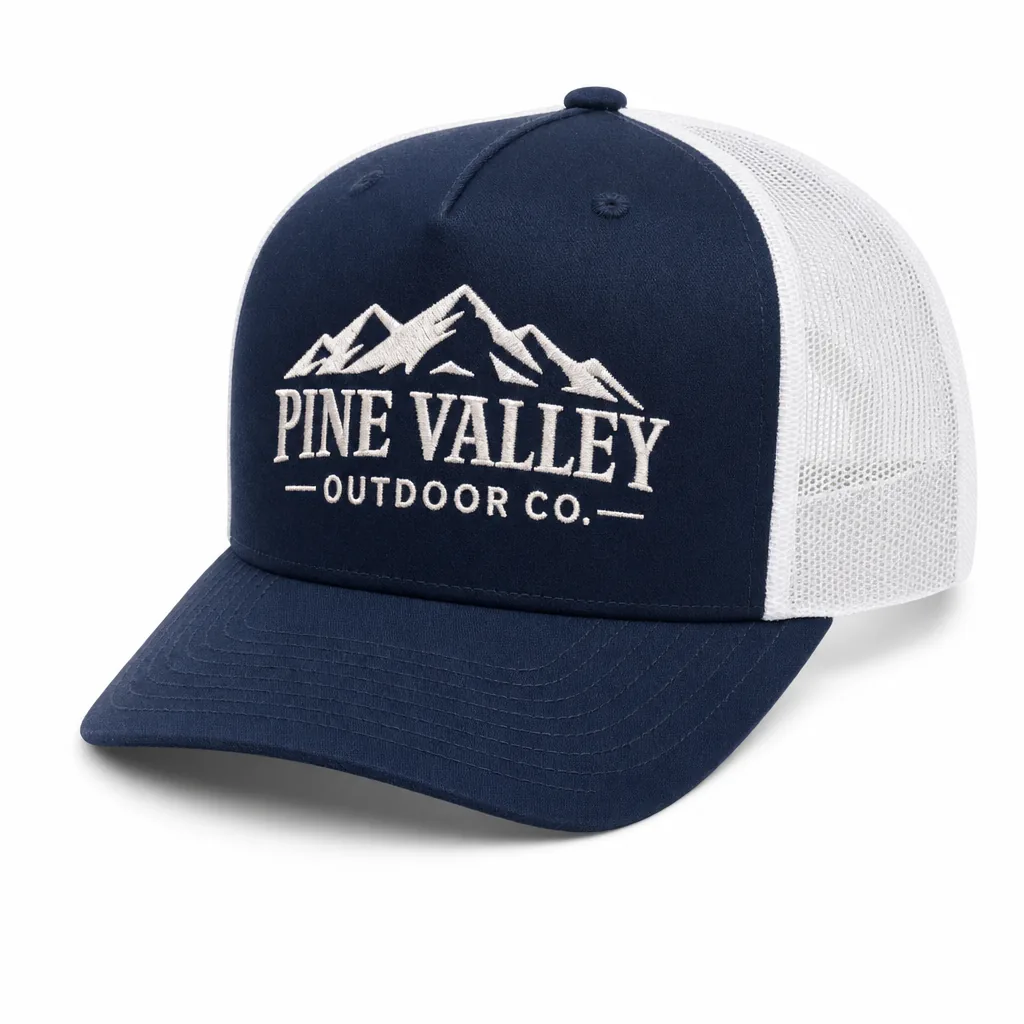
For brand owners, wholesalers and procurement teams entering the custom headwear category, custom golf hats: a manufacturer's guide to performance headwear - cost & moq breakdown - 2026 buyer's guide is one of the highest-leverage decisions you will make. Get it right and your unit economics, retail story and reorder cycle all improve. Get it wrong and you carry the cost for years.
The golf-specific silhouettes that dominate retail and tournament programs
The silhouette choice decides whether custom golf hats actually get worn past the first round, and the volume anchor is still the pre-curved 6-panel performance cap. For tournament programs and pro-shop replenishment, the safest build is a mid-profile crown with 58-62 mm front height, a pre-curved visor using a PE or EVA insert, and a dark gray or black undervisor to cut reflected glare off fairways and cart paths. Most workable shells sit at 130-165 gsm: 100% polyester microfiber for light weight and sublimation clarity, or 92/8 to 95/5 polyester-spandex when the buyer wants stretch and better recovery. A moisture-management sweatband in the 180-220 gsm range, plus laser-perforated side panels and a low-bulk micro hook-and-loop closure, consistently outperforms fashion trims on course because stability matters more than shelf drama over 18 holes. The real failure point is usually crown geometry, not decoration quality; a tall streetwear block may look right in a sales deck, then lift in crosswind, press against sunglasses, and sit too high at address.
The 5-panel low-profile cap and the rope hat both earn their place, but for different channels. A true golf 5-panel with a seamless front panel is the cleaner spec when the logo includes small copy, satin-outline embroidery, or a welded TPU patch that would distort over a center seam; on Tajima or Barudan machines, that uninterrupted panel gives more reliable registration and less push-pull on narrow strokes. Rope hats sell harder in tournament gifting, resort retail, and destination events because the braid reads from 2-3 meters away and signals “golf” immediately, but the construction has to be right: structured poly dobby or lightweight microfiber at 120-155 gsm, a slightly taller crown, and a firm visor board. Cheap foam-front versions wrinkle, absorb sweat badly, and lose shape fast in humidity. Bucket hats and visors are smaller-volume categories, but they are commercially useful when specified correctly: buckets for hot-climate events, caddie use, and junior programs that need 360-degree shade, and visors for women’s assortments and high-UV clubs where ponytail access and ventilation matter. In our standard practice, visors usually land about $0.40-$0.85 below a comparable cap at 500-1,000 units because they use less shell fabric and simpler crown construction.
Why golf demands performance fabric (not cotton twill)
For custom golf hats that will actually be worn for 18 holes, 8-10 oz cotton twill is usually the wrong shell. Cotton absorbs sweat into the fiber core, so moisture sits in the yarn bundle instead of spreading and evaporating across the surface. On a humid 85-95°F day, a cotton cap that starts around 90-100 grams can easily pick up another 8-15 grams by the back nine, especially once the sweatband, lower front panel, and brim binding are loaded. Players feel that weight at the forehead first, then in the way the brim softens and the crown loses crispness. White, stone, and pastel cotton also show salt mapping fast; one round is enough to leave visible tide lines at the sweatband seam and front panel break. A better starting spec is 100-150 gsm microfiber polyester in 50D or 75D filament, or a polyester/spandex blend with 8-12% elastane if you want mechanical recovery without making the cap overly elastic. Pair that with a 30-35 mm moisture-wicking sweatband, ideally a brushed polyester tricot or microfiber knit, and you get faster dry-down and less cling at the crown. On the factory floor, the difference is obvious after a simple wear test: performance fabric dries in the locker or cart window in a fraction of the time cotton needs, and it does not develop the same heavy, swampy handfeel after four hours on course.
Shape retention is the second reason cotton twill underperforms in golf. Once cotton takes repeated sweat and heat load, the front panel relaxes, the buckram softens, and the crown arch starts to flatten. That is exactly how structured 6-panel custom golf hats lose logo presentation after only a few wears. Polyester microfiber is more dimensionally stable, which matters during both production and use. Embroidery runs cleaner on Tajima, Barudan, and ZSK heads because the shell distorts less under hoop tension, so small satin text, side sponsor marks, and seam-crossing fills stay in registration instead of pulling off line. If the design includes laser perforation, welded eyelets, or bonded taping, polyester also handles those processes more predictably than cotton. The cost argument for cotton is weaker than many sourcing sheets suggest. In China, the shell-material gap between basic brushed cotton twill and a competent 120 gsm performance polyester is often only $0.08-$0.18 per cap at commercial volumes, sometimes less than the cost swing created by a premium closure or upgraded sweatband. That small saving is rarely worth the downstream complaints. For golf, I would rather specify moisture management, UPF-oriented finishing, and controlled shade matching than chase a few cents on fabric. A serious program should approve bulk only after checking color against the Pantone reference, fabric-to-trim Delta-E below 1.5 where feasible, and sweat/lightfastness performance before production release.
UPF sun protection for golf programs
Most performance polyester used in custom golf hats will test around UPF 30+ only under favorable conditions: tight construction, darker shades, and limited stretch. That is why white, stone, pastel blue, and light heather programs routinely create problems. A 140-160 gsm interlock or mini-pique made from 75D-100D filament polyester can clear UPF 50+ in navy or forest, then drop below the cutoff in white after the same knit is finished and worn under tension. Dye depth matters because ultraviolet transmission rises as color lightens, and mechanical stretch opens the knit enough to change the result again. For golf programs shipping into Arizona, Florida, Hawaii, or Australia, a generic mill statement is not adequate; ask for test data tied to the exact fabric code, exact Pantone-approved color, and exact finishing route, including wicking, anti-microbial, or cooling finishes if they are part of the BOM.
UPF 50+ is usually decided at the fabric-development stage, not solved later with a hangtag. The practical routes are titanium-dioxide-loaded polymer, UV-absorbing chemical finishes, or a denser microfiber construction in the 75D-150D range, and each affects hand feel, CFM air permeability, and moisture transport. In current bulk buying, a verified UPF 50+ shell normally adds about $0.18-$0.45 per cap over standard moisture-wicking polyester; recycled performance fabrics with documented UV protection more often add $0.50-$0.90 depending on MOQ, color count, and mill source. If the spec includes laser-perforated side panels, define hole diameter and pitch before sampling, because perforation can materially reduce protection even when the base fabric passed in the lab.
The most common compliance mistake is testing too late, after artwork, fit approvals, and pre-production are already moving. If a school district, resort operator, or tournament organizer requires UPF 50+, budget roughly $300-$500 per SKU for AS/NZS 4399 testing through SGS, Intertek, or Bureau Veritas, and define SKU correctly: change the fabric, color family, coating, or panel construction and you may need a new report. A white 5-panel rope cap and a navy 6-panel structured cap are not the same compliance file. Dense embroidery run on Tajima, Barudan, or ZSK heads may stiffen the front panel slightly, but it does nothing for exposed side panels, mesh, or perforated areas. For serious sun programs, I would specify a solid upper crown, a black or dark-green underbill to cut reflected glare, and a low-friction moisture-wicking sweatband so players actually keep the cap on for 18 holes.
Moisture-wicking sweatband: the detail buyers don't notice until summer
The sweatband is where golfers feel quality first, and it usually fails before the shell fabric does. Brushed cotton terry still appears on cheap caps because it is easy to source and saves roughly $0.10-$0.18 per unit, but for play in 82-93°F conditions with 70-85% humidity, it is the wrong specification. Cotton terry can saturate by the front nine, then sit wet against the forehead for another two hours, leaving salt rings, sunscreen staining, and odor complaints that show up later as pro-shop returns. For custom golf hats built for real wear rather than tournament giveaways, a 35-45 mm moisture-wicking sweatband in an 88/12 or 90/10 polyester-elastane knit is the safer build. That fabric spreads perspiration across a larger surface area, dries faster than cotton, and keeps the cap from feeling noticeably heavier over 18 holes, especially when paired with a 140-180 gsm performance polyester or microfiber shell.
The cost increase is modest compared with the comfort gain. In a typical China program, upgrading from a standard cotton band to a wicking polyester-elastane band adds about $0.15-$0.25 per cap at volume, and can reach $0.28 when buyers require a dark matched shade with tighter dye-lot control, such as Pantone TCX alignment within Delta-E 1.5-2.0. Construction matters as much as material: if sewing tension is off or the join seam is bulky, the band twists, creates pressure points, and puckers after a few wears. Buyers should lock in seam flatness, width tolerance, and attachment consistency during sample approval, then inspect bulk under AQL 2.5 rather than relying on a clean pre-production sample. On custom golf hats sold through clubs, resorts, and tournament merchandise programs, those inside-seam defects surface quickly because the product is worn in heat, sweat, and sunscreen, not left in a swag bag.
A good factory treats the sweatband as a performance component, not a trim line on the BOM. Moisture management works best when the crown can actually release heat: laser-perforated side panels, 75-100 denier microfiber, or breathable poly-spandex mesh all help move vapor out after the band pulls sweat off the skin. If the front panels are heavily laminated and over-structured, the benefit drops because moisture has nowhere to escape. Our standard practice is to check perspiration colorfastness and wet rub fastness on navy, black, and deep green bands before bulk approval, since weak dye fixation can bleed onto skin once sweat and sunscreen combine. MOQ usually does not change if the band stays within standard widths and stock color ranges, so serious buyers of custom golf hats are usually better off keeping the outer spec simple and spending the extra cents here, where players actually feel the difference by the back nine.
Rope hats: why this silhouette became the golf hero category
Rope hats became golf’s hero silhouette because they create instant category recognition without adding much cost or complexity. From a merchandising distance of 4 to 6 meters, the 3 mm to 4 mm braided cord above the visor reads “golf” faster than a standard six-panel twill cap, which matters in pro shops where shoppers scan a fixture in a few seconds. That single line also improves logo presentation: a 5,000- to 8,000-stitch front embroidery sits visually framed instead of floating across an open crown. The best-selling builds for custom golf hats are still structured 5-panel rope caps with foam-backed fronts or mid-profile 6-panel shapes with a squared crown, usually in 110 to 140 gsm mechanical-stretch polyester, or 150 to 165 gsm poly-spandex when the buyer wants better recovery and cleaner rebound after packing. Golf consumers want lightweight and breathable, but they also reject crowns that collapse after a few rounds in a locker or cart basket.
The rope profile gives more decoration options than buyers assume, but only if the artwork is engineered for the crown block. On Tajima and Barudan embroidery heads, lower-crown clearance gets tighter because the visor seam and rope sit directly under the design area, so key artwork should stay at least 10 to 12 mm above the seam to avoid push distortion and uneven satin columns. That shape works well for flat embroidery, controlled 3D puff, woven patches, and molded TPU badges, especially when crown height stays around 8.5 to 9.5 cm. In production, MOQ is rarely the real issue; fragmentation is. For custom golf hats using one shell fabric, one rope color, one closure, and one decoration method, 100 pieces per colorway is a realistic opening run. A standard performance rope cap with flat embroidery typically lands around $4.20 to $6.80 FOB China, while laser perforation, molded badges, branded seam tape, and metal closure hardware push cost closer to $7.50 to $10.50 FOB. At CrownsForge, the rope itself is a negligible cost line; delays usually come from repeated closure approvals, inconsistent profile references, and extra trim combinations.
Rope hats also stay commercially strong because buyers can refresh the look without disturbing fit, which is exactly what replenishment programs need. Once the crown block, visor curve, and closure have been approved, you can rotate rope contrast, undervisor color, patch type, or logo execution while keeping the same wear profile. That lowers remake risk and makes forecasting easier across club shops, tournament merchandise, and resort retail. The most stable programs split cleanly into two lanes: core colors such as white, navy, black, and sandstone for volume, then seasonal fashion colors like cypress, clay, and ice gray referenced to Pantone TCX standards. If the order is color-sensitive, especially on light neutrals or tonal embroidery, fabric lots should hold within Delta-E 1.5 to 2.0 against the approved standard; anything wider becomes visible under daylight and retail LED lighting. That is why rope-based custom golf hats work across both traditional country clubs and more fashion-driven accounts: the silhouette is distinctive, but the supply chain logic is disciplined, repeatable, and easy to scale.
Tournament + club merchandise compliance and timing
For tournament-driven custom golf hats, the schedule fails at approvals long before it fails at sewing capacity. Treat 90 to 120 days as the real working window from tech pack sign-off to ex-factory, and assume 10 to 15 of those days disappear into logo permission, sponsor legal review, UPC assignment, and pre-production sample comments. The cap itself is not complicated if the spec is locked early; the delays start when a club wants one Pantone TCX matched across microfiber shell, woven wrap label, woven inside tape, silicone patch, metal clasp, and embroidery thread. On white, stone, and pale sage programs, shade drift is obvious under both daylight and 4000K retail lighting, so I would hold body fabric to Delta-E 1.5 and trims to Delta-E 2.0 against the approved lab dip. If the build includes 3D front embroidery plus side sponsor logos, freeze art 70 days before the event so the digitizer can run sew-outs on Tajima or Barudan heads, adjust pull compensation and underlay, and still leave room for one revision without compressing production.
Most club and tournament compliance issues are not regulatory failures; they are spec-discipline failures. Caps get rejected for crown height running 2 to 3 mm high, undervisor color missing the approved Pantone by a visible margin, embroidery placement drifting more than +/-2 mm, or country-of-origin and fiber labels failing retail requirements. For resale merchandise, barcode position, hangtag format, and sponsor logo hierarchy matter just as much as sewing quality because pro shops audit presentation at SKU level. Our standard practice is to approve one sealed pre-production sample, then lock stitch count, embroidery density, satin column width, patch hardness, visor curve, and measurement tolerances before bulk cutting starts. If the program uses laser-perforated side panels, sonic-weld seam tape, antimicrobial moisture-wicking sweatbands, or molded TPU patches, add 7 to 12 days for outsourced component lead time and incoming QC.
Retail calendars are less forgiving than tournament dates because the penalty is not embarrassment on event day; it is missing the sell-through window for the whole season. For a May floor set, January PO placement is prudent, February is still workable, and by March most buyers are forced into air freight, stock 110 to 140 gsm polyester, and whatever closures are available rather than custom metal buckle, debossed strap tab, or branded snap. Spring demand from golf, resort, school, and promotional headwear all hits the same embroidery and sewing lines, so the factory should build quality gates into the plan instead of relying on final inspection to rescue the order. That means inline checks for panel-to-panel shade consistency, seam puckering, visor symmetry, and logo registration, followed by final inspection to AQL 2.5 with extra attention on sweatband staining, closure function, carton assortment, and retained sample match. Those controls are what keep repeat custom golf hats consistent when dye lots move or artwork gets refreshed for the next season.
Working with CrownsForge on golf programs
Recurring golf programs live or die on process control, not on whether a factory can sew one good sample. For custom golf hats, the advantage is starting from materials and cap blocks that have already been through wear, wash, and embroidery trials. The practical core is a stocked library: 110-160 gsm mechanical-stretch polyester woven for lightweight shells, 130-145 gsm laser-perforated or micro-perforated side panels for ventilation, and 180-220 gsm brushed performance twill where the buyer wants more body without the heavy, dead hand of a 260-280 gsm commodity cotton twill. That shortens development because the factory already knows shrinkage rates, visor rebound, seam slippage, and how each shell behaves on a semi-structured 5-panel versus a deeper 6-panel golf block. Our standard practice is to lock shell, sweatband, closure, and visor board from proven combinations first, then only vary color, logo, and minor trims for seasonal drops. Color consistency matters more in golf than many buyers expect because hats are often merchandised beside polos, quarter-zips, and outerwear sourced from different mills. If the cap navy misses the apparel navy, the whole pro-shop range looks cheap. The workable standard is Pantone TCX or coated reference matching under D65 light, with lab dips held to roughly Delta-E 1.0-1.5 for core solids; beyond that, lot-to-lot variation becomes visible on shelf, especially in white, black, navy, and heather gray programs. On repeat orders six months apart, a factory should not be requalifying every shell fabric or sweatband tape from zero. It should be pulling from pretested lots, existing crown patterns, and approved closure hardware so the only real approvals are color and decoration. That is how buyers avoid paying hidden redevelopment costs every season.
The biggest technical mistake in custom golf hats is treating decoration like an afterthought. Golf silhouettes often use shallower crown depth, softer front panels, lighter gsm shells, and lower visor pitch than promo caps, so the logo method has to be engineered around the block. A soft 5-panel in 145 gsm perforated polyester cannot carry the same stitch density as a buckram-supported trucker front without tunneling, puckering, or a hard patch under the forehead. On Tajima, Barudan, or ZSK heads, clean flat embroidery is usually the safest first choice; 2 mm or 3 mm EVA 3D foam only works when front-panel tension, buckram support, and stitch path are right. If the shell is too light or too elastic, TPU badges, sonic-weld patches, or heat-applied transfers often deliver a cleaner result with less distortion and better long-round comfort. Reliable lead times only happen when those technical choices are frozen early. A realistic sampling window is 7-12 days if fabrics are in stock and the embroidery strike-off does not need multiple revisions; bulk production is commonly 25-32 days ex-factory after sample approval and deposit. If the cap is marketed with UV protection, test the fabric system before bulk cutting because UPF belongs to fiber content, construction, color, and finish—not to the assembled hat by itself. Any change to crown depth, rope gauge, snapback hardware, visor board, or sweatband composition warrants a fresh pre-production sample because small pattern shifts can change fit enough to affect sell-through and return rates. For importer control, FOB Yiwu is usually cleaner than rolled-in terms, and licensed, resort, or tournament programs should require at minimum inline and final random inspection to AQL 2.5, with carton drop testing and metal contamination checks added for larger retail accounts.
Frequently Asked Questions
Can I order a sample before bulk production?
Yes. We strongly recommend approving a pre-production sample before mass production. Samples are charged at 35 to 60 USD each plus express shipping, fully refundable against confirmed bulk orders over 500 pieces.
What is the minimum order quantity (MOQ) for custom hats?
Our standard MOQ is 100 pieces per design and color, with sampling available from 1 piece. For complex multi-color logos or premium fabric upgrades, the MOQ can be lowered with a small per-piece surcharge.
How long does production take?
Sampling takes 7 to 12 days. Bulk production runs 20 to 30 days depending on quantity, fabric availability and decoration complexity. Inspection and packing adds another 3 to 5 days before shipment.
Do you support sustainability certifications?
Yes. We work with GOTS organic cotton, GRS-certified recycled polyester, OEKO-TEX Standard 100 fabrics, and are BSCI and Sedex audited. Certification documentation can be provided per order.
What file format should I send for my logo?
Vector files (AI, EPS, PDF) are ideal. High-resolution PNG or JPG at 300 dpi on transparent background works as a fallback. Provide Pantone color references for accurate reproduction.
What's the MOQ for custom embroidered baseball caps no minimum?
When evaluating custom embroidered baseball caps no minimum, the key considerations are construction quality, decoration capability, MOQ flexibility and lead time. Performance baseball cap with curved brim, 5-panel low-profile golf cap, rope hat with rope detail above the brim, performance bucket hat, and visor. Each has a specific use case — driving range, tournament play, club merchandise programs and pro-shop retail. Standard cotton twill absorbs perspiration and stays heavy. Golf demands moisture-wicking polyester (typically…
How does ordering baseball cap custom logo work?
When evaluating baseball cap custom logo, the key considerations are construction quality, decoration capability, MOQ flexibility and lead time. Performance baseball cap with curved brim, 5-panel low-profile golf cap, rope hat with rope detail above the brim, performance bucket hat, and visor. Each has a specific use case — driving range, tournament play, club merchandise programs and pro-shop retail. Standard cotton sweatband saturates within 9 holes of summer play; polyester-elastane wicking sweatband moves…
How does ordering custom baseball team hats work?
When evaluating custom baseball team hats, the key considerations are construction quality, decoration capability, MOQ flexibility and lead time. Performance baseball cap with curved brim, 5-panel low-profile golf cap, rope hat with rope detail above the brim, performance bucket hat, and visor. Each has a specific use case — driving range, tournament play, club merchandise programs and pro-shop retail. Rope hats (a 5-panel or 6-panel cap with decorative rope above the brim, often in contrast color) became the golf…
What's the MOQ for custom logo hats no minimum?
When evaluating custom logo hats no minimum, the key considerations are construction quality, decoration capability, MOQ flexibility and lead time. Rope hats (a 5-panel or 6-panel cap with decorative rope above the brim, often in contrast color) became the golf cap of the 2020s. Originally a fishing/outdoor silhouette adopted by Imperial, Melin and Branded Bills. We produce equivalents at MOQ 100 pieces. Performance baseball cap with curved brim, 5-panel low-profile golf cap, rope hat with rope detail above the brim,…
Looking for a reliable hat manufacturer in China?
CrownsForge has produced custom hats for 800+ brands across 40 countries. From 100-piece launches to 100,000-piece retail programs, we deliver on time and on spec.
Get in touchRelated guides
Bulk Trucker Hats Export Shipping Checklist for Custom Hat Buyers
Read article →
BSCI vs Sedex SMETA: Which Audit Does Your Cap Supplier Actually Need?
Read article →
Cap Defect Catalog: 32 Production Issues to Inspect For - 2026 Buyer's Guide
Read article →We hope this guide demystifies custom golf hats: a manufacturer's guide to performance headwear - cost & moq breakdown - 2026 buyer's guide and helps you move forward with confidence. If you have questions specific to your project, our English-speaking sales engineers are one message away.