
Custom Embroidered Patches: When to Use It, Costs, and What to Ask Your Factory - Cost & MOQ Breakdown
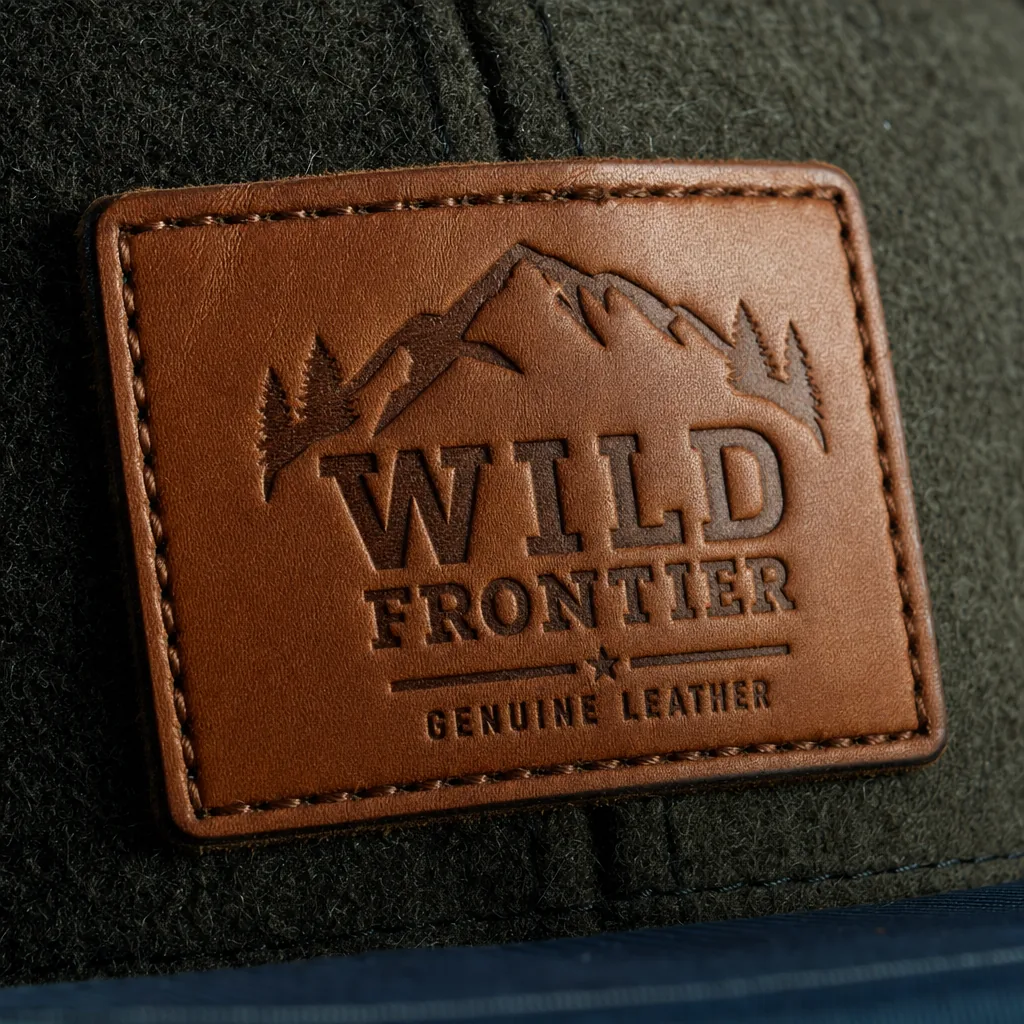
Every week, our sales team answers detailed questions about custom embroidered patches: when to use it, costs, and what to ask your factory - cost & moq breakdown. We wrote this guide so that wholesalers, streetwear brands, corporate buyers and promotional resellers can compare options with full information, and avoid the traps that show up only after production has started.
Custom Logo Hats
On custom logo hats, decoration method is a construction decision, not an artwork decision. The same logo can fail as direct embroidery and run clean as custom embroidered patches, especially when line weight drops below 1.0 to 1.2 mm, text is under 4 mm cap height, or the design uses 6+ thread colors with tight color breaks. A patch gives you a stable ground fabric, so edge definition stays sharper and fill coverage stays more even than stitching straight into a curved crown panel with buckram underneath. On the factory floor, that difference is obvious on structured 6-panel caps, low-profile dad hats, and any front panel with a center seam. A patch program adds real process steps: twill, felt, or TPU base is laser-cut or die-cut, logo files are digitized and run on Tajima, Barudan, or ZSK heads, edges are finished with merrow, satin stitch, or clean heat-cut, and only then is the patch applied by sew-down, heat press, or a combined tack-and-sew method. Buyers should not send only a logo. The sample room needs vector art, finished patch size in mm, Pantone TCX or solid coated references, border style, backing, placement, cap profile, crown fabric, and whether the patch crosses the center seam. Miss one of those inputs and the approval sample can look fine on a flat board but distort once it is sewn onto 245 gsm cotton twill or 14-wale corduroy.
Patch caps need tighter QC because you are controlling two separate components: the patch and the hat assembly. For the patch, lock down base material, thread type, stitch density, border construction, backing, finished thickness, and color tolerance. A practical standard is visual approval under D65 lighting with Delta-E under 2.0 against the approved thread card or lab dip; anything looser invites visible shade shift between production lots. For the cap, confirm panel structure, buckram stiffness, visor curve, closure, seam tape, and patch position tolerance. If a front patch sits more than 2 mm off center, or the top edge rolls over the crown curve, rejection rates climb fast; our standard practice is to flag any patch bridging a center seam as higher risk before bulk cutting. Cost also moves for predictable reasons. MOQ for custom embroidered patches applied to hats is typically 100 to 144 pcs per colorway, while small runs under 50 pcs often add $35 to $80 for digitizing, laser setup, and edge programming. A basic 5-panel or 6-panel cotton twill cap with one front patch usually lands around $2.80 to $4.60 FOB China at 300 to 500 pcs. Wool blend, suede, corduroy, chain stitch, or multiple patch placements can push that to $5.50 to $8.50. Final inspection should run at AQL 2.5, checking centering, edge integrity, puckering, visor symmetry, thread coverage, and peel strength where heat seal is used, especially on nylon or recycled performance polyester that can shine or warp under excess heat.
Custom Hat with Patch
A custom hat with patch is usually built in two separate production streams, and buyers who miss that end up with avoidable delays. First the patch is made — most commonly merrow-border embroidered patch, laser-cut satin-stitch patch, woven patch, TPU patch, or printed twill patch — then the cap body is cut, sewn, and the patch is applied by heat press or sewing. For structured baseball caps and truckers, sewing the patch after crown assembly is safer because it holds better through wash and abrasion; for 5-panel campers and unstructured dad caps, patch placement is easier if the front panel is still flat. If you are sourcing custom embroidered patches specifically for hats, send the factory patch size in millimeters, backing type, border type, stitch coverage, Pantone TCX references for thread matching, and exact placement from brim seam and center line. A vague request like “front logo patch” is how you get crooked placement or a patch that overpowers the crown profile.
The specs that matter most on a custom patch for hat are patch dimensions, edge finish, attachment method, and cap fabric compatibility. A 65 x 45 mm patch behaves very differently on brushed cotton twill than on 600D polyester or foam-front trucker mesh, especially if the patch has dense fill stitching above 75 percent coverage. Dense patches can tunnel, pucker, or distort the front panel, particularly on low-profile caps with light buckram. Ask for embroidery file format compatibility from Tajima or Barudan machines, target thread brand and sheen, backing weight, and a placement tolerance of no more than plus or minus 2 mm. For MOQ, most factories quote patch hats starting around 100 to 144 pcs per colorway and style, while standalone patches may start at 50 to 100 pcs depending on size. Typical China ex-factory pricing for a custom patch hat is about $2.20 to $4.80 per piece at 300 pcs for basic cotton twill caps with a sewn patch, while the patch itself may account for $0.28 to $0.95 depending on size, stitch count, and border construction.
Inspection is where a lot of hat patch custom programs either hold margin or bleed money. The failure points are usually not dramatic defects; they are small inconsistencies repeated across a run: patch angle drifting 3 to 5 mm off center, merrow border fraying, heat-press glue strike-through, loose jump stitches, thread trims trapped under satin columns, or patch corners lifting after carton compression. For AQL 2.5 inspection, I would specifically check patch placement, edge security, color match under D65 light, crown deformation after attachment, and whether the inside stitching or backing scratches the wearer’s forehead. If the factory claims sedex-audit-cap-supplier-guide.html">BSCI 2.0 or Sedex SMETA 4-Pillar compliance, that helps with social audit requirements, but it does nothing for patch execution unless there is a real inline QC checkpoint. Broadly, the custom patch hats decision should come back to end use: embroidered patch if you want texture and a heritage look, woven patch if fine text matters, TPU if weather resistance matters, and direct embroidery if you want to remove one whole failure point from the assembly line.
Custom Patch for Hat
A custom patch for hat is usually made in a separate patch workshop first, then applied onto the cap shell by heat press, edge stitch, satin stitch tack-down, or Velcro depending on the design and end use. The manufacturing route matters because a 3D look on the patch does not behave the same way as direct cap embroidery on a buckram front panel. Buyers should ask the factory to quote the patch and cap assembly as two operations: patch base material (twill, felt, PU, woven ground), border type (merrow, laser-cut, hot-cut, overlock), backing (iron-on, pressure adhesive, sew-on, hook backing), and attachment method onto the hat. For a custom hat with patch, I usually recommend sending final patch size in millimeters, Pantone TCX references, stitch coverage target, border width, and placement tolerance such as ±2 mm. If the factory cannot confirm these basics in writing, they are guessing, not controlling production. The numbers are fairly predictable if the artwork is clean. For custom embroidered patches, most Chinese factories will set MOQ at 100 to 300 pieces per design for sampling into bulk, while patch-only MOQs can start at 50 pieces if the size is under 70 mm and the color count is limited. A standard 2.5 inch to 3 inch embroidered patch for a custom patch hat typically lands around $0.35 to $0.90 per piece in bulk at 500 to 1,000 units, before cap application cost. Adding it onto a cap is usually another $0.15 to $0.40 depending on whether it is heat-pressed only or stitched after positioning. Smaller runs of custom patch hats under 144 pieces carry obvious inefficiency because digitizing, laser cutting, and setup time do not scale down well; that is why buyers see sample charges of $25 to $60 per design. CrownsForge standard practice is to separate moldless setup costs from unit cost so buyers can see what will disappear at repeat order stage. Inspection is where most importers lose margin, because a custom patch for hat can look acceptable from one meter away and still fail in retail. Check border consistency, thread trims, stitch density, registration between color blocks, puckering after attachment, and patch angle on the cap crown; I reject anything with obvious fill gaps, loose bobbin showing, or placement drift beyond agreed tolerance. Ask for AQL 2.5 final inspection, wash or rub testing if the cap fabric is garment washed, and Delta-E control if the patch ground or thread color must match branded trims. On a custom patch for hat using Tajima or Barudan heads, the factory should already know how to reduce thread breaks on small lettering under 4 mm height, but buyers still need to specify minimum text size and line thickness in artwork approval. That sourcing decision ties back to the bigger custom embroidered patches question: use patches when you need flexibility across multiple hat bodies or lower rework risk, but stay with direct embroidery when the logo is simple, permanent, and you want the lowest total cost at scale.
Custom Patch Hat
On a custom patch hat, the patch spec drives both the look and the failure rate. A typical embroidered patch starts on 180-220 gsm polyester twill or 1.5-2.0 mm wool-blend felt, runs on Tajima, Barudan, or ZSK heads, and finishes with either a merrow edge or a laser-cut satin stitch border. The real factory decision is attachment timing. Sewing the patch onto the front panel before crown assembly saves labor, but on a structured 6-panel cap it often prints through the center seam, distorts the buckram, and causes tunneling after topstitching. Attaching the patch after the cap is built costs more—usually $0.08-$0.20 per piece—but the placement is cleaner on high-profile snapbacks, truckers, and premium streetwear shapes. Not every logo should use custom embroidered patches. If copy is under 3 mm cap height, or serif strokes fall below about 0.4 mm, thread fill will close counters and blur edges. In those cases, a woven patch, direct embroidery, or sublimated emblem is the better technical choice. Our standard practice is to flag these risks at sampling instead of forcing embroidery to do a woven label’s job. For quotation, buyers should specify patch size in millimeters, border type, backing, attachment method, cap fabric, crown profile, stitch coverage, and Pantone TCX reference. If color approval is tight, define an acceptable Delta-E tolerance as well, because polyester thread, cotton twill, and recycled poly foam rarely read as an exact visual match under D65 lighting.
Most RFQs for patch hats are still too loose to price correctly. “Front patch on cap” is not a usable spec when a 65 mm merrow patch on 300 gsm cotton twill behaves very differently from a 90 mm satin-edge patch on foam-front recycled polyester. Cost the job as three operations: cap body, patch, and application. At 500 pieces, a basic 2.5 inch embroidered patch with roughly 65-70% stitch coverage usually runs $0.30-$0.70, post-assembly sewing adds $0.12-$0.35, and digitizing or patch setup is commonly $15-$40 per design. Finished hats typically land around $2.80-$6.50 FOB China at 300-1,000 units, depending on fabric, closure, and profile. The failure points are predictable, so buyers should ask direct questions before approving bulk. Confirm whether the factory heat-presses first and then stitches the patch down; on curved panels, edge lift shows up fastest on cotton chino, brushed canvas, and acrylic/wool blends if the patch is only pressed. Placement tolerance should be held to ±2 mm from approved centerline, and bulk inspection should check border fray, loose jump threads, puckering, skipped stitches, seam read-through, and color drift against the sealed sample. For production release, AQL 2.5 is the practical standard for patch hats, not a vague “general inspection,” because patch alignment defects are highly visible at retail.
Custom Patch Hats
Patch construction decides whether a hat looks retail-grade or promotional-grade; the cap silhouette is secondary. A merrowed-edge embroidered patch, laser-cut patch with satin border, woven damask label, molded TPU badge, leather patch, and printed twill applique each carry different stitch behavior, edge durability, and unit cost. On structured 6-panel caps, the cleanest result usually comes from attaching the patch before crown assembly, because the front panel stays flat under the sewing head and you avoid tunneling, panel distortion, and ugly backing drag inside the crown. On finished truckers, washed chino twill dad hats, or soft unstructured 5-panels, factories often stitch the patch after sewing because it is faster, but you should expect a higher risk of wrinkling, off-center placement, and a stiff front hand feel. For custom embroidered patches, the tech pack needs hard numbers, not vague artwork notes. Lock patch size in millimeters, merrow width or satin border width, stitch coverage, backing type, placement tolerance, and the exact color standard—preferably Pantone TCX or Pantone C, depending on the thread system the supplier is using. If you care about brand colors, ask for a Delta-E target around 1.5 to 2.0 on critical shades; navy, black, and red are where cross-supplier drift shows up first when the patch vendor and cap factory are separate. Also be realistic about artwork limits: text under 4 mm cap height, lines below 0.8 mm, and tight negative space usually read cleaner in a woven patch than in embroidery, even on well-tuned Tajima or Barudan heads, because high stitch density closes up fine detail fast.
Most patch-hat failures are visible within seconds if you know where to look. Common defects are off-center placement beyond a ±3 mm tolerance, loose merrow yarn, frayed laser-cut edges, skipped stitches, heat-press bubbling, and corners lifting after a few flexes. Always inspect both sides of the front panel. A cap can look acceptable outside and still have messy reverse stitching, bobbin thread exposure, glue bleed, or excess adhesive film that makes the crown hot and boardy in wear. For bulk inspection, AQL 2.5 is a sensible workmanship standard, but patch styles need extra checks: flex testing for every patch construction, peel testing for heat-applied badges, and shade segregation at carton level so mixed lots do not get packed together. If the shell is pigment-dyed or garment-washed, add crocking checks because light patch borders can pick up loose surface dye in transit. Cost is where buyers often misjudge custom embroidered patches. On a stock cap body, a standard embroidered patch usually adds about $0.35 to $0.90 per piece FOB China, while digitizing, merrow setup, laser cutting, and strike-off sampling typically add $40 to $120 per design. If the blank cap already exists, MOQ is often 144 to 300 pieces per colorway; once you change shell fabric, closure, sweatband label, seam tape, or visor sandwich, the practical MOQ usually moves to 500 to 1,000 pieces. Direct embroidery is not automatically more expensive. When the patch vendor and cap factory are different suppliers, you add inbound freight, one more QC handoff, higher shade-risk exposure, and extra handling damage before final packing.
Hat Patch Custom
On a cap program, the attachment method matters more than the artwork style because it drives panel distortion, cycle time, and the defect pattern in bulk. Most factories build hat patches in four formats: merrowed-edge embroidered patch, laser-cut satin-stitch patch, woven label patch, or molded TPU/PVC badge. True custom embroidered patches are usually run on Tajima, Barudan, or ZSK multi-head machines on polyester twill, acrylic felt, or canvas, then laser-cut or die-cut before application. If your smallest copy falls below 3.0 mm letter height, or line weight drops under about 0.8 mm, woven patches hold readability better than embroidery. If you want raised texture, heavier thread, and a more classic sports or workwear look, embroidered patches still win. Before sampling, lock the six specs that actually prevent remakes: finished size in millimeters, border type, backing, stitch coverage, Pantone reference, and placement tolerance. On structured 6-panel fronts, ±2 mm is a realistic placement tolerance; asking for ±1 mm on a curved crown usually raises rejection rates without giving you a better-looking cap at retail.
MOQ is almost always lower for loose patches than for finished hats because cap application adds setup and handling labor. A factory may quote 100 to 300 pieces per design for loose custom embroidered patches, but once that patch is sewn or heat-applied to a finished cap, workable MOQ usually moves to 144 to 300 pieces per colorway. In Zhejiang and Guangdong, a 2.25 to 2.75 inch embroidered twill patch with merrow edge typically costs about $0.18 to $0.45 at 1,000 pieces; a laser-cut satin-border version is more often $0.28 to $0.60, depending on stitch density, backing film, and cut complexity. Applying the patch adds roughly $0.10 to $0.35 by heat press or $0.20 to $0.50 by sewing, with sewing preferred for long-term wash durability and lower edge-lift risk. The repeat failure points are predictable: heat-press puckering on low-gsm front panels, off-center placement, frayed laser-cut edges, loose bobbin thread, and thread shade drift between sample and bulk lot. Solid factories inspect finished caps to AQL 2.5, align thread color to an agreed standard such as Pantone TCX with a defined Delta-E tolerance where relevant, and state clearly whether embroidery and patch application are done in-house or subcontracted, because subcontracted application is where consistency usually breaks down.
Working with CrownsForge for custom embroidered patches programs
The biggest risk in a custom embroidered patches program is not embroidery quality; it is mismatch between patch spec, cap construction, and realistic MOQ. For first-time buyers, we usually split the project into two approvals: patch strike-off first, then full cap sample with placement and attachment method locked. A clean sampling timeline is 3 to 5 working days for patch swatches and about 7 to 10 working days for a sewn custom hat with patch sample, assuming the artwork is production-ready and Pantone references are provided. MOQ can stay flexible at the trial stage: 48 to 100 hats per colorway is workable on many washed cotton dad caps and acrylic beanies, while structured 6-panel caps with multiple decorations usually make more sense from 144 pieces upward. If a buyer wants only loose custom embroidered patches, patch-only MOQ can start around 100 to 300 pieces depending on size, merrow border versus laser-cut edge, and backing type such as heat seal, Velcro hook, or plain sew-on.
What de-risks the program is keeping decoration in-house and choosing the attachment method based on fabric behavior, not on a mood board. A thick twill patch on a lightweight 190 gsm nylon camper cap will pucker if the sew line and needle count are wrong; on that style, we often recommend a lower-stitch-density badge, woven label patch, or direct embroidery instead. For heavier brush cotton, canvas, corduroy, and wool blends, a custom patch for hat application is straightforward, whether it is edge stitched, satin stitched, or combined with applique. Our standard practice is to digitize on Tajima or Barudan workflows, check stitch density against the patch base, and confirm thread shade under D65 light so color drift stays commercially acceptable, typically within a Delta-E tolerance discussed at approval stage. For buyers building a custom patch hat range, this matters more than chasing the cheapest quoted unit price, because one bad digitizing file can waste an entire run.
Order control is where factories either look organized or actually are organized. A reliable workflow should include tech pack review, artwork cleanup, material confirmation, pre-production sample approval, inline inspection, and final AQL 2.5 audit before carton sealing. On compliance, buyers should ask for current BSCI 2.0 or Sedex SMETA 4-Pillar reports, plus basic chemical controls for components like patch backing glue, thread, and base fabric, especially if the custom patch hats are for children’s retail or licensed programs. Cost-wise, patch-only pricing is commonly around $0.35 to $1.20 per piece FOB China for standard 2 to 3 inch sizes, while a finished hat patch custom program usually adds about $0.50 to $1.50 per cap depending on patch complexity, attachment labor, and cap material. Scale-up brands benefit from locking repeat specs early: once the patch file, stitch count, backing, and cap panel placement are fixed, reorders move faster and defect rates usually drop noticeably.
Frequently Asked Questions
What logo decoration techniques do you offer?
3D puff embroidery, flat embroidery, woven patch, leather patch, PVC patch, screen printing, sublimation, applique and laser etching, all in-house with no subcontracting.
Can I order a sample before bulk production?
Yes. We strongly recommend approving a pre-production sample before mass production. Samples are charged at 35 to 60 USD each plus express shipping, fully refundable against confirmed bulk orders over 500 pieces.
What is the minimum order quantity (MOQ) for custom hats?
Our standard MOQ is 100 pieces per design and color, with sampling available from 1 piece. For complex multi-color logos or premium fabric upgrades, the MOQ can be lowered with a small per-piece surcharge.
How long does production take?
Sampling takes 7 to 12 days. Bulk production runs 20 to 30 days depending on quantity, fabric availability and decoration complexity. Inspection and packing adds another 3 to 5 days before shipment.
What file format should I send for my logo?
Vector files (AI, EPS, PDF) are ideal. High-resolution PNG or JPG at 300 dpi on transparent background works as a fallback. Provide Pantone color references for accurate reproduction.
How does ordering custom embroidered patch hat work?
When evaluating custom embroidered patch hat, the key considerations are construction quality, decoration capability, MOQ flexibility and lead time. Cover everything buyers ask about custom hat with patch: how it's manufactured, what specs to request from a factory, typical MOQ and pricing, common quality issues to inspect for, and how this ties back to the broader custom embroidered patches sourcing decision. Cover everything buyers ask about custom patch for hat: how it's manufactured, what specs to request from a…
How does ordering custom leather patch hats work?
When evaluating custom leather patch hats, the key considerations are construction quality, decoration capability, MOQ flexibility and lead time. Cover everything buyers ask about custom patch hats: how it's manufactured, what specs to request from a factory, typical MOQ and pricing, common quality issues to inspect for, and how this ties back to the broader custom embroidered patches sourcing decision. Cover everything buyers ask about custom logo hats: how it's manufactured, what specs to request from a factory,…
How does ordering custom embroidered baseball hats work?
When evaluating custom embroidered baseball hats, the key considerations are construction quality, decoration capability, MOQ flexibility and lead time. Cover everything buyers ask about custom logo hats: how it's manufactured, what specs to request from a factory, typical MOQ and pricing, common quality issues to inspect for, and how this ties back to the broader custom embroidered patches sourcing decision. Cover everything buyers ask about custom patch hats: how it's manufactured, what specs to request from a factory,…
What's the MOQ for custom embroidered patches no minimum?
When evaluating custom embroidered patches no minimum, the key considerations are construction quality, decoration capability, MOQ flexibility and lead time. Cover everything buyers ask about custom logo hats: how it's manufactured, what specs to request from a factory, typical MOQ and pricing, common quality issues to inspect for, and how this ties back to the broader custom embroidered patches sourcing decision. Cover everything buyers ask about custom hat with patch: how it's manufactured, what specs to request from a…
Looking for a reliable hat manufacturer in China?
CrownsForge has produced custom hats for 800+ brands across 40 countries. From 100-piece launches to 100,000-piece retail programs, we deliver on time and on spec.
Get in touchRelated guides
Custom Camo Hats: Hunting, Outdoor and Tactical Cap Manufacturing (2026 Update)
Read article →
Festival Bucket Hats Decoration QC Checklist for Custom Hat Buyers
Read article →
Blank Trucker Cap Wholesale Bulk: A 2026 B2B Sourcing Guide
Read article →Sourcing custom hats does not have to be complicated. With the right manufacturing partner, clear specifications and a small upfront investment in sampling, you can launch a retail-quality product in 30 to 45 days.