
Custom Cap Closure Options and Cost: Snapback, Strap, Buckle - Supplier Checklist (2026 Update)
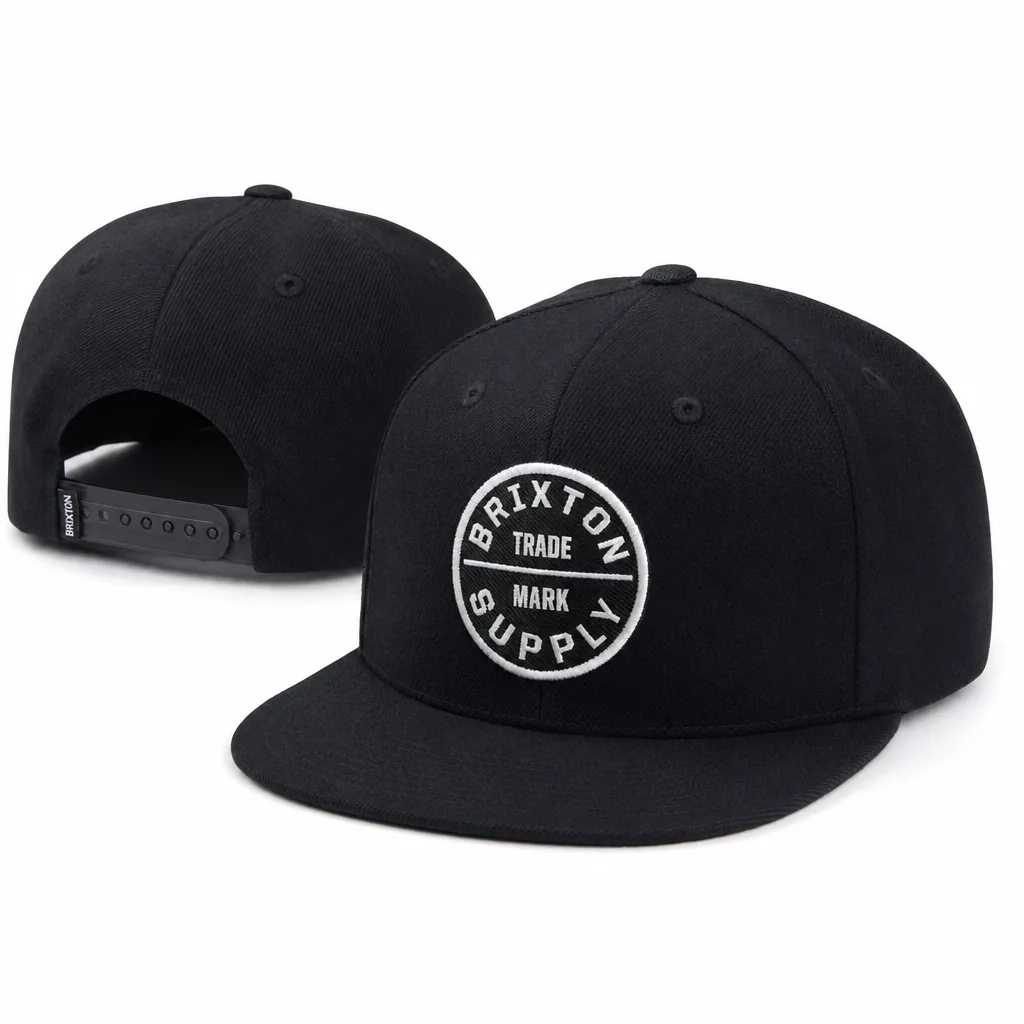
For brand owners, wholesalers and procurement teams entering the custom headwear category, custom cap closure options and cost: snapback, strap, buckle - supplier checklist (2026 update) is one of the highest-leverage decisions you will make. Get it right and your unit economics, retail story and reorder cycle all improve. Get it wrong and you carry the cost for years.
What custom cap closure options cost means in real production
Custom cap closure options cost should be priced as a production operation, not buried inside “trim.” On a 1,000-piece FOB Yiwu order, a stock 7-hole PP snap normally adds $0.08 to $0.16 per cap; dyed-to-match male and female snaps move closer to $0.14 to $0.22 once Pantone TCX matching, MOQ resin loss, and shade approval are included. Recycled PP is usually not cheaper because color drift and brittleness create more incoming QC rejects. A self-fabric strap with zinc alloy slider typically adds $0.24 to $0.48: the factory must cut the strap on grain, fold, edge-stitch, bartack, thread the slider, and adjust the sweatband break at the rear opening. Genuine leather is a different bracket. A 1.2-1.6 mm split leather strap with edge paint, debossed logo, punched holes, and an engraved brass buckle can add $0.75 to $1.20 before rework, especially if nickel-free plating or REACH documentation is required.
The closure choice changes the cap pattern, wash behavior, and inspection risk. A structured 6-panel snapback with buckram front panels and a flat visor handles PP snaps cleanly because the rear arch holds shape after pressing. A low-profile washed dad cap in 260 gsm enzyme-washed cotton twill usually needs a self-fabric strap, metal slider, tuck-in buckle, or hook-and-loop tape so the back sits flat against the head. Strap length must be checked after washing, not only on the sewing sample; I have seen approved bulk come back 5-8 mm short after garment wash, which makes the back opening pull and twist. Our standard practice at CrownsForge is to lock back opening width, finished strap length, bartack location, buckle orientation, and a simple 5 kg pull test before pre-production approval.
Buyers should require closure cost as a separate FOB line item and tie it to an inspection standard in the RFQ. For plastic snaps, specify PP, PE, or recycled PP, Pantone TCX target, gloss level, and Delta-E tolerance: under 1.5 for licensed sports or retail programs, under 2.0 for most promotional caps. For metal closures, confirm zinc alloy versus brass, plating color, nickel-free compliance for EU shipments, and 24- or 48-hour neutral salt spray testing. Under AQL 2.5, isolate closure defects instead of hiding them inside general workmanship: loose rivets, sharp buckle edges, weak bartacks, crooked rear openings, snap color mismatch, peeling plating, and hook-and-loop tape losing grip after 300-500 cycles. This is where a “cheap” closure becomes expensive, because reworking 1,000 finished caps can cost more than choosing the right closure at sampling.
Specs to request before a quote
A quote is only comparable if the closure is defined by measurements, not by vague labels like “snapback” or “strapback.” Your RFQ should list back opening width, strap width, total cut length, usable adjustment range, hole count, hole pitch, buckle inner width, tab length, and sweatband overlap allowance, all in millimeters. For an adult 58 cm fit, a standard injection PP snap set usually uses a 24–26 mm strap with 7 studs and 6.5–7.0 mm pitch; a self-fabric tuck strap is more often 18–22 mm wide with 70–90 mm of adjustment; D-ring and single-prong buckle closures commonly run on 20 mm or 25 mm webbing. If those dimensions are left open, one supplier may quote an existing snap mold while another prices a fresh mold, heavier hardware gauge, or an extra bartack operation. That is exactly how custom cap closure options cost gets distorted before sampling even starts. Material specs move the price more than most buyers expect, especially once finishes and wash effects are involved. Call out PP, HDPE, or POM for plastic parts; webbing as nylon or polyester with denier and gsm; leather as PU, split leather, or full-grain cowhide with thickness in mm; and hardware as zinc alloy, iron, or brass with the required finish. A 1.6–1.8 mm corrected-grain cowhide strap with a nickel-free matte black zinc-alloy buckle does not belong in the same quote range as 600D polyester webbing with a POM tri-glide. For color-critical programs, specify Pantone TCX for textile parts, plating reference for metal, and a Delta-E target of 1.5 or tighter on adjacent strap and back-panel components. If the cap is garment-washed, enzyme-washed, or pigment-dyed, state that up front; washed cotton twill, canvas, and leather tabs all react differently in shrinkage, shade shift, and yield loss.
Most bad closure quotes fail on tolerances, branding method, and QC assumptions. Put the tolerances directly into the quote request: strap width ±1 mm, buckle centerline alignment within 3 mm, stitch-box position ±2 mm, and hole spacing tolerance within ±0.5 mm. If there is branding on the closure, send vector AI or EPS for deboss dies, laser marking, or etched metal logos; if the strap itself will be embroidered, provide the final logo size in millimeters and preferably the DST file. Small closure embroidery is not crown embroidery. A 12 mm logo on a cotton strap or leather tab needs different underlay, density, and pull compensation, and even on Tajima or Barudan heads, small text will collapse if the substrate and digitizing are not matched. Packing and inspection also belong in the RFQ because closure thickness changes carton efficiency and delivered cost. A flat PP snapback nests tighter than a cap with a metal buckle or double-layer leather strap, so carton count, cubic volume, and DDP air rate can move noticeably. State the packing method by style—25 pcs per inner polybag and 100 pcs per export carton is common—but also give a maximum carton size and gross weight if the goods are headed to FBA or express channels. On QC, AQL 2.5 major / 4.0 minor is a practical baseline, but add closure-specific checkpoints: snap engagement consistency, plating appearance, stitch-box pull strength, rivet security, and needle-control records. Our standard practice is to price branded hardware molds, custom-dyed webbing, and low-yield leather straps separately, because these items can add roughly $0.18 to $0.90 per cap depending on MOQ, reject risk, and whether the factory can use stock trims.
Factory risks and quality checks
Closure defects become expensive when they affect fit, retention, or rework time; cosmetic scuffs are secondary. On snapbacks, the failure points I flag first are post-to-hole misalignment over 1.0 mm, hole flash that raises insertion force, and polypropylene tabs that fracture in cold-chain transit or winter delivery below 0 to 5°C. The closure pitch also has to match the graded back opening. If the strap lands too short, a nominal adult size effectively starts on the second-last hole, which guarantees complaints even when the crown spec was correct. For hook-and-loop straps, the real checks are peel strength and cycle life: below about 1.5 kgf peel after 500 open-close cycles, return risk goes up fast on promo and team orders. Self-fabric straps fail differently: bartack drift over 2 mm, tail-length variance above 5 mm, and fray on light webbing under 420D are the defects that get missed until packing.
Metal closures create a different cost profile because they damage adjacent materials and are slower to replace once the sweatband and back seam are closed. Burrs on slider buckles will cut 10 oz cotton twill or brushed canvas during adjustment; weak spring tension slips under load; cheap electroplating rubs through after carton vibration, especially on black nickel and matte gunmetal. For EU programs, nickel release cannot be treated as a paperwork issue; hardware should be screened to REACH limits before bulk assembly, not after. Once a defective buckle is sewn into a finished cap, seam opening, hardware swap, re-topstitching, and repressing typically adds $0.20 to $0.55 per piece in China, and a 5,000-piece order can lose 4 to 6 production days if replacement trims are not in-house. That is where custom cap closure options cost stops being a trim-line comparison and becomes a landed-cost problem.
The factories that control this well do not rely on final AQL 2.5 alone; they freeze the closure standard before bulk sewing and inspect it inline with measurable tolerances. The sequence I trust is closure board approval, then a wearer-fit sample, then a sealed PP sample listing trim code, resin grade or alloy, plating finish, stitch count, back-opening width, and Pantone or Pantone TCX reference where relevant. Strap fabrics should be checked in a D65 light box to Delta-E 1.5 to 2.0 maximum because dyed twill, brushed canvas, and suede-look microfiber often drift more than the crown fabric. Inline QC should measure buckle center position, exposed strap length, left-right back seam symmetry, and closure pull performance on at least 32 pieces per lot; metal parts need burr and plating checks under consistent lighting. On embroidery-heavy caps, dense rear logos and thick backing can stiffen the panel enough to distort topstitching or snapback installation, especially after running on Tajima, Barudan, or ZSK heads, so closure fit has to be reviewed with the actual sewing sequence, not as a standalone trim test.
MOQ, lead time, and cost drivers
MOQ changes closure pricing because the trim supplier, not the sewing line, sets the first hard floor. On a basic 6-panel cap in 260 gsm cotton twill, an off-the-shelf PP snap in black, navy, or white usually adds about $0.12 to $0.20 per cap at 1,000 to 1,200 pcs, but the same style at 144 to 300 pcs often lands 25% to 40% higher once trim overage, carton splits, and color breaks are allocated honestly. The crown sewing minutes barely move; what moves is the closure SKU economics. For buyers comparing custom cap closure options cost, stock trims are almost always the cheapest path, while color-matched or branded hardware is where unit cost escalates fast.
The jump is steepest when the closure needs its own tooling, finish control, or compliance file. A custom-injected snapback tab in a Pantone-matched shade typically requires a 3,000 to 5,000-set trim commitment, and a new color setup or mold modification usually runs $180 to $450 depending on cavity count, texture, and acceptable Delta-E tolerance. Metal is less forgiving. A zinc-alloy buckle with logo debossing, brushed or antique finish, and nickel-release compliance will usually sit around $0.35 to $0.80 each before attachment labor; genuine leather adds skiving, edge coating, hole punching, and hide yield loss, so small runs get expensive quickly. At CrownsForge, we quote leather strap programs only after confirming leather grade, thickness in mm, and whether the buyer wants REACH-compliant chemistry, because those details affect cost more than most buyers expect.
Lead time follows the trim path more than the line booking. A stock snap can be sewn into production with low variance, but a tuck strap, D-ring, or tri-glide closure adds extra cutting, strap-end turning, bartacking, manual threading, and more in-line QC points. In practical terms, stock closures can keep a cap order in a 25 to 35 day production window after approvals, while decorated buckles, die-struck logos, or custom plating can add 7 to 18 days before assembly even starts. Shade control also becomes more visible on strap programs: if crown fabric, strap fabric, and sweatband drift beyond roughly Delta-E 1.5 to 2.0 under D65 lighting, the mismatch shows immediately on stone, khaki, and pastel colors. Buyers also underestimate downstream costs. Metal hardware usually needs tissue or polybag separation to prevent visor scratching in export cartons, adding around $0.03 to $0.08 per cap, and lower carton density can materially change FOB and DDP math. A cap packed 60 pcs per carton instead of 72 is not a rounding error once freight, testing, and fulfillment are included.
How CrownsForge manages this order type
Closure mistakes get expensive because buyers often approve the silhouette and ignore the back opening as if it were just trim. We lock the closure BOM before digitizing or PPS: PP versus POM snap resin, webbing width in 20 mm or 25 mm, buckle base metal, plating code, eyelet finish, visor board thickness, sweatband composition, and crown fabric lot all sit in one spec sheet with measured tolerances and reference photos. That single step is where custom cap closure options cost is either controlled or allowed to drift. On a standard 6-panel 260-280 gsm cotton twill cap, moving from a stock 20 mm zinc-alloy slider to brass with nickel-free plating typically adds $0.08-$0.18 per cap at 3,000 pcs. Pantone-matched injection snaps usually add $0.05-$0.12 depending on cavity count, resin color, and whether the snap supplier is already running that masterbatch.
The sample process also has to test function, not just appearance. A fit sample with closure options usually takes 5-7 working days; a full PPS with embroidery, woven flag label, printed sweatband, and confirmed closure takes another 7-10 working days if trims are in-house. We measure back opening circumference, crown height, strap tail length, snap engagement force, buckle slip, and rear-arch symmetry so approval is based on wearability instead of photos over WhatsApp. Our standard practice is to reject PPS if the strap is off-center by more than 2 mm or if a metal slider slips under normal pull, because those are the failures buyers find first during receiving. On retail programs, a closure that looks acceptable on a table can still fail once caps are pegged side by side, especially if the rear opening drifts or the strap tail hangs unevenly.
The control document should be a trim-and-color matrix tied to actual production variables, not scattered email approvals. We link Pantone TCX or Pantone Coated references to fabric weight, twill construction, thread brand, buckle finish code, snap supplier code, logo method, carton ratio, and packing method, then close PPS with signed comments and revision history. For coated metal and molded plastic closures, Delta-E should usually stay within 1.0-1.5 against the approved standard; dyed cotton or nylon straps need D65 light-box review because strap lots often shift more visibly than the crown fabric. Around the rear opening, we record stitch density, bartack location, seam allowance, and needle count, since a buckle body just 2 mm taller or a strap sewn 3 mm off-center changes fit and shelf presentation immediately.
QC has to start at incoming trim inspection, not at final packing. Metal buckles are checked for burrs, plating coverage, spring action, pin grip, and corrosion risk; plastic snaps are checked for cavity marks, color consistency, and engagement force; hook-and-loop straps are checked for peel strength and edge fray. In-line inspection focuses on strap alignment, rear-arch symmetry, bartack security, and sweatband distortion because operators under output pressure tend to pull that area out of balance first. Final inspection is typically AQL 2.5 for major defects and AQL 4.0 for minor defects, with functional tests on sampled units for snap hold, buckle slip, tuck-strap security, and packed head-opening measurement. For licensed retail or promotional programs, buyers usually ask for sedex-audit-cap-supplier-guide.html">BSCI 2.0 or Sedex SMETA 4-Pillar records, carton specs, shipping marks, and packaging photos before balance payment; keeping approved trim cards and Tajima or Barudan embroidery files by PO usually cuts reorder development by 7-12 days.
Frequently Asked Questions
Which shipping methods do you support?
We support FOB, CIF and DDP shipping. Air express for samples and small orders, sea LCL for 100 to 500 pieces, sea FCL for 5,000+ pieces. Door-to-door DDP available for US, EU, UK, Canada and Australia.
Do you support sustainability certifications?
Yes. We work with GOTS organic cotton, GRS-certified recycled polyester, OEKO-TEX Standard 100 fabrics, and are BSCI and Sedex audited. Certification documentation can be provided per order.
Can I order a sample before bulk production?
Yes. We strongly recommend approving a pre-production sample before mass production. Samples are charged at 35 to 60 USD each plus express shipping, fully refundable against confirmed bulk orders over 500 pieces.
How long does production take?
Sampling takes 7 to 12 days. Bulk production runs 20 to 30 days depending on quantity, fabric availability and decoration complexity. Inspection and packing adds another 3 to 5 days before shipment.
What logo decoration techniques do you offer?
3D puff embroidery, flat embroidery, woven patch, leather patch, PVC patch, screen printing, sublimation, applique and laser etching, all in-house with no subcontracting.
How do I find a reliable custom waterproof cap manufacturer?
When evaluating custom waterproof cap manufacturer, the key considerations are construction quality, decoration capability, MOQ flexibility and lead time. Explain custom cap closure options cost in the context of a custom headwear RFQ, with the production details a buyer should verify before sampling. Cover dimensions, materials, tolerances, decoration files, carton requirements, AQL level, and the evidence a capable factory should provide.
How much does branded bills custom hat cost typically cost?
When evaluating branded bills custom hat cost, the key considerations are construction quality, decoration capability, MOQ flexibility and lead time. Explain custom cap closure options cost in the context of a custom headwear RFQ, with the production details a buyer should verify before sampling. Cover dimensions, materials, tolerances, decoration files, carton requirements, AQL level, and the evidence a capable factory should provide.
How do I find a reliable custom hat manufacturer usa?
When evaluating custom hat manufacturer usa, the key considerations are construction quality, decoration capability, MOQ flexibility and lead time. Explain custom cap closure options cost in the context of a custom headwear RFQ, with the production details a buyer should verify before sampling. Cover dimensions, materials, tolerances, decoration files, carton requirements, AQL level, and the evidence a capable factory should provide.
How does ordering custom embroidered snapback hat work?
When evaluating custom embroidered snapback hat, the key considerations are construction quality, decoration capability, MOQ flexibility and lead time. Explain custom cap closure options cost in the context of a custom headwear RFQ, with the production details a buyer should verify before sampling. Cover dimensions, materials, tolerances, decoration files, carton requirements, AQL level, and the evidence a capable factory should provide.
Ready to start your custom hat project?
Send us your tech-pack, sketch or even just an inspiration photo. We will respond with a detailed quotation and digital mock-up within 24 hours.
Request a free quoteRelated guides
Merino Wool Beanie: Properties, Costs and How to Spec It Right - Cost & MOQ Breakdown - 2026 Buyer's Guide
Read article →
Custom Made Trucker Hat: The 2026 Sourcing & Manufacturing Playbook (2026 Update) (2026 Update) - 2026 Buyer's Guide - Cost & MOQ Breakdown - 2026 Buyer's Guide
Read article →
Fedora Hats For Men Export Shipping Checklist for Custom Hat Buyers
Read article →Sourcing custom hats does not have to be complicated. With the right manufacturing partner, clear specifications and a small upfront investment in sampling, you can launch a retail-quality product in 30 to 45 days.