
Custom Hats for Corporate, Business and Branded Merchandise Programs (2026 Update)
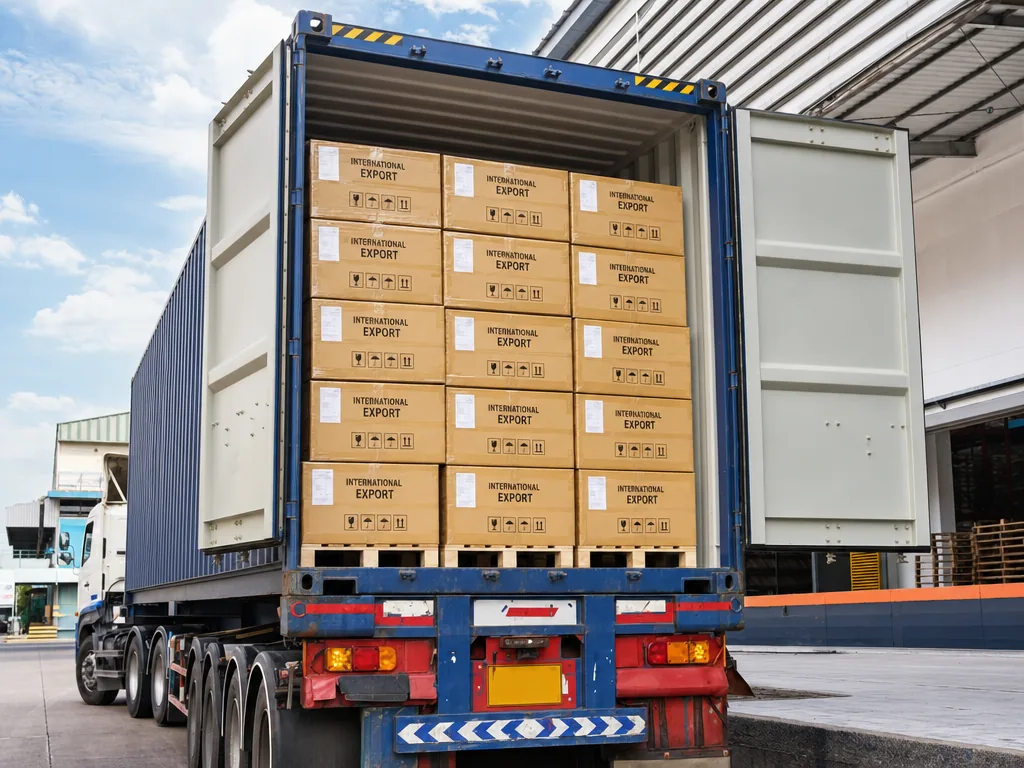
Every week, our sales team answers detailed questions about custom hats for corporate, business and branded merchandise programs (2026 update). We wrote this guide so that wholesalers, streetwear brands, corporate buyers and promotional resellers can compare options with full information, and avoid the traps that show up only after production has started.
The four corporate-cap use cases that drive most procurement budgets
Most procurement teams fund custom business hats in four spend buckets because the use case changes the spec, the decoration method, and the acceptable defect rate. Trade-show giveaways are the cheapest and most brutal: 500 to 10,000 pieces, usually capped around $3.20 to $5.80 FOB for a 5-panel foam trucker or basic 6-panel twill cap, with the landed-cost target fixed before trims are discussed. For these runs, visibility beats craft. A 5,000 to 8,000 stitch flat embroidery, a single-color screen print, or a woven patch usually gives the best return, while anything with gradients, microtext under 4 mm cap height, or linework below 0.8 mm is asking for unreadable decoration. Keep the build simple: 160 to 220 gsm poly-foam truckers or 180 to 240 gsm brushed cotton twill, one logo location, standard plastic snapback, no extra seam work.
Uniform and employee issue sits higher on the budget curve because the cap has to survive sweat, UV, daily handling, and the occasional hot wash. For retail staff, brewery crews, field technicians, and sales teams, the safer spec is 260 to 300 gsm cotton twill, washed chino, or 110 to 140 denier performance polyester, plus a sweatband that does not collapse after repeated wear. Decoration needs abrasion resistance, which is why 3D embroidery, twill appliqué, or molded PVC/rubber patches usually outlast cheap heat transfers. Matching matters too: if the buyer calls for corporate navy or brand red, the fabric should be approved against Pantone TCX and the thread should hold within a realistic Delta-E window, or the first replenishment lot will look off next to the original issue. For this category, AQL 2.5 final inspection is the baseline, not an upgrade; replacing 2,000 mismatched caps already sent into a branch network costs more than catching the drift at packing.
Client gifting and conference merchandise are the two premium-facing buckets, but they should not be engineered the same way. Gift-tier custom business hats need visible value the moment the carton opens: 30/70 wool blends, peach-finish cotton, recycled nylon, suede-touch microfiber, genuine leather straps, antique-brass buckles, and properly digitized embroidery for Tajima, Barudan, or ZSK heads. On curved front panels, slowing the machine from roughly 850 stitches per minute to 650 to 700 spm reduces edge pull and registration drift, especially on dense logos. Packaging matters almost as much as the cap itself; a kraft gift box, printed belly band, or custom hangtag with care instructions will often outperform another decoration layer. Conference runs are different again: they need frictionless distribution, wide fit tolerance, and ventilation. Adjustable snapbacks, hook-and-loop closures, mesh backs, laser-perforated side panels, and 120 to 160 gsm performance shells keep rejection rates low and carton cube manageable when 5,000 pieces have to move fast.
Pricing tiers by corporate use case
For high-volume giveaways, decoration time and finishing labor move the quote more than cap silhouette. In current 2026 buying terms, entry-tier custom business hats for trade shows usually price at $2.10-$3.70 FOB China at 2,000-5,000 units, whether you use a foam trucker or a basic 6-panel promo cap. A typical spec is 5 mm polyester foam front, 100% polyester mesh back, PVC snap closure, stock black sweatband, and one-location flat embroidery capped at 5,000-6,000 stitches. That assumes standard open-back digitizing, no applique or inside taping print, no woven flag label, and bulk export packing with individual polybag. On Tajima or Barudan machines, every extra thread change, trim operation, and minute of run time matters more than buyers expect. Cut the order to 300-500 pieces and the same hat often rises 20%-30% because digitizing, sample approval, carton setup, inline QC, and final inspection labor do not scale down cleanly. The hidden cost in giveaway programs is control, not fabric. If procurement wants Pantone TCX alignment within commercial tolerance, cleaner underlay to reduce edge pull, custom stickering, barcode application, or pre-assorted pack-out by event kit, the unit price climbs fast because those are touch points. Even simple requests like retail-style curved visor consistency or logo placement tolerance within plus or minus 2 mm add handling and rejection risk. Our standard practice is to quote these separately so buyers can see whether they are paying for material, machine minutes, or downstream packing labor.
Employee wear programs sit in a different bracket because comfort and repeatability matter more than the absolute floor price. A realistic mid-tier range is $4.40-$6.20 FOB at 500-1,500 units for 280-320 gsm chino cotton, brushed twill, or cotton-poly twill with structured 6-panel construction, pre-curved PE visor board, woven loop label, and 8,000-12,000 stitches of multicolor embroidery. This is where custom business hats start behaving like uniform product rather than event swag: firmer buckram, more stable crown profile, seam allowance control closer to 3-4 mm, and sweatband attachment that holds up after repeated wear and light washing. Buyers should also expect cleaner embroidery on ZSK, Tajima, or Barudan heads, especially on small corporate text where poor digitizing shows immediately. For client gifts, executive off-sites, and branded merchandise programs, budgets usually land around $7.20-$11.80 FOB at 300-1,000 units, sometimes higher if presentation packaging is part of the brief. Materials move up to recycled nylon, peach-finish cotton, suede-touch microfiber, or performance fabric with a TPU or leatherette patch, often combined with 3D puff plus flat embroidery. At this level, the right controls are non-negotiable: Pantone-approved lab dips or strike-offs, AQL 2.5 final inspection, carton drop protection, and written tolerance for logo placement, visor curve, and patch centering. End users notice a 2 mm patch shift, a twisted crown, or a dented FSC-certified mailer long before they notice that you saved $0.18 per unit.
Logo decoration that reads at giveaway distance
If a logo disappears at 10 to 15 feet, the cap has already failed as merchandise. On custom business hats, the front hit that performs most consistently is still flat embroidery, typically 85 to 100 mm wide on a structured 6-panel crown, digitized for legibility rather than strict brand-book fidelity. I generally push buyers to strip the art down to one dominant wordmark or symbol, with satin columns no narrower than 1.2 mm, clean negative space, and internal knockouts kept above 1.5 mm; below that, they start closing after pull compensation and underlay are added. Thin outlines are another common mistake. They may survive on a vector proof, but once they run over the center seam or onto buckram with heavy curvature, they fragment visually and read as fuzz from giveaway distance.
Readability is governed as much by stitch engineering as by artwork. On 260 to 300 gsm cotton twill or brushed chino, front logos in roughly the 6,000 to 9,500 stitch range usually hold shape without tunneling, edge curl, or crown distortion; push density too hard on lighter shells and the embroidery starts fighting the fabric. Tajima and Barudan heads will repeat detail accurately, but they will not rescue bad digitizing, poor sequencing, or tonal logos with weak separation. For most custom business hats used at conferences, distributor programs, or employee kits, one high-contrast thread color on an opposing crown color will outperform a three-color corporate mark every time, especially under mixed lighting where rayon and polyester sheen can shift by viewing angle. Our standard practice is to approve sew-outs on the actual shell, then check visibility at 3, 4, and 5 meters under daylight and trade-show LEDs before bulk release. If the mark is not obvious in motion, simplify it, enlarge it, or cut elements until it reads instantly.
MOQ and lead time for corporate programs
For most corporate programs, the practical MOQ is 100 pieces per colorway, not 100 pieces total. A 300-piece order split into 100 black, 100 khaki, and 100 stone is three separate production runs: different fabric pulls, cutting bundles, line scheduling, and carton sorting. On custom business hats, one embroidery file does not mean one MOQ. The digitizing can be shared, but each shell color still needs shade approval, trim matching, and its own QC record. If you mix washed cotton twill, heather polyester, and white performance fabric under one PO, expect separate dye-lot control and separate inspection notes. Zhejiang factories will usually accept small color splits only when the body fabric is stock-supported and the closure, sweatband, visor board, and thread spec stay unchanged. Once you change crown fabric plus closure type, MOQ stops being a sales talking point and becomes a real production constraint.
Mixed-color corporate orders are common, but they are not cheap to run. A layout like 200 navy, 100 red, and 100 white usually carries one embroidery digitizing charge if logo size and stitch count stay fixed, but production still books separate cutting markers and often separate color approvals. White caps are the headache piece because topstitching, backing show-through, and thread opacity are less forgiving than on dark shells. For Pantone-sensitive work, we match embroidery thread to Pantone TCX references and keep bulk fabric control tight, usually targeting Delta-E under 2.0 on approved swatches. That is the level that keeps custom business hats from looking off under retail lighting or on a tradeshow floor. A factory that knows what it is doing flags split-color risk before sampling, not after the bulk is already on the line.
Lead time is usually 22 to 28 calendar days for bulk production after sample approval and deposit, plus 7 to 12 days for air or courier transit, so procurement teams should budget 50 to 60 days door-in to their warehouse. The gap is approvals, booking windows, export paperwork, customs clearance, and destination handling, not sewing time. If the order needs woven labels, inside seam taping, retail polybags with barcode stickers, or carton marks by department, add a few days because those are packing-line constraints. Our standard practice is inline and final inspection to AQL 2.5; label errors, carton assortment mistakes, and shade issues can block shipment just as easily as stitch defects. For business launches, the safe move is simple: lock artwork early, freeze fabric and thread colors before sampling, and keep at least one week of buffer for freight delays or customs exams.
Compliance for client gifting in regulated industries
In banking, pharma, insurance, and public-sector gifting, supplier approval usually fails before artwork is even opened. Procurement wants a current sedex-audit-cap-supplier-guide.html">BSCI 2.0 audit or Sedex SMETA 4-Pillar report dated within the last 12 months, and they check whether the audited scope covers the exact site doing cutting, sewing, embroidery, packing, and any subcontract washing or heat-transfer work. For custom business hats, the common disqualifiers are not subtle: no needle-control log on Tajima or Barudan embroidery lines, incomplete payroll and timecard records, missing fire-drill documentation, poor chemical segregation, and no subcontractor register linking outside processes back to the PO. A certificate PDF by itself does not clear legal or vendor-risk review. Buyers want traceability from greige fabric receipt to final carton sealing, with lot records, inline QC reports, corrective-action closure, and packing lists that tie back to the approved style number. Our standard practice is to keep audit reports, CAP files, bank verification, and site-specific process maps ready because regulated clients often request all of it before releasing a first order.
Compliance-sensitive gifting programs usually break on labeling and claims, not on sewing quality. If the shell is 100% cotton twill at 270 gsm but the sweatband is 65/35 poly-cotton and the buckram is polyester, the fiber declaration has to match the real bill of materials; vague “cotton cap” language gets rejected by legal teams fast. U.S.-bound programs tied to hospital systems, financial institutions, or field reps typically require permanent country-of-origin marking plus manufacturer or importer identity and care/content labeling that survives rebagging at a 3PL. A removable hangtag is weak control because it disappears during kitting. The safer spec is a woven main label and a printed satin or nylon care/content label sewn into the sweatband seam. If the program calls for RPET, PVC-free closures, or azo-free dyes, those claims should be locked on the PO and backed by mill declarations, test reports, or transaction certificates, then verified during inline and final inspection to AQL 2.5. The cleanest custom business hats are the ones where audit scope, label copy, material file, carton marks, and the shipped cap all match without exceptions.
Repeat-order economics for annual corporate programs
The real savings in annual programs come from engineering stability, not beating a factory up for another $0.03 on CMT. For custom business hats, buyers who can commit to a credible 12-month schedule—typically 2,400 to 5,000 units split across quarterly releases—usually cut true landed cost by 8% to 15% versus placing four unrelated POs. That only works if the spec stays locked: same crown height, buckram weight, visor board, closure type, sweatband, seam tape, decoration method, and retail pack-out. Keep the fabric family stable—210 gsm brushed cotton twill, 300D cationic polyester, or 228T nylon taslon—and approve color by Pantone TCX with a defined Delta-E tolerance. Then the mill can hold greige or reserve dyed lots instead of forcing spot buys, which routinely add 5% to 9% after Lunar New Year or during Q3-Q4 promo congestion. The less visible gain is administrative: once the embroidery program, patch mold, barcode logic, carton dieline, and carton pack ratio are approved, nobody has to rebuild them every release, and that is where a lot of avoidable errors die.
Setup amortization is the easiest repeat-order math to prove. A first run often absorbs $25 to $60 for embroidery digitizing, $80 to $150 for woven label development, $120 to $300 for PVC or molded rubber patch tooling, plus DHL charges for strike-offs, fit samples, and PPS approvals. Spread those fixed costs over a 3,000-piece annual plan and you typically remove $0.20 to $0.50 per cap before freight. Floor efficiency improves too. When operators are running a known Tajima, Barudan, or ZSK file with approved thread tensions, underlay, and pull compensation already tuned for small text, stoppages drop and logo placement variance tightens from batch to batch. Our standard practice is to lock labor, core trims, approved construction, decoration spec, and QC protocol for 12 months, while treating freight, duty, and specialty-fabric surcharges as floating items. For corporate identity programs, put the controls in writing: retained master sample at the factory, Delta-E under 1.5 on critical grounds, and final inspection to AQL 2.5 major / 4.0 minor. Mixed-spec inventory and reapproval delays cost more than almost any negotiated unit-price concession.
Packaging that protects the brand-impression
Packaging is where custom business hats keep their perceived value or get downgraded to disposable promo stock before anyone opens the box. For trade shows, the right answer is boring: one cap per 0.04-0.05 mm LDPE or PE self-seal bag, sized to protect the crown without trapping excess air, then 50 or 100 pieces per 5-layer K=K corrugated master carton. Use carton specs that match the route, not a showroom fantasy: 32 ECT is fine for short domestic runs, but export cartons often need 44 ECT or better if pallets are stacked high. Add a flat size sticker, style/color carton mark, and a clean carton pack list so receiving teams can move 2,000 units in one morning without opening random boxes. This packaging usually adds $0.03-$0.08 per cap, which is cheap compared with crushed buckram fronts, warped sandwich brims, and the labor cost of resorting or local rework.
Employee programs need more discipline because the package has to look deliberate without drifting into gift-box waste. For onboarding kits, field sales uniforms, or distributor issue, polybag plus a branded hangtag usually gives the best cost-to-impression ratio. A 350 gsm C1S hangtag with matte lamination, 4-color print, QR code, and a matched satin string generally lands around $0.08-$0.18 each, depending on quantity and die-cut complexity. Keep packaging under about 8-10% of ex-factory cap cost; once it climbs above that, you are paying for disposal, not brand value. The floor detail that matters is friction: rough tag edges, oversized metal eyelets, and stiff string can scuff brushed cotton twill, snag mesh backs, or leave pressure marks on lightweight polyester when cartons are packed tight. CrownsForge checks packaging print against Pantone references and rejects obvious color drift; if the box navy and embroidery navy are visibly different, buyers notice immediately.
Client gifting is the one case where premium pack-out earns its money, but only if the structure protects the cap instead of just looking expensive. For executive mailers or partner kits, a rigid or semi-rigid FSC-certified paper box with tissue wrap, branded closure label, and a 250-300 gsm insert card gives branded merchandise hats a retail-grade arrival. Real cost is usually $0.70-$1.80 per unit, depending on board caliper, print coverage, insert design, and whether the cap ships fully shaped or slightly nested to cut DIM weight. On a $6.50-$9.00 cap program, that puts packaging at roughly 15-20% of total unit cost, which is acceptable for low-volume, high-visibility recipients. Ask for carton drop-test results, paper certification, and tissue pH spec; acidic tissue can mark light sweatbands, and weak box corners let crowns deform in courier networks. If color consistency matters, specify Pantone references and a Delta-E tolerance of 2.0 or tighter for the box, insert, and logo so the package does not look like three unrelated jobs.
Frequently Asked Questions
What logo decoration techniques do you offer?
3D puff embroidery, flat embroidery, woven patch, leather patch, PVC patch, screen printing, sublimation, applique and laser etching, all in-house with no subcontracting.
Can I order a sample before bulk production?
Yes. We strongly recommend approving a pre-production sample before mass production. Samples are charged at 35 to 60 USD each plus express shipping, fully refundable against confirmed bulk orders over 500 pieces.
What is the minimum order quantity (MOQ) for custom hats?
Our standard MOQ is 100 pieces per design and color, with sampling available from 1 piece. For complex multi-color logos or premium fabric upgrades, the MOQ can be lowered with a small per-piece surcharge.
How long does production take?
Sampling takes 7 to 12 days. Bulk production runs 20 to 30 days depending on quantity, fabric availability and decoration complexity. Inspection and packing adds another 3 to 5 days before shipment.
What file format should I send for my logo?
Vector files (AI, EPS, PDF) are ideal. High-resolution PNG or JPG at 300 dpi on transparent background works as a fallback. Provide Pantone color references for accurate reproduction.
What's the MOQ for custom embroidered baseball caps no minimum?
When evaluating custom embroidered baseball caps no minimum, the key considerations are construction quality, decoration capability, MOQ flexibility and lead time. Conference and tradeshow caps need logos readable from 10-15 feet (so attendees see the brand on others wearing it). Use 8-10 cm wide flat embroidery, simple monochrome colorways, bold sans-serif logo treatments. Avoid intricate emblems that disappear at distance. Tradeshow caps: standard polybag, fast distribution. Employee swag: polybag + branded hangtag with company URL.…
What's the MOQ for custom trucker hat no minimum?
When evaluating custom trucker hat no minimum, the key considerations are construction quality, decoration capability, MOQ flexibility and lead time. Tradeshow giveaway: $2-$4 per cap (polyester foam-front trucker, 1-color flat embroidery, polybag packaging). Employee swag: $4-$6 per cap (cotton twill 6-panel, multi-color embroidery, polybag + hangtag). Client gift: $7-$12 per cap (premium fabric, leather patch or 3D embroidery, FSC box, branded sticker). Conference merchandise: $4-$7 per cap (variants of the above based…
What's the MOQ for custom embroidered trucker hats no minimum?
When evaluating custom embroidered trucker hats no minimum, the key considerations are construction quality, decoration capability, MOQ flexibility and lead time. Tradeshow giveaway: $2-$4 per cap (polyester foam-front trucker, 1-color flat embroidery, polybag packaging). Employee swag: $4-$6 per cap (cotton twill 6-panel, multi-color embroidery, polybag + hangtag). Client gift: $7-$12 per cap (premium fabric, leather patch or 3D embroidery, FSC box, branded sticker). Conference merchandise: $4-$7 per cap (variants of the above based…
How does ordering baseball cap custom logo work?
When evaluating baseball cap custom logo, the key considerations are construction quality, decoration capability, MOQ flexibility and lead time. Tradeshow giveaway: $2-$4 per cap (polyester foam-front trucker, 1-color flat embroidery, polybag packaging). Employee swag: $4-$6 per cap (cotton twill 6-panel, multi-color embroidery, polybag + hangtag). Client gift: $7-$12 per cap (premium fabric, leather patch or 3D embroidery, FSC box, branded sticker). Conference merchandise: $4-$7 per cap (variants of the above based…
Looking for a reliable hat manufacturer in China?
CrownsForge has produced custom hats for 800+ brands across 40 countries. From 100-piece launches to 100,000-piece retail programs, we deliver on time and on spec.
Get in touchRelated guides
Mesh Caps Wholesale: Trucker Cap Manufacturing Specifications and Pricing (2026 Update)
Read article →
Festival Bucket Hats Decoration QC Checklist for Custom Hat Buyers
Read article →
Blank Trucker Cap Wholesale Bulk: A 2026 B2B Sourcing Guide
Read article →Sourcing custom hats does not have to be complicated. With the right manufacturing partner, clear specifications and a small upfront investment in sampling, you can launch a retail-quality product in 30 to 45 days.