
Cap Packaging Options: Retail-Ready, Hangtag, Polybag & Custom Boxes - Supplier Checklist
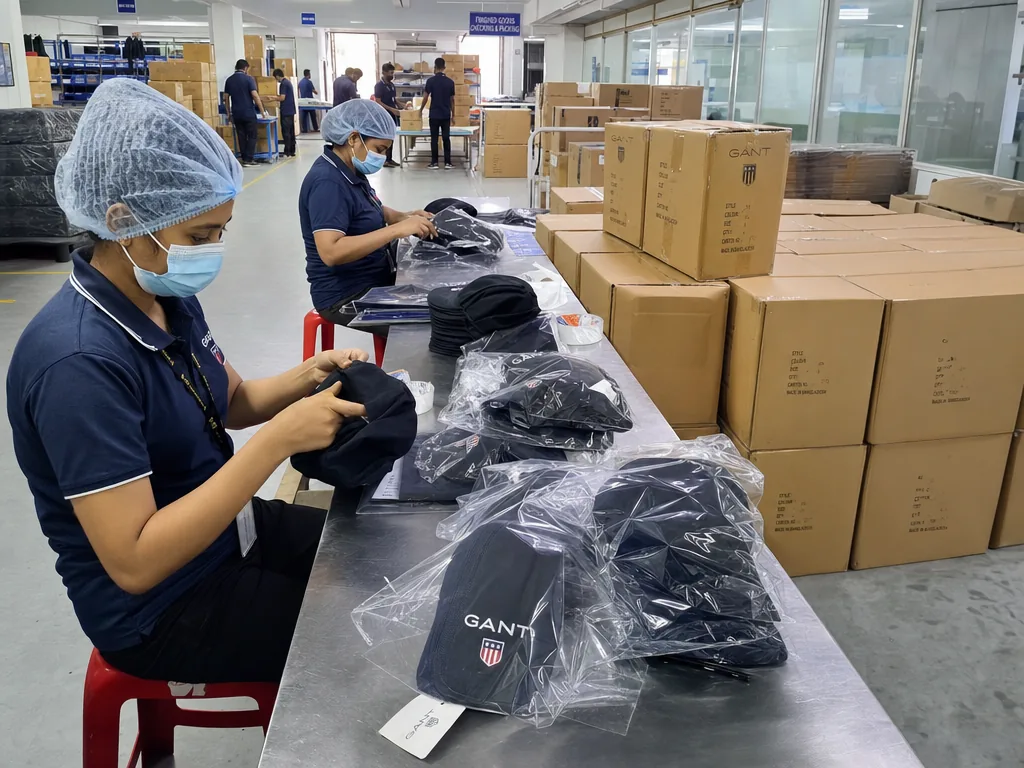
For brand owners, wholesalers and procurement teams entering the custom headwear category, cap packaging options: retail-ready, hangtag, polybag & custom boxes - supplier checklist is one of the highest-leverage decisions you will make. Get it right and your unit economics, retail story and reorder cycle all improve. Get it wrong and you carry the cost for years.
Why packaging is part of the product
Buyers place a cap in a price tier before they ever touch the crown, which is why cap packaging belongs on the BOM and PPS checklist, not buried in the shipping note. On a retail peg, packaging has about three seconds to signal “licensed team,” “streetwear premium,” or “budget promo,” and the difference is usually obvious in the details. A 350 gsm C2S hangtag with sharp die-cut edges, Pantone-matched offset print held to Delta-E 2.0 against the approved TCX reference, and a 15 mm kimble or nylon loop through the sweatband label reads clean and intentional. A 250 gsm card clipped through an eyelet usually reads cheap and often damages the panel seam. The same principle applies to barcode placement, suffocation warning copy, and header-card orientation: if the UPC quiet zone is too tight, the warning text misses Canada bilingual requirements, or the header torque bends the visor on display, the cap already looks mishandled before sell-through starts.
Packaging failures create more chargebacks than many new buyers expect because retailers judge presentation and compliance at the same level as sewing quality. I have seen good caps rejected for cracked hangtag scores, size stickers applied off-center on the visor, and polybags missing the required French warning text for Quebec distribution. Our standard practice is to lock packaging approvals at PPS with embroidery strike-offs, woven labels, and care labels, then inspect packaging under the same AQL 2.5 final audit as the cap itself. For chain retail, cap packaging needs measurable checkpoints: cardstock tolerance within plus or minus 5 percent gsm, print rub resistance after 20 cycles dry rub, adhesive performance across 5–40°C, and signed pack-out photos before mass production. Repacking 8,000 units after final inspection can easily cost US$0.35–0.80 per cap in labor, replacement materials, and warehouse delay, which is far more painful than specifying the packaging correctly upfront.
For e-commerce and export, cap packaging is also a protection system, not just a branding surface. A standard 0.04 mm LDPE polybag keeps dust off but does almost nothing against compression, so structured 6-panel caps, foam truckers, and high-profile snapbacks are vulnerable if carton height or pack ratio is wrong. Overfilled masters flatten buckram, set memory creases into visor edges, and can permanently deform foam fronts during a 25- to 35-day ocean transit. For DTC orders, I usually call for an E-flute or B-flute corrugated mailer at 32 ECT with crown-support tissue or a recycled PET insert; that typically adds only US$0.28–0.65 per cap depending on print coverage and MOQ, far cheaper than a return, reshipment, and one-star review. The weak point is usually material interaction in transit: heavy-ink printed polybags can scuff or offset if corona treatment is poor, and sealing bags too soon after heat transfer or screen print curing traps odor and can ghost ink onto white mesh. A proper checklist should specify bag thickness in microns, vent-hole count, carton pack ratio, support method, and mailer drop-test standard.
Hangtags — material, print, attachment
Hangtags are the cheapest part of cap packaging, but they only look deliberate when the spec is tight. For retail work, 350 to 600 gsm board is the normal band: 400 gsm C1S art board for crisp offset detail, 450 to 500 gsm natural kraft when the brand wants an earthy retail signal, and 350 gsm recycled board when the sustainability story has to survive scrutiny. In production, the tag needs stiffness, edge-crack resistance, and rub performance, not just a clean mockup. Soft-touch lamination reads premium but scuffs fast on dark headwear; uncoated stock fingerprints less, yet it usually lowers contrast and shifts fine type. The practical question is not whether the tag looks good on a screen, but whether it still looks deliberate after packing, hanging, and shelf handling.
Print method should follow run size and artwork complexity. Offset is the better choice above roughly 3,000 to 5,000 pieces because it gives tighter Pantone matching and cleaner microtype; digital is the sensible route for short runs, variable SKUs, or buyers who keep changing assortment details. On a calibrated press, Delta-E 2 to 3 on coated board is a realistic target if the proof is approved and ink limits are locked. Foil stamping and blind embossing are not decorative extras in premium cap packaging; they create real tactile separation for logos on baseball caps, golf caps, and streetwear drops. For metallics, check the die line and foil matrix on a physical proof, because foil fill, registration, and emboss depth always move once the job hits actual board.
Attachment fails more often than print. Basic string is fine for low-cost programs, but a heat-cut polyester loop or cotton cord with a clean tag-gun barb holds better through packing, replenishment, and retail handling. For trucker caps and mesh-backed styles, keep the tag compact, usually no larger than 50 x 90 mm, because oversized tags curl, catch on mesh, and tear before the buyer touches the cap. If the order also includes polybag printing or custom shipping boxes, keep the same Pantone references across the tag, insert card, and carton so the set does not drift under store LEDs. Our standard practice is to confirm hole position, loop length, and carton pack-out on the preproduction sample, because those small choices decide whether the cap packaging survives the warehouse or gets trashed before it reaches the floor.
Polybag options
Plain LDPE is still the safest cap packaging for export bulk orders because it tolerates compression, humidity swings, and rough carton handling better than most alternatives. At 10,000 units, a clear LDPE bag in 1.5-2.0 mil usually costs $0.02-$0.05 per cap, but the film price is not the part that causes claims. The real failure points are wrong dimensions, poor venting, and retailer noncompliance on suffocation warnings. A soft unstructured dad cap will usually fit a 280 x 280 mm bag, while a high-crown 5-panel trucker with a curved brim often needs 300 x 320 mm and, in some cases, a 40-50 mm bottom gusset so the front panel does not get crushed under carton stack pressure. For U.S. programs, I treat vent holes and warning copy as approval items, not afterthoughts, because major retailers often require their own exact wording, font size, or placement before packaging sign-off.
Film consistency matters more than buyers expect. Low-grade LDPE with uneven gauge or poor slip additive will haze, block, or drag against the visor edge during packing, especially when operators are inserting 40-60 caps per hour on a line. If caps go into polybags before the sweatband, seam tape, or buckram has fully dried after sewing and steam shaping, trapped moisture can turn into odor complaints or light mildew spotting by the time the container reaches Long Beach or Rotterdam. My baseline check is simple: verify thickness with a micrometer, test heat-seal strength, and run a packed-carton drop test from 760 mm on edge and corner. We also size the bag mouth to the closure type; metal tri-glides, brass buckles, and plastic snapbacks regularly snag thin film during insertion, which creates tiny tears that are easy to miss in-line but obvious at final AQL 2.5 inspection.
Frosted PE is the practical step up when the buyer wants cleaner-looking cap packaging without paying for a full retail-ready presentation. A matte PE bag at 0.06-0.08 mm generally runs $0.05-$0.09 each depending on zip closure, one-color flexo print, euro hole, and barcode label application. The finish hides dust, loose threads, and minor oil transfer better than clear film, which matters for e-commerce prep and marketplace fulfillment where units are handled multiple times before delivery. For foam-front truckers, I usually prefer a zipper format because it keeps the cap from sliding out while still allowing QC to confirm mesh color, front-panel symmetry, embroidery placement, and visor shape without reopening every piece. Compostable film needs a much stricter risk discussion. PLA or starch-blend bags can support a sustainability brief, but in South China summer conditions above 70% RH they are noticeably weaker on puncture resistance, seal stability, and storage life than conventional PE. I do not recommend them for long ocean transit unless the buyer accepts a 6-12 month shelf-life window and a higher failure rate; pricing is also materially higher at around $0.08-$0.18 per bag. If the bag also carries EAN/UPC, FNSKU, recycled-content marks, or retailer warning copy, lock all artwork before plate making. Re-cutting a polybag plate after approval is a small packaging change that routinely adds a few hundred dollars and can push ex-factory by 2-4 days.
Sticker, sticker pack and dust-bag options
Brim stickers are cheap, but they create a disproportionate share of avoidable cap packaging defects. The standard visor decal is a 38-45 mm round PP or PET sticker with acrylic adhesive; if peel strength gets much above 12-16 N/25 mm, you start seeing fiber lift on brushed cotton twill, glue shadowing on peach-finish suede, and edge curl after 60-90 days in carton storage. Placement tolerance should be written into the spec, not left to packer judgment: on metallic foil or hologram film, more than 3 mm off the visor centerline looks fake at retail. Foam-front truckers are even less forgiving. When caps are stacked under compression, a pre-applied sticker can print through the foam and leave a pressure ring that does not fully recover, especially on 5 mm laminated fronts. For retail programs, a sticker pack is usually safer than pre-applying anything to the hat. The most practical format is a kiss-cut sheet with four labels: EAN/UPC, brand mark, size or fit callout, and an authentication or limited-drop seal. That gives the retailer flexibility and keeps adhesive off decorated panels, screen-printed trucker fronts, and heat-transfer logos. If the label stock is silver, chrome, or holographic, require a 40°C aging test for 72 hours, then a peel and residue check after conditioning. At CrownsForge, we lock sticker substrate, adhesive type, and a placement photo standard at PP sample stage; by final inspection, misapplied stickers are rework-heavy and often damage the visor surface during removal.
Dust bags only earn their place in cap packaging when the product value and finish justify the added handling cost. For wool-blend snapbacks, 8 wale corduroy, suede, or 280-300 gsm brushed cotton twill, a 150D-210D polyester bag or 8 oz cotton canvas bag prevents abrasion and stops metal buckles, side embroidery, and visor trims from scuffing adjacent crowns in transit. Size matters more than most buyers realize: the bag opening should be at least 20 mm wider than the packed crown width, or operators will force the cap in, flatten the front panel, and distort the visor curve. For bag branding, screen print is still the lowest-cost option, but once logo strokes drop below about 1.2 mm or serif text gets small, a woven label gives a cleaner edge and survives repeated handling better. The checklist here should be technical, not decorative. Fix the dust-bag fabric spec, color reference, and attachment method before bulk: Pantone TCX for dyed fabric, Pantone C for printed ink, and Delta-E under 1.5 on dark brand colors where warm-black shift is obvious. If the cap also carries a hangtag, a nylon swift tag through the sweatband label is safer than tagging through eyelets or crown seams, which can leave stress marks or distort panel shape. If the dust bag sits inside a printed polybag, specify that printing remains on the outer poly only and verify full ink cure; in humid Zhejiang summer shipments, flexo or offset ink transfer onto light-colored fabric is still a real problem. These points are cheaper to control at PP approval than to sort later under AQL 2.5 final inspection.
Shipping cartons
Shipping cartons are the last line of protection in cap packaging, so the carton spec should be fixed when the style is approved, not after production starts. For export work, the pack count usually lands at 25, 50, or 100 caps per master carton, but the real variable is cap geometry: a low-profile cotton twill dad cap tolerates a denser pack than a 5-panel trucker with a foam front, buckram, and raised embroidery. For mixed freight, I would start with double-wall corrugated, typically 5-ply C-flute with an ECT rating around 32 to 44, then step down to single-wall only on short domestic routes with controlled handling. If the carton is too tight, you get brim warp, flattened front panels, and tape failure; if it is too loose, the caps migrate and scuff each other during vibration and pallet movement.
Carton marks need to be operational, not decorative: style code, color, size range, PO number, quantity, carton number, and gross/net weight are the fields that matter to warehouse teams, freight forwarders, and customs. That is the minimum needed to keep one PO with multiple SKUs from getting mixed at packing or destination receiving. In cap packaging, buyers often spend time on hangtags and polybags and leave the shipping carton vague, which is where avoidable mistakes start. Our standard practice is FSC-certified corrugated when the brief calls for it, with water-based flexo printing to avoid solvent odor and ink offset in humid transit. FSC is not a branding exercise; it is a procurement signal that the carton material source is traceable and the spec can be repeated on the next order.
For branded programs, ask for carton test data before production, not after the shipment has already failed in QC. A practical export carton for caps should be able to hold stacking loads in the 12 to 18 kg range for typical retail orders, with the supplier able to show edge crush and burst values instead of saying the box is strong enough. If the order also includes printed polybags, custom hangtags, or insert cards, lock the carton dimensions early so pack count, inner count, and pallet pattern all line up. The carton is not the place to improvise. It is where you prevent crushed bills, scuffed embroidery, and repack labor at destination, and where the cap packaging plan either holds together through container vibration and warehouse handling or falls apart on arrival.
Sustainable packaging upgrades
The cleanest sustainability gain in cap packaging is usually switching from virgin LDPE to a controlled recycled-content film, not chasing a compostable claim that cannot survive export handling. For standard cap packaging, 30 to 50 micron PCR PE is the practical band, with 30% to 100% post-consumer recycled content depending on seal integrity and clarity requirements; once you go under 30 micron, puncture resistance drops fast when cartons scuff in transit. PLA/PBAT bags can work for short domestic programs, but they haze, crease, and lose seal strength in hot warehouses, especially above 30 C and 70% RH. If the bag is printed, keep ink coverage under 25% of the face, avoid flood coats, and confirm the ink system is compatible with recycling or composting claims. Buyers also need REACH and California Proposition 65 declarations for the film, ink, and adhesive, not just the hat body, because packaging noncompliance is what usually gets missed in document packs.
Recycled paper formats are more dependable than glossy green language on plastic, and they read cleaner at retail. A 300 to 350 gsm FSC-certified folding carton is enough for premium snapbacks and fitted caps, while E-flute or B-flute mailers with 60% to 80% recycled fiber usually give the best balance of crush strength, board cost, and printability. Kraft stock will shift color because it absorbs ink, so specify Delta-E under 3.0 against the approved Pantone reference instead of asking for a visual match. Box dimensions should come from the actual packed cap height, closure style, and insert thickness, then be checked with compression and drop testing to at least the equivalent of ISTA 1A. Our standard practice is to confirm transit fit before artwork release, because correcting a 2 mm box error is harder than fixing a weak print file.
Soy-based inks help, but only as part of the full print system; they are not a sustainability credential by themselves. On hangtags, they work best on uncoated kraft or textured stock when total ink coverage stays modest and the layout uses one or two spot colors instead of dense full-bleed artwork. On polybags, resin grade, curing, and adhesion matter more than the ink label, and water-based flexo usually behaves better on recycled film than weak UV systems that crack or scuff. For cap packaging tied to decorated hats, keep the packaging color approval aligned with the cap decoration standard, whether that is Pantone TCX for fabric, coated Pantone for print, or a measured production target. The lowest-risk spec is the one that combines recycled paper, fewer laminate layers, clear disposal labeling in the destination language, and a print file that does not force extra varnish or over-inking to mask substrate flaws.
Frequently Asked Questions
What logo decoration techniques do you offer?
3D puff embroidery, flat embroidery, woven patch, leather patch, PVC patch, screen printing, sublimation, applique and laser etching, all in-house with no subcontracting.
Do you support sustainability certifications?
Yes. We work with GOTS organic cotton, GRS-certified recycled polyester, OEKO-TEX Standard 100 fabrics, and are BSCI and Sedex audited. Certification documentation can be provided per order.
What is the minimum order quantity (MOQ) for custom hats?
Our standard MOQ is 100 pieces per design and color, with sampling available from 1 piece. For complex multi-color logos or premium fabric upgrades, the MOQ can be lowered with a small per-piece surcharge.
How long does production take?
Sampling takes 7 to 12 days. Bulk production runs 20 to 30 days depending on quantity, fabric availability and decoration complexity. Inspection and packing adds another 3 to 5 days before shipment.
Can I order a sample before bulk production?
Yes. We strongly recommend approving a pre-production sample before mass production. Samples are charged at 35 to 60 USD each plus express shipping, fully refundable against confirmed bulk orders over 500 pieces.
How does ordering custom made trucker hat work?
When evaluating custom made trucker hat, the key considerations are construction quality, decoration capability, MOQ flexibility and lead time. First retail impression, unboxing experience, e-commerce protection. Coated paper, kraft, recycled board; offset vs digital print; gold-foil and embossing.
How does ordering baseball cap embroidered custom work?
When evaluating baseball cap embroidered custom, the key considerations are construction quality, decoration capability, MOQ flexibility and lead time. First retail impression, unboxing experience, e-commerce protection. Coated paper, kraft, recycled board; offset vs digital print; gold-foil and embossing.
How does ordering custom embroidered trucker hats work?
When evaluating custom embroidered trucker hats, the key considerations are construction quality, decoration capability, MOQ flexibility and lead time. First retail impression, unboxing experience, e-commerce protection. Coated paper, kraft, recycled board; offset vs digital print; gold-foil and embossing.
How does ordering custom made hats for men work?
When evaluating custom made hats for men, the key considerations are construction quality, decoration capability, MOQ flexibility and lead time. First retail impression, unboxing experience, e-commerce protection. Coated paper, kraft, recycled board; offset vs digital print; gold-foil and embossing.
What is cap packaging?
Controlled atmosphere packaging (CAP) is defined as a method where a specific gas or mixture of gases is established within a package after removing air, and this gas composition is maintained throughout the package's shelf life.
How do you package a cap?
Whatever your packing looks. Like. I promise you it will all fit. And then you put over here and then fill in as needed.
What does cap stand for in food packaging?
CAP " controlled atmosphere packaging ": a packaging method in which selected atmospheric concentrations of gases are maintained throughout storage in order to extend product shelf life. Gas may either be evacuated or introduced to achieve the desired atmosphere.
Ready to start your custom hat project?
Send us your tech-pack, sketch or even just an inspiration photo. We will respond with a detailed quotation and digital mock-up within 24 hours.
Request a free quoteRelated guides

Acrylic Beanie: Properties, Costs and How to Spec It Right
Read article →
Custom Hat Design: The 2026 Sourcing & Manufacturing Playbook
Read article →
Bucket Hat Corduroy Retail Packaging Guide for Custom Hat Buyers
Read article →We hope this guide demystifies cap packaging options: retail-ready, hangtag, polybag & custom boxes - supplier checklist and helps you move forward with confidence. If you have questions specific to your project, our English-speaking sales engineers are one message away.