
Cap Packaging Options: Retail-Ready, Hangtag, Polybag & Custom Boxes - 2026 Buyer's Guide
For brand owners, wholesalers and procurement teams entering the custom headwear category, cap packaging options: retail-ready, hangtag, polybag & custom boxes - 2026 buyer's guide is one of the highest-leverage decisions you will make. Get it right and your unit economics, retail story and reorder cycle all improve. Get it wrong and you carry the cost for years.
Why packaging is part of the product
Cap packaging sets the quality expectation before a buyer touches the sweatband or checks stitch density. A cap with clean 3D puff embroidery, balanced crown height, and a straight visor still loses value fast if it is stuffed into a thin 0.03 mm OPP bag that arrives creased, fogged, or split at the side seal. Retail buyers judge packaging in seconds: can store staff scan the UPC/EAN on first pass, is the fiber content legible at arm’s length, and does the hat hold its front profile after unpacking. For chain retail, the difference between a loose polybag and a retail-ready pack with an internal crown support, 350-400 gsm SBS hang card, and Pantone-matched header card is not cosmetic; it directly affects shelf compliance, labor time, and returns. I have seen the same 6-panel snapback reorder differently across accounts because one version came out of the carton clean and merchandisable while the other needed steaming, reshaping, and retagging.
Protection is where most cap packaging specs are too light. PE-foam trucker fronts, buckram-backed high-profile snapbacks, brushed cotton dad caps, and 20%-30% wool-blend baseball caps all deform differently under stacking pressure, humidity, and long transit cycles. Spending an extra $0.08-$0.22 per unit on an RPET cap shaper, anti-scuff tissue, or a correctly sized insert is usually cheaper than eating a 2%-3% claim rate for crushed crowns, brim distortion, or color transfer from dark undervisors. Our standard practice at CrownsForge is to validate packed samples with 80 cm corner and face drop tests, then recheck visor symmetry, crown memory, sweatband staining, and logo abrasion after 24 hours under carton load. For DTC and licensed programs, packaging also carries data and compliance: 600-700 micron black-core hangtags can handle QR authentication, RN or CA identification, and care instructions, while a 32 ECT corrugated mailer often outperforms a rigid box by surviving parcel handling with lower DIM weight and lower freight cost.
Hangtags — material, print, attachment
Board choice decides whether a hangtag still looks retail-ready after carton packing, customs inspection, and shelf handling. For cap packaging, 350-400 gsm C2S is the safe spec when you have solid black fills, product photography, or tight Pantone matching; 250-300 gsm tags save a fraction of a cent but dog-ear faster and flex enough to crack aqueous coating at the corners. Kraft works for workwear, outdoor, and heritage programs, usually at 280-350 gsm, but buyers need realistic color tolerances because the substrate pushes every ink build warmer and dirtier. On bright white coated stock, a disciplined offset printer can usually hold key colors within Delta-E 2.0; on natural kraft or high-PCR recycled board, I budget around Delta-E 3.0-4.0 and avoid promising clean cool grays, pale sage, or light blush tones. Recycled content is now less a premium option than a compliance requirement on many EU accounts. FSC-certified board in the 300-350 gsm range, often with 30%-100% post-consumer fiber, is common, but sheet formation is less uniform than virgin C2S, so tiny reversed type and fine rules become risky. As a practical floor rule, I do not approve reverse text below 6 pt or lines under 0.25 pt on recycled or kraft hangtags because they fill in, break, or scan poorly once varnish is applied. If the tag needs EAN-13 or Code 128 barcodes, keep the quiet zone clean and test scans after coating, not before press approval.
Print method should follow volume and data requirements, not whatever finish is trending on mood boards. Offset is still the best value once you are above roughly 2,000-3,000 tags per SKU because registration is tighter, solids are flatter, and unit cost for a standard 50 x 90 mm to 55 x 90 mm tag usually lands around $0.03-$0.08 depending on board, colors, and coating. Digital makes sense for 300-1,000 pieces, especially when the hangtag carries variable QR codes, sequential numbering, multilingual copy, or retailer-specific price fields; you typically save 2-4 days by skipping plates, but large solids and brand reds are less forgiving. For licensed programs, our standard practice is to approve a hard proof on the actual substrate, because navy on C2S, kraft, and recycled board can look like three different colors even when the file is identical. Attachment is where good hangtags get damaged during cap packing. A punched hole of 2.5-3.0 mm holds up better than 1.5-2.0 mm once you add waxed cotton cord, elastic loop, or PP loop-lock, especially on 400 gsm stock with foil stamping or embossing, where the board edge is already stressed. I prefer attaching through the back strap, metal buckle, or sweatband seam allowance so the cap packaging stays clean and no one punctures a visible crown panel. On trucker caps, loop tension matters: if the operator cinches too hard, the polyester mesh takes a set and the front panel twists inside the polybag. QC should include a simple 20-cycle tug test, a foil rub test, and a bagging check; anything over about 55 x 90 mm tends to snag in semi-automatic polybagging and crease before the cap reaches the customer.
Polybag options
LDPE is still the default for cap packaging because it survives container freight without adding avoidable cost. For most adult 6-panel baseball caps, a 45 to 50 micron bag is the practical middle ground; below 40 microns, punctures and split seals increase noticeably once cartons are stacked 5 to 6 layers high in a 40HQ. Common bag sizes are 280 x 300 mm for standard low-profile caps, 300 x 320 mm for structured twill styles, and 320 x 350 mm for high-crown truckers, rope caps, or oversized flat brims that need clearance around the buckram. Two 6 to 8 mm vent holes and a suffocation warning are standard for U.S. and EU shipments. At normal factory volumes, plain clear LDPE usually lands around $0.02 to $0.05 per piece, but the real failure point is the heat seal, not the resin. If the side seal is too narrow or under-heated, bags burst under carton compression and the cap picks up dust, loose thread, or dye transfer from dark visors and sweatbands. Our standard practice is to check seal width, run a rub test on packed samples, and reject any lot with inconsistent sealing before carton-out.
Printed polybags look simple on paper, but soft PE film exposes every weak process setting. A 1-color flexo print for SKU, PO number, barcode, or size mark is routine; once a buyer asks for 2-color registration, large white blocks, or edge-to-edge graphics, drift of 2 to 3 mm and ink scuff become common unless the converter is running tight tension control. That is why experienced factories keep print on one face only and define logo-position tolerance in the packing spec. Frosted PE is a useful upgrade when cap packaging needs to look cleaner at first touch, especially for light-color cotton twill, brushed canvas, suede-look microfiber, or foam-front truckers where fingerprints and lint show immediately. Expect frosted film to add roughly $0.01 to $0.03 per piece over clear LDPE at the same gauge. Reclosable zipper bags in EVA or PE blends sit in a different cost tier, usually $0.12 to $0.35 each depending on micron, zipper track width, and print coverage. They make sense for retail replenishment, licensed programs, or influencer seeding; they do not make sense for basic FOB bulk orders where pack speed matters more than presentation.
Sticker, sticker pack and dust-bag options
Brim stickers are the cheapest line item in cap packaging and still one of the easiest ways to trigger claims. At 3,000 pcs, a standard 40-55 micron PET, matte PET, or BOPP foil sticker usually lands around $0.015-$0.05 each, but the adhesive chemistry matters more than the face stock. Permanent hot-melt adhesive is where problems start: on peach-brushed cotton twill, pigment-washed chino, brushed canvas, or suede-touch PU, it can leave adhesive shadowing or oil marks after 30-45 days in a container that spikes past 45°C. The safer call is removable acrylic adhesive with a short dwell test on actual bulk fabric, not just strike-off material. I also push buyers to lock three details before print approval: exact diameter or die-cut shape, adhesive grade, and placement standard. Hand application on a curved visor is never a precision operation. A realistic placement tolerance is +/-3 mm; asking for +/-1 mm on a manual packing line only slows throughput and raises rework. If the cap already has front embroidery, side hit, back arch, and underbrim print, a large hologram sticker usually makes the product look cheaper, not more premium. Sticker packs only justify themselves when they solve a real operational need: size coding, barcode redundancy, QR authentication, collaboration labeling, or serialized limited-edition numbering. A 2-4 piece set on 157 gsm C2S art paper with matte lamination typically runs $0.08-$0.18 per set; upgrading to 80-100 micron PP synthetic for humid storage or DDP warehousing pushes it closer to $0.12-$0.25.
Sticker packs fail most often on print control, not design. For retail-ready cap packaging, keep the system disciplined: Pantone Solid Coated references, Delta-E under 2.0 against the approved proof, and a barcode quiet zone wide enough to scan under warehouse LED lighting and curved-surface handling. For EAN-13 or Code 128 labels, I prefer black-only bars on matte white stock rather than metallic or dark tinted films, because gloss and low contrast create avoidable scan failures at inbound. Our standard practice is to insert a kiss-cut sticker sheet inside the polybag instead of pre-applying multiple decals to the cap; it looks cleaner, cuts packing time, and removes operator-to-operator variation. Dust bags only make sense when the cap price point and trim package can absorb them. They are practical for melton wool snapbacks, nubuck-peak fashion caps, brushed suiting caps, or boxed programs where visor scuffing and crown abrasion during inland trucking are real risks. The working spec is usually 210D rPET or 8-10 oz cotton canvas, around 30 x 35 cm for a standard baseball cap, with a drawcord channel and either a woven label or 1-color screen print. At 2,000 pcs, expect about $0.35-$0.75 for 210D rPET and $0.60-$1.20 for canvas, depending on print coverage, bag size, and cord construction. Dark bags need crocking control before approval; cheap black canvas can transfer onto white sweatbands or seam tape. If color standards are tight, approve lab dips and hold Delta-E within 1.5 to the master standard.
Shipping cartons
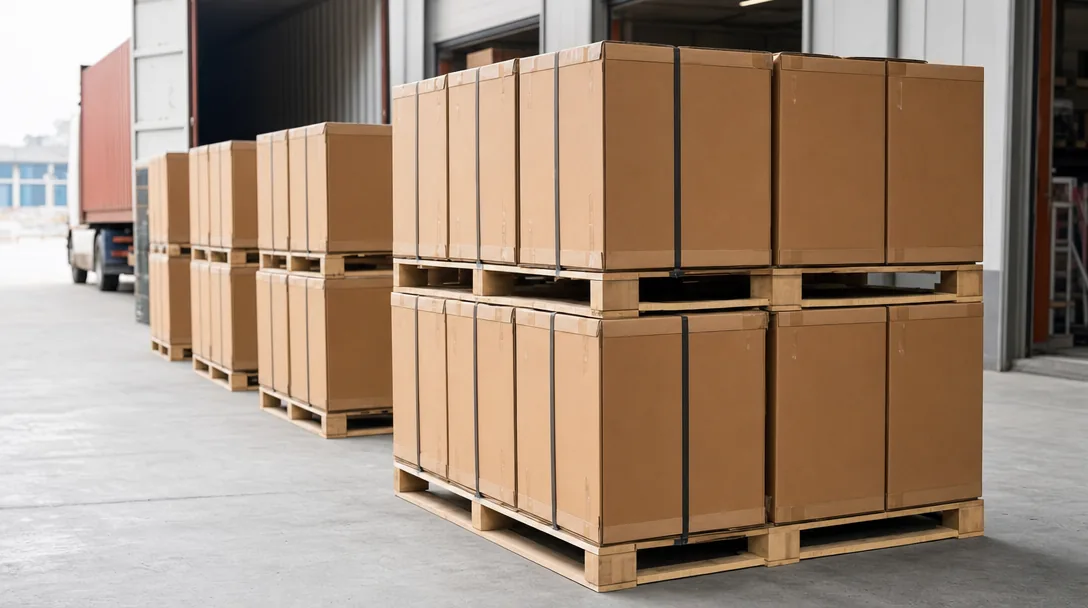
Shipping cartons are where cap packaging protects margin or creates chargebacks. Carton count should be set by crown structure, visor memory, and trim height, not by chasing the last $0.12 in freight savings. A structured 6-panel cotton twill cap with 2.0-2.2 mm PE visor insert and buckram front usually travels safely in a 50-pack master around 58 x 38 x 45 cm; push that to 72 or 100 and you start seeing front-panel flattening, seam grin, and visor set drift by the time the container is devanned. Unstructured dad caps in 180-220 gsm chino twill can often run 100 per carton if nesting alternates sweatband direction every 10-12 pieces and backstrap hardware is kept off the crown face. High-crown foam truckers are less forgiving: 25 or 50 per carton is the practical limit because 3-5 mm compression on the foam front can leave a permanent crease that no steaming or reblocking line will fully remove. Board grade matters more than buyers think. For export cartons, 32 ECT / 200# burst is the floor I will accept for standard ocean freight, but 44 ECT is the safer spec for U.S. pallet stacking, cross-dock abuse, and inland LTL moves over 1,000 miles. If caps are packed in individual retail boxes, the outer shipper needs edge-crush strength recalculated for stack load, not just product weight; twelve rigid inner boxes inside a weak master is a textbook corner-collapse claim. Decorated styles also need more headspace. Raised foam embroidery, 2-3 mm silicone patches, rope details, and screen-printed trucker fronts should get kraft top pads or honeycomb paper fill, and I would rather ship a 25-pack carton with slightly worse cube efficiency than accept deformation under AQL 2.5 because someone packed premium caps like cheap promo blanks.
Carton labeling should serve warehouse control first and branding second. A basic one-color flexo print on two panels usually adds about $0.08-$0.18 per carton in Yiwu, but it needs to carry the information receiving teams actually use: PO number, style, color, size run, quantity, net/gross weight, carton dimensions, country of origin, and destination mark. If the customer’s downstream flow depends on retail-ready cap packaging, use GS1-compliant carton labels with confirmed quiet zones and barcode height matched to the scanner environment. I have seen receiving failures caused by poor ink density, 8-10 mm print gain on kraft, and labels applied across carton seams where they wrinkle under humidity. Those are small errors that turn into rework fees fast. The inner pack has to support the outer carton. Individual polybags should have vent holes—typically two to four holes at 6-8 mm—so moisture can escape during summer loading, when container temperatures in South China can exceed 50°C. Without venting, you trap condensation risk, haze the poly, and increase the chance of sweatband moisture pickup, especially on brushed cotton and recycled PET sweatbands. Hangtags complicate stacking too: metal eyelets, string locks, and folded card corners snag adjacent closures unless caps are nested face-to-back and separated with kraft dividers every 20-25 units. Our standard practice is to verify FSC claims before print approval, because FSC Mix board requires valid chain-of-custody from the converter and matching invoice language; unauthorized logos or mismatched paperwork get flagged immediately by licensed programs and major retailers.
Sustainable packaging upgrades
The lowest-risk sustainability upgrade in cap packaging is usually recycled polyethylene, not a compostable film claim. A standard export polybag for caps is typically 30–40 microns LDPE; moving to 30–50% post-consumer recycled PE usually adds only about $0.008–$0.03 per unit at 10,000 pieces, while preserving seal strength, transparency, and scan reliability for EAN/UPC labels. By contrast, PBAT/PLA industrial-compostable bags often cost 25%–45% more and are less forgiving in real shipping conditions: 40–50°C container peaks, high humidity, and 3–5 weeks between packing and final delivery. If the end market lacks a verified industrial compost stream, the disposal outcome is mostly theoretical. Our standard practice is to specify resin identification, local recycling language, and suffocation warnings that still meet destination-market requirements while keeping the film compatible with auto-bagging lines. Testing matters more than sustainability copy on the bag spec. Recycled-content film can behave differently at the lip, seal edge, and vent holes, so run seal-strength checks, tear tests around perforations, and a 48-hour heat-aging trial using packed-carton conditions before approving artwork. On printed bags, rub resistance is a bigger issue than whether the ink is marketed as soy-based; under-cured print can offset onto white cotton twill, brushed chino, or foam trucker fronts if caps are packed warm from steaming or final shaping. Cheap bag failures turn acceptable cap packaging into claims for soiled sweatbands, scratched sandwich bills, and relabeling labor that costs more than the packaging upgrade ever saved.
For retail-ready cap packaging, FSC-certified kraft board is the most practical plastic-reduction move because it improves presentation without introducing freight risk. A 350–400 gsm kraft tuck box with one-color flexo or offset print usually adds $0.18–$0.45 per cap at 1,000 units; an E-flute mailer for direct-to-consumer programs will run higher once die-cuts, inserts, and fit tolerances are added. Unbleached kraft also hides scuffing better than coated SBS, which matters when master cartons are floor-loaded, cross-docked, and hand-unloaded in U.S. distribution. Spend money on board caliper, corner compression, and visor clearance first. A box with crushed sidewalls or a crown fit that deforms the front panel does more damage to perceived quality than a plain graphic layout ever will. The paper set is where buyers often overcomplicate sustainable cap packaging. A 600–700 gsm recycled hangtag with cotton string or paper raffia feels premium and avoids the mixed-material problem of laminated tags with plastic loop fasteners. Keep graphics restrained if the cap already carries raised embroidery from Tajima, Barudan, or ZSK heads, a woven patch, or printed underbill art; the trim should support the product, not fight it. For logos on kraft, call out a Delta-E tolerance under D65 lighting because black solids and muted Pantone TCX-adjacent tones drift visibly on uncoated stock. Also ask for documents, not slogans: FSC chain of custody, heavy-metal-free ink declarations, and current sedex-audit-cap-supplier-guide.html">BSCI 2.0 or Sedex SMETA 4-Pillar records from the packaging supplier. Unsupported sustainability claims create more importer friction than conventional packaging.
Frequently Asked Questions
What logo decoration techniques do you offer?
3D puff embroidery, flat embroidery, woven patch, leather patch, PVC patch, screen printing, sublimation, applique and laser etching, all in-house with no subcontracting.
Do you support sustainability certifications?
Yes. We work with GOTS organic cotton, GRS-certified recycled polyester, OEKO-TEX Standard 100 fabrics, and are BSCI and Sedex audited. Certification documentation can be provided per order.
What is the minimum order quantity (MOQ) for custom hats?
Our standard MOQ is 100 pieces per design and color, with sampling available from 1 piece. For complex multi-color logos or premium fabric upgrades, the MOQ can be lowered with a small per-piece surcharge.
How long does production take?
Sampling takes 7 to 12 days. Bulk production runs 20 to 30 days depending on quantity, fabric availability and decoration complexity. Inspection and packing adds another 3 to 5 days before shipment.
Can I order a sample before bulk production?
Yes. We strongly recommend approving a pre-production sample before mass production. Samples are charged at 35 to 60 USD each plus express shipping, fully refundable against confirmed bulk orders over 500 pieces.
How does ordering custom made trucker hat work?
When evaluating custom made trucker hat, the key considerations are construction quality, decoration capability, MOQ flexibility and lead time. First retail impression, unboxing experience, e-commerce protection. Coated paper, kraft, recycled board; offset vs digital print; gold-foil and embossing.
How does ordering baseball cap embroidered custom work?
When evaluating baseball cap embroidered custom, the key considerations are construction quality, decoration capability, MOQ flexibility and lead time. First retail impression, unboxing experience, e-commerce protection. Coated paper, kraft, recycled board; offset vs digital print; gold-foil and embossing.
How does ordering custom embroidered trucker hats work?
When evaluating custom embroidered trucker hats, the key considerations are construction quality, decoration capability, MOQ flexibility and lead time. First retail impression, unboxing experience, e-commerce protection. Coated paper, kraft, recycled board; offset vs digital print; gold-foil and embossing.
How does ordering custom made hats for men work?
When evaluating custom made hats for men, the key considerations are construction quality, decoration capability, MOQ flexibility and lead time. First retail impression, unboxing experience, e-commerce protection. Coated paper, kraft, recycled board; offset vs digital print; gold-foil and embossing.
What is cap packaging?
Controlled atmosphere packaging (CAP) is defined as a method where a specific gas or mixture of gases is established within a package after removing air, and this gas composition is maintained throughout the package's shelf life.
How do you package a cap?
Whatever your packing looks. Like. I promise you it will all fit. And then you put over here and then fill in as needed.
What does cap stand for in food packaging?
However, with CAP ( controlled atmosphere packaging ), you can make alterations to the storage conditions of the packaging during its lifespan. This involves adding oxygen absorbers or nitrogen to achieve the optimal gas composition to extend shelf life.
Ready to start your custom hat project?
Send us your tech-pack, sketch or even just an inspiration photo. We will respond with a detailed quotation and digital mock-up within 24 hours.
Request a free quoteRelated guides
Acrylic Beanie: Properties, Costs and How to Spec It Right
Read article →
Custom Hat Design: The 2026 Sourcing & Manufacturing Playbook
Read article →
Bucket Hat Corduroy Retail Packaging Guide for Custom Hat Buyers
Read article →We hope this guide demystifies cap packaging options: retail-ready, hangtag, polybag & custom boxes - 2026 buyer's guide and helps you move forward with confidence. If you have questions specific to your project, our English-speaking sales engineers are one message away.