
Cap Defect Catalog: 32 Production Issues to Inspect For - Cost & MOQ Breakdown - Supplier Checklist
Every week, our sales team answers detailed questions about cap defect catalog: 32 production issues to inspect for - cost & moq breakdown - supplier checklist. We wrote this guide so that wholesalers, streetwear brands, corporate buyers and promotional resellers can compare options with full information, and avoid the traps that show up only after production has started.
How to read this catalog
Read the catalog twice: first by cap area, then by severity. Location tells you where the defect entered the line. A collapsed or buckled front panel on a structured 6-panel usually traces back to the build-up, not “bad sewing”: buckram that is too soft or too light, fusing with poor adhesion, front-panel seam allowances drifting more than 2 mm, or center-front embroidery with excessive stitch density pulling the crown out of plane. On the floor, I would also check whether pressing heat distorted the panel after embroidery. Brim wave is the same story. It typically starts with PE visor board cut off-spec, moisture absorption in the insert, uneven sandwich piping tension, or binding tension that over-pulls one side of the visor edge. When you read cap production defects by area, you stop treating them as random cosmetic issues and start mapping them to cutting, embroidery, sewing, pressing, or packing.
Embroidery distortion is one of the easiest defects to diagnose if you know the process. A logo that looks “fat” or twisted is usually caused by bad compensation in digitizing, unstable backing weight, poor hooping, or thread tension imbalance on Tajima, Barudan, or ZSK heads; those problems show up long before final carton packing. Severity then tells you what action to take. Critical defects are automatic rejects because they create legal, safety, or compliance risk: wrong country-of-origin label, unauthorized artwork, mold, or broken needle contamination. Major defects hurt saleability and should be measured, not argued: visor skew beyond ±3 mm, logo off-center beyond ±2 mm, shade variation above Delta-E 1.5, or obvious crown asymmetry at arm’s length. Minor defects are cosmetic within tolerance, such as a light seam grin inside the sweatband. Under ANSI/ASQ Z1.4, General Inspection Level II, a 1,200-piece lot is commonly sampled at 80 units; critical is usually Ac 0 / Re 1, while major and minor limits must match the PO, approved golden sample, Pantone TCX callout, BOM, and packing standard.
Use the catalog as a decision tool, not a photo sheet. A soft crown is correct on an unstructured washed chino dad cap in 280 gsm cotton twill, but it is a major defect on a structured cap that calls for 1.5 to 1.8 mm EVA or hard buckram support. The same principle applies to visor curve, sweatband width, fabric hand feel, closure hardware, and embroidery stitch count. If the tech pack specifies 108 x 58 cotton twill in 21s yarn, a center-front logo at 7,000 stitches, and an approved strike-off, that is the inspection baseline. Anything outside that spec is nonconforming product, even if it looks “acceptable” to a line supervisor. Our standard practice is to log recurring cap production defects by process ownership—cutting, embroidery, sewing, finishing, or packing—because rework hides cost without fixing root cause. Read the list that way and you can separate defects that threaten MOQ, lead time, and chargebacks from isolated cosmetic misses that do not justify holding the entire lot.
Panel and crown defects (8 categories)
Front-panel faults are the cap production defects buyers see first because the crown carries the silhouette, seam balance, and logo field. The eight crown issues I separate during inline inspection are stitch puckering, mill weave defects, pilling or fuzzing, panel shade variation, crown-seam twist, front-panel collapse, seam grin, and uneven crown height. Puckering is normally process-made: a DBx1 needle that is too large, lockstitch tension set too high, or cotton twill cut before it has relaxed 12–24 hours after spreading. On 260–300 gsm chino twill or 15 oz wool blend, the center front seam should press flat with no roping visible under D65 light at 50 cm. Weave faults are not sewing faults; slubs, broken twill wales, barré, and neps come from the mill and must be flagged during 4-point roll inspection before cutting. If those defects appear inside the front decoration zone, I classify them as major under AQL 2.5 because embroidery or patch application rarely hides them cleanly.
Shade variation is the crown defect most likely to trigger a costly remake, especially when a factory mixes dye lots to protect an ex-factory date. Navy, black, and forest green can still vary Delta-E 1.5–3.0 between lots, and garment wash or enzyme wash can amplify the mismatch after sewing. The practical control is shade-band sorting against the approved Pantone TCX, lab dip, or bulk standard before bundling cut panels; after the top button, sweatband, and visor are attached, recovery is mostly scrap. Crown-seam twist is a hard reject when the center front seam is more than 2 mm off visor center, or when the six-panel intersection forms a bulky knot instead of a clean rosette. Front-panel collapse usually points to wrong buckram weight, poor fusing temperature, or weak lamination on structured caps; seam grin means the seam allowance is opening under tension. Eyelet distortion often comes from poor backing or over-tight hooping on Tajima, Barudan, or ZSK embroidery heads. Typical rework is US$0.08–0.18 per cap for loose eyelet thread, but replacing miscut crown panels can exceed US$0.45 per cap plus fabric loss and a 300–500 piece recut minimum.
Brim defects (5 categories)
Brim defects are some of the most expensive cap production defects because the visor locks in both shape and perceived quality; once the cap is fully assembled, clean rework is limited. On factory floor audits I split brim issues into five practical categories: curve out of tolerance, left-right wing asymmetry, insert stiffness variation, undervisor shade or print defects, and visor stitching failure. “Curved brim” is not a usable spec. The approved sample should define center drop, wing height, and front-edge arc against an acrylic or aluminum gauge. For a standard structured baseball cap, a workable tolerance is ±2 mm at each corner and ±3 mm at center drop. Anything looser lets mixed lots pass. Most rejects trace back to unstable heat-press settings, cooling time under 20 to 30 seconds, or insert substitutions made to save $0.03 to $0.06 per cap. Insert variation is the hidden root cause. PE, EVA, recycled PE, paperboard, and sandwich inserts do not rebound the same after pressing, and a 1.8 mm recycled PE sheet will not behave like 2.0 mm virgin PE even if the visor looks acceptable right off the mold. If fusing or molding temperature drifts by 8 to 12°C between shifts, the brim may pass visual inspection but soften after a few wears or develop asymmetrical spring-back in carton. The BOM should state insert material, thickness tolerance such as ±0.1 mm, density if applicable, and target hand feel relative to the sealed pre-production sample; gsm is meaningless for molded PE board. At CrownsForge, we also check flex response at the center and both wings because replacing a defective visor after sewing typically adds $0.18 to $0.35 per cap in labor, scrap, and re-press risk.
Undervisor defects and stitching failures need their own checkpoint because many inline inspectors only watch the crown profile and top visor. Shade mismatch on the underside is obvious the moment the wearer tilts the cap, especially on team programs and streetwear drops using dark contrast colors. If the spec calls for Pantone Black 6 C or a Pantone TCX textile standard, I would treat Delta-E above 1.5 to 2.0 under D65 light as out of tolerance; cotton twill, polyester micro-peach, and brushed tricot can all read differently even when the dye lab claims the same color. Printed undervisors create another failure mode: on sublimation, screen print, or heat-transfer layouts, artwork shift beyond 1.5 mm at the tip or front edge is usually visible and should be rejected on licensed product. Visor stitching is the last category, and it is not cosmetic. Multi-row stitching controls both appearance and edge stability, so skipped stitches, bobbin imbalance, row wandering, and thread floats from Juki, Brother, or Mitsubishi single-needle stations should be classified as major defects under AQL 2.5. On a six-row baseball visor, row spacing should stay visually even, typically within about ±1 mm, with no broken row on either top side or undervisor. I also look for edge bite where the needle tracks too close to the visor seam and exposes the insert after flexing. A brim that cracks open during a simple bend test was usually sewn with poor tension control or after the insert was over-pressed and embrittled. Those are the brim defects buyers remember first because they affect shelf presentation, wear life, and claims rate.
Embroidery defects (6 categories)
Embroidery is one of the costliest cap production defects because it fails late, after the shell, visor board, sweatband, and closure have already absorbed material and labor. The six defect groups that matter on a cap line are: thread color drift against the approved standard, inconsistent stitch density, color-to-color misregistration, untrimmed jump threads or messy reverse-side finishing, underlay show-through, and off-center or crooked placement on the crown. Color mismatch is usually a thread control problem before it is a machine problem. Buyers should approve against a Pantone TCX reference or physical color standard under D65 light at 1000-1500 lux, then define a tolerance; for brand logos, Delta-E below 1.5 is realistic, while anything above 2.0 is usually visible on royal, red, and navy threads. If the PPS is approved in Madeira Classic or Gunold 40 wt polyester and bulk gets switched to a cheaper local 120D/2 yarn, sheen, hue depth, and coverage change immediately. On licensed or team programs, that is a major defect under AQL 2.5 because there is no credible cosmetic rework once front panels are assembled and crowned.
Density, registration, and placement failures usually begin in the digitized file and get amplified on poorly tuned Tajima, Barudan, or ZSK heads. Satin columns that look clean on 100% cotton twill often break down on brushed twill, acrylic-wool blends, or 3 mm EVA foam trucker fronts when the punch file has weak edge-walk underlay, insufficient pull compensation, or overpacked fills above roughly 0.40 mm stitch spacing. On outlined logos, 0.8 mm layer shift is already obvious; by 1.2 mm, most buyers will flag it at first glance. Placement tolerance should also be written into the tech pack: front-center embroidery more than ±3 mm off the crown centerline or more than 2 degrees of rotation reads crooked on shelf. Underlay show-through and puckering are the next tell. If fill coverage is too open, capping underlay ghosts through light-color top thread; if density is too high, the embroidery turns boardy, sinks into the buckram, and distorts the crown profile. Lightweight washed cotton, taslon nylon, and unbonded performance fabrics ripple fast when backing weight, bobbin tension, and hooping pressure are wrong. Our standard practice is reverse-side inspection on every lot because hanging jump threads, poor trims, and thread nests inside the crown are common cap production defects that buyers miss when they only audit the face side.
Patch defects (4 categories)
Patch placement is the quickest visual screen for cap production defects because the eye reads centerline error before it notices stitch count. On a standard 6-panel structured baseball cap, the patch center should be within ±2 mm of the front seam and the patch bottom within ±3 mm of the visor seam, unless the tech pack specifies an offset. Rotation over 2° on buckram-backed fronts should be treated as a major defect under AQL 2.5; it will show clearly in e-commerce photography. I rarely blame Tajima, Barudan, or ZSK heads first, because those machines repeat well when the panel is controlled. The usual causes are a worn acrylic placement jig, weak spray adhesive, mismatched hoop tension, or a front panel creeping 3–4 mm during sewing or heat press. Inline QC should measure three points per carton: seam-to-patch center, visor seam-to-patch bottom, and left/right top-corner height to catch rotation before packing.
Adhesion and heat damage must be judged by patch material, not by one generic standard. Leatherette, suede, woven, TPU, silicone, and PVC patches all fail differently. Visible glue squeeze-out beyond 1 mm from the edge is a major defect on most retail programs; on light brushed cotton twill, even a thin hot-melt halo is visible under D65 lighting at 50 cm. I start investigating the press setup when platen temperature exceeds 155°C or dwell time goes past 12 seconds just to force bonding. Polyester performance caps are less forgiving than cotton: excess heat can leave a rectangular gloss mark, crown shrinkage, or a wavy front panel that cannot be reworked. For pre-production approval, require 24-hour conditioning after pressing, then a 90° peel check by hand; if the cap is sold as washable, add 10 home-laundry cycles at 30°C and inspect for edge lift, bubbling, and adhesive migration.
Edge finish and color control are the other two patch categories that cause expensive late-stage rejects. Genuine leather and PU patches need clean die-cut edges, sealed sides, and no exposed white scrim; once the backing shows, the patch looks dirty after normal handling. Woven patches need the correct border construction: merrowed borders for bold shapes, laser-cut or heat-cut edges for fine detail, and satin borders only when the artwork leaves enough clearance. If a woven edge sheds more than two yarn ends after light fingernail rubbing, I classify it as major. PVC and silicone patches should be matched to Pantone Solid Coated or Pantone TCX, with Delta-E ≤2.0 for licensed programs and ≤3.0 for promotional orders. Late fixes are not cheap: woven patch remake setup usually runs $35–$80, while PVC mold revision is commonly $80–$180, before sorting labor, re-pressing, missed vessel cutoff, or DDP air freight upgrades are counted.
Sweatband defects (3 categories)
Loose sweatband attachment is a structural failure, not a cosmetic trim defect, because the band locks the crown seam allowance and absorbs repeated shear from forehead pressure, perspiration salts, and carton compression in transit. The weak points are predictable: the rear overlap, both side-seam intersections, and the front crown where buckram, seam tape, or fused panels create extra bulk. On a 25-32 mm sweatband, the attaching seam should hold 6-8 SPI with a consistent 3.0-3.5 mm stitch bite into the edge; when a line drops to 4-5 SPI to push output, edge miss, seam grin, and peel-out increase quickly. In my experience, the root cause is usually machine setup, not “careless labor”: worn needles, unstable bobbin tension, poor folder alignment on post-bed single-needle machines, or feed imbalance at thick seam crossings. These cap production defects need inline checks every 1-2 hours and a post-pack compression test, because a seam that looks clean on the line can pop after 12-24 caps are stacked in a master carton for export.
Material mismatch and size inconsistency are separate sweatband defects, but buyers usually discover both only after wear testing or customer returns. Substitution happens most often on small private-label orders below 1,000 pcs per color, where an approved 100% cotton twill, brushed cotton, or terry sweatband at 180-240 gsm quietly becomes polyester tricot or a low-cotton dead-stock blend. The cost delta is usually only $0.03-$0.08 per cap, yet the performance change is obvious: lower absorbency, more surface slip, hotter skin contact, and faster odor retention. The tech pack should lock fiber content, gsm tolerance, width, finish, color reference by Pantone TCX, and whether moisture-wicking or anti-microbial claims are allowed; at CrownsForge, we also keep a sealed swatch card at line start to catch substitutions before sewing. Size inconsistency is just as expensive because fit complaints are hard to salvage after delivery. On fitted, Flexfit-style, or taped-seam caps, a 5-8 mm swing in finished inner circumference is enough to trigger returns, especially across mixed size runs. We treat more than ±3 mm on sweatband width and more than ±5 mm on finished circumference as major cap production defects under AQL 2.5. The main drivers are off-grain cutting, elastic recovery drift, uneven steam setting, and operators stretching bands unevenly during attachment. Good control means measuring circumference and band width by line every 1-2 hours, not waiting for final QC; once humidity shifts or a cutter stack drifts, an entire lot can move out of tolerance before anyone sees it.
Closure defects (3 categories)
Closure failures are some of the most expensive cap production defects because many pass a flat-table visual check and fail only when the buyer adjusts the cap. For plastic snapbacks, QC must test engagement across all positions, not just one casual open-close. A standard adult snap usually has 7 holes and 7 pegs, and the first two and last two positions expose most problems because the strip is under the highest bending stress. Common root causes are underfilled POM or PP injection, warped male pegs from excessive mold temperature, ovalized female sockets, and back openings sewn under uneven panel tension so the two strips meet on a slight arc instead of a flat plane. A snap that releases under light hand pull should be logged as a major defect; a cracked stud, missing socket, or detached strip is critical on any adjustable style. Color is not cosmetic if the trim was approved to Pantone TCX. When shell fabric is controlled to Delta-E under 1.5, a black closure drifting toward charcoal is an accessory-lot failure, not acceptable shade variation.
Fabric strap and metal buckle defects usually start at sewing, not hardware. On 260–320 gsm brushed cotton twill, the stress points are the strap-root box-X, bartacks beside the back opening, and the folded strap edge where yarns begin to fray. I want 8–10 SPI using stable 40 wt polyester core-spun thread; below that, the seam may survive packing but open after a few customer adjustments. Buckle systems add their own failure modes: burrs on the inner bar cutting suede or nylon webbing, weak plating adhesion, bent sliders from poor racking, and face scratches from bulk handling without PE separators. For brass or zinc alloy buckles, the inner edge should be smooth enough that it does not mark webbing after 20 pull-through cycles. Rework after sewing normally costs $0.08–$0.20 per cap, and replacing the strap after wash or embroidery can push higher because the back opening has to be reopened without distorting the crown.
Hook-and-loop closures look simple, but they are easy to damage on the line. The most common defects are skewed placement, short stitch run-off at the corners, hook contamination from loose threads, and low peel strength caused by cheap hook tape with shallow molded hooks. Operators should not press the hook and loop together before final thread trimming; once lint and thread ends pack into the hook side, the closure loses bite before inspection. A finished cap should show at least 80% contact area when closed in the normal wearing range, with no corner lifting after a light peel check. Under AQL 2.5, skewed sewing that reduces usable contact, insecure corner stitching, or hook tape pulling away from the crown should be major defects, not minor appearance issues. Our standard practice at CrownsForge is to inspect closures both flat and on a head form, because a back opening that looks centered on the table can twist under tension and make the cap feel defective to the wearer.
Packaging defects (3 categories)
Packaging errors are not admin mistakes; they are cap production defects with some of the worst cost-to-fix ratios in the factory. I group them into three categories: unit-pack defects, ticketing or sticker defects, and master-carton identification defects. Unit-pack failures usually start with the wrong bag gauge or venting spec. A 0.03 mm LDPE bag is cheap, but it tears easily at the air hole and side seal when packed under compression; for structured caps with buckram and raised 3D embroidery, 0.04 to 0.05 mm is usually safer. Bags that are too short flatten the crown, abrade the visor edge, and transfer loose dust or thread oil onto sweatbands during line-haul transit. Those marks get blamed on sewing, but the root cause is bad packing geometry. Compliance is where packaging defects become expensive fast. EU and UK buyers often require approved PE-LD or LDPE resin codes, recycling marks, suffocation text, and packaging-waste language before bulk packing starts. If the artwork is wrong, reprinting typically costs $0.02 to $0.05 per cap, and hand-repacking a 10,000-piece order can burn another 20 to 35 labor hours. I have also seen vent holes omitted on children’s programs, which creates avoidable compliance exposure. At CrownsForge, we lock the bag spec to the approved packing card, including dimensions, gauge, vent-hole count, warning text, and fold direction, because even a correct cap can arrive looking defective if the unit pack is wrong.
Ticketing defects create retailer chargebacks because they break scan, shelf, and visual compliance even when the cap itself passes inspection. The common failures are wrong UPC or EAN, wrong color name versus approved Pantone reference, missing country-of-origin statement, fiber-content omission on mixed-material caps, and hangtags attached through the wrong panel seam or eyelet. On licensed sports, collegiate, and department-store programs, visor sticker placement is often controlled within plus or minus 5 mm from the sealed sample; outside that tolerance, the goods may be rejected as unsellable. Barcode quality is another blind spot. A label printed with weak thermal transfer ribbon or poor contrast can drop below the buyer’s scannability requirement, especially after humidity exposure in ocean freight. Carton-label defects are more dangerous because one bad template can contaminate the full shipment. Missing PO number, style code, color, carton sequence, ratio pack, net and gross weight, or country of origin will trigger WMS receiving exceptions at the buyer DC. SSCC-18 labels should be verified to ISO/IEC 15416, and anything below grade C is asking for trouble once pallets hit an automated inbound line. In practice, relabeling at a forwarder or DC usually runs $1.50 to $4.00 per carton, before storage, missed-delivery, or redelivery fees. My standard control point is line-end verification against the approved packing card, then final audit at AQL 2.5 with barcode spot checks, carton-count reconciliation, and one sealed golden sample per SKU for post-shipment dispute handling.
Frequently Asked Questions
What is the minimum order quantity (MOQ) for custom hats?
Our standard MOQ is 100 pieces per design and color, with sampling available from 1 piece. For complex multi-color logos or premium fabric upgrades, the MOQ can be lowered with a small per-piece surcharge.
Do you support sustainability certifications?
Yes. We work with GOTS organic cotton, GRS-certified recycled polyester, OEKO-TEX Standard 100 fabrics, and are BSCI and Sedex audited. Certification documentation can be provided per order.
How long does production take?
Sampling takes 7 to 12 days. Bulk production runs 20 to 30 days depending on quantity, fabric availability and decoration complexity. Inspection and packing adds another 3 to 5 days before shipment.
What logo decoration techniques do you offer?
3D puff embroidery, flat embroidery, woven patch, leather patch, PVC patch, screen printing, sublimation, applique and laser etching, all in-house with no subcontracting.
Can I order a sample before bulk production?
Yes. We strongly recommend approving a pre-production sample before mass production. Samples are charged at 35 to 60 USD each plus express shipping, fully refundable against confirmed bulk orders over 500 pieces.
What should buyers know about cotton twill army cap kangol?
When evaluating cotton twill army cap kangol, the key considerations are construction quality, decoration capability, MOQ flexibility and lead time. Sweatband attachment loose, sweatband fabric mismatch (cotton requested but polyester delivered), sweatband size inconsistency (varies cap-to-cap within batch). The 32 defect categories below group by area of the cap (panel, brim, embroidery, etc.) and severity (critical, major, minor under AQL 2.5). Critical defects mean reject. Major defects must remain under the AQL 2.5…
How does ordering baseball cap embroidered custom work?
When evaluating baseball cap embroidered custom, the key considerations are construction quality, decoration capability, MOQ flexibility and lead time. The 32 defect categories below group by area of the cap (panel, brim, embroidery, etc.) and severity (critical, major, minor under AQL 2.5). Critical defects mean reject. Major defects must remain under the AQL 2.5 sample limit. Minor defects are tolerated within wider limits. Stitch puckering on panels, fabric weave irregularity, color shading between panels of supposedly…
How does ordering custom embroidered trucker hat work?
When evaluating custom embroidered trucker hat, the key considerations are construction quality, decoration capability, MOQ flexibility and lead time. The 32 defect categories below group by area of the cap (panel, brim, embroidery, etc.) and severity (critical, major, minor under AQL 2.5). Critical defects mean reject. Major defects must remain under the AQL 2.5 sample limit. Minor defects are tolerated within wider limits. Stitch puckering on panels, fabric weave irregularity, color shading between panels of supposedly…
What should buyers know about kangol bucket hat mens?
When evaluating kangol bucket hat mens, the key considerations are construction quality, decoration capability, MOQ flexibility and lead time. The 32 defect categories below group by area of the cap (panel, brim, embroidery, etc.) and severity (critical, major, minor under AQL 2.5). Critical defects mean reject. Major defects must remain under the AQL 2.5 sample limit. Minor defects are tolerated within wider limits. Stitch puckering on panels, fabric weave irregularity, color shading between panels of supposedly…
What are the defects of plastic bottle caps?
Types of bottle caps defects that can be detected damages (chips, cracks, scratches); deformations (pinches, bents, dents, warping, buckling, roundness loss); missing parts (absence of caps, absence of tamper rings);
What are production defects?
A production defect is any deviation in a manufactured part from its defined specification — dimensional, functional, visual or material. The definition sounds simple; in practice, most disagreements in a quality meeting come from confusing four related terms that are not the same thing.
What are common manufacturing defects?
Manufacturing defects arise during the production process, where an otherwise safe product is rendered dangerous due to errors or irregularities in its manufacturing. This might include issues such as substandard materials, improper assembly, or other deviations from the intended design.
What are the top 3 defects?
How Many Types of Quality Defects Are There? In quality control inspections, quality defects are typically categorized into three main types, Critical defects, Major defects and Minor defects, based on their severity and impact on product performance and safety.
What is CAP in production?
Businesses often use a corrective action plan, or CAP, to determine the steps that can help them find a solution to an issue that's impacting their daily operations. With a CAP, a company may resolve its workflow issues, leading to increased output.
What are three types of defects?
Minor defects are usually cosmetic and not considered to be serious. Major defects may inhibit the product's ability to function as intended and are considered somewhat serious. Critical defects may pose hazards and are considered to be very serious.
Ready to start your custom hat project?
Send us your tech-pack, sketch or even just an inspiration photo. We will respond with a detailed quotation and digital mock-up within 24 hours.
Request a free quoteRelated guides
Fitted Hats Custom: A Vertical-Specific Sourcing Guide
Read article →
Custom Made Trucker Hat: The 2026 Sourcing & Manufacturing Playbook - 2026 Buyer's Guide - 2026 Buyer's Guide - 2026 Buyer's Guide
Read article →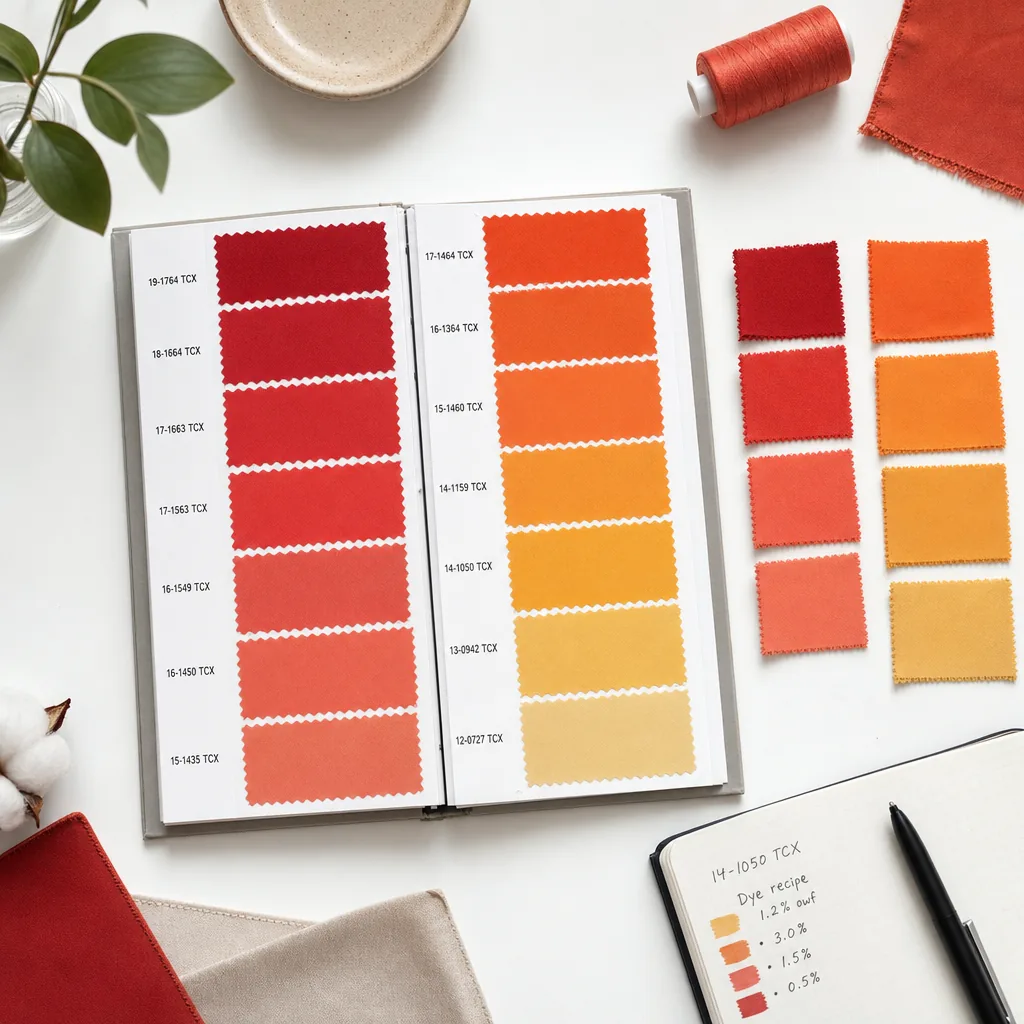
Pantone Color Matching for Custom Caps: A Manufacturer's Reference - 2026 Buyer's Guide
Read article →We hope this guide demystifies cap defect catalog: 32 production issues to inspect for - cost & moq breakdown - supplier checklist and helps you move forward with confidence. If you have questions specific to your project, our English-speaking sales engineers are one message away.