Cap Defect Catalog: 32 Production Issues to Inspect For - Cost & MOQ Breakdown (2026 Update) (2026 Update)
Cap Defect Catalog: 32 Production Issues to Inspect For - Cost & MOQ Breakdown (2026 Update) (2026 Update) is one of the most-asked questions we receive from international buyers, and for good reason. With dozens of factories competing for your order and an alphabet soup of technical terms in every supplier quote, even experienced importers can feel lost. This guide consolidates what we have learned producing custom hats for clients in 40+ countries.
How to read this catalog
Read the catalog on two axes: where the defect appears and where the process actually failed. Most cap production defects are diagnosed incorrectly when teams stop at the visible symptom. A wavy visor is seldom just a visor issue; it usually starts with PE insert warp, buckram weight variation, or press dwell drifting outside roughly 145-155°C during shaping. Crown asymmetry typically comes from panel pattern mismatch, seam allowance drift of 2-3 mm, or uneven blocking before the top button is set. Embroidery should be read the same way. Jump stitches, flagging, and outline mis-registration usually trace back to digitizing density, underlay choice, upper and bobbin tension, or a worn #11 or #12 needle on Tajima, Barudan, or ZSK heads. That is why the catalog is organized by front panel, side panel, closure, visor, sweatband, embroidery, print, trims, and packing: it mirrors the sewing floor, not the complaint email. Then apply an agreed AQL standard before goods are packed, not after someone opens cartons and starts arguing from photos. Under ANSI/ASQ Z1.4, General Inspection Level II, a 1,200-piece lot typically pulls an 80-piece sample. At AQL 2.5 for major defects, acceptance is commonly 5 and rejection 6; at AQL 4.0 for minor defects, acceptance is usually 7 and rejection 8. Those thresholds directly affect claims, chargebacks, and replacement liability. A 3 mm logo shift may be major on licensed sports headwear with fixed artwork placement, but only minor on a pigment-washed dad cap where off-register character is part of the look. Critical defects stay non-negotiable: exposed sharp metal, broken needle contamination, mold, azo-restricted print failure, or wrong country-of-origin labeling. Locking severity before bulk cutting prevents the usual ex-factory dispute where every defect suddenly becomes “acceptable variation.”
Use each defect entry as a decision tool, not a glossary. The useful entry answers three questions fast: how to identify it, which operation most likely caused it, and whether it should be classified as critical, major, or minor in an actual shipment. That is the cleanest way to separate true cap production defects from normal process tolerance. Color is the best example. A shell fabric may pass within Delta-E 1.0 against an approved Pantone TCX lab dip under D65 lighting, while the embroidery still reads wrong because 120D rayon and polyester threads reflect differently under retail LEDs or warm office light. Printing needs the same discipline: a silicone heat transfer can look fine at final QC and still fail later if curing temperature, pressure, or dwell time was low. Always read the defect with the production stage in mind because the repair cost escalates fast. Seam puckering usually starts with thread-to-fabric mismatch, excessive SPI, or unstable low-gsm cotton twill, not at final inspection. Sweatband twisting often comes from uneven feeding, poor notch alignment, or knit recovery that was never checked after heat setting. Hook-and-loop skew, visor sandwich exposure, eyelet burrs, and back-opening misalignment all carry different commercial risk depending on whether the cap is retail, team-issued, or promotional. Our standard practice at CrownsForge is to use the same catalog at pre-production, inline QC, and final random inspection. Catching a logo placement error during sampling may cost $0.20-$0.50 per cap to correct; finding it after packing can mean carton reopening, rework labor, airfreight replacement, or dead stock that wipes out the margin on the order.
Panel and crown defects (8 categories)
The crown is where buyers spot cap production defects in two seconds flat, and the worst offender is still panel misalignment. On a standard 6-panel structured cap, the center-front seam should sit directly under the top button with no more than 1.5 mm lateral drift; at 2.5-3.0 mm, the crown already looks twisted and the visor appears skewed when worn. That fault rarely starts at inspection. It usually comes from cutting tolerance stacking, front-panel buckram fused off-center, or seam allowance swing between operators on the center-front join. We treat top-button misplacement, seam grin, asymmetrical crown peak, and panel torque as major defects under AQL 2.5 because consumers read them as bad shape, not minor workmanship. Crown height variation is another expensive one: if one front panel finishes even 4-5 mm taller than the other, the profile collapses on one side. The root causes are predictable—buckram cut off-grain, inconsistent blocking pressure, or excessive heat on 210-260 gsm cotton twill and cotton/poly twill, which shrinks the shell unevenly after fusing.
The other five panel and crown defects are less obvious on the sewing line but just as costly at packing: puckering, shading, weave bars, pilling, and eyelet distortion. Puckering usually comes from wrong SPI for the fabric weight, top-thread tension too high, or operators forcing curved seams on post-bed machines; on embroidered front panels, poor backing selection and unreset bobbin tension on Tajima, Barudan, or ZSK heads will tighten the shell before assembly. Shade variation has to be controlled before sewing, not after. Our standard practice is to shade-band rolls and compare cut panels under D65 light against the approved lab dip or Pantone TCX standard, holding Delta-E to 1.0-1.5 for solid programs; once black, navy, or olive drift beyond that, left and right panels show visible split-tone, especially on brushed cotton, wool blend melton, and suede-touch microfiber. Eyelets deserve stricter inspection than many factories give them: inner diameter should stay within +/-0.5 mm, satin stitch coverage must be even, and the hole must remain round after wash or cap press. Reworking a bad eyelet might cost only $0.08-$0.20 per cap, but shading, weave defects, or crown distortion usually means recutting, and for piece-dyed lots that can trigger remakes of 300-500 units per color.
Brim defects (5 categories)
Brim geometry is where process drift turns into an obvious reject fastest. I split visor shape defects into two separate categories because buyers often lump them together: first, profile distortion and, second, centerline misalignment. On a standard 58 cm structured baseball cap, I flag profile distortion when left-right curve deviation exceeds ±2.0 mm against the approved sample, checked on a fixed aluminum mold or laser-cut acrylic gauge. Centerline misalignment is different: a brim can meet finished width but still look wrong if the tip projects 2.5 mm off the crown center after joining. Most of these cap production defects are not caused by the sewing operator; they start upstream with die-cut visor insert tolerance drifting past ±0.5 mm, PE cores warping after storage above 65% RH, or mixed curving methods between lines. If Line A uses a heated jig at 90°C and Line B relies on hand-bending after packing, you will get visible lot-to-lot variation even when the topstitch looks clean.
Stiffness inconsistency is the third brim category, and it should be judged separately from shape because wear performance fails long before appearance does. The common causes are mixed insert thicknesses—1.5 mm and 1.8 mm PE in one run is enough—uneven lamination pressure between top visor and undervisor, or over-tensioned edge binding that makes one piece feel boardy and the next one collapse. In practical QA terms, if 5 pieces out of a 13-piece sample from a 500-unit lot flex noticeably softer than the sealed standard, I would book that as a major defect under AQL 2.5. The fourth category is undervisor defects: shade mismatch beyond Delta-E 1.5-2.0 under D65 lighting, fabric substitution from cotton twill to poly-cotton, or printed undervisor artwork off-register by more than 1.5 mm against the visor seam reference. The fifth category is edge-stitch failure—skipped stitches, seam grin, wandering topstitch, loose thread tails, or edge opening after flexing. On 301 lockstitch or 401 chainstitch visor seams, anything below 6-7 SPI on heavy 8-10 oz twill is asking for pop-open failures during wear or after 30-40 days of ocean transit under stacking load and high container humidity.
Embroidery defects (6 categories)
Embroidery generates more cap production defects than almost any other process because buyers approve artwork on a screen, then judge bulk goods on a curved crown where buckram hardness, panel angle, and thread luster change the result. The first two failure modes are thread color drift and color-to-color misregistration. If the approved reference is Pantone TCX or Pantone C but production switches to the nearest stock 120D/2 rayon or 108D polyester without a sewn strike-off, Delta-E can easily hit 2.5-3.5, and that is visible immediately on white, stone, khaki, and heather gray caps. Thread color needs its own approval because viscose rayon, trilobal polyester, and mercerized cotton embroidery thread all reflect differently under D65, TL84, and store LEDs. I have seen “approved” red logos look burgundy indoors simply because the factory matched the fabric lab dip, not the thread card. Misregistration is just as common, especially on front logos mixing 3D puff, satin columns, and flat fill shadows. Once drift between color runs exceeds about 0.8 mm, outlines lose definition and small text starts reading soft or doubled. On Tajima, Barudan, and ZSK cap frames, the root cause is usually digitizing before it is machine setting: weak push-pull compensation, bad sequencing, incorrect pull angles, or density packed too tightly for the fabric. Our standard practice is to test the same file across at least two heads before bulk run, because one head sewing clean does not mean twelve heads will hold registration through a 500-piece lot.
The next two categories are patchy coverage and visible underlay, and both usually come from bad digitizing choices rather than bad operators. A fill that looks solid at 0.40 mm spacing on brushed cotton twill can open up badly on washed canvas, melton wool blends, corduroy, or mesh-backed front panels where the top thread sinks into the surface. When stitch density is cut to save thread or improve speed, you start seeing pinholes inside letters, weak fill on broad areas, and satin borders that no longer sit clean over the shape. Underlay causes the opposite problem if it is too heavy: edge-walk and zigzag structures telegraph through the face, especially on fine 16 wale cord, lightweight chino, or low-profile unstructured caps. The right fix is not “more stitches”; it is matching density, underlay type, needle size, and backing to the fabric. The last two categories are crooked placement and puckering, and these are the defects that buyers notice from two meters away. Front embroidery should stay within +/-2 mm from panel centerline and visor seam reference; on 5-panel campers, youth sizes, or narrow front profiles, +/-1.5 mm is a better internal limit because visual balance shifts fast. Puckering is the costly one, especially on 120-160 gsm nylon taslon, lightweight brushed cotton, or foam-backed 5-panels with uneven crown tension. It usually comes from excess upper-thread tension, the wrong backing stack, overcompensated density, or forcing a curved panel into a frame setup that distorts grain. For AQL 2.5 inspection, pull samples from multiple cartons and multiple embroidery heads, then check at roughly 50 cm under D65; multi-head variation is where these cap production defects usually hide, not in the salesman sample.
Patch defects (4 categories)
Four patch-related cap production defects cause most avoidable claims: misplacement, adhesive contamination, edge failure, and color mismatch. Placement needs a numeric standard, not “looks centered.” On adult caps, front patches should sit within ±2 mm from the crown centerline and within ±2 mm from the approved height reference; once drift passes 3 mm, the logo reads visibly crooked on a head form even if it seems acceptable on a flat inspection table. Structured 6-panel caps usually place the patch 12–18 mm above the brim stitch line, but 5-panel foam truckers often require optical centering because the visual midpoint sits higher than the true panel center. Most placement errors come from operators freehanding against the seam, worn acrylic jigs, or patch lots varying 1–2 mm in cut size. If you do not lock both patch dimensions and placement guides before bulk, you are inviting rework. Adhesive contamination is the next high-frequency failure, and it typically starts in lamination, not final sewing. Over-activated heat-seal backing leaves glossy squeeze-out on suede, PU, brushed cotton twill, and foam fronts; aerosol or solvent positioning glue can also bleed through white, stone, and pastel shells. A practical reject rule is straightforward: any glue visible from 30 cm under a D65 light source is a fail. Temporary tacking for sew-on patches is generally stable around 125–145°C for 8–14 seconds with controlled pressure, but operators chasing output often spike temperature and distort the buckram at the same time. That is not just cosmetic. On the factory floor, visible adhesive usually correlates with weak rub resistance, patch edge lift after carton compression, and uneven sew-down tension on Tajima or Barudan heads.
Edge failure and color mismatch need separate inspection criteria because different patch materials fail in different ways. Leather and microfiber patches usually show rough edges from dull dies, inconsistent skiving, poor edge paint coverage, or laser settings that carbonize corners. Woven patches fail more often through low pick density, weak heat sealing on laser-cut borders, or incomplete merrow coverage that exposes base yarn. Under an AQL 2.5 plan, isolated loose fibers under 2 mm might pass as minor, but any lifted corner, delamination, exposed substrate, or unraveling on the front logo should be graded major. Folded-edge construction, edge paint, or higher-density woven labels typically add $0.08-$0.18 per cap, which is cheap compared with repacking or retailer deductions. Color mismatch is where buyers and factories argue the most, especially on PVC and woven badges. Soft PVC should not be approved against a JPEG; it should be matched to a physical chip or sealed strike-off with a defined tolerance, typically Delta-E under 2.0-2.5 for critical brand colors. Navy, safety orange, and cool gray are common trouble shades because pigment shifts during curing, and gloss level changes perceived color again. Woven and printed patches also drift if the yarn lot or ink system changes between sample and bulk. Our standard practice is to verify color under D65 and TL84, because some reds and grays pass daylight but fail badly in store lighting. Typical 2026 patch costs are about $0.18-$0.45 for woven or printed, $0.35-$0.90 for molded PVC, and $0.40-$1.20 for genuine leather before specialty finishes. PVC molds usually need 500-1,000 pieces to amortize tooling, so color standards must be locked before mass production starts.
Sweatband defects (3 categories)
Loose sweatband attachment is a wear failure, not a cosmetic pick-up, because the first complaint comes from the forehead, not the mirror. On a standard 58 cm adult cap, the band should lie flat through the full inside circumference with no skipped stitches, no seam grin, and no floating section longer than 8 mm; beyond that, the edge starts catching skin after a few wears. The failures I see most often come from process drift at the single-needle lockstitch station: operators pushing speed on curves without a folder or guide, SPI left at the previous style setting, or thread tension not recalibrated when moving from 10 oz cotton twill to 20 to 24 oz melton wool. A practical control point is 9 to 11 SPI on the attachment seam, balanced top and bobbin tension, and a #14 or #16 needle depending on bulk, with seam allowance held within +/-1.5 mm. Under AQL 2.5, partial detachment, twisting at the back join, or exposed raw edge should be classified as a major among cap production defects because comfort is immediately affected and the seam usually opens further after sweat exposure or wash testing. Factory-side repair before packing typically costs $0.08 to $0.18 per cap; after carton sealing, landed rework can exceed $0.60 once unpacking, repressing, resorting, and carton replacement are added.
Material substitution and sizing variation are the two sweatband defects that quietly turn into batch claims, because they rarely stay isolated to one operator or one carton. If the BOM calls for 100% cotton twill sweatband at 180 to 220 gsm and production swaps in polyester tricot or a 65/35 poly-cotton strip without signed approval, that is a specification failure, not just a sewing issue. You verify it with a gsm cutter, supplier fiber-content declaration, and, when needed, a simple burn test; handfeel is too subjective to win a claim. Color mismatch is another fast tell: a cotton band approved to Pantone 19-4007 TCX will read flatter than polyester, and a Delta-E above 1.5 under D65 light is already visible on dark interiors. The third category is sweatband size inconsistency. Within one size run, finished band length should hold within +/-3 mm and stretch recovery should remain consistent after joining; once variation gets wider, buyers report the classic problem of identical caps wearing differently. Our standard practice is to watch this closely on low-MOQ orders below 300 pieces, where manual strip cutting often replaces die-cutting or elastic guides to save setup cost, then creates expensive sorting and rework later.
Closure defects (3 categories)
Closure defects generate claims faster than most trim issues because the wearer notices them on the first fitting, not after a week of use. Snapbacks are the highest-risk category: a set can lock cleanly at positions 1-3, then release at positions 7-8 when the back opening narrows and side load shifts onto the outer male studs. A real factory check means cycling all 7 or 8 holes after shaping and cooling, then applying a light pull of roughly 2-3 lb to confirm the socket does not spring open. Reject snaps with uneven engagement force, whitening stress at the peg base, cracked sockets, or male pins leaning off-axis from bad molding. These are classic cap production defects because the crown can look perfect while the closure fails functionally on day one. The trim itself is cheap—stock PP or PE snap sets usually run $0.03-$0.08 per cap—but once the sweatband is closed and back labels are attached, replacement becomes labor-heavy rework that typically adds $0.15-$0.30 per cap.
Color mismatch is the second closure problem buyers routinely underestimate, especially on black and navy programs. A stock “black” resin snap can read gray, warm, or chalky against shell fabric under D65 light, and the mismatch is obvious because the closure sits in the center of the back opening. For licensed work, the practical benchmark is visual approval against the approved lab dip or strike-off, with Delta-E typically kept under 1.5; stock trim on promotional runs often drifts beyond that because resin suppliers match broadly, not to textile color standards like Pantone TCX. Custom-dyed snap sets generally become commercially reasonable only at 3,000-5,000 pcs per color. Below that, expect nearest-stock trim or an extra molding and dye-lot charge around $80-$180 per color. At CrownsForge, closure color is checked in the same light box as shell fabric, button wrap, and top button, because a cap can still fail AQL 2.5 at final inspection even when bulk fabric passed separately.
Fabric-strap, buckle, and hook-and-loop closures fail in more predictable ways: weak seam security, deformed hardware, and contaminated fastening surfaces. On cotton twill, brushed chino, corduroy, or 600D polyester, the strap fold should be secured with a clean lockstitch at about 8-10 SPI and a proper backtack; skipped stitches, loose upper tension, or shallow bite into thick webbing will show seam grin under a 5-7 lb hand pull. Once that fold opens, the strap starts creeping through the buckle during wear. Metal hardware problems are usually sourcing or packing issues, not bad luck: thin plated iron buckles bend at the center bar under carton pressure, while better sets use brass or zinc alloy with more stable plating and fewer burrs. Hook-and-loop has its own false-failure pattern—lint, thread waste, or brushed sweatband fiber contamination makes the closure feel weak even when the tape is in spec. In AQL 2.5, closure slip, deformation, and fastening contamination should be treated as functional cap production defects, not minor cosmetics; post-assembly hardware replacement typically adds $0.12-$0.25 per cap and often is not economical below a 300-500 pc repair lot.
Packaging defects (3 categories)
Packaging faults deserve the same line-item treatment as sewing or embroidery because they can convert a saleable cap into an unreceivable SKU overnight. The three categories that actually matter are unit-pack defects, ticketing and labeling defects, and outer-carton identification defects. Unit-pack failures usually start with the wrong material or dimensions: 25-30 micron LDPE substituted for an approved 40-50 micron bag, bottom seals that burst under a 6-8 kg load, or a bag cut too narrow for a high-profile 6-panel crown, which compresses buckram and leaves the front panel with a permanent wave after 30-40 days in ocean transit. On structured styles, I also treat missing tissue support, absent visor clips, and loose sweatband inserts as real cap production defects, not cosmetic misses, because they create deformation or contamination before the carton is even opened. For EU and UK programs, omitted resin marks such as LDPE 4 or PP 5, incorrect recycling text, and noncompliant suffocation warnings are major defects under AQL 2.5 when the buyer’s packaging spec requires them; the fix is usually full repacking, not a simple paperwork correction.
Ticketing mistakes create more chargebacks than most new importers budget for because inbound receiving is barcode-led, not eyeball-led. The expensive errors are data mismatches: UPC-A or EAN-13 encoded to the wrong PO, style, or color; incorrect country-of-origin or fiber-content labels in the sweatband; or a price ticket attached with a 75 mm plastic fastener that pierces seam tape and leaves a visible hole when removed. Sticker position should be controlled with a jig and checked against the approved sample, not judged by feel. If the visor sticker is approved at centerline plus or minus 3 mm and production drifts 8-10 mm, that is a presentation defect on any account and a rejection trigger on licensed sports programs. On finishing lines pushing 900-1,100 caps per shift, these cap production defects multiply fast when operators work without scanner verification, a sealed golden sample, or in-line PO cross-checks.
Outer-carton defects create warehouse-level failures from very small shortcuts. If a buyer approves BC-flute and the factory substitutes lighter B-flute or low-edge-crush board, the carton may pass ex-factory handling but collapse under container stacking once relative humidity sits above 75%. Carton markings need the same control as the product inside: PO number, style number, color, carton sequence, quantity, gross and net weight, dimensions, and country of origin must stay legible after rub testing and humidity exposure, while carton barcodes should scan at ANSI grade B or better. Smudged thermal labels, duplicate carton numbers, or mixed size ratios inside one master carton can make a 5,000-piece shipment effectively unreceivable at the 3PL. At CrownsForge, carton marks are checked against the packing list before sealing and spot-tested with a 76 cm drop standard. Repacking in Yiwu usually adds $0.08-$0.18 per cap; relabeling after arrival in the US or EU is typically $1.20-$3.50 per carton before storage, demurrage, or retailer compliance penalties.
Frequently Asked Questions
What logo decoration techniques do you offer?
3D puff embroidery, flat embroidery, woven patch, leather patch, PVC patch, screen printing, sublimation, applique and laser etching, all in-house with no subcontracting.
Can I order a sample before bulk production?
Yes. We strongly recommend approving a pre-production sample before mass production. Samples are charged at 35 to 60 USD each plus express shipping, fully refundable against confirmed bulk orders over 500 pieces.
Do you support sustainability certifications?
Yes. We work with GOTS organic cotton, GRS-certified recycled polyester, OEKO-TEX Standard 100 fabrics, and are BSCI and Sedex audited. Certification documentation can be provided per order.
What file format should I send for my logo?
Vector files (AI, EPS, PDF) are ideal. High-resolution PNG or JPG at 300 dpi on transparent background works as a fallback. Provide Pantone color references for accurate reproduction.
Which shipping methods do you support?
We support FOB, CIF and DDP shipping. Air express for samples and small orders, sea LCL for 100 to 500 pieces, sea FCL for 5,000+ pieces. Door-to-door DDP available for US, EU, UK, Canada and Australia.
What should buyers know about cotton twill army cap kangol?
When evaluating cotton twill army cap kangol, the key considerations are construction quality, decoration capability, MOQ flexibility and lead time. Sweatband attachment loose, sweatband fabric mismatch (cotton requested but polyester delivered), sweatband size inconsistency (varies cap-to-cap within batch). The 32 defect categories below group by area of the cap (panel, brim, embroidery, etc.) and severity (critical, major, minor under AQL 2.5). Critical defects mean reject. Major defects must remain under the AQL 2.5…
How does ordering baseball cap embroidered custom work?
When evaluating baseball cap embroidered custom, the key considerations are construction quality, decoration capability, MOQ flexibility and lead time. The 32 defect categories below group by area of the cap (panel, brim, embroidery, etc.) and severity (critical, major, minor under AQL 2.5). Critical defects mean reject. Major defects must remain under the AQL 2.5 sample limit. Minor defects are tolerated within wider limits. Stitch puckering on panels, fabric weave irregularity, color shading between panels of supposedly…
How does ordering custom embroidered trucker hat work?
When evaluating custom embroidered trucker hat, the key considerations are construction quality, decoration capability, MOQ flexibility and lead time. The 32 defect categories below group by area of the cap (panel, brim, embroidery, etc.) and severity (critical, major, minor under AQL 2.5). Critical defects mean reject. Major defects must remain under the AQL 2.5 sample limit. Minor defects are tolerated within wider limits. Stitch puckering on panels, fabric weave irregularity, color shading between panels of supposedly…
What should buyers know about kangol bucket hat mens?
When evaluating kangol bucket hat mens, the key considerations are construction quality, decoration capability, MOQ flexibility and lead time. The 32 defect categories below group by area of the cap (panel, brim, embroidery, etc.) and severity (critical, major, minor under AQL 2.5). Critical defects mean reject. Major defects must remain under the AQL 2.5 sample limit. Minor defects are tolerated within wider limits. Stitch puckering on panels, fabric weave irregularity, color shading between panels of supposedly…
What are the defects of plastic bottle caps?
Types of bottle caps defects that can be detected damages (chips, cracks, scratches); deformations (pinches, bents, dents, warping, buckling, roundness loss); missing parts (absence of caps, absence of tamper rings);
What are production defects?
A production defect is any deviation in a manufactured part from its defined specification — dimensional, functional, visual or material. The definition sounds simple; in practice, most disagreements in a quality meeting come from confusing four related terms that are not the same thing.
What are common manufacturing defects?
Manufacturing defects arise during the production process, where an otherwise safe product is rendered dangerous due to errors or irregularities in its manufacturing. This might include issues such as substandard materials, improper assembly, or other deviations from the intended design.
What are the top 3 defects?
How Many Types of Quality Defects Are There? In quality control inspections, quality defects are typically categorized into three main types, Critical defects, Major defects and Minor defects, based on their severity and impact on product performance and safety.
What is CAP in production?
Businesses often use a corrective action plan, or CAP, to determine the steps that can help them find a solution to an issue that's impacting their daily operations. With a CAP, a company may resolve its workflow issues, leading to increased output.
What are three types of defects?
Minor defects are usually cosmetic and not considered to be serious. Major defects may inhibit the product's ability to function as intended and are considered somewhat serious. Critical defects may pose hazards and are considered to be very serious.
Ready to start your custom hat project?
Send us your tech-pack, sketch or even just an inspiration photo. We will respond with a detailed quotation and digital mock-up within 24 hours.
Request a free quoteRelated guides
Performance & Athletic Caps: Moisture-Wicking, UPF and Buyer Specs - 2026 Buyer's Guide - 2026 Buyer's Guide
Read article →
Country Trucker Caps: The 2026 Sourcing & Manufacturing Playbook
Read article →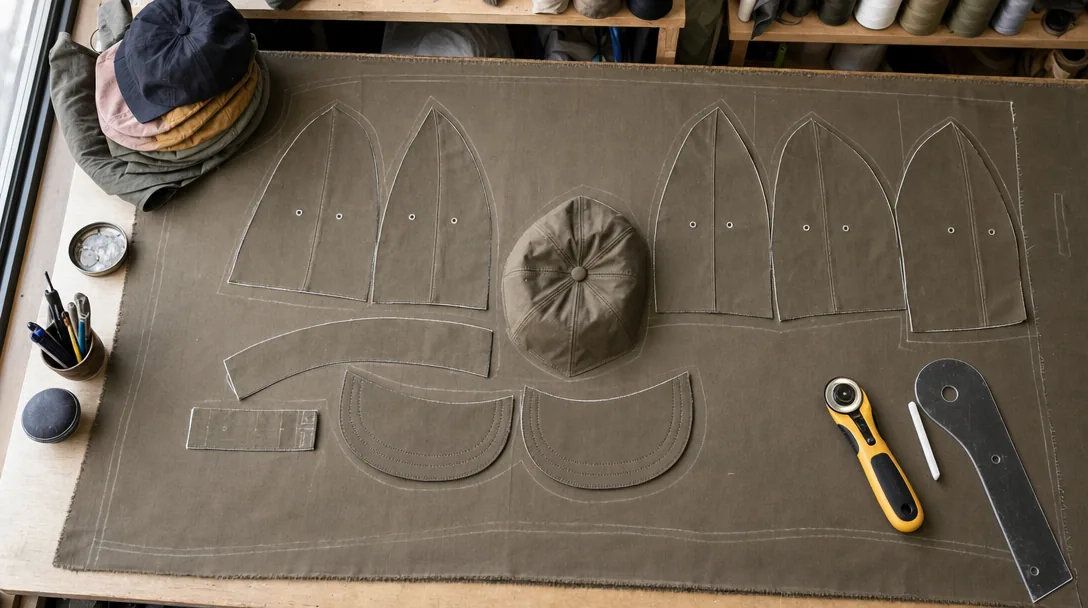
5-Panel vs 6-Panel Caps: Construction, Use Cases and Cost Compared (2026 Update)
Read article →If you are ready to take the next step on cap defect catalog: 32 production issues to inspect for - cost & moq breakdown (2026 update) (2026 update), our team can put a tailored quotation and digital mock-up in your inbox within 24 hours. Send the inquiry form on our contact page or message us directly on WhatsApp.