
Cap Defect Catalog: 32 Production Issues to Inspect For - Cost & MOQ Breakdown - 2026 Buyer's Guide
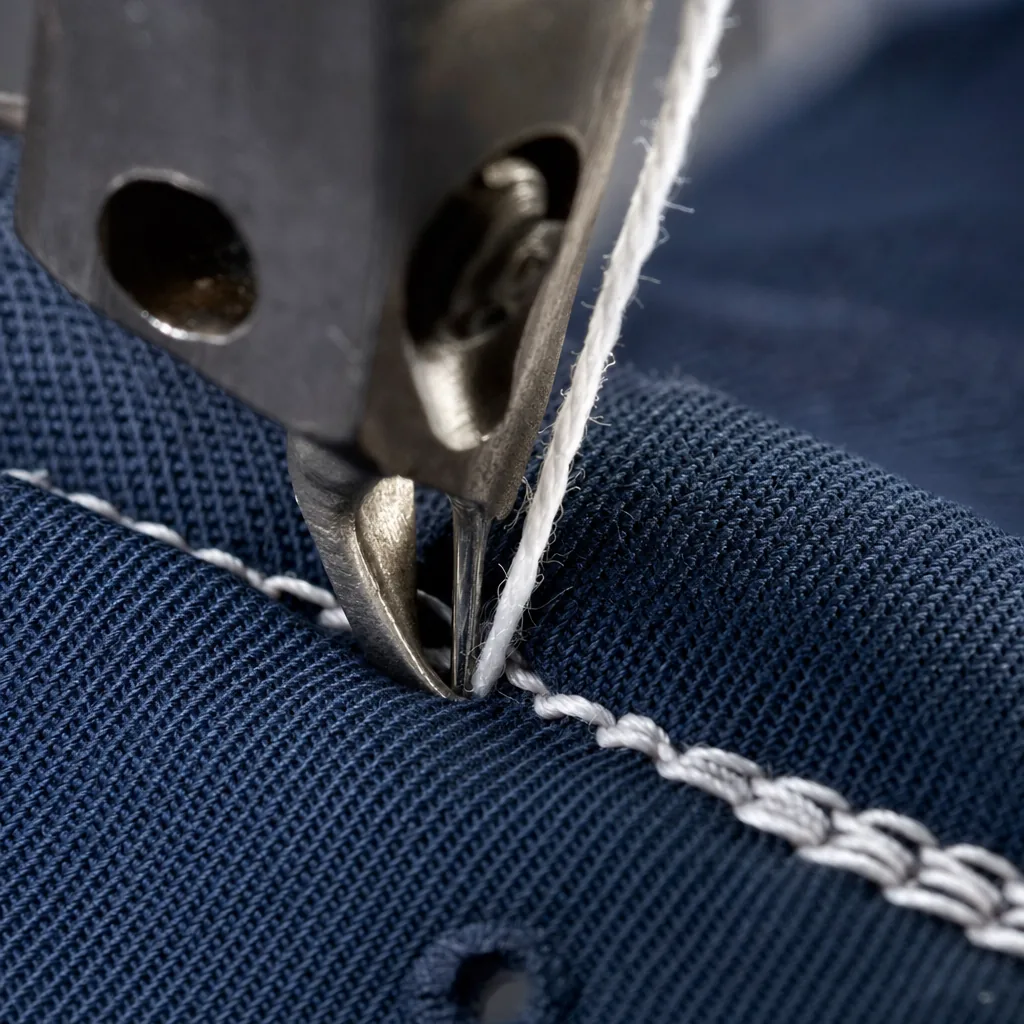
Cap Defect Catalog: 32 Production Issues to Inspect For - Cost & MOQ Breakdown - 2026 Buyer's Guide is one of the most-asked questions we receive from international buyers, and for good reason. With dozens of factories competing for your order and an alphabet soup of technical terms in every supplier quote, even experienced importers can feel lost. This guide consolidates what we have learned producing custom hats for clients in 40+ countries.
How to read this catalog
Read the catalog the way a good inline inspector reads a sewing line: by location first, then by defect family, because cap production defects usually point back to a specific process. The 32 entries are grouped by crown panels, seam lines, eyelets, closures, sweatbands, brims, embroidery, labels, and packing for a reason. A twisted front panel is rarely just “bad sewing”; more often it starts with off-grain cutting, uneven buckram lamination, or fusing run outside the stable window, typically around 125-145°C depending on shell fabric and adhesive. Brim waviness usually traces to low-density PE board, inconsistent sandwich tension, or over-steaming during shaping. Embroidery puckering is even more diagnostic: fill density above about 0.40 mm, weak underlay, mismatched backing weight, or poor upper/bobbin tension on Tajima, Barudan, or ZSK heads will show up immediately on brushed cotton twill or lightweight nylon. If you read the defects in process order, you get root cause instead of just counting symptoms.
Start inspection with silhouette and measurements, not cosmetics, because bad shape cannot be hidden in finishing. On a structured baseball cap, check crown height, visor arc, left-right symmetry, panel match, and seam alignment first; typical tolerances are ±3 mm on key dimensions and no obvious visual lean at arm’s-length viewing. Then verify decoration against approved artwork, Pantone TCX reference, and placement tolerances: embroidery centerline within 2-3 mm, patch angle within about 2°, print registration clean under a D65 light box, and shade variation kept around Delta-E 1.5-2.0 unless the approval standard says otherwise. Finish with closures, labels, barcode accuracy, carton assortment, and packing cleanliness. A few 2-3 mm thread tails may still pass as minor under AQL 2.5; a 5 mm logo shift, distorted brim, or mixed-size carton on a retail order is a commercial failure.
Do not judge any defect in isolation; severity only makes sense when tied to the sample plan, written tolerances, and defect frequency. Under General Inspection Level II with AQL 2.5, critical defects are automatic rejects because they create safety, legal, or brand risk: broken needle contamination, sharp burrs on a metal buckle, mold, wrong country-of-origin, incorrect fiber content, or a licensed logo built off spec. Major defects are sell-through killers even if the cap is technically wearable: off-center embroidery beyond tolerance, skipped topstitching, raw edge exposure, closure malfunction, or obvious panel shade mismatch. Minor defects are low-impact issues that remain inside the approved visual standard, such as removable chalk marks or trimmed thread ends under 3 mm. On a 1,200-piece order, one bad inside label may stay minor; the same error across several cartons signals process drift and often justifies carton expansion, 100% relabeling, or a full sort. Our standard practice is to log each finding by defect code, workstation, and rework minutes because cost drives disposition: spot cleaning or thread trimming typically costs $0.08-$0.25 per cap, while panel replacement, logo re-embroidery, or brim rebuild usually runs $0.80-$1.50 and often makes no sense on 144-300 piece MOQ runs.
Panel and crown defects (8 categories)
The crown defects that actually destroy yield are the ones that alter silhouette; a loose thread can be clipped, but a distorted shell is scrap. In this group, the first three cap production defects to control are seam puckering, fabric irregularity, and panel shading. Puckering usually starts before sewing, when the shell fabric and buckram or tricot fusible shrink at different rates under heat, dwell time, and pressure. If the interlining moves even 1.0% to 1.5% more than a 10 oz or 12 oz cotton twill shell, the front-to-side seam will rope after assembly even at a stable 8 to 10 SPI. On structured 6-panel baseball caps, anything over 3 mm visible waviness on a crown seam is a reject in most AQL 2.5 inspections because the profile looks broken once the cap is on-head or displayed brim-forward. Fabric defects are more deceptive because they may not show until decoration adds tension: slub lines, reed marks, float yarns, uneven pick density, and localized nap changes in chino, brushed twill, melton, or 600D poly can telegraph badly after embroidery on Tajima or Barudan heads. Carton-top checking misses most of this; the reliable method is panel laydown under D65 light before embroidery, then a second check after pressing.
Shade variation remains one of the most expensive cap production defects because cutting rooms start mixing rolls when marker utilization gets tight or replenishment fabric arrives half a shade off. A black, charcoal, or dark navy poly/cotton twill can pass lab dip approval and still drift above Delta-E 1.0 to 1.5 after brushing, steaming, or fusing changes surface reflectance from panel to panel. Buyers usually spot it first at the front-left seam, where two panels meet at a high-visibility angle. The only workable control is discipline: bundle cut parts by roll number, print lot ID on every bundle ticket, and audit at least 10% of assembled crowns before the sweatband and visor go in. Once the shell is closed and trimmed, rework is rarely economic; scrap normally lands around $0.35 to $0.90 per cap before freight, depending on fabric and decoration value. The remaining crown categories are panel misalignment, loose eyelets, wrong-color eyelet stitching, and missing or undersized eyelet holes. On 5-panel campers and high-profile caps, more than 2 mm left-right offset at the top seam makes the crown read twisted. Eyelet failures often come from skipped stitches, bad bobbin tension on ZSK or Barudan embroidery runs, or glue bleed that chokes a nominal 4 mm punched hole down to 2.5 to 3.0 mm. Under AQL 2.5, a missing eyelet is major; wrong-tone thread is usually minor unless plainly visible at 1 meter.
Brim defects (5 categories)
Brim defects are high-risk because buyers notice them before they see crown sewing, and once the sandwich brim, edge binding, and topstitch are closed, rework usually costs more than replacement. The first two categories I audit are visor curve deviation and stiffness inconsistency. On a structured baseball cap, the finished visor should match the sealed sample or steel curve gauge within about ±2 mm at the left tip, center, and right tip; beyond that, the cap reads visibly off on shelf and in product photos. A lot can look technically “clean” yet still fail commercially if 12 to 15 pieces per 100 sit flatter or more aggressive than the approved reference. Stiffness problems usually come from mixed inserts on the cutting floor: 1.8 mm PE blended with 2.0 mm HDPE, virgin boards mixed with recycled boards, or uneven heat-setting after stitching. These are classic cap production defects because the silhouette loses batch consistency even when embroidery, panel alignment, and sweatband sewing are acceptable.
The other three brim categories are undervisor shade mismatch, printed-undervisor misregistration, and brim-edge stitching failure. Undervisor color errors are usually lot-control failures, not subjective arguments about shade. We check against the approved standard under D65 light; on dark programs like black, olive, khaki, and bottle green, a Delta-E above 1.5 to 2.0 is already visible, and even a one-step drift from the approved Pantone TCX can break continuity with prior shipments. Printed undervisors fail for a different reason: sublimation graphics often drift 2 to 4 mm off center, while screen prints skew when operators register to raw cut edges instead of the sewn centerline, so the art twists once the cap is curved and worn. The durability category is brim-edge stitching failure: skipped stitches, loose topstitch, SPI inconsistency, seam opening, or piping instability on heavy sandwich constructions. Standard control is 6 to 8 SPI with balanced tension, clean lock formation, and no visible loops; even a single 8 mm skip can let the visor layers separate after carton compression or repeated flexing. At CrownsForge, visible skipped brim stitching is treated as major under AQL 2.5 and traced back by machine, needle size, and operator shift because brim issues almost never happen randomly.
Embroidery defects (6 categories)
Embroidery is where buyers lose margin fastest because most visible failures are not reworkable after the cap is built. The six embroidery issues I would classify as priority cap production defects are wrong thread shade, color-to-color misregistration, crooked or off-center placement, thin or patchy coverage, puckering or panel distortion, and poor backside cleanup. Shade approval should be done against the buyer’s Pantone TPX/TCX reference or dyed thread card under D65 light, not under mixed shop LEDs that mask cast differences. In practice, a thread swap from Madeira Polyneon to rayon or an unverified local polyester can shift the visual match beyond Delta-E 1.5-2.0 on black, red, and navy far faster than suppliers admit. Registration tolerance also needs to be explicit. On a 3D puff logo, 1.0 mm drift between the foam fill and satin border is already visible at arm’s length; above 1.5 mm, most auditors will call it major under AQL 2.5. Placement is just as unforgiving: on a standard 6-panel front, logo center should typically hold within +/-2 mm of the center seam, and baseline tilt should stay under 1.5 degrees or the whole cap reads crooked on-head.
Patchy coverage usually starts in the digitizing file, not at the embroidery head. A fill that is too open for brushed cotton, polyester twill, or heather jersey will flash base fabric through the stitches; then the factory overcompensates with heavy underlay, creating ridges, shine, and a stiff hand. On Tajima, Barudan, and ZSK machines, unstable upper-thread tension, worn rotary hooks, incorrect presser-foot height, and dull 75/11 or 80/12 needles will magnify the problem, but the real control point is a strike-off sewn on the actual shell fabric with the actual backing. Puckering is especially common on unstructured cotton below 180-200 gsm, washed chino, and 70D-210D nylon when tear-away backing is used where cut-away, fusible backing, or a pre-fused front support should have been specified. The sixth defect, poor backside cleanup, is easy to ignore and expensive to regret: long trim tails, loose jump stitches, exposed bobbin nests, and underlay show-through indicate weak trimming calibration and unstable SOPs, not a one-off operator lapse. If caught in-line, thread cleanup may cost only $0.03-$0.08 per cap; if the front panel has to be scrapped after assembly, the loss is typically $0.45-$1.20 per cap before freight. Our standard practice at CrownsForge is 100% front-logo inspection before crown assembly because embroidery defects compound too quickly once the sweatband and closure are in.
Patch defects (4 categories)
Patch defects generate claims faster than most cap production defects because the branding sits at eye level and cannot be cleaned up once the cap is shaped, stickered, and packed. Placement is the first fail point. For a front-center patch on a standard adult 6-panel cap, I would treat more than ±2.0 mm off centerline, over 1.5° of rotation, or more than ±2.5 mm from approved crown height as rejectable unless the tech pack calls for an intentional offset. On a structured buckram front, even a 1.5 mm drift reads crooked across a 24-cap inner carton because the crown plane is rigid. Inspectors should measure from the front seam, visor midpoint, and seam intersection using a placement jig or transparent ruler against the approved PP sample; eyeballing is how mixed lots slip through. Under AQL 2.5, off-center, tilted, or height-inconsistent patches are usually major defects because the cap is still wearable but no longer retail-acceptable.
Adhesive bleed and edge-finishing failures are usually process-control problems, not random damage. A visible hot-melt halo wider than 2 mm around a leather, suede, TPU, silicone, or woven patch is already obvious on light-color 210 gsm cotton twill, brushed chino, or 8 oz canvas; at 3 to 5 mm, it is a clear major defect. The root causes are predictable: press temperature drifting above 140°C, dwell time exceeding spec by 2 to 3 seconds, pressure not calibrated across the platen, or heat-film die cuts extending beyond the patch edge. Our standard practice is to test on actual shell fabric because PU that behaves on 10 oz canvas can bleed badly on enzyme-washed twill. Edge quality is the other hard gate: cracked edge paint, exposed leather fibers, weak merrow coverage, frayed woven borders, low-density satin stitching, and corner lifting on fine woven patches below roughly 75D all belong in the defect log, not in a “cosmetic” bucket. The fourth category is material and color inconsistency between lots. PVC and silicone patches can drift to Delta-E 2.0 to 3.5 if pigments are mixed by eye instead of by weight, especially on red, orange, and olive tones referenced to Pantone TCX or coated standards. Add shallow embossing, uneven fill on Tajima or Barudan embroidery heads, or woven density variation, and replacement patches stop matching the first run. That is where costs climb fast: sorting a 500-piece lot for patch shade variance can add $0.12 to $0.25 per cap in labor, while a full patch remake on low MOQs under 300 pieces can push unit cost up by $0.40 to $0.90.
Sweatband defects (3 categories)
Loose sweatband attachment is a wear failure, not a cosmetic miss, so it belongs near the top of any cap production defects checklist. On a standard 6-panel baseball cap, the band should be caught evenly into the lower crown seam at 6-8 SPI using a 401 or 301 lockstitch, with balanced top and bobbin tension and no seam grin at the fold. On heavier 200-240 gsm brushed cotton or terry bands, most lines run 7-9 SPI and reduce differential feed to stop the band from stretching during insertion. The failures I see most often are 15-30 mm openings at the center-back overlap, skipped stitches near side seam taping, and detached sections caused by dull DPx5 needles, mistimed post-bed machines, or operators pulling the band to match the shell. Once the cap relaxes after packing, the seam opens. This defect is routinely missed in carton audits because the cap looks clean until the band is flexed by hand or worn for a few hours. A practical in-line check is a light pull test at center back and both side seams on 5 pieces per bundle; if the seam starts to ladder or the fold exposes raw allowance, stop the line immediately. Under AQL 2.5, any separation over 20 mm, broken seam affecting comfort, or exposed seam allowance should be logged as major; waviness without separation or loose thread tails is minor. The risk spikes on rushed orders under 300 pieces, where machine setup is abbreviated and first-piece approval is treated like a formality instead of process control.
Sweatband material mismatch and size inconsistency are quieter defects, but they drive returns faster than a slightly off embroidery registration. Buyers often approve 180-220 gsm cotton twill, brushed cotton jersey, or cotton-rich terry, then bulk goods arrive with polyester tricot or a 65/35 poly-cotton substitution that saves only $0.03-$0.08 per cap at scale. Dark navy and black are where this swap hides best because polyester mimics cotton under factory and warehouse lighting. The PO should lock fiber content, gsm tolerance at plus/minus 5%, visible band height at 30-35 mm, color standard by Pantone TCX, and shade tolerance no worse than Delta-E 1.5 to approved trim. For runs above 2,000 pieces, ask for mill cards and confirm by burn test or third-party fiber composition report before bulk assembly; our standard practice is to seal the approved band against the PP sample because hand-feel memory is unreliable after a week on the line. Size inconsistency creates fit variation even when the shell fabric and decoration are perfect. If bands are cut inconsistently at 54, 55, and 56 cm for the same size spec, finished internal circumference can drift by more than 0.5 cm, which is enough to twist the back opening, pucker the lower crown, and make identical caps sit differently on the head. The root causes are usually manual cutting without steel templates, weak notch control at center back, or mixed bundles from separate markers. This matters most on fitted caps, licensed teamwear, and DTC programs where customers compare units side by side. The fix is simple: measure at least 10 pieces per colorway in-line for internal circumference, center-back join accuracy within plus/minus 2 mm, and visible band height before packing. In a serious cap production defects review, any sweatband variation that changes fit should be classified as major.
Closure defects (3 categories)
Closure failures are among the most expensive cap production defects because they bypass front-panel inspection and show up only when the wearer adjusts the cap. The highest-risk subcategory is snapback function: studs that do not fully lock, tabs that stress-whiten or crack at hole 1 or hole 7, and closure halves sewn off-axis so the strap torques under tension. I treat 100% closure cycling as mandatory on first articles and inline QC: every snap position must engage and release cleanly, with no partial seating, no rebound, and no visible deformation after 10 open-close cycles. Under AQL 2.5, any non-functioning closure is a major defect; if the tab breaks or the cap cannot be secured, it is effectively critical for retail use. The root causes are rarely mysterious on the factory floor: low-impact PP instead of POM, shallow stud geometry from worn molds, gate flash not trimmed cleanly, or back-arch stitching pulling the strap centerline more than 2 mm off spec. Color mismatch is the second closure category buyers routinely underestimate, especially on black, navy, forest, and licensed team shades where the rear closure sits directly below embroidery. A snap or buckle that is even slightly warm or cool reads immediately as a factory miss. The control point should be resin-chip or plated-hardware approval against the PO colorway under D65 light, with an agreed Delta-E tolerance below 1.5 for premium retail and below 2.0 for promo programs. The most common failure is mixed-lot usage: leftover closures from different resin batches packed into one order, causing carton-to-carton shade drift that only appears once the goods are lined up. Our standard practice is to seal approved snap sets by PO, colorway, and supplier lot, because dark cotton twill, melange polyester, and recycled rPET fabrics expose undertone differences fast.
Strap-and-buckle workmanship is the third closure category, covering self-fabric straps, tri-glides, D-rings, metal tuck straps, and hook-and-loop. Most failures start at the fold-back end of the strap, not at the hardware itself. For a 20-25 mm self-fabric strap, I want 7-9 SPI, a proper back-tack, and balanced lockstitch tension so the fold does not open when pulled to roughly 8-10 kgf by hand. Common defects are skipped stitches, uneven bartacks, seam grin at the fold, and strap width cut too narrow for the hardware channel, which causes slippage during wear. Metal parts add a separate risk profile: bent tri-glides, burrs that cut the fabric edge, plating rub-through on antique brass or gunmetal, and pinholes from thin electroplating. A practical incoming test is 10 adjustment cycles plus a dry rub on edge-contact points; if base metal shows that quickly, the hardware should not pass. Hook-and-loop needs its own judgment because inspectors often overcall weak closure when the real issue is contamination. If the hook side has collected lint from a brushed sweatband, loose overlock threads, or woven-label waste, engagement will feel weak even when the tape is within spec. The correct method is to clean both sides, then cycle the tape at least 5 times and check for consistent peel and shear hold. I also look for stitch run-off at the tape corners, exposed hook edges that scratch the wearer, and tape skew that leaves the closure misaligned by more than 3 mm. These are not cosmetic nuisances. On promotional orders in particular, one bad adjustment is enough for the end user to label the whole cap cheap, which is why closure workmanship deserves the same scrutiny as embroidery and panel sewing.
Packaging defects (3 categories)
Packaging mistakes are cheap to correct before pallet wrap and disproportionately expensive after arrival, so they belong in any serious list of cap production defects. The three failure groups worth separating are unit-pack defects, ticketing defects, and outer-carton identification defects, because each one triggers a different kind of loss: product damage, retail noncompliance, or warehouse receiving delays. Unit-pack failures usually start with the wrong bag gauge or poor sealing. A 0.025 mm polybag is marginal for structured 5-panel and 6-panel caps once master cartons are stacked 5–6 high; side seals burst, sandwich brims abrade through film, and metal tri-glides or brass buckles mark adjacent crowns. In practice, 0.03–0.05 mm LDPE or OPP is the workable range for export programs, with a 3–5 mm heat seal, clean cut edge, and 1–2 vent holes to release trapped air under compression. If the buyer spec calls for a suffocation warning, recycle logo, or resin identification mark such as PE-LD or PP, missing print is a compliance defect, not a cosmetic one, and UK/EU retailers will reject it at inbound QA.
Ticketing defects are usually created at finishing tables, not sewing lines. The common failure is fastener placement: a nylon swiftach pushed through the sweatband, seam tape, or brushed cotton twill front panel instead of the approved buttonhole or eyelet point leaves a permanent puncture, especially on suede microfiber, washed chino twill, and 14-wale corduroy. Label placement also needs a measurable tolerance. A front sticker drifting more than 5 mm off center, a size tab covering an eyelet, or a barcode label bridging the visor curve will wrinkle, lift, or fail a scanner check. For UPC and EAN labels, a barcode verifier grade of at least ANSI/ISO C is a practical minimum; cheap 203 dpi thermal output often produces muddy bars, while 300 dpi transfer print is safer for small labels. Outer-carton defects create the biggest operational mess because one wrong carton mark can stop intake on a full size run. If the carton label does not match PO, style, color, size ratio, and carton count, U.S. 3PLs and EU DCs will hold the shipment for manual sort. Re-labeling at origin may cost $0.20–$0.80 per carton; after export, the same error turns into chargebacks, delayed appointments, and avoidable compliance claims under AQL 2.5 receiving standards.
Frequently Asked Questions
What logo decoration techniques do you offer?
3D puff embroidery, flat embroidery, woven patch, leather patch, PVC patch, screen printing, sublimation, applique and laser etching, all in-house with no subcontracting.
Can I order a sample before bulk production?
Yes. We strongly recommend approving a pre-production sample before mass production. Samples are charged at 35 to 60 USD each plus express shipping, fully refundable against confirmed bulk orders over 500 pieces.
Do you support sustainability certifications?
Yes. We work with GOTS organic cotton, GRS-certified recycled polyester, OEKO-TEX Standard 100 fabrics, and are BSCI and Sedex audited. Certification documentation can be provided per order.
What file format should I send for my logo?
Vector files (AI, EPS, PDF) are ideal. High-resolution PNG or JPG at 300 dpi on transparent background works as a fallback. Provide Pantone color references for accurate reproduction.
Which shipping methods do you support?
We support FOB, CIF and DDP shipping. Air express for samples and small orders, sea LCL for 100 to 500 pieces, sea FCL for 5,000+ pieces. Door-to-door DDP available for US, EU, UK, Canada and Australia.
What should buyers know about cotton twill army cap kangol?
When evaluating cotton twill army cap kangol, the key considerations are construction quality, decoration capability, MOQ flexibility and lead time. Sweatband attachment loose, sweatband fabric mismatch (cotton requested but polyester delivered), sweatband size inconsistency (varies cap-to-cap within batch). The 32 defect categories below group by area of the cap (panel, brim, embroidery, etc.) and severity (critical, major, minor under AQL 2.5). Critical defects mean reject. Major defects must remain under the AQL 2.5…
How does ordering baseball cap embroidered custom work?
When evaluating baseball cap embroidered custom, the key considerations are construction quality, decoration capability, MOQ flexibility and lead time. The 32 defect categories below group by area of the cap (panel, brim, embroidery, etc.) and severity (critical, major, minor under AQL 2.5). Critical defects mean reject. Major defects must remain under the AQL 2.5 sample limit. Minor defects are tolerated within wider limits. Stitch puckering on panels, fabric weave irregularity, color shading between panels of supposedly…
How does ordering custom embroidered trucker hat work?
When evaluating custom embroidered trucker hat, the key considerations are construction quality, decoration capability, MOQ flexibility and lead time. The 32 defect categories below group by area of the cap (panel, brim, embroidery, etc.) and severity (critical, major, minor under AQL 2.5). Critical defects mean reject. Major defects must remain under the AQL 2.5 sample limit. Minor defects are tolerated within wider limits. Stitch puckering on panels, fabric weave irregularity, color shading between panels of supposedly…
What should buyers know about kangol bucket hat mens?
When evaluating kangol bucket hat mens, the key considerations are construction quality, decoration capability, MOQ flexibility and lead time. The 32 defect categories below group by area of the cap (panel, brim, embroidery, etc.) and severity (critical, major, minor under AQL 2.5). Critical defects mean reject. Major defects must remain under the AQL 2.5 sample limit. Minor defects are tolerated within wider limits. Stitch puckering on panels, fabric weave irregularity, color shading between panels of supposedly…
What are the defects of plastic bottle caps?
Types of bottle caps defects that can be detected damages (chips, cracks, scratches); deformations (pinches, bents, dents, warping, buckling, roundness loss); missing parts (absence of caps, absence of tamper rings);
What are production defects?
A production defect is any deviation in a manufactured part from its defined specification — dimensional, functional, visual or material. The definition sounds simple; in practice, most disagreements in a quality meeting come from confusing four related terms that are not the same thing.
What are common manufacturing defects?
Manufacturing defects arise during the production process, where an otherwise safe product is rendered dangerous due to errors or irregularities in its manufacturing. This might include issues such as substandard materials, improper assembly, or other deviations from the intended design.
What are the top 3 defects?
How Many Types of Quality Defects Are There? In quality control inspections, quality defects are typically categorized into three main types, Critical defects, Major defects and Minor defects, based on their severity and impact on product performance and safety.
What is CAP in production?
Businesses often use a corrective action plan, or CAP, to determine the steps that can help them find a solution to an issue that's impacting their daily operations. With a CAP, a company may resolve its workflow issues, leading to increased output.
What are three types of defects?
Minor defects are usually cosmetic and not considered to be serious. Major defects may inhibit the product's ability to function as intended and are considered somewhat serious. Critical defects may pose hazards and are considered to be very serious.
Ready to start your custom hat project?
Send us your tech-pack, sketch or even just an inspiration photo. We will respond with a detailed quotation and digital mock-up within 24 hours.
Request a free quoteRelated guides
Performance & Athletic Caps: Moisture-Wicking, UPF and Buyer Specs - 2026 Buyer's Guide - 2026 Buyer's Guide
Read article →
Country Trucker Caps: The 2026 Sourcing & Manufacturing Playbook
Read article →
5-Panel vs 6-Panel Caps: Construction, Use Cases and Cost Compared (2026 Update)
Read article →If you are ready to take the next step on cap defect catalog: 32 production issues to inspect for - cost & moq breakdown - 2026 buyer's guide, our team can put a tailored quotation and digital mock-up in your inbox within 24 hours. Send the inquiry form on our contact page or message us directly on WhatsApp.