
Camouflage Bucket Hat: Properties, Costs and How to Spec It Right - Cost & MOQ Breakdown
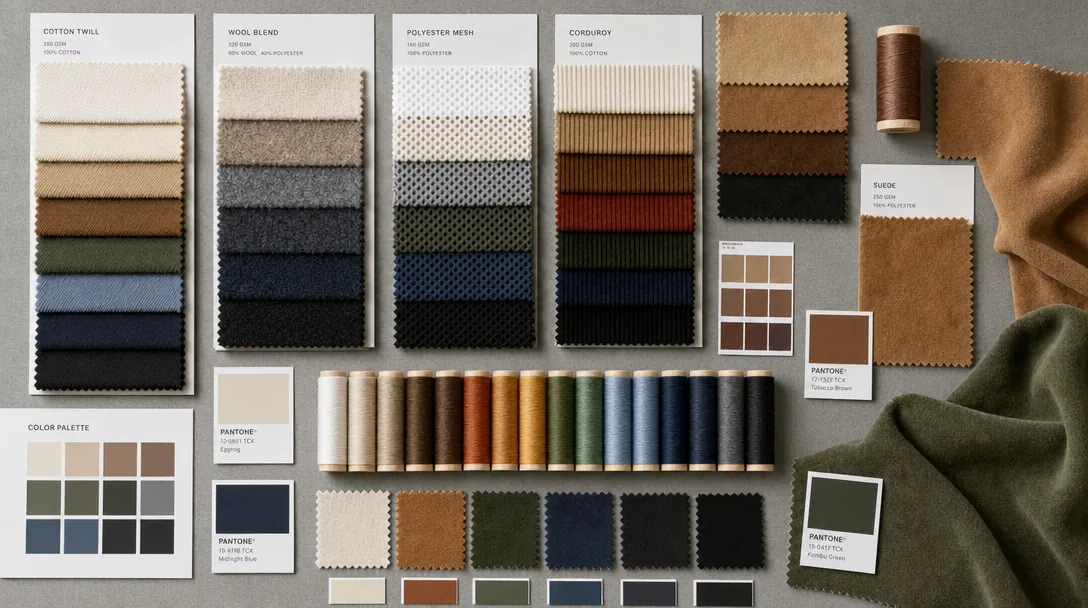
For brand owners, wholesalers and procurement teams entering the custom headwear category, camouflage bucket hat: properties, costs and how to spec it right - cost & moq breakdown is one of the highest-leverage decisions you will make. Get it right and your unit economics, retail story and reorder cycle all improve. Get it wrong and you carry the cost for years.
Bucket Hat Women
For women’s programs, the block is what makes or breaks the hat; the camo print is secondary. A female-focused bucket usually fits better with a 5.5-6.0 cm brim, 8.0-8.4 cm crown height, and a slightly reduced top diameter versus a standard unisex promo block, which tends to look too straight-walled on a 56-58 cm head. In production, that means you should spec the actual circumference point and crown profile, not just call it “women’s fit.” Common shell fabrics are 180-240 gsm cotton twill, washed cotton canvas, brushed cotton, or 21-wale corduroy if you want a softer silhouette and less stiffness at the brim edge. For a camouflage bucket hat, the first real decision is print source: stock camo yardage is cheaper and faster, while reactive-printed custom fabric gives better repeat control and collection consistency. Even then, poor marker planning will cause obvious pattern breaks at the side seam, crown join, and brim panel splice. Brim construction needs to be written into the tech pack because this is where cheap factories cut corners. A stable build is usually self fabric plus a 40-60 gsm nonwoven fusible, with 5-7 rows of topstitching at 0.6-0.8 cm spacing; a two-layer self-fabric brim without the right fuse often starts waving after wash, steaming, or carton compression in transit. Size tolerances should be tight: head circumference by centimeter, brim width at +/-0.3 cm, crown height at +/-0.3 cm, and fabric weight within +/-5%. If the camouflage bucket hat has to sit with matching outerwear or bags, ask for strike-offs, Pantone TCX references for labels and trims, and print shade control within Delta-E 1.5 under D65 lighting. Stitch density should be called at 6-8 SPI for assembly seams and 8-10 SPI for brim topstitching, plus eyelet finish, sweatband material, and REACH/azo-free compliance requirements.
Costing moves fast once you decide whether the camo is stock or custom. A women’s bucket in piece-dyed 200-220 gsm cotton twill with a woven label and standard metal eyelets typically lands around $2.10-$3.40 ex-factory in China at 300-500 pieces per color. A true custom camouflage bucket hat is a different cost structure: reactive or pigment print development, fabric minimums, and strike-off approvals usually push it into the $3.60-$5.80 range, and 500 pieces per pattern is a realistic floor because the mill will charge separately for screen setup, sampling, or digital print calibration. Add 3D embroidery, corduroy shell fabric, or branded inner taping and you can add another $0.35-$1.20 per unit without doing anything exotic. Inspection should focus on the failure points that buyers actually get claims on. The main checkpoints are brim waviness, crown seam skew, eyelet burrs, stitch tension around the brim rounds, sweatband join bulk, and visible print mismatch at the side seam and crown. For first orders, I’d hold inline measurement checks on the first 20-30 pieces off line, then run final inspection to AQL 2.5 with tighter measurement review on fit-critical points. If embroidery is added, check registration, thread trims, and puckering after pressing, ideally on Tajima or Barudan samples before bulk starts. Our standard practice is to approve a sealed sample with the exact fusible, stitch count, and print placement marked, because a camouflage bucket hat can look right in photos and still fail badly on shape and seam matching in hand.
Corduroy Hat Men's
Corduroy exposes sloppy cutting faster than almost any other bucket-hat fabric. If the nap is not kept running one way across crown, side band, and brim, the hat will read as two shades under retail LED lighting even when the dye lot is fine. For a men’s silhouette, 8- to 14-wale cotton corduroy at 220-300 gsm is the practical range: 12-14 wale gives a cleaner fashion look, while 8-10 wale feels tougher but shows seam grin, brim waviness, and press marks sooner. Lock the fabric spec before sampling—fiber content, wale count, finished gsm, Pantone TCX target, and acceptable shade tolerance—and ask for lab dips within Delta-E 1.5. If the same supplier is quoting both corduroy and a camouflage bucket hat in brushed twill or 210 gsm cotton ripstop, do not compare FOB on fabric price alone; corduroy typically loses 6-10% more cutting yield because panels cannot be flipped to improve marker efficiency without reversing the nap. A real tech pack needs construction data, not just a style name. Specify crown height, brim width, brim stitch rows, eyelet material, sweatband composition, fusible weight, seam-binding denier, and whether the shell is garment-washed before packing. Embroidery on corduroy also needs special handling: Tajima or Barudan heads can sew it cleanly, but lettering below 4 mm usually needs a knockdown stitch and reduced underlay so the pile does not swallow the edge. In Yiwu, MOQ is usually 300-500 pieces per colorway for stocked corduroy, rising to 800-1,000 pieces if you need custom-dyed shell fabric, printed lining, or mixed trims. A basic unstructured style generally lands around $2.10-$3.40 FOB at 500 pieces; add metal eyelets, applique, woven labels, inside taping, and tighter inline QC, and the cost often moves past $4.20.
Inspection is where weak corduroy factories get exposed. The repeat failures are off-grain brims, seam slippage at the side band, mixed nap direction between panels, crushed wale after steam pressing, and logo puckering from over-tensioned frames. Set AQL 2.5 for major defects and measure brim symmetry to within +/-3 mm, crown height to within +/-2 mm, and stitch-row spacing for visible drift. Compression packing matters too: leave samples packed for 24 hours, then recheck for shading, brim memory, and wale crush, because corduroy can look acceptable on the finishing table and fail once it comes out of a master carton. Retail programs should also verify needle-detection logs and current sedex-audit-cap-supplier-guide.html">BSCI 2.0 or Sedex SMETA 4-Pillar audit records, especially if the hats are going into chain stores or licensed distribution. That discipline matters beyond this fabric. A factory that cannot control nap direction, panel grain, and bulk handling on corduroy usually struggles with print placement, panel matching, and finishing consistency on a camouflage bucket hat as well. If you want one quick stress test before approving bulk, ask for a pre-production sample with embroidery, wash, and compression packing all included; weak process control usually shows up there long before the final inspection report does.
Organic Cotton Newborn Hat
Traceability is the first control point on any organic cotton newborn hat; if the spinner lot, knitting lot, and GOTS or OCS transaction certificate do not match, “organic” is just a claim on paper. In Zhejiang and Jiangsu supply chains, substitutions are most common on orders below 3,000 pcs because mills try to protect margin when greige prices move by RMB 1.5-2.5/kg. Standard constructions are 180-220 gsm combed single jersey for a softer drape or 240-280 gsm 1x1 rib when you need better opening recovery. For newborn sizing, a practical finished spec is 13-15 cm body height and 16-18 cm opening width, but the real pass/fail point is after-wash stability: shrinkage should stay within 3-5% and finished measurement tolerance within ±0.5 cm after one domestic wash. That sounds stricter than a camouflage bucket hat, but baby headwear has no forgiveness because seam bulk, residual chemistry, and fabric torque all sit against skin for hours. A usable tech pack has to specify more than “100% organic cotton.” Call out yarn count where relevant—commonly 30s or 40s combed cotton—plus azo-free reactive dyes, formaldehyde limits suitable for infant apparel, pH range, and nickel-free requirements if any snaps or decorative hardware are involved. Color approval should be tied to Pantone TCX with Delta-E under 1.5 for solids; otherwise repeat lots drift fast, especially on pastel shades. Labeling is another frequent failure point: a soft satin side-seam label or a heat-transfer print tested to 20 wash cycles is safer than a scratchy neck label. For compliance, U.S. programs should ask for CPSIA documentation and needle detection records, while EU shipments should carry REACH test reports covering saliva colorfastness, extractable heavy metals, and pH. Stock-fabric MOQ usually sits at 500-1,000 pcs per color, while custom knitting, reactive print, or boxed retail packing typically pushes minimums to 1,500 pcs or higher.
Infant-hat inspection should be tighter than standard fashion headwear because the critical defects are functional, not cosmetic. The failures I watch first are shrinkage above 5%, seam twisting, spirality after wash, loose thread ends inside the crown, uneven opening rebound, and lab results that miss pH or colorfastness limits. AQL 2.5 is still workable, but only if the checklist adds seam-comfort checks, odor review, carton cleanliness, metal contamination control, and lot-code traceability down to packed-carton level. On the sewing floor, 4-thread overlock with a soft coverstitch is the safer build because it reduces ridge pressure across the forehead; if the overlock tension is too tight, you will see puckering and opening distortion before you even get to final inspection. FOB Yiwu pricing for a basic organic cotton newborn hat is usually $0.85-1.35 in stock jersey, rising to $1.40-2.20 with rib binding, printed artwork, or stricter wash testing. If the order requires GOTS-certified cut-and-sew, individual polybag control, or retail gift packaging, landed factory cost moves past $2.50 quickly. Those numbers are not directly comparable to a camouflage bucket hat, which uses heavier twill or ripstop, more panels, and often more trims, but the discipline is similar: if a supplier can hold infant tolerances, pass chemistry tests, and maintain paperwork integrity on this category, they are generally better equipped to manage a camouflage bucket hat program with reactive print, chin cord, or mixed-fabric panels without quality drift.
Corduroy Hat Wholesale
Corduroy wholesale lives or dies on fabric spec, and that matters even more when a buyer is comparing it with a camouflage bucket hat built in printed twill or ripstop. For bucket hats, Zhejiang mills usually offer 8-wale, 11-wale, and 14-wale cotton corduroy at 220 to 320 gsm; in practice, 260 to 280 gsm is the safe range because it supports a 5.5 to 6 cm brim without creating ropey seam buildup at the side crown join. Lock fiber content before sampling. A 100% cotton shell gives the dry hand and vintage surface most streetwear buyers want, but a 97/3 cotton-spandex blend is easier to sew cleanly because it reduces seam grin and crown distortion during topstitching. Nap direction is the non-negotiable point: every crown panel and brim piece must be cut one-way, or the shade will flip under retail lighting even from the same dye lot. If embroidery is on the brief, ask what machine and backing the factory actually runs, not just whether it can "do embroidery." Tajima, Barudan, and ZSK heads all handle corduroy well, but the file has to be digitized for pile height, with underlay and pull compensation adjusted so satin columns do not sink into the wale. On 11-wale corduroy, a medium cutaway or composite backing usually performs better than tearaway, which tends to leave edge instability after washing. The spec should also pin down crown height, brim width, stitch rows, sweatband construction, and color standard by Pantone TCX, with Delta-E kept under 1.5 for solid-dyed lots. Typical MOQ is 300 to 500 pieces per color in stock corduroy, but 800 to 1,200 pieces once you add custom dye, enzyme wash, or printed lining because the real cost driver is fabric-lot minimum and cutting loss from one-way nap layout.
Pricing is straightforward once trims and finishing are stated honestly. In Yiwu, a basic unstructured corduroy bucket hat in stock 11-wale fabric usually lands around $2.10 to $3.40 FOB Ningbo at 500 pieces, assuming a standard cotton twill sweatband, no wash, and no branded tape. Add $0.40 to $0.90 for front embroidery depending on stitch count and backing, $0.18 to $0.35 for woven labels and seam taping, and roughly $0.25 to $0.60 if the shell uses organic-certified cotton with transaction certificates. A camouflage bucket hat may quote lower on base sewing when it uses stock printed twill, but custom camouflage often brings strike-off charges, print minimums of 500 to 1,000 meters, and print registration risk that closes the cost gap quickly. Lead time is typically 25 to 35 days after PP approval for corduroy, versus 30 to 40 days if custom camo printing is still on the critical path. Inspection should focus on the defects buyers actually file claims on: nap mismatch, seam slippage at the side wall, skipped stitches where brim layers stack thick, brim waviness after topstitching, and shade variation between brim and crown parts. AQL 2.5 is the practical standard here, with panel comparison under a D65 lightbox because corduroy often looks acceptable on the sewing line and wrong in daylight. Brim reinforcement matters more than many buyers realize; woven fusible or stitched self-fabric holds shape better than cheap needle-punched nonwoven, which can delaminate and bubble after washing. Our standard practice is to check post-wash shrinkage and pile crush as separate risk points, because corduroy returns are usually driven by appearance inconsistency, while a camouflage bucket hat more often fails on print approval, repeat matching, or fabric MOQ planning.
Wholesale Hat Manufacturers Usa
When screening wholesale hat manufacturers usa for a camouflage bucket hat program, ignore the patriotic sales pitch and audit the control points. Many U.S.-based vendors are distributors or decorators buying from cut-and-sew factories in China, Vietnam, or Bangladesh; that is workable if they can document fabric source, print method, inline QC, and final inspection standards. For bucket hats, the shell fabric decides shape retention, sewability, and print clarity. A practical baseline is 100% cotton twill at 180-240 gsm, while 3/1 cotton ripstop around 200 gsm performs better for outdoor use because it resists seam slippage and keeps the brim cleaner after wash. Brushed canvas gives a softer hand but builds bulk at the brim seam, which matters once you stack shell, interlining, and sweatband. Get the camouflage method written into the PO: reactive printing on cotton gives better wash fastness, pigment print is cheaper but flatter and more prone to crocking, and sublimation only makes sense on polyester shells, usually 120D to 150D microfiber or peach skin.
A custom camouflage bucket hat should never be approved from a JPEG on a laptop screen. Ask for physical strike-offs or lab dips matched to Pantone TCX references, then lock shade tolerance at Delta-E 1.5-2.0 to the signed standard under D65 lighting. That single requirement prevents the most common camo failures in bulk production: muddy olive tones, brown casts drifting red after wash, and visible panel mismatch from lot-to-lot variation. The supplier also needs to confirm print repeat size, fabric lot consistency, and whether the pattern is cut to control motif placement; otherwise two hats from the same carton can look like different SKUs. On the construction side, specify finished circumference, crown height, top diameter, brim width, brim stitch rows, eyelets, sweatband, lining, and interlining weight. A standard adult size is 58 cm with a 5.5-6.0 cm brim; fashion fits often widen to 6.5 cm and need heavier fusible support to stop brim collapse. At bulk stage, inspect to AQL 2.5 and watch the real failure points: off-center embroidery, skipped stitches at the sweatband join, brim waviness from uneven topstitch tension, oxidation at metal eyelets after wash, and finished size drifting beyond plus or minus 0.5 cm.
Cost and MOQ are driven by complexity, not by whether a seller lists itself among wholesale hat manufacturers usa. A stock-camo cotton bucket hat usually starts at a true factory MOQ of 300-500 pieces per colorway, with FOB China pricing around $2.10-$3.40 at 500 units depending on fabric weight, brim construction, and packaging. A fully custom camouflage bucket hat with all-over print, woven label, inside seam taping print, and front embroidery is more realistically $3.60-$5.80 FOB at the same volume; add another $0.12-$0.28 for a woven patch, $0.08-$0.15 for custom inner tape, and roughly $80-$150 in one-time embroidery digitizing and sampling charges. If someone quotes 48 pieces at near-bulk pricing, they are almost always using a stock body, a stock camo, or burying setup costs elsewhere. The safer supplier is the one that can produce fabric test reports, colorfastness data, and current BSCI 2.0 or Sedex SMETA 4-Pillar records, plus inline QC photos before shipment. That paperwork tells you far more about risk than a U.S. mailing address ever will.
Black Beanie Hat
A black beanie only looks simple until you price it correctly. The floor spec in bulk is usually 100% acrylic, 2/28Nm or 2/32Nm yarn, knitted on 7G or 12G machines, with a 6-needle or 8-needle crown finish and a 6-8 cm cuff; at 500-1,000 pcs per color, that normally lands around $1.10-$1.80 FOB China. Move to 50/50 cotton-acrylic, viscose-polyester, or 100% cotton and the cost typically climbs to $1.80-$2.80 FOB because yarn price, knitting efficiency, and reject risk all move against you. Black is where factories get exposed: acrylic lots can drift against Pantone TCX references, sulfur black can crock on dry rubbing, and polyester-heavy blends often look acceptable under warm showroom lighting but miss under D65. If you are buying a black beanie alongside a camouflage bucket hat, do not let the supplier treat color control as “close enough”; ask for a stated shade tolerance, ideally Delta-E under controlled light, and confirm whether trims are matched to shell color or to the Pantone chip.
A usable spec sheet should remove every excuse before sampling starts. Call out finished height, cuff depth, flat width, target weight in grams, yarn composition tolerance, knit gauge, and head circumference range; then add measurable test points such as pilling minimum grade 3-4, colorfastness to rubbing grade 3 dry and 2-3 wet, and stretch recovery after 20 cycles at a defined extension. For fully knitted beanies, specify crown linking density and tension to avoid grin-through; for cut-and-sew jersey versions, specify seam allowance, overlock thread count, and whether a coverstitch is required at the hem. MOQ is commonly 300-500 pcs per color in stock black yarn, but custom-dyed yarn, heather blends, or branded labels usually push the real break-even closer to 800-1,000 pcs. Inspection on black knitwear has to be harsher than on light colors because transit exposes defects fast. Focus on cuff height variance, spiraling, dropped stitches, needle lines, oil marks, loose crown tails, and embroidery puckering if the logo sits on a high-stretch rib. AQL 2.5 is standard, but black goods should also be shade-sorted by carton and lot-segregated on the packing list so retail stores do not open mixed blacks on the same shelf. If the same program includes a camouflage bucket hat, keep labels, hangtags, care content format, and carton footprints aligned across both styles; that makes mixed shipments cleaner and prevents one style from carrying avoidable packaging waste or relabeling cost.
Working with CrownsForge for camouflage bucket hat programs
Most camouflage bucket hat problems are baked in before bulk starts. If the tech pack is complete—bill of materials, panel spec, brim width, stitch count, artwork size, carton standard—a first proto should take 5 to 7 working days. If you are developing custom camouflage, garment wash, or applique on 240 gsm cotton twill, 210 gsm ripstop, or 150D polyester, plan on 7 to 10 working days because the bottleneck is approvals, not sewing minutes. Printed camo should be approved on the actual shell fabric against Pantone TCX references or physical swatches, never from a monitor proof. On reactive-printed cotton, a Delta-E tolerance under 1.5 is realistic; once olive, khaki, and brown drift, the pattern loses depth after curing and washing. MOQ also needs to be called straight. A stock-fabric camouflage bucket hat can work at 144 pieces per colorway, but custom rotary print or custom-milled camo usually starts at 300 to 500 pieces due to cylinder setup, fabric minimums, trim MOQs, and marker loss. Decoration is where too many programs quietly burn margin. A camouflage bucket hat does not benefit from every technique available on the floor; it benefits from the one that survives the base fabric and keeps the pattern readable. On Tajima, Barudan, or ZSK heads, a 6,000 to 9,000 stitch logo usually runs cleaner than a heavy fill that tunnels lightweight panels or warps the brim edge. On camo shells, narrow direct embroidery, woven labels, merrowed patches, and HD rubber badges generally hold definition better than large screen prints crossing seam joins. Placement tolerance should be held to plus or minus 3 mm on the front crown and tighter if the logo sits above an eyelet line. Sample charges usually land around $35 to $80 per style, but molded rubber patches, extra digitizing, or a second strike-off can push that higher fast.
Once approvals are signed, control points matter more than promising a heroic lead time. The baseline workflow should be tech pack review, lab-dip or print strike-off approval, PPS sign-off, inline inspection, and final random inspection to AQL 2.5 before shipment. On bucket hats, I also want brim circumference checked against spec, interlining stiffness verified, and a carton drop test done before closing bulk packing, because weak brim support and oversized master cartons are what crush crowns in transit. Our standard practice is to confirm valid BSCI 2.0 or Sedex SMETA 4-Pillar records before production and align testing to the destination market, including AZO, REACH, CPSIA, and color fastness to crocking and perspiration where required. For a 1,000 to 3,000 piece camouflage bucket hat order, bulk production is typically 25 to 35 days after PPS approval if fabric and trims are already booked. If you are adding custom woven labels, molded patch tooling, or a new rotary print cylinder, the realistic schedule moves closer to 35 to 45 days. FOB Ningbo or Shanghai usually gives experienced buyers better visibility on freight booking and customs control; DDP makes more sense for smaller brands that need a fixed landed number and do not want to manage duty classification, last-mile delivery, or clearance delays. The factory should be able to quote both clearly, with carton count, gross weight, and CBM based on the approved packing method rather than a rough estimate.
Frequently Asked Questions
What logo decoration techniques do you offer?
3D puff embroidery, flat embroidery, woven patch, leather patch, PVC patch, screen printing, sublimation, applique and laser etching, all in-house with no subcontracting.
What is the minimum order quantity (MOQ) for custom hats?
Our standard MOQ is 100 pieces per design and color, with sampling available from 1 piece. For complex multi-color logos or premium fabric upgrades, the MOQ can be lowered with a small per-piece surcharge.
Which shipping methods do you support?
We support FOB, CIF and DDP shipping. Air express for samples and small orders, sea LCL for 100 to 500 pieces, sea FCL for 5,000+ pieces. Door-to-door DDP available for US, EU, UK, Canada and Australia.
Do you support sustainability certifications?
Yes. We work with GOTS organic cotton, GRS-certified recycled polyester, OEKO-TEX Standard 100 fabrics, and are BSCI and Sedex audited. Certification documentation can be provided per order.
Can I order a sample before bulk production?
Yes. We strongly recommend approving a pre-production sample before mass production. Samples are charged at 35 to 60 USD each plus express shipping, fully refundable against confirmed bulk orders over 500 pieces.
What should buyers know about organic cotton bucket hat?
When evaluating organic cotton bucket hat, the key considerations are construction quality, decoration capability, MOQ flexibility and lead time. Cover everything buyers ask about organic cotton newborn hat: how it's manufactured, what specs to request from a factory, typical MOQ and pricing, common quality issues to inspect for, and how this ties back to the broader camouflage bucket hat sourcing decision. Cover everything buyers ask about bucket hat women: how it's manufactured, what specs to request from a…
What should buyers know about men's corduroy bucket hat?
When evaluating men's corduroy bucket hat, the key considerations are construction quality, decoration capability, MOQ flexibility and lead time. Cover everything buyers ask about corduroy hat men's: how it's manufactured, what specs to request from a factory, typical MOQ and pricing, common quality issues to inspect for, and how this ties back to the broader camouflage bucket hat sourcing decision. Cover everything buyers ask about corduroy hat wholesale: how it's manufactured, what specs to request from a factory,…
What should buyers know about nike bucket hats for men?
When evaluating nike bucket hats for men, the key considerations are construction quality, decoration capability, MOQ flexibility and lead time. Cover everything buyers ask about corduroy hat men's: how it's manufactured, what specs to request from a factory, typical MOQ and pricing, common quality issues to inspect for, and how this ties back to the broader camouflage bucket hat sourcing decision. Cover everything buyers ask about bucket hat women: how it's manufactured, what specs to request from a factory,…
What should buyers know about cotton beanie men?
When evaluating cotton beanie men, the key considerations are construction quality, decoration capability, MOQ flexibility and lead time. Cover everything buyers ask about corduroy hat men's: how it's manufactured, what specs to request from a factory, typical MOQ and pricing, common quality issues to inspect for, and how this ties back to the broader camouflage bucket hat sourcing decision. Cover everything buyers ask about organic cotton newborn hat: how it's manufactured, what specs to request from a…
Looking for a reliable hat manufacturer in China?
CrownsForge has produced custom hats for 800+ brands across 40 countries. From 100-piece launches to 100,000-piece retail programs, we deliver on time and on spec.
Get in touchRelated guides
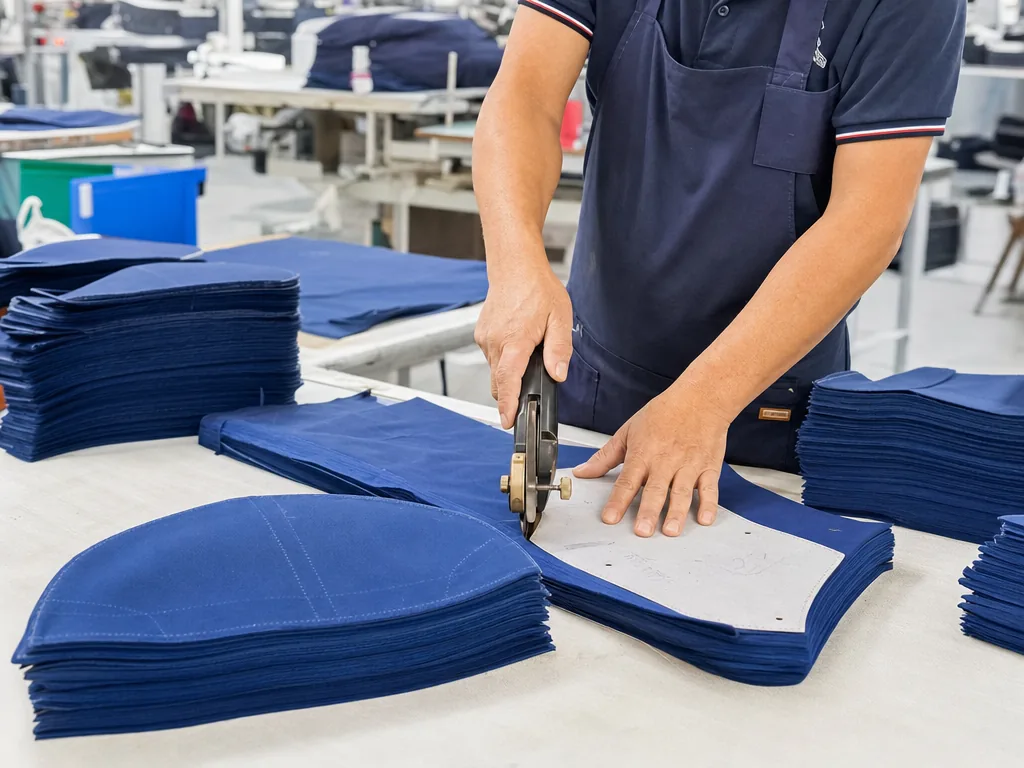
First Custom Hat Order: 10 Mistakes That Cost First-Time Buyers Money - 2026 Buyer's Guide
Read article →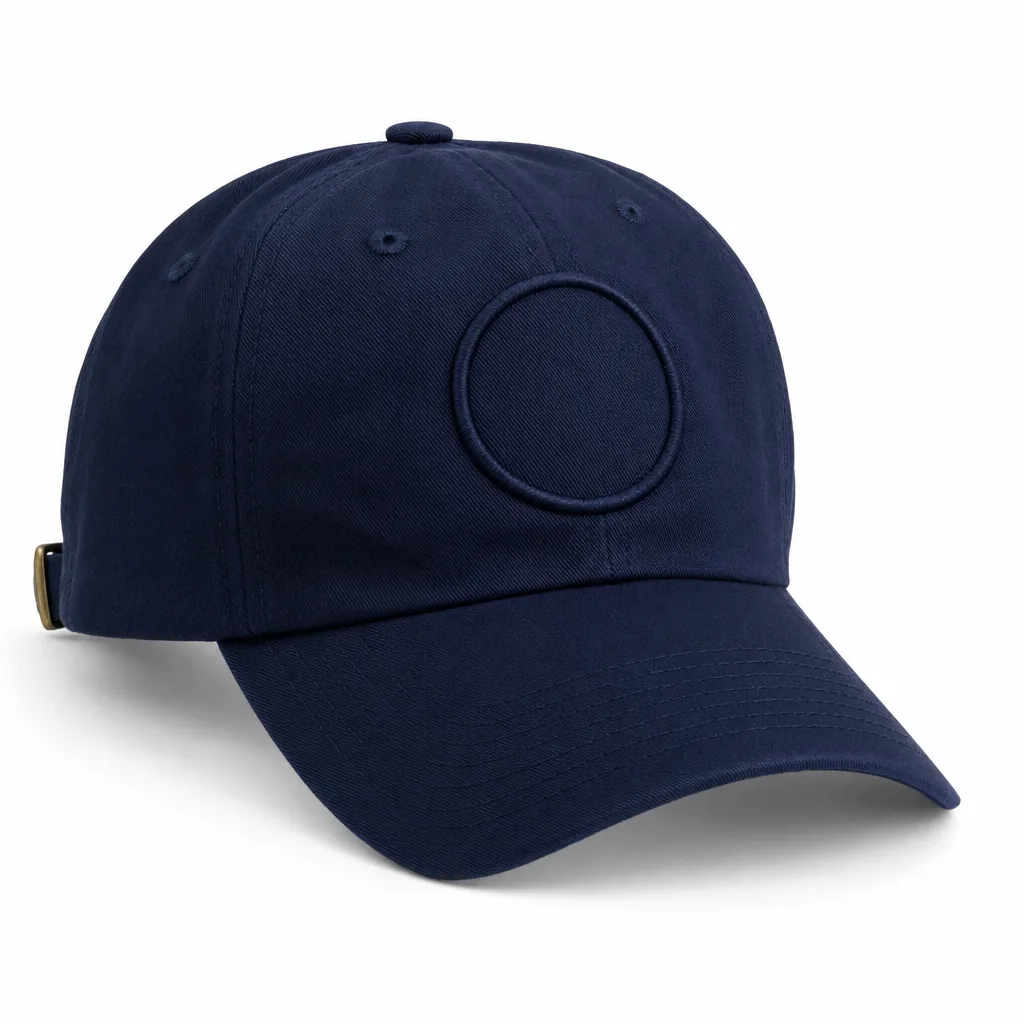
Custom Embroidered Hats: The 2026 Sourcing & Manufacturing Playbook
Read article →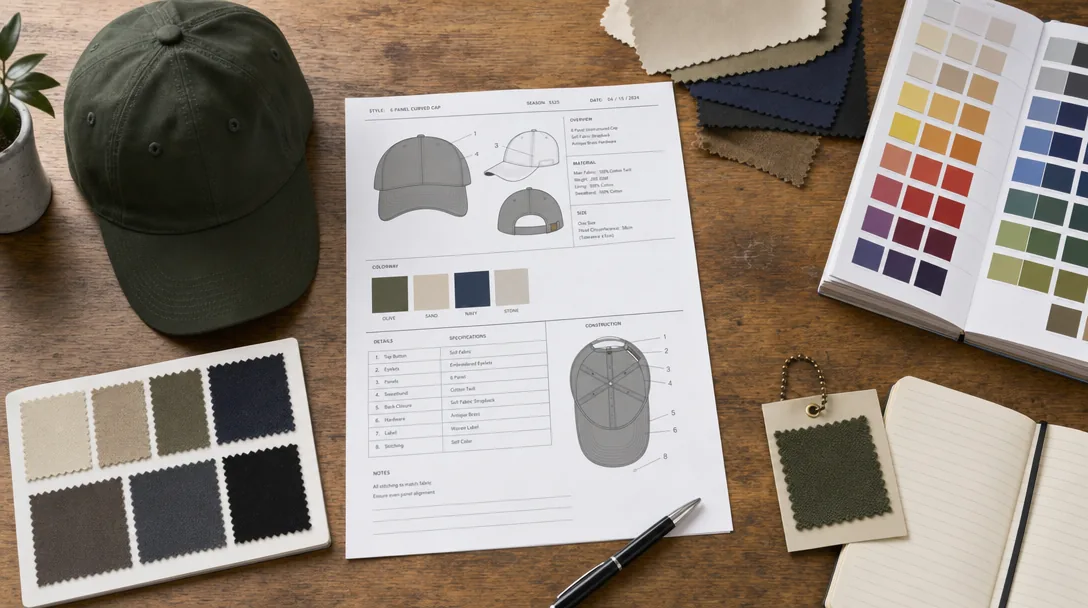
Switching Hat Manufacturers Mid-Program Without Losing Quality - Cost & MOQ Breakdown
Read article →Sourcing custom hats does not have to be complicated. With the right manufacturing partner, clear specifications and a small upfront investment in sampling, you can launch a retail-quality product in 30 to 45 days.