
Camouflage Bucket Hat: Properties, Costs and How to Spec It Right - Cost & MOQ Breakdown - 2026 Buyer's Guide
Camouflage Bucket Hat: Properties, Costs and How to Spec It Right - Cost & MOQ Breakdown - 2026 Buyer's Guide is one of the most-asked questions we receive from international buyers, and for good reason. With dozens of factories competing for your order and an alphabet soup of technical terms in every supplier quote, even experienced importers can feel lost. This guide consolidates what we have learned producing custom hats for clients in 40+ countries.
Bucket Hat Women
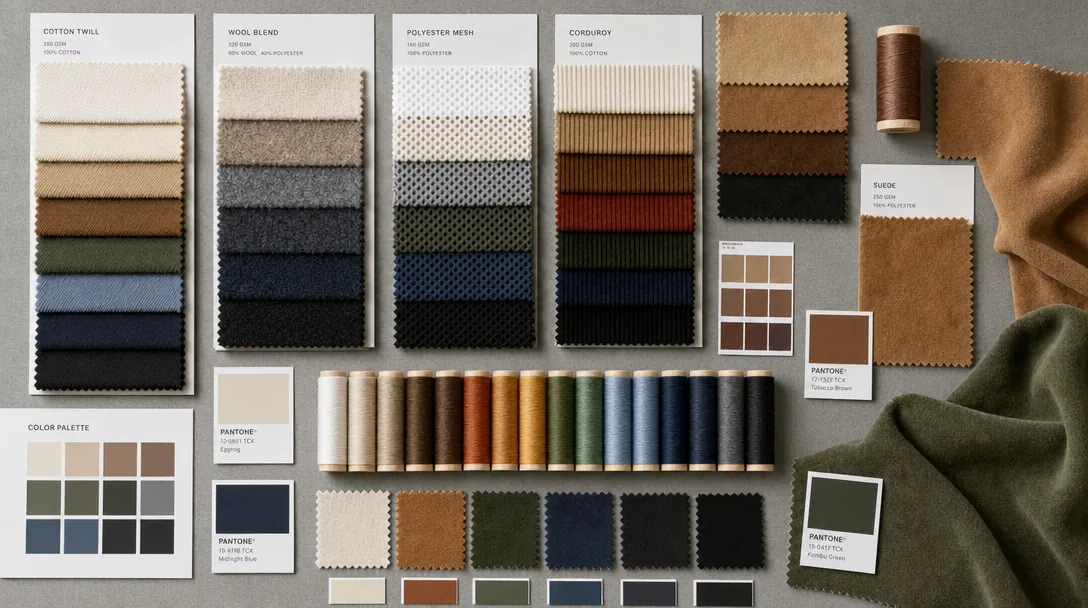
Women’s sizing is the first place a camouflage bucket hat fails, especially when a factory uses a men’s/unisex block and just scales the circumference down. For women’s retail, I would spec a base size of 57 cm finished circumference, crown height 8.5-9.0 cm, top diameter 16.8-17.2 cm, and brim width 5.5-6.0 cm, with finished tolerance held to +/-0.5 cm after pressing. That spec only works if the material is named precisely. A 210 gsm cotton ripstop, 200-220 gsm enzyme-washed twill, and 150D recycled polyester peach skin all stand differently once fused and topstitched. If the PO only shows a tech sketch, the brim almost always comes back wrong. The brim line should call out fusible weight, stitch rows, stitch pitch, and whether the brim edge is turned, bound, or self-faced. For women’s fashion programs, 80-120 gsm fusible is usually the usable range, but the exact choice depends on hand feel and drape. Six rows of brim stitching at 5-6 stitches per inch is a safe baseline on washed cotton; on lighter polyester, seven rows often control waviness better. Go too soft and the brim collapses after one wash test; go too hard and the hat wears like low-end promo stock. If you want a cleaner silhouette, specify front-to-back brim drop and side brim angle on the sealed sample, because that is what determines whether the hat frames the face properly or sits flat and awkward. I would also lock shade approval against Pantone TCX references and keep fabric-to-thread Delta-E under 1.5 where solid trims are visible next to the camo ground.
Cost on a women’s camouflage bucket hat is driven less by the shape than by print method, fabric yield, and sewing minutes. In Zhejiang, a basic 100% cotton twill version at 200-220 gsm, using stock fabric and standard labels, usually prices around $2.10-$3.40 FOB at 300-500 pieces per colorway in 2026. Once camouflage is custom printed, the range moves fast: rotary print on cotton or reactive print on twill generally lands around $3.20-$4.60 FOB, while digital print on smaller runs or engineered placement can push $4.80-$5.80 before special trims. Reversible construction usually adds $0.80-$1.50 because you are cutting, matching, and sewing two complete shells, and small size splits like 56 cm and 58 cm hurt marker efficiency more than most buyers expect. Camo quality control is stricter than plain dyed hats because seam drift is visible the moment the repeat breaks across side panels or the brim join. I would require a sealed sample that confirms repeat direction, underbrim contrast, crown symmetry, and brim stiffness before bulk cutting starts. Bulk inspection should be at AQL 2.5 major and 4.0 minor, with checks on head opening, brim torque, sweatband roping, skipped topstitching, and shade variation under D65 light box conditions. If the camouflage bucket hat includes embroidery, appliqué, or a woven patch, add an embroidery strike-off approval and check registration carefully; on Tajima or Barudan heads, even a 1.5 mm placement drift becomes obvious when it lands over a high-contrast woodland or digital camo pattern.
Corduroy Hat Men's
Corduroy works on men’s headwear only when the mill spec and cutting discipline are locked before sampling. For a commercial camouflage bucket hat, 11-wale cotton corduroy at 270 to 290 gsm is the safest range: it gives enough body for a clean side wall and crown, but it does not stack too much bulk into the brim seam the way coarse 8-wale, 300+ gsm fabric often does. Finer 14-wale can look cleaner in close-up photography, but it usually loses the rugged hand buyers expect from men’s outdoor or workwear-inspired styles. The critical control point is nap direction. Every crown panel, side band, and both brim layers need to be cut with the pile running identically, otherwise the fabric will shade differently under D65 or retail LED lighting. On camouflage, that problem gets misread immediately as bad print registration or mixed fabric lots because the tonal breaks in the pattern exaggerate every panel-to-panel shift. A usable tech pack needs more than “100% cotton corduroy.” Specify wale count, finished weight tolerance of plus or minus 5%, brim width, crown height, seam allowance, sweatband material, and the approved color standard. If the base is dyed, I would cap shade variance at Delta-E 1.5 against the master under D65; if the fabric is printed, ask for full-width strike-offs because camouflage edges soften on corduroy much more than on 210 gsm cotton twill or 150D polyester ripstop. Embroidery needs the same realism. On Tajima or Barudan heads, dense fills disappear into the pile unless the digitizer builds in a knockdown stitch and reduces top-stitch density, so text below about 4 mm is a reject waiting to happen after abrasion or wash. In 2026, a standard corduroy bucket hat in stock fabric usually lands around $3.40 to $5.90 FOB China at 144 to 300 pieces per colorway, while custom-dyed corduroy often starts at 500 to 1,000 meters and pushes the practical MOQ past 800 hats.
Inspection is where corduroy separates capable factories from sample-room pretenders. A plain twill line can hide small process errors; corduroy exposes them fast. The defect list should explicitly call out reversed nap, seam grin, crushed wales, brim asymmetry, skipped stitches at high-bulk joins, and needle cuts along the ridge lines. Brim roundness can drift by 3 to 5 mm if the sewing operator uses standard twill settings instead of backing off presser-foot pressure and thread tension for the added loft. Pressing is another common failure point. Once the wale ribs are flattened along the brim edge, they rarely recover after polybagging and carton compression, so a good factory limits heat and dwell time instead of trying to force a sharper edge. Final inspection should be written around measurable controls, not vague visual approval. I would hold a camouflage bucket hat program at AQL 2.5 for major defects and 4.0 for minor, then add a light-box panel shading check, dry and wet crocking on dark shades, and a side-by-side review of print continuity across brim seams. Our standard practice is also to review embroidery registration after the hat has rested off the machine, because logos that look acceptable under hoop tension can distort once the pile relaxes. If a supplier cannot maintain pile direction, brim geometry, and readable camouflage definition on corduroy, the issue is usually not one bad lot; it is a process-control problem that will keep repeating in bulk.
Organic Cotton Newborn Hat
Fiber control is where headwear programs fail, and the lesson transfers directly to a camouflage bucket hat order. If a supplier says “100% organic cotton” but cannot produce GOTS or OCS transaction certificates matched to your PO and lot numbers, the claim is decorative, not auditable. For newborn hats, I would lock the base fabric at combed ring-spun cotton, 30s or 40s yarn, using single jersey at 180-220 gsm or interlock at 260-300 gsm, with residual shrinkage below 5% after 40°C home laundering. Lab reports should confirm pH, azo dyes, formaldehyde, and extractable heavy metals instead of relying on a generic compliance statement. Shade control also needs to be tighter than on most adult cotton programs: keep Delta-E within 1.0-1.5 from approved lab dip to bulk, especially on ecru, pale sage, and blush, where even a half-panel mismatch reads as defective. Any trim near skin contact should be stripped back to the safest option: no exposed embroidery backing, no abrasive woven badge edges, and no nickel-bearing snaps or eyelets.
The sewing is straightforward; the finishing discipline is not. Better factories cut tubular jersey or open-width interlock, sew on 4-thread overlock, and use fine-gauge needles with soft-core thread to reduce seam grin, roping, and needle damage around the cuff fold. I would spec by age band with finished circumference, crown depth tolerance at plus or minus 0.5 cm, cuff height, and stretch-recovery targets, because cotton without 3-5% elastane loses shape quickly. Final inspection should run at AQL 2.5 with zero tolerance on infant-critical defects: broken-needle contamination, wrong fiber labels, sharp trim edges, oil stains, and size-mixed cartons. A factory that cannot show needle control logs, fragment reconciliation, and line sweep records should not be making infant product. Typical 2026 FOB China pricing is about $0.85-$1.40 for a basic single-layer jersey newborn hat, $1.25-$2.00 for interlock with a cuff label, and $2.40+ once you add certified trim segregation, gift carding, or special packing rules. The practical value for a camouflage bucket hat buyer is simple: suppliers that can hold certified fiber segregation, hand-feel consistency, and low-defect finishing on infant goods usually execute print alignment, brim symmetry, and lot control better on camouflage bucket hat production too.
Audit paperwork is useful, but it does not prove product compliance. sedex-audit-cap-supplier-guide.html">BSCI 2.0 and Sedex SMETA 4-Pillar tell you something about labor systems; they tell you almost nothing about whether goods pass CPSIA, REACH Annex XVII, or a retailer RSL. For U.S. infant programs, I would ask for third-party reports covering total lead, phthalates where applicable, small-parts risk on trims, and colorfastness to saliva and perspiration if the styling justifies it. MOQ also needs a reality check: 500-1,000 pieces per color is normal when the mill already holds certified greige or dyed stock, while true custom dyeing usually starts closer to 150-250 kg per shade, which can easily exceed 2,000 hats depending on marker yield and fabric width. Our standard practice is to treat lot segregation, shade-band approval, and carton traceability as production controls, not paperwork exercises. That same rigor matters when sourcing a camouflage bucket hat, because weak lot control shows up fast as panel mismatch, brim shade variation, and inaccurate labeling across production runs.
Corduroy Hat Wholesale
Corduroy is rarely the best starting fabric for a camouflage bucket hat unless you want the print to look broken-in rather than crisp. The ribbed surface scatters edge definition, so tiger stripe, woodland, and especially digital camo lose clarity compared with 210-240 gsm cotton twill or 150D polyester micro-ripstop. If you still want the handfeel and vintage look of corduroy, 11-wale cotton cord around 260-290 gsm is the safest spec for bucket construction: it holds a 5.5-7 cm brim without collapsing, but it does not stack excessive bulk at the side seam the way 8-wale 320 gsm fabric often does. I would lock down fiber content, wale count, pile direction, finished width, wash shrinkage, and print method before quoting bulk. On corduroy, camouflage is usually rotary or pigment printed after weaving, and that introduces more shade swing than flat twill. The weak point is color control across lots. Dark olive, bark brown, and black bases can drift fast if mills mix greige lots or rush finishing, so bulk approval should not rely on a loose visual match. Ask for a strike-off on the actual wale count, then approve against Pantone TCX references with a defined Delta-E tolerance; under 1.5 on the main ground shades is a realistic target, while 2.0 is already visible on adjacent cut panels. Piece-dyed solid corduroy can save about $0.12-$0.25 per hat versus printed fabric, but once you add custom camouflage and lot segregation in cutting, that advantage disappears quickly.
Construction tolerance is tighter on corduroy because every mistake shows in the nap. A proper camouflage bucket hat tech pack should specify crown height, brim width, seam allowance, topstitch spacing, sweatband composition, and nap direction for every visible panel; if one panel is flipped, the shade looks off even when the fabric is technically from the same roll. For most factories, 6-8 mm brim quilting spacing is the practical range, and presser-foot pressure usually needs to be backed off versus chino so the wale does not crush and glaze. Needle choice matters too: many lines run an 11 or 12 ballpoint or light round-point setup on corduroy, then adjust SPI instead of forcing the same settings used for flat twill. Decoration and inspection both need different standards from standard twill hats. Dense fill embroidery sinks into the pile, so Tajima or Barudan operators should increase underlay support and reduce stitch density rather than reusing a file built for brushed cotton; otherwise small lettering closes up and border edges fuzz out at first glance. In current China pricing, a basic corduroy bucket hat with woven label typically sits around $2.10-$3.40 FOB at 300-500 pieces, while a camouflage bucket hat in printed corduroy with custom taping, moisture-wicking sweatband, and retail packaging is more realistically $3.60-$5.20 FOB depending on print yield and reject rate. At final inspection I would hold it to AQL 2.5 and check panel shading, seam puckering, brim waviness, pile crush, oil marks, and embroidery edge loss from 50 cm, because those are the defects buyers end up arguing about after delivery.
Wholesale Hat Manufacturers Usa
When sourcing from wholesale hat manufacturers in the USA for a camouflage bucket hat, the deciding factor is not the ZIP code on the invoice; it is where fabric printing, cutting, sewing, and finishing actually happen. Many U.S. suppliers are legitimate decorators or final-stage assemblers, but the shell, printed twill, or even completed blanks often come from China or Vietnam, with only embroidery, patch application, or retail packing done domestically. Ask bluntly whether they cut crown and brim panels in-house, whether the brim uses 120-160 gsm fusible or a nonwoven insert, and whether brim stitch rows run on a single-needle lockstitch setup or a programmable pattern machine. Those details affect wear and rework rates. On a standard 220 gsm cotton twill bucket, pushing brim support to 180 gsm often makes the edge too boardy and causes visible wash puckering, especially after one home-laundry cycle. If the camouflage is custom rather than stock woodland or multicam-inspired artwork, confirm the print route early: reactive print on 100% cotton twill, pigment print on brushed chino, or a 65/35 poly-cotton ripstop with a 3-5 mm grid. Each option shifts shrinkage, crocking resistance, hand feel, and landed cost more than most buyers budget for.
Most bad costing on a camouflage bucket hat starts with an incomplete tech pack, not poor sewing. Lock down finished circumference, crown height, brim width, topstitch count, eyelet construction, sweatband spec, seam binding width, label placements, and the orientation of the camo across each panel, all with millimeter tolerances. A workable baseline is 220 gsm cotton twill at plus or minus 5%, crown height 8.5 cm, brim width 6.5 cm plus or minus 2 mm, head circumference 58 cm plus or minus 3 mm, and color matched to approved Pantone TCX references with Delta-E below 1.5 against the signed strike-off. If you add embroidery, specify thread brand, stitch count, backing weight, and machine family; dense fills run differently on Tajima, Barudan, and ZSK heads, and brushed surfaces expose registration drift fast. Our standard practice is print strike-off approval, pre-production sample, then size and workmanship sign-off before bulk. Camouflage is unforgiving: a 4 mm panel mismatch, skipped brim stitch, or shade variation outside tolerance is obvious at first glance. For acceptance, AQL 2.5 is a sensible baseline, with circumference and brim symmetry checked across at least 13 samples per lot. Pricing is usually around $2.10-$3.80 FOB China for stock camo programs, versus roughly $7.50-$14.00 per piece for genuine U.S. cut-and-sew runs below 1,000 units.
Black Beanie Hat
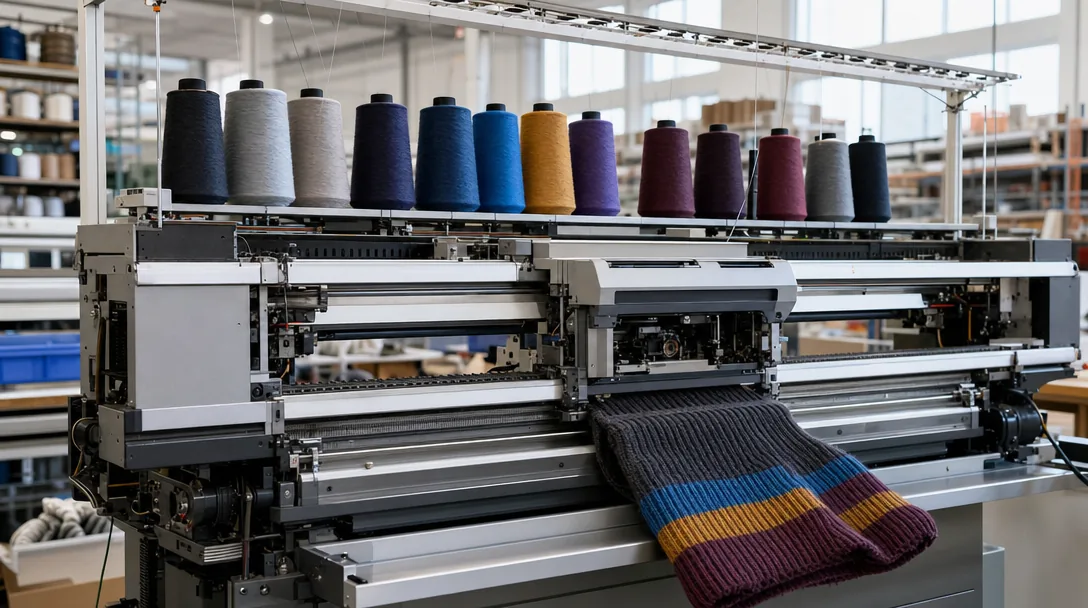
A black beanie looks simple, but the failure points are technical: machine gauge, yarn system, shade control, and recovery after wear. Most commercial orders run on 7GG, 9GG, or 12GG flat machines using 100% acrylic, 50/50 acrylic-poly, recycled polyester, or cotton-rich yarns in the 21s to 32s range. Finer gauge gives a cleaner face and sharper woven-label or jacquard presentation, but it also adds knitting time, linking labor, and usually 8% to 15% more yarn consumption per piece. For black, the dye route matters more than many buyers realize. Cotton should be reactive dyed with wash fastness targets written into the spec, while acrylic is more stable in dope-dyed or high-grade package-dyed lots if you want to limit bronzing, crocking, and visible shade drift between production lots. I would write hard numbers into the tech pack: Delta-E below 1.5 to the approved lab dip under D65, finished weight in grams, unfolded height, cuff height, wale density per 5 cm, and stretch-recovery results after 10 extension cycles. Buyers used to sourcing a camouflage bucket hat often underestimate how little forgiveness knitwear gives; once the body is knitted loose, the crown is badly linked, or the black surface starts frosting after wash, there is no meaningful rework.
Cost needs to be locked before sample approval, because knit structure changes are not small corrections. A basic acrylic cuff beanie with a woven loop label is typically FOB $1.05 to $1.65 at 1,000 pieces, while a heavier recycled-poly or cotton-rich version with jacquard branding, tighter gauge, or custom Pantone development usually lands around $1.80 to $2.90. MOQ is often 300 to 500 pieces per color if the knitter already has stock yarn, but it moves to 1,000 pieces or more when you need custom melange, retail shade approval, or branded jacquard yarn feeds. Inspection should focus on post-relaxation stability, not just table appearance: dropped stitches at crown closing, barre, oil contamination, cuff rolling, spiraling from uneven tension, and embroidery puckering on rib structures are the claim drivers I see most often. AQL 2.5 is normal for mainstream retail, but for e-commerce I would hold cuff height and body width to ±0.5 cm, require pilling and dry/wet crocking tests, and recheck measurements after 24 hours of relaxation because beanies can grow 1 to 2 cm after packing. At CrownsForge, that distinction matters whenever the same supplier also quotes a camouflage bucket hat program, because strong cut-and-sew control in twill or ripstop does not prove the same discipline in a subcontracted knitting workshop.
Working with CrownsForge for camouflage bucket hat programs
Bulk-to-sample drift is what breaks a camouflage bucket hat program. If the approved sample is cut from 210 gsm reactive-printed cotton twill and bulk gets substituted to 190 gsm, you will see it immediately in crown collapse, brim memory, and print contrast. The problem is not just appearance; lighter base cloth also changes stitch bite at the eyelets and seam torque around the brim join. For stocked twill or 220 gsm cotton ripstop, a realistic prototype window is 7 to 10 calendar days. Once the program moves to custom camouflage, lead time usually stretches to 12 to 18 days because the mill has to run color separation, strike-off approval, and sometimes lab dips to hold the shell against Pantone TCX references for labels, sweatband, and hangtag trim. MOQ follows the same logic: 300 to 500 pieces per colorway is workable for stock fabrics, but custom print usually starts at 1,000 pieces per pattern because the printer wants an efficient run length and the packing plan gets messy once you add size ratios, private labeling, and retailer carton marks. The spec sheet has to lock the physical build before PPS, or the factory will make assumptions that cost you time later. On bucket hats, I want brim width tolerance at ±0.3 cm, shell weight tolerance within ±5 percent, seam allowance called out in millimeters, and a named interlining grade rather than vague language like medium stiff. If the buyer wants a flatter brim, specify stitch rows, SPI, and brim board or fusible weight; if not, the line may overfeed and you end up with roping. Pattern placement needs the same discipline. A camouflage bucket hat should be labeled as engineered placement, controlled front-panel placement, or commercial random print, because each option changes marker efficiency, fabric yield, and final FOB by real money. On orders above 10,000 pieces, a 3 to 5 percent drop in marker efficiency can add several cents per unit, which is enough to wipe out a tight target margin.
Decoration and compliance are where buyers usually lose schedule, not where they lose the quote. Front embroidery in the 5,000 to 7,000 stitch range on Tajima or Barudan heads typically adds $0.28 to $0.55 per piece, assuming standard run speed and no frequent thread changes. A woven patch with merrow edge is commonly $0.35 to $0.70 depending on size, color count, backing, and whether it is stitched on or heat-applied. Those numbers are straightforward; what matters more is preventing distortion on a curved bucket panel. Dense embroidery on lighter 190 to 210 gsm shells can tunnel or telegraph through the backing, and poorly set eyelets will pucker after garment wash or packed moisture exposure. Our standard practice is to freeze stitch density, backing type, and attachment method at PPS instead of leaving those decisions to the floor supervisor on bulk day one. Retail-grade control needs checkpoints tied to measurable standards. For a camouflage bucket hat going into licensed, team, or mass retail channels, the minimum safe sequence is raw-material approval, print strike-off signoff, PPS review against the approved BOM, inline inspection at 20 to 30 percent output, and final random inspection to AQL 2.5. Delta-E tolerance on the camouflage print should be written into the approval standard, especially when matching olive, khaki, and black across shell panels from different dye lots. After sewing, carton drop testing, barcode scan verification, needle log reconciliation, and metal detection matter just as much as appearance if the goods are shipping into U.S. retail compliance systems. A capable supplier should already understand BSCI 2.0 or Sedex SMETA 4-Pillar expectations and be ready to provide REACH or CPSIA support when inks, PVC patches, or heat transfers trigger chemical testing.
Frequently Asked Questions
How long does production take?
Sampling takes 7 to 12 days. Bulk production runs 20 to 30 days depending on quantity, fabric availability and decoration complexity. Inspection and packing adds another 3 to 5 days before shipment.
Do you support sustainability certifications?
Yes. We work with GOTS organic cotton, GRS-certified recycled polyester, OEKO-TEX Standard 100 fabrics, and are BSCI and Sedex audited. Certification documentation can be provided per order.
What logo decoration techniques do you offer?
3D puff embroidery, flat embroidery, woven patch, leather patch, PVC patch, screen printing, sublimation, applique and laser etching, all in-house with no subcontracting.
Can I order a sample before bulk production?
Yes. We strongly recommend approving a pre-production sample before mass production. Samples are charged at 35 to 60 USD each plus express shipping, fully refundable against confirmed bulk orders over 500 pieces.
Which shipping methods do you support?
We support FOB, CIF and DDP shipping. Air express for samples and small orders, sea LCL for 100 to 500 pieces, sea FCL for 5,000+ pieces. Door-to-door DDP available for US, EU, UK, Canada and Australia.
What should buyers know about organic cotton bucket hat?
When evaluating organic cotton bucket hat, the key considerations are construction quality, decoration capability, MOQ flexibility and lead time. Cover everything buyers ask about organic cotton newborn hat: how it's manufactured, what specs to request from a factory, typical MOQ and pricing, common quality issues to inspect for, and how this ties back to the broader camouflage bucket hat sourcing decision. Cover everything buyers ask about bucket hat women: how it's manufactured, what specs to request from a…
What should buyers know about men's corduroy bucket hat?
When evaluating men's corduroy bucket hat, the key considerations are construction quality, decoration capability, MOQ flexibility and lead time. Cover everything buyers ask about corduroy hat men's: how it's manufactured, what specs to request from a factory, typical MOQ and pricing, common quality issues to inspect for, and how this ties back to the broader camouflage bucket hat sourcing decision. Cover everything buyers ask about corduroy hat wholesale: how it's manufactured, what specs to request from a factory,…
What should buyers know about nike bucket hats for men?
When evaluating nike bucket hats for men, the key considerations are construction quality, decoration capability, MOQ flexibility and lead time. Cover everything buyers ask about corduroy hat men's: how it's manufactured, what specs to request from a factory, typical MOQ and pricing, common quality issues to inspect for, and how this ties back to the broader camouflage bucket hat sourcing decision. Cover everything buyers ask about bucket hat women: how it's manufactured, what specs to request from a factory,…
What should buyers know about cotton beanie men?
When evaluating cotton beanie men, the key considerations are construction quality, decoration capability, MOQ flexibility and lead time. Cover everything buyers ask about corduroy hat men's: how it's manufactured, what specs to request from a factory, typical MOQ and pricing, common quality issues to inspect for, and how this ties back to the broader camouflage bucket hat sourcing decision. Cover everything buyers ask about organic cotton newborn hat: how it's manufactured, what specs to request from a…
Looking for a reliable hat manufacturer in China?
CrownsForge has produced custom hats for 800+ brands across 40 countries. From 100-piece launches to 100,000-piece retail programs, we deliver on time and on spec.
Get in touchRelated guides
Corduroy Hat: Properties, Costs and How to Spec It Right (2026 Update)
Read article →
Custom Hat Trucker: The 2026 Sourcing & Manufacturing Playbook - Cost & MOQ Breakdown
Read article →
Cap Sweatband Material Selection for Custom Headwear Buyers
Read article →We hope this guide demystifies camouflage bucket hat: properties, costs and how to spec it right - cost & moq breakdown - 2026 buyer's guide and helps you move forward with confidence. If you have questions specific to your project, our English-speaking sales engineers are one message away.