
Buckram vs Foam vs Unstructured: Cap Crown Construction Compared - Supplier Checklist
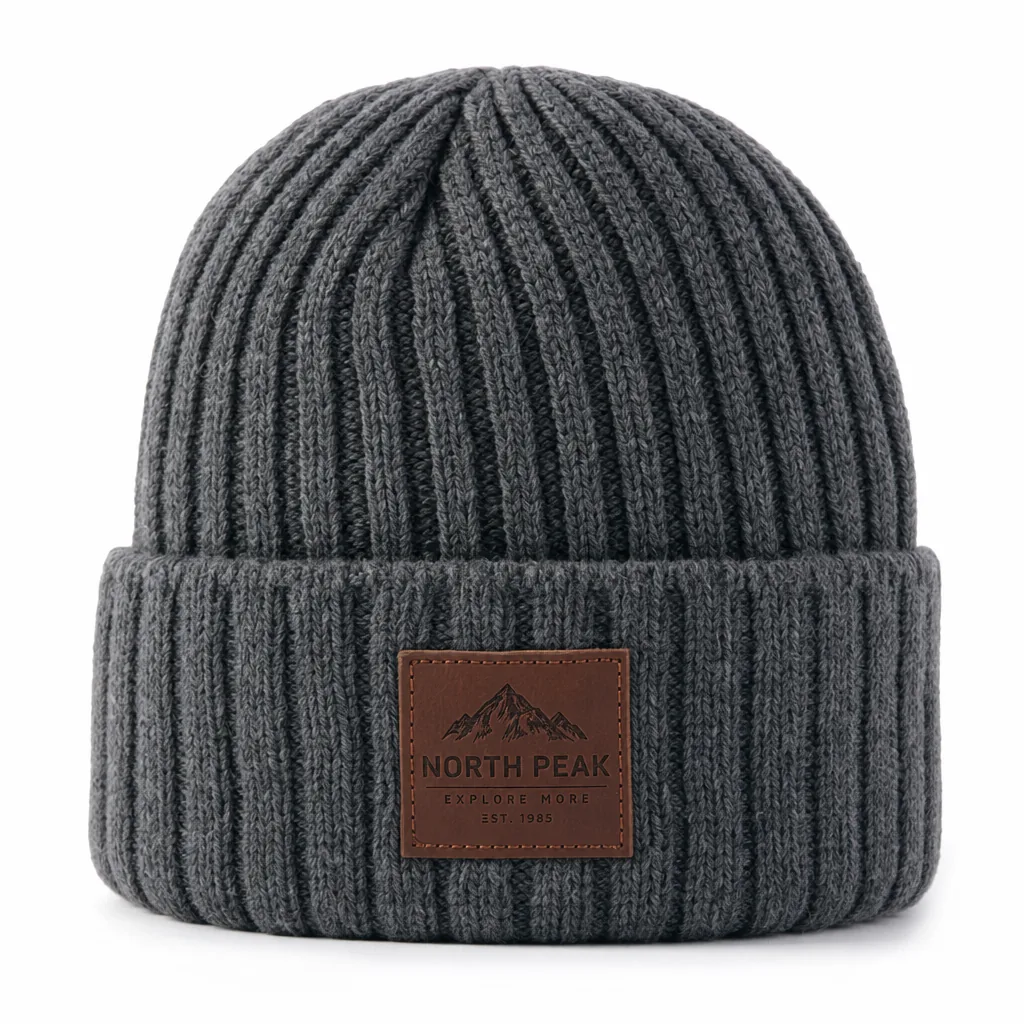
For brand owners, wholesalers and procurement teams entering the custom headwear category, buckram vs foam vs unstructured: cap crown construction compared - supplier checklist is one of the highest-leverage decisions you will make. Get it right and your unit economics, retail story and reorder cycle all improve. Get it wrong and you carry the cost for years.
What buckram is and why it matters
Buckram is what makes a cap hold its face, and in buckram cap construction that matters long before the customer puts it on. The front two crown panels are backed with a stiff interlining—usually polyester scrim coated with thermo-reactive resin—then fused before crown assembly. Done right, the panel stays square through embroidery, carton pressure, and sea transit. Done badly, the defects show immediately: under-fusing creates bubbles and resin lift, over-fusing can glaze cotton twill or leave strike-through on light colors, and uneven platen pressure twists the front wall so the center seam walks off line. Most export factories specify polyester buckram instead of cotton because it is more dimensionally stable and less reactive to humidity, with typical fusing windows around 125-145°C depending on shell fabric and resin system.
The useful spec is not “structured”; it is thickness, hand, and compatibility with the shell fabric. In cap production, front-panel buckram usually falls around 0.4-0.7 mm. At 0.4-0.45 mm, the result is semi-structured and easier to break in; at 0.6-0.7 mm, you get the hard retail profile common in snapbacks, team caps, and promotional programs. But stiff buckram behind a light 160 gsm chino twill or 120D taslon nylon often prints a visible break line above the seam, while the same interlining behaves well under 260-300 gsm brushed cotton twill or acrylic-wool blends. That stiffness also affects decoration: firm buckram gives Tajima or Barudan heads a stable surface for 3D puff, dense flat embroidery, and woven patch application, while softer or unstructured fronts deflect under the needle and increase puckering, logo drift, and panel distortion.
Buyers should ask for the actual buckram specification, not vague language like “hard structured.” Request thickness in millimeters, base material, and whether the interlining is full height or partial front. Also check how the fused panel behaves under D65 light if the shell color is off-white, stone, or pastel; resin show-through, gloss shift, and panel shading are common on cotton twill below 220 gsm and washed canvas with uneven surface tension. For color-critical orders, a shell fabric Delta-E under 1.5 is not enough if the fused front panels darken compared with the side panels. That is why buckram cap construction needs to be evaluated together with embroidery density, visor curve, and carton compression—otherwise the cap may still pass AQL 2.5 at final inspection and arrive with the crown shape already compromised.
Foam-front construction (trucker caps)
Foam-front trucker caps get their shape from a laminated foam facer, not from buckram cap construction, and that changes both the silhouette and the decoration window. The common build is 3-5 mm PE or EVA foam, usually around 45-65 kg/m3 density, laminated to a polyester jersey or brushed tricot face before the front panel is sewn into the crown. On a standard 5-panel trucker pattern, a 4 mm foam front typically stands about 10-15 mm higher at center front than the same shell cut in 10 oz cotton twill with no reinforcement. That extra height is why promo truckers still lean heavily toward foam: you get a flatter print plane, a cleaner front wall for heat transfer or screen print, and a more exaggerated high-profile shape than unstructured construction. Buyers should not treat foam and buckram cap construction as interchangeable stiffening options. Foam creates a billboard effect and lighter front mass, while buckram gives a drier hand, a more textile-like face, and better resistance to needle tracking when dense embroidery is pushed hard across the panel.
Foam thickness drives both visual profile and factory runability. At 3 mm, operators can turn panels faster, hold cleaner seam lines, and usually save about $0.08-$0.15 per cap versus 5 mm foam on a 5,000-piece order. It also runs more predictably on Tajima or Barudan embroidery heads at 650-800 rpm, with less drag at the seam intersection and less heat buildup around the needle. At 5 mm, the crown looks noticeably more aggressive and 3D puff embroidery has stronger lift, but the reject rate climbs if seam allowance is not trimmed tightly or presser-foot pressure is off. For supplier review, ask for foam resin, density, and lamination method; low-density foam under roughly 45 kg/m3 creases too easily and can take a permanent set if packed above 100-120 caps per master carton without crown support. In inspection, I would check front-panel rebound after compression, center-front symmetry, seam break sharpness, and logo distortion to AQL 2.5, then verify face-fabric color against Pantone TCX with Delta-E under 1.5 because lamination can shift the way whites and neons read under retail lighting.
Unstructured construction (dad hats)
Unstructured dad hats work because the front support package is intentionally absent: no buckram, no 2-3 mm EVA foam laminate, and usually no nonwoven fusing behind the two front panels. On a typical 6-panel pattern in washed cotton twill, brushed chino, or enzyme-washed canvas at around 240-280 gsm, that changes the crown mechanics completely. Off-head, the front panels cave in and show every sewing decision; on-head, they drape to the forehead instead of holding a fixed block shape. Compared with buckram cap construction, the profile is lower, the break line is softer, and the cap looks worn-in straight out of packing rather than retail-stiff. The downside is that the shell stops hiding mistakes. A center-front seam mismatch of 1.0-1.5 mm, slight needle-feed imbalance, or uneven topstitch spacing that would disappear under a stiff front support stays visible on an unstructured crown, especially in light khaki, stone, and washed black shades where seam shadow is obvious.
The material savings are real but small. At 3,000 pieces, removing front-panel reinforcement and one fixing step usually cuts only about $0.05-$0.12 per cap, depending on whether the structured version used 100-140 gsm buckram or laminated foam. What changes more than cost is process control: operators get less resistance at the center seam, so visor-to-crown alignment, sweatband tension, crown height symmetry, and button position have to be cleaner to pass AQL 2.5. The common failures on soft crowns are center-front waviness, seam roping, uneven collapse after carton compression, and a twisted silhouette when the back strap is fastened. Decoration is also less forgiving. On Tajima or Barudan heads, a soft front panel handles flat embroidery well, but I would keep most logos around 6,000-8,000 stitches with moderate fill density and conservative underlay. Heavy 3D puff, thick TPU badges, or large merrow-edge patches fight the nature of the cap; if the design needs a stable, photo-flat front face, buckram cap construction is still the safer build.
How crown construction interacts with decoration
Decoration success is usually set by the crown architecture before the file ever reaches the digitizer. Buckram cap construction gives the cleanest embroidery window because the fused front panel limits needle deflection, frame bounce, and post-sew collapse in the critical zone roughly 25 to 60 mm above the visor seam. In practical production terms, a front built with 150 to 220 gsm buckram behind 7 oz cotton twill, acrylic wool serge, or 300 to 450D polyester holds shape far better than soft crowns when you add stitch load or patch weight. On Tajima and Barudan cap frames running 40 wt polyester thread, that stability lets you keep satin columns crisp at around 0.38 to 0.42 mm density, maintain cleaner corners on serif lettering, and reduce tunneling on filled borders. If the artwork includes tall vertical elements, dense tatami fills, merrow-edge woven badges, or 2 mm EVA-backed 3D puff, buckram is still the safest construction to quote first because it tolerates tension variation without telegraphing distortion across the face.
Foam fronts perform well, but for different reasons. A standard trucker build uses 2 to 3 mm EVA or PU foam laminated under polyester tricot, and that foam becomes part of the decoration profile rather than just a support layer. It produces a higher, rounder puff than buckram, especially on block lettering and simple outlines, but it also forces stricter digitizing: wider satin coverage, controlled knife cuts, and enough pull compensation to keep the foam from flashing through top stitches after wash and wear. Flat embroidery is possible, yet edge definition drops fast once text falls below about 4 mm cap height because the face compresses under the needle. Unstructured crowns are less forgiving again. Without buckram or foam, washed chino, brushed twill, or 12- to 14-wale corduroy will drape with the decoration, so dense fills, oversized patches, and heavy appliques tend to pucker or create a memory crease after packing. In structured vs unstructured cap buying, this is the point that gets missed: decoration does not disappear on a soft crown, but stitch count usually needs to stay closer to 6,000 to 8,000, densities should be backed off, and patch widths above roughly 55 mm start to look awkward on-head.
Per-piece cost differential by construction
Crown construction moves piece price faster than most logo changes because it changes both the bill of materials and the sewing line’s yield. In Yiwu at 500 to 1,000 pieces, buckram cap construction is still the baseline for a standard 6-panel baseball cap: 108 x 56 cotton twill at 180 to 220 gsm, 0.35 to 0.50 mm PE or cotton buckram behind the two front panels, one fusing or heat-lamination pass, and post-sew shaping on a heated crown former. With a plain woven sweatband, standard hook-and-loop or plastic snap closure, and 5,000 to 8,000 stitches of front embroidery, that cap usually books at $2.10 to $2.80 FOB. Move to 260 to 320 gsm chino twill, 7 to 8 SPI topstitching, woven flag label, printed seam tape, and tighter front-logo registration, and the same shape is more realistically $3.40 to $4.80 FOB.
The cost gap versus foam is smaller than many buyers expect. A foam-front trucker is often only $0.15 to $0.30 cheaper than buckram cap construction because the factory swaps woven front shell plus buckram for 2 to 5 mm EVA or PU foam laminated to tricot, while the rear four panels move to 75D to 150D polyester mesh. Sewing does speed up slightly, but that gain disappears fast if the embroidery file is not redigitized for foam. On Tajima or Barudan heads, soft foam fronts need lower fill density, controlled pull compensation, and cleaner underlay or the panel tunnels, puckers, or crushes after packing. Unstructured caps usually save a bit more—around $0.20 to $0.40 against a structured 6-panel—because there is no front stiffener, no lamination step, and less shaping labor. That saving evaporates on premium specs such as 10 oz canvas, 14-wale corduroy, enzyme-washed chino, bound internal seams, or a tightly controlled low-profile crown, which is why any honest comparison has to start with construction before it starts with fabric or decoration.
Durability and wash characteristics
The durability gap starts with the interlining, not the shell fabric. In good buckram cap construction, the front two panels are backed with cotton or poly-cotton buckram around 180-220 gsm, then fused under controlled heat so the crown keeps its profile through 30 or more home-laundry cycles. When buyers complain that a structured cap “collapsed after a season,” it is usually cheap polyester buckram in the 120-150 gsm range or poor fusing temperature, not the twill itself. On a structured vs unstructured cap program, I always ask suppliers what buckram weight they use, whether it is woven or non-woven, and how many wash cycles they have actually tested before approving bulk.
A foam front cap behaves differently because the cap front panel construction relies on EVA or PU foam thickness rather than stiff woven interlining. A standard 3-5 mm foam front keeps a tall silhouette even after repeated washing because the foam does not soften the way low-grade buckram does, but it can show pressure dents if cartons are overpacked or if the front panel is crushed during transit. That matters for trucker styles and promo caps: the cap crown structure looks stable after wash, yet storage damage can still make the front look cheap. Our standard practice is to specify carton fill limits and run a simple recovery check after packing, because wash durability and shipping durability are not the same thing.
With unstructured cap construction, the “aging” is the feature, not the defect. There is no reinforced front to hold a rigid crown, so washed cotton chino, garment-washed canvas, or brushed twill will relax further and develop a softer hand after laundering. Buyers should not judge these against buckram cap construction standards; the target is a broken-in profile, lower crown memory, and natural drape around the forehead. For supplier approval, the useful checklist is whether the cap still tracks to spec on head fit, seam torque, visor shape, and fabric appearance after wash, not whether the front panels stand upright. A well-made unstructured cap should look intentionally casual after 20 washes, not warped or twisted.
Frequently Asked Questions
What file format should I send for my logo?
Vector files (AI, EPS, PDF) are ideal. High-resolution PNG or JPG at 300 dpi on transparent background works as a fallback. Provide Pantone color references for accurate reproduction.
What logo decoration techniques do you offer?
3D puff embroidery, flat embroidery, woven patch, leather patch, PVC patch, screen printing, sublimation, applique and laser etching, all in-house with no subcontracting.
Which shipping methods do you support?
We support FOB, CIF and DDP shipping. Air express for samples and small orders, sea LCL for 100 to 500 pieces, sea FCL for 5,000+ pieces. Door-to-door DDP available for US, EU, UK, Canada and Australia.
How long does production take?
Sampling takes 7 to 12 days. Bulk production runs 20 to 30 days depending on quantity, fabric availability and decoration complexity. Inspection and packing adds another 3 to 5 days before shipment.
Do you support sustainability certifications?
Yes. We work with GOTS organic cotton, GRS-certified recycled polyester, OEKO-TEX Standard 100 fabrics, and are BSCI and Sedex audited. Certification documentation can be provided per order.
How does ordering baseball cap custom logo work?
When evaluating baseball cap custom logo, the key considerations are construction quality, decoration capability, MOQ flexibility and lead time. Buckram-structured 6-panel: baseline cost. Foam-front trucker: -$0.15 to -$0.30 per cap (cheaper foam + cheaper mesh back). Unstructured dad hat: -$0.20 to -$0.40 per cap (no buckram, no fusing). Construction is a meaningful cost lever for buyers comparing $3 retail-grade vs $5 streetwear-grade. Buckram is a stiff woven fabric impregnated with adhesive, fused to the inside…
What should buyers know about cotton twill baseball cap?
When evaluating cotton twill baseball cap, the key considerations are construction quality, decoration capability, MOQ flexibility and lead time. Buckram is a stiff woven fabric impregnated with adhesive, fused to the inside of front panels to maintain the crown's structured shape. Polyester buckram is the modern standard; cotton buckram still appears in heritage/retail brands. Buckram thickness ranges 0.4-0.7 mm; thicker = stiffer = more retail-grade feel. Buckram-structured 6-panel: baseline cost. Foam-front…
What should buyers know about nike heritage cotton twill cap?
When evaluating nike heritage cotton twill cap, the key considerations are construction quality, decoration capability, MOQ flexibility and lead time. Buckram is a stiff woven fabric impregnated with adhesive, fused to the inside of front panels to maintain the crown's structured shape. Polyester buckram is the modern standard; cotton buckram still appears in heritage/retail brands. Buckram thickness ranges 0.4-0.7 mm; thicker = stiffer = more retail-grade feel. Buckram-structured 6-panel: baseline cost. Foam-front…
What should buyers know about vintage washed baseball cap?
When evaluating vintage washed baseball cap, the key considerations are construction quality, decoration capability, MOQ flexibility and lead time. Buckram-structured 6-panel: baseline cost. Foam-front trucker: -$0.15 to -$0.30 per cap (cheaper foam + cheaper mesh back). Unstructured dad hat: -$0.20 to -$0.40 per cap (no buckram, no fusing). Construction is a meaningful cost lever for buyers comparing $3 retail-grade vs $5 streetwear-grade. Buckram is a stiff woven fabric impregnated with adhesive, fused to the inside…
What is a buckram on a cap?
Buckram is the stiff material or fabric behind a hat's front panels that provides shape and structure. The buckram helps to ensure the hat holds its shape over time and maintains a sleek appearance.
What are the disadvantages of using buckram?
Buckram's rigidity is a disadvantage when flexibility is needed. It is not suitable for applications that require soft draping or fluid movement. Many types of buckram are not washable because the stiffening agents can be compromised by washing. As a result, dry cleaning is often recommended.
Need a low-MOQ test order?
We help emerging brands launch with as few as 100 pieces. Premium fabric, in-house embroidery, retail-ready packaging.
Start a small orderRelated guides
BSCI vs Sedex vs WRAP vs WCA: Compliance Audit Standards Compared (2026 Update)
Read article →
Primark Bucket Hat: A Vertical-Specific Sourcing Guide
Read article →
Custom Hat Embroidery: The 2026 Sourcing & Manufacturing Playbook - Supplier Checklist
Read article →We hope this guide demystifies buckram vs foam vs unstructured: cap crown construction compared - supplier checklist and helps you move forward with confidence. If you have questions specific to your project, our English-speaking sales engineers are one message away.