
Bucket Hat Women: Properties, Costs and How to Spec It Right - Supplier Checklist
Every week, our sales team answers detailed questions about bucket hat women: properties, costs and how to spec it right - supplier checklist. We wrote this guide so that wholesalers, streetwear brands, corporate buyers and promotional resellers can compare options with full information, and avoid the traps that show up only after production has started.
Camouflage Bucket Hat
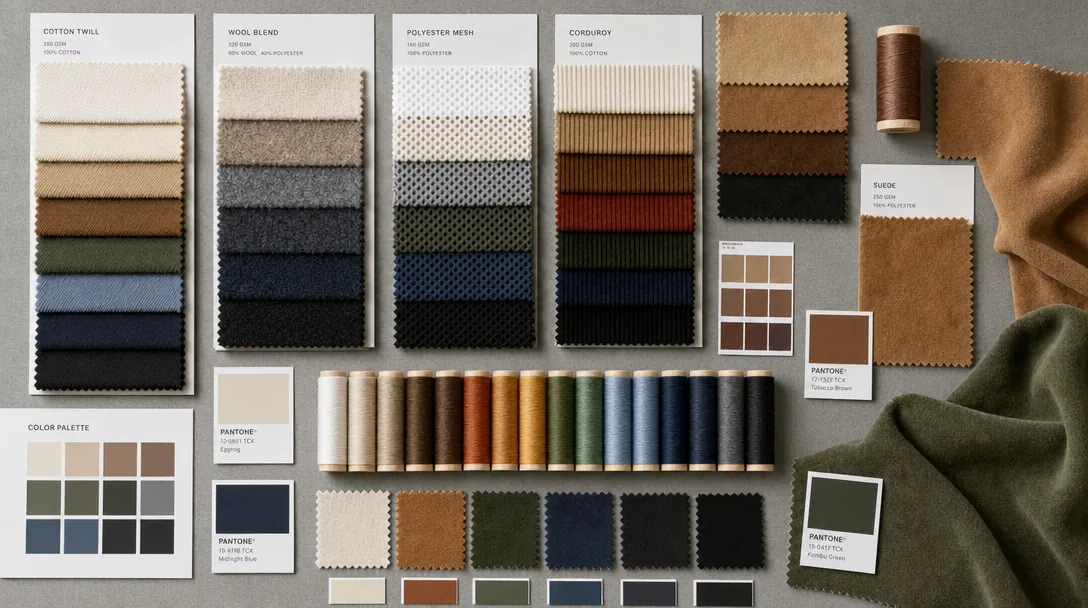
Lock the camouflage print before you talk about sewing. On a camo style, most rejections come from pattern scale, color drift, and seam mismatch, not from whether the hat was stitched on a clean line. The usual shell is 100% cotton twill at 180-240 gsm, brushed cotton around 200 gsm, or CVC ripstop at roughly 210 gsm; custom camouflage is normally rotary screen printed for larger runs and digital reactive printed for shorter runs with more color detail. For a bucket hat women program, the tech pack should name the exact base cloth, Pantone TCX references for the key green, khaki, brown, and black tones, print repeat size in centimeters, and wash shrinkage under 3% in both warp and weft. If those points stay vague, the sidewall seam and brim joins will telegraph the mismatch immediately. Dimensions need to be written just as tightly as the print standard. A commercial women’s bucket hat usually lands at a 56-58 cm finished head circumference, brim width 5.5-7.0 cm, sidewall height 8-9 cm, and top crown diameter 16-17 cm, with 1.0 cm seam allowance and 6-8 rows of brim stitching to keep the edge flat after washing. Sweatband options are usually self-fabric cotton twill or 120-140 gsm polyester mesh, while brim support is commonly 1.5-2.0 mm PE sheet or a firm non-woven fusible, depending on how much structure the brand wants. Our standard practice is to write pattern placement tolerances into the approval sheet, because camouflage allows less visual deviation than a solid color and WeChat photos will not show panel drift reliably.
MOQ is driven by print setup and fabric availability more than by sewing complexity. If you buy stock camouflage fabric, 300-500 pieces per colorway is realistic; if you develop custom artwork, the workable MOQ usually moves to 800-1,500 pieces because of screen cylinder cost, print wastage, and minimum fabric booking. In Zhejiang, a standard camouflage bucket hat women style in 200-220 gsm cotton twill typically lands around USD 2.10-3.40 FOB Ningbo at 500-1,000 pieces. Add enzyme wash, woven main label plus flag label, metal eyelets, inside seam taping, or small front embroidery on Tajima or Barudan heads, and the range usually moves to USD 3.80-5.20. Very low quotes in this category usually mean 160-170 gsm fabric, fewer brim stitch rows, weak brim interlining, or careless marker planning that guarantees visible pattern breaks. The quoting sheet should also define measurable tolerances before bulk starts. Specify finished head circumference tolerance at +/-0.5 cm, brim width variance within +/-3 mm, consistent stitch density at 6-8 SPI, and inspection to AQL 2.5 rather than a vague “good quality” note. On dark camouflage grounds, thread shade control matters; if the topstitch tone shifts too far, the mismatch reads immediately, so bulk thread lots should be checked against the approved lab dip and visual Delta-E kept tight. A serious factory will ask for packing ratio, barcode position, carton drop standard, and whether you need sedex-audit-cap-supplier-guide.html">BSCI 2.0 or Sedex SMETA 4-Pillar compliance on file. For online retail, approve a pre-production sample, a bulk cutting swatch, and a top-of-production sample; that sequence catches more claims than any final photo review ever will.
Corduroy Hat Men's
Fabric control decides whether a corduroy bucket looks premium or cheap, and that starts before sewing. If this style is parked under a mislabeled “corduroy hat men’s” category, the spec still needs to lock four non-negotiables: wale count, fabric weight, fiber content, and nap direction. For bucket hat women programs, 11-wale cotton corduroy at 250-280 gsm is the safest range for shape and sewability. Below 230 gsm, the brim tends to collapse and telegraph seam impressions; above 300 gsm, the side seam gets bulky and clean topstitching becomes inconsistent. Stick with 100% cotton unless there is a very specific fit reason to add stretch; 97/3 cotton-spandex corduroy often twists after fusing and throws off crown symmetry during blocking. A practical construction is a 30-50 gsm nonwoven fusible in the brim, or brim plus upper side wall if the target is a sharper retail silhouette. Nap direction cannot be left to factory judgment because corduroy shifts shade under light even within the same dye lot. If crown, side band, and brim are cut inconsistently, black, camel, forest, and burgundy will look visibly mismatched at first glance. A usable tech pack should call out crown height at 8.5-9.0 cm, brim width at 5.0-6.0 cm, top diameter, 6-8 rows of brim stitching, eyelet finish, sweatband material, and finished tolerance of ±0.5 cm. If color must match apparel, specify Pantone TCX and hold bulk approval to Delta-E 1.0-1.5 under D65 lighting; beyond that, “same color” becomes a customer claim issue. Our standard practice is to approve cut panels for nap direction before sewing, because this catches the most expensive visual defect before the line starts running.
Cost on corduroy buckets moves more with fabric sourcing and finishing than with sewing minutes. In Zhejiang, stock corduroy usually supports MOQ at 300-500 pieces per color, but custom-dyed corduroy often needs 800-1,000 meters per shade, which is where small runs stop making economic sense. For bucket hat women, a basic 500-piece order in stock 11-wale corduroy with standard sweatband, woven size label, and polybag packing typically lands around $2.40-$3.90 FOB China. Add enzyme wash, custom woven main label, metal eyelets, satin care label, and an individual retail box, and the real FOB range is closer to $4.30-$5.90. If embroidery is part of the design, digitizing needs special handling: corduroy ribs eat detail, and serif text under 4 mm height is unreliable even on Tajima or Barudan heads unless underlay is increased and stitch density is reduced. Inspection also has to target defects that plain twill would hide. The failure points are usually wale misalignment at seams, needle cuts on the ridges, seam grin at the side band join, brim waviness, pile crushing, and uneven topstitch spacing. AQL 2.5 is standard for export, but corduroy benefits from one in-line inspection after cutting and another after pressing, because excessive pressure can permanently flatten the pile before packing. Keep wash shrinkage under 3% and set carton pack-out limits so the crown is not compressed during transit; overpacked master cartons are a common cause of poor shape recovery on arrival. The safest approval path is bulk fabric lap dip, cut-panel approval, pre-production sample, then a signed golden sample before mass production.
Organic Cotton Newborn Hat
Traceability is the first filter on any organic cotton newborn hat. If a factory cannot link the finished lot to GOTS or OCS transaction certificates, yarn lot records, and OEKO-TEX Standard 100 Class I chemical compliance, “organic” is just a claim on paper. For infant use, the safest fabric window is usually 160–220 gsm combed cotton single jersey for lighter hand feel or 240–280 gsm 1x1 rib for better recovery. If stretch is necessary, keep elastane at 3–5%; above that, the fabric starts to feel synthetic and can complicate GOTS input approval. Construction should stay deliberately soft: 4-thread overlock with low-bulk seam buildup, trimmed seam allowance, and no hard joins at the crown, fold, or label attachment point. A supplier already running bucket hat women programs should be able to control the same fundamentals here—lot-level shade continuity, fabric skew under 3%, and trim traceability—but infant styles expose those weaknesses much faster because the tolerance for hand feel and chemical risk is effectively zero.
The spec sheet needs tighter controls than most adult headwear. Set finished circumference by age band with ±0.5 cm tolerance, fabric weight at ±5%, and color approval against a Pantone TCX standard with bulk repeat Delta-E kept under 1.5. Require azo-free dyestuffs, infant-level formaldehyde limits, a written needle control policy, and nickel-free compliance if any snap or metal badge is proposed. Decoration should stay light and flexible: soft woven labels, water-based prints, or low-temperature silicone transfers are safer choices than dense embroidery, even when the factory has Tajima or Barudan capability. Pricing also needs to be grounded in how certified fabric is actually bought. Custom-dyed organic fabric usually means 1,000–3,000 pieces per color to make knitting and dyeing economical, while stock greige or ready-dyed programs can start around 300–500 pieces. In today’s China market, FOB is commonly $0.95–$1.60 for a basic certified newborn hat and $1.80–$2.80 once you add custom packaging, third-party lab testing, or more complex trims.
The failures that cost buyers money are usually ordinary production mistakes, not dramatic defects: seam puckering after wash, off-grain cutting that twists the body, resin-heavy finishing that leaves a harsh hand, loose thread ends inside the crown, and label stitches that scratch at the fold. For bulk inspection, AQL 2.5 is a reasonable baseline, but infant goods need extra checkpoints for needle damage, odor, wash shrinkage after one home-laundry cycle, and opening recovery so the hat does not bag out after repeated fitting. In practice, this category is not simpler than a bucket hat women order just because it uses less fabric. Sewing minutes are lower, but the compliance threshold is higher, and a factory that cannot hold infant standards will usually struggle later with premium women’s headwear, where panel symmetry, clean topstitching, retail-ready packing, and consistent hand feel have to survive full production rather than just the approval sample.
Corduroy Hat Wholesale
Corduroy bucket hats usually fail at the fabric stage, not the sewing stage. For a bucket hat women program, 11W to 14W corduroy is the safest commercial range: 8W looks bulky on a softer silhouette, while 16W often loses definition after wash, steaming, and carton compression. The shell is typically 100% cotton at 220 to 280 gsm; if you need a softer hand and cleaner curved seams, a cotton-spandex blend around 240 to 255 gsm performs better because it reduces seam grin on the side panel. The factory controls that matter are basic but often missed: minimum 24-hour fabric relaxation, one-way lay cutting, all panels running in the same nap direction, and low-temperature fusing on brim layers so the pile does not glaze. One panel cut against pile will read as a different shade under store LEDs. The tech pack needs more than color and logo callouts. Lock the fabric to composition, wale count, finished weight tolerance of +/-5%, brim width, crown height, sweatband spec, fusible weight, SPI for topstitching, and a pile-direction arrow on every pattern piece. If color accuracy matters, specify Pantone TCX and approve lab dips or bulk swatches within Delta-E 1.0 to 1.5 under D65 light; corduroy reflects light unevenly, so loose color language creates arguments later. Embroidery on ridged fabric also needs operator input, not just a file drop. On Tajima, Barudan, or ZSK heads, the digitizer should increase underlay and pull compensation so satin columns do not sink into the wale valleys. In China, MOQ is usually 300 to 500 pcs per color with stock corduroy, while custom dyeing starts around 800 to 1,000 meters. Ex-factory cost is commonly USD 2.80 to 4.80 for a clean basic hat and USD 5.20 to 7.50 once you add dense embroidery, custom lining, inner taping, and branded trims.
Inspection is where the margin gets protected. The recurring defects on corduroy hats are reversed nap, panel-to-panel shading, seam slippage at side joins, skipped stitches over thick brim crossings, and pile bruising after pack-out. For bucket hat women orders, AQL 2.5 is a reasonable finished-goods standard, but it is not enough on its own. The QC sheet should also check head circumference within +/-0.5 cm, brim symmetry, crown roundness, stitch balance, and visual appearance after 24 hours in carton. Corduroy has memory: a hat that looks sharp off the steam press can arrive with pressure marks if cartons are overfilled or vacuum compression is used without proper recovery testing. A reliable factory will control process inputs, not just final appearance. Bulk fabric should come from a single dye lot per color, pressing temperature should be logged to avoid pile glazing, and packing should use tissue separation or light internal support on softer silhouettes. At CrownsForge, pre-production review for corduroy always includes shade-direction checks under both natural light and cool-white retail light because the pile can look acceptable in the sewing room and wrong on shelf. Ask the supplier how they handle wale distortion at the brim edge, what fusible they use in the brim sandwich, and whether they test pack density before mass shipment. If they treat corduroy like standard twill, expect claims; if they understand pile recovery and structured reinforcement, the hats will land cleaner and with fewer chargebacks.
Wholesale Hat Manufacturers Usa
Most buyers searching wholesale hat manufacturers usa are really deciding between three supply chains: fully domestic cut-and-sew, imported blanks with U.S. decoration, or direct Asia production with FOB/DDP delivery. For bucket hat women programs, that distinction matters more than the country label because the construction is straightforward but the consistency is not. A standard bucket hat starts with shell fabric cutting, crown side panel joining, top crown attachment, brim sandwiching with interlining, edge topstitching, eyelet setting, sweatband insertion, then wash/shape packing. On heavier styles like a camouflage bucket hat in 8 oz cotton twill or a corduroy hat men's silhouette in 11-wale 280 gsm corduroy, the brim seam bulk changes needle choice and SPI target; I usually want 6 to 8 stitches per inch on brim rows and a fused or stitched nonwoven interlining around 120 to 150 gsm so the brim does not collapse after carton compression. U.S. vendors often subcontract some of these steps anyway, so ask where sewing, embroidery, and finishing are actually done rather than assuming a domestic address means domestic production.
The factory spec pack should be blunt and measurable. Request fabric composition, weight, and finish; for example 100% cotton twill 220 gsm, reactive dyed to Pantone TCX with Delta-E under 1.5 against lab dip approval, or 98/2 cotton-spandex corduroy if you need softer recovery. Call out crown height, brim width, head circumference tolerance, stitch count per row, eyelet material, sweatband fabric, label placement, and carton packing method. If you are matching a bucket hat women collection to adjacent SKUs like a cotton beanie, organic cotton newborn hat, or beanies for men, lock color continuity across materials early because fleece, rib knit, and woven twill can drift badly in bulk even under the same Pantone reference. Our standard practice is to ask for a PP sample, brim stiffness reference, wash test result, and metal component salt-spray report if trims are exposed. For decoration, specify Tajima or Barudan embroidery, thread brand, backing type, and max logo height so the crown does not pucker on lighter shells.
MOQ and price move mostly with fabric and decoration, not with the bucket shape itself. A plain bucket hat in brushed cotton twill usually starts around 300 to 500 pcs per colorway from an export factory, with FOB pricing roughly $2.10 to $3.80 depending on fabric weight, lining, and label complexity; piece-dyed camouflage prints, corduroy, or appliqué embroidery can push it to $4.20 to $6.50. Smaller U.S.-based wholesalers may quote 24 to 144 pcs, but that is often stock blank pricing plus local decoration, not true custom manufacturing. Inspection should focus on brim symmetry, panel skew, top crown centering, seam roping, broken topstitch, embroidery registration, color shading between panels, needle oil marks, and actual circumference within tolerance, typically plus or minus 0.5 cm. Use AQL 2.5 for bulk inspection, and if the supplier claims BSCI 2.0 or Sedex SMETA 4-Pillar alignment through offshore partners, ask for the latest audit date and facility name. That gives you a cleaner comparison when deciding whether a wholesale hat manufacturers usa option is genuinely lower risk than direct sourcing for the broader bucket hat women program.
Black Beanie Hat
Black beanie programs go wrong on color control and structure, not on styling. Black is the shade that exposes every factory shortcut: red or green undertone drift between dye lots, seam grin at over-stretched ribs, silicone oil marks from knitting, and needle heat glazing on synthetic fleece. If the beanie has to sit beside a broader bucket hat women assortment, “standard black” is not a usable instruction. For acrylic or polyester yarns, lock the shade to Pantone Black 6 C; for cotton-rich jersey or fleece, use the nearest Pantone TCX reference and approve lab dips at Delta-E 1.5 max under D65, with AATCC gray scale records kept on file. On retail programs, I would also require wash-retained shade approval, because black often shifts after the first enzyme or softener cycle even when the initial bulk looks clean. Construction should be specified by end use, not by mood board. Low-cost promo beanies in Zhejiang are usually cut-and-sew from 180-240 gsm cotton-spandex jersey or 220-280 gsm brushed polyester fleece, sewn on 4-thread overlock with a coverstitched hem. Better retail winter styles are fully fashioned on Stoll or Shima Seiki flat knitting machines in 5G, 7G, or 12G using 100% acrylic, 70/30 acrylic-wool, or cotton-acrylic blends. For adult size, practical specs are 28-30 cm body height before cuffing, 21-23 cm laid-flat width, 2x2 rib or single jersey structure, and finished weight around 70-95 g depending on gauge and yarn count. If you do not call out rib recovery, top closure type, and cuff depth, the supplier will optimize for yield, and that usually means a flatter hand feel and weaker return after wear.
Testing and decoration are where black beanies quietly fail inspection. A complete spec should require colorfastness to crocking minimum grade 4 dry and 3-4 wet, pilling performance after 5,000 Martindale cycles, spirality limits on jersey versions, and azo-free or REACH-compliant chemistry for EU shipments. For knit styles, I’d add stretch-recovery targets on the cuff and opening, because black ribs can look acceptable on the table but bag out after one fitting. Bulk inspection should be no looser than AQL 2.5, with extra attention on shade banding across cartons, loose yarn tails inside the crown, torque after wash, and cuff edge waviness. Our standard practice is to check black goods under both D65 and warm-store lighting because undertone differences often hide in the sample room and show up at retail. Embroidery needs tighter engineering on black than most buyers expect. Dense logos on Tajima, Barudan, or ZSK heads will pucker fast if the backing is under-specced; 40-60 gsm cutaway is usually too light for filled designs, while 80-100 gsm cutaway or a cap-stable soft backing gives cleaner edges and less tunneling. Thread should be color-matched with a controlled sheen level, since high-luster polyester can read charcoal against a matte black body. In Zhejiang, realistic FOB pricing is about US$1.10-US$1.85 for plain acrylic beanies at 300-500 pcs per color, and US$2.20-US$4.80 for wool-blend or cotton-rich versions with woven labels and embroidery. If the beanie is part of a bucket hat women collection, matching trim blacks across woven labels, care labels, and embroidery thread is worth specifying separately; body fabric approval alone will not keep the whole set visually consistent.
Working with CrownsForge for bucket hat women programs
Fit and construction need to be locked before unit price talks, because bucket hat women styles fail on shape long before they fail on cost. A practical sample path is 3-5 working days for a blank fit sample, 5-7 days for a decorated prototype, and 7-10 days if you add all-over print, contrast panels, enzyme wash, or lab dips matched to Pantone TCX. On women’s fits, 0.5-1.0 cm in brim width or crown depth is enough to change the silhouette from clean to sloppy, especially on softer 180-240 gsm cotton twill. PDFs do not catch that; a live fit sample on head form does. For first orders, two approvals are usually sufficient: one fit sample to freeze shape and one pre-production sample to confirm all trims, decoration, and finishing. MOQ should follow the fabric and trim reality, not a sales promise. Stock cotton twill or brushed chino can run at 144-300 pieces per colorway, while custom reactive prints, camouflage yardage, 8-wale corduroy, or custom lining programs usually push the break-even closer to 500 pieces.
Decoration and control points expose weak suppliers fast because a bucket hat women silhouette has no structured front panel to hide defects. Puckering around embroidery, drifting eyelets, uneven brim topstitch, and side seams that torque after washing are all visible immediately. Our standard practice is to run embroidery on Tajima or Barudan heads and adjust digitizing by fabric type: lower stitch density on pigment-dyed cotton to prevent tunneling, wider underlay control on corduroy so the wale does not swallow edge definition, and tighter registration checks on polyester blends for sublimated panels. Buyers who spec the job properly save more than they gain by grinding $0.20 off the unit cost: shell fabric weight, brim stitch rows, seam allowance, eyelet finish, thread brand, stitch count target, label position, and trim color tolerance such as Delta-E below 1.5 on visible parts. Compliance should be gated the same way. For US or EU orders, ask for current BSCI 2.0 or Sedex SMETA 4-Pillar records, AQL 2.5 inspection standards, AZO/REACH/CPSIA-relevant testing, and any transaction certificates for recycled polyester or organic cotton before bulk booking. A normal lead time is 25-35 days after PP approval, but washed fabrics, custom prints, and peak-season vessel congestion routinely add another 7-14 days.
Frequently Asked Questions
How long does production take?
Sampling takes 7 to 12 days. Bulk production runs 20 to 30 days depending on quantity, fabric availability and decoration complexity. Inspection and packing adds another 3 to 5 days before shipment.
What file format should I send for my logo?
Vector files (AI, EPS, PDF) are ideal. High-resolution PNG or JPG at 300 dpi on transparent background works as a fallback. Provide Pantone color references for accurate reproduction.
Can I order a sample before bulk production?
Yes. We strongly recommend approving a pre-production sample before mass production. Samples are charged at 35 to 60 USD each plus express shipping, fully refundable against confirmed bulk orders over 500 pieces.
What is the minimum order quantity (MOQ) for custom hats?
Our standard MOQ is 100 pieces per design and color, with sampling available from 1 piece. For complex multi-color logos or premium fabric upgrades, the MOQ can be lowered with a small per-piece surcharge.
What logo decoration techniques do you offer?
3D puff embroidery, flat embroidery, woven patch, leather patch, PVC patch, screen printing, sublimation, applique and laser etching, all in-house with no subcontracting.
What should buyers know about organic cotton bucket hat?
When evaluating organic cotton bucket hat, the key considerations are construction quality, decoration capability, MOQ flexibility and lead time. Cover everything buyers ask about organic cotton newborn hat: how it's manufactured, what specs to request from a factory, typical MOQ and pricing, common quality issues to inspect for, and how this ties back to the broader bucket hat women sourcing decision. Cover everything buyers ask about camouflage bucket hat: how it's manufactured, what specs to request from a…
What should buyers know about men's corduroy bucket hat?
When evaluating men's corduroy bucket hat, the key considerations are construction quality, decoration capability, MOQ flexibility and lead time. Cover everything buyers ask about corduroy hat men's: how it's manufactured, what specs to request from a factory, typical MOQ and pricing, common quality issues to inspect for, and how this ties back to the broader bucket hat women sourcing decision. Cover everything buyers ask about corduroy hat wholesale: how it's manufactured, what specs to request from a factory,…
What should buyers know about cotton beanie men?
When evaluating cotton beanie men, the key considerations are construction quality, decoration capability, MOQ flexibility and lead time. Cover everything buyers ask about corduroy hat men's: how it's manufactured, what specs to request from a factory, typical MOQ and pricing, common quality issues to inspect for, and how this ties back to the broader bucket hat women sourcing decision. Cover everything buyers ask about organic cotton newborn hat: how it's manufactured, what specs to request from a factory,…
What should buyers know about ralph lauren corduroy bucket hat?
When evaluating ralph lauren corduroy bucket hat, the key considerations are construction quality, decoration capability, MOQ flexibility and lead time. Cover everything buyers ask about corduroy hat men's: how it's manufactured, what specs to request from a factory, typical MOQ and pricing, common quality issues to inspect for, and how this ties back to the broader bucket hat women sourcing decision. Cover everything buyers ask about corduroy hat wholesale: how it's manufactured, what specs to request from a factory,…
Looking for a reliable hat manufacturer in China?
CrownsForge has produced custom hats for 800+ brands across 40 countries. From 100-piece launches to 100,000-piece retail programs, we deliver on time and on spec.
Get in touchRelated guides
Baseball Hats For Men Export Shipping Checklist for Custom Hat Buyers
Read article →Wholesale Hats Suppliers: Properties, Costs and How to Spec It Right
Read article →
Country Hats For Men Sample Approval Process for Custom Hat Buyers
Read article →We hope this guide demystifies bucket hat women: properties, costs and how to spec it right - supplier checklist and helps you move forward with confidence. If you have questions specific to your project, our English-speaking sales engineers are one message away.