
BSCI vs Sedex vs WRAP vs WCA: Compliance Audit Standards Compared - Supplier Checklist - Supplier Checklist (2026 Update)
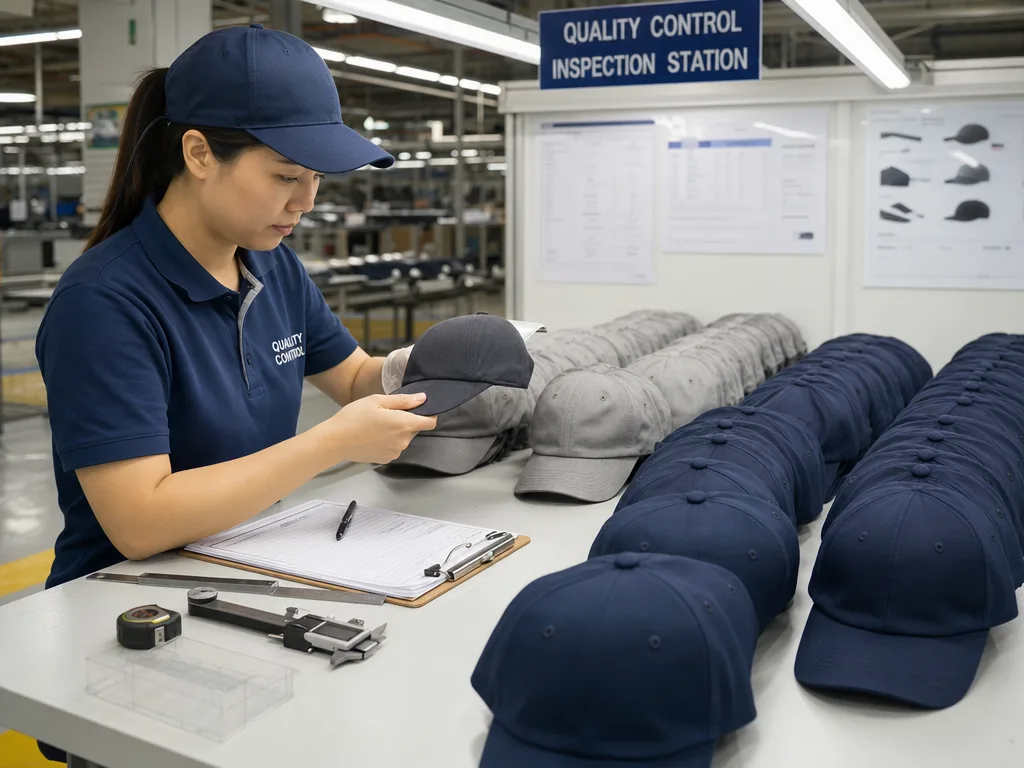
BSCI vs Sedex vs WRAP vs WCA: Compliance Audit Standards Compared - Supplier Checklist - Supplier Checklist (2026 Update) is one of the most-asked questions we receive from international buyers, and for good reason. With dozens of factories competing for your order and an alphabet soup of technical terms in every supplier quote, even experienced importers can feel lost. This guide consolidates what we have learned producing custom hats for clients in 40+ countries.
The four audits hat factories actually hold
sedex-audit-cap-supplier-guide.html">BSCI 2.0, administered by amfori, is still the default social audit for many EU buyers because it goes straight at the labor controls that break first in cap production: excessive overtime in peak months, incomplete payroll records, weak subcontracting approval, and inconsistent worker interviews between embroidery, sewing, finishing, and packing. In a hat factory, that matters more than policy language. Auditors typically sample 12 months of timecards, wage ledgers, labor contracts, leave records, and social insurance data, then cross-check them against line output and dispatch logs. The practical BSCI vs Sedex SMETA question is not which checklist sounds tougher; it is which framework your customer actually accepts and how deep they expect corrective-action follow-up to go. BSCI tends to press harder on management systems, root-cause closure, and whether overtime stayed inside both local law and buyer code, which in China usually means not just legal maximum hours on paper but traceable attendance records with no manual smoothing.
Sedex SMETA 4-Pillar is broader and more modular, which is why UK retailers and multi-country sourcing teams write it into supplier manuals. The four pillars—labor standards, health and safety, environment, and business ethics—push the audit beyond wages and hours into fire-drill logs, machine guarding, chemical secondary containment, waste manifests, dormitory conditions, grievance channels, and anti-bribery controls. In a social compliance audit hat factory, the repeat findings are predictable: payroll that does not reconcile to attendance, needle-control records missing by shift, unapproved homeworking or overflow subcontracting, blocked exits in finished-goods storage, and accident logs with no corrective action. WRAP and WCA are usually more buyer-specific. WRAP remains common with US licensees and promotional importers; WCA is tied more closely to major retail programs and tends to scrutinize wage accuracy, working-hour caps, and life-safety discipline with less tolerance for documentation gaps. Our standard practice is to tell buyers to decide the audit named in the PO or supplier agreement first, because one valid report can cost roughly $900 to $1,800, but carrying three overlapping audits creates admin without fixing the factory-floor weaknesses that auditors actually cite.
BSCI 2.0 scope and audit process
amfori BSCI 2.0 is not a light-touch factory walk-through; it is a structured social compliance system built around 13 performance areas, from fair remuneration and decent working hours to occupational health and safety, ethical business behavior, and no unauthorized subcontracting. In practice, auditors in China spend disproportionate time where records break first: payroll versus attendance, labor contracts, recruitment fees, age verification, disciplinary controls, and production overflow sent to outside workshops. In a cap factory, that means reconciling needle-room headcount to line attendance, checking whether embroidery, washing, or hand-trimming was subcontracted without buyer approval, and reviewing chemical registers for screen-print inks, spot-cleaning solvents, adhesives, and stain removers. For buyers comparing BSCI vs Sedex SMETA, BSCI is usually the more system-driven benchmark: the expectation is not just that policies exist, but that management can prove they function daily across multiple departments and shifts.
The audit window is usually 1 to 2 onsite days, but the preparation burden is much heavier than the calendar suggests. Auditor days are driven by worker headcount, number of shifts, dormitory coverage, and whether peak-season processes must be traced to labor agents or subcontractors. The first document pull is rarely negotiable: at least 12 months of payroll and time records, contracts, ID copies, age checks, social insurance evidence, safety training logs, fire drill reports, machine maintenance records, and grievance-channel evidence. Those files are then cross-checked against confidential worker interviews and floor observation, so clean binders alone do not survive long. A 12-month report validity also matters commercially: buyers should treat BSCI as a recurring control cycle with CAP closure, not a framed certificate. Our standard practice is to pre-audit overtime calculations, social insurance gaps, and EHS records first, because those three areas generate a large share of nonconformities long before branding, MOQ, or FOB terms are discussed.
The decisive factor is evidence consistency under sampling pressure. A credible BSCI 2.0 audit will test whether PPE issuance logs match actual use at embroidery, cutting, and printing stations; whether exit routes and extinguishers match the posted evacuation map; whether first-aid staffing is adequate by shift; and whether hazardous chemicals are labeled to local law and backed by SDS files. Auditors also compare hiring dates, probation terms, and wage components against worker statements, so a Delta between payroll, attendance, and interview testimony creates findings quickly. In real factories, the weak points are usually excessive monthly overtime, incomplete social insurance enrollment, missing machine guards, and informal subcontracting during rush orders. That is the practical difference in BSCI vs Sedex SMETA: BSCI tends to impose tighter operating discipline and clearer management-system expectations, while SMETA is often used as a flexible audit methodology that can vary more by buyer scope, especially around environmental and business ethics modules.
Sedex SMETA 4-Pillar scope and process
SMETA 4-Pillar is what most buyers mean when they ask for a serious Sedex audit, not a basic floor walk. The 2-Pillar format covers Labor Standards and Health & Safety; 4-Pillar adds Environment and Business Ethics, which materially changes the evidence an auditor will demand. In a cap factory, that goes beyond needle guards and blocked exits. Auditors will sample payroll, timecards, piece-rate calculations, labor contracts, rest-day logs, and age-verification files, then cross-check them against production peaks and shipment dates to see whether the hours are believable. On the environmental side, they will look at wastewater manifests from washing or garment-dye processes, chemical segregation, secondary containment, SDS availability, and licensed disposal records for ink, solvent, and adhesive waste. Business Ethics usually means documented anti-bribery policy, gift and hospitality controls, whistleblowing channels, and traceable approval authority on purchases and invoices. In any practical BSCI vs Sedex SMETA comparison, this broader document trail is why SMETA 4-Pillar often feels tougher than factories expect.
A normal SMETA 4-Pillar audit runs 2 to 3 auditor-days on site, but the real variable is worker count, dormitory scope, subcontracting, and whether the site runs one shift or two. Buyers usually accept a report for 12 months, yet a move of legal entity, plant address, or production process can trigger a new audit sooner; unresolved findings can also require a follow-up visit within 90 days. Sedex-recognized firms such as SGS, Intertek, Bureau Veritas, QIMA, and TÜV Rheinland all work to the same SMETA methodology, so the difference is rarely the logo on the report and more often the factory’s record discipline. Expect worker interviews off the line, payroll traceability checks back to bank transfers, overtime consent forms, machine guarding verification, dorm fire-safety review, and close scrutiny of prior CAPR closure evidence. Our standard practice is to prepare records by month, not by audit topic, because that is how auditors actually test credibility. In BSCI vs Sedex SMETA, the factories that struggle most are usually not unsafe on the surface; they are the ones with gaps between attendance, wages, subcontracting declarations, and what the shipment calendar proves happened.
WRAP scope and process
WRAP is narrower than many buyers expect, and that is exactly why licensed-merchandise programs keep using it. The standard is built around 12 principles, not a sprawling social audit checklist: compliance with local law, prohibition of forced and child labor, fair compensation, safe and healthy working conditions, no harassment or abuse, freedom of association, and environmental compliance tied to legal requirements. In a hat factory, that translates into a very specific document and floor review: payroll accuracy, time records, minimum wage and overtime calculations, dormitory conditions if workers live on-site, fire exits, chemical storage, machine guarding, and whether discipline is recorded instead of handled ad hoc by line leaders. On-site time is usually 1 to 2 days for a single facility, but it stretches when headcount is high, subcontracting is involved, or the factory keeps records in separate systems that do not reconcile cleanly.
WRAP is also more certification-oriented than a broader BSCI vs Sedex SMETA review. The audit is performed by WRAP-approved firms such as Intertek, Bureau Veritas, and Centre Testing, and the outcome is tiered: Silver for 1 year, Gold for 2 years, and Platinum for a multi-year cycle, depending on benchmark coverage and corrective-action closure. That structure matters to brand compliance teams because it gives them a simple certificate state to file, rather than a long narrative report they have to interpret line by line. For buyers in sports, licensed character goods, and music merchandise, WRAP tends to fit vendor-approval programs well because the pass/fail logic is clear and the scope is predictable across factories.
For a WRAP vs WCA audit comparison, the practical difference is how much interpretation the buyer wants to allow. WRAP is more standardized and certification-led; WCA is often used by retailers and sourcing teams that want a broader working-conditions review without the same brand recognition or certificate hierarchy. In day-to-day factory work, the failures are usually boring but expensive: overtime miscalculation, missing age verification, weak dormitory controls, or a policy that says one thing while supervisors do another when production slips. Our standard practice is to treat WRAP as a document-control exercise first and a shop-floor compliance exercise second, because if attendance, wage sheets, and disciplinary logs do not match the actual workflow, the audit ends in findings before the walk-through even becomes interesting.
WCA scope and process
WCA is not a interchangeable social audit; it is a Walmart-accepted gate tied to Walmart’s Standards for Suppliers and the exact facility code shipping the goods. That is where many buyers get tripped up in a real BSCI vs Sedex SMETA discussion. A factory can hold a current BSCI 2.0 result or a Sedex SMETA 4-Pillar report and still fail onboarding for Walmart or Sam’s Club programs if the site does not also carry a valid WCA from an approved audit firm. The scope overlaps with other social audits—working hours, payroll accuracy, minimum-age checks, labor contracts, health and safety, dormitories where applicable, environmental permits, and worker interviews—but the acceptance logic is not based on broad mutual recognition. It is buyer-specific, site-specific, and date-sensitive. In practical terms, that means the audit file must support not only legal and ethical compliance, but also Walmart’s supplier setup controls, including the legal entity, production address, and records for the exact workshops actually making the order.
The fieldwork looks similar to SMETA on paper, but the record reconciliation is usually tighter. Auditors sample timecards, piece-rate sheets, payroll ledgers, social insurance records, leave logs, disciplinary records, fire drill logs, extinguisher inspection tags, electrical testing, machine guarding, chemical SDS files, and grievance channels, then compare production peaks against attendance to spot undeclared overtime, agency labor, or off-book subcontracting. On a cap factory floor, they will expect traceability across cutting, panel sewing, embroidery, eyelet punching, brim forming, heat transfer, finishing, and packing by shift and by line, not just a clean walkthrough. Most WCA reports run on a 12-month validity cycle, but waiting until the last 30 days to renew is a common mistake; once an audit expires, the commercial risk is immediate—PO release delays, booking holds, or shipment blocks against the affected factory code. At CrownsForge, the most common failures are not on a Tajima or Barudan line; they are wage-calculation errors, incomplete student worker files, expired safety inspections, and permit renewals that slipped past the calendar.
What overlap exists and what differs
About 70% to 80% of the checklist overlaps, and it is the boring operational evidence that decides the result: payroll matched to timecards, government ID and age-verification files, machine guarding, unobstructed exits, SDS registers for inks and spot cleaners, PPE issuance, grievance logs, and subcontractor declarations. In a headwear plant, both BSCI 2.0 and Sedex SMETA auditors will sample the same core records: needle-control logs from Tajima or Barudan embroidery lines, overtime approvals, fire-drill minutes, first-aid rosters, dormitory inspections, and wage sheets reconciled against attendance. That is why any serious BSCI vs Sedex SMETA review starts with daily controls, not audit branding. If a factory can retrieve 12 months of consistent payroll, attendance, and training records in under an hour, the second audit is usually a gap-closing exercise rather than a full operational cleanup.
The real difference is audit logic, especially in how nonconformities are framed and closed. BSCI 2.0 leans harder on management systems: risk assessment, policy deployment, worker communication, and corrective-action evidence with dates, photos, invoices, and updated procedures. Sedex SMETA 4-Pillar covers labor standards, health and safety, environment, and business ethics, but many buyers use it as a due-diligence screen rather than a graded maturity model. On the floor, that means a factory can pass SMETA with only minor issues, then get pushed harder in BSCI interviews when line leaders cannot explain the grievance process, weekly hour controls, or remediation steps. The usual failures are not dramatic; they are technical and cumulative: wage reconciliation errors, hours above local legal limits, missing social insurance records, inconsistent worker interview answers, or CAP closures supported by promises instead of evidence.
WRAP and WCA separate themselves less by subject matter than by buyer pressure and depth of reconciliation. WRAP fits sewn and embellished products reasonably well because it stays focused on lawful employment, working conditions, compensation, and traceable records without too much framework clutter. WCA, especially on large US retail programs, is more forensic: auditors often cross-check attendance, payroll, piece-rate output, dorm occupancy, and leave records line by line, with little patience for manual Excel adjustments that cannot be explained. In China, that is where factories get exposed. If attendance sits in one system, output in another, and wages are adjusted offline, a WCA sample can turn a small bookkeeping gap into a systemic finding. Our standard practice is to hold at least 12 months of retrievable records, though many buyers informally expect 24, because the only workable way to stay ready across BSCI, Sedex SMETA, WRAP, and WCA is one internal standard: legal working hours, clean payroll, closed CAPs, controlled chemical inventory, and supervisors trained well enough to survive worker interviews.
What the audit doesn't tell you
A passed social audit does not prove a factory can execute a difficult cap program at scale. In any honest BSCI vs Sedex SMETA comparison, the audit scope is labor hours, payroll, juvenile-worker controls, grievance channels, fire safety, PPE, machine guarding, canteen and dorm conditions, and management systems tied to worker welfare. That matters, but it says nothing about whether a hat factory can keep crown height within +/-2 to 3 mm across a 12,000-piece order, hold visor curvature consistently across multiple molds, or match embroidery thread and body fabric closely enough to an approved Pantone TCX standard. I have seen factories with current BSCI 2.0 and Sedex SMETA 4-Pillar reports still ship caps with front logos drifting 2 to 4 mm off center, buckram quietly downgraded from 210 gsm to 160 gsm, or sweatbands failing colorfastness to perspiration after a basic ISO 105-E04 test. None of that appears in the audit score.
The bigger gap is operating discipline, because compliance scores do not show whether the factory actually controls production under load. WRAP, WCA, and social audits will not tell you the supplier’s real OTIF rate over the last 20 shipments, first-pass PPS approval rate, remake percentage, or whether carton labeling routinely misses Amazon FBA, retailer routing-guide, or team distribution-center requirements. They also do not reveal whether embroidery is running on maintained Tajima, Barudan, or ZSK heads with stable tension, whether fabric passed a 4-point inspection before cutting, or whether final inspection was done to AQL 2.5 instead of a rushed end-line check before container loading. Treat supplier compliance audit standards as an entry ticket, not evidence of manufacturing capability. Ask for the full audit report, then separately verify recent bulk-production photos, defect data by category, material test reports, sample and booking lead times, and references from current customers running similar volumes. That is what prevents chargebacks, late launches, and inventory you cannot sell.
Frequently Asked Questions
How long does production take?
Sampling takes 7 to 12 days. Bulk production runs 20 to 30 days depending on quantity, fabric availability and decoration complexity. Inspection and packing adds another 3 to 5 days before shipment.
What is the minimum order quantity (MOQ) for custom hats?
Our standard MOQ is 100 pieces per design and color, with sampling available from 1 piece. For complex multi-color logos or premium fabric upgrades, the MOQ can be lowered with a small per-piece surcharge.
Can I order a sample before bulk production?
Yes. We strongly recommend approving a pre-production sample before mass production. Samples are charged at 35 to 60 USD each plus express shipping, fully refundable against confirmed bulk orders over 500 pieces.
Which shipping methods do you support?
We support FOB, CIF and DDP shipping. Air express for samples and small orders, sea LCL for 100 to 500 pieces, sea FCL for 5,000+ pieces. Door-to-door DDP available for US, EU, UK, Canada and Australia.
Do you support sustainability certifications?
Yes. We work with GOTS organic cotton, GRS-certified recycled polyester, OEKO-TEX Standard 100 fabrics, and are BSCI and Sedex audited. Certification documentation can be provided per order.
How does ordering custom embroidered trucker hat work?
When evaluating custom embroidered trucker hat, the key considerations are construction quality, decoration capability, MOQ flexibility and lead time. BSCI 2.0 (Business Social Compliance Initiative by amfori) — European retailer favorite. Sedex SMETA 4-Pillar (Social, Health & Safety, Environment, Business Ethics) — used by UK and increasingly global retailers. WRAP (Worldwide Responsible Accredited Production) — US retailer favorite for licensed merchandise. WCA (Walmart Conformance Audit) — required by Walmart and…
How does ordering custom bucket hat embroidery work?
When evaluating custom bucket hat embroidery, the key considerations are construction quality, decoration capability, MOQ flexibility and lead time. BSCI 2.0 (Business Social Compliance Initiative by amfori) — European retailer favorite. Sedex SMETA 4-Pillar (Social, Health & Safety, Environment, Business Ethics) — used by UK and increasingly global retailers. WRAP (Worldwide Responsible Accredited Production) — US retailer favorite for licensed merchandise. WCA (Walmart Conformance Audit) — required by Walmart and…
What should buyers know about bucket hat men nike?
When evaluating bucket hat men nike, the key considerations are construction quality, decoration capability, MOQ flexibility and lead time. BSCI 2.0 (Business Social Compliance Initiative by amfori) — European retailer favorite. Sedex SMETA 4-Pillar (Social, Health & Safety, Environment, Business Ethics) — used by UK and increasingly global retailers. WRAP (Worldwide Responsible Accredited Production) — US retailer favorite for licensed merchandise. WCA (Walmart Conformance Audit) — required by Walmart and…
How does ordering custom made hats for men work?
When evaluating custom made hats for men, the key considerations are construction quality, decoration capability, MOQ flexibility and lead time. BSCI 2.0 (Business Social Compliance Initiative by amfori) — European retailer favorite. Sedex SMETA 4-Pillar (Social, Health & Safety, Environment, Business Ethics) — used by UK and increasingly global retailers. WRAP (Worldwide Responsible Accredited Production) — US retailer favorite for licensed merchandise. WCA (Walmart Conformance Audit) — required by Walmart and…
What is the difference between BSCI and Sedex?
BSCI audits follow a fixed framework, whereas SEDEX supports multiple audit types, including BSCI itself. BSCI membership is required for suppliers, while SEDEX enables transparency by sharing audits with multiple buyers.
Is BSCI recognized globally?
The BSCI certification is recognized globally and demonstrates a company's commitment to responsible sourcing and ethical business practices. It helps companies ensure that their supply chains meet internationally recognized social standards and supports the protection of workers' rights and welfare.
Are Sedex and Smeta the same?
SMETA audits are carried out by auditors from Sedex's named independent, third-party Affiliate Audit Companies (AACs). Sedex owns and evolves the SMETA methodology, oversees its usage and drives SMETA auditing consistency through our Audit Quality Programme.
Are Smeta and BSCI the same?
Differences in Focus and Outcomes BSCI audits primarily focus on issues such as compliance with the law, freedom of association, collective bargaining, prohibition of discrimination, compensation, and working hours. SMETA audits, therefore, fall under the category of social responsibility inspections.
Is the BSCI certification legit?
The BSCI certification is recognized globally and demonstrates a company's commitment to responsible sourcing and ethical business practices. It helps companies ensure that their supply chains meet internationally recognized social standards and supports the protection of workers' rights and welfare.
Ready to start your custom hat project?
Send us your tech-pack, sketch or even just an inspiration photo. We will respond with a detailed quotation and digital mock-up within 24 hours.
Request a free quoteRelated guides
Winter Beanie & Knit Cap Manufacturing: The Complete Wholesale Guide - Cost & MOQ Breakdown
Read article →
Bucket Hat Corduroy Reorder Planning Guide for Custom Hat Buyers
Read article →
Ball Caps for Women: A 2026 Sourcing Playbook for International Buyers - Cost & MOQ Breakdown
Read article →If you are ready to take the next step on bsci vs sedex vs wrap vs wca: compliance audit standards compared - supplier checklist - supplier checklist (2026 update), our team can put a tailored quotation and digital mock-up in your inbox within 24 hours. Send the inquiry form on our contact page or message us directly on WhatsApp.