
BSCI vs Sedex vs WRAP vs WCA: Compliance Audit Standards Compared - Supplier Checklist - Supplier Checklist - 2026 Buyer's Guide
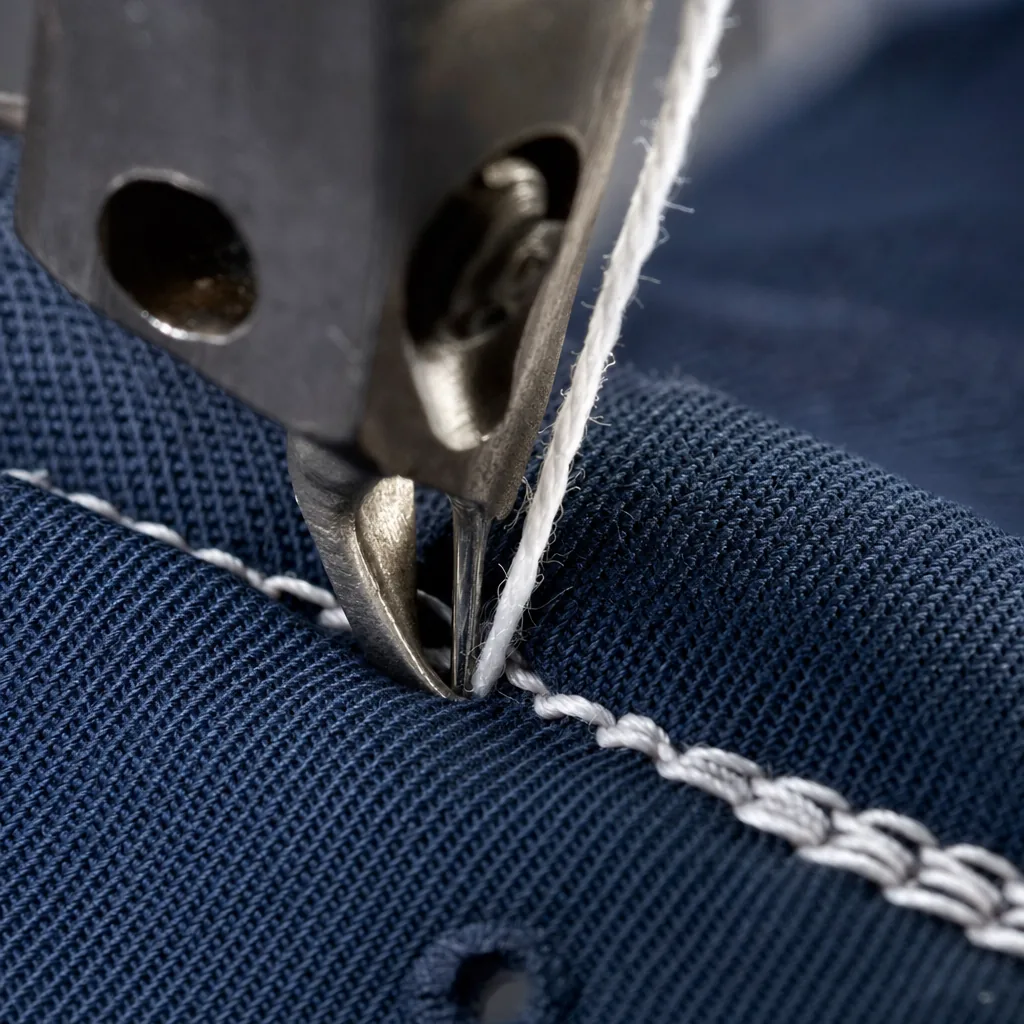
BSCI vs Sedex vs WRAP vs WCA: Compliance Audit Standards Compared - Supplier Checklist - Supplier Checklist - 2026 Buyer's Guide is one of the most-asked questions we receive from international buyers, and for good reason. With dozens of factories competing for your order and an alphabet soup of technical terms in every supplier quote, even experienced importers can feel lost. This guide consolidates what we have learned producing custom hats for clients in 40+ countries.
The four audits hat factories actually hold
Buyer acceptance decides the purchase order, but in a real sedex-audit-cap-supplier-guide.html">BSCI vs Sedex SMETA decision, scope matters because the evidence burden is different. amfori BSCI 2.0 is still the default first screen for many EU importers and private-label programs; it grades performance across 13 areas, including fair remuneration, decent working hours, occupational health and safety, and protection of young workers, then rolls that into ratings buyers can compare quickly. Sedex SMETA 4-Pillar is usually more document-heavy in practice because it covers labor, health and safety, environment, and business ethics, and auditors tend to go deeper on corrective action evidence such as wastewater manifests, chemical inventories, disciplinary records, and grievance logs. On a cap factory floor, that translates into more traceable paperwork, not better sewing by itself. Neither audit is a quality certification, and neither tells you whether 5,000 snapbacks will ship with clean embroidery, correct Pantone TCX matching, or an AQL 2.5 pass rate. Buyers should ask for the audit date, site address, announced or semi-announced status, auditor company, overall grade or risk level, and any CAP items still open beyond 60 to 90 days. A factory showing a recent BSCI A or B result can still fail your onboarding if your retailer requires SMETA 4-Pillar, while a current SMETA with only minor nonconformities may be commercially stronger than a vague claim of “BSCI passed.” In hat production, the useful proof is operational: payroll matched to timecards, fire drill records, needle-control logs on Tajima or Barudan embroidery lines, dormitory inspections, subcontractor declarations, and overtime records that reconcile to actual monthly output.
WRAP and WCA sit in a different lane: they are less about theoretical benchmarking and more about which compliance badge your customer’s sourcing system will accept. WRAP remains widely recognized by US buyers, especially licensed sports merchandise, collegiate headwear, and promotional programs, because its 12 principles are familiar to brand-protection teams reviewing legal compliance, wages, hours, harassment, health and safety, and security controls. WCA is often more retailer-specific and can be effectively mandatory in certain big-box supply chains, particularly when a nominated vendor list is tied to Intertek-managed social compliance. A WRAP Gold or Platinum certificate looks strong, but it does not override a retailer rule that names WCA or SMETA as the required protocol. On the factory side, these audits change control discipline more than they change how a 6-panel cap is sewn. A 12-head ZSK, Tajima, or Barudan machine still runs at the same stitch speed, but the audited records behind it differ: guarding checks, PPE issuance, SDS files, chemical segregation, canteen hygiene, dormitory occupancy, worker interview consistency, and payroll reconciliation all get reviewed with different emphasis. The practical buying rule is simple: ask for the latest full report, not just the certificate cover page, and verify the factory legal name, physical address, validity window, auditor, and whether the audited site actually includes cutting, embroidery, sewing, finishing, and packing. If the quoted factory outsources embroidery or washing, the audit on the main site alone is not enough.
BSCI 2.0 scope and audit process
BSCI 2.0 is hard to fake because the audit logic is built on reconciliation, not paperwork display. Auditors score a site against 13 performance areas under the amfori Code of Conduct, then test whether payroll, attendance, contracts, social insurance, and worker testimony tell the same story. In a cap factory, the repeat failures are usually not exotic: overtime above local limits during peak shipment months, dispatch or temporary workers with incomplete contracts, under-18 worker controls that do not match ID records, and weak chemical management around spot-cleaning solvents, plastisol or water-based print chemicals, heat-transfer primers, and embroidery spray adhesives. On the production floor they will physically inspect machine guards on brim cutting presses, eyelet setters, snapback assembly tools, and needle zones; they will also check exit width, evacuation maps, fire-door access, emergency lighting, PPE issuance, SDS files, and secondary containment for liquids. If one payroll month is missing, or if interview feedback contradicts the wage sheet, that can move a case from a simple management-system gap to a much more serious nonconformity.
The audit cycle is structured and usually takes 1.0 to 2.5 auditor days, depending on headcount, dormitory scope, and whether the factory runs embroidery, screen print, washing, or only cut-sew-pack. An amfori-approved firm such as SGS, Intertek, TÜV Rheinland, or Bureau Veritas will normally run an opening meeting, site tour, document review, confidential worker interviews, and a closing meeting with findings and corrective-action timing. Sampling is where factories get exposed: auditors pull 12 months of payroll and attendance, labor contracts, leave records, disciplinary logs, age-verification files, social insurance payment receipts, fire-drill logs, electrician inspection records, training sign-ins, and chemical inventory lists, then cross-check those documents against live conditions in cutting, sewing, embroidery, finishing, warehouse, and canteen or dorm areas. In any practical BSCI vs Sedex SMETA comparison, BSCI often matters more to EU buyers because the amfori platform standardizes auditor approval, report sharing, and CAP follow-up. Audit validity is generally 12 months, but serious importers expect CAP launch within 15 to 30 days, with closure evidence tracked tightly; a factory with clean exits but falsified overtime records will still fail the credibility test.
Sedex SMETA 4-Pillar scope and process
Serious buyers in 2026 rarely accept a Sedex 2-Pillar audit for headwear; they ask for SMETA 4-Pillar because the extra Environment and Business Ethics modules expose risks that a basic labor-only review misses. In practical terms, auditors do not just confirm policy files exist. They reconcile 12 months of payroll, timecards, labor contracts, ID and age-verification records, social insurance enrollment, leave logs, disciplinary actions, and grievance records against actual production peaks before major shipment cutoffs. In a cap factory, that means checking whether the staffing and hours on paper match the output coming off cutting, embroidery, sewing, eyelet punching, brim forming, finishing, and packing. They also test whether any overflow embroidery, washing, screen printing, or handwork has been subcontracted without disclosure. That is where BSCI vs Sedex SMETA becomes a real sourcing decision: SMETA tends to be more transactional and evidence-led, while BSCI 2.0 puts relatively more weight on management systems, root-cause controls, and scored performance across its protocol.
A credible SMETA 4-Pillar audit is invasive by design and usually runs 2 auditor-days for a smaller single-site factory, moving to 3 auditor-days once headcount passes roughly 300 workers or the site includes dormitories, canteens, or multiple buildings. The audit flow is standard: opening meeting, document review, physical inspection, confidential worker interviews, management interviews, and a closing meeting with findings graded by severity and corrective-action deadlines. On hat production floors, auditors routinely check needle-control records for Tajima, Barudan, or ZSK embroidery heads, compressor lockout/tagout, pressure-vessel and boiler inspection certificates, GHS chemical labeling, SDS availability, secondary containment for inks and solvents, emergency-light function, aisle clearance, and whether carton storage reduces egress width below code. Reports are typically valid for 12 months, but major nonconformities often trigger CAP deadlines of 30, 60, or 90 days plus follow-up verification. In cap factories, the repeat failures are predictable: overtime above legal limits during peak vessel windows, blocked exits in packing, incomplete social insurance enrollment, weak dormitory controls, and poor traceability over outsourced decoration or washing processes.
WRAP scope and process
WRAP is narrower than a risk-exchange platform and more rigid on execution than many buyers expect. The standard is built around 12 non-negotiable principles: legal compliance, forced labor, child labor, harassment or abuse, compensation and benefits, hours of work, discrimination, health and safety, freedom of association and collective bargaining, environment, customs compliance, and security. On a hat factory audit in Zhejiang, that translates into line-by-line verification, not a policy review. Auditors typically reconcile payroll, piece-rate sheets, and swipe-card attendance over the most recent 3 to 12 months; verify worker age from resident ID, labor contract, and onboarding files; inspect dormitories and canteens if they are on site; and walk cutting, embroidery, sewing, eyelet punching, brim shaping, pressing, finishing, and packing to see whether records match actual conditions. In cap production, frequent nonconformities are broken-needle control, metal-detection logs for infant or kids' products, missing SDS in Chinese for spot cleaners or adhesives, unlabeled chemical secondary containers, and undeclared subcontracting for washing, heat transfer, or flat embroidery.
The on-site audit is usually 1 to 2 days, but factories pass or fail WRAP in the pre-audit paperwork. Approved monitoring firms such as Intertek, Bureau Veritas, and TÜV SÜD review wage calculations down to overtime premiums, social insurance enrollment, disciplinary procedures, emergency-drill records, machine guarding, first-aid staffing, PPE issuance, and private worker interviews sampled across departments and shifts. Certification is time-limited: Platinum is typically valid for 2 years for low-risk sites with a clean history, Gold for 1 year, and Silver for 6 months where corrective-action confidence is weaker or findings are more serious. This is exactly why a BSCI vs Sedex SMETA comparison should not treat WRAP as interchangeable. WRAP is a certification against fixed principles with a pass/fail outcome after corrective action; SMETA is an audit methodology, often 2-Pillar or 4-Pillar, built around ETI Base Code requirements; amfori BSCI is a monitoring framework with its own rating logic and follow-up cycle. Our standard practice before a WRAP visit is to stress-test overtime against local legal limits, check fire-drill intervals and exit clearance, verify waste-transfer manifests, and trace every outside process vendor back to signed declarations and business licenses.
WCA scope and process
WCA is not a generic CSR badge you can swap in for another report; it is a Walmart and Sam’s Club access audit, and factories selling into those channels treat it like a gate, not a credential. That is the practical difference buyers miss when comparing BSCI vs Sedex SMETA to WCA. The subject matter overlaps—working hours, wages, occupational health and safety, environmental controls, and management systems—but the acceptance logic is retailer-specific and heavily evidence-driven. A factory can hold a passable BSCI 2.0 result or a Sedex SMETA 4-Pillar audit and still fail WCA if payroll ledgers, swipe-card attendance, labor contracts, dorm rosters, or emergency-exit controls do not reconcile line by line. On the floor, WCA behaves less like a benchmarking framework and more like a sourcing screen with very little tolerance for inconsistent records, ghost workers, or undeclared production flow. The audit process is tougher on document triangulation than many first-time suppliers expect. Walmart-approved audit firms typically pull 12 months of payroll, time records, piece-rate sheets, labor contracts, ID and age-verification files, social insurance records, fire inspection reports, evacuation drill logs, and prior CAP closures, then cross-check them against worker interviews and a full site walkthrough. In a cap factory, auditors go straight to actual risk points: needle logs, Tajima or Barudan embroidery machine guards, cutting-knife protection, compressor and boiler inspection tags, GHS chemical labels, dorm controls, and any subcontract embroidery unit not listed on the approved factory profile. Cosmetic issues rarely decide the outcome. Repeated overtime beyond legal limits, blocked exits narrower than code requires, missing machine guards, falsified attendance, or production traceability gaps are what usually trigger a high-risk result or follow-up visit before the normal 12-month validity window ends.
For buyers, the useful question is not whether a supplier “has WCA,” but exactly which legal entity, address, workshop, and processes the audit covered. That matters in China because one hat supplier may cut panels on one floor, run embroidery in a separate workshop, outsource washing, and pack from a different warehouse under another business license. If the audit scope covers only sewing and finishing, the embroidery room or off-site warehouse may still sit outside the report. Ask for the latest rating, audit date, CAP status, zero-tolerance history, and whether any findings involved underage labor, blocked fire exits, unauthorized subcontracting, or manipulated hours. A one-page summary is not enough; the scope page and corrective-action log tell you far more. This is also why WCA does not sit neatly beside broader certifications in a sourcing matrix. In BSCI vs Sedex SMETA discussions, both are useful for comparing labor and EHS maturity across multiple vendors, but neither automatically clears Walmart onboarding. The same distinction shows up in WRAP versus WCA: WRAP is a transferable certification recognized by multiple brands, while WCA is tied to a specific retail channel and judged against that customer’s risk threshold. CrownsForge treats audit verification the same way we verify Pantone TCX lab dips, Delta-E tolerance, or AQL 2.5 inspection records: by exact site, exact process, and exact date, never by the report title alone.
What overlap exists and what differs
Most buyers overstate the gap between these schemes. In practice, about 70% to 80% of what gets checked in BSCI 2.0, Sedex SMETA 4-Pillar, WRAP, and WCA sits on the same control base: legal working hours, wage calculation, age verification, freely chosen employment, fire safety, machine guarding, chemical handling, and grievance channels. Auditors typically start with the same 12-month evidence pack—attendance records, payroll ledgers, labor contracts, ID copies, social insurance filings, fire drill reports, training logs, accident records, SDS files, and maintenance logs. In a cap factory, they also look at needle-control registers for Tajima or Barudan embroidery lines, compressor inspection records, heat-press ventilation checks, and any subcontract approval trail for washing, printing, or finishing. That is the real center of most BSCI vs Sedex SMETA decisions: if records reconcile by worker, by department, and by pay period, the factory usually needs targeted CAP work rather than a full system rebuild. The differences show up in emphasis, scoring logic, and how aggressively auditors test the same records. BSCI puts more weight on management systems, policy deployment, worker interview consistency, and whether repeat findings were closed with credible root-cause action; a factory can have the documents yet still score poorly if supervisors give conflicting answers or CAP evidence is superficial. Sedex SMETA 4-Pillar adds explicit business ethics and environmental assessment, which matters more when the site does screen printing, solvent spot cleaning, washing, or any process generating VOC exposure, wastewater, or hazardous waste. WRAP is familiar to many U.S. apparel buyers, but its expectations on wages, hours, lawful employment, and health and safety are not materially lighter. WCA is usually the most forensic on payroll traceability, checking base wage, overtime premium, leave deductions, and social insurance month by month against raw attendance. In peak-season hat production, where pre-holiday catch-up can push hours, that payroll-to-attendance reconciliation is where otherwise solid factories fail.
What the audit doesn't tell you
The biggest mistake in any BSCI vs Sedex SMETA review is treating a social audit like a production audit. A clean BSCI 2.0 or Sedex SMETA 4-Pillar result tells you the factory has documented controls for wages, working hours, health and safety, grievance channels, and basic management systems. It does not tell you whether that supplier can run a stable cap program at 3,000 pieces without quality drift. In a hat factory with 80 to 200 sewing and finishing operators, plus subcontracted washing, screen printing, heat transfer, or woven-label work, those are separate control systems with separate failure points. An audit score will not show whether the mill can keep a Pantone TCX match within Delta-E 1.5 across bulk dye lots, whether visor curvature stays within +/-3 mm of the approved sealed sample, or whether embroidery registration remains clean on a 6-head Tajima or Barudan run after the first 800 pieces. It also says nothing about crown symmetry after blocking, stitch density holding at 8 to 10 SPI on sweatbands, or whether fused front panels recover cleanly after pressing and packing. Read the report as a labor-risk snapshot, not as evidence of manufacturing discipline.
The losses buyers actually feel are usually small process misses that compound into claims, airfreight, and late launches. I have seen audited factories ship bulk caps with top buttons half a shade off the approved lab dip, woven labels sewn upside down because the PPS was signed without checking the tech pack, and underbrims cut from the wrong 240 gsm roll because bulk fabric was mixed at cutting. WRAP, WCA, and social compliance checklists do not catch that. They also do not tell you on-time delivery by PO, first-pass sample approval rate, remake percentage, artwork revision turnaround, or whether the merchandiser understands how 108x58 cotton twill behaves differently from 600D recycled polyester when building a structured front panel. A serious supplier review should sit audit verification beside operating proof: AQL 2.5 final reports, inline defect data for the last 12 months, at least three recent shipment records, and a subcontractor list covering printing, washing, and trims. Ask how many Tajima, Barudan, or ZSK heads are in-house, what share of styles go outside for decoration, and how CAPs were closed after major or minor nonconformities. That is the difference between a compliant factory and a controllable one.
Frequently Asked Questions
Can I order a sample before bulk production?
Yes. We strongly recommend approving a pre-production sample before mass production. Samples are charged at 35 to 60 USD each plus express shipping, fully refundable against confirmed bulk orders over 500 pieces.
What is the minimum order quantity (MOQ) for custom hats?
Our standard MOQ is 100 pieces per design and color, with sampling available from 1 piece. For complex multi-color logos or premium fabric upgrades, the MOQ can be lowered with a small per-piece surcharge.
How long does production take?
Sampling takes 7 to 12 days. Bulk production runs 20 to 30 days depending on quantity, fabric availability and decoration complexity. Inspection and packing adds another 3 to 5 days before shipment.
What file format should I send for my logo?
Vector files (AI, EPS, PDF) are ideal. High-resolution PNG or JPG at 300 dpi on transparent background works as a fallback. Provide Pantone color references for accurate reproduction.
What logo decoration techniques do you offer?
3D puff embroidery, flat embroidery, woven patch, leather patch, PVC patch, screen printing, sublimation, applique and laser etching, all in-house with no subcontracting.
How does ordering custom embroidered trucker hat work?
When evaluating custom embroidered trucker hat, the key considerations are construction quality, decoration capability, MOQ flexibility and lead time. BSCI 2.0 (Business Social Compliance Initiative by amfori) — European retailer favorite. Sedex SMETA 4-Pillar (Social, Health & Safety, Environment, Business Ethics) — used by UK and increasingly global retailers. WRAP (Worldwide Responsible Accredited Production) — US retailer favorite for licensed merchandise. WCA (Walmart Conformance Audit) — required by Walmart and…
How does ordering custom bucket hat embroidery work?
When evaluating custom bucket hat embroidery, the key considerations are construction quality, decoration capability, MOQ flexibility and lead time. BSCI 2.0 (Business Social Compliance Initiative by amfori) — European retailer favorite. Sedex SMETA 4-Pillar (Social, Health & Safety, Environment, Business Ethics) — used by UK and increasingly global retailers. WRAP (Worldwide Responsible Accredited Production) — US retailer favorite for licensed merchandise. WCA (Walmart Conformance Audit) — required by Walmart and…
What should buyers know about bucket hat men nike?
When evaluating bucket hat men nike, the key considerations are construction quality, decoration capability, MOQ flexibility and lead time. BSCI 2.0 (Business Social Compliance Initiative by amfori) — European retailer favorite. Sedex SMETA 4-Pillar (Social, Health & Safety, Environment, Business Ethics) — used by UK and increasingly global retailers. WRAP (Worldwide Responsible Accredited Production) — US retailer favorite for licensed merchandise. WCA (Walmart Conformance Audit) — required by Walmart and…
How does ordering custom made hats for men work?
When evaluating custom made hats for men, the key considerations are construction quality, decoration capability, MOQ flexibility and lead time. BSCI 2.0 (Business Social Compliance Initiative by amfori) — European retailer favorite. Sedex SMETA 4-Pillar (Social, Health & Safety, Environment, Business Ethics) — used by UK and increasingly global retailers. WRAP (Worldwide Responsible Accredited Production) — US retailer favorite for licensed merchandise. WCA (Walmart Conformance Audit) — required by Walmart and…
What is the difference between BSCI and Sedex?
BSCI audits follow a fixed framework, whereas SEDEX supports multiple audit types, including BSCI itself. BSCI membership is required for suppliers, while SEDEX enables transparency by sharing audits with multiple buyers.
Is BSCI recognized globally?
The BSCI certification is recognized globally and demonstrates a company's commitment to responsible sourcing and ethical business practices. It helps companies ensure that their supply chains meet internationally recognized social standards and supports the protection of workers' rights and welfare.
Are Sedex and Smeta the same?
SMETA audits are carried out by auditors from Sedex's named independent, third-party Affiliate Audit Companies (AACs). Sedex owns and evolves the SMETA methodology, oversees its usage and drives SMETA auditing consistency through our Audit Quality Programme.
Are Smeta and BSCI the same?
Differences in Focus and Outcomes BSCI audits primarily focus on issues such as compliance with the law, freedom of association, collective bargaining, prohibition of discrimination, compensation, and working hours. SMETA audits, therefore, fall under the category of social responsibility inspections.
Is the BSCI certification legit?
The BSCI certification is recognized globally and demonstrates a company's commitment to responsible sourcing and ethical business practices. It helps companies ensure that their supply chains meet internationally recognized social standards and supports the protection of workers' rights and welfare.
Need a low-MOQ test order?
We help emerging brands launch with as few as 100 pieces. Premium fabric, in-house embroidery, retail-ready packaging.
Start a small orderRelated guides
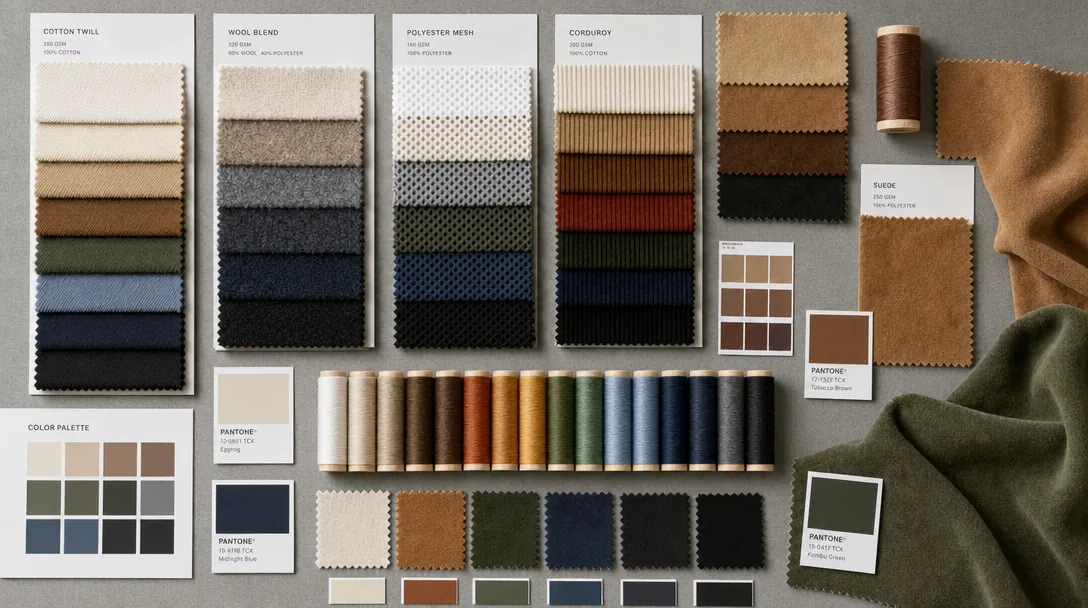
Bucket Hat Corduroy Decoration QC Checklist for Custom Hat Buyers - Cost & MOQ Breakdown (2026 Update)
Read article →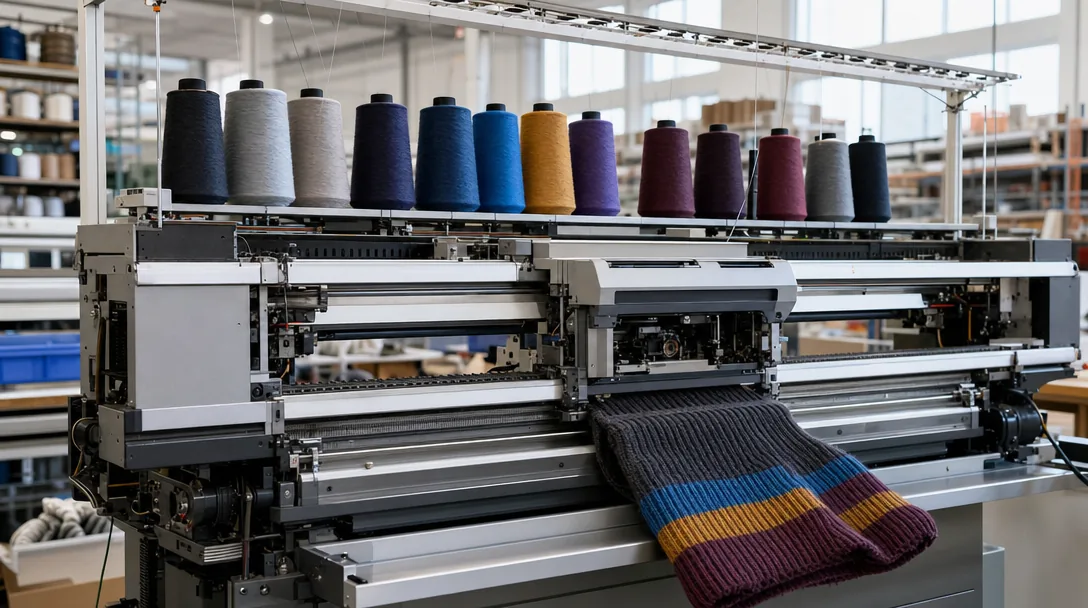
Winter Beanie & Knit Cap Manufacturing: The Complete Wholesale Guide - Cost & MOQ Breakdown
Read article →Bucket Hat Corduroy Reorder Planning Guide for Custom Hat Buyers
Read article →Sourcing custom hats does not have to be complicated. With the right manufacturing partner, clear specifications and a small upfront investment in sampling, you can launch a retail-quality product in 30 to 45 days.