
BSCI vs Sedex vs WRAP vs WCA: Compliance Audit Standards Compared - Supplier Checklist - Cost & MOQ Breakdown
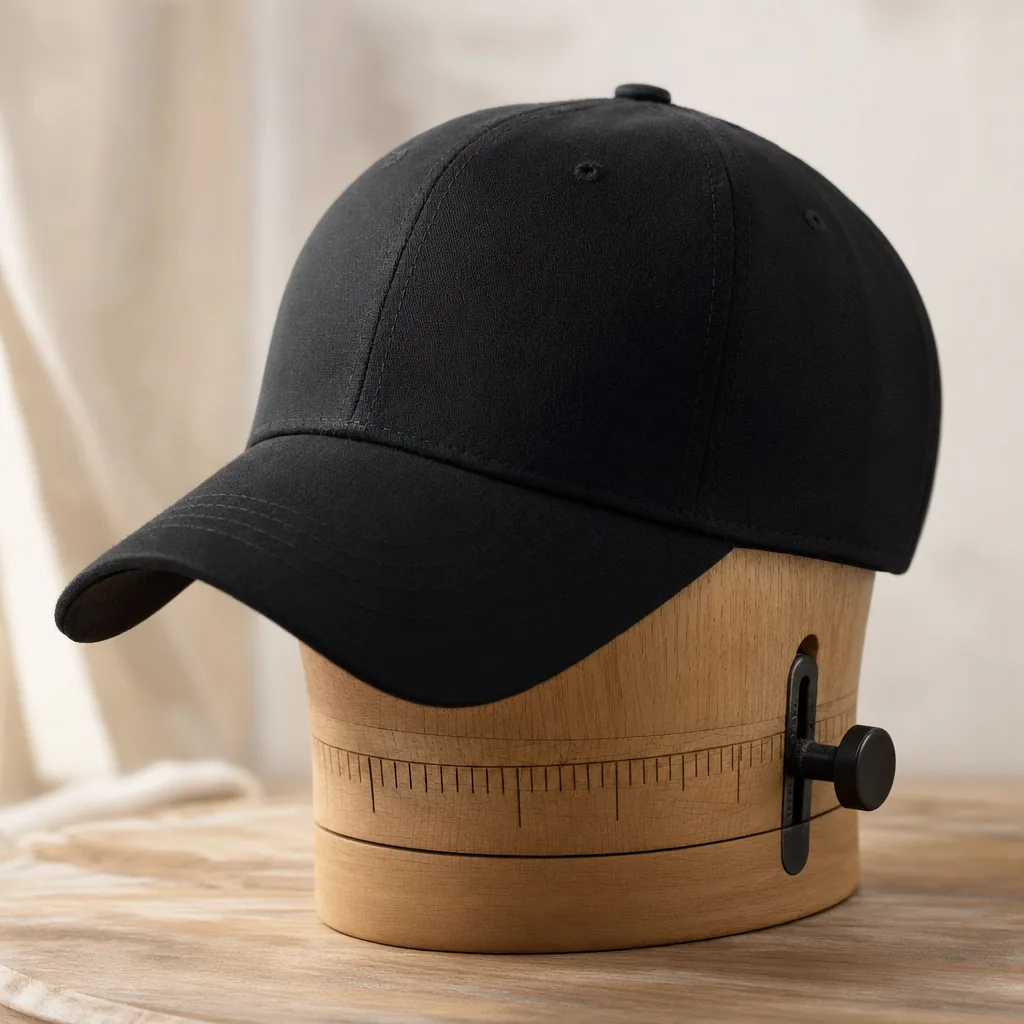
Every week, our sales team answers detailed questions about bsci vs sedex vs wrap vs wca: compliance audit standards compared - supplier checklist - cost & moq breakdown. We wrote this guide so that wholesalers, streetwear brands, corporate buyers and promotional resellers can compare options with full information, and avoid the traps that show up only after production has started.
The four audits hat factories actually hold
The four audits buyers actually encounter in headwear are amfori sedex-audit-cap-supplier-guide.html">BSCI 2.0, Sedex SMETA 4-Pillar, WRAP, and WCA, but they do not carry the same commercial weight. For a Yiwu or Dongguan cap factory, the audit on file usually mirrors the customer base. BSCI is still the default for EU private-label and discount chains because the grading logic, corrective action plan timeline, and worker-interview protocol are familiar to sourcing teams; a B or C rating is often acceptable if the CAP is closed within the buyer’s deadline. Sedex SMETA 4-Pillar shows up more often with UK retailers, supermarket groups, and multinational importers because the site profile sits on the Sedex platform and can be shared across multiple customers. In a practical BSCI vs Sedex SMETA comparison, that shareability is the biggest difference, not the checklist itself. The audit content overlaps heavily. Both will dig through 12 months of payroll, attendance, labor contracts, ID and age records, social insurance, fire drill logs, electrical inspections, needle-control logs, PPE issuance, dormitory conditions, grievance channels, and subcontractor declarations. SMETA usually pushes harder on cross-checking legal permits, environmental files, and management accountability, especially when embroidery, screen printing, washing, or boiler use are on site. A mid-size cap plant with 150 to 300 workers, 12 to 24 Tajima or Barudan heads, 2 to 4 sewing lines, and a warehouse should expect roughly 1.5 to 2.5 days on site with 2 to 4 auditors. In Zhejiang, direct audit fees commonly run US$1,200 to US$3,500, but the real spend is remediation: exit signage and emergency lighting at US$800 to US$2,000, machine guarding and needle policy upgrades at US$1,500 to US$4,000, and payroll or EHS system cleanup that can push total corrections to US$5,000 to US$20,000.
WRAP and WCA sit in a narrower lane. WRAP is still the social-compliance audit many US buyers recognize first, particularly for licensed sports, collegiate, and entertainment programs where legal brand exposure is high and the brand wants a clean, portable credential. WCA is less useful as open-market currency; in practice it functions more as a gatekeeper inside Walmart-linked supply chains and programs tied to that ecosystem. For headwear, that distinction matters. A WRAP-certified factory can still be unusable for a Walmart program if the site is not approved in the right chain, while a WCA-passing site may carry little weight for an EU fashion buyer comparing BSCI vs Sedex SMETA across several suppliers. The pricing consequence is real but usually overstated. Small workshops making 3,000 to 5,000 caps per style seldom maintain multiple active audits because surveillance cycles, document control, and management hours are expensive, so audited factories often quote 3% to 8% above unaudited peers on the same 260 gsm brushed cotton twill, 8-wale corduroy, or 600D polyester order. The report itself is not enough. Verify the legal entity, exact site address, validity date, production scope, dormitory inclusion, and whether embroidery, sewing, finishing, packing, printing, and washing are all covered. Our standard practice is to ask for the CAP, not just the cover page or score. If a supplier claims 500,000 caps per month but the audited site lists only 8 ZSK heads and one finishing line, the missing capacity is almost certainly sitting in an annex or subcontractor that was never audited.
BSCI 2.0 scope and audit process
BSCI 2.0 exposes weak control systems faster than bad shop-floor optics. The amfori Code of Conduct covers 13 performance areas, but in a cap factory the repeat findings are usually documentary and systemic: attendance logs that do not reconcile to payroll and piece-rate sheets, dispatched workers without valid labor contracts, missing ID copies for age verification, underpayment or delayed enrollment of social insurance, and overtime approvals that appear to be backfilled after peak season. Auditors will still walk the floor hard—checking machine guards on die-cutting and brim pressing equipment, needle-control records on Tajima or Barudan embroidery lines, PPE issue logs for solvent-based adhesives and plastisol or water-based print chemicals, and SDS availability in Chinese at the point of use—but the scoring often turns on whether 12 months of records tie back cleanly. In BSCI vs Sedex SMETA, that is the distinction buyers regularly underestimate: BSCI puts more weight on management-system evidence and corrective governance, so a factory that looks orderly can still fail commercially if working-hours data, wage calculations, and leave records do not match line by line.
For a 100 to 300-worker headwear facility, the audit typically takes 1 to 2 auditor-days; add time if dormitories, canteens, washing, screen printing, or subcontracted processes are in scope. An amfori-approved firm starts with an opening meeting, then site walk, confidential worker interviews, and a document review covering payroll, timecards, labor contracts, disciplinary actions, social insurance, machine maintenance, fire-drill records, and injury logs. In practice, expect roughly 8 to 15 worker interviews and payroll sampling for at least the prior 3 months, often expanded to 12 months if overtime spikes before shipment windows or in Q4. Report validity is generally 12 months, but most buyers expect CAP closure within 30 to 90 days, not at the next annual audit. In Zhejiang, external audit fees usually run about USD 900 to 2,200 depending on headcount, building count, and dormitory coverage; remediation often adds another USD 300 to 1,500 for emergency signage, extinguisher servicing, eyewash checks, chemical inventory cleanup, or working-hours software corrections. Our standard practice is a clause-by-clause pre-audit because cheap misses—expired inspection tags, incomplete accident registers, missing training records—are exactly what turn a manageable BSCI review into an avoidable setback.
BSCI 2.0 is most common in EU retail supply chains, where nomination often depends on an active amfori report rather than a generic social audit. Buyers tied to discount retail, supermarket programs, and private-label sourcing in Europe typically want annual monitoring, formal corrective-action tracking, and evidence that the factory can sustain controls through peak production, not just pass one visit. There is no official MOQ attached to BSCI, but there is a real economic threshold: workshops under 30 workers often struggle to justify the annual admin burden unless the account value is roughly USD 80,000 to 150,000 or the customer base is heavily European. That commercial filter matters in BSCI vs Sedex SMETA. SMETA is often accepted as a broader-entry ethical audit by UK and multi-market buyers, while BSCI is more often used as a gating requirement when the customer wants a structured CAP process, clearer governance evidence, and repeat annual surveillance tied to amfori expectations.
Sedex SMETA 4-Pillar scope and process
SMETA 4-Pillar is materially broader than 2-Pillar, and buyers know it. The four modules are Labor Standards, Health and Safety, Environment, and Business Ethics, but on a real audit roughly two-thirds of the time is still spent proving labor compliance with records that can be cross-checked: 12 months of payroll, attendance, labor contracts, age verification, social insurance, leave, disciplinary actions, grievance handling, and dispatch or temporary labor files. In a cap factory, auditors do not stay on the stitching line. They sample embroidery operators on Tajima or Barudan heads, trimming and pressing staff, QC, packing, warehouse loaders, maintenance, security, canteen workers, and dorm residents if housing is provided. That is where BSCI vs Sedex SMETA becomes a practical sourcing decision. SMETA 4-Pillar tests whether management controls actually work across the site, not just whether the HR cabinet looks organized. The weak points are usually Business Ethics and Environment, because many factories prepare for wage and hour checks but neglect control systems. Auditors want evidence of anti-bribery training, whistleblowing channels, gift and hospitality rules, subcontractor approval, and controls against unauthorized outsourcing. On the environmental side they check chemical inventory, SDS availability, secondary containment, waste segregation, spill response, air-emission permits where heat transfer or printing is involved, and wastewater compliance if washing or wet processing exists. A clean workshop does not offset blocked fire exits, missing needle logs, expired extinguisher inspections, or a solvent cabinet without labeling. Our standard practice is to reconcile payroll, piece-rate output, and attendance before audit day, because mismatches between earned wages and recorded hours are one of the fastest routes to a major non-conformance.
A proper SMETA 4-Pillar audit is not a box-ticking visit; the auditor triangulates documents, worker interviews, and floor conditions until the story either matches or breaks. In China, audit firms such as SGS, Intertek, Bureau Veritas, QIMA, and TÜV Rheinland typically allocate 2 auditor-days for a single-site factory with about 100 to 200 workers. Three auditor-days is more realistic if the site includes dormitories, an off-site warehouse, washing, screen printing, or more than one production block. The sequence is usually opening meeting, document review, site walk, confidential worker interviews, management interviews, and closing meeting, with the report uploaded to the Sedex platform. Interview sampling is deliberate: recent hires, migrant workers, female operators, line leaders, temporary staff, and sometimes night-shift personnel if overtime risk exists. Corrective action plans usually sit on 30-, 60-, or 90-day deadlines depending on severity, even though the report itself is commonly treated as valid for 12 months. In Zhejiang or Guangdong, a SMETA 4-Pillar audit usually costs about USD 1,200 to 2,800 for a small to midsize factory, with price driven by auditor day rate, travel, and site complexity. There is no MOQ requirement in Sedex, but compliance overhead changes the commercial math. Factories maintaining legal working-hour controls, PPE issuance records, machine-maintenance logs, metal-detection or needle-control registers, and approved subcontractor files cannot absorb very small custom runs efficiently. In caps, the practical MOQ often lands around 144 to 300 pieces per style-color once those systems are kept audit-ready year-round. In BSCI vs Sedex SMETA comparisons, this is one reason U.S. and EU retail buyers often lean toward SMETA: the 4-Pillar report is widely shareable inside the Sedex ecosystem and gives a clearer cross-factory risk picture than a narrower labor-focused review.
WRAP scope and process
WRAP is narrower than a buyer-specific codebook, but on a cap factory floor it can be harder to pass because the monitor tests live operating evidence against 12 principles, not polished policy binders. The first failures in headwear plants are usually basic but measurable: payroll and attendance mismatches, missing labor contracts, weak ID and age-verification files, overtime beyond local statutory limits, and wage premiums that do not reconcile to the hour. Auditors will sample raw timecards, piece-rate sheets, bank records, and resignation files, then cross-check them against worker interviews. If an embroidery operator’s card shows 92 hours in a week or Sunday overtime paid at the wrong multiplier, that issue lands immediately, regardless of how clean the handbook looks. Physical compliance is equally direct. In cut-and-sew hat production, monitors inspect locked chemical storage for inks, spot removers, and cleaning solvents; SDS posting in Chinese; eyewash access; fire exits, alarm testing logs, and emergency lighting that actually functions; plus dormitory hygiene if housing is on site. They also look at needle-control registers and broken-needle reconciliation on Tajima or Barudan embroidery lines, machine guards on Juki lockstitch stations, compressor inspection records, and PPE at eyelet punching, brim pressing, heat-transfer, and solvent-wipe operations.
The audit window is short and there is not much room to manage around it. A WRAP-accredited monitor such as Intertek, Bureau Veritas, or TÜV usually completes a single-site assessment in 1 to 2 auditor-days, with timing driven by headcount, floor count, and whether dormitories and canteens are included in scope. In a 100- to 150-worker hat plant with cutting, embroidery, sewing, finishing, and packing under one roof, the sequence is typically document review, management interviews, confidential worker interviews, then a full line walk through trimming, sewing, QC, metal detection if applicable, and carton packing. Unlike a points-based system, WRAP certification is tiered: Platinum generally follows consistent compliance and carries a 2-year validity, Gold is normally valid for 12 months, and Silver is used where non-critical gaps remain under corrective action. In a practical BSCI vs Sedex SMETA comparison, WRAP sits closer to a gatekeeping certification than a broad social-compliance benchmark, which is why licensed sportswear and promotional programs often treat it as a clear pass/fail signal. In East China, direct audit fees are commonly USD 1,200 to 2,500 per site, but the real cost is remediation: fire-door upgrades, dorm fixes, EHS training, and 12 months of payroll-attendance reconciliation before the monitor arrives.
WCA scope and process
WCA is Walmart’s vendor-approval audit, not a portable social certificate you can substitute after PO issue. If a cap factory ships to Walmart or Sam’s Club through direct import, a licensed program, or a nominated supplier, the facility typically needs a current Walmart-accepted assessment loaded in Walmart’s compliance platform. On site, the audit is closer to Sedex SMETA 4-Pillar than to a document-only review: 12 months of payroll and attendance sampling, labor-contract verification, H&S walkthroughs, dormitory and canteen checks where relevant, confidential worker interviews, and management cross-checks against actual line conditions. That is why buyers comparing BSCI vs Sedex SMETA still cannot treat WCA as interchangeable; the acceptance body, scoring method, and corrective-action workflow are controlled by Walmart, not by the importer or brand.
The scope is broad enough to expose weak control systems in a single visit. Auditors reconcile wages to timecards and piece-rate sheets, test overtime against PRC labor law, verify ID and age documents, inspect fire egress, electrical panels, chemical storage, machine guarding, PPE issuance, and grievance channels, then compare those controls with live production. In a hat plant, they normally walk cutting, embroidery, sewing, eyelet punching, brim pressing, heat-transfer, finishing, packing, and warehouse areas. The failures are rarely abstract: aisle clearance below roughly 1.1 meters, expired extinguisher inspection tags, missing needle-control logs on Tajima or Barudan heads, unlabeled inks or thinners without Chinese-language SDS, or subcontract embroidery that appears in shipment records but not in approved vendor files. Those details will sink an otherwise decent factory quickly.
Process discipline matters more than a polished conference room. In Zhejiang, a smaller 80- to 150-worker cap facility is usually audited in one day; a multi-floor or multi-building site with dormitories, canteens, or separate washing and packing workshops often takes 1.5 to 2 audit days. Factories should have at least the last 12 months of payroll registers, attendance logs, piece-rate calculations, labor contracts, social insurance records, ID files, fire drill reports, alarm and extinguisher inspection records, equipment maintenance logs, and CAP evidence from prior audits ready in Chinese. Zero-tolerance findings such as child labor, forced labor indicators, bribery, or severe life-safety failures can block approval immediately, while standard CAP items often close within 7, 14, or 30 calendar days. In East China, the initial WCA cost is commonly around $900 to $1,800, with re-audits at $600 to $1,200 depending on headcount, travel, and dormitory scope.
What overlap exists and what differs
In practical terms, the overlap in BSCI vs Sedex SMETA is roughly 70% to 80% of the same factory discipline expressed through different templates and grading logic. In a cap plant, either audit will sample payroll against attendance for at least the prior 12 months, verify IDs and minimum-age controls, review labor contracts, test overtime against PRC labor law and buyer code, inspect fire doors, exit routes, extinguisher inspection tags, and check whether chemicals on the floor match the SDS register. Auditors still walk the same risks: needle guards and broken-needle logs on Tajima or Barudan heads, emergency-stop function on eyelet and snap presses, lockout controls on compressors, and heat-stress or ventilation conditions at steaming, ironing, and heat-transfer stations. If the factory already keeps complete wage ledgers, social insurance records, evacuation drill logs, machine maintenance sheets, and subcontractor declarations, changing schemes is usually a corrective-action exercise, not a rebuild from zero.
The real difference is where each framework pushes harder and how much evidence it wants. BSCI 2.0 tends to punish weak management systems more visibly: missing policy deployment, no worker committee minutes, poor grievance-channel awareness, or supervisors who cannot explain disciplinary rules will pull down the result even if the lines look clean. Sedex SMETA is an audit methodology, not a certification, and the gap between 2-Pillar and 4-Pillar is material. A 4-Pillar audit adds environment and business ethics, which means auditors may request waste-transfer manifests, wastewater contracts, chemical inventory by SKU, anti-bribery training logs, gift-policy sign-offs, and business-partner due-diligence records. WRAP and WCA often go deeper on document reconciliation; if one sewing line worked 68 hours in a peak week, auditors may triangulate badge swipes, production output, line rosters, and payroll to calculate whether every excess hour was voluntary, approved, and paid at the statutory premium rate.
For buyers, the smart filter is not the logo on page one but whether the report is current, site-specific, and closed with evidence. A valid audit should name the exact production address, legal entity, headcount, dormitory status, sampled payroll period, and all in-scope processes. Headwear suppliers fail this test more often than buyers realize: the audit may cover cutting and sewing, while embroidery, washing, screen printing, or hand finishing is subcontracted to small outside workshops that were never visited. At CrownsForge, the safer practice is one bilingual master compliance file mapped to BSCI, Sedex SMETA, WRAP, and customer protocols, so the same source documents can be pulled without version conflicts. In China, third-party social compliance audits typically run about $800 to $1,500 per auditor-day, while remediation commonly adds $1,000 to $5,000 for items like emergency lighting, electrical cabinet segregation, dorm egress upgrades, social-insurance backfill, or payroll-system cleanup before a follow-up visit.
What the audit doesn't tell you
A passed social audit tells you the factory has documentation and management controls; it does not tell you whether they can hold a 5,000-piece cap order to the approved spec. That is the practical gap in BSCI vs Sedex SMETA. BSCI 2.0 and Sedex SMETA 4-Pillar are useful for checking wages, working hours, grievance mechanisms, fire safety, and basic HSE discipline, but they do not verify process capability on the floor. They do not test visor curvature consistency, crown height tolerance within ±3 mm, front logo placement within ±2 mm, or seam allowance stability after sewing and steaming. They also say nothing about embroidery digitizing quality: underlay choice, pull compensation, stitch density, or whether a Tajima, Barudan, or ZSK head is being run at the wrong speed for a 3D puff file. I have seen factories with current audit reports still carry 8% to 12% remake rates because cutting ignored fabric grain, buckram stiffness varied by lot, or inline QC checked appearance only and skipped measurement points on panel alignment, sweatband join position, and closure attachment.
The stronger test is shipment discipline, not the certificate on the wall. Ask for the last 12 months of order data by month: ex-factory on-time delivery rate, PP sample approval lead time, final pass rate at AQL 2.5, and how often bulk matches the sealed sample on color, handfeel, and trim finish. For custom hats, stable factories usually manage lab dips in 3 to 5 days, embroidery strike-offs in 3 to 7 days, and a PP sample in 7 to 10 days once artwork, Pantone TCX references, and materials are locked. If replies to technical questions take 72 hours, closure specs drift, or a supplier swaps approved 240 gsm cotton twill for 210 gsm without written approval, the audit is not protecting you from claims. Our standard practice is to track sample-to-bulk variance on thread sheen, visor board stiffness, back-strap hardware plating, and carton pack-out accuracy, because that is where chargebacks start. Compliance gets a supplier through vendor onboarding; process control, escalation discipline, and measurable QC data determine whether they stay approved.
Frequently Asked Questions
How long does production take?
Sampling takes 7 to 12 days. Bulk production runs 20 to 30 days depending on quantity, fabric availability and decoration complexity. Inspection and packing adds another 3 to 5 days before shipment.
What is the minimum order quantity (MOQ) for custom hats?
Our standard MOQ is 100 pieces per design and color, with sampling available from 1 piece. For complex multi-color logos or premium fabric upgrades, the MOQ can be lowered with a small per-piece surcharge.
Can I order a sample before bulk production?
Yes. We strongly recommend approving a pre-production sample before mass production. Samples are charged at 35 to 60 USD each plus express shipping, fully refundable against confirmed bulk orders over 500 pieces.
Which shipping methods do you support?
We support FOB, CIF and DDP shipping. Air express for samples and small orders, sea LCL for 100 to 500 pieces, sea FCL for 5,000+ pieces. Door-to-door DDP available for US, EU, UK, Canada and Australia.
Do you support sustainability certifications?
Yes. We work with GOTS organic cotton, GRS-certified recycled polyester, OEKO-TEX Standard 100 fabrics, and are BSCI and Sedex audited. Certification documentation can be provided per order.
How does ordering custom embroidered trucker hat work?
When evaluating custom embroidered trucker hat, the key considerations are construction quality, decoration capability, MOQ flexibility and lead time. BSCI 2.0 (Business Social Compliance Initiative by amfori) — European retailer favorite. Sedex SMETA 4-Pillar (Social, Health & Safety, Environment, Business Ethics) — used by UK and increasingly global retailers. WRAP (Worldwide Responsible Accredited Production) — US retailer favorite for licensed merchandise. WCA (Walmart Conformance Audit) — required by Walmart and…
How does ordering custom bucket hat embroidery work?
When evaluating custom bucket hat embroidery, the key considerations are construction quality, decoration capability, MOQ flexibility and lead time. BSCI 2.0 (Business Social Compliance Initiative by amfori) — European retailer favorite. Sedex SMETA 4-Pillar (Social, Health & Safety, Environment, Business Ethics) — used by UK and increasingly global retailers. WRAP (Worldwide Responsible Accredited Production) — US retailer favorite for licensed merchandise. WCA (Walmart Conformance Audit) — required by Walmart and…
What should buyers know about bucket hat men nike?
When evaluating bucket hat men nike, the key considerations are construction quality, decoration capability, MOQ flexibility and lead time. BSCI 2.0 (Business Social Compliance Initiative by amfori) — European retailer favorite. Sedex SMETA 4-Pillar (Social, Health & Safety, Environment, Business Ethics) — used by UK and increasingly global retailers. WRAP (Worldwide Responsible Accredited Production) — US retailer favorite for licensed merchandise. WCA (Walmart Conformance Audit) — required by Walmart and…
How does ordering custom made hats for men work?
When evaluating custom made hats for men, the key considerations are construction quality, decoration capability, MOQ flexibility and lead time. BSCI 2.0 (Business Social Compliance Initiative by amfori) — European retailer favorite. Sedex SMETA 4-Pillar (Social, Health & Safety, Environment, Business Ethics) — used by UK and increasingly global retailers. WRAP (Worldwide Responsible Accredited Production) — US retailer favorite for licensed merchandise. WCA (Walmart Conformance Audit) — required by Walmart and…
What is the difference between BSCI and Sedex?
BSCI audits follow a fixed framework, whereas SEDEX supports multiple audit types, including BSCI itself. BSCI membership is required for suppliers, while SEDEX enables transparency by sharing audits with multiple buyers.
Is BSCI recognized globally?
The BSCI certification is recognized globally and demonstrates a company's commitment to responsible sourcing and ethical business practices. It helps companies ensure that their supply chains meet internationally recognized social standards and supports the protection of workers' rights and welfare.
Are Sedex and Smeta the same?
SMETA audits are carried out by auditors from Sedex's named independent, third-party Affiliate Audit Companies (AACs). Sedex owns and evolves the SMETA methodology, oversees its usage and drives SMETA auditing consistency through our Audit Quality Programme.
Are Smeta and BSCI the same?
Differences in Focus and Outcomes BSCI audits primarily focus on issues such as compliance with the law, freedom of association, collective bargaining, prohibition of discrimination, compensation, and working hours. SMETA audits, therefore, fall under the category of social responsibility inspections.
Is the BSCI certification legit?
The BSCI certification is recognized globally and demonstrates a company's commitment to responsible sourcing and ethical business practices. It helps companies ensure that their supply chains meet internationally recognized social standards and supports the protection of workers' rights and welfare.
What are the 4 pillars of Smeta?
SMETA 4-Pillar Audits Labor Standards. Health and Safety. Environmental Assessment (extended) Business Ethics.
Ready to start your custom hat project?
Send us your tech-pack, sketch or even just an inspiration photo. We will respond with a detailed quotation and digital mock-up within 24 hours.
Request a free quoteRelated guides
Winter Beanie & Knit Cap Manufacturing: The Complete Wholesale Guide - Cost & MOQ Breakdown
Read article →
Bucket Hat Corduroy Reorder Planning Guide for Custom Hat Buyers
Read article →
Ball Caps for Women: A 2026 Sourcing Playbook for International Buyers - Cost & MOQ Breakdown
Read article →If you are ready to take the next step on bsci vs sedex vs wrap vs wca: compliance audit standards compared - supplier checklist - cost & moq breakdown, our team can put a tailored quotation and digital mock-up in your inbox within 24 hours. Send the inquiry form on our contact page or message us directly on WhatsApp.