
BSCI vs Sedex vs WRAP vs WCA: Compliance Audit Standards Compared - Supplier Checklist (2026 Update)
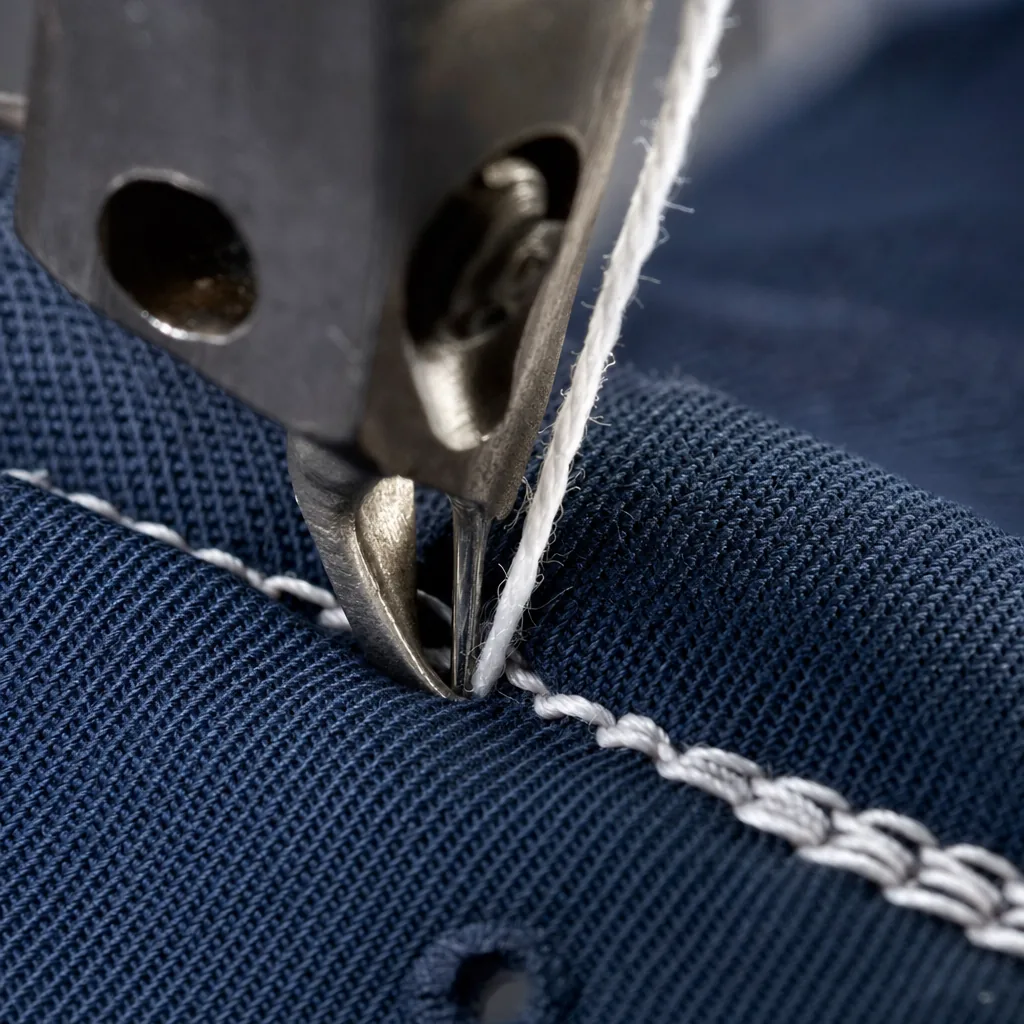
For brand owners, wholesalers and procurement teams entering the custom headwear category, bsci vs sedex vs wrap vs wca: compliance audit standards compared - supplier checklist (2026 update) is one of the highest-leverage decisions you will make. Get it right and your unit economics, retail story and reorder cycle all improve. Get it wrong and you carry the cost for years.
The four audits hat factories actually hold
If you source caps from China, the useful question is not which code of conduct sounds better on paper; it is which valid audit report the factory can release today, with CAPs closed and payroll records that survive document review. In real buyer conversations, sedex-audit-cap-supplier-guide.html">BSCI vs Sedex SMETA comes up first because those two reports cover most EU and UK retail onboarding. Amfori BSCI 2.0 is still the default credential for many continental European importers because auditors go deep on working hours, wage calculation, labor contracts, disciplinary practice, grievance channels, and management accountability. A factory that passes cleanly usually has 12 months of payroll, attendance, social insurance records, age-verification files, fire drill logs, and machine-maintenance checks organized in a way compliance teams can verify in one sitting. On the shop floor, small gaps matter: missing overtime reconciliation, incomplete needle logs, blocked exits, or dormitory findings can push a rating down even when the sewing and embroidery quality is excellent.
Sedex SMETA 4-Pillar overlaps heavily on labor, health and safety, and legal compliance, but it is broader where many UK retailers and multi-brand groups care most: environment and business ethics. A SMETA auditor will still inspect extinguisher validity, first-aid coverage, electrical panels, compressor guarding, chemical SDS files, and cafeteria hygiene, yet they also spend more time on wastewater discharge records, waste segregation, anti-bribery controls, subcontractor disclosure, and environmental permits. In a cap factory, that is not theoretical. Embroidery departments running Tajima, Barudan, or ZSK multi-head machines, heat-transfer presses, steam-forming stations, and solvent-based cleaning points create real EHS exposure that must be documented with training logs, PPE issuance, and corrective actions. At CrownsForge, the practical lesson is simple: the overlap between BSCI and SMETA is high, but buyer acceptance is not interchangeable, so a factory that understands its export mix keeps both evidence sets audit-ready rather than assuming one report will satisfy every customer.
WRAP and WCA are more channel-specific. WRAP is still the credential U.S. licensed-goods buyers recognize fastest, especially for sports, collegiate, and entertainment programs that want an independent social compliance benchmark outside a single retailer platform. It concentrates on lawful employment, forced-labor controls, harassment prevention, health and safety, and supply-chain transparency, and many licensees will not open production without a current certificate cycle. WCA, by contrast, is mainly a commercial access requirement tied to Walmart programs and Walmart-adjacent vendors, not a universal badge for the wider market. That distinction matters when screening factories: the four audits are not interchangeable trophies but routing documents tied to geography, retail channel, and customer type. If a supplier only carries one audit, ask which customers required it, when the last audit date was, whether corrective actions were closed on time, and whether the report holder is the actual manufacturing site rather than a trading office or sister factory.
BSCI 2.0 scope and audit process
BSCI 2.0 is a site audit, not a paperwork exercise, and it usually breaks down where factory records fail a simple reconciliation test. Auditors assess the amfori Code of Conduct across 13 performance areas, but in cap manufacturing the repeat findings are concentrated: legal working hours, wage calculation, valid labor contracts, occupational health and safety, young worker protection, and functioning grievance channels. A clean employee handbook means nothing if attendance logs, payroll sheets, piece-rate output, and line capacity do not match over a 12-month sample. In a hat plant, that cross-check gets very specific: embroidery head utilization on Tajima, Barudan, or ZSK machines is compared with operator headcount and overtime; social insurance receipts are checked against the active roster; and ID files are reviewed for age verification, dispatch labor status, and probation terms. When peak season output says 1,200 caps per day but time records show legal-hour compliance with too few operators, auditors flag the gap immediately.
The floor inspection is where cosmetic preparation falls apart. Auditors look for blocked exits, missing emergency lighting, expired extinguisher tags, ungrounded steam irons, missing machine guards, and needle-control logs that do not reconcile with issuance and breakage records. Chemical handling is another common weak spot in headwear factories: spot removers, screen-printing auxiliaries, heat-transfer solvents, and aerosol adhesives should be labeled in Chinese, stored with current SDS sheets, and segregated from cartons and finished goods. Dormitories and canteens, if included in scope, are reviewed with the same rigor for occupancy density, outward-opening exits, hot-water electrical safety, hygiene permits, and evacuation maps. A typical BSCI audit takes 1 to 2 auditor-days for a small or midsize site, but more time is added for dorms, night shift, or subcontracted washing and printing. In BSCI vs Sedex SMETA discussions, the practical difference is less about moral standard and more about buyer acceptance, CAP structure, and reporting framework: BSCI is often a hard gate for EU retail approval, while SMETA is more commonly used as a shared audit format across mixed customer portfolios.
Sedex SMETA 4-Pillar scope and process
For most sourcing teams, the real difference in BSCI vs Sedex SMETA is scope. SMETA 4-Pillar covers Labor Standards, Health and Safety, Environment, and Business Ethics in a single audit protocol, so it exposes operational weaknesses that a narrower social-compliance review can miss. In a headwear factory, auditors do far more than check labor contracts and age documents. They usually sample 12 months of payroll, attendance, and leave records; reconcile piece-rate earnings against output on sewing and embroidery lines; verify social insurance enrollment; and test whether overtime premiums match local law. On the floor, they inspect needle-control logs for Tajima, Barudan, or ZSK embroidery heads, machine guarding on cutting presses and eyelet setters, fire exits, emergency lighting, and first-aid readiness. If the site also runs screen printing, heat transfers, washing, or solvent spot cleaning, the audit expands into SDS control, chemical labeling, spill containment, and hazardous-waste storage with licensed disposal receipts. That is why many buyers now treat 4-Pillar as the minimum for private-label and licensed programs: the missing issues are usually environmental discipline and management controls, not basic paperwork.
The 4-Pillar process is evidence-led and operationally intrusive, which is exactly why underprepared factories struggle with it. A Sedex-approved audit body such as SGS, Intertek, Bureau Veritas, TÜV SÜD, or QIMA will typically spend 2 to 3 onsite days for a small or mid-sized cap plant, with timing driven by headcount, dormitories, and process complexity. Auditors normally request 12 months of payroll, timecards, production records, labor contracts, fire-drill logs, machine-maintenance sheets, EHS training records, and subcontractor declarations before onsite work begins. Worker interviews are confidential, and auditors cross-check testimony against attendance, wage slips, and line-level output. During peak baseball-cap season, they will quickly spot 72- to 78-hour weeks if rest days, overtime premiums, and leave balances do not reconcile across records.
The business-ethics and environmental pillars are where SMETA 4-Pillar becomes especially useful in BSCI vs Sedex SMETA comparisons. Auditors do not accept a one-page anti-bribery statement as proof of control; they look for gift and entertainment registers, whistleblower channels, conflict-of-interest declarations, subcontracting approvals, and records around customs brokers or facilitation-payment risk. Environment is equally practical: electricity and water logs, waste segregation, chemical inventory, hazardous-waste handover manifests, and label accuracy are checked against actual use on the floor. SMETA does not issue a simple pass-fail certificate; it produces a detailed report and CAPR inside the Sedex platform, so medium-risk findings remain visible until closure. Our standard practice is to pre-audit chronic weak points such as blocked aisles, locked exits, missing PPE near steam irons, incomplete induction training, and weak accident investigation records. Buyers should read repeat findings and CAP closure rates more closely than the headline report because that is where management discipline shows up.
WRAP scope and process
WRAP is tighter in scope than many sourcing teams assume, but for licensed caps it is often harder to pass cleanly than a generic social compliance visit. Its 12 principles cover legal compliance, wages and benefits, hours of work, health and safety, environment, customs compliance, and supply-chain security, with a much sharper focus on product integrity and export controls than buyers usually hear in the BSCI vs Sedex SMETA debate. In a Zhejiang hat plant, that means auditors are not just reading policies. They will reconcile labor contracts against attendance, test piece-rate calculations on sewing and embroidery operators, review dormitory rules, inspect disciplinary records, confirm SDS availability for spot-cleaning chemicals, and trace subcontracting declarations down to washing, embroidery, or patch attachment vendors. For licensed merchandise, they also push deeper into carton sealing, visitor logs, and shipment release controls because diversion risk matters as much as payroll accuracy.
The audit is compact, usually 1.5 to 2.0 days for a single-site cap factory, but it is not a box-ticking exercise. WRAP-accredited firms such as Intertek, Bureau Veritas, and TÜV Rheinland typically sample 12 months of payroll and timekeeping, run confidential worker interviews off-line, inspect exits, extinguishers, eye-wash points, first-aid stock, dorms, canteens, and warehouse access control, then test whether written SOPs match the line reality. In headwear production, the repeat findings are specific: overtime spikes above PRC limits during August-November peak season, incomplete broken-needle logs on Tajima, Barudan, or ZSK embroidery heads, weak PPE use at heat-transfer presses and eyelet setters, and poor machine-guard verification on brim-forming equipment. WRAP’s certificate structure gives those findings commercial consequences: Silver is generally valid for 6 months, Gold for 12 months, and Platinum for 24 months only after sustained compliance with no serious repeat issues. Our standard practice is monthly payroll self-checks, quarterly fire drills with signed rosters, and CAP closure backed by dated photos and invoice records, because waiting for the next audit always costs more.
WCA scope and process
WCA is not a buyer-portable social audit. In practice, it functions as a retailer-gated access requirement for Walmart and Sam’s Club programs, so a clean BSCI audit or a standard Sedex SMETA report usually will not substitute for it. The content overlaps with what buyers know from BSCI vs Sedex SMETA—working hours, wages, labor contracts, young worker protection, freedom of association, grievance channels, dormitories, fire safety, machine guarding, chemical handling, and worker interviews—but the acceptance route and scoring logic are different. The audit is booked through Walmart-recognized channels, the protocol is retailer-specific, and the report is generally valid for 12 months unless a critical finding, failed CAP, or mandated follow-up shortens the cycle. The real pressure point is evidence quality. WCA auditors do not stop at policy review; they test whether one full year of records survives transaction-level verification. In a cap factory, that means matching attendance logs, payroll registers, labor contracts, social insurance receipts, and production reports line by line. Peak-season overtime from August through November gets extra attention because headwear orders compress around back-to-school, holiday promotions, and sports launches. If 2,400 caps were packed on a line in one shift but booked labor hours only support 1,500, that mismatch triggers a deeper sample. Our standard practice is to reconcile timecards, payroll, and daily output before the audit because inconsistencies—not missing slogans on a notice board—are what turn a normal review into an escalation.
Auditors usually pull the records factories mishandle when controls are loose: piece-rate earnings for embroidery operators, temporary or dispatch labor files, age verification, overtime premiums, and proof that statutory benefits were actually paid. They will trace hours against output on cutting, sewing, embroidery, finishing, and packing, then test whether the ratios are operationally credible. On the floor, they inspect needle-control logs, broken-needle records, guarding around Tajima or Barudan heads, eyelet presses, steam-ironing tables, compressor areas, and carton storage. They also verify extinguisher inspection tags, emergency-light tests, evacuation maps, first-aid logs, SDS availability, chemical secondary containment, and whether workers can explain emergency procedures without coaching. That is why WCA sits closer to an operating license for one retail channel than to a broad certification you can shop around to multiple customers. When buyers compare WRAP, WCA, and the usual BSCI vs Sedex SMETA options, WCA is the least flexible but often the most commercially decisive if Walmart is in the supply chain. The supplier checklist should be blunt: confirm the approved audit pathway, lock the audit date against shipment milestones, prepare 12 months of original payroll and attendance, disclose all subcontracting and homeworking, and run an internal life-safety inspection before the auditor arrives. Paperwork can sometimes be cleaned up late; blocked exits, falsified hours, and worker testimony that contradicts payroll cannot.
What overlap exists and what differs
On a cap factory floor, the overlap is bigger than most sourcing teams expect: about 75% of the checkpoints repeat across amfori BSCI 2.0, Sedex SMETA 2-Pillar, Sedex SMETA 4-Pillar, WRAP, and WCA. Auditors still test the same operating basics—age verification against government ID, signed labor contracts, payroll at or above local minimum wage, legally controlled overtime, machine guarding on snap presses and sewing stations, SDS availability for stain removers and embroidery backing adhesives, clear fire exits, functional emergency lighting, and attendance records that reconcile to payroll and bank transfers. In practical BSCI vs Sedex SMETA terms, a factory that can show 12 months of clean timekeeping, wage calculations, social insurance records, and evacuation drill logs is already covering most of the risk. The failures I see most often are not dramatic abuses; they are evidence failures: missing induction training sign-offs, expired fire extinguisher inspections, unlabeled secondary chemical containers, incomplete subcontractor declarations, or dorm rosters that do not match actual occupancy during a night walk. The real separation is the audit framework, not the ethical baseline. BSCI 2.0 is more management-system heavy: auditors push harder on policy deployment, responsible-person assignment, root-cause analysis, and whether prior CAPs were closed with objective evidence instead of a photo and a promise. Sedex SMETA 4-Pillar widens scope into environment and business ethics on top of labor, health and safety, and its worker interviews are often sharper on grievance channels, recruitment fees, discrimination, and supervisor conduct. WRAP usually leans harder into lawful manufacturing, production traceability, and consistency between the sewing floor, warehouse, canteen, and dormitory. WCA is often the most evidence-hungry, asking for 12 months of payroll exports down to the hour, potable water test reports, dorm occupancy records, and closure proof for every prior nonconformity. Our standard practice is to treat them as one common compliance base with different evidence thresholds, scoring logic, and buyer-recognition rules.
For procurement teams, the commercially important question is not which logo looks stricter; it is how much duplicate qualification work the chosen protocol creates. A supplier making 10,000 brushed cotton twill baseball caps or 5,000 1x1 acrylic rib beanies still needs the same compliance backbone: legal hiring files, needle policy, chemical inventory, preventive maintenance logs, wage records, and production planning that does not hide excessive overtime in the four weeks before ex-factory. If that backbone is stable, moving between BSCI, Sedex SMETA, WRAP, and WCA is usually an exercise in document formatting and scope extension, not a full rebuild of factory controls. That distinction matters in cost and lead time. In East China, a duplicate social compliance audit typically costs about $900 to $2,500 per site depending on travel, dormitory coverage, subcontract-process review, and whether the audit is announced or semi-announced. Re-auditing also burns management time: HR, EHS, production, and payroll staff can lose two full working days preparing records and escorting auditors. For a buyer qualifying a new factory, that easily adds 2 to 4 weeks if the first report is not recognized by the customer’s compliance team. The overlap across standards is real; the sourcing risk sits in document discipline, closure speed for corrective actions, and whether the buyer accepts equivalency between BSCI vs Sedex SMETA and the other major protocols.
What the audit doesn't tell you
A passed audit lowers legal and reputational risk; it does not prove a factory can hold your cap program inside tolerance at scale. That gap gets glossed over in a lot of BSCI vs Sedex SMETA discussions. BSCI 2.0 and Sedex SMETA 4-Pillar are designed to verify labor conditions, working hours, wages, disciplinary practices, fire safety, dormitories, grievance channels, and management controls. They do not test whether 3D puff embroidery lands within ±1.5 mm of the center line across 8,000 caps, whether crown height stays inside a 3 mm window after blocking, or whether a black twill body and visor match the sealed standard at Delta-E below 1.0 under D65 lighting. I have seen factories pass audits and still fail bulk because the approved trim card never reached the line, the PP sample was signed against the wrong Pantone TCX, or the sewing floor ran substitute buckram without buyer approval.
Production failure usually comes from process control, not audit status. A social auditor will not stand beside a Tajima, Barudan, or ZSK head counting thread breaks per 1,000 stitches, checking push-pull distortion on a structured front panel, or confirming that the operator used approved 120D polyester instead of switching to 40 wt rayon because the shade looked “close enough.” They will not measure visor curvature against the sample board, verify needle detection records for children’s products, or check whether inline QC is rejecting defects at source rather than sorting them at packing. Our standard practice is to separate compliance approval from capability approval because they answer different buyer risks. For capability, ask for hard data from the last 12 months: on-time shipment rate, PP sample lead time, remake percentage, customer claim rate, and AQL 2.5 final-pass rate. If a factory cannot show a machine-group loading plan, weekly WIP board, and defect Pareto by process, the certificate is just paperwork.
Delivery and material integrity are the other blind spots. A factory can pass BSCI or Sedex and still miss vessel cutoff by five days because embroidery was loaded at 110 percent of practical capacity, one 12-head machine sat idle waiting for spare parts, or the woven-label supplier shipped three days late. None of the mainstream audit frameworks score schedule adherence, changeover loss, backup capacity, or subcontractor lead-time reliability. Sustainability claims also need separate proof. If the order uses 210D recycled polyester, 16x12 cotton twill around 270 gsm, or suede-touch microfiber, ask for GRS transaction certificates, mill test reports, azo and formaldehyde results, and colorfastness data for crocking and perspiration under ISO 105. Serious suppliers should also be able to produce shade-band approvals by lot, carton assortment checks by SKU ratio, and final inspection reports with defect breakdown, not just a pass stamp. The practical rule is simple: verify the audit, then verify execution with current production evidence and two repeat-order references above 50,000 units per year.
Frequently Asked Questions
What logo decoration techniques do you offer?
3D puff embroidery, flat embroidery, woven patch, leather patch, PVC patch, screen printing, sublimation, applique and laser etching, all in-house with no subcontracting.
Can I order a sample before bulk production?
Yes. We strongly recommend approving a pre-production sample before mass production. Samples are charged at 35 to 60 USD each plus express shipping, fully refundable against confirmed bulk orders over 500 pieces.
Do you support sustainability certifications?
Yes. We work with GOTS organic cotton, GRS-certified recycled polyester, OEKO-TEX Standard 100 fabrics, and are BSCI and Sedex audited. Certification documentation can be provided per order.
What file format should I send for my logo?
Vector files (AI, EPS, PDF) are ideal. High-resolution PNG or JPG at 300 dpi on transparent background works as a fallback. Provide Pantone color references for accurate reproduction.
Which shipping methods do you support?
We support FOB, CIF and DDP shipping. Air express for samples and small orders, sea LCL for 100 to 500 pieces, sea FCL for 5,000+ pieces. Door-to-door DDP available for US, EU, UK, Canada and Australia.
How does ordering custom embroidered trucker hat work?
When evaluating custom embroidered trucker hat, the key considerations are construction quality, decoration capability, MOQ flexibility and lead time. BSCI 2.0 (Business Social Compliance Initiative by amfori) — European retailer favorite. Sedex SMETA 4-Pillar (Social, Health & Safety, Environment, Business Ethics) — used by UK and increasingly global retailers. WRAP (Worldwide Responsible Accredited Production) — US retailer favorite for licensed merchandise. WCA (Walmart Conformance Audit) — required by Walmart and…
How does ordering custom bucket hat embroidery work?
When evaluating custom bucket hat embroidery, the key considerations are construction quality, decoration capability, MOQ flexibility and lead time. BSCI 2.0 (Business Social Compliance Initiative by amfori) — European retailer favorite. Sedex SMETA 4-Pillar (Social, Health & Safety, Environment, Business Ethics) — used by UK and increasingly global retailers. WRAP (Worldwide Responsible Accredited Production) — US retailer favorite for licensed merchandise. WCA (Walmart Conformance Audit) — required by Walmart and…
What should buyers know about bucket hat men nike?
When evaluating bucket hat men nike, the key considerations are construction quality, decoration capability, MOQ flexibility and lead time. BSCI 2.0 (Business Social Compliance Initiative by amfori) — European retailer favorite. Sedex SMETA 4-Pillar (Social, Health & Safety, Environment, Business Ethics) — used by UK and increasingly global retailers. WRAP (Worldwide Responsible Accredited Production) — US retailer favorite for licensed merchandise. WCA (Walmart Conformance Audit) — required by Walmart and…
How does ordering custom made hats for men work?
When evaluating custom made hats for men, the key considerations are construction quality, decoration capability, MOQ flexibility and lead time. BSCI 2.0 (Business Social Compliance Initiative by amfori) — European retailer favorite. Sedex SMETA 4-Pillar (Social, Health & Safety, Environment, Business Ethics) — used by UK and increasingly global retailers. WRAP (Worldwide Responsible Accredited Production) — US retailer favorite for licensed merchandise. WCA (Walmart Conformance Audit) — required by Walmart and…
What is the difference between BSCI and Sedex?
BSCI audits follow a fixed framework, whereas SEDEX supports multiple audit types, including BSCI itself. BSCI membership is required for suppliers, while SEDEX enables transparency by sharing audits with multiple buyers.
Is BSCI recognized globally?
The BSCI certification is recognized globally and demonstrates a company's commitment to responsible sourcing and ethical business practices. It helps companies ensure that their supply chains meet internationally recognized social standards and supports the protection of workers' rights and welfare.
Are Sedex and Smeta the same?
SMETA audits are carried out by auditors from Sedex's named independent, third-party Affiliate Audit Companies (AACs). Sedex owns and evolves the SMETA methodology, oversees its usage and drives SMETA auditing consistency through our Audit Quality Programme.
Are Smeta and BSCI the same?
Differences in Focus and Outcomes BSCI audits primarily focus on issues such as compliance with the law, freedom of association, collective bargaining, prohibition of discrimination, compensation, and working hours. SMETA audits, therefore, fall under the category of social responsibility inspections.
Is the BSCI certification legit?
The BSCI certification is recognized globally and demonstrates a company's commitment to responsible sourcing and ethical business practices. It helps companies ensure that their supply chains meet internationally recognized social standards and supports the protection of workers' rights and welfare.
Ready to start your custom hat project?
Send us your tech-pack, sketch or even just an inspiration photo. We will respond with a detailed quotation and digital mock-up within 24 hours.
Request a free quoteRelated guides

Embroidery Hats Machine: When to Use It, Costs, and What to Ask Your Factory - Cost & MOQ Breakdown
Read article →
Country Trucker Caps: The 2026 Sourcing & Manufacturing Playbook
Read article →
5-Panel vs 6-Panel Caps: Construction, Use Cases and Cost Compared (2026 Update)
Read article →If you are ready to take the next step on bsci vs sedex vs wrap vs wca: compliance audit standards compared - supplier checklist (2026 update), our team can put a tailored quotation and digital mock-up in your inbox within 24 hours. Send the inquiry form on our contact page or message us directly on WhatsApp.