
BSCI vs Sedex vs WRAP vs WCA: Compliance Audit Standards Compared - Cost & MOQ Breakdown
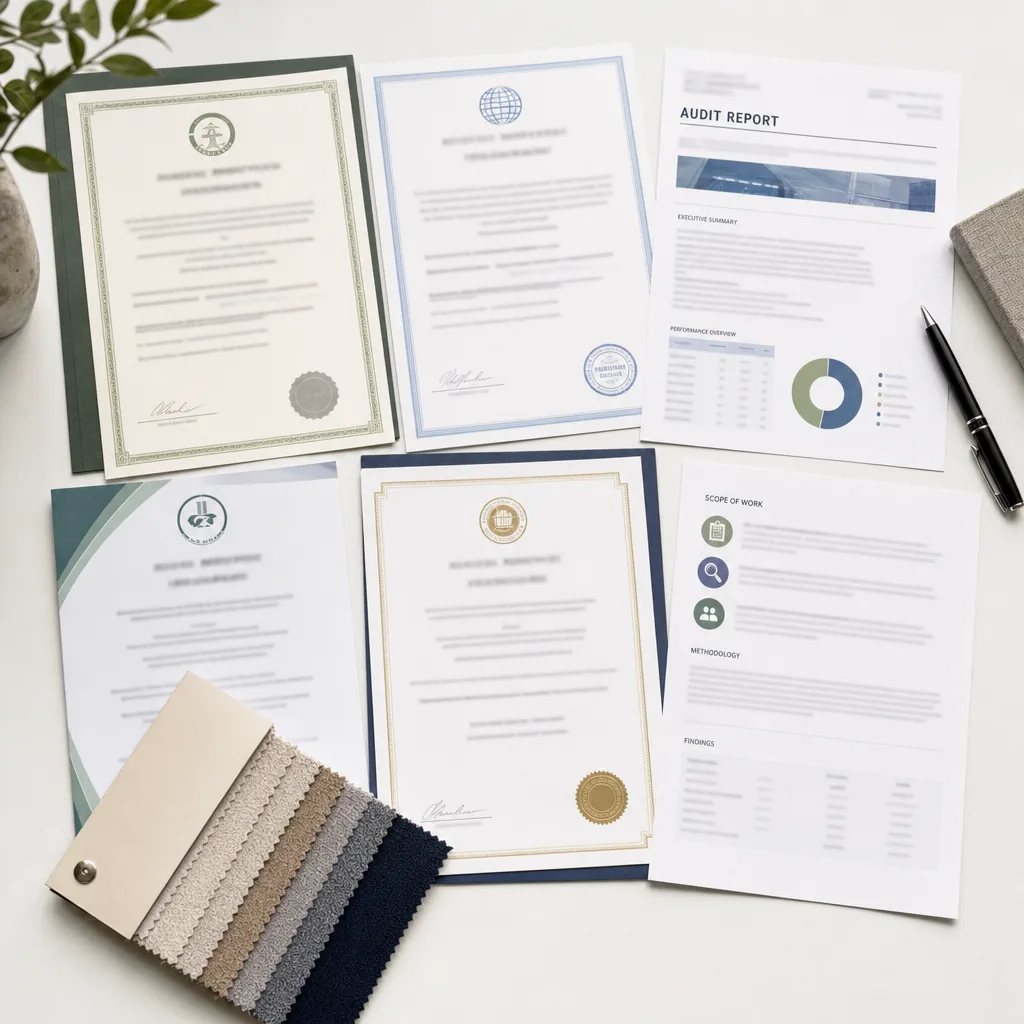
Every week, our sales team answers detailed questions about bsci vs sedex vs wrap vs wca: compliance audit standards compared - cost & moq breakdown. We wrote this guide so that wholesalers, streetwear brands, corporate buyers and promotional resellers can compare options with full information, and avoid the traps that show up only after production has started.
The four audits hat factories actually hold
The four audit names buyers actually ask a China hat factory for are amfori sedex-audit-cap-supplier-guide.html">BSCI 2.0, Sedex SMETA 4-Pillar, WRAP, and WCA, but they answer different sourcing risks. BSCI remains the most common gatekeeper for EU vendor approval because it is a structured social compliance audit against the amfori Code of Conduct, with graded findings tied to payroll records, timekeeping, labor contracts, age-verification files, grievance procedures, fire safety, PPE issuance, and subcontracting declarations. Sedex SMETA 4-Pillar covers much of the same labor and H&S ground, but it also reviews environmental practices and business ethics, so UK retail groups and food-adjacent sourcing teams often default to it. In practical BSCI vs Sedex SMETA decisions, the real constraint is usually buyer administration: which platform their compliance team, insurer, or vendor portal already recognizes, and whether they require a full uploaded report rather than a simple certificate. WRAP and WCA sit in a different lane. WRAP is common in U.S. apparel and licensed headwear because brands want a named certification with a defined validity cycle, usually 12 months, plus formal corrective-action closure. Factories making fitted caps, snapbacks, and licensed team programs will encounter WRAP much earlier than a basic EU private-label supplier. WCA, by contrast, is more retailer-driven and scoring-heavy, especially in Walmart-linked supply chains. Auditors go line by line through swipe-card data, wage calculations, emergency egress, chemical inventories, dormitory controls if applicable, and CAP closure speed. On the factory floor, WCA is less about a certificate on the wall and more about whether the factory can produce 12 months of consistent records with no gaps, no altered timecards, and no mystery subcontractors.
Audit cost is where compliance theory hits MOQ. For a small-to-mid-size cap factory in Zhejiang, a BSCI or Sedex SMETA 4-Pillar audit usually lands around USD 1,500 to 3,200, depending on audit length, agency, headcount, and scope. If the auditor must include an embroidery annex, off-site warehouse, canteen, or dormitory, the fee climbs quickly because auditor man-days increase. The visible invoice is only part of the cost. Remediation often means replacing non-rated fire doors, adding machine guards to eyelet setters and brim presses, installing emergency lighting, updating payroll software to reconcile standard hours versus overtime, or retraining supervisors on young-worker restrictions. A single serious fire-safety CAP can cost more than the audit itself. That burden tells you a lot about the factory’s business model. A plant keeping BSCI, Sedex SMETA 4-Pillar, WRAP, and WCA current at the same time is usually built for repeat orders in the 3,000 to 50,000 piece range, not a 144-cap trial in six colorways. Our standard practice is to treat audit status as an operating-discipline signal, not just a compliance badge, because the same factories that can maintain clean HR files, needle logs, training matrices, and evacuation drill records usually also control carton traceability, AQL 2.5 inspections, Pantone TCX shade approval, and subcontractor declarations without drama. If a supplier has no current report, expect longer onboarding, more friction on licensed trims and test reports, and a higher chance that the sample room is stronger than the production system.
BSCI 2.0 scope and audit process
BSCI 2.0 is still the first social audit many EU retail buyers ask for because it tests whether a factory can control labor risk over time, not just survive a tidy one-day inspection. The amfori BSCI Code of Conduct covers 13 performance areas, but in cap manufacturing the highest-risk points are usually working hours, wages, occupational health and safety, special protection for young workers, and ethical business behavior. Auditors do not stop at noticeboards and policy binders. They recalculate piece-rate wages for embroidery operators on Tajima or Barudan multi-head lines, cross-check raw attendance against payroll and bank transfer records, verify social insurance contributions, and review ID files for any employee who could plausibly be under 25. In a practical BSCI vs Sedex SMETA comparison, BSCI is usually tougher on management-system evidence: documented procedures, corrective-action ownership, and root-cause closure matter as much as what the site looks like on audit day.
The weak spots are predictable if you have spent time on a hat factory floor. Piece-rate systems often break down when weekday overtime, weekend hours, and statutory-holiday premiums are blended into one payment line, which immediately creates underpayment risk. Printing, heat-transfer, washing, and chemical storage areas get flagged for missing SDS in Chinese, incomplete GHS labeling, no secondary containment, blocked eyewash access, or expired fire equipment. Undeclared subcontracting is another serious issue: if visor pre-forming, metal badge fixing, washing, or even overflow embroidery goes outside the approved site list, auditors will treat that far more severely than a missing policy poster. Standard preparation should include 12 months of payroll, attendance, labor contracts, leave records, social insurance receipts, fire-drill logs, machine-maintenance records, and dormitory inspection sheets, all matched line by line before the audit starts.
Audit duration is driven by headcount and site complexity, not by square footage. A 50 to 80 worker sewing-and-embroidery unit without dorms may be covered in 1 auditor-day, while a 200-plus worker factory with cutting, sewing, embroidery, finishing, canteen, and dormitory blocks typically needs 2 auditor-days. Amfori-approved firms sample the previous 12 months of records, conduct private worker interviews away from supervisors, inspect exits, extinguishers, compressors, boilers, needle-control logs, first-aid inventory, and locked chemical cabinets, then test whether the management team can explain the control process instead of reciting a prepared script. In China, a single-site BSCI audit usually lands around USD 900 to 1,800; remote-city travel, 2-day schedules, and follow-up verification raise that number. There is no formal MOQ, but the math is blunt: a USD 1,200 audit adds roughly USD 0.24 per cap on a 5,000-piece order, while on a 100,000-piece annual program it is almost noise. That cost reality is one reason BSCI is harder for small workshops than for larger integrated factories.
Sedex SMETA 4-Pillar scope and process
In a serious BSCI vs Sedex SMETA evaluation, the first thing to get right is scope: most buyers asking for “Sedex” actually want SMETA 4-Pillar, not the older 2-Pillar social audit. The 4 pillars are Labor Standards, Health and Safety, Environment, and Business Ethics, with the ETI Base Code anchoring the labor side and local law used for wage, hour, and age-compliance testing. In a cap factory, that means auditors do more than skim payroll. They recalculate wages from timecards, production records, and leave logs; verify juvenile-worker protections; compare overtime against statutory limits; and test whether labor contracts, social insurance, and disciplinary procedures match actual practice on the floor. Health and safety checks get very operational: needle control logs, broken-needle registers, machine guarding on Tajima, Barudan, or ZSK embroidery heads, compressor inspection tags, emergency lighting lux levels, fire-door clearance, and PPE use in trimming, washing, heat-transfer, and packing.
SMETA 4-Pillar is typically a 2 to 3 auditor-day job for a China factory, not a quick paperwork exercise. A single-site facility with 100 to 300 workers usually takes 2 days; add dormitories, canteens, laundry, screen printing, solvent-based cleaning, or multiple buildings and the scope often expands to 3 days. Auditors from SGS, Intertek, Bureau Veritas, QIMA, or TÜV Rheinland will review 12 months of payroll and attendance, run confidential worker interviews off the production line, sample environmental permits and waste-transfer manifests, and check whether SDS files, chemical labels, secondary containment, and air-emission records are current. Our standard practice is to treat the CAPR as the real deliverable, because buyers care less about the audit date than about noncompliance severity, recurrence, and closure discipline. In Yiwu and broader Zhejiang, a straightforward SMETA 4-Pillar usually lands around $1,200 to $2,500; dorms, interpreter requirements, or complex environmental scope can push it above $3,000. The repeat findings I see most often are peak-season overtime, blocked exits, expired extinguisher inspections, missing hazardous-waste contracts, and weak business-ethics controls such as no formal whistleblowing channel, no anti-bribery training log, and poor gift-and-hospitality approval records.
WRAP scope and process
WRAP is narrower than most buyers think and more operational than a desktop CSR review. Its 12 Principles cover labor, health and safety, environment, customs compliance, and security, but the pass/fail logic is simple: do the records match what the auditor sees on the floor that day. In a cap factory, that means needle-control logs with piece counts by shift, broken-needle collection and destruction records, guarding on heat presses and eyelet setters, compressor lockout/tagout, SDS files in Chinese for spot removers and screen-print chemicals, dormitory checks if housing is provided, and carton-level traceability from cutting ticket to export shipment. That is where WRAP separates itself when buyers compare BSCI vs Sedex SMETA: SMETA 2-Pillar or 4-Pillar often reads broader at the policy level, while WRAP drills harder into whether the site is actually controlled every shift, especially on subcontracting, anti-transshipment, and customs-risk points that matter for licensed headwear and U.S.-bound programs.
The audit itself is usually 1 to 2 days on site, but the preparation burden is heavier than the calendar suggests. A 120 to 180-worker hat plant should expect a WRAP-accredited firm such as Intertek, Bureau Veritas, or SGS to review 12 months of payroll, attendance, social insurance records, hiring files, disciplinary logs, and production planning against shipment peaks to test whether overtime breaches legal limits. Auditors will sample private worker interviews from sewing, embroidery, finishing, warehouse, and packing, then walk the floor looking for practical failures: missing guards on Tajima or Barudan embroidery heads, blocked fire exits, expired extinguisher inspections, weak PPE issuance records in pressing, or poor segregation of inks, solvents, and stain removers in the chemical area. In China, direct WRAP audit fees commonly fall around USD 2,500 to 4,500 per facility, with follow-up verification typically another USD 500 to 1,200 depending on CAP scope. Certificate status also changes buyer confidence: Gold is normally valid 12 months, Platinum 24 months after sustained compliance, and Silver is a shorter-term outcome that usually tells procurement there are still open risks on wages, hours, or corrective-action closure.
WCA scope and process
WCA is retailer-gated compliance, not a transferable social-audit credential, and that distinction matters more than most sourcing teams admit. In practice, buyers usually mean the Walmart Standards for Suppliers assessment run by an approved firm such as Intertek, SGS, or Bureau Veritas, typically with 12-month validity from the audit date. For a China hat factory shipping into Walmart or Sam’s Club programs, a valid WCA is effectively non-negotiable; a clean BSCI report or Sedex SMETA 4-Pillar result is not treated as a substitute. That is why any honest BSCI vs Sedex SMETA comparison has to separate WCA into a different category: it is customer-access control, not a broadly portable benchmark. The audit mechanics will still look familiar to anyone who has managed a social compliance review: document inspection, management interviews, confidential worker interviews, production-floor walkthroughs, and checks on dormitories, canteens, infirmaries, and site security where applicable.
Factories usually lose points on system integrity, not because the sewing floor looks messy. Auditors reconcile payroll, timecards, labor contracts, minimum-age verification, social insurance, resignation records, grievance logs, disciplinary policy, fire-drill reports, and machine-maintenance files against live factory conditions. In cap production, they routinely flag blocked evacuation lanes near cutting tables, missing needle-control records on Tajima or Barudan embroidery heads, absent lockout/tagout procedure on eyelet or pressing equipment, expired first-aid kits, and undeclared subcontract embroidery or washing. At CrownsForge, the sensible window for a pre-audit is 3 to 4 weeks before the formal visit, because missing SDS sheets, incomplete overtime records, or outdated training sign-offs are not same-day fixes. For a Zhejiang factory with roughly 80 to 150 workers, the WCA audit fee usually lands around USD 1,200 to 2,500, with follow-up verification often adding USD 600 to 1,200. The bigger commercial issue is timing and overhead: booking can take 2 to 4 weeks, reports another 7 to 15 days, and the compliance burden pushes small orders upward, so 300-piece custom cap runs absorb those fixed costs poorly while 1,200 to 3,000 pieces price more rationally.
What overlap exists and what differs
On a live cap-factory audit, about 75% of the checkpoints overlap. BSCI 2.0, Sedex SMETA 4-Pillar, WRAP, and WCA all pull the same core evidence: 12 months of payroll and attendance, labor contracts, young-worker controls, social insurance records, disciplinary rules, fire drill reports, extinguisher inspection tags, machine-guarding logs, chemical SDS registers, and subcontractor declarations. In a hat plant, the auditor still walks the same high-risk zones regardless of logo on the checklist: embroidery lines running Tajima or Barudan heads, steam-forming and pressing stations, eyelet punching, cutting tables, compressor or boiler rooms, finished-goods warehouses, and dormitories if the site provides housing. That is why the practical BSCI vs Sedex SMETA question is not about different labor principles; it is about scoring logic, evidence presentation, and how corrective actions are closed.
The real split is in structure and buyer acceptance. BSCI uses amfori’s rating model and a stricter CAP workflow, so repeat findings such as unclear wage-component breakdowns, incomplete worker-committee minutes, or partially blocked emergency exits can pull the overall result down fast even if gross wages and overtime premiums are paid correctly. Sedex SMETA 4-Pillar is usually easier for multi-buyer review because the audit report, CAPR, and follow-up notes sit inside the Sedex platform, which procurement teams can access without asking for offline files. In practice, SMETA also tests management systems more visibly around environment and business ethics: waste-transfer manifests, chemical segregation by compatibility class, anti-bribery communication, and grievance-channel effectiveness. A factory can show the same floor conditions and still receive a different commercial outcome because one retailer accepts a recent SMETA while another requires amfori BSCI, WRAP, or WCA on its approved-vendor matrix.
The divergence gets sharper when records do not reconcile cleanly. WRAP tends to push harder on lawful employment, security controls, and procedural discipline, which matters in licensed sports and entertainment programs. WCA is often the least tolerant when timecards, payroll, bank transfer slips, and rest-day records fail line-by-line cross-checks; if a factory runs seasonal peaks at 68 to 72 hours per week before school, MLB, or promo deadlines, WCA will usually expose that gap quickly. For budgeting, a social-compliance audit in Zhejiang typically lands around $900 to $1,800 for a 1- to 2-day review, while a larger site or 4-Pillar scope can reach $2,000 to $2,800 before remediation. Corrective actions may cost almost nothing for document cleanup, but $3,000 to $15,000 is common for fire-door replacement, electrical segregation, secondary chemical containment, or dormitory upgrades. That is the blunt answer in BSCI vs Sedex SMETA: overlap is high on factory controls, but grading logic and buyer recognition still create real sourcing friction.
What the audit doesn't tell you
The main thing an audit will not tell you is whether a factory can repeat your cap six months later without drift. In the real BSCI vs Sedex SMETA comparison, both standards are checking labor and management systems: payroll, overtime, age verification, fire safety, grievance records, dorm conditions, and document control. Useful, yes, but none of that measures crown-height tolerance of plus or minus 3 mm, visor symmetry within 2 to 3 mm, SPI consistency on the sweatband seam, or whether dyed twill can stay within Delta-E 1.5 to 2.0 against a Pantone TCX target after washing and light exposure. I have seen audited factories pass paperwork cleanly and still fail a reorder because buckram stiffness changed, fabric lots were mixed without shade segregation, or the embroidery file was re-digitized by a different operator and the logo pulled wider on the center front. A clean social audit also does not tell you how the line is actually controlled. A 6 mm crown-height shift, a 3 mm visor-angle change, or swapping 0.8 mm front-panel buckram for 1.2 mm will be obvious in a fit review long before it appears in any compliance report. The same goes for embroidery: a Tajima or Barudan head with worn tension springs, incorrect underlay, or poor push-pull compensation can leave loose satin edges and registration drift even if the factory is fully audited. What matters for hats is process discipline: first-piece signoff, in-line QC after cutting and sewing, shade-band control by fabric lot, needle-change records, carton drop tests, and final inspection at AQL 2.5 or tighter for licensed programs. CrownsForge treats BSCI vs Sedex SMETA as a gatekeeper, not a quality guarantee. Environmental and material claims are another blind spot. BSCI, Sedex SMETA 4-Pillar, WRAP, and WCA may confirm permits, chemical storage, waste handling logs, and basic HSE controls, but they do not validate that a claimed 100 percent cotton twill is really 21x21 ring-spun at 108x58 construction, that recycled polyester is supported by GRS transaction certificates, or that fabric weight holds at 240 to 280 gsm across all rolls. They also will not catch a factory buying from a gray-market trader, blending lots, or substituting a cheaper 300D lining for a specified 420D. If the order value is meaningful, ask for recent bulk inspection reports, fabric test data, trim purchase records, and photos from cutting, embroidery, sewing, and packing tied to the same PO. Two buyer references and a live video walkthrough will tell you more about output stability than the audit logo on the reception wall.
Frequently Asked Questions
What is the minimum order quantity (MOQ) for custom hats?
Our standard MOQ is 100 pieces per design and color, with sampling available from 1 piece. For complex multi-color logos or premium fabric upgrades, the MOQ can be lowered with a small per-piece surcharge.
Which shipping methods do you support?
We support FOB, CIF and DDP shipping. Air express for samples and small orders, sea LCL for 100 to 500 pieces, sea FCL for 5,000+ pieces. Door-to-door DDP available for US, EU, UK, Canada and Australia.
Do you support sustainability certifications?
Yes. We work with GOTS organic cotton, GRS-certified recycled polyester, OEKO-TEX Standard 100 fabrics, and are BSCI and Sedex audited. Certification documentation can be provided per order.
Can I order a sample before bulk production?
Yes. We strongly recommend approving a pre-production sample before mass production. Samples are charged at 35 to 60 USD each plus express shipping, fully refundable against confirmed bulk orders over 500 pieces.
What file format should I send for my logo?
Vector files (AI, EPS, PDF) are ideal. High-resolution PNG or JPG at 300 dpi on transparent background works as a fallback. Provide Pantone color references for accurate reproduction.
How does ordering custom embroidered trucker hat work?
When evaluating custom embroidered trucker hat, the key considerations are construction quality, decoration capability, MOQ flexibility and lead time. BSCI 2.0 (Business Social Compliance Initiative by amfori) — European retailer favorite. Sedex SMETA 4-Pillar (Social, Health & Safety, Environment, Business Ethics) — used by UK and increasingly global retailers. WRAP (Worldwide Responsible Accredited Production) — US retailer favorite for licensed merchandise. WCA (Walmart Conformance Audit) — required by Walmart and…
How does ordering custom bucket hat embroidery work?
When evaluating custom bucket hat embroidery, the key considerations are construction quality, decoration capability, MOQ flexibility and lead time. BSCI 2.0 (Business Social Compliance Initiative by amfori) — European retailer favorite. Sedex SMETA 4-Pillar (Social, Health & Safety, Environment, Business Ethics) — used by UK and increasingly global retailers. WRAP (Worldwide Responsible Accredited Production) — US retailer favorite for licensed merchandise. WCA (Walmart Conformance Audit) — required by Walmart and…
What should buyers know about bucket hat men nike?
When evaluating bucket hat men nike, the key considerations are construction quality, decoration capability, MOQ flexibility and lead time. BSCI 2.0 (Business Social Compliance Initiative by amfori) — European retailer favorite. Sedex SMETA 4-Pillar (Social, Health & Safety, Environment, Business Ethics) — used by UK and increasingly global retailers. WRAP (Worldwide Responsible Accredited Production) — US retailer favorite for licensed merchandise. WCA (Walmart Conformance Audit) — required by Walmart and…
How does ordering custom made hats for men work?
When evaluating custom made hats for men, the key considerations are construction quality, decoration capability, MOQ flexibility and lead time. BSCI 2.0 (Business Social Compliance Initiative by amfori) — European retailer favorite. Sedex SMETA 4-Pillar (Social, Health & Safety, Environment, Business Ethics) — used by UK and increasingly global retailers. WRAP (Worldwide Responsible Accredited Production) — US retailer favorite for licensed merchandise. WCA (Walmart Conformance Audit) — required by Walmart and…
What is the difference between BSCI and Sedex?
BSCI audits follow a fixed framework, whereas SEDEX supports multiple audit types, including BSCI itself. BSCI membership is required for suppliers, while SEDEX enables transparency by sharing audits with multiple buyers.
Is BSCI recognized globally?
The BSCI certification is recognized globally and demonstrates a company's commitment to responsible sourcing and ethical business practices. It helps companies ensure that their supply chains meet internationally recognized social standards and supports the protection of workers' rights and welfare.
Are Sedex and Smeta the same?
SMETA audits are carried out by auditors from Sedex's named independent, third-party Affiliate Audit Companies (AACs). Sedex owns and evolves the SMETA methodology, oversees its usage and drives SMETA auditing consistency through our Audit Quality Programme.
Need a low-MOQ test order?
We help emerging brands launch with as few as 100 pieces. Premium fabric, in-house embroidery, retail-ready packaging.
Start a small orderRelated guides
5 Panel Hat Vintage: A 2026 B2B Sourcing Guide
Read article →
Custom Embroidered Hat: The 2026 Sourcing & Manufacturing Playbook
Read article →
Golf Hats For Men Supplier Audit Checklist for Custom Hat Buyers
Read article →We hope this guide demystifies bsci vs sedex vs wrap vs wca: compliance audit standards compared - cost & moq breakdown and helps you move forward with confidence. If you have questions specific to your project, our English-speaking sales engineers are one message away.