
BSCI vs Sedex SMETA: Which Audit Does Your Cap Supplier Actually Need? - Cost & MOQ Breakdown
BSCI vs Sedex SMETA: Which Audit Does Your Cap Supplier Actually Need? - Cost & MOQ Breakdown is one of the most-asked questions we receive from international buyers, and for good reason. With dozens of factories competing for your order and an alphabet soup of technical terms in every supplier quote, even experienced importers can feel lost. This guide consolidates what we have learned producing custom hats for clients in 40+ countries.
The four audits you'll actually be asked for
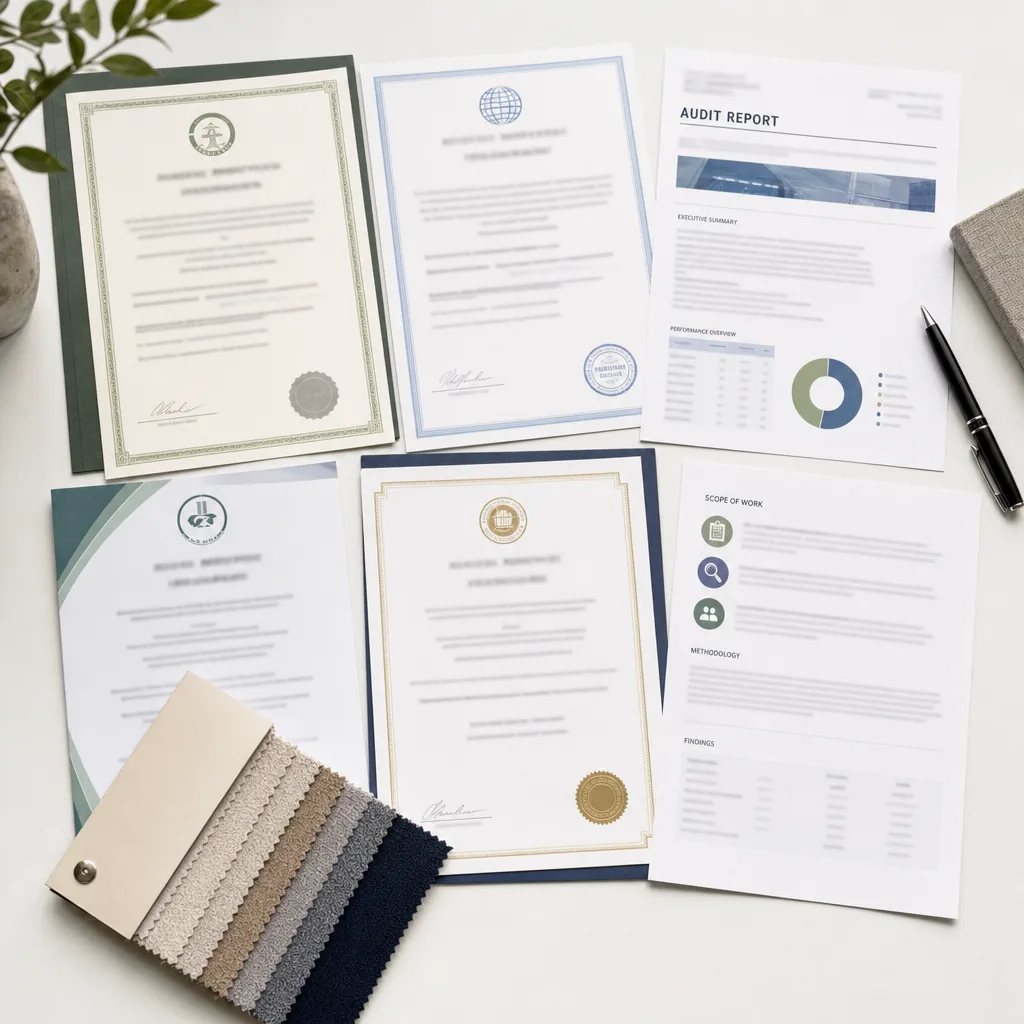
sedex-audit-cap-supplier-guide.html">BSCI and Sedex SMETA are the two audits cap buyers ask for most, but they are not substitutes on a retailer portal. A buyer looking for a bsci hat factory is usually shipping into EU retail—especially Germany, the Netherlands, and the Nordics—where amfori BSCI 2.0 is the standard social-compliance format and the result is tied to the factory site, not the product. Sedex is a different workflow altogether: buyers normally specify SMETA 2-Pillar or SMETA 4-Pillar, and 4-Pillar adds environment and business ethics to the labor and health-and-safety review. UK chains, grocery groups, and multinational sourcing offices often require the report uploaded against the site’s Sedex ID, with the audit still inside the normal 12-month validity window. In practice, if the onboarding checklist says “SMETA 4-Pillar,” a BSCI report will not clear compliance, even when the findings cover similar issues like working hours, payroll records, PPE, machine guarding, and fire-drill logs. The other two audits that matter are WCA and WRAP, and both tend to appear only when the sales channel is already defined. WCA is common in big-box and value retail because it scores management systems, wages, hours, dormitory controls, emergency preparedness, and grievance handling in a format U.S. sourcing teams know how to benchmark across factories. WRAP still shows up with American apparel importers, licensed sports merchandise, and promo-product distributors that want a certification focused on lawful, humane production and traceable corrective actions. In Zhejiang, a first-time BSCI or SMETA 4-Pillar audit usually lands around USD 1,200-2,800 per site; WRAP is more often USD 2,000-3,500 once registration and certification fees are included, and follow-up audits add cost if CAP items remain open. That matters when the order is only 300-500 caps per colorway: on a small PO, compliance overhead can add USD 0.80-2.50 per cap before fabric, embroidery, or freight is even discussed. CrownsForge matches the audit requirement to the end customer before sampling, because discovering the wrong audit after lab dips and PPS approval is how a simple cap program loses six weeks.
What the auditor actually checks
The fastest way to judge whether an audit means anything is to ignore the logo on page one and read the sampling trail. In both BSCI 2.0 and Sedex SMETA 4-Pillar, auditors triangulate timecards, payroll ledgers, bank-transfer records, piece-rate sheets, production output, and worker interviews to see whether the numbers reconcile. If a bsci hat factory says it ships 80,000 caps a month with 120 operators, that claim gets stress-tested against SAM by process, line balancing, machine count, and overtime distribution. A basic six-panel baseball cap with flat embroidery may run 12 to 18 minutes total labor, while more complex cut-and-sew styles with appliqué or 3D embroidery run higher; if attendance shows a clean 8.0 hours through peak season but payroll has no 150% weekday overtime or 200% rest-day premium, the mismatch is obvious. Auditors also pull labor files for written contracts, social insurance enrollment, age verification, leave records, resignation forms, and disciplinary logs, then compare those against PRC labor law on probation limits, minimum wage, dispatch labor, and unlawful deductions. The floor walk usually exposes weak control systems faster than any document review. Auditors move through cutting, sewing, eyelet setting, embroidery, steam shaping, finishing, and packing looking for machine guards, blocked exits, exposed wiring, emergency lighting, and fire lanes that are too narrow for safe egress. On embroidery lines, Tajima, Barudan, and ZSK heads are checked for intact needle guards, current broken-needle logs, and whether operators actually follow needle-control procedure instead of just signing the sheet. Chemical management is another common failure in cap production: screen-print inks, spot-cleaning solvents, spray adhesives, and stain removers need GHS labels, SDS access within the work area, secondary containment, and local exhaust ventilation, not a tidy cabinet staged for audit day. Fire compliance is equally practical and document-heavy: extinguisher inspection tags, alarm-test records, drill logs, evacuation maps, and worker interviews must all match. Under Sedex SMETA 4-Pillar, auditors usually probe deeper into dormitories, canteens, grievance channels, and environmental controls, so weak interview preparation and backfilled records show up very quickly.
The findings that hurt most are rarely dramatic; they are routine failures that prove management has poor control of the factory for months at a time. Child-labor prevention is checked through original photo ID, hiring forms, personnel files, and spot checks for borrowed or altered documents. If juvenile workers are legally employed, auditors confirm they are kept off night shift, overtime, and hazardous equipment. Dormitories are reviewed for occupancy density, sanitation, potable water, hot-water access, gender separation where applicable, barred-window emergency release, and exits that open freely from inside. A credible management system also needs an active grievance channel with anonymous reporting, anti-retaliation policy, investigation records, and closed corrective actions, not a hotline poster nobody can explain. What usually separates a pass from a major finding is record discipline. Auditors may sample only 12 to 20 personnel files, 3 months of payroll, and a limited cross-section of production records, but that is enough if HR, EHS, and production have been updating documents inconsistently. At CrownsForge, our standard practice is to reconcile attendance, payroll, subcontracting records, and output data monthly because auditors can back-calculate problems in under two hours. A missing social insurance record, expired fire-drill log, or broken-needle register with two months of identical handwriting is often more damaging than a polished factory tour, because it shows the system is cosmetic rather than controlled.
Reading an audit report: red flags vs accepted-with-CAR
Treat “accepted with CAR” as routine, not as a pass with no risk attached. Under BSCI 2.0 and Sedex SMETA 4-Pillar, most cap factories will carry a few findings; the real question is whether they are isolated minor CARs or signs that management control is weak. A missing fire-drill sign-in sheet, one expired forklift inspection label, or an outdated dormitory posting can still trigger a minor CAR, but those are paperwork defects if the underlying practice exists. What I want to see from a bsci hat factory is closure discipline: root-cause analysis that goes beyond “staff forgot,” a named owner in HR or EHS, and dated evidence such as retraining records, refreshed logs, or calibrated inspection tags. In practice, minor CARs should usually be closed in about 15 to 60 days, with the original finding, CAP, and close-out proof cross-referenced in one file set. The report turns from manageable to dangerous when the records stop reconciling. Payroll that does not match timecards, missing social insurance payments, overtime above legal limits without premium pay, or inconsistent leave records are not clerical misses; they indicate the wage-and-hours system is being manipulated or not controlled. On the factory floor, I would immediately escalate blocked exits, extinguishers past monthly inspection, missing SDS in printing or washing areas, absent machine guarding, or no needle-control log on Tajima, Barudan, or ZSK embroidery lines. Those findings often sit in major CAR territory because they create direct worker-safety exposure, shipment disruption, and brand liability. If the supplier also cannot produce signed labor contracts, age-verification files, or subcontractor approval records on demand, assume the problem is operational, not administrative.
Read the trend line, not the certificate page. A site with 3 minor CARs this year after 10 or 12 findings last cycle is often a safer sourcing decision than a factory showing 1 finding while withholding the previous report, sample payroll month, or closure evidence. Repeated findings in working hours, wage calculation, social insurance, grievance channels, or unauthorized subcontracting tell you management is staging for audit day instead of fixing the system. That matters more than the headline rating because repeat CARs usually mean the same failure will surface again in peak season, when embroidery lines are overloaded, temp labor is added, and shipment dates start slipping. Ask for the full report, the CAP, and the closure evidence, not just the front-page summary or certificate screenshot. For a cap supplier, I would verify that sampled months include at least one recent peak-production period, then cross-check attendance logs, payroll registers, labor contracts, dormitory records if housing is provided, and any corrective-action evidence against the exact CAR number. A credible review also distinguishes auditor-verified closure from self-declared closure, because those are not equal. Our standard practice is to classify findings into tolerable documentation gaps versus sourcing-stop failures within 24 hours; once hour control, wage integrity, or safety discipline breaks down, quality drift, rework, and late shipment usually follow.
Audit duration and what you can verify by video
A genuine Sedex SMETA 4-Pillar audit in a cap factory takes time because the auditor is testing records against what is happening on the floor. In a 150- to 300-worker facility, expect roughly 2.0 to 3.0 working days, with 12 months of payroll, timecards, labor contracts, age-verification files, disciplinary records, and production peaks sampled against local overtime limits. The auditor will also walk cutting, embroidery, sewing, finishing, packing, canteen, warehouse, chemical storage, and dormitories if they are factory-managed, then run confidential worker interviews across departments and shifts. If embroidery and sewing sit in separate workshops, or multiple business licenses share one compound, audit time usually stretches because worker allocation, legal entity boundaries, and hidden subcontracting risk must be checked line by line. A BSCI audit is often slightly shorter, usually 1.5 to 2.5 days, but buyers should not read that as stronger control. The difference is mostly methodology and sampling depth, not audit rigor in the abstract. When you are qualifying a bsci hat factory, the practical question is how much evidence can be tested before patterns start to show: double-booked attendance, inconsistent piece-rate calculations, missing social insurance records, or coaching of interviewees. A short “compliance tour” cannot surface those issues. A proper audit can, especially when the auditor cross-checks payroll spikes against shipment schedules, peak-season output, and needle-room or finishing headcount.
Video is useful, but only if you use it to verify operations instead of accepting a polished showroom walk-through. A live 20- to 40-minute call can confirm whether the factory actually runs the processes listed in the audit summary: Tajima, Barudan, or ZSK embroidery heads under load, needle-policy boards and broken-needle logs posted beside sewing lines, guarded eyelet presses, PPE at heat-transfer stations, segregated scrap bins, and packed caps stored in a clean area with humidity control typically kept below 65% RH to protect brim shape, buckram, and metal trims. Ask the supplier to walk continuously from raw-material warehouse to cutting, sewing, embroidery, finishing, and packing without camera cuts; staged routes are where borrowed facilities and undeclared subcontractors usually get exposed. You can also ask for redacted compliance proof on screen: a recent payroll register, overtime approval forms, evacuation maps, first-aid inspection tags, MSDS files, chemical cabinet labeling for spot-cleaning solvents or screen-print inks, and calibration records if metal detection is part of the brand standard. None of that replaces an on-site ethical audit, and it will not tell you whether the site would pass at AQL 2.5 on social compliance documentation, but it is very effective at catching weak document discipline before first PO. Always request the redacted audit summary showing audit firm, audit date, exact site address, headcount band, finding grades, and CAP status; a certificate screenshot alone proves almost nothing.
Cost: who pays for the audit?
Annual social audits are factory overhead, not a line-item surcharge on a normal FOB cap order. In Yiwu and broader Zhejiang, a cap plant running 200 to 350 workers typically budgets BSCI 2.0 and Sedex SMETA the same way it budgets needle policy controls, extinguisher inspections, payroll archiving, and dormitory maintenance. In practice, a BSCI follow-up or renewal commonly lands around $1,200 to $2,800, while a Sedex SMETA 4-Pillar audit is often $900 to $2,400, depending on auditor man-days, site size, dorm coverage, and how much pre-audit cleanup is needed on wages, timecards, and juvenile worker records. A legitimate bsci hat factory should already have a current amfori status, audit ID, CAP progress, and validity window ready for review. If a supplier suddenly invents a “compliance fee” after sampling or price approval, that usually points to weak cash flow, poor audit planning, or a factory trading through a third party that does not control the actual production site. The cost only shifts when the buyer requires a protocol the factory does not already maintain. Retailer-specific programs like Walmart WCA, Target FCCA, or bespoke licensee compliance audits are usually buyer-paid, because they sit inside that customer’s approval stack rather than the factory’s general commercial base. In the cap business, those audits usually run $1,500 to $3,500 before any re-audit, and more if the scope includes multiple legal entities, off-site embroidery, washing subcontractors, or worker dormitories. The math gets ugly fast: a surprise $2,000 audit spread across 1,000 caps adds $2.00 per piece before freight, duty, hangtags, or carton cost. Lock it down before the PO is issued: who pays, which protocol applies, which site code and legal entity are covered, whether subcontract processes are in scope, and who absorbs re-audit fees if the first result comes back Needs Improvement or non-accepted.
What changes with the 2026 UFLPA and EU CSRD
By 2026, the audit itself is only the front gate; it is no longer evidence strong enough to clear a shipment on its own. Under UFLPA, a BSCI report or Sedex SMETA 4-Pillar audit is just a screening document. A buyer sourcing from a bsci hat factory still needs transaction-level traceability that ties each cap order to labor, material, and dates: cotton country-of-origin declarations, spinner invoices, weaving or knitting mill records, dyehouse batch cards, trim PO files, carton packing lists, and payroll or attendance logs that match the actual production window. Caps are unusually exposed because one SKU can combine 10x10 cotton twill or brushed chino, 120-140 gsm polyester mesh, PE or EVA visor board, hook-and-loop tape, seam tape, woven labels, and sweatband components from five to eight upstream vendors. If one shell-fabric lot stops at the trader or converter level, the social audit does not save the shipment.
The factories that stand up to document review are the ones already coding fabric rolls by lot, tracking cut bundles in line, and linking finished cartons back to PO, sewing date, embroidery file, and operator records. On a well-run line, you can reconcile output against timesheets, machine logs from Tajima or Barudan embroidery heads, needle-control sheets, and final carton counts, then retain that file for at least five years. That matters because U.S. import reviews increasingly test whether declared production volume, headcount, and working hours are mathematically credible, not just whether the site passed AQL 2.5 or closed a few minor findings. Our standard practice is to treat audit status, traceability, and record retention as one compliance system; a framed certificate in reception is useless if Customs asks for yarn-spinner paperwork and the factory can only produce a PDF summary.
EU CSRD adds a different layer: structured, comparable disclosure that procurement, legal, and sustainability teams can actually plug into vendor approval and annual reporting. Large EU brands are moving beyond simple pass/fail logic and asking for audit scope, validity window, major versus minor nonconformities, corrective-action closure rate, weekly hours controls, grievance channel evidence, subcontractor declarations, and wage records checked against local law. In stronger compliance programs, that data sits in one supplier matrix beside BSCI 2.0, Sedex SMETA, WCA, chemical-management status, and sometimes traceability fields such as mill name, Pantone-approved fabric source, and lot-level origin documents. The extra cost is usually administrative, not audit-day cost: a follow-up social audit may still run about $1,200 to $3,500 depending on man-days and scope, but maintaining clean document packs across shell fabric, mesh, embroidery, washing, and packing often adds $0.03 to $0.08 per cap on orders under 3,000 pieces. In 2026, the real question is not which audit logo a supplier has; it is whether its records survive legal review, CSRD disclosure, and retailer compliance checks at the same time.
Frequently Asked Questions
What is the minimum order quantity (MOQ) for custom hats?
Our standard MOQ is 100 pieces per design and color, with sampling available from 1 piece. For complex multi-color logos or premium fabric upgrades, the MOQ can be lowered with a small per-piece surcharge.
What logo decoration techniques do you offer?
3D puff embroidery, flat embroidery, woven patch, leather patch, PVC patch, screen printing, sublimation, applique and laser etching, all in-house with no subcontracting.
Can I order a sample before bulk production?
Yes. We strongly recommend approving a pre-production sample before mass production. Samples are charged at 35 to 60 USD each plus express shipping, fully refundable against confirmed bulk orders over 500 pieces.
What file format should I send for my logo?
Vector files (AI, EPS, PDF) are ideal. High-resolution PNG or JPG at 300 dpi on transparent background works as a fallback. Provide Pantone color references for accurate reproduction.
Which shipping methods do you support?
We support FOB, CIF and DDP shipping. Air express for samples and small orders, sea LCL for 100 to 500 pieces, sea FCL for 5,000+ pieces. Door-to-door DDP available for US, EU, UK, Canada and Australia.
What should I know about wholesale custom baseball cap?
When evaluating wholesale custom baseball cap, the key considerations are construction quality, decoration capability, MOQ flexibility and lead time. BSCI (amfori), Sedex SMETA 4-Pillar, WCA (Walmart), and WRAP. Each retailer requires a specific format. We hold all four and refresh annually. Buyers who don't ask are the ones who get surprised by retailer onboarding. Working hours, wage records, contract documentation, dormitory conditions, fire-safety drills, chemical storage, factory-floor safety equipment, child-labor…
How does ordering custom dad hat work?
When evaluating custom dad hat, the key considerations are construction quality, decoration capability, MOQ flexibility and lead time. BSCI (amfori), Sedex SMETA 4-Pillar, WCA (Walmart), and WRAP. Each retailer requires a specific format. We hold all four and refresh annually. Buyers who don't ask are the ones who get surprised by retailer onboarding. Working hours, wage records, contract documentation, dormitory conditions, fire-safety drills, chemical storage, factory-floor safety equipment, child-labor…
How does ordering custom baseball cap motorcycle helmet work?
When evaluating custom baseball cap motorcycle helmet, the key considerations are construction quality, decoration capability, MOQ flexibility and lead time. BSCI (amfori), Sedex SMETA 4-Pillar, WCA (Walmart), and WRAP. Each retailer requires a specific format. We hold all four and refresh annually. Buyers who don't ask are the ones who get surprised by retailer onboarding. Working hours, wage records, contract documentation, dormitory conditions, fire-safety drills, chemical storage, factory-floor safety equipment, child-labor…
How does ordering custom baseball hats for men work?
When evaluating custom baseball hats for men, the key considerations are construction quality, decoration capability, MOQ flexibility and lead time. BSCI (amfori), Sedex SMETA 4-Pillar, WCA (Walmart), and WRAP. Each retailer requires a specific format. We hold all four and refresh annually. Buyers who don't ask are the ones who get surprised by retailer onboarding. Working hours, wage records, contract documentation, dormitory conditions, fire-safety drills, chemical storage, factory-floor safety equipment, child-labor…
Looking for a reliable hat manufacturer in China?
CrownsForge has produced custom hats for 800+ brands across 40 countries. From 100-piece launches to 100,000-piece retail programs, we deliver on time and on spec.
Get in touchRelated guides

Custom Logo Hats: When to Use It, Costs, and What to Ask Your Factory (2026 Update)
Read article →
Mesh Caps Wholesale: Trucker Cap Manufacturing Specifications and Pricing
Read article →
Baseball Hats Men's: A Vertical-Specific Sourcing Guide - Cost & MOQ Breakdown
Read article →If you are ready to take the next step on bsci vs sedex smeta: which audit does your cap supplier actually need? - cost & moq breakdown, our team can put a tailored quotation and digital mock-up in your inbox within 24 hours. Send the inquiry form on our contact page or message us directly on WhatsApp.