
Blank Hats Fabric And Trim Spec Guide for Custom Hat Buyers
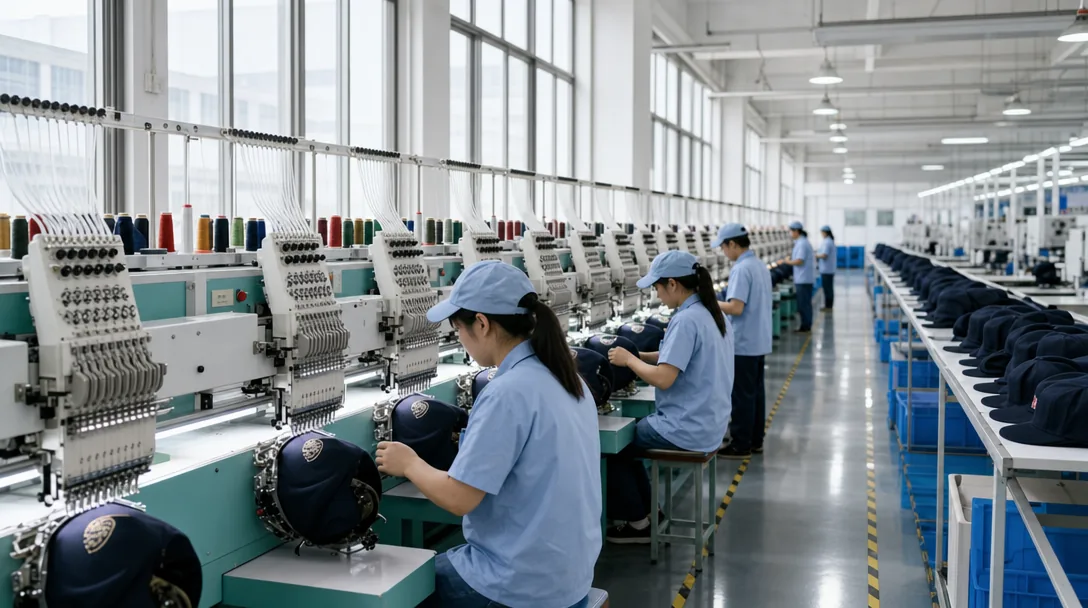
For brand owners, wholesalers and procurement teams entering the custom headwear category, blank hats fabric and trim spec guide for custom hat buyers is one of the highest-leverage decisions you will make. Get it right and your unit economics, retail story and reorder cycle all improve. Get it wrong and you carry the cost for years.
Why blank hats fabric and trim spec guide needs a separate sourcing plan
A blank hats fabric and trim spec guide needs its own sourcing plan because the buyer is usually not asking for “any cap that can carry a logo.” They are locking the physical platform before decoration, packaging, or regional compliance is finalized. For wholesale blank hats, the fabric, sweatband, closure, buckram, eyelets, seam tape, and visor board decide whether the later embroidery runs cleanly on Tajima, Barudan, or ZSK heads. A 280 gsm brushed cotton twill behaves very differently from 160 gsm nylon taslan or 100% polyester mesh at 90–120 denier. If the crown collapses during hooping, the embroidery reject rate can jump from under 2% to 8–12%, even when the digitizing file is correct. That is why our standard practice at CrownsForge is to approve the blank body spec before quoting decoration, not after.
This sourcing path differs from generic hat buying because “blank” does not mean simple. A buyer ordering country hats for men may care about washed cotton, antique brass buckles, and a softer unstructured crown; a buyer planning bulk custom trucker hats needs foam density, mesh stretch, snapback resin grade, and front-panel lamination checked before production. For custom bulk trucker hats, a $0.06 cheaper mesh can save money on paper but cause panel distortion after heat transfer or puff embroidery. Fabric color also needs control: Pantone TCX matching within Delta-E 1.5–2.0 is realistic for dyed cotton lots, while polyester mesh may drift more unless the yarn is solution-dyed. These choices affect MOQ, too. Stock fabric can support 300–500 pieces per color, while custom-dyed fabric or private snap molds often push practical MOQ toward 1,000–3,000 pieces.
Cost, lead time, and compliance are decided early by trim details most spec sheets understate. Cotton twill may add $0.20–$0.45 per cap over basic polyester, recycled rPET fabric usually adds $0.35–$0.80, and a better sweatband with wicking yarn can add $0.08–$0.18. Metal buckles, PVC patches, PU leather labels, and printed seam tape all introduce separate colorfastness, nickel, phthalate, and REACH/CPSIA considerations depending on market. A custom hat manufacturer also has to plan inspections around these parts: incoming fabric inspection, shade-band grouping, pull testing on closures, and final AQL 2.5 or 4.0 depending on buyer risk tolerance. If the order is headed to retailers requiring sedex-audit-cap-supplier-guide.html">BSCI 2.0 or Sedex SMETA 4-Pillar documentation, fabric mill traceability and subcontracted embroidery disclosure can add 3–7 working days before production even starts. The blank hats fabric and trim spec guide is therefore a risk-control document, not just a material checklist.
Factory capability checks before quoting
The first capability check is not price; it is whether the factory can physically build the hat you are specifying. For embroidery, ask what machines are on the floor and what stitch density they normally run on caps: Tajima, Barudan, and ZSK heads all perform well, but only if the operator understands curved-front hooping, backing choice, and thread tension. A clean 3D puff logo usually needs 0.7–1.0 mm foam, satin columns under 9 mm, and fewer tiny internal cuts than buyers expect. For woven, rubber, leather, chenille, or sublimated patches, request actual edge-finish samples: merrowed border, laser-cut border, heat-press adhesive, or perimeter stitching all change cost and failure risk. If a supplier quotes wholesale blank hats but cannot show recent patch hats with wash-tested adhesion, I would not trust them for bulk custom trucker hats.
Fabric and panel construction checks prevent most fit complaints. A proper blank hats fabric and trim spec guide should identify shell fabric by weight and structure, not just “cotton” or “polyester.” Common options include 260–320 gsm cotton twill, 10 oz duck canvas, 150D–300D nylon taslan, polyester ripstop, corduroy at 14–21 wale, and 100–110 gsm trucker mesh. For country hats for men, buyers often want heavier fronts, pre-curved brims, and sweatbands that tolerate sweat and dust; cheap 85 gsm mesh and soft buckram collapse quickly. Confirm whether the factory can make 5-panel foam truckers, 6-panel structured caps, unstructured dad hats, camper caps, and rope caps in-house. Closure options also matter: plastic snapback, brass buckle, hook-and-loop, elastic Flexfit-style band, nylon webbing, and metal press closure each need different inventory and QC gauges.
A serious custom hat manufacturer should have a sample room that can cut, sew, embroider, press, and revise samples without waiting for the bulk line to be free. Our standard practice at CrownsForge is to review tech packs against available blocks, brim molds, thread cards, Pantone TCX fabric references, and Delta-E tolerance before quoting, because a $0.18 cheaper fabric can create a failed fit or shade lot problem later. Ask for sample lead time by process: blank proto 5–7 days, embroidered cap 7–10 days, patch cap 10–14 days, and custom-dyed fabric often 18–25 days. Audit readiness is another filter: BSCI 2.0, Sedex SMETA 4-Pillar, wage records, needle-control logs, and AQL 2.5 final inspection reports should be available before deposit. Communication is part of capability too; if the merchandiser cannot explain panel seams, MOQ by color, carton CBM, FOB Ningbo versus DDP cost, custom bulk trucker hats will become guesswork.
MOQ, pricing and sample approval
MOQ is not one number; it depends on fabric, color, and whether the trims are stock or custom. For wholesale blank hats, a realistic factory MOQ is usually 144–300 pcs per color for stock cotton twill, polyester mesh, or acrylic wool blends, but custom-dyed fabric normally starts at 500–1,000 pcs per Pantone TCX color because dye lots below that carry poor shade control and high surcharge. Bulk custom trucker hats using stock foam fronts and mesh backs can often run at 144 pcs, while custom bulk trucker hats with private molds, woven labels, sandwich piping, or printed seam tape should be budgeted at 300–500 pcs. In a proper blank hats fabric and trim spec guide, buyers should separate body fabric, visor board, sweatband, closure, eyelets, button, label, and packaging because each item has its own MOQ and failure risk.
Decoration setup is where many first-time buyers under-budget. Flat embroidery digitizing is typically US$25–60 per logo, 3D puff digitizing US$45–90, and a Barudan or Tajima sample run may add US$30–80 depending on thread changes and placement. Stitch density matters more than buyers think: a clean front logo usually sits around 0.35–0.45 mm stitch spacing, but dense fills above 12,000 stitches on a six-panel crown can pucker lightweight 160–180 gsm cotton. Pantone matching should be approved against physical thread cards, not screen images; Madeira, Isacord, and Gunold thread rarely hit Pantone exactly, so we normally allow Delta-E under 2.0 for fabric dyeing and choose the closest commercial thread for embroidery. For patches, expect separate mold or screen charges: woven labels US$40–80, rubber patches US$80–150, and leather deboss dies US$60–120.
PPS approval should freeze everything before bulk cutting: crown shape, panel balance, visor curve, embroidery position tolerance, trim color, hangtag, polybag, carton mark, and barcode label if the order goes to retail DCs. Our standard practice at CrownsForge is to send pre-production samples with a spec sheet showing measurements, Pantone references, stitch count, thread code, fabric gsm, closure type, and packaging method, then hold bulk until written approval is received. Lead time after PPS approval is usually 18–25 days for blank stock-color caps, 25–35 days for embroidered caps, and 40–55 days for custom-dyed fabric or special trims; add 7–12 days if lab dips are needed. AQL 2.5 final inspection should check shade bands, loose threads, skipped stitches, sweatband alignment, visor symmetry, and carton quantity. This blank hats fabric and trim spec guide should be treated as a production control document, not a sales quote.
Quality inspection and shipping risk
AQL inspection is where many wholesale blank hats orders either become predictable or become arguments. For finished caps, I usually set AQL 2.5 for major defects and AQL 4.0 for minor defects, with 100% checking only on logos, metal trims, and special wash effects. Measurement tolerance should be written before cutting: crown height ±3 mm, visor length ±2 mm, sweatband width ±1.5 mm, back-strap length ±5 mm, and finished cap circumference ±5 mm after steaming. For country hats for men with curved brims or rope trim, add a separate visual limit board because “acceptable curve” cannot be managed by words alone. A proper blank hats fabric and trim spec guide should also define fabric weight, such as 260–280 gsm cotton twill, 180–220 gsm washed canvas, or 100D/120D polyester mesh, so inspectors are not comparing production against a salesman’s sample made from a different roll.
Color and embroidery failures are the most common reasons buyers reject bulk custom trucker hats after the goods are already packed. For fabric shade, use Pantone TCX or a physical lab dip and keep Delta-E under 1.5 for solid panels; mesh can realistically run Delta-E 2.0 because yarn batches shift more. Colorfastness should be tested to rubbing and perspiration, especially on black, navy, red, and garment-dyed caps; dry rubbing Grade 4 and wet rubbing Grade 3–4 are reasonable commercial targets. Embroidery inspection should cover thread breaks, loose bobbin tails, puckering, off-center placement over 2 mm, stitch density below the digitizing spec, and registration drift between 3D puff and flat fill. On Tajima, Barudan, and ZSK heads, most defects trace back to cap frame tension, backing choice, or running 3D foam too fast above 650–700 spm.
Shipping risk is reduced by boring documentation, not heroic problem-solving at the port. Cartons need buyer PO, style number, color, size ratio, quantity, gross/net weight, carton dimensions, made-in-China mark if required, and sequential carton numbers such as 1/86–86/86. For custom bulk trucker hats, crushed crowns usually come from weak 5-ply cartons or overloading above 12–14 kg, not from ocean freight itself. FOB Ningbo or Shanghai gives experienced importers better control over freight and insurance; DDP is simpler for small brands but hides duty, exam, and last-mile risk inside the unit price, often adding $0.35–$1.20 per cap depending on destination and volume. Our standard practice at CrownsForge is to keep a reorder file with approved fabric swatches, trim cards, embroidery DST files, carton photos, packing method, inspection report, and sealed production sample, because a custom hat manufacturer cannot repeat a cap accurately from an invoice alone.
Buyer checklist for the next RFQ
The fastest way to get a firm quote is to send a spec pack that removes guessing: cap style, panel construction, crown height, visor type, closure, fabric, trim, decoration, quantity, packing, and destination terms. For a structured RFQ, I like one line per SKU with quantity breaks at 300, 500, 1,000, and 3,000 pcs, because MOQ and stitch-time economics change sharply there. If you are sourcing wholesale blank hats, state whether they are truly undecorated blanks or “blank with private label,” because woven labels, taping print, and branded buckles can add $0.18–$0.65 per cap. This blank hats fabric and trim spec guide should also include target FOB or DDP budget, required compliance such as BSCI 2.0 or Sedex SMETA 4-Pillar, and inspection level, usually AQL 2.5 for major defects and AQL 4.0 for minor defects.
Photos matter, but they must be useful: front, side, back, inside sweatband, under-visor, closure, seam tape, and a ruler shot showing crown height and visor length. If you have a sample cap, send weight in grams, fabric hand-feel notes, and any known material data: 280 gsm cotton twill, 150D polyester mesh, 100% recycled polyester, wool blend, or pigment-washed canvas. For country hats for men, buyers often forget to specify structured versus unstructured front panels; that single point changes buckram selection, crown collapse, packing method, and landed cost. Color references should be Pantone TCX for fabric and Pantone C for embroidery thread or print ink, with acceptable Delta-E tolerance, usually under 1.5 for premium retail and under 2.5 for promo programs.
For decoration, send vector artwork in AI, EPS, or PDF, plus a JPG mockup showing placement and size in millimeters, not just “large front logo.” Embroidery RFQs need stitch type expectations: flat, 3D puff, appliqué, merrow patch, woven patch, or heat-transfer patch; Tajima, Barudan, and ZSK heads all run cleanly when the digitizing is built for the cap curve, but stitch count still drives price. Bulk custom trucker hats and custom bulk trucker hats should specify mesh color, snapback grade, foam or twill front, visor sandwich, rope trim, and whether the visor is flat or pre-curved. As a custom hat manufacturer, CrownsForge asks for carton marks, polybag preference, barcode rules, and Incoterms before quoting, because DDP Los Angeles and FOB Ningbo can differ by $0.35–$1.20 per cap depending on carton cube and season.
Working with CrownsForge
QC and export coordination are built around measurable checkpoints rather than trust. Incoming fabric is checked for gsm, width, color, shrinkage, skew, and mesh hole consistency; inline inspection catches crown symmetry, visor centering, sweatband tension, loose threads, and seam puckering before the line finishes. Final inspection normally follows AQL 2.5 for major defects and 4.0 for minor defects, with carton drop tests for DDP shipments and barcode scans when the buyer needs Amazon FBA or retail allocation. For custom bulk trucker hats, I also require closure pull testing and snapback colorfastness because cheap plastic tabs can whiten under stress. Export files should include PI, packing list, HS code confirmation, COO if needed, and photo records of sealed cartons. BSCI 2.0 or Sedex SMETA 4-Pillar documentation should be checked before production, not when the container is already waiting in Ningbo.
Frequently Asked Questions
What file format should I send for my logo?
Vector files (AI, EPS, PDF) are ideal. High-resolution PNG or JPG at 300 dpi on transparent background works as a fallback. Provide Pantone color references for accurate reproduction.
What logo decoration techniques do you offer?
3D puff embroidery, flat embroidery, woven patch, leather patch, PVC patch, screen printing, sublimation, applique and laser etching, all in-house with no subcontracting.
Which shipping methods do you support?
We support FOB, CIF and DDP shipping. Air express for samples and small orders, sea LCL for 100 to 500 pieces, sea FCL for 5,000+ pieces. Door-to-door DDP available for US, EU, UK, Canada and Australia.
How long does production take?
Sampling takes 7 to 12 days. Bulk production runs 20 to 30 days depending on quantity, fabric availability and decoration complexity. Inspection and packing adds another 3 to 5 days before shipment.
Do you support sustainability certifications?
Yes. We work with GOTS organic cotton, GRS-certified recycled polyester, OEKO-TEX Standard 100 fabrics, and are BSCI and Sedex audited. Certification documentation can be provided per order.
What should I know about blank trucker cap wholesale bulk?
When evaluating blank trucker cap wholesale bulk, the key considerations are construction quality, decoration capability, MOQ flexibility and lead time. Explain the buyer intent behind blank hats fabric and trim spec guide, when it differs from generic hat sourcing, and what decisions affect cost, lead time and compliance. Describe how CrownsForge manages blank hats fabric and trim spec guide programs with sampling, decoration, QC and export coordination.
How does ordering custom embroidered trucker hat work?
When evaluating custom embroidered trucker hat, the key considerations are construction quality, decoration capability, MOQ flexibility and lead time. Explain the buyer intent behind blank hats fabric and trim spec guide, when it differs from generic hat sourcing, and what decisions affect cost, lead time and compliance. Cover embroidery, patch, fabric, panel construction, closure options, sample room capability, audit readiness and communication checks.
What should I know about custom rope hat wholesale bulk?
When evaluating custom rope hat wholesale bulk, the key considerations are construction quality, decoration capability, MOQ flexibility and lead time. Explain the buyer intent behind blank hats fabric and trim spec guide, when it differs from generic hat sourcing, and what decisions affect cost, lead time and compliance. Cover embroidery, patch, fabric, panel construction, closure options, sample room capability, audit readiness and communication checks.
What should I know about custom trucker hats bulk?
When evaluating custom trucker hats bulk, the key considerations are construction quality, decoration capability, MOQ flexibility and lead time. Explain the buyer intent behind blank hats fabric and trim spec guide, when it differs from generic hat sourcing, and what decisions affect cost, lead time and compliance. Describe how CrownsForge manages blank hats fabric and trim spec guide programs with sampling, decoration, QC and export coordination.
Need a low-MOQ test order?
We help emerging brands launch with as few as 100 pieces. Premium fabric, in-house embroidery, retail-ready packaging.
Start a small orderRelated guides
Cap Size Run Planning for Retail Launches: A B2B Buyer Guide
Read article →
Cap Defect Catalog: 32 Production Issues to Inspect For
Read article →Baseball Hats For Men Retail Packaging Guide for Custom Hat Buyers
Read article →We hope this guide demystifies blank hats fabric and trim spec guide for custom hat buyers and helps you move forward with confidence. If you have questions specific to your project, our English-speaking sales engineers are one message away.