
Customizing Blank Fitted Caps: New Era 59FIFTY, Otto, Imperial Buyer's Guide (2026 Update)
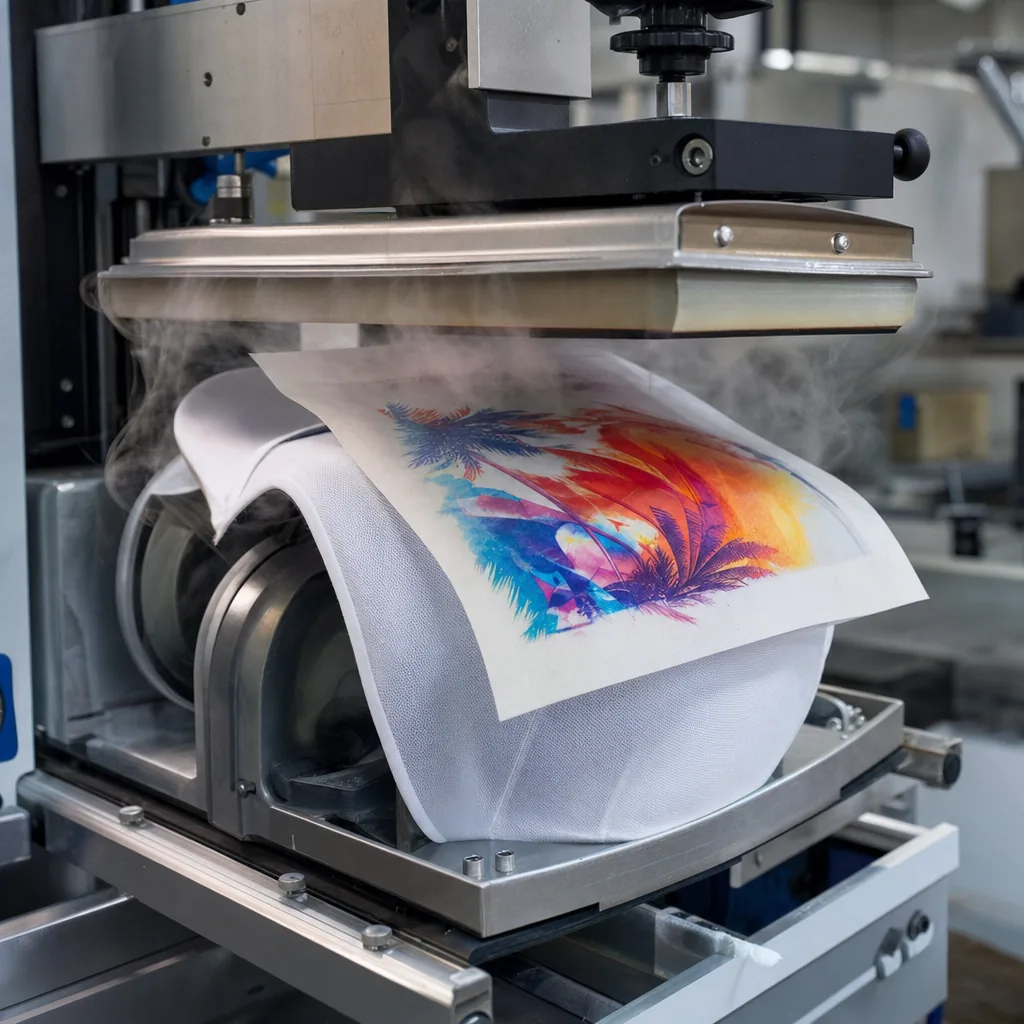
For brand owners, wholesalers and procurement teams entering the custom headwear category, customizing blank fitted caps: new era 59fifty, otto, imperial buyer's guide (2026 update) is one of the highest-leverage decisions you will make. Get it right and your unit economics, retail story and reorder cycle all improve. Get it wrong and you carry the cost for years.
Why brands ask about 'custom New Era' (and what they actually need)
When buyers ask for custom new era hats, they are usually naming a silhouette and quality benchmark, not requesting a trademark license. In factory terms, they want a high-profile fitted with a rigid front, clean crown geometry, and a flat visor that can still be hand-curved at retail without cracking the board. That means 6-panel construction, hard buckram on the two front panels, taped interior seams, and shell fabrics that can hold shape after embroidery and 30 to 45 days in a master carton. The usual starting point is 280 to 320 gsm wool serge, melton wool, or a 65/35 poly-wool blend, with size grading across 6 7/8 to 7 5/8 that does not distort the side profile. Buyers also expect embroidery to stay stable at roughly 6,000 to 12,000 stitches on a Tajima or Barudan head, with no obvious tunneling, flagging, or puckering around the logo field. What they actually need is a measurable spec, because “looks like a 59FIFTY” is not a production standard. The useful questions are crown height in millimeters, visor board thickness, front-panel stiffness, sweatband composition, seam allowance tolerance, undervisor color, and thread specification such as Madeira or Gunold 40 wt polyester. Color control should be tied to Pantone TCX or C references with an acceptable Delta-E of 1.5 to 2.0 under D65 lighting, especially on black, navy, and team colors where shade drift is obvious. If the cap has metallic thread, 3D puff, or satin seam tape, that should be called out up front because each one changes run speed, rejection risk, and unit cost.
The sourcing path usually splits in two, and mixing them up causes expensive mistakes. One option is decorating genuine blanks bought through authorized channels; in that case, the cap remains branded product and you may be restricted on relabeling, inside taping, stickers, carton markings, or hangtags. The second option is OEM development: same fitted architecture, your own labels and trims, your own grading, and no claim that the cap is branded product. Most independent brands move to OEM once they are ordering roughly 300 to 1,200 pieces per colorway, because the cost structure changes quickly. Decorated authentic blanks can land at $18 to $28 per unit before domestic pick-pack, while a retail-grade OEM fitted is more often $6.50 to $11.50 FOB China depending on fabric, stitch count, visor details, woven labels, and finishing. The legal line is simple: silhouette equivalence is not trademark equivalence. A factory can build a closed-back fitted with a similar on-head feel, but it cannot be sold as branded product unless the blanks are genuine and the decoration sits inside the brand’s approval framework. That matters even more for licensed sports, college, and music merchandise, where approvals may extend to logo placement, carton labeling, country-of-origin marking, and trim usage. For everyone else, the real procurement question is narrower: do you need the trademark, or do you need a retail-grade fitted cap that performs like one? Fitted caps are unforgiving; a 2 to 3 mm panel mismatch, uneven seam allowance, or poor blocking will show immediately, especially above size 7 1/2. At CrownsForge, fitted QC is usually done by size set with crown symmetry checks after embroidery and final inspection to AQL 2.5, because shape failure shows up long before a seam actually breaks.
Blank-cap brands and their positioning
New Era sits at the top of the blank-cap stack because the value is in the block, the trademark, and the retail signal, not the raw sewing cost. For buyers sourcing custom new era hats, the 59FIFTY is the reference silhouette: high-profile fitted crown, firm full buckram on the front, closed back sizing, and a visor board that usually holds shape through steaming, heavy embroidery, and export carton pressure better than cheaper blanks. In U.S. wholesale channels, a blank 59FIFTY often lands around $12 to $18 before decoration, versus roughly $6 to $10 for a comparable structured Otto profile, and the size curve is tighter because inventory sits in core fitted breaks such as 6 7/8 through 7 5/8. The other practical issue is placement control. Front-center embroidery is straightforward, but side, rear, and undervisor layouts can be restricted by model, program, or licensing channel, which matters if you are building league-style artwork maps or sponsor packages where logo geography is part of the spec.
Otto wins the middle of the market because it leaves room for decoration margin without looking cheap from six feet away. Most of the volume styles are cotton twill or poly-cotton structured caps with acceptable buckram stiffness, standard visor board, and broad stock depth in team and promo colors. In real buying terms, Otto often comes in 30% to 50% below premium branded blanks, which is why it dominates fundraisers, contractor uniforms, school spirit programs, and fast-turn e-commerce drops. The compromise is consistency: visor density, sweatband handfeel, seam tension, and dye-lot matching can move more from lot to lot, so we normally check crown height, panel symmetry, and strike-off registration before bulk runs, especially for 3D puff or satin-fill logos over 8,000 stitches.
Imperial, Branded Bills, and Melin should not be lumped together with fitted heritage caps because they sell on category fit and material story first. Imperial is strongest in golf and resort programs, especially rope caps, lightweight performance poly, and soft unstructured profiles where a 110 to 140 gsm shell, laser-perforated side panels, or polyester-spandex stretch matters more than a classic fitted crown. Melin plays further upmarket with bonded constructions, hydrophobic outer fabrics, antimicrobial moisture-management liners, and retail prices that commonly clear $75; Branded Bills sits between those poles with a cleaner outdoor-retail presentation. Decoration gets narrower as the material package gets more technical. Laminated panels can show needle marks, seam-sealed areas do not like dense fills, and heat-applied embellishment has to respect bonding films and panel memory. If the brief calls for custom new era hats, the buyer is paying for sportswear authenticity and recognized brand equity; if they choose Imperial or Melin, they are prioritizing performance fabric, leisure identity, and comfort on head over fitted-cap heritage.
Path 1: Buying blanks from these brands for in-house embellishment
Treat branded blanks as finished-goods inputs, not cheap shells waiting for decoration. In current U.S. wholesale channels, blank fitted caps usually land around $18-$28 for New Era 59FIFTY, $4-$10 for Otto, and $9-$18 for Imperial, with real variance driven by account tier, color allocation, and whether you are buying full cartons through S&S, SanMar, or alphabroder. Decoration closes that gap fast. A front logo at 8,000-12,000 stitches on a structured crown typically adds $2.25-$4.50 at domestic shop rates; add a side hit, rear arch, woven label, or inside seam tape and conversion cost can reach $6-$9 per cap before inbound freight, spoilage, and operator rework. If you are building a retail program around custom new era hats, fully burdened unit cost is the only number worth trusting, because a 59FIFTY blank leaves very little room for bad estimates, markdowns, or distributor margin.
New Era also punishes sloppy embroidery more than most buyers expect. The 59FIFTY’s stiff buckram, pronounced crown taper, and center seam expose weak digitizing immediately; a file that runs acceptably on a softer promo blank can still fail on Tajima, Barudan, or ZSK cap frames with flagging, seam strike, and fill distortion. Dense satin borders crossing the seam are where many custom new era hats start looking amateur, so underlay, push-pull compensation, density, and cap-driver sequence need to be tuned to that profile rather than copied from a generic 6-panel file. Inventory is usually a bigger constraint than price. Core sizes like 7, 7 1/8, and 7 1/4 turn faster than extended sizes, and core colors can disappear around league launches or seasonal allocations. By contrast, Otto and Imperial leave more room for decoration economics: Otto works when speed and price discipline matter, while Imperial is stronger for golf, resort, and corporate programs where washed cotton twill, performance poly, or heather jersey sell on hand feel instead of MLB-style authenticity.
Quality spread between brands shows up in measurable ways: seam straightness, visor board stiffness, sweatband absorbency, crown height tolerance, and shade continuity between lots. Reorders placed six months apart may come from different factories or mills, which is where programs drift if nobody locked the baseline. The practical control point is a pre-production sample with documented fabric content, crown profile, visor spec, and nearest Pantone TCX reference, then finished-goods inspection to AQL 2.5. For embroidery-heavy runs, approve a strike-off against the actual blank color, not a digital mockup; navy thread on a navy crown can look visibly off if the lot shifts beyond roughly Delta-E 1.5-2.0. Otto and Imperial usually offer better margin tolerance, but they also demand tighter lot control if you want reorder consistency that does not unravel after the first successful drop.
Path 2: Equivalent OEM manufacturing
If you are sourcing custom new era hats in meaningful volume, equivalent OEM manufacturing is usually the rational path: you are buying silhouette, hand feel, and fit consistency, not paying a licensed-brand markup for a sticker and trademark. The benchmark for a 59FIFTY-style fitted is straightforward but unforgiving: 6-panel high-profile crown, fused buckram on the front two panels, flat visor with PE insert, taped internal seams, and a sweatband that recovers after carton compression. At 300-1,000 pcs, a realistic FOB China range is $4.60-$8.40 for a fitted or snapback built in 280-320 gsm acrylic-wool, wool blend, or heavy brushed cotton twill, assuming 6,000-15,000 stitches on front plus standard back hit, woven loop label, and size run packing. Add $0.18-$0.45 for metallic thread, rope trim, contrast undervisor, or printed seam tape; add more if you need genuine melton wool, moisture-wicking sweatband fabric, or multi-location embroidery. The cap either feels right in hand or it does not, and that comes down to engineering tolerances more than artwork. On a fitted program, I want crown height held within ±3 mm, visor length within ±2 mm, left-right panel symmetry within 2 mm, and sweatband joining with no torque after 24 hours in a master carton. Cheap factories miss the front-panel mold: the crown collapses, the embroidery tunnels, and the profile photographs flat on shelf. Good factories run samples through proper blocking, use stable visor boards that do not ripple at 45-50°C container heat, and spec snap closures in virgin-grade plastic rather than brittle regrind. If you are matching premium retail expectations, the difference between acceptable and cheap is usually hidden in buckram stiffness, seam allowance discipline, and whether the cap still holds its line after transit from Yiwu to a U.S. 3PL.
Buyers get burned when they treat blank fitted caps as interchangeable commodities. They are not. Sweatband width, stitch density at the visor seam, seam tape gsm, and even the denier of top button wrap all change how the cap sits on-head and how cleanly it recovers after stacking. A promo-grade Otto-style blank can tolerate looser specs; a team, streetwear, or private-label retail program cannot. For embroidery, I would only approve bulk on Tajima, Barudan, or ZSK heads with a digitized file built for the actual crown curve, especially on 3D puff where foam exposure, satin spread, and underlay tension can ruin a front logo. Thread and fabric approvals should be checked to Pantone TCX references, with lab dips and thread cards kept below Delta-E 2.0 if you expect repeat orders to match. Control comes from locking the sample, not arguing after production. Our standard practice is to freeze a signed golden sample, then run pre-production and inline checks against it for panel alignment, logo placement, visor shape, stitch skips, puckering, and size-set accuracy. Final inspection at AQL 2.5 is the minimum sensible standard for this category; for licensed-adjacent programs, many buyers tighten critical appearance points even further. Expect a normal timeline of 7-10 days for development, 3-5 days for revisions, and 25-35 days for bulk after approvals, plus freight. If your goal is margin, repeatability, and freedom to tune every detail—from undervisor color to interior taping—equivalent OEM manufacturing is usually the better business decision than buying true branded inventory.
MOQ and timing differences between the two paths
Blank fitted-cap programs are fast only when the distributor already holds the exact SKU and size curve. With 59FIFTY blanks, MOQ is rarely a clean "12 pieces" decision because fitted inventory is broken by size: you may find 7 1/4, 7 3/8, and 7 1/2 available, while 6 7/8 or 7 5/8 is backordered for weeks. In practice, U.S. decorators usually sell by inner pack or case, but buyers still end up building fragmented assortments such as 12 units per size per color, not 12 units total. If stock is live, embroidery and outbound shipping can happen in 3 to 7 business days; if the colorway is constrained, replenishment on branded blanks commonly slips to 3 to 5 weeks, and no factory efficiency fixes that because the choke point is distributor inventory. That makes blanks the right tool for pilot drops, one-off events, and test orders under roughly 96 to 144 pieces, where a higher landed cost is still cheaper than opening development, sampling, and bulk production. The catch is that decorated blanks get expensive faster than many buyers expect, especially on custom new era hats with multi-point branding. A stocked blank can start around $14 to $22 before decoration, then side embroidery, rear hit, size-sticker change, custom polybag, relabeling, and mixed-carton packing can add another $2 to $6 per cap before domestic freight. You are also locked into the original crown profile, visor shape, buckram stiffness, and sweatband specification, so the "custom" part is mostly surface branding, not the build itself.
OEM starts slower but becomes more rational once size continuity, margin, and repeatability matter. For a fitted-cap factory, realistic MOQs are 144 to 300 pieces per colorway on a standard body, then 300 to 600 pieces when you spread units across a full run from 6 7/8 through 7 5/8 and need matching shell fabric, buckram, undervisor, and sweatband across all sizes. A pre-production sample usually takes 7 to 10 days; bulk production runs 25 to 35 days after approval; add 3 to 7 more days for printed seam tape, woven flag labels, or dense embroidery on Tajima, Barudan, or ZSK heads. The cost crossover typically appears around 200 to 300 pieces: a properly specified OEM fitted cap in 100% polyester or 80/20 wool blend often lands at $6.50 to $11.50 ex-factory, depending on stitch count, fabric weight, closure-free size assortment, packaging, and AQL 2.5 inspection. OEM also gives the controls that blank programs cannot. You can lock shell and undervisor colors to Pantone TCX targets, hold embroidery placement to a 2 to 3 mm tolerance, choose sweatband composition and hand feel, and set carton ratios by size instead of accepting whatever the distributor has left. That matters if the hat needs a licensed look, a streetwear-specific silhouette, or stable fit across reorders. CrownsForge's standard practice is straightforward: use blanks when same-week delivery is the priority and stock risk is acceptable; use OEM when the job requires repeatable sizing, cleaner margins, and fewer surprises on replenishment.
When to choose which path
Choose blank-cap decoration when speed, trademarked silhouette, and low MOQ outweigh material control. If the brief specifically calls for custom new era hats, you are paying for a fixed 59FIFTY block, branded trims, and retail recognition that consumers already understand. That makes sense for launches tied to events, team drops, or influencer merch where 24 to 48 pieces per colorway can move through embroidery and ship in roughly 7 to 21 days, depending on the queue and whether you are running flat stitch, 3D puff, woven patch application, or inside heat-transfer labels. What you are not buying is engineering freedom. On stocked blanks, the crown height, buckram stiffness, visor board thickness, seam tape program, shell fabric weight, and sweatband construction are already locked by the brand spec. That limitation matters more than many buyers expect. If you need to control hand feel, shrinkage, crocking, or exact color harmony across shell, undervisor, button, and embroidery thread, licensed blanks become restrictive fast. You may get close on thread matching, but you are still decorating on a preselected fabric lot with its own dye history and finish. In practice, blanks are the right tool when the logo carries the value and the cap body just needs to be authentic, consistent, and available now. They are the wrong tool when your tech pack includes Pantone TCX targets, wash-performance requirements, or specific fit notes that would normally be signed off with a pre-production sample.
Use OEM when the cap itself is part of the brand proposition and not just a vehicle for decoration. Once volumes reach roughly 1,200 to 2,000 units per style, the economics usually favor development because returns, markdowns, and inconsistent fit cost more than sampling. A proper spec pack should define fabric by weight and construction—say 180 to 220 gsm cotton twill or 300D performance polyester—along with crown depth, panel shape, seam allowance tolerance of about plus or minus 2 mm, seven-row visor stitching, a 3.0 mm PE visor board, undervisor color, sweatband composition, and acceptable color variance, typically within Delta-E 1.5 to 2.0 against the approved standard. That is how you control repeatability instead of hoping a blank program happens to line up with your brand story. Execution also separates serious OEM from casual private labeling. A capable factory should hold embroidery registration consistently across Tajima, Barudan, or ZSK heads, build against an approved fit block, and pass final inspection at AQL 2.5 without excessive loose threads, panel twist, or mismatched top buttons. CrownsForge treats the decision pretty bluntly: if you need 48 fitted caps next week, decorate blanks; if you need 2,000 units with custom fit, woven labels, barcode stickers, size-set carton packing, and FOB or DDP routing, develop OEM. Trying to force blank programs to deliver full customization usually burns margin twice—first in compromise, then again in rework.
Decoration restrictions and licensing implications
Owning the blank does not grant trademark rights. For custom new era hats, the legal line is simple: you may possess authentic inventory yet still have no permission to use “New Era,” the Flag logo, “59FIFTY,” or any confusingly similar wording in PDP copy, Amazon title fields, Meta ads, TikTok Shop listings, carton labels, or private hangtags without written authorization. Enforcement usually hits the listing before it hits the warehouse; marketplaces can suppress ASINs or freeze ad spend the same day if branded language suggests an unauthorized relationship. The safer listing practice is to stick to measurable construction facts only: fitted 6-panel crown, full buckram front, flat visor, 83/17 acrylic-wool shell, sewn eyelets, taped seams, and exact size run such as 6 7/8 to 8. Keep chain-of-custody records tied to each SKU: distributor invoice, purchase order, lot photos, carton labels, and any approval email that defines resale language. If counsel ever has to defend a takedown, that paperwork matters more than whatever the factory packed.
Decoration creates a second risk layer because relabeling can change how the cap is represented at retail. Tag-out is common, but on wool-blend serge or polyester sweatbands, seam ripping often leaves needle scars visible under 6500K QC lighting, especially on black, navy, and dark heather bodies. A 50D damask woven label typically costs $0.18 to $0.42 per piece at 500 to 1,000 units, and resewing near the rear seam or seam tape adds another $0.08 to $0.15; heat-transfer size marks are cheaper, but crocking and edge lift become issues after wear testing. Our standard practice is to sample relabeling on every colorway, because high-density buckram, contrast undervisors, and self-fabric sweatbands expose rework fast. Inspect relabeling as its own checkpoint at AQL 2.5, not buried inside embroidery QC. On decorated fitteds, the rejects I see most are crooked replacement labels, exposed stitch holes above 1.5 mm, and distorted sweatbands that fail retail presentation long before anyone argues trademark law.
The risk compounds when one program mixes blanks and rights holders. A drop might combine Otto promotional caps, Imperial structured fitted styles, and New Era silhouettes, but each supplier can impose different reseller terms, label-removal rules, and restrictions on post-production presentation. Do not assume one approval covers all SKUs. Build a SKU-level matrix showing source vendor, original item code, country-of-origin labeling, decoration method, relabel operation, and final sales channel; that is the only clean way to separate what was lawfully purchased from what is lawfully marketed. The second check buyers routinely miss is that decoration rights are independent of blank rights. Even if the base cap was acquired correctly, you still need permission for any protected team insignia, league side patch, artist mark, collegiate logo, or recognizable trade dress applied on top. If the program is audit-heavy, document every relabel and trim swap as a separate operation, then hold pre-shipment photos and inspection records with the embroidery sew-out, Pantone match notes, and final carton packout.
Working with CrownsForge on either path
Buyer-supplied blanks are the least disruptive route when the shell itself is non-negotiable—licensed New Era trims, exact 59FIFTY crown geometry, retailer-approved ticketing, or an existing U.S. inventory position you need decorated without rebuilding the cap. The workflow has to be tighter than standard factory stock: carton-by-carton count against the packing list, 100% incoming QC for crush marks, seam grin, visor wave, sweatband contamination, and size-set verification before any hooping. We also run a strike-off on the actual cap body, not a fabric swatch, because buckram stiffness, crown angle, and seam placement change how a file sews on structured fitteds. On buyer-owned goods, one damaged shell can cost more than the decoration margin on the entire order, so controls like needle logs, broken-needle traceability, shade segregation by carton, and final inspection to AQL 2.5 are standard, not optional. The commercial drawback is simple arithmetic: once a genuine blank is bought at U.S. domestic pricing, forwarded to China, export-cleared, and moved again by courier or air, the landed blank can easily outrun the ex-works cost of a fully made private-label fitted before embroidery even starts.
If the target look is custom new era hats, the smarter question is usually not branding language but measurable construction. A credible equivalent starts with the right build spec: 80/20 acrylic-wool at roughly 285-310 gsm or melton wool around 360-380 gsm, hard buckram front panels, six-row visor stitching, PE visor board in the 1.6-1.8 mm range, sweatband weight around 180-220 gsm, and stitch density near 12-14 stitches per cm on structural seams. At 300-1,000 units, a structured fitted with 3D front embroidery typically lands around $3.20-$5.80 ex-works depending on fabric, stitch count, patch type, and packaging; molded TPU, printed satin taping, metal eyelets, or premium woven labels will push that upward. Embroidery also has to be digitized for cap geometry, not flat goods—underlay, pull compensation, and column direction are adjusted for curved seams and hard buckram, then run on Tajima, Barudan, or ZSK heads with thread matched to Pantone TCX within a commercially realistic Delta-E tolerance. Our standard practice at CrownsForge is to quote both paths side by side—blank cost, decoration minutes, packaging spec, carton ratios, and FOB versus DDP assumptions—because the right decision usually shows up immediately once landed cost and risk are on the same sheet.
Frequently Asked Questions
What logo decoration techniques do you offer?
3D puff embroidery, flat embroidery, woven patch, leather patch, PVC patch, screen printing, sublimation, applique and laser etching, all in-house with no subcontracting.
Do you support sustainability certifications?
Yes. We work with GOTS organic cotton, GRS-certified recycled polyester, OEKO-TEX Standard 100 fabrics, and are BSCI and Sedex audited. Certification documentation can be provided per order.
What is the minimum order quantity (MOQ) for custom hats?
Our standard MOQ is 100 pieces per design and color, with sampling available from 1 piece. For complex multi-color logos or premium fabric upgrades, the MOQ can be lowered with a small per-piece surcharge.
How long does production take?
Sampling takes 7 to 12 days. Bulk production runs 20 to 30 days depending on quantity, fabric availability and decoration complexity. Inspection and packing adds another 3 to 5 days before shipment.
Can I order a sample before bulk production?
Yes. We strongly recommend approving a pre-production sample before mass production. Samples are charged at 35 to 60 USD each plus express shipping, fully refundable against confirmed bulk orders over 500 pieces.
What should I know about new era blank hats wholesale?
When evaluating new era blank hats wholesale, the key considerations are construction quality, decoration capability, MOQ flexibility and lead time. Most blank-cap brands sell to authorized distributors (SanMar, S&S Activewear, Alphabroder) at wholesale prices that build in their brand margin. Cost per blank cap: New Era $18-$28, Otto $4-$10, Imperial $9-$18, Branded Bills $25-$40, Melin $35-$55. Plus your decoration cost. Plus your margin for retail. Most searches for 'custom New Era hats' come from brand owners who…
What should buyers know about new era 9fifty snapback?
When evaluating new era 9fifty snapback, the key considerations are construction quality, decoration capability, MOQ flexibility and lead time. Most searches for 'custom New Era hats' come from brand owners who want the New Era silhouette and quality — premium 59FIFTY fitted construction, 9FIFTY structured snapback — without necessarily needing the New Era licensed brand. There are two viable paths: (1) buy New Era blanks and customize them, or (2) commission equivalent silhouettes from an OEM manufacturer at lower…
What's the MOQ for custom hat embroidery no minimum?
When evaluating custom hat embroidery no minimum, the key considerations are construction quality, decoration capability, MOQ flexibility and lead time. We produce silhouette equivalents — 59FIFTY-style fitted, 9FIFTY-style structured snapback, Imperial-style rope hat, Otto-style mid-tier promotional — at $4-$8 per piece including decoration. Same construction quality (we run Tajima embroidery, full buckram structure, retail-grade wool blend), at a fraction of the licensed-brand cost. Most searches for 'custom New Era hats'…
How does ordering custom embroidered hats new era work?
When evaluating custom embroidered hats new era, the key considerations are construction quality, decoration capability, MOQ flexibility and lead time. Most searches for 'custom New Era hats' come from brand owners who want the New Era silhouette and quality — premium 59FIFTY fitted construction, 9FIFTY structured snapback — without necessarily needing the New Era licensed brand. There are two viable paths: (1) buy New Era blanks and customize them, or (2) commission equivalent silhouettes from an OEM manufacturer at lower…
Ready to start your custom hat project?
Send us your tech-pack, sketch or even just an inspiration photo. We will respond with a detailed quotation and digital mock-up within 24 hours.
Request a free quoteRelated guides
Sports Team Caps & Uniform Headwear: Bulk Manufacturing for Clubs and Schools
Read article →
Buckram vs Foam vs Unstructured: Cap Crown Construction Compared
Read article →Custom Trucker Hats: The 2026 Sourcing & Manufacturing Playbook
Read article →We hope this guide demystifies customizing blank fitted caps: new era 59fifty, otto, imperial buyer's guide (2026 update) and helps you move forward with confidence. If you have questions specific to your project, our English-speaking sales engineers are one message away.