
Baseball Hats Custom: A Vertical-Specific Sourcing Guide
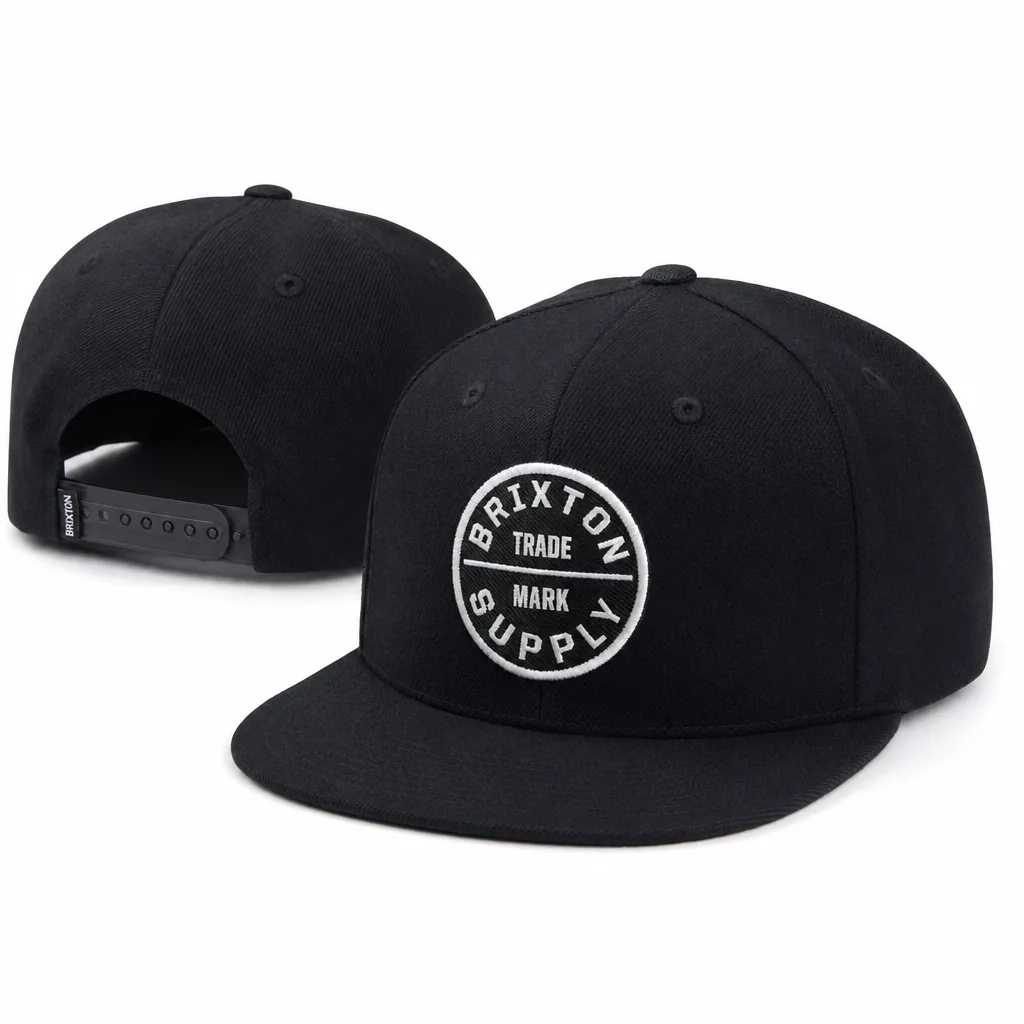
Every week, our sales team answers detailed questions about baseball hats custom: a vertical-specific sourcing guide. We wrote this guide so that wholesalers, streetwear brands, corporate buyers and promotional resellers can compare options with full information, and avoid the traps that show up only after production has started.
Fitted Hats Custom
Fitted hats custom are usually built on a structured crown, six-panel or sometimes seven-panel, with no adjuster, so the entire fit lives or dies on pattern accuracy. If you are sourcing baseball hats custom for a retail line, ask for the exact block size in inches or centimeters, not just “small/medium/large.” For fitted hats 59fifty-style profiles, the factory should confirm crown height, visor curve, front panel buckram stiffness, and sweatband width before sample cutting. The better factories will specify shell fabric by composition and weight, such as 100% wool blend at 280–320 gsm or cotton twill at 240–260 gsm, plus embroidery file format, stitch count, and thread brand. On real production floors, the difference between a clean fit and a return problem is often a half-size error in the internal circumference or inconsistent steaming during blocking.
For specs, demand a tech pack with panel dimensions, seam allowance, visor sandwich details, eyelet count, and closure method if you are doing a hybrid fitted/adjustable style. Confirm embroidery placement in millimeters, Pantone TCX thread targets, and acceptable Delta-E, because cap brands get burned by color drift more often than by sewing defects. Typical MOQ for fitted hats custom is 300 to 500 pieces per colorway and size run, though many factories will quote 100 to 200 for development samples at a higher unit cost. At factory level, you may see FOB pricing around USD 4.80 to 8.50 for simple twill caps and USD 7.50 to 12.00 for heavier wool blends, 3D embroidery, and custom taping; domestic DDP numbers can land much higher once duties and last-mile fees are included. CrownsForge’s standard practice is to lock fit samples first, then approve bulk after a preproduction size set and a wash/steam test, because fitted hats do not forgive sloppy grading.
The common failures are visible if you know where to look: uneven crown symmetry, visor misalignment, puckering around raised embroidery, sweatband twisting, and size drift after steam shaping. Check for AQL 2.5 at minimum, but I would push a tighter visual standard on front panels and embroidery edges because those are what buyers notice on shelf and in photos. For baseball hats vintage or distressed programs, inspect abrasion consistency and color loss pattern, since over-bleaching can weaken the crown seam and make the cap collapse after a few wears. If your line also includes baseball hats for men or even adjacent SKUs like designer bucket hats, keep the sourcing decision tied to use case: fitted caps need tighter size control and more rigorous blocking, while fashion headwear can tolerate more visual variation. The practical rule is simple: if the customer is paying for a precise fit, you need a factory that treats circumference, crown shape, and finish consistency as controlled dimensions, not as “close enough.”
Fitted Hats 59fifty
Fitted hats 59Fifty are not just “closed-back caps” with a nicer name; the whole product is built around a fixed crown, a precise internal tape layout, and size grading that has to stay consistent across dozens of production steps. For baseball hats custom programs, the first thing to lock is the block shape: crown height, front panel stiffness, visor curve, and whether the shell is structured with buckram or a lower-compression fuse. A true 59Fifty-style build usually uses a six-panel crown, a hard buckram front, and a matching sweatband width that doesn’t twist after washing or heat pressing. If a factory cannot tell you the exact crown depth in millimeters, the visor board thickness, and the seam allowance spec, they are guessing.
When sourcing fitted hats custom, ask for a full tech pack with head circumference grading, panel patterns, stitch density, embroidery placement, and material callouts by GSM and denier. Typical shell fabrics are 100% cotton twill around 250-280 gsm or polyester wool-look blends, depending on whether you want a cleaner streetwear handfeel or a more heritage baseball hats vintage look. For MOQ, a serious factory usually wants 300-500 pcs per colorway for a standard fitted build, with sample development costing about USD 50-120 per style and bulk pricing often landing around USD 4.50-8.50 FOB depending on embroidery complexity, private labeling, and whether you require custom sizing sets. If you want multiple head sizes, the price rises because every size needs its own cutting and fit verification, which is why fitted hats 59fifty programs are less forgiving than strapback or snapback orders.
The quality checks that matter are very specific: symmetry of the front panels, visor sandwich alignment, underbrim color consistency, sweatband stitching straightness, and size tolerance within plus/minus 1/8 inch on the internal circumference. I also inspect embroidery pull, especially on high-density logos, because over-digitized satin stitches can pucker the crown and distort the profile after steaming. For a broader baseball hats custom decision, fitted hats are the hardest to execute cleanly but they often give the best retail perception if you are targeting baseball hats for men, premium teamwear, or streetwear drops; if your brand wants lighter fashion positioning, baseball hats vintage or even designer bucket hats may be easier to sell with less fit risk. Our standard practice is AQL 2.5 on final inspection, with extra checks on color matching to Pantone TCX and seam recovery after steam pressing, because once a fitted cap is out of spec, there is no adjustment like there is on an adjustable closure.
Baseball Hats Vintage
Vintage baseball hats are not “old-looking” by accident; the factory has to build that effect into the spec. For baseball hats vintage, ask for washed cotton twill or garment-dyed chino, usually 260–340 gsm, with a low-profile 6-panel crown, soft buckram or no buckram, and a pre-curved visor with contrast sandwich if you want a retro retail feel. The key request is the aging method: enzyme wash, bio-wash, garment wash, or pigment-dye with controlled shade variation. If you want true vintage character, specify Pantone TCX on the base cloth before wash and allow a Delta-E window after washing, because post-wash color drift is normal. On the trim side, request matte thread, washed brass or antique silver buckle, and sweatband fabric that does not look glossy or “new.”
For sourcing, the factory spec sheet matters more than the sales sample. Good buyers ask for crown height in millimeters, visor length, stitch density, panel seam tolerance, embroidery density in stitches per square centimeter, and labeling details for a tear-away or woven size label. If you are comparing baseball hats custom programs, vintage styles usually sit closer to fashion caps than performance caps, so MOQ is often 300–500 pieces per colorway, sometimes 1,000 if you need custom wash effects or special dye lots. Typical ex-factory pricing in Yiwu is about $2.20–$4.80 for basic washed cotton, $4.80–$7.50 for heavier fabric with custom applique or patchwork, and more if you add chain stitch, aged hardware, or specialty finishing. Fitted hats custom and fitted hats 59fifty usually cost more because of size runs, structured construction, and tighter tolerances, while baseball hats for men in standard adjustable formats are easier to control on cost.
The main defects are easy to miss if you only approve a top-view photo. Check for uneven wash shade across panels, puckering around embroidery, crooked center seams, visor edge warp, and sweatband shrinkage after wash, because those problems show up after packing, not on the sewing line. Ask for AQL 2.5 inspection with special attention to size consistency, colorfastness, and metal parts corrosion if the hat uses a buckle or clasp. If you are comparing these against designer bucket hats or other fashion headwear, the lesson is the same: the more “casual” the look, the more precise the process control has to be, especially on fabric lot consistency and wash repeatability. In practice, baseball hats vintage work best when you define the aging effect exactly and lock the construction spec before production starts, instead of treating vintage as a loose aesthetic.
Baseball Hats for Men
Baseball hats for men are usually built on three main constructions: structured six-panel, unstructured six-panel, and 5-panel low-profile. If you are sourcing baseball hats custom, the real decision starts with the crown shape, brim board, and closure system, not the logo. A clean adult men’s fit typically uses cotton twill, brushed chino, acrylic-wool blends, or polyester for performance styles, with 280–320 gsm fabric on casual caps and 360–420 gsm on premium structured models. For a fitted look, ask for fitted hats custom with exact head circumference grading in 1 cm increments, or specify fitted hats 59fifty-style sizing if you want a rigid profile and a flat visor. On the floor, the quality difference shows up in stitch density, panel alignment, and how well the sweatband sits after steaming and cooling.
When buyers ask for specs, I tell them to lock down crown height, visor curve, buckram stiffness, embroidery size, seam tape, sweatband material, and closure hardware before sampling. A normal production spec sheet should call out Pantone TCX or Pantone C colors for panels and thread, 3 mm topstitch spacing, 6 rows of visor stitching, and embroidery registration tolerance within 0.5–1.0 mm. Typical MOQ for baseball hats custom is 300–500 pieces per colorway for standard styles, while complex fitted hats custom or washed baseball hats vintage treatments can push that to 1,000 pieces if there are multiple sizes. Factory pricing in China is usually around $2.20–$4.50 FOB for basic cotton twill caps, $4.80–$7.50 for structured embroidered styles, and $6.50–$10.00 for premium wool-blend or high-detail builds, depending on logo complexity and packing.
The defects that matter are boring but expensive: crooked front panels, off-center embroidery, broken back buckram, weak visor curve memory, loose thread tails, and inconsistent size grading across a carton. For men’s market caps, I also inspect sweatband stitch tension, because a bad band will twist after one wash and the cap sits wrong on the head. If you are comparing baseball hats for men against other categories like designer bucket hats, the sourcing logic changes: baseball caps need consistent crown geometry and repeatable fit, while buckets are more sensitive to brim drape and fabric handfeel. Our standard practice is AQL 2.5 for general inspection, with special checks for needle marks, color variance under D65 light, and shrinkage after steaming. That is what separates a usable bulk run from product that comes back as returns.
Designer Bucket Hats
Designer bucket hats are usually simpler than baseball hats custom on paper, but the spec sheet is where buyers either save money or create a mess. A proper factory build starts with body fabric choice — 100% cotton twill at 260-320 gsm for a cleaner streetwear handfeel, nylon taslan at 105-120 gsm for lightweight packable use, or washed canvas if you want a more rugged look. Ask for crown depth, brim width, stitch count on the brim, seam allowance, lining yes/no, and whether the sweatband is self-fabric, cotton twill, or a polyester/cotton tape. If you want designer bucket hats with a premium finish, request color matching to Pantone TCX, embroidery placement files in DST, and a seam-to-seam tolerance of ±0.5 cm. Cheap factories often skip interfacing or use soft brim inserts that collapse after one wash; that is the first thing I check on the production floor.
MOQ and pricing depend on decoration and fabric complexity more than the silhouette itself. For plain cotton designer bucket hats, 300-500 pcs per color is common; for custom print, patchwork, or washed treatments, 500-1,000 pcs is more realistic because the cutting loss and setup cost are higher. Factory ex-works pricing in China usually lands around $2.20-$4.80 for basic unbranded pieces, $4.50-$7.50 for heavier washed cotton or lined versions, and $7.00-$12.00 once you add embroidery, woven labels, custom sweatbands, or special trims. Buyers comparing fitted hats custom and fitted hats 59fifty against bucket hats should not assume the same cost structure — fitted caps have size runs, buckram, and structured panels, while bucket hats are more fabric-driven and easier to sample quickly. If a supplier quotes too low, they are usually hiding in the fabric weight, brim insert, or finishing quality.
Quality control on bucket hats is boring until it is not: check brim symmetry, stitch density, thread tension, crown height consistency, color shade variation, and laundering shrinkage. I would inspect at AQL 2.5 on a mixed lot, with special attention to off-grain cutting and twisted side seams, because those defects make the hat look cheap even when the embroidery is clean. If the style is meant to sit beside baseball hats vintage or baseball hats for men in a retail assortment, the finishing standard has to match — no loose topstitching, no puckered sweatband, no visible glue marks, and no misaligned labels. The broader sourcing decision is simple: bucket hats are the low-risk entry point for custom headwear, but if your sales channel also needs structured silhouettes, you should compare them against baseball hats custom in the same factory to see who can actually control pattern accuracy, decoration placement, and repeatability across reorders.
Custom Baseball Team Hats
Custom baseball team hats are usually built around a six-panel crown, structured buckram front, and a curved or pre-curved visor, then finished with team embroidery, woven labels, or heat-transfer graphics depending on the brand position. The real manufacturing difference is whether you want a full cut-and-sew build or a stock blank decorated at the factory. For baseball hats custom programs, I usually ask for crown height in millimeters, visor board thickness, stitch density per inch, panel fabric spec in gsm, sweatband material, and closure type before talking about price. If you need fitted hats custom or fitted hats 59fifty-style sizing, the factory must control grading tightly because a 1/8 inch error is very visible on headwear. When buyers compare baseball hats vintage aesthetics versus modern team caps, the sourcing logic changes too: vintage usually means softer cotton twill, lower crown, washed finish, and less rigid buckram, while team hats lean harder into consistency and logo placement.
For MOQ, a normal factory range is 300 to 500 pieces per colorway for a simple embroidered cap, but true custom development with new fabric, new brim mold, or a bespoke closure often starts at 1,000 pieces. FOB China pricing for a straightforward six-panel team cap generally lands around $3.20 to $6.80 depending on fabric, embroidery stitch count, and whether you use a woven back label or printed taping; heavy appliqué, 3D puff, or laser-cut patches push it higher. If you are cross-shopping baseball hats for men against designer bucket hats, do not compare only unit price, because the brim construction, washing process, and trim quality drive totally different costs. CrownsForge’s standard practice is to quote separately for sample fee, bulk unit price, and packing, because carton spec, polybag gauge, and barcode labeling can add $0.15 to $0.40 per piece before freight.
The biggest quality misses are obvious once you know where to look: crooked front embroidery, uneven panel matching, visor shape drift, weak topstitch tension, and sweatband puckering after steaming. I always inspect seam allowance consistency, color matching against Pantone TCX or actual lab-dip approval, and whether the logo lands symmetrically relative to the center seam rather than the side stitch. For team orders, ask the factory for pre-production samples, a size spec sheet, and in-line inspection at AQL 2.5 for major and minor defects; if the supplier cannot show a clear measurement tolerance, expect rework. This is the point where the broader baseball hats custom decision matters: if the market wants retail-ready consistency, you need a stable factory with bar-tack discipline, controlled moisture during storage, and real audit readiness such as sedex-audit-cap-supplier-guide.html">BSCI 2.0 or Sedex SMETA 4-Pillar.
Working with CrownsForge for baseball hats custom programs
For baseball hats custom programs, the first thing buyers usually get wrong is assuming sample approval is a formality. It is not. Our standard sampling window is 7 to 10 days for a true production-style proto, and 12 to 15 days if the spec includes heavy 3D puff, mixed fabrics, or a complex wash on baseball hats vintage. We keep MOQ flexible because first-time buyers do not always need 300 dozen on day one; for core six-panel constructions we can often start at 100 to 300 pieces per colorway, while fitted hats custom and fitted hats 59fifty-style builds usually need tighter size-run discipline and a bit more planning. If the buyer wants baseball hats for men with a specific crown height, visor curve, and closure type, we lock those details in the tech pack before cutting so the sample does not become a guessing game.
Decoration is where most hidden cost and quality drift happens, so we keep it in-house instead of handing it to a random subcontractor. Embroidery is run on Tajima, Barudan, and ZSK heads, which matters when you are chasing clean satin borders, sharp small lettering, or dense fill on heavier twill and brushed cotton. We also handle applique, woven labels, patch sewing, screen print, and heat transfer under one roof, which gives better control on thread tension, registration, and color matching to Pantone TCX; in practice, we target Delta-E under 2.0 on critical logo colors. For buyers comparing baseball hats custom against designer bucket hats or other headwear categories, the process is the same: tighter artwork control, fewer handoffs, fewer surprises, and a clearer cost ladder from sample to bulk.
On compliance, we do not treat paperwork as decoration. Our factory workflow is built around BSCI 2.0 and Sedex SMETA 4-Pillar expectations, with material traceability, needle control, and carton-level packing records so a buyer can audit the chain without chasing missing files. For bulk orders, we usually inspect to AQL 2.5 for major defects and 4.0 for minor defects, then separate size-run issues before shipment so bad ratios do not leave the dock. The order-management side is equally important: one salesperson, one merchandiser, one production file, and a weekly status update covering fabric inbound, embroidery approval, sewing output, and packing completion. That is how CrownsForge de-risks baseball hats custom sourcing for first-time buyers and scale-up brands alike, especially when the order mixes multiple silhouettes, from fitted hats 59fifty to curved-brim retail styles.
Frequently Asked Questions
How long does production take?
Sampling takes 7 to 12 days. Bulk production runs 20 to 30 days depending on quantity, fabric availability and decoration complexity. Inspection and packing adds another 3 to 5 days before shipment.
Do you support sustainability certifications?
Yes. We work with GOTS organic cotton, GRS-certified recycled polyester, OEKO-TEX Standard 100 fabrics, and are BSCI and Sedex audited. Certification documentation can be provided per order.
What is the minimum order quantity (MOQ) for custom hats?
Our standard MOQ is 100 pieces per design and color, with sampling available from 1 piece. For complex multi-color logos or premium fabric upgrades, the MOQ can be lowered with a small per-piece surcharge.
What logo decoration techniques do you offer?
3D puff embroidery, flat embroidery, woven patch, leather patch, PVC patch, screen printing, sublimation, applique and laser etching, all in-house with no subcontracting.
Can I order a sample before bulk production?
Yes. We strongly recommend approving a pre-production sample before mass production. Samples are charged at 35 to 60 USD each plus express shipping, fully refundable against confirmed bulk orders over 500 pieces.
How does ordering custom new era 59fifty fitted hats work?
When evaluating custom new era 59fifty fitted hats, the key considerations are construction quality, decoration capability, MOQ flexibility and lead time. Cover everything buyers ask about fitted hats 59fifty: how it's manufactured, what specs to request from a factory, typical MOQ and pricing, common quality issues to inspect for, and how this ties back to the broader baseball hats custom sourcing decision. Cover everything buyers ask about fitted hats custom: how it's manufactured, what specs to request from a factory,…
How does ordering custom baseball hats for men work?
When evaluating custom baseball hats for men, the key considerations are construction quality, decoration capability, MOQ flexibility and lead time. Cover everything buyers ask about baseball hats for men: how it's manufactured, what specs to request from a factory, typical MOQ and pricing, common quality issues to inspect for, and how this ties back to the broader baseball hats custom sourcing decision. Cover everything buyers ask about fitted hats custom: how it's manufactured, what specs to request from a factory,…
What should buyers know about nike bucket hats for men?
When evaluating nike bucket hats for men, the key considerations are construction quality, decoration capability, MOQ flexibility and lead time. Cover everything buyers ask about baseball hats for men: how it's manufactured, what specs to request from a factory, typical MOQ and pricing, common quality issues to inspect for, and how this ties back to the broader baseball hats custom sourcing decision. Cover everything buyers ask about designer bucket hats: how it's manufactured, what specs to request from a factory,…
What should buyers know about men's bucket hat designer?
When evaluating men's bucket hat designer, the key considerations are construction quality, decoration capability, MOQ flexibility and lead time. Cover everything buyers ask about designer bucket hats: how it's manufactured, what specs to request from a factory, typical MOQ and pricing, common quality issues to inspect for, and how this ties back to the broader baseball hats custom sourcing decision. Cover everything buyers ask about baseball hats for men: how it's manufactured, what specs to request from a factory,…
Ready to start your custom hat project?
Send us your tech-pack, sketch or even just an inspiration photo. We will respond with a detailed quotation and digital mock-up within 24 hours.
Request a free quoteRelated guides
Shipping Custom Hats from China: FOB, EXW, DDP & Incoterms Decoded
Read article →
Wholesale Trucker Hats with Custom Logo: A Complete Bulk Sourcing Playbook
Read article →
Launching a Hat Brand: Marketing Playbook for the First 12 Months
Read article →Sourcing custom hats does not have to be complicated. With the right manufacturing partner, clear specifications and a small upfront investment in sampling, you can launch a retail-quality product in 30 to 45 days.