
Sustainable Custom Hats: Eco-Friendly Materials, Recycled Fabrics & Certifications - Supplier Checklist
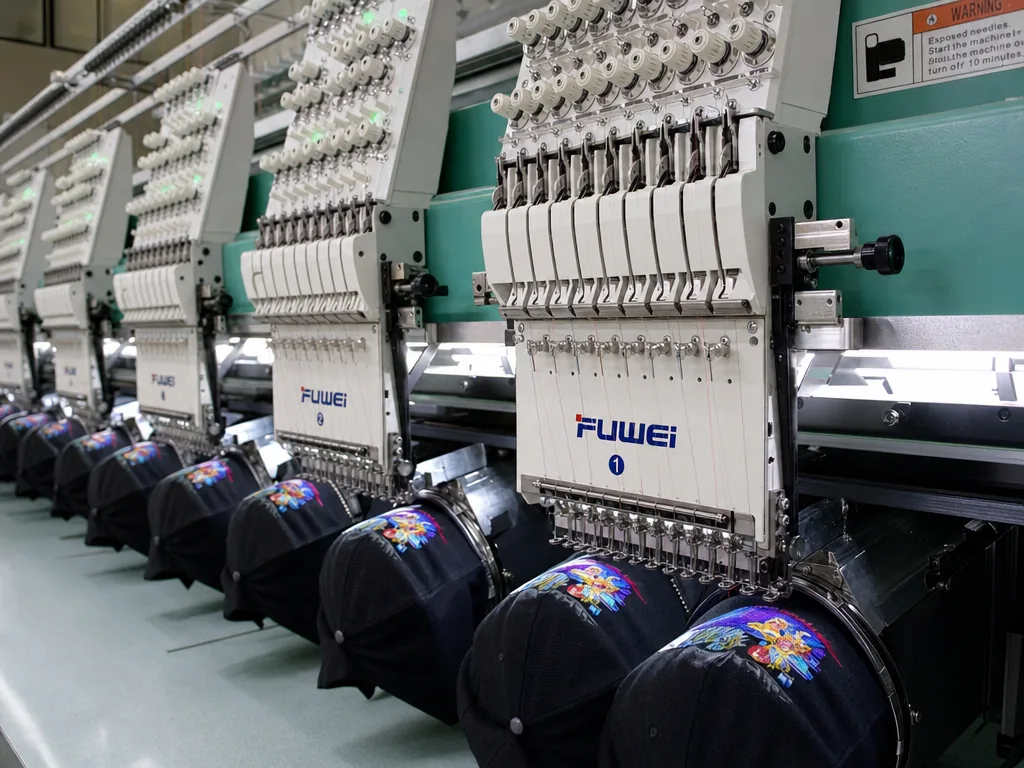
Every week, our sales team answers detailed questions about sustainable custom hats: eco-friendly materials, recycled fabrics & certifications - supplier checklist. We wrote this guide so that wholesalers, streetwear brands, corporate buyers and promotional resellers can compare options with full information, and avoid the traps that show up only after production has started.
Why sustainability matters in headwear
Sustainability in headwear is now a procurement gate, not a branding garnish. Retailers, sports licensors, and corporate buyers routinely ask for fiber origin, mill traceability, dye-house compliance, and chain-of-custody documents before approving sustainable custom hats. In practice, the claim has to survive a paper audit: GRS or RCS for recycled polyester, OEKO-TEX Standard 100 for harmful-substance control, and an organic scope certificate when the spec calls for organic cotton. A cap can be sewn without that stack of records, but it will not pass a serious vendor review, especially when the buyer is comparing factories on the same PO and asking for batch-level evidence instead of brochure language.
Headwear is a mixed-component product, so the shell fabric is only part of the story. A 6-panel cap with a recycled-poly crown does not read as sustainable if the sweatband, seam tape, visor board, embroidery backing, hangtag, and packaging are all unspecified or noncompliant. Buyers now want exact percentages and construction detail: 60 percent post-consumer rPET / 40 percent organic cotton twill, 280 gsm, solution-dyed thread, nickel-free hardware, recycled PET visor insert, and labeling that matches the certified scope. That is the difference between a product that sounds green and one that can stand up to a document check. Our standard practice is to build the BOM around the claim first, then lock the paperwork to the finished hat, not the other way around.
The pressure is rising on the commercial side too. EU green-claims scrutiny, EPR schemes, and anti-greenwashing enforcement in North America make unsupported environmental language risky for importers and brand owners. The downside is practical, not theoretical: a bad claim can delay customs clearance, trigger retailer chargebacks, or force relabeling after a 5,000-piece run is already in transit. Sustainable custom hats matter because they reduce compliance risk as much as they improve brand perception. Buyers who handle this well treat sustainability like fit spec or carton count: a required line item verified with certificates, sample checks, and factory records before bulk production starts.
Organic cotton options
For organic cotton, traceability matters more than the logo. A supplier should be able to show a GOTS-certified chain from ginning and spinning through the fabric mill, cut-and-sew factory, and final shipment, with a transaction certificate tied to each PO or lot number. GOTS is the only standard I treat as genuinely useful here because it covers fiber origin, restricted chemicals, wastewater treatment, and social criteria, not just the raw material. For sustainable custom hats, that documentation is what makes the claim defensible in retail, corporate, and licensed programs. If the mill cannot name the spinning mill, the finishing mill, and the certificate scope, the “organic” claim is weak and not worth the audit risk.
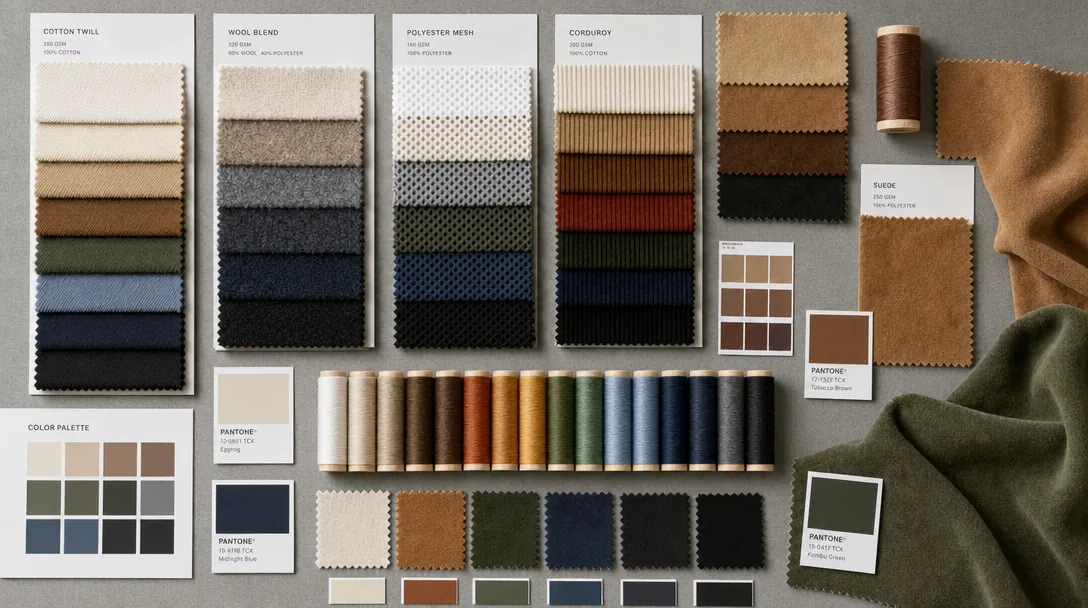
Color is where organic cotton gets tested. In practice, Pantone TCX matches hold best in navy, black, forest, and muted earth tones; bright red, neon green, and high-chroma orange often drift unless the factory controls lab dips, strike-offs, and shade banding tightly. I would want a written Delta-E target of under 2.0 for core colors, plus an agreed tolerance if the buyer is chasing a difficult shade. On orders under 5,000 pieces, GOTS cotton usually adds about 12 to 25 percent versus standard cotton twill, with the exact delta driven by fabric weight, commonly 180 to 240 gsm, and by whether the cap uses piece-dyed or yarn-dyed cloth. Certified trims can add another small bump if thread, labels, and packaging all have to stay inside scope.
The cost stack is broader than fabric, and that is where sloppy quotes fall apart. A serious price should separate organic cotton twill, organic sewing thread, recycled carton inserts or kraft polybags, hangtag certification fees, and the admin needed to keep the claim intact through export and customs documents. For structured caps, 180 to 240 gsm is the normal range; for unstructured dad hats, 160 to 200 gsm is more common, but lighter cloth will show seam puckering sooner if the pattern is weak or the stitch density is too aggressive. Our standard practice is to lock the material spec before sampling, because a sustainable custom hats program only works when the same shade, hand feel, and certification file can be repeated across multiple POs without drift.
Recycled polyester (rPET, REPREVE®)
Recycled polyester is the workhorse for sustainable custom hats because it can match virgin polyester when the yarn count, filament quality, and finishing are controlled. For crown panels, brims, and sweatbands, 75D to 150D rPET yarns are common, with woven fabrics around 170 to 260 gsm and knits around 180 to 220 gsm. At those weights, the fabric usually holds a structured silhouette, takes dense embroidery cleanly on Tajima or Barudan heads, and does not pill or collapse after repeated wear. The failure mode is usually upstream: poor flake sorting, inconsistent melt filtration, or denier drift. That shows up as low tensile strength, uneven dye uptake, and a rough hand that buyers can spot immediately. For sustainable custom hats, I would specify the same performance targets used for virgin polyester and require lab results, not just a recycled content claim.
The paper trail matters as much as the cloth. GRS 4.0 is the baseline most buyers should ask for, but it only means anything if the Transaction Certificates, scope certificates, and lot codes line up from recycled input to finished fabric. REPREVE® is useful when brand-level traceability matters, but it does not replace mill records; you still need documented chain of custody for every conversion step. A clean file should let you trace the recycled feedstock to the yarn lot, the yarn lot to the fabric roll, and the fabric roll to the purchase order, with no missing links. Missing TC numbers, mismatched quantities, or unexplained inventory losses are not paperwork quirks. They are release-hold issues because they weaken the sustainability claim and make a buyer audit harder to defend.
On the factory floor, rPET should be treated as equivalent to virgin polyester only after sample approval and lab confirmation. Check GSM, dimensional stability after wash, seam slippage, colorfastness to washing and perspiration, and shrinkage; I would not accept more than 3 percent unless the style is intentionally relaxed. The difference shows up fastest on structured caps, contrast stitching, and heavy embroidery, where needle heat and thread tension expose brittle yarns. If you are building sustainable custom hats in a polyester-cotton blend, ask for the exact recycled content by weight, whether it is post-consumer or post-industrial, and the blend-ratio tolerance. A specification that only says “recycled polyester” is too loose for procurement. You want a measurable material definition that can survive a buyer audit, a lab test, and a customs query without changing the story.
Hemp and natural fiber blends
For supplier control, request the exact fiber ratio, hemp origin, and chain-of-custody paperwork, then verify whether the fabric is covered by GOTS, OCS, or at minimum a traceable transaction certificate. On a six-panel structured build, a good sample should hold stitch tension evenly, show no scorching at seam intersections, and stay within about 3% shrinkage after wash testing. In our standard practice, we also check front panel recovery after hooping, because a fabric that looks fine on the cutting table can still pucker once the embroidery head starts pulling thread across the crown.
Hemp blends work best on relaxed silhouettes like unstructured dad caps, bucket hats, and softer five-panel styles. They are less forgiving on tall crowns, sharp front panels, and crisp visors that need more body from the shell itself, not just from interfacing. If the mill cannot explain lot-to-lot shade control, replacement timing, and fabric-width tolerance, it is not ready for replenishment orders of sustainable custom hats. That is usually where buyers lose margin: the first lot looks acceptable, the second lot lands a half-step darker, and the embroidery approval that passed on day one no longer matches production.
Trims and packaging
Trims and packaging are where sustainable custom hats most often fail an audit: the shell may be recycled or organic, while the closure, woven label, hangtag laminate, and mailer still rely on virgin plastic, mixed-metal hardware, or paper with no chain-of-custody. I check the trim BOM line by line. A recycled PP or post-industrial nylon snapback buckle is only acceptable if the supplier can show resin origin, lot traceability, and pull strength that still clears wear testing; on a 6-panel cap, that trim usually adds about $0.08 to $0.18 per piece versus a standard buckle. The same standard applies to sew-in labels, seam tape, eyelets, and size stickers. On orders of 5,000 to 20,000 units, one noncompliant trim can cost more in rework, relabeling, and delayed shipment than the material savings ever justified.
Hangtags should prove the claim, not decorate it. For sustainable custom hats, I expect FSC-certified or recycled-content tag stock, usually 300 to 400 gsm uncoated paperboard, printed with soy-based or water-based inks and no film lamination unless the retail channel truly needs it. If the buyer wants a certification callout, the wording has to match the underlying document exactly, whether that is FSC Mix, GRS, OEKO-TEX Standard 100, or a scope the factory can actually support. Keep the same language across the tech pack, trim approval, carton mark, and commercial invoice. CrownsForge’s standard practice is to lock the trim BOM with the same discipline as the fabric BOM, because paper claims and fiber claims get checked by customs, retail QA, and marketplace compliance teams with the same skepticism.
Packaging should be specified like a production component, not left to the warehouse. Compostable polybags sound good on paper, but PLA-based bags usually need industrial composting conditions and a narrower heat-seal window than LDPE, so they split if the sealing temperature or dwell time drifts. For most wholesale and DDP programs, a 32 ECT or 200 lb test kraft shipper with recycled content is the more reliable choice, especially if it replaces inner trays and extra void fill. The carton spec, inner pack count, master carton mark, and sticker material should be coordinated so the pack-out line does not mix approved and nonapproved materials. That matters when a recycled polyester hat, an organic cotton cap, and a jacquard bucket hat all ship under one program: keep the system simple, keep the materials traceable, and make the end-of-life story real enough that it survives inspection.
Certifications and audits
Certifications only matter when they attach to the exact fiber, mill, dyehouse, and cut-and-sew line behind the claim. For sustainable custom hats, I look first for GOTS on organic cotton, GRS on recycled polyester or recycled cotton blends, and OEKO-TEX Standard 100 on the finished fabric lot, not a generic catalog statement. GOTS is the strongest of the three because it covers certified fiber content, restricted chemicals, wastewater controls, and chain-of-custody through each processing step. GRS works for recycled yarn hats, but only if the supplier can show transaction certificates, purchase orders, and batch-level traceability; a “100% recycled” label without documents is not a compliance claim. OEKO-TEX Standard 100 is narrower, but it still matters on wearables because it checks formaldehyde, azo dyes, heavy metals, pH, and other skin-contact limits.
Factory audits are the next filter, and they should be current, named correctly, and tied to the legal entity on the invoice. sedex-audit-cap-supplier-guide.html">BSCI 2.0 and Sedex SMETA 4-Pillar are the formats I see most often for labor, health and safety, environment, and business ethics, while WRAP still shows up in suppliers shipping into the U.S. market. For sustainable custom hats, I also want the audit scope to cover the same site that actually sews and trims the hats, not a trading company or parent office. In Yiwu and Quanzhou, expired reports, mismatched company names, and borrowed certificates are common failure points. I also ask for the latest AQL 2.5 inspection record, because a factory can pass a social audit and still ship crooked embroidery, loose binding, or shade variation beyond Delta-E 2.0.
The practical checklist is simple: match the purchase order to the certified composition, color, and trim spec, then verify that the scope reaches the fabric mill, dyeing house, and final assembly site. For a jacquard bucket hat or five-panel cap, I want Pantone TCX references, approved lab dips, wash test results, shrinkage limits, and fabric weights listed together with the certificate set. If recycled polyester is involved, the yarn denier, GSM, and post-consumer content should be stated clearly, because those details change hand feel, sewability, and whether the recycled claim will hold up in review. The suppliers worth keeping are the ones who can produce documents quickly, explain gaps without evasions, and keep the certification chain intact from first sample to packed carton for sustainable custom hats.
Telling the sustainability story to retail buyers
Retail buyers do not believe a sustainability claim until they can audit the file behind it. For sustainable custom hats, that means fiber composition declarations, recycled input transaction records, mill certificates, and traceability that matches the purchase order, production batch, and carton labels. The standard packet is blunt: GRS or RCS scope certificates for recycled polyester, OEKO-TEX Standard 100 when chemical safety is in scope, and lot-to-lot mapping that ties each yarn, fabric roll, and trim lot to a specific SKU. A credible file also includes the Pantone TCX reference, a trim sheet, country of origin, and a bill of materials that separates shell fabric, lining, sweatband, label, and closure. If those documents do not line up on composition, color, and quantity, the buyer stops discussing assortment and starts discussing compliance risk.
Suppliers that win repeat orders keep proof attached to the production batch, not buried in a generic company folder. For an organic cotton cap, that usually means the organic certificate number, transaction certificates, and dyehouse notes if the fabric was piece-dyed or yarn-dyed. For a blended style, such as a jacquard bucket hat in organic cotton and recycled polyester, the buyer will want the exact blend ratio, fabric weight in gsm, recycled content percentage, and the same numbers repeated across the tech pack, carton mark, packing list, and commercial invoice. The practical standard is consistency, not decorative language: if the spec says 280 gsm, the inspection report and hanger ticket need to say 280 gsm too. CrownsForge keeps that evidence with the batch file because a procurement team can verify it in minutes instead of chasing ten separate emails.
The story itself should be factual enough to survive legal review. Retail teams respond to one-page spec sheets, fiber source summaries, and process photos that show the actual fabric, embroidery head, and packing line, not mood copy or vague “eco” language. A useful sales kit for sustainable custom hats includes swatches labeled with fiber content, close-ups of recycled yarn texture, and a short note on water, energy, or waste reduction only when the method is supported by a certificate or lab report. If the claim is reduced virgin polyester, state the percentage and the basis of claim; if it is certified organic input, quote the certificate number and scope. Anything that cannot be cross-checked against the test report, scope certificate, or commercial invoice will get cut by the buyer’s compliance team before line review.
Frequently Asked Questions
How long does production take?
Sampling takes 7 to 12 days. Bulk production runs 20 to 30 days depending on quantity, fabric availability and decoration complexity. Inspection and packing adds another 3 to 5 days before shipment.
Do you support sustainability certifications?
Yes. We work with GOTS organic cotton, GRS-certified recycled polyester, OEKO-TEX Standard 100 fabrics, and are BSCI and Sedex audited. Certification documentation can be provided per order.
Which shipping methods do you support?
We support FOB, CIF and DDP shipping. Air express for samples and small orders, sea LCL for 100 to 500 pieces, sea FCL for 5,000+ pieces. Door-to-door DDP available for US, EU, UK, Canada and Australia.
What logo decoration techniques do you offer?
3D puff embroidery, flat embroidery, woven patch, leather patch, PVC patch, screen printing, sublimation, applique and laser etching, all in-house with no subcontracting.
What file format should I send for my logo?
Vector files (AI, EPS, PDF) are ideal. High-resolution PNG or JPG at 300 dpi on transparent background works as a fallback. Provide Pantone color references for accurate reproduction.
How does ordering custom hat trucker work?
When evaluating custom hat trucker, the key considerations are construction quality, decoration capability, MOQ flexibility and lead time. Consumer demand, retailer requirements, brand storytelling, regulatory direction. GOTS-certified cotton supply chain, color limitations, premium pricing.
How does ordering baseball cap custom work?
When evaluating baseball cap custom, the key considerations are construction quality, decoration capability, MOQ flexibility and lead time. Consumer demand, retailer requirements, brand storytelling, regulatory direction. GOTS-certified cotton supply chain, color limitations, premium pricing.
How does ordering beanie hats custom work?
When evaluating beanie hats custom, the key considerations are construction quality, decoration capability, MOQ flexibility and lead time. Consumer demand, retailer requirements, brand storytelling, regulatory direction. GOTS-certified cotton supply chain, color limitations, premium pricing.
How does ordering custom embroidered baseball caps work?
When evaluating custom embroidered baseball caps, the key considerations are construction quality, decoration capability, MOQ flexibility and lead time. Consumer demand, retailer requirements, brand storytelling, regulatory direction. GOTS-certified cotton supply chain, color limitations, premium pricing.
Need a low-MOQ test order?
We help emerging brands launch with as few as 100 pieces. Premium fabric, in-house embroidery, retail-ready packaging.
Start a small orderRelated guides
Camouflage Bucket Hat: Properties, Costs and How to Spec It Right
Read article →
Patch Hats Retail Packaging Guide for Custom Hat Buyers
Read article →
Merino Wool Beanie: Properties, Costs and How to Spec It Right - Cost & MOQ Breakdown - 2026 Buyer's Guide
Read article →We hope this guide demystifies sustainable custom hats: eco-friendly materials, recycled fabrics & certifications - supplier checklist and helps you move forward with confidence. If you have questions specific to your project, our English-speaking sales engineers are one message away.