
Snapback vs Fitted vs Adjustable: Cap Closure Systems Compared - Supplier Checklist - Cost & MOQ Breakdown
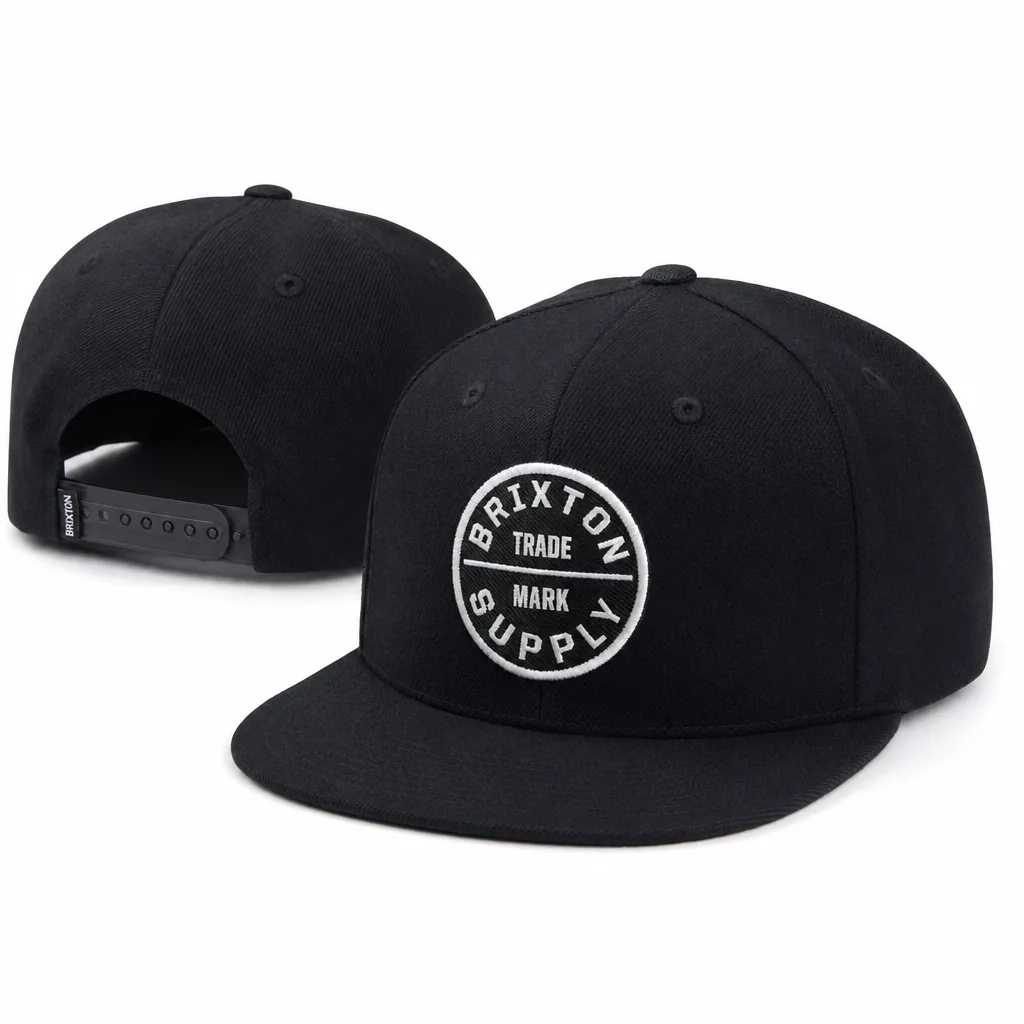
Snapback vs Fitted vs Adjustable: Cap Closure Systems Compared - Supplier Checklist - Cost & MOQ Breakdown is one of the most-asked questions we receive from international buyers, and for good reason. With dozens of factories competing for your order and an alphabet soup of technical terms in every supplier quote, even experienced importers can feel lost. This guide consolidates what we have learned producing custom hats for clients in 40+ countries.
The five closure systems in commercial production
Closure choice drives SKU count, sewing tolerance, and carton complexity harder than most buyers budget for. In commercial cap production there are five practical systems: plastic snap, self-fabric strap with slide buckle, self-fabric tuck strapback, hook-and-loop, and fitted with no rear opening. In any real snapback vs fitted comparison, the decisive issue is size architecture. A snapback usually covers roughly 54-61 cm in one SKU, while a fitted program typically needs 6 7/8 through 7 5/8 in 1/8 increments, with 7 3/4 added for North America if you want decent sell-through. That means separate cutting bundles, size stickers, carton ratio planning, and a much higher chance of mixed-size packing errors. Fitted caps also punish sloppy sewing: if the back seam drifts 2 mm or the sweatband join is off, the wearer feels it immediately and the cap effectively sizes down.
Plastic snaps stay dominant in streetwear and licensed sports because they are cheap, fast, and tolerant on the line. On an 80/20 acrylic-wool 6-panel, a standard PP snap set usually lands at $0.06-$0.10 in volume, installs in a quick press operation, and creates very little rework unless prongs crack or spacing is uneven. Fitted removes that hardware cost, but total unit cost often rises $0.20-$0.45 because output slows once operators sort by size, QA must check circumference by spec, and packing becomes size-sensitive. Our standard practice is AQL 2.5 on closure alignment, opening symmetry, and function; on fitted, we also verify finished circumference against the approved size chart before packing.
Adjustable fabric straps split into two different products in practice. A slide buckle reads more premium on brushed cotton twill, chino, corduroy, or washed canvas, but it eats center-back decoration space and adds hardware variables like plating consistency and salt-spray performance. Stock buckle sets in brushed nickel, matte black, or antique brass generally add $0.12-$0.28 per cap; custom logo buckles often need 1,000-3,000 pieces per finish and should be checked for color variance and burrs before assembly. Tuck strapbacks look cleaner because the excess strap feeds into the sweatband tunnel, but they require tighter control: rear opening width, strap length, and tunnel position should stay within about plus or minus 2 mm or the tuck twists and looks cheap. Hook-and-loop remains the most efficient option for promo, golf, and uniform runs. Specify 20 mm or 25 mm tape, ask whether it is branded Velcro or generic, and expect a $0.08-$0.18 delta with a real difference in peel life and lint pickup.
Plastic snap (snapback) economics
The cost advantage in a snapback vs fitted program comes from SKU compression, not the plastic itself. A standard adult snap set with 7 or 8 holes usually covers roughly 54 to 62 cm head circumference, so one OSFA size can replace four to six fitted sizes, typically 6 7/8 through 7 3/8. On a 1,200-piece order, that removes size-ratio planning, separate carton marking, extra case labels, and the dead-stock problem when one size stalls. The hardware is cheap: a stocked PP snap in black, navy, white, or red usually adds only $0.03 to $0.07 per cap over a closed-back shell, and attachment is a fast back-panel operation with pre-punched strips. If the buyer is comparing landed cost rather than on-field aesthetics, snapback is usually the lowest-cost closure for mainstream adult sizing. Fitted caps carry hidden cost in handling and inconsistency. Each size needs its own marker, WIP bundle control, carton assortment, and final count reconciliation, and the imbalance risk is real when 7 1/8 sells through while 7 3/8 sits in stock. In Yiwu, that usually adds $0.18 to $0.40 per cap before freight, depending on size count, fabric yield, and order volume. MOQ logic changes too: 1,200 pieces of snapback runs as one clean SKU, while 1,200 fitted pieces may break into 200 to 300 units per size, where sweatband joining, oval shape, and finished circumference tolerance start to drift. On structured 6-panel twill and foam-front trucker programs, snap closures also pack cleaner than strapbacks because there is no loose tail and no buckle abrasion during export carton transit.
Plastic snaps are not fully interchangeable, and that matters once brand color standards tighten. Stocked closures come in a narrow palette, but gloss level, resin blend, and regrind percentage can shift from molding batch to molding batch. A cap body matched to Pantone TCX can still look off if the snap reads too blue, too chalky, or too glossy under D65 lighting. For branded programs, we treat the snap as a trim with a practical visual tolerance around Delta-E 2.0 to 2.5; molded plastic will never match cotton twill or polyester serge as tightly as a dyed fabric component. Custom-color snaps are realistic, but suppliers usually want 500 to 1,000 pieces per color, plus a $40 to $120 setup charge and 7 to 12 extra days. QC is straightforward, but skipping it is where cheap snapbacks fail. At inline and final inspection under AQL 2.5, the basics are centering both strips within 2 mm, checking that every peg seats fully, and cycling the closure 10 times to expose brittle resin, flash, or weak sockets. On better-managed lines, the approved PP sample locks the exact snap finish before bulk sewing starts so the back trim does not drift from the shell color standard. That is why, in practical snapback vs fitted sourcing, snap closures stay dominant in promo, streetwear, trucker, and volume retail programs: broad size coverage, low trim cost, simpler packing, and fewer inventory mistakes than fitted size curves.
Fabric strap with metal buckle (dad hat aesthetic)
A self-fabric strap with a metal slide buckle is the right closure when the cap needs a true dad-hat silhouette: low-profile, quiet at the back, and compatible with washed cotton rather than a sporty plastic snap. For adult caps, strap width is typically 18-20 mm; youth runs 14-16 mm. On a correctly patterned 6-panel unstructured cap, the closure should comfortably cover a 54-63 cm finished head circumference, but that only happens if the rear opening is drafted wide enough and the sweatband join stays within about 2 mm of center. Standard constructions are 240-280 gsm cotton chino, brushed cotton twill, or 8-10 wale corduroy, folded and edge-stitched, then fed through an antique brass, brushed nickel, or matte black slider with either a tuck-in tail or keeper loop. Against a basic PP snap set, the buckle hardware and extra sewing time usually add $0.12-$0.22 per cap at 3,000-5,000 pieces, with the spread driven by plating quality, strap turning labor, and bar-tack count.
In the snapback vs fitted decision, this closure is the practical middle lane for buyers who want one adjustable SKU without the visual bulk of a snap. It works especially well on washed, unstructured crowns where the product is sold on hand feel, drape, and vintage styling rather than team-locker utility. The tradeoff is speed: retail customers can size a snap faster, and a strapback is less forgiving if the adjustment range is narrow or the buckle slips under tension. Self-fabric straps generally outperform PU leather in wash durability and color consistency, especially after enzyme or pigment washes where cotton twill can shrink 2-3% if the strap blank was not cut with allowance. The main factory failure point is trim consistency, not the buckle shape itself: mixed plating lots can show visible shade shift under D65 light, and thin matte-black coating scratches quickly after repeated adjustment cycles. Our standard practice is to tensile-check the bar-tack, verify slider bite with a light pull test, and inspect closure function at AQL 2.5, because one creeping strap makes a premium cap feel cheap immediately.
Velcro (lowest cost, widest range)
Hook-and-loop is still the cheapest adjustable closure by a clear margin, and that price delta is big enough to change the whole BOM. At 1,000 pcs, a standard 20 x 70 mm nylon hook-and-loop set in black or white usually adds $0.03-$0.05 per cap FOB; dyed-to-match tape, molded low-profile hook, or a woven logo flag pushes it closer to $0.06-$0.10. The real advantage is fit tolerance: a Velcro back on a finished baseball cap typically covers about 54-63 cm head circumference, wider than most 7-hole plastic snaps and far more forgiving than fixed-size runs. In a snapback vs fitted decision, that matters because one adjustable SKU can absorb bad size forecasting, reduce split-size inventory, and cut claim rates on promo or event programs. That is why this closure dominates school orders, charity runs, municipal campaigns, and ad-specialty caps where the buyer cares more about coverage than perceived fashion value. MOQ is rarely the constraint; most factories can run black or white stock tape from 500 pcs, while custom-dyed sets often need 1,000-1,500 pcs to make sense. If you need body-color consistency, do not let the supplier treat the back strap as an afterthought. Ask for Pantone TCX lab dips on the strap fabric and hold shade tolerance to Delta-E 1.5-2.0, because black hook tape stitched onto navy, charcoal, or forest bodies is a common shortcut on rushed production.
The downside shows up immediately in hand feel and long-term appearance. Standard loop tape pills, collects lint in polybag packing, and looks tired much sooner than a good acrylic snap or metal buckle strap. On premium caps with structured buckram fronts, 3D embroidery on Tajima or Barudan heads, microsuede brims, or 380-450 gsm wool-blend bodies, Velcro usually drags the product down visually. That is why adult streetwear, team licensed, and better-retail programs usually avoid it even when factory cost is under pressure. Once MSRP gets past roughly $12-$15, buyers tend to regret choosing hook-and-loop unless the end use is overtly functional. Factory risk is usually in the sewing method, not the tape itself. Cheap single-needle attachment is where returns start, especially after repeated opening cycles. We look for a boxed-X reinforcement at the strap end, balanced 8-10 SPI, clean edge folding, and no needle damage on the hook side. For inspection, treat it like any other failure-prone component: AQL 2.5 on appearance, seam pull testing on the strap attachment, and repeated open-close cycle checks before bulk packing. Material choice also matters. For repeated-use caps, 100% nylon hook-and-loop holds engagement better than low-grade polyester sets; polyester is acceptable for short-life giveaways, but not for programs where the cap is expected to survive a season of regular wear.
Fitted: why some brands accept the operational cost
Fitted only makes sense when exact size is part of the product promise; otherwise, in a snapback vs fitted decision, you are paying for complexity that the consumer will not reward. A true fitted run usually starts at 6 7/8 and goes to 7 1/2, with better programs carrying 7 5/8, 7 3/4, and sometimes 7 7/8. Because there is no rear closure to absorb variance, the factory has to control finished inside circumference much tighter than on snapbacks or strapbacks—typically within +/-3 mm after sewing, steaming, blocking, and cooling. That tolerance is not theoretical. Sweatband behavior changes the final fit materially: a 180 gsm brushed cotton sweatband can relax differently from a 220 gsm polyester/spandex band with 3-5% elastane, and the difference shows up fast between a nominal 58 cm and 60 cm cap. If the blocking form, crown grading, or sweatband shrinkage is off, the customer feels it immediately. The real cost driver is not shell construction but SKU multiplication. Every size needs its own size tape, carton ratio, WIP tracking, and replenishment logic. A quoted MOQ of 300 pieces per colorway sounds workable until it is split across six or seven sizes; then line efficiency drops and odd sizes become dead stock on day one. In practice, most brands need 600-900 units per colorway to build a usable size curve without wrecking cutting yields and packing efficiency. U.S. sell-through usually concentrates in 7 1/8, 7 1/4, and 7 3/8, while 6 7/8 and 7 3/4 turn slower, so overhang is built into the model. At final inspection under AQL 2.5, wrong size-tape insertion, assortment errors, and circumference out-of-spec routinely create more claims than embroidery issues from Tajima or Barudan heads.
Brands accept that burden because fitted signals authenticity in a way adjustable caps do not. Licensed on-field styles, clubhouse programs, and premium streetwear use fitted as a category marker, not just a closure option. That is the part often missed in snapback vs fitted comparisons: the buyer does not read fitted as merely non-adjustable; they read it as exact, collectible, and closer to pro-issue product. That perception has value only if the fit is repeatable across the size run. If the crown profile changes between 7 1/8 and 7 1/2 because grading is sloppy, or the front panel tension shifts and distorts the silhouette, the premium disappears immediately. Color consistency matters too on fitted programs with size replenishment; we normally hold shell fabric within Delta-E 1.5 to approved lab dip and keep visor board and top button shade matched to avoid visible lot variation at retail. The landed-cost premium is real but usually manageable if the sell-through data is solid. Compared with a like-for-like snapback, fitted typically adds about $0.45-$1.20 per piece once you account for broken-run handling, per-size labeling, ratio packing, and lower sewing output. Freight becomes less forgiving as well, especially on DDP replenishment programs where carton fragmentation and mixed-size pick fees start to matter. Our standard practice is to recommend fitted only when the brand can support at least five core sizes and has historical sales by size, not just by style or color. For promotional distribution, fitted is almost always the wrong tool. For league-authentic product, collector drops, or premium identity lines, the added operating cost is rational because the fit itself is part of what the customer is paying for.
MOQ implications by closure type compared
MOQ is where snapback vs fitted stops being a design choice and becomes an inventory math problem. Adjustable closures keep the body in one size, so a factory can usually open at 100 to 144 pcs per colorway on a standard 6-panel cap, whether that is a PP 7-hole snap, a cotton strap with brass slider, or a hook-and-loop back using 20 to 25 mm nylon tape. One shell size means one crown pattern, one sweatband length, one visor board, and one finished-goods SKU. That reduces cutting loss, trim exposure, and carton fragmentation. In real costing, an 80/20 acrylic-wool snapback at 380 to 420 gsm with 5,000 to 8,000 stitches on Tajima or Barudan heads typically lands around $3.30 to $4.70 FOB Ningbo at 300 pcs; a strapback in 220 to 260 gsm cotton twill is often another $0.18 to $0.45 because metal hardware, tuck strap finishing, and extra back sewing add labor minutes. Trim MOQ matters too, and buyers often miss it when comparing closures. Standard plastic snaps are commodity items and can be bought in small lots with color matching usually held to Delta-E 1.5 to 2.0 against a Pantone TCX reference. Custom strap hardware is less forgiving: logo-debossed buckles, antique plating, or die-cast shapes commonly require 500 to 1,000 sets per finish. That can distort the economics of a 100-piece trial order even if the sewing MOQ looks low on paper. Our standard practice is to flag custom closure trim before sampling, because stock fabric and stock snaps are easy to test in small runs; custom metal is not.
Fitted caps raise MOQ because each size is a separate SKU with its own cut plan, packing ratio, and replenishment risk. A supplier may quote 100 pcs MOQ, but if that applies per size, a minimal run in 7, 7 1/8, 7 1/4, 7 3/8, and 7 1/2 is already 500 pcs. Add 6 7/8 and 7 5/8 for a commercially usable range and the practical opening order becomes 600 to 700 units per style-color. The tolerance burden is also higher. On an adjustable cap, a 2 mm circumference drift is usually hidden by the closure; on a fitted, that same error becomes an immediate fit complaint. Sweatband join position, seam allowance consistency, and crown blocking need tighter control, and finished goods should be checked to AQL 2.5 with head-circumference points measured against a tape standard. The commercial mistake most new buyers make is treating fitted as only a style upgrade. It is really a depth-of-inventory commitment. Adjustable programs can be reordered in 100 to 300 pcs with limited forecasting pain because one SKU covers most adult heads. Fitted programs do not become efficient until each core size can move roughly 80 to 120 units per replenishment cycle; below that, edge sizes sit in stock and erode margin. This is especially obvious in streetwear and licensed sports, where sell-through clusters around 7 1/8 and 7 1/4 while 6 7/8 or 7 5/8 can go stale. For first orders, adjustable caps are product tests; fitted caps are size-curve bets with real carrying-cost exposure.
How to spec the right closure for your retail positioning
Retail channel should drive the closure decision before silhouette, because inventory exposure sits in the back opening, not in the underbill. In snapback vs fitted planning, a one-size snapback usually covers about 58-62 cm finished head circumference, while a true fitted run needs a full size scale—typically 6 7/8 to 7 5/8 in 1/8 increments, or seven sellable sizes before you even split ratios by market. That is where margin gets eaten. If your curve is wrong, tail sizes like 6 7/8 and 7 5/8 stall first, and the markdown cost is usually higher than any savings you got on shell fabric or decoration. For premium streetwear, I only recommend fitted when the brand has clean replenishment data, repeat customers who already know their size, and the willingness to hold deeper inventory in core colors. Otherwise, a structured 6-panel snapback or refined strapback gives far better forecasting and less dead stock. The physical build also matters more on fitted, because customers feel tolerance errors immediately. On a standard 80/20 acrylic-wool shell or 260-300 gsm cotton twill, a retail-grade 7-hole PE snap still presents well if the crown profile is stable, seam tape registration is clean, and front embroidery is digitized correctly for Tajima or Barudan heads. Fitted caps are less forgiving: once finished inner circumference drifts beyond about ±0.5 cm from spec, return rates move fast. That is why our standard practice is to treat snapback vs fitted as a commercial decision first and an aesthetic decision second, with circumference tolerances, brim symmetry, and back-opening stress written directly into the QC sheet rather than left to visual judgment.
Adjustable closures win most promotional, event, and entry-price retail programs because speed, size forgiveness, and landed cost matter more than purity. Hook-and-loop is still the lowest-cost functional option, typically reducing unit cost by about $0.12-$0.28 versus a branded plastic snap, and by roughly $0.35-$0.60 versus a self-fabric strap with metal buckle, depending on MOQ, buckle plating, and packing method. The tradeoff is obvious at retail: hook-and-loop reads utilitarian, while a plastic snap remains acceptable for mid-tier street and sports merchandise if the shell fabric is stable enough not to pucker around the back opening. In practical terms, 260-300 gsm brushed cotton twill, 8-10 oz canvas, and 600D polyester all handle closure stress better than lighter open-weave cottons that tunnel after repeated adjustment. Fitted only justifies its complexity when authenticity is part of the selling story, which is why licensed sports and on-field-inspired programs still support it. The MOQ and QC math get harder immediately: size ratios must be balanced, sweatband joins need consistent placement, and inspection should be written to AQL 2.5 with explicit circumference tolerances by size, not a vague appearance standard. Sedex SMETA 4-Pillar or BSCI 2.0 compliance will not solve sizing mistakes, but disciplined process control will. In mixed retail programs, the safest structure is straightforward: make snapback the volume SKU and reserve fitted for hero drops or proven replenishment accounts. As a sourcing baseline, snapbacks are workable from about 144-288 pieces per colorway, while fitted programs are more realistic at 480-720 pieces once quantity is spread across all sizes.
Frequently Asked Questions
What file format should I send for my logo?
Vector files (AI, EPS, PDF) are ideal. High-resolution PNG or JPG at 300 dpi on transparent background works as a fallback. Provide Pantone color references for accurate reproduction.
What logo decoration techniques do you offer?
3D puff embroidery, flat embroidery, woven patch, leather patch, PVC patch, screen printing, sublimation, applique and laser etching, all in-house with no subcontracting.
Do you support sustainability certifications?
Yes. We work with GOTS organic cotton, GRS-certified recycled polyester, OEKO-TEX Standard 100 fabrics, and are BSCI and Sedex audited. Certification documentation can be provided per order.
Can I order a sample before bulk production?
Yes. We strongly recommend approving a pre-production sample before mass production. Samples are charged at 35 to 60 USD each plus express shipping, fully refundable against confirmed bulk orders over 500 pieces.
Which shipping methods do you support?
We support FOB, CIF and DDP shipping. Air express for samples and small orders, sea LCL for 100 to 500 pieces, sea FCL for 5,000+ pieces. Door-to-door DDP available for US, EU, UK, Canada and Australia.
What should buyers know about cotton twill baseball cap?
When evaluating cotton twill baseball cap, the key considerations are construction quality, decoration capability, MOQ flexibility and lead time. Universal sizing 54-62cm with 8 snap positions. Single SKU per design covers most adults. Adds ~$0.05 per cap for hardware. Industry-standard for retail snapback hats, trucker caps, casual baseball caps. Available in 8 stocked colors; custom Pantone-matched snaps at 500+ pieces. Plastic snap (snapback), fabric strap with metal slide buckle, fabric strap with tuck-buckle,…
What should buyers know about flat bill hats snapback?
When evaluating flat bill hats snapback, the key considerations are construction quality, decoration capability, MOQ flexibility and lead time. Universal sizing 54-62cm with 8 snap positions. Single SKU per design covers most adults. Adds ~$0.05 per cap for hardware. Industry-standard for retail snapback hats, trucker caps, casual baseball caps. Available in 8 stocked colors; custom Pantone-matched snaps at 500+ pieces. Plastic snap (snapback), fabric strap with metal slide buckle, fabric strap with tuck-buckle,…
How does ordering custom flat bill hat embroidery work?
When evaluating custom flat bill hat embroidery, the key considerations are construction quality, decoration capability, MOQ flexibility and lead time. Universal sizing 54-62cm with 8 snap positions. Single SKU per design covers most adults. Adds ~$0.05 per cap for hardware. Industry-standard for retail snapback hats, trucker caps, casual baseball caps. Available in 8 stocked colors; custom Pantone-matched snaps at 500+ pieces. Soft fabric strap (1.5-2cm wide) with antique brass slide buckle. Fits 54-63cm. Adds ~$0.15 per…
What should buyers know about baseball hats women?
When evaluating baseball hats women, the key considerations are construction quality, decoration capability, MOQ flexibility and lead time. Universal sizing 54-62cm with 8 snap positions. Single SKU per design covers most adults. Adds ~$0.05 per cap for hardware. Industry-standard for retail snapback hats, trucker caps, casual baseball caps. Available in 8 stocked colors; custom Pantone-matched snaps at 500+ pieces. Plastic snap (snapback), fabric strap with metal slide buckle, fabric strap with tuck-buckle,…
Is a fitted hat a snapback?
Comparing Style and Fit Snapbacks have an adjustable snap closure, usually made from plastic, that you can use to adjust the size of the cap to fit your head perfectly. A fitted cap is just a hat, with no adjustable sizing. The snapback design is bolder, with a more structured high crown and a flat brim.
Do baseball players wear snapbacks or fitted?
The snaps are usually plastic even if the cap is made of wool, cotton, or other material. Popularized by New Era, the official hat supplier to the MLB, the snapback cap is de rigueur for Major League baseball players.
Ready to start your custom hat project?
Send us your tech-pack, sketch or even just an inspiration photo. We will respond with a detailed quotation and digital mock-up within 24 hours.
Request a free quoteRelated guides
Cap Sweatband Material Selection for Custom Headwear Buyers
Read article →
Bucket Hat Women: Properties, Costs and How to Spec It Right (2026 Update)
Read article →
Reflective Trim Running Cap Bulk: A 2026 B2B Sourcing Guide
Read article →We hope this guide demystifies snapback vs fitted vs adjustable: cap closure systems compared - supplier checklist - cost & moq breakdown and helps you move forward with confidence. If you have questions specific to your project, our English-speaking sales engineers are one message away.