
Snapback vs Fitted vs Adjustable: Cap Closure Systems Compared - Cost & MOQ Breakdown
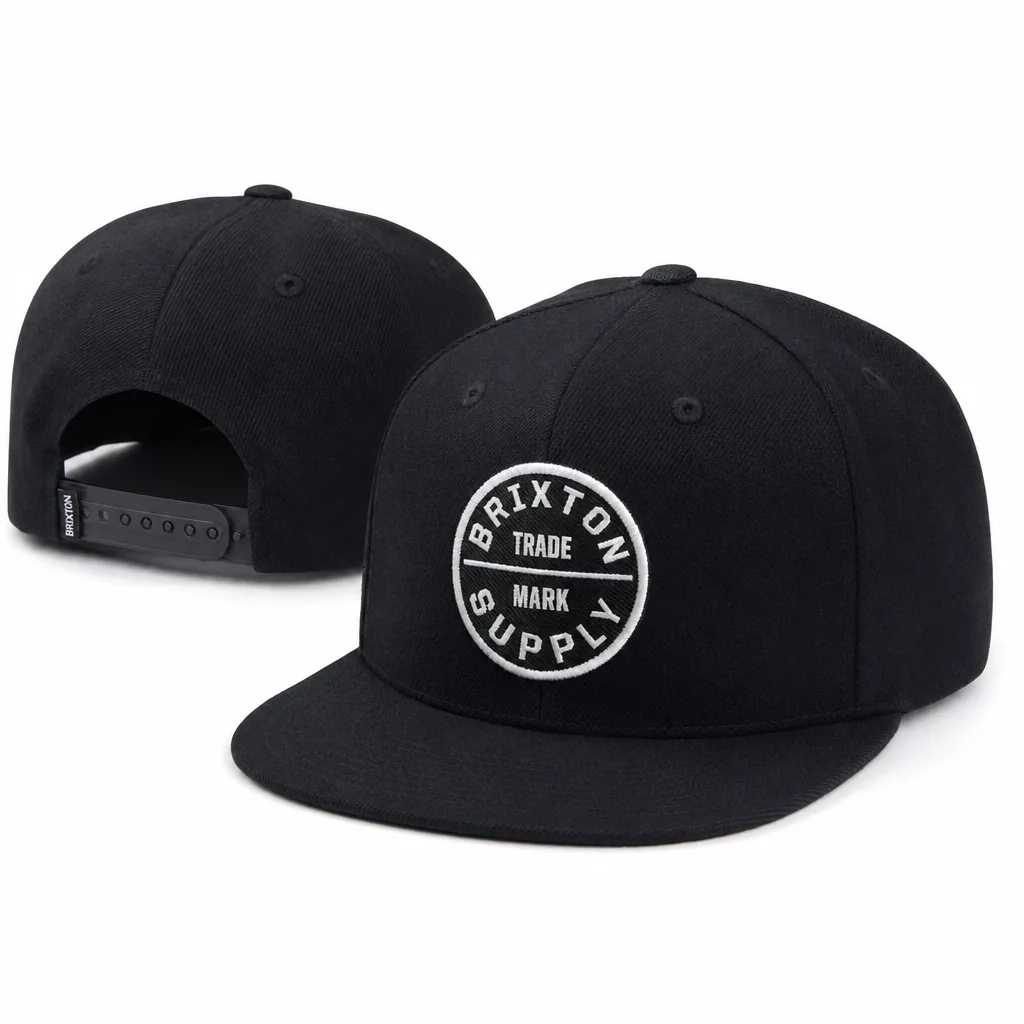
Snapback vs Fitted vs Adjustable: Cap Closure Systems Compared - Cost & MOQ Breakdown is one of the most-asked questions we receive from international buyers, and for good reason. With dozens of factories competing for your order and an alphabet soup of technical terms in every supplier quote, even experienced importers can feel lost. This guide consolidates what we have learned producing custom hats for clients in 40+ countries.
The five closure systems in commercial production
Five closure systems cover almost every commercial cap line: plastic snap, fabric strap with slide buckle, tuck-strap with buckle and keeper, hook-and-loop, and fitted with a closed back. In a real snapback vs fitted decision, that choice affects much more than styling. It changes the back-arch pattern, sweatband circumference tolerance, size labeling, carton ratios, and reorder risk. A standard 7-hole or 8-hole PP snap usually adds about $0.08 to $0.18 per cap at 5,000 pcs, with black and white stock components cheapest because factories keep them on hand. Custom Pantone-matched resin is another story; unless the order is above roughly 10,000 pcs, the color setup and molding cost rarely makes commercial sense. Fitted removes the closure trim, but it multiplies SKUs fast. A single color run graded from 6 7/8 to 7 5/8 creates seven size positions, seven pack ratios, and seven ways to get stuck with dead stock if sell-through is uneven. That is why snapback vs fitted is usually an inventory-planning call before it is a design call.
The differences get expensive on the sewing floor. Plastic snaps are forgiving: the rear opening hides small variance, assembly is fast, and replacement components are easy to source. Fitted caps are less tolerant. On a closed-back program, 2 to 3 mm drift in crown circumference, rear arch height, or sweatband joining is enough for the cap to feel mislabeled on head, even if it still passes a casual visual check. Good factories treat fitted under tighter inline measurement control and final inspection at AQL 2.5 because a size complaint costs more to correct than a cracked snap tab. Buyers often assume fitted should be cheaper because there is no hardware, but that is not how production math works. Separate woven size labels, more complicated assortment packing, slower replenishment decisions, and higher size-level inventory exposure usually push total landed cost above an equivalent adjustable cap unless volume is deep and the size curve is already proven.
Among adjustable options, strapbacks sit in the middle of the market. A basic slide-buckle strap is common on 8-12 oz brushed cotton twill, washed chino, and low-profile unstructured caps. It reads more premium than a plastic snap only when the trim is controlled properly; low-grade buckles often show plating drift from approved antique brass, nickel, or gunmetal, and weak finishing can corrode after humid storage or 30- to 45-day ocean transit. Tuck-strap buckles cost slightly more because they need extra strap length, a keeper tunnel, and cleaner turn-back stitching, but they solve the loose-tail issue that ruins back-view retail photography. Hook-and-loop remains the most practical option for golf events, uniforms, and mass promo because one body size covers a broad head-size range and trim cost stays around $0.05 to $0.10 per set in volume. The downside is predictable: lint pickup, noisy opening, and weaker holding power after roughly 3,000 to 5,000 cycles, which is why it rarely survives on premium retail programs.
Plastic snap (snapback) economics
The real cost advantage of a plastic snap is inventory simplification, not the hardware itself. A standard PP snap set with 7 holes and 8 pegs adds only $0.04-$0.07 per cap FOB China, even using decent virgin resin instead of brittle regrind. What changes the math in a snapback vs fitted program is that one adjustable SKU usually covers roughly 54-61 cm, which eliminates size splitting across 6 7/8, 7, 7 1/8, 7 1/4, 7 3/8, and 7 1/2. On a 1,200-piece order, a fitted run normally needs 6-8 size buckets and ratio packing, then separate carton labels, stock counts, and replenishment logic for each size. The closure cost you save on fitted caps disappears quickly when 7 1/8 sells out in two weeks and 6 7/8 sits in stock for 90 days. That is why snapbacks usually outperform fitted on landed margin below about 1,000-1,500 pieces per colorway, especially in e-commerce, event merch, and licensed team drops where returns and dead sizes punish cash flow harder than a 5-cent part ever will.
On the line, plastic snaps are also cheaper because they are fast and forgiving. Installation happens after crown assembly, and an experienced operator can set and align the back strap area faster than a metal buckle strapback because there is no slider, tuck loop, or excess webbing to control. Most failures are not resin failures; they come from a bad rear opening pattern, uneven topstitch tension, or male/female strip misalignment that makes the closure twist under pull. Our standard practice is AQL 2.5 final inspection with checkpoints for cracked pegs, molding flash, sharp edges, contamination on white resin, and symmetry of the back arch. Stock colors like black, white, navy, red, royal, gray, khaki, and dark green usually carry no extra MOQ. Custom-matched snaps are possible, but resin suppliers typically ask for 500-1,000 sets per color and another 5-7 days for color approval. If the buyer wants a branded back view, define the Pantone reference up front and accept a realistic Delta-E tolerance, because molded plastic will not match cotton twill or poly mesh the same way a dyed textile does.
Fabric strap with metal buckle (dad hat aesthetic)
A fabric strap with a metal slide buckle is the cleanest way to get a dad-hat look without changing the crown pattern, which is why it belongs on 6-panel unstructured or lightly structured caps, not high-profile truckers. On adult sizes, the strap is usually cut at 16-19 mm from self fabric or 1.0-1.2 mm cotton herringbone tape, then matched with a single-bar or double-bar slider in antique brass, matte black, or brushed nickel. The usable adjustment window is typically 54-62 cm head circumference; push past that and the tail gets sloppy or the rear opening starts to flare. In a real snapback vs fitted comparison, this closure sits in the middle: it keeps the soft silhouette buyers expect from washed chino twill, 8-wale corduroy, or 220-260 gsm canvas, while still giving size flexibility that a true fitted cap cannot. It also reads more premium than a plastic snap, especially on streetwear or golf programs where the back opening is part of the visual. The downside is speed and consistency. A snapback gives fixed increments and one-handed adjustment at retail or event distribution; a buckle takes two hands and depends on how cleanly the strap is folded, bartacked, and topstitched. If the rear seam is off-center by even 2-3 mm, the buckle looks crooked immediately. That makes buckle-back less forgiving in production, particularly on pigment-washed shells where puckering around the rear opening shows faster than on stiffer structured caps.
The cost adder is modest but real. Factory-side, a fabric strap with metal buckle usually adds about $0.12-$0.22 per cap over a basic tuck strap, and roughly $0.08-$0.15 over standard hook-and-loop, depending on hardware finish, labor rate, and whether the strap edges are turned cleanly before wash. That extra cost covers the slider, slower rear assembly, bartack reinforcement, and tighter appearance control. On garment-washed cotton twill or enzyme-washed brushed chino, the strap should be topstitched at around 7-9 SPI; otherwise the folded edge can fuzz or roll after wash. Matte black hardware needs the toughest incoming inspection because plating drift is common, and inconsistent electroplating will show against black eyelets, rear woven labels, or dark shell fabric. MOQ is usually driven by trim customization, not by the buckle style itself. Stock sliders in antique brass, nickel, and matte black can normally run at the same 144-300 piece MOQ as the cap body. The numbers change when buyers specify die-cast logo buckles, laser engraving, custom-dyed tape to a Pantone TCX target, or shell-to-strap shade matching within Delta-E 1.5-2.0 after wash; then the real cost comes from trim setup, sampling, and higher reject risk under AQL 2.5. In snapback vs fitted buying decisions, buckle-back works best when the brief is low-profile, heritage, and premium-looking. It is the wrong answer for team issue, promo, or athletic programs where fast adjustment, wider size tolerance, and easy resale matter more than a quieter back view.
Velcro (lowest cost, widest range)
Hook-and-loop is the lowest-cost closure on a cap BOM, and the savings are material once you get past sampling. On a standard 6-panel brushed cotton twill cap, a 20 mm polyester hook-and-loop set usually costs $0.025 to $0.045 at 3,000-plus units; a basic PP snap tab is more often $0.07 to $0.12, while a metal buckle strap lands around $0.12 to $0.22 depending on plating, strap fabric, and packaging standard. The real advantage is not fashion but tolerance: one strap length typically covers about 54 to 62 cm head circumference, so you avoid size splits and reduce return risk on promotional, school, event, and youth programs. In a practical snapback vs fitted comparison, Velcro wins on simplicity, not image. It trims a few sewing seconds per cap, eliminates size-run planning, and keeps landed cost predictable when the priority is broad fit coverage rather than shelf appeal. Production is forgiving, which is why hook-and-loop stays popular on budget runs from 500 to 5,000 pieces. A back opening that drifts 1.5 to 2.0 mm will still function cleanly, whereas a snapback rail set too far off center looks defective immediately. Most factories spec 20 mm or 25 mm nylon or polyester tape with box-stitch or bartack reinforcement at both ends; without that, peel failure shows up fast after repeat opening cycles, especially on lighter straps below 300 gsm. Incoming trim inspection matters more than buyers think: low-grade hook material loses engagement quickly, and weak adhesive lamination between hook face and base tape can delaminate under heat and humidity during transit. For cadet caps, team issue, and entry-price custom programs, the closure is hard to beat on cost control and low defect exposure.
The tradeoff is obvious at first glance: hook-and-loop signals utility, not premium product. Compared with a molded snap tab, tuck strap, or metal clasp, it reads promotional, and in most streetwear or licensed-sports programs that perception costs more than the trim savings. In a serious snapback vs fitted discussion, Velcro usually sits outside the core style set because saving $0.08 to $0.15 per cap is rarely worth weakening perceived value at retail. It also creates functional problems that show up after packing: the hook face grabs knit jerseys, acrylic beanies, and even neighboring caps if the goods are packed loosely in PE bags. Once lint and loose fiber build up, holding strength drops and the back strap starts to look tired long before the crown fails. I would only spec it for tactical uses, youth product, heavy price pressure, or convenience-led programs where one-size coverage matters more than presentation. As a rule of thumb, once U.S. target retail moves past $14.99, hook-and-loop starts to look out of place unless the entire cap is intentionally basic—light embroidery count, standard sweatband, no premium fabric story. Cleaner closures justify their extra trim cost because the rear arch photographs better, feels better in hand, and supports higher perceived value on the shelf. At CrownsForge, hook-and-loop is usually the correct answer for giveaways, school events, and entry-level custom orders, not premium capsules where closure finish influences sell-through almost as much as crown profile, embroidery density, or fabric hand.
Fitted: why some brands accept the operational cost
Fitted caps make sense only when the brand can monetize the extra operational load. In a real snapback vs fitted decision, the first issue is not aesthetics; it is whether you can hold size accuracy with zero forgiveness at the back opening. A fitted run needs graded patterns in 1/8-size increments, usually from 6 7/8 to 7 5/8 or 8, plus matched sweatband lengths, size-specific inside tape, and blocking that keeps crown circumference and visor shape consistent across the full curve. Most programs do not need every size, but they still need 5 to 7 live SKUs per style-color to avoid obvious gaps. That creates separate cutting bundles, barcode or WIP tracking by size, carton ratio planning, and packing checks that an adjustable cap simply does not carry. The material cost barely moves; the labor and control points do. If a factory misses even 3 mm on sweatband join or crown seam tolerance, the wearer feels it immediately, which is why fitted production is less forgiving than snapback or hook-and-loop programs.
The real penalty is MOQ fragmentation and inventory risk. If a cap style has a workable MOQ of 144 pieces per color, splitting that across six fitted sizes leaves only 24 units per size, which is inefficient for sewing lines and weak for AQL 2.5 inspection because defects concentrate faster in thin size buckets. In practice, stable fitted production usually starts around 300 to 600 pieces per style-color, sometimes higher if you are using wool blend suiting, heavy brush cotton, or multiple embroidery placements. Each size needs its own marker, carton code, warehouse SKU, and replenishment forecast. If 7 1/4 sells out but 7 1/2 and 7 5/8 stall, the gross margin gets trapped in dead stock. Our standard practice is to freeze size ratios before bulk cutting because a late ratio change affects marker utilization, sweatband allocation, woven size labels, and final carton assortments all at once.
Brands still accept that burden when the consumer can tell the difference and expects it. Licensed on-field, streetwear, and serious team programs are the clearest cases: buyers want a true fitted silhouette, not a one-size shell with a plastic snap. Those caps often carry denser decoration too—3D puff front logos, side embroidery, rear marks, contrast undervisors—run on Tajima, Barudan, or ZSK multi-head machines where registration must stay clean across every size. Spec control is also tighter: internal size tape has to match approved artwork, head circumference tolerance typically needs to stay within about plus or minus 3 mm, and shade variation across sizes should stay within a practical Delta-E of 1.0 to 1.5 under D65 lighting. In any honest snapback vs fitted comparison, snapbacks win on forecasting, replenishment speed, and SKU simplicity. Fitted wins only when brand positioning and sell-through are strong enough to justify the complexity.
MOQ implications by closure type compared
MOQ is driven more by size architecture than by the closure part itself. Most adjustable caps—plastic snapback, cotton strapback with tri-glide, hook-and-loop, or elastic tuck strap—can usually open at 96 to 144 pcs per colorway because the crown pattern, sweatband length, visor board, seam tape, and embroidery file do not change between units. A standard adult snapback with a 7-hole PE closure typically covers about 58–61 cm head circumference, so in real production the snapback vs fitted decision is usually an inventory question before it is a design question. One adjustable SKU means one inner label set, one size sticker, one carton ratio, and fewer chances to miss assortment during final packing. On the sewing floor, that matters: operators are not stopping to separate size bundles or swap size tapes, and QC can hold workmanship and packing accuracy more easily under AQL 2.5.
Fitted caps raise MOQ because the order has to be spread across a size curve, not because the factory suddenly spends much more on closure materials. In China, a practical fitted minimum is often 72 to 100 pcs per size per color; a five-size run of 7, 7 1/8, 7 1/4, 7 3/8, and 7 1/2 immediately becomes 360 to 500 pcs for one colorway, and a six- or seven-size run is common for licensed sports or streetwear accounts. Every size needs its own circumference pattern, size tape, sticker, polybag label, carton breakdown, and measurement check on internal opening and crown balance. On fitted programs, our standard practice is to control internal circumference within ±3 mm and watch visor alignment and sweatband join placement closely during in-line inspection, because size drift is a claim issue even when embroidery on a Tajima or Barudan head is perfectly clean. By comparison, the trim delta is small: a generic plastic snap closure is usually $0.10–$0.18, while a metal buckle strap can be $0.32–$0.75 depending on plating, logo mold, and salt-spray requirement. The real cost sits in slower-turning edge sizes, extra WIP handling, and the higher risk of broken size assortments.
How to spec the right closure for your retail positioning
Closure choice sets your margin and inventory risk before it says anything about style. In a real snapback vs fitted decision, the back construction changes unit cost, size complexity, and return exposure. A standard 7-hole polypropylene snap on a structured 6-panel usually adds about $0.18 to $0.28 at 1,000 pcs; a self-fabric strap with antique brass buckle, tuck tab, or custom debossed clasp typically lands at $0.35 to $0.75 once you include hardware plating, mold tooling, and extra fabric loss. The bigger issue is SKU count: one-size snapback or strapback lets you buy deeper by color and reorder cleanly, while fitted forces a size curve across 6 3/4, 6 7/8, 7, 7 1/8, 7 1/4, 7 3/8, and 7 1/2 or wider. That immediately fragments demand and makes slow sizes expensive. Material pairing matters too: snapbacks look correct on acrylic/wool serge, melton, and suiting-weight poly blends with a high crown and flat visor, while strapbacks feel more premium on enzyme-washed cotton twill, brushed chino at 260 to 320 gsm, and 14-wale corduroy.
If you sell into promo, events, university stores, or broad lifestyle retail, adjustable closures usually outperform because they absorb fit variance without blowing up the size curve. Hook-and-loop is still the cheapest adjustable option at roughly $0.20 to $0.40 added cost, and it is fast on the sewing line, but in retail it often depresses perceived value unless the product is overtly athletic. Most buyers step up to PP snap or strapback for that reason. Fitted only earns its place when authenticity is the product: licensed teamwear, on-field replicas, and collector-driven drops where the clean rear profile and exact sizing language justify the extra planning. In production, fitted commonly adds $0.40 to $1.20 per cap versus an equivalent adjustable style once you include woven size labels, size stickers, assorting labor, carton splits, and more complicated AQL 2.5 packing checks. My rule is simple: reserve fitted for hero SKUs with proven sell-through by size; for core programs, snapback is usually the safer commercial answer in the broader snapback vs fitted mix.
Frequently Asked Questions
What is the minimum order quantity (MOQ) for custom hats?
Our standard MOQ is 100 pieces per design and color, with sampling available from 1 piece. For complex multi-color logos or premium fabric upgrades, the MOQ can be lowered with a small per-piece surcharge.
Do you support sustainability certifications?
Yes. We work with GOTS organic cotton, GRS-certified recycled polyester, OEKO-TEX Standard 100 fabrics, and are BSCI and Sedex audited. Certification documentation can be provided per order.
Which shipping methods do you support?
We support FOB, CIF and DDP shipping. Air express for samples and small orders, sea LCL for 100 to 500 pieces, sea FCL for 5,000+ pieces. Door-to-door DDP available for US, EU, UK, Canada and Australia.
What file format should I send for my logo?
Vector files (AI, EPS, PDF) are ideal. High-resolution PNG or JPG at 300 dpi on transparent background works as a fallback. Provide Pantone color references for accurate reproduction.
How long does production take?
Sampling takes 7 to 12 days. Bulk production runs 20 to 30 days depending on quantity, fabric availability and decoration complexity. Inspection and packing adds another 3 to 5 days before shipment.
What should buyers know about cotton twill baseball cap?
When evaluating cotton twill baseball cap, the key considerations are construction quality, decoration capability, MOQ flexibility and lead time. Universal sizing 54-62cm with 8 snap positions. Single SKU per design covers most adults. Adds ~$0.05 per cap for hardware. Industry-standard for retail snapback hats, trucker caps, casual baseball caps. Available in 8 stocked colors; custom Pantone-matched snaps at 500+ pieces. Plastic snap (snapback), fabric strap with metal slide buckle, fabric strap with tuck-buckle,…
What should buyers know about flat bill hats snapback?
When evaluating flat bill hats snapback, the key considerations are construction quality, decoration capability, MOQ flexibility and lead time. Universal sizing 54-62cm with 8 snap positions. Single SKU per design covers most adults. Adds ~$0.05 per cap for hardware. Industry-standard for retail snapback hats, trucker caps, casual baseball caps. Available in 8 stocked colors; custom Pantone-matched snaps at 500+ pieces. Plastic snap (snapback), fabric strap with metal slide buckle, fabric strap with tuck-buckle,…
How does ordering custom flat bill hat embroidery work?
When evaluating custom flat bill hat embroidery, the key considerations are construction quality, decoration capability, MOQ flexibility and lead time. Universal sizing 54-62cm with 8 snap positions. Single SKU per design covers most adults. Adds ~$0.05 per cap for hardware. Industry-standard for retail snapback hats, trucker caps, casual baseball caps. Available in 8 stocked colors; custom Pantone-matched snaps at 500+ pieces. Soft fabric strap (1.5-2cm wide) with antique brass slide buckle. Fits 54-63cm. Adds ~$0.15 per…
What should buyers know about baseball hats women?
When evaluating baseball hats women, the key considerations are construction quality, decoration capability, MOQ flexibility and lead time. Universal sizing 54-62cm with 8 snap positions. Single SKU per design covers most adults. Adds ~$0.05 per cap for hardware. Industry-standard for retail snapback hats, trucker caps, casual baseball caps. Available in 8 stocked colors; custom Pantone-matched snaps at 500+ pieces. Plastic snap (snapback), fabric strap with metal slide buckle, fabric strap with tuck-buckle,…
Looking for a reliable hat manufacturer in China?
CrownsForge has produced custom hats for 800+ brands across 40 countries. From 100-piece launches to 100,000-piece retail programs, we deliver on time and on spec.
Get in touchRelated guides
Reflective Trim Running Cap Bulk: A 2026 B2B Sourcing Guide
Read article →
5-panel Hat Men: A 2026 B2B Sourcing Guide
Read article →Festival Hat Women's: A Vertical-Specific Sourcing Guide
Read article →Sourcing custom hats does not have to be complicated. With the right manufacturing partner, clear specifications and a small upfront investment in sampling, you can launch a retail-quality product in 30 to 45 days.