
Performance & Athletic Caps: Moisture-Wicking, UPF and Buyer Specs - Cost & MOQ Breakdown - Supplier Checklist
Performance & Athletic Caps: Moisture-Wicking, UPF and Buyer Specs - Cost & MOQ Breakdown - Supplier Checklist is one of the most-asked questions we receive from international buyers, and for good reason. With dozens of factories competing for your order and an alphabet soup of technical terms in every supplier quote, even experienced importers can feel lost. This guide consolidates what we have learned producing custom hats for clients in 40+ countries.
What makes a cap 'performance' vs 'standard'
A cap is “performance” when the fabric, sweat handling, and build are engineered for heat and motion, not just for a clean shelf photo. In practice that usually means a 100% polyester tricot, micro-pique, or birdseye crown at 110 to 130 gsm, often with a 95/5 or 90/10 polyester-elastane sweatband for recovery and better forehead contact. A standard cotton twill cap can look similar at a glance, but it absorbs sweat, dries slowly, and loses shape once saturated. A performance cap manufacturer should also control finished weight, panel count, stitch density, and internal bulk; once a cap lands much above 75 to 85 g finished weight, it starts feeling like casual headwear rather than sports equipment. For buyers, that weight number matters more than marketing copy.
The details that separate an athletic spec from a generic cap are usually the ones buyers fail to write down. For running, tennis, or gym use, I would expect laser-cut vents or mesh side panels, low-bulk seam tape, a softer brim insert, and a sweatband that moves moisture instead of trapping it. For golf, the brim can be slightly more structured and the crown cleaner; for trail running, fast dry time and reduced internal mass matter more than a crisp silhouette. Color changes comfort too: dark shades run hotter in direct sun, while lighter polyester knits and wovens usually feel less oppressive even when the construction is identical. Use case should drive the spec before decoration, logo placement, or trim.
UPF should be treated as a tested material claim, not a loose sales phrase, especially for outdoor sports or resort programs. A proper spec should state the fabric construction, fiber content, colorway, and target rating, usually UPF 30+, UPF 40+, or UPF 50+ under AS/NZS 4399 or AATCC 183, depending on the buyer’s market. If the cap is expected to survive repeated wash cycles, the vendor should say whether the protection comes from yarn selection, knit density, or a chemical finish, because those age differently. The buyer checklist should also lock down GSM, sweatband blend, finished weight, Pantone TCX tolerance, and any extras like antimicrobial treatment or reflective trim. Our standard practice is to align the lab spec and production spec before sampling, so what passes approval can be repeated in bulk without drifting on weight, shade, brim recovery, or UPF performance.
UPF ratings: what's actually meaningful
UPF is only meaningful when you treat it as a fabric-and-construction property, not a logo on a hangtag. UPF 30 blocks roughly 96.7 percent of UV, while UPF 50 blocks about 98 percent, so the jump is real but not dramatic in normal wear. In practice, a tightly knit 100 percent polyester performance fabric, especially a filament yarn tricot or warp knit at about 140 to 180 gsm, will often test around UPF 30 before any special chemistry. Loose jersey, open pique, and pale heathers leak more UV because the test cares about porosity, coverage, and color depth, not just fiber content. For a performance cap manufacturer, the first question is always the actual face fabric: yarn type, stitch density, opacity, dye shade, and whether the crown has any mesh or cutout zones that break the protection.
The claimed number can collapse once the cap is built. Mesh side panels, laser-perforation, a lighter undervisor, or a mixed-color crown can drag the finished hat below the submitted rating, because the lab result applies only to the exact construction that was tested. Ask for the full report, the standard used, and the specimen ID, not a certificate screenshot. The relevant standards are ASTM D6603 for the U.S., AS/NZS 4399 for Australia and New Zealand, and EN 13758 for Europe; each one is strict about sample scope and labeling. If the supplier cannot say which fabric lot was tested, whether the brim, undervisor, and side panels were included, and what was excluded, the claim is too loose to buy against. In caps, construction changes usually matter more than the raw fabric claim.
UPF 50+ usually comes from tighter construction, darker coloration, or a UV-absorbing finish, and the cost impact is modest rather than punitive. On an FOB basis, the premium is often about $0.20 to $0.80 per cap, depending on yarn count, dye formula, lab fees, and whether each colorway needs separate verification. That is why buyers get into trouble when they pay for a generic “sun protection” promise instead of writing the spec they actually need. For most athletic programs, UPF 30 to 40 is the sensible target; go to 50+ when the brief is golf, tennis, rowing, or outdoor licensing where the claim will be scrutinized by the end customer. The discipline is simple: lock the fabric first, then test the finished cap built the same way it will ship.
Sweatband construction for athletic use
The sweatband is where a performance cap earns its keep or gets rejected fast. Plain cotton tape absorbs sweat, then stays wet, gets cold, and starts rubbing the brow; on a 60-minute run or a humid golf round, that means more wipe breaks and more friction marks. A proper athletic build uses a 35 to 50 mm wicking tape in 92/8 or 95/5 polyester-elastane, or a polyester tricot with a hydrophilic finish, so moisture spreads through the yarn structure and flashes off at the surface instead of pooling on skin. In wear testing, that difference shows up after 20 to 30 minutes, which is exactly when cheap samples begin to feel heavy and sloppy. A performance cap manufacturer should treat that timing as the real pass/fail point, not the first fit check at the table.
For an athletic hat custom order, I look first at fiber content, tape width, and attachment method, not decoration. A 40 mm sweatband is the most practical starting point for a moisture-wicking cap: narrow enough to stay light, wide enough to cover the contact zone across the forehead and temples. The build should be flat-stitched or coverstitched with low-bulk thread; if the inner seam is thick or the tape is trapped under a hard front-panel join, it creates a pressure ridge under heat and sweat. Surface choice matters too: brushed knit feels softer, tricot dries faster, and micro-mesh moves more air but can feel less plush, so the spec should follow the sport, not a generic house standard. For running and training, I usually want the driest tape; for golf or sideline wear, hand feel and long-wear comfort matter more.
The sweatband should be treated as part of the fit system, not a comfort strip added at the end. On a UPF cap program, it can work with bonded seam tape, internal foam, or laser-cut ventilation, but each choice shifts cost and MOQ behavior more than buyers expect. In current factory quoting, a better sweatband typically adds about $0.12 to $0.35 per piece versus basic cotton tape, depending on fabric weight, elastic content, and stitch count; that extra spend usually buys fewer complaints in hot-weather use and less edge curling after washing. Our standard practice is to sample the sweatband with moisture and abrasion checks, because hand feel alone tells you almost nothing about how it behaves after one sweaty afternoon. For buyer specs, I would call out tape width, composition, stitch type, and wash stability up front, then hold the sample to the same AQL 2.5 standard as the rest of the cap.
Reflective trim, vented panels, and other athletic features
Reflective trim only pays for itself when it sits where motion and headlights actually catch it: lower brim edge, center-back closure, rear crown seam, or the outside seam on a cycling cap. For a running cap custom program, I would spec 1.0 to 2.0 mm reflective piping or 10 to 15 mm retroreflective tape, with wash durability verified to at least 10 to 20 domestic cycles under AATCC 61 or an equivalent internal test. Narrow stitched tape survives laundering better than glued film, and wide reflective panels can torque a brim, raise stiffness, and change the hand of the crown. A performance cap manufacturer should be able to show the tape source, wash report, and post-heat-set color shift, because cheap silver films often move past Delta-E 2.0 after curing.
Laser-cut venting is the cleaner choice for high-output training because it moves air without the collapse risk of open mesh, but it has to be engineered around the fabric. On 110 to 130 gsm polyester or recycled PET shell cloth, a perforation matrix around 1.5 to 3.0 mm, evenly spaced across the side crowns and upper rear panels, will reduce heat buildup while keeping enough body for a six-panel moisture-wicking cap with bonded front panels. If you want embroidery from a Tajima or Barudan head to sit flat, the front panel still needs lamination or a stabilizer stack; otherwise the needle tension will pucker over the cut zones. Ask for pull testing around the vent edge, sealed holes that do not fray after abrasion, and a sweatband in 100% polyester or a 95/5 polyester-spandex knit at roughly 200 to 250 gsm for better wicking.
Perforated mesh inserts are more forgiving than laser cuts for golf and general teamwear, because they breathe well and still give you a clean face under tonal print or small embroidery. A typical golf cap wholesale spec uses 100 to 120 gsm polyester mesh in the back two panels, combined with a structured polyester twill front, a 30s cotton-look performance weave, or a lightly brushed stretch fabric, then a curved or semi-curved brim for shade and shape recovery. For sun protection, a UPF hat manufacturer should quote the tested rating and construction details, not just print “UPF 50+” on the hangtag; a dense dark weave can outperform a loose light mesh that looks airy but leaks UV. The buyer checklist is simple: reflective placement, vent geometry, mesh denier, brim recovery, and whether the cap was pattern-engineered for sport or just adapted from a casual crown.
Color and design considerations for athletic positioning
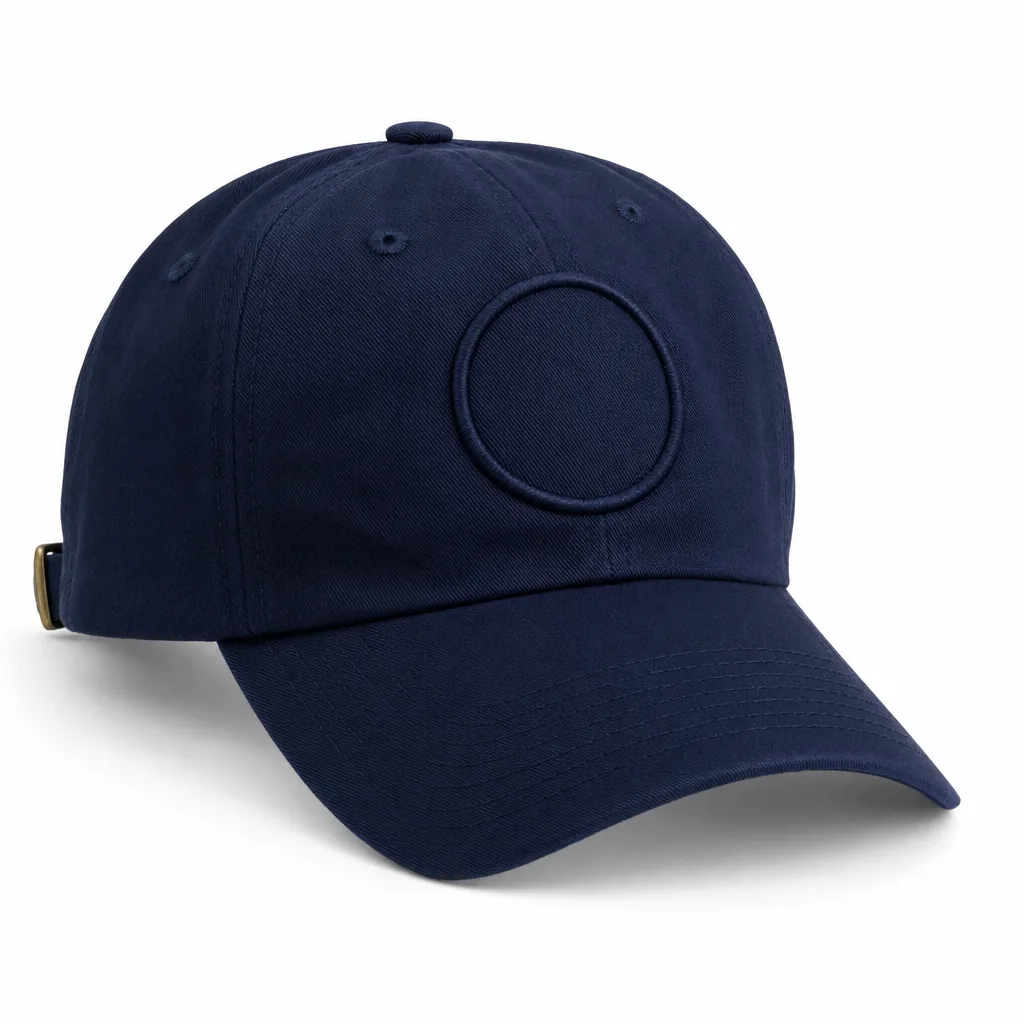
Athletic positioning works when the cap reads as one controlled surface: a dominant shell color, branding kept in the same value range, and only small shifts in gloss or texture. That is the opposite of streetwear, where contrast and oversized placement do the work. For a performance cap manufacturer, the reason is mechanical, not aesthetic. Tonal construction photographs cleanly in motion, holds up under stadium LEDs, and hides minor registration drift better than hard two-tone embroidery. On the floor, I would hold shell color to Delta-E 1.0 to 1.5 against the approved lab dip, then keep the logo in a matched thread range rather than force a bright contrast fill that exposes every needle path. The same logic should carry through the woven label, seam tape, undervisor print, and exterior decoration so a moisture-wicking cap or running cap custom program feels engineered instead of assembled from unrelated parts.
Team and league programs usually split into a core line and a seasonal or event drop. The core line stays disciplined: black, navy, white, graphite, or forest with a small center-front wordmark, side icon, or tone-on-tone patch. The drop can carry player numbers, sponsor marks, or louder colorways, but it should keep the same crown block, visor curve, and closure spec so the BOM does not jump. That is how athletic hat custom orders avoid looking like generic promotional stock. A golf cap wholesale program might hold one neutral color standard and two seasonal accents, while a UPF hat manufacturer may keep the same silhouette but change fabric finish, undervisor shade, and logo scale for different sports channels. In practice, decoration changes are low-cost; new panels, new trims, or a different fabric family move both price and MOQ much faster.
Buyers should lock color intent early with Pantone TCX references, thread charts, and a signed approval sample viewed in daylight and under 4000K indoor light. Athletes notice glare before they notice hue, so matte polyester-spandex, recycled nylon, and micro-sanded finishes usually outperform shiny tricot or high-gloss poly on a running cap custom program. If the cap needs team identification, keep the shell neutral and use a tonal patch, debossed rubber, or low-relief embroidery instead of a high-contrast fill; that gives the product a wider retail life across golf, event, and training channels. Our standard practice is to check the first sample against the uniform palette before bulk starts, because a color that looks harmless on a monitor can read three shades louder once it is stitched on a curved crown with seam tension and changing light fall across the surface.
Pricing: performance fabric costs vs standard cotton
Standard cotton twill is still the low-water mark on price, but it is not the right comparison if the buyer wants a real athletic cap. On a basic 6-panel build, a performance cap manufacturer will usually add about $0.40-$0.80 per piece for polyester, polyester-spandex, or recycled PET shell fabric versus commodity cotton twill. That delta comes from the cloth itself: 130-180 gsm performance weaves, 75D/72F filament yarn, micro-mesh side panels, and brushed tricot all cost more than low-grade ring-spun cotton, and they behave better after sweat, wash, and pack-down. If the spec is a moisture-wicking cap for running, golf, or team sideline wear, the fabric callout matters more than the marketing label. Cheap cotton is fine for a giveaway trucker; it is the wrong base if the buyer expects shape retention and dry time.
UPF is a separate cost line, and the cheap version is usually a spray finish that fades fast in laundering. A serious upf hat manufacturer will either use inherently UV-stable polyester or apply a tested finish, which typically adds $0.20-$0.30 per cap depending on the target rating and whether current lab data is already on file. For a running cap custom order with a real UPF claim, ask for the standard, not the brochure: ASTM D6603 or AS/NZS 4399 is what procurement should expect to see. UPF 30 versus UPF 50+ is usually a small materials swing, but the documentation burden is not small. Sweatband choice also moves the number. A basic poly tricot band is cheap; a double-layer microfiber or mesh-backed band adds about $0.10-$0.20 and does more for comfort than another logo hit ever will.
The expensive mistake is treating performance as one fabric choice instead of a stack of small upgrades. Once you combine a polyester shell, UPF treatment, better sweatband, tighter color control, and more consistent sewing, the common bump is $0.70-$1.30 per cap before embroidery, seam tape, labels, or packaging. That is why buyers comparing moisture-wicking cap options against standard cotton should quote the full BOM and test scope together, especially if the order needs Pantone TCX matching, Delta-E under 2.0, or multiple colorways. For volume planning, 300-500 pieces per color is a practical MOQ for stock-based athletic hat custom production, but fabric minimums can push that higher if the mill requires a full dye lot. Our standard practice is to confirm fabric availability before locking trim and decoration, because a low unit price means little if the base cloth has to be specially milled just to hit spec.
Frequently Asked Questions
What file format should I send for my logo?
Vector files (AI, EPS, PDF) are ideal. High-resolution PNG or JPG at 300 dpi on transparent background works as a fallback. Provide Pantone color references for accurate reproduction.
How long does production take?
Sampling takes 7 to 12 days. Bulk production runs 20 to 30 days depending on quantity, fabric availability and decoration complexity. Inspection and packing adds another 3 to 5 days before shipment.
Can I order a sample before bulk production?
Yes. We strongly recommend approving a pre-production sample before mass production. Samples are charged at 35 to 60 USD each plus express shipping, fully refundable against confirmed bulk orders over 500 pieces.
What is the minimum order quantity (MOQ) for custom hats?
Our standard MOQ is 100 pieces per design and color, with sampling available from 1 piece. For complex multi-color logos or premium fabric upgrades, the MOQ can be lowered with a small per-piece surcharge.
Which shipping methods do you support?
We support FOB, CIF and DDP shipping. Air express for samples and small orders, sea LCL for 100 to 500 pieces, sea FCL for 5,000+ pieces. Door-to-door DDP available for US, EU, UK, Canada and Australia.
How does ordering baseball cap custom logo work?
When evaluating baseball cap custom logo, the key considerations are construction quality, decoration capability, MOQ flexibility and lead time. Performance polyester adds roughly $0.40-$0.80 per cap vs standard cotton. UPF treatment adds another $0.20-$0.30. Sweatband upgrade adds $0.10-$0.20. Moisture-wicking fabric (typically polyester with wicking finish), moisture-wicking sweatband (usually polyester-elastane blend), lightweight construction (under 80g), and often UPF treatment.
What should buyers know about branded bills performance hat?
When evaluating branded bills performance hat, the key considerations are construction quality, decoration capability, MOQ flexibility and lead time. UPF 30 blocks ~97% of UV. UPF 50+ blocks 98%+. Most performance polyester fabric reaches UPF 30 naturally without chemical treatment. UPF 50+ usually requires treated fabric, which adds cost. Performance polyester adds roughly $0.40-$0.80 per cap vs standard cotton. UPF treatment adds another $0.20-$0.30. Sweatband upgrade adds $0.10-$0.20.
How much does branded bills custom hat cost typically cost?
When evaluating branded bills custom hat cost, the key considerations are construction quality, decoration capability, MOQ flexibility and lead time. UPF 30 blocks ~97% of UV. UPF 50+ blocks 98%+. Most performance polyester fabric reaches UPF 30 naturally without chemical treatment. UPF 50+ usually requires treated fabric, which adds cost. Moisture-wicking fabric (typically polyester with wicking finish), moisture-wicking sweatband (usually polyester-elastane blend), lightweight construction (under 80g), and often UPF…
How does ordering custom logo bucket hat work?
When evaluating custom logo bucket hat, the key considerations are construction quality, decoration capability, MOQ flexibility and lead time. Moisture-wicking fabric (typically polyester with wicking finish), moisture-wicking sweatband (usually polyester-elastane blend), lightweight construction (under 80g), and often UPF treatment. UPF 30 blocks ~97% of UV. UPF 50+ blocks 98%+. Most performance polyester fabric reaches UPF 30 naturally without chemical treatment. UPF 50+ usually requires treated fabric, which…
Ready to start your custom hat project?
Send us your tech-pack, sketch or even just an inspiration photo. We will respond with a detailed quotation and digital mock-up within 24 hours.
Request a free quoteRelated guides
Custom Made Trucker Hat: The 2026 Sourcing & Manufacturing Playbook (2026 Update) - Cost & MOQ Breakdown
Read article →
Blank Hats MOQ And Pricing Plan for Custom Hat Buyers
Read article →Ball Caps for Women: A 2026 Sourcing Playbook for International Buyers
Read article →If you are ready to take the next step on performance & athletic caps: moisture-wicking, upf and buyer specs - cost & moq breakdown - supplier checklist, our team can put a tailored quotation and digital mock-up in your inbox within 24 hours. Send the inquiry form on our contact page or message us directly on WhatsApp.