
Performance & Athletic Caps: Moisture-Wicking, UPF and Buyer Specs - Cost & MOQ Breakdown (2026 Update) - 2026 Buyer's Guide - Cost & MOQ Breakdown
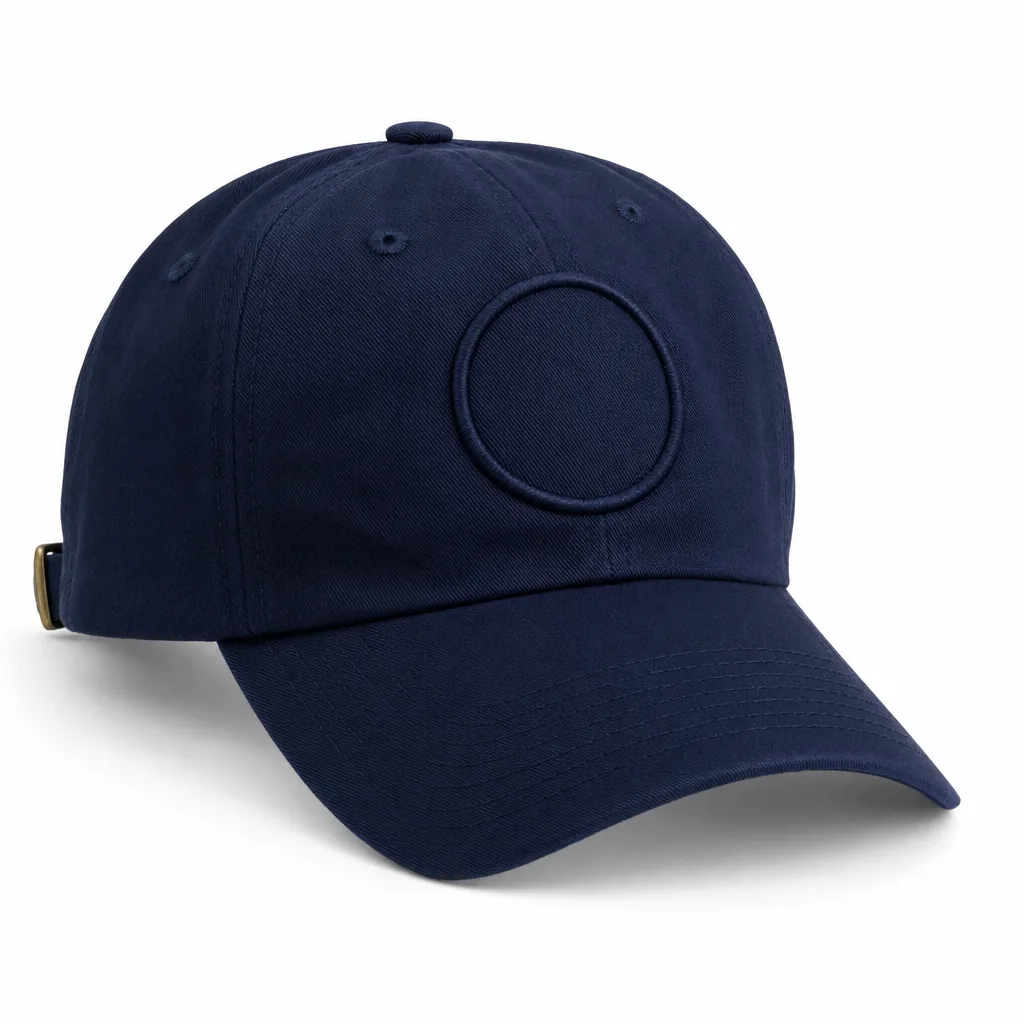
Performance & Athletic Caps: Moisture-Wicking, UPF and Buyer Specs - Cost & MOQ Breakdown (2026 Update) - 2026 Buyer's Guide - Cost & MOQ Breakdown is one of the most-asked questions we receive from international buyers, and for good reason. With dozens of factories competing for your order and an alphabet soup of technical terms in every supplier quote, even experienced importers can feel lost. This guide consolidates what we have learned producing custom hats for clients in 40+ countries.
What makes a cap 'performance' vs 'standard'
A cap earns the word "performance" only when the materials still function after sweat, UV exposure, and repeated laundering; sporty styling alone does not count. In production, the real dividing line is fabric behavior: most genuine athletic caps use 70D to 150D woven polyester, recycled polyester ripstop, or mechanical-stretch poly twill in the 95 to 160 gsm range, usually with a C0 or C6-free moisture-management finish or yarn-engineered wicking. That is a completely different spec from the 240 to 280 gsm brushed cotton twill common on standard promo caps, which absorbs perspiration, dries slowly, and telegraphs salt staining across the crown. On the factory floor, I look at moisture spread, dry-back time, and shade change after a wear test; if sweat beads on the surface, the shell darkens unevenly, or the crown is still damp after 15 to 20 minutes, it is not a true performance style. A reliable performance cap manufacturer also gets the sweatband right: typically 180 to 220 gsm polyester-elastane or polyester air-mesh with quick-dry foam. Cotton terry sweatbands feel fine at first, then turn heavy, stiff, and abrasive once they load up with sweat.
Construction tells the truth even faster than the fabric claim. A standard structured baseball cap usually finishes around 90 to 120 grams, while a proper running, golf, or training cap is more often 55 to 75 grams, depending on panel count, visor geometry, and closure type. Hitting that range means removing bulk everywhere: 0.35 mm PE visor board instead of thicker inserts, soft or half-structured front panels, reduced seam tape, laser-perforated side panels, and lightweight hook-and-loop, elastic cord, or micro webbing closures instead of metal buckles. Once a buyer adds 3D embroidery on a Tajima or Barudan run, thick woven patches, sandwich brims, or heavy buckram, the cap shifts back toward fashion headwear regardless of the shell fabric. UPF claims also need scrutiny. Polyester by itself does not guarantee UPF 50+; protection comes from fabric density, yarn construction, color depth, and sometimes a chemical finish, all of which should be backed by lab data before bulk production. In practice, moving from a standard cap to a moisture-wicking style often adds only $0.35 to $0.90 per piece at 3,000 units FOB, while validated UPF fabric, ultralight trims, and color control within Delta-E 1.5 to 2.0 typically add another $0.80 to $1.20.
UPF ratings: what's actually meaningful
UPF numbers only matter if the fabric keeps delivering that protection after dyeing, perforation, and washing. As a practical buying standard, UPF 30 blocks about 96.7% of UV radiation, while UPF 50+ blocks 98% or more, but the commercial difference is smaller than many catalogs imply. For most caps, the more meaningful question is whether the main crown fabric tests to AATCC 183 or AS/NZS 4399 after finishing, not just in greige form. A 140-160 gsm interlock polyester or 75D-150D microfiber woven used in a typical moisture wicking cap will often reach UPF 30 naturally because filament density and darker shades already limit transmission. If you add laser-cut ventilation or wide rear mesh panels, real-world protection drops in those zones, so the claimed rating only applies to the covered fabric area.
UPF 50+ is where cost starts to move, because many lightweight performance fabrics need a UV-absorbing finish or tighter construction to pass consistently. On factory side, that usually means treated polyester, higher-density microfibers, or specialty finishes added at the mill, which can raise fabric cost by roughly $0.18-$0.45 per cap depending on yardage, color count, and whether the supplier provides third-party test reports. For buyers building a running cap custom program or an athletic hat custom line, I usually recommend asking for the actual test report by color, since white, neon, and heather shades often perform worse than black or navy. A serious upf hat manufacturer should also tell you whether the rating was tested before or after 10-20 home launderings, because some budget finishes lose effectiveness faster than the sales sheet suggests.
The useful spec is not “highest UPF available”; it is matching protection level to the use case and price point. For team training, event merch, and golf cap wholesale programs, UPF 30 fabric is often the best value because it already covers the bulk of sun exposure needs without forcing expensive treated fabric into every SKU. For fishing, trail running, and high-altitude use, paying for verified UPF 50+ makes more sense, especially when the brim underbill and side panels are also built from tested fabric instead of generic sandwich mesh. At CrownsForge, our standard practice is to separate fabric protection claims from the whole-cap claim and note any mesh exemptions on the spec sheet, which avoids the common problem of a brand sourcing from one performance cap manufacturer and discovering at inspection that only the solid panel fabric, not the finished cap, was ever documented.
Sweatband construction for athletic use
The sweatband decides whether an athletic cap still feels wearable at minute 90. A standard 100% cotton terry band is cheap and familiar, but once it holds roughly 20-30 g of sweat, it stays wet, gets heavier, and starts pushing salt back onto the forehead. For running, golf, training, and dugout use, the stronger spec is a warp-knit polyester-elastane sweatband at 180-220 gsm, typically 88/12 or 90/10, brushed on the skin side and finished with a hydrophilic wicking treatment. In factory wear trials at 25°C, these bands consistently dry faster than cotton terry and feel cooler because they move moisture outward instead of storing it in the pile. Any serious performance cap manufacturer should spec the sweatband like a functional material, not a generic trim, because it affects comfort more than decorative perforation or contrast taping ever will. Construction is where good material gets ruined or validated. For most athletic caps, a finished sweatband width of 32-38 mm is the practical range: wide enough to manage sweat over 60-120 minutes, narrow enough to avoid a bulky ridge above the brow. Low-denier filament polyester with 5%-12% elastane gives better recovery and cleaner contact against the head, but only if the sewing line controls edge tension, back-join thickness, and stitch consistency. Rear joins are the first failure point in production; if the seam tunnels, twists after washing, or shows skipped stitches, runners will feel it immediately. Our standard practice is to reject bands with rear-seam bulk, poor stretch recovery, or visible puckering before they ever reach final packing.
The cost delta is small compared with the claim risk of using the wrong band. On a 3,000-5,000 piece order, moving from cotton terry to a polyester-elastane moisture-wicking band usually adds about $0.12-$0.28 per cap, depending on gsm, color, finish, and trim mill source. Antimicrobial options such as silver-ion or zinc-based finishes can add another $0.03-$0.08, but many buyers skip them unless the cap is positioned for premium golf, endurance events, or team training where repeated high-sweat wear is expected. Stock black, white, and heather gray wicking bands can often run from a 1,000-piece MOQ, while custom jacquard elastic, branded melange knits, or dyed-to-match shades usually push the trim MOQ into the 3,000-5,000 range because the knitting mill wants a full lot. The most common sourcing mistake is leaving the BOM vague. If the tech pack says only "standard sweatband," many factories will default to the cheapest available trim, which is usually cotton terry or a low-spec polyester strip with poor recovery and inconsistent dyeing. Lock the spec completely: composition, gsm, finished width, color reference in Pantone TCX, finish type, stitch construction, and test requirements such as colorfastness to perspiration, wash stability, and Delta-E tolerance against the approved lab dip. For larger programs, set inspection at AQL 2.5 and approve the pre-production sample only after at least one wash-and-dry cycle. That discipline prevents avoidable returns far more effectively than spending the same budget on cosmetic upgrades.
Reflective trim, vented panels, and other athletic features
Reflective trim is one of the first places athletic cap specs break down, because buyers approve a clean salesman sample and forget to define how the reflective component must survive production, packing, and wash. For running or cycling styles, specify woven retroreflective tape or reflective piping at 5-8 mm width, stitched rather than purely heat-applied, with initial retroreflection around 100-250 cd/lx/m² and no cracking, edge lift, or delamination after 10 home-laundry cycles. On 75D-100D polyester shells with a DWR finish, heat-transfer reflective film is the failure-prone choice; sweat salts, crown flex, and carton pressure tend to lift the edges, especially on curved side panels. Sewing reflective piping into the visor seam, sandwich seam, or rear arch seam is far more repeatable at scale. A competent performance cap manufacturer will also approve reflectivity separately from color, because a silver trim that reads slightly off against a Pantone TCX shell in daylight can still meet the functional requirement under vehicle light or flash photography.
Ventilation deserves the same discipline. On 120-140 gsm polyester-spandex shells, usually 90/10 or 92/8, laser-cut perforation on the side and rear panels vents better than standard embroidered eyelets and adds less weight than metal eyelets or bound holes. The practical spec window is 1.2-2.0 mm hole diameter with even pitch; go bigger without reinforcement and the panel starts twisting, wrinkling, or collapsing after wear testing and carton compression. On better builds, factories stabilize high-stress seam zones with fused stay tape or a light tricot backing so the crown keeps its shape after repeated use. If the brief needs more structure, printable area, or cleaner sewing yield, micro-perforated warp-knit mesh inserts are usually more commercial than large laser fields, adding roughly $0.12-$0.30 per cap versus about $0.18-$0.45 for laser cutting at 3,000 pieces. For UPF claims, state clearly whether the rating applies to the solid shell fabric only or the finished cap, because vent panels reduce protection by definition; inspection should stay at AQL 2.5 with extra checks for hole symmetry, seam waviness, puckering, and panel distortion.
Color and design considerations for athletic positioning
Color discipline matters more than logo creativity on athletic caps. The best-selling team and training colors are still black, optic white, navy, graphite, dark maroon, royal, and forest, but bulk failures usually come from component mismatch, not the palette itself. Crown shell, visor sandwich, hook-and-loop tape, sweatband binding, seam tape, and top button wrap will not match automatically just because every vendor received the same Pantone TCX code. Polyester microfiber, 92/8 poly-spandex, recycled stretch twill, and spacer mesh all absorb dye differently, so a competent performance cap manufacturer should approve shade by Pantone reference, spectrophotometer reading, and visual review under D65 and TL84 light. On monochrome programs, I treat Delta-E 1.5 as the practical ceiling between adjacent visible parts; once you drift past that, the cap starts looking assembled from mixed lots. For repeat orders, lock lab dips to the approved bulk lot and archive the actual production cutting swatch, because a reorder against an old swatch card can drift enough to trigger claims even when the mill says it is “within tolerance.”
Tonal branding usually gives a performance cap a cleaner, more technical look than high-contrast decoration, but only if the application matches the fabric weight and panel construction. Raised silicone heat transfers, matte TPU welds, laser-cut appliques, and low-profile 3D embroidery all work well on golf, training, and run-cap silhouettes, but lightweight 75D to 150D woven shells need different digitizing than cotton chino. On Tajima or Barudan machines, stitch density has to be reduced and underlay minimized, or you will see puckering, needle drag, and front-panel distortion, especially on unstructured styles with perforated side panels or bonded seams. Cost also pushes buyers toward restraint: a bonded poly-spandex cap with laser perforation, moisture-wicking mesh sweatband, and standard front branding typically runs about $4.80 to $7.20 FOB China at 300 to 500 pieces per color. Add custom-dyed closure parts, printed underbill art, or two extra logo locations, and you usually add $0.60 to $1.40 per unit while making each colorway less MOQ-efficient. In practice, two or three core colorways beat six speculative ones, especially before wear-test data and reorder velocity are proven.
Pricing: performance fabric costs vs standard cotton
The fabric upcharge from basic cotton to a true athletic build is usually manageable; what inflates price is the way performance specs stack across the BOM. On a standard 6-panel structured cap in 108x56 cotton twill at 260-280 gsm, shell fabric commonly lands around $0.55-$0.75 per cap at decent marker yield. Shift that same body to 75D-150D performance polyester—microfiber woven, mini-ripstop, or interlock knit with moisture management—and shell cost typically increases by $0.40-$0.80 per cap. The spread comes from denier, gsm, yarn type, and whether the mill is relying on a cheap topical wicking finish or solution-dyed/cationic construction with better wash stability. Any competent performance cap manufacturer should be able to tell you exactly which route they are quoting, because “quick dry” is not a technical specification. On darker shades especially, I would ask for AATCC 61 wash durability, AATCC 8 crocking, and perspiration colorfastness data; low-grade finishes often lose hand feel, show frosting, or stop moving moisture after roughly 10-15 home wash cycles.
UPF pricing is often misunderstood because the chemistry is not the main driver. In most cases, adding a UV finish to light- or mid-weight polyester only adds about $0.20-$0.30 per cap, but achieving reliable UPF 50+ depends more on cover factor, fabric density, yarn count, and shade depth than on the treatment line itself. A tight navy woven will usually test better than a pale cap with mesh side panels, even under the same finishing program, so buyers need actual lab data rather than generic claims. I would expect a factory to discuss UV transmission results, test method, and color control against approved Pantone TCX standards, ideally holding Delta-E within 1.0-1.5 after finishing. The cheapest comfort upgrade is often the sweatband: moving from a basic poly-cotton band to moisture-managing terry, spacer mesh, or brushed quick-dry polyester generally adds only $0.10-$0.20 per cap. By contrast, laser perforation, reflective heat transfers, seam tape, and lighter EVA or HDPE visor inserts can quietly add another $0.15-$0.40. At 1,000 pieces, a plain cotton cap may sit around $1.80-$2.40 FOB China, while a properly specified moisture-wicking, UPF-rated athletic cap is more realistically $2.60-$3.60 FOB under AQL 2.5.
Frequently Asked Questions
What file format should I send for my logo?
Vector files (AI, EPS, PDF) are ideal. High-resolution PNG or JPG at 300 dpi on transparent background works as a fallback. Provide Pantone color references for accurate reproduction.
How long does production take?
Sampling takes 7 to 12 days. Bulk production runs 20 to 30 days depending on quantity, fabric availability and decoration complexity. Inspection and packing adds another 3 to 5 days before shipment.
Can I order a sample before bulk production?
Yes. We strongly recommend approving a pre-production sample before mass production. Samples are charged at 35 to 60 USD each plus express shipping, fully refundable against confirmed bulk orders over 500 pieces.
What is the minimum order quantity (MOQ) for custom hats?
Our standard MOQ is 100 pieces per design and color, with sampling available from 1 piece. For complex multi-color logos or premium fabric upgrades, the MOQ can be lowered with a small per-piece surcharge.
Which shipping methods do you support?
We support FOB, CIF and DDP shipping. Air express for samples and small orders, sea LCL for 100 to 500 pieces, sea FCL for 5,000+ pieces. Door-to-door DDP available for US, EU, UK, Canada and Australia.
How does ordering baseball cap custom logo work?
When evaluating baseball cap custom logo, the key considerations are construction quality, decoration capability, MOQ flexibility and lead time. Performance polyester adds roughly $0.40-$0.80 per cap vs standard cotton. UPF treatment adds another $0.20-$0.30. Sweatband upgrade adds $0.10-$0.20. Moisture-wicking fabric (typically polyester with wicking finish), moisture-wicking sweatband (usually polyester-elastane blend), lightweight construction (under 80g), and often UPF treatment.
What should buyers know about branded bills performance hat?
When evaluating branded bills performance hat, the key considerations are construction quality, decoration capability, MOQ flexibility and lead time. UPF 30 blocks ~97% of UV. UPF 50+ blocks 98%+. Most performance polyester fabric reaches UPF 30 naturally without chemical treatment. UPF 50+ usually requires treated fabric, which adds cost. Performance polyester adds roughly $0.40-$0.80 per cap vs standard cotton. UPF treatment adds another $0.20-$0.30. Sweatband upgrade adds $0.10-$0.20.
How much does branded bills custom hat cost typically cost?
When evaluating branded bills custom hat cost, the key considerations are construction quality, decoration capability, MOQ flexibility and lead time. UPF 30 blocks ~97% of UV. UPF 50+ blocks 98%+. Most performance polyester fabric reaches UPF 30 naturally without chemical treatment. UPF 50+ usually requires treated fabric, which adds cost. Moisture-wicking fabric (typically polyester with wicking finish), moisture-wicking sweatband (usually polyester-elastane blend), lightweight construction (under 80g), and often UPF…
How does ordering custom logo bucket hat work?
When evaluating custom logo bucket hat, the key considerations are construction quality, decoration capability, MOQ flexibility and lead time. Moisture-wicking fabric (typically polyester with wicking finish), moisture-wicking sweatband (usually polyester-elastane blend), lightweight construction (under 80g), and often UPF treatment. UPF 30 blocks ~97% of UV. UPF 50+ blocks 98%+. Most performance polyester fabric reaches UPF 30 naturally without chemical treatment. UPF 50+ usually requires treated fabric, which…
Ready to start your custom hat project?
Send us your tech-pack, sketch or even just an inspiration photo. We will respond with a detailed quotation and digital mock-up within 24 hours.
Request a free quoteRelated guides
Custom Made Trucker Hat: The 2026 Sourcing & Manufacturing Playbook (2026 Update) - Cost & MOQ Breakdown
Read article →
Blank Hats MOQ And Pricing Plan for Custom Hat Buyers
Read article →Ball Caps for Women: A 2026 Sourcing Playbook for International Buyers
Read article →If you are ready to take the next step on performance & athletic caps: moisture-wicking, upf and buyer specs - cost & moq breakdown (2026 update) - 2026 buyer's guide - cost & moq breakdown, our team can put a tailored quotation and digital mock-up in your inbox within 24 hours. Send the inquiry form on our contact page or message us directly on WhatsApp.