
Pantone Color Matching for Custom Caps: A Manufacturer's Reference - Supplier Checklist
Every week, our sales team answers detailed questions about pantone color matching for custom caps: a manufacturer's reference - supplier checklist. We wrote this guide so that wholesalers, streetwear brands, corporate buyers and promotional resellers can compare options with full information, and avoid the traps that show up only after production has started.
Pantone TCX vs TPX — which reference do hat factories actually use?
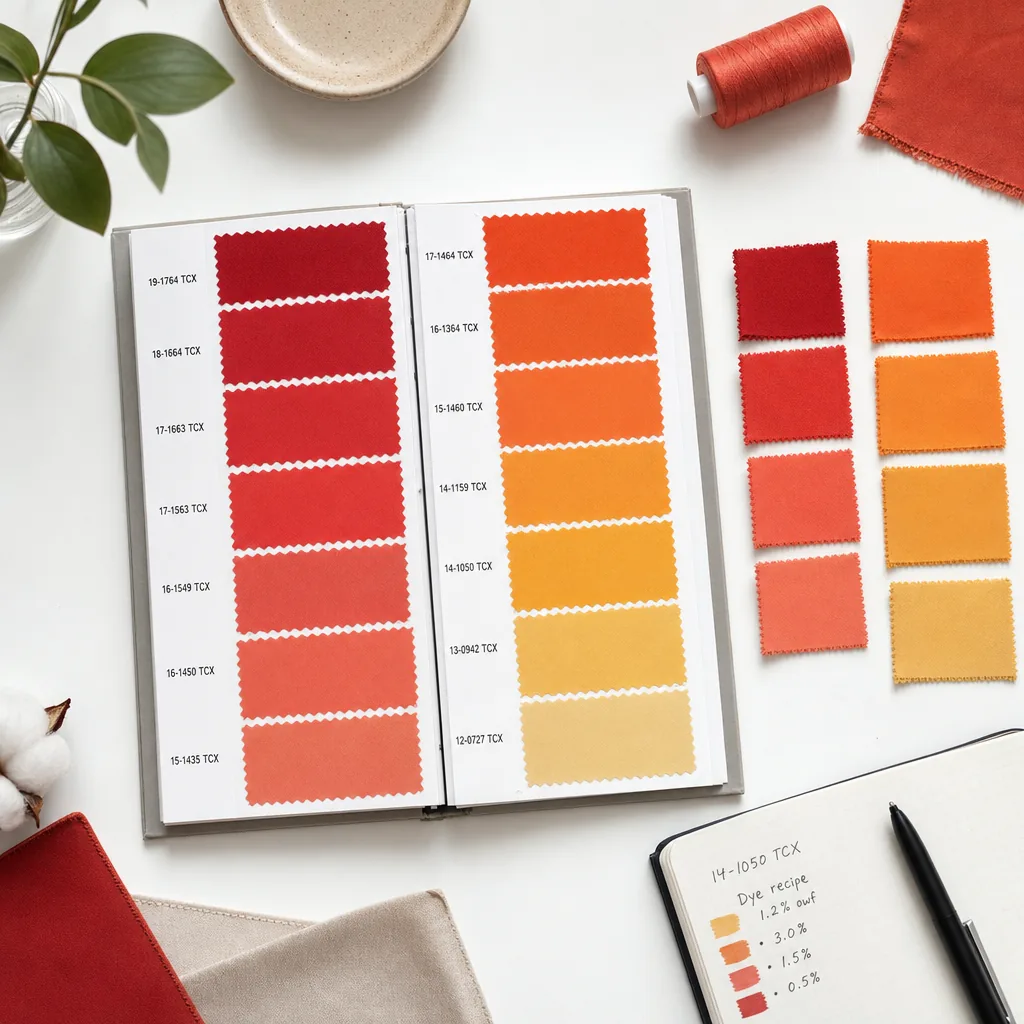
TCX is the reference that matters in cap production because caps are built from dyed textiles, not coated paper. Pantone retired TPX and moved paper-based fashion references to TPG, but many tech packs still say “TPX,” and that is exactly where avoidable color drift starts in a pantone matching hat workflow. A TCX swatch is a dyed cotton standard, so its surface texture, absorbency, and light scatter read far closer to actual cap materials such as 270 gsm brushed cotton twill, 10 oz canvas, chino, or 16-wale corduroy than a smooth paper chip. On the factory side, lab dips should be judged against the TCX standard under D65 lighting in a light booth, not beside a window or from a phone photo. For solid 100% cotton shells, a practical approval window is usually Delta-E 1.0 to 1.5; washed finishes, pigment dyes, heathers, and enzyme-treated fabrics often need a looser range around Delta-E 1.5 to 2.0 because finish variation changes how the shade is perceived on the crown.
If a buyer submits only a TPX or TPG reference, the mismatch usually appears at bulk approval, when the color is finally seen on the finished hat rather than on a mood board. Paper reflects evenly; cap materials do not. Weave density, pile direction, buckram stiffness, seam tension, topstitch shadow, and adjacent embroidery all shift the visual result, so the same nominal Pantone can look cleaner on a card and then turn duller, warmer, or slightly greener on a six-panel crown. That is why the usable standard is: specify the exact FHI TCX code, confirm shell composition and finish, and approve a lab dip or strike-off on the actual material under at least D65 and warm retail light around 3000K. A 60/40 cotton-poly twill will not build color like 100% cotton because reactive and disperse dye systems behave differently, and acrylic/wool-blend snapbacks often require closest visual match rather than strict instrumental match, especially on forest, rust, olive, and muted khaki shades. Main shell, visor facing, button, eyelets, rope, closure strap, and sweatband tape should also be checked separately because trim suppliers rarely hold the same tolerance as the primary fabric mill.
The cleanest approval standard is physical and documented. PDF mockups, calibrated monitors, and phone screenshots are useful for design alignment, but they are not production standards and they are worthless when a repeat order comes back six months later. The factory should log the approved TCX code, measured Delta-E, fabric weight in gsm, fiber content, finish, and dye lot on the pre-production sheet, then retain the signed swatch as the reorder benchmark. If a supplier cannot tell you whether approval was made against TCX, which light source was used, or whether the tolerance was AATCC-style visual, instrumental, or both, the color control is still too loose for serious custom cap manufacturing. For reliable pantone matching hat results, buyers should treat TPX or TPG as design-side guidance only and lock bulk dyeing against a real textile standard before cutting begins.
Delta-E: what tolerance should you specify?
“Match Pantone” is not an acceptance standard; it is a vague instruction that guarantees arguments at bulk delivery. Delta-E turns that into a measurable pass/fail rule by comparing the approved standard and production material in CIE L*a*b* values. For a pantone matching hat program, write tolerance by product tier and by visible area. On retail or licensed caps, Delta-E 1.0-1.5 max is the right target for front crown panels and other customer-facing parts; on mainstream commercial headwear, Delta-E 2.0 max is usually realistic; on price-driven promotional caps, Delta-E 3.0 max is the highest number I would put in a PO. Above Delta-E 4.0, most buyers will see the shift without instruments, especially on black, navy, bottle green, and saturated red. Fabric construction matters. A smooth 245-280 gsm cotton twill, brushed microfiber, or recycled poly plain weave will usually hold color tighter than enzyme-washed chino, slub canvas, heather jersey, or pigment-washed fabrics, where texture and wash chemistry scatter light and widen visual variation.
The method matters as much as the tolerance. A lab dip can hit Pantone 19-4052 TCX on a card, then drift after heat-setting, coating, lamination, or final pressing, especially when the cap mixes cotton shell fabric, 75D-150D polyester trims, nylon taslon, and rayon embroidery thread from different dye systems. Specify measurement conditions in the tech pack: D65 illuminant, 10° observer, spectrophotometer reading from bulk production material, and whether acceptance is based on average Delta-E or maximum Delta-E at any point. I would never approve color as one single cap-level judgment; split it by component: crown fabric, visor top, underbrim, closure tape, sweatband, embroidery thread, woven label, TPU patch, and heat transfer. A shell at Delta-E 1.3 and logo embroidery at 2.6 will still look wrong on shelf. Our standard practice is Delta-E 1.5 max on front-facing components and 2.0 max on secondary parts for retail orders, while Delta-E 3.0 max is commercially sensible for giveaways or rush repeats where claim risk must stay proportional to budget.
Dye-lot batch consistency for repeat orders
Repeat orders go wrong when the first 1,000 caps are treated as a permanent color standard. They are not. A first run may use one dye lot of 270 gsm cotton twill or 180 gsm recycled brushed polyester; six months later the mill is usually on a different kettle, different liquor ratio, and often a different finishing recipe. Even when both runs target the same Pantone TCX, a Delta-E shift of 0.8 to 1.5 is routine on piece-dyed fabric, and that difference is easy to see when two caps are compared side by side under D65 or TL84 lighting. The problem is worst on muted shades like stone, sage, mushroom, and putty, where even a small hue drift makes the cap look like a different style. A dependable pantone matching hat program treats replenishment as batch-controlled production, not a casual reorder from an old approval photo or a faded salesman swatch. The cleanest way to control repeat shade is to lock fabric early. For stable SKUs, reserve 2,000 to 3,000 yards from the same bulk dye lot on the first PO and release it against staggered cutting schedules; the carrying cost is usually far lower than discounting mismatched replenishment stock. If fabric cannot be reserved, write the repeat standard into the PO before yarn or greige fabric is booked: define the light source, the approved master, and the acceptance band. In practice, buyers usually hold Delta-E under 1.0 for black, navy, and corporate colors, and under 1.5 for fashion shades. The factory should retain one signed lab dip, one bulk cutting panel, and one sealed gold-seal cap, all tied to mill lot number, roll number, finish, and test conditions. Without that paper trail, a pantone matching hat reorder is guesswork.
Trim mismatch is the second failure point, because buyers focus on crown fabric and forget that top buttons, sandwich brims, snap closures, woven labels, sweatbands, and embroidery thread do not reflect light the same way. A polyester undervisor can read noticeably cooler than a cotton crown by more than Delta-E 1.5, and thread from Madeira, Gunold, or Coats that looks acceptable on the cone can shift once stitched at high density on a Tajima or Barudan head. That is why repeat approvals should state exactly where shade tolerance is allowed and where separate visual sign-off is mandatory. Crown panels may pass within instrument tolerance, but top button, visor sandwich, undervisor, and logo thread often need individual approval because those are the first places retail buyers spot mismatch. On the floor, color control has to happen before cutting, not at final audit. Compare retained references in a calibrated light box under D65 and TL84, then inspect incoming fabric and trims against the approved master before production release. AQL 2.5 is fine for final workmanship inspection, but it is too late for shade problems once 1,200 caps have already been sewn. Our standard practice is to quarantine any component that does not visually balance to the master cap, even if the supplier insists it is technically within Pantone tolerance. That distinction matters in real business: two shipments can both pass paperwork and still look inconsistent when they sit on the same retail wall or in the same team store replenishment.
The five-color trap: when too many Pantones blow up your unit cost
The fastest way to wreck margin on a cap program is to specify too many body colors too early. Every extra Pantone on woven twill, brushed cotton, or recycled polyester usually means a separate lab dip, a separate bulk dye lot, and separate shade approval records tied back to the purchase order. In real factory terms, that is not just “another color”; it is another setup at the dye house, another 200-300 yard minimum per fabric base, and another chance for shade drift between lots. A brand asking for 6-8 seasonal colors on one 6-panel shape often expects scale pricing, then gets surprised when the cut-and-sew cost stays flat but the fabric cost per usable cap jumps 12% to 28% because deadstock gets baked into the quote. That is where a pantone matching hat program stops being a design exercise and becomes an inventory problem.
The hidden cost is that color complexity compounds across materials, not just shell fabric. If the crown is Pantone 19-4052 TCX, the visor sandwich, top button, eyelets, thread, sweatband print, woven label ground, and sometimes even the buckle tape have to be matched or intentionally offset. A competent color matching cap manufacturer will control this with approved standards and Delta-E tolerances, but each component has a different dye behavior: cotton reactive dye, polyester disperse dye, and embroidery thread sheen will never read exactly the same under D65 and TL84 lighting. For most programs, our standard practice is to hold body fabric within Delta-E 1.0-1.5 to the approved standard and accept slightly looser visual alignment on trims, especially on textured materials. If you demand perfect custom hat color accuracy across seven colors and four substrates, expect longer lead times, more rejects at inline inspection, and higher re-dye risk.
The practical fix is to build the range around 3-4 hero colors, then use accents for variety: contrast undervisor, rope, sandwich, patch merrow, or 3D embroidery fill instead of a fully new dyed shell. That keeps the fabric buy concentrated, improves yield, and gives the pantone cap factory enough volume per shade to buy cleaner lots and keep records straight. For capsule drops, I usually recommend locking the core body colors in Pantone TCX references first, then testing novelty through trims or artwork colors that can change without forcing a new fabric run. A pantone tcx hat assortment built this way often lands $0.35 to $0.90 lower per cap versus a scattered six-color approach at 500-1,000 pieces per color, and the savings are even more obvious once you factor carton consolidation, replacement risk, and AQL 2.5 inspection fallout from marginal shade variation.
What to send your factory for first-time color matching
Send a physical Pantone TCX chip first if you expect repeatable bulk color, especially on brushed cotton twill, suede microfiber, or acrylic-wool blends where dye uptake shifts by fiber type. A factory can work from a code like 19-4024 TCX, but the actual chip is what lets the lab dip team judge undertone, depth, and finish under D65 light rather than guessing from a number alone. For a first-time pantone matching hat program, that chip should travel with a hard-copy tech pack listing shell fabric composition, target Pantone, logo colors, and tolerance expectations. On our floor, we treat a signed chip plus material callout as the only clean starting point for custom hat color accuracy, because the same Pantone can read noticeably different on 100% cotton twill versus 600D recycled polyester or melton wool.
If you do not have a Pantone chip, mail an approved physical cap or fabric swatch that already shows the target shade. That is second-best because it gives the color matching cap manufacturer a real-world reference for how the color behaves on texture, pile direction, coating, and stitch density. A navy on flat woven polyester often reads cleaner than the same navy on washed chino cotton, and embroidery thread can shift visually by 0.5 to 1.0 Delta-E against the base cloth even when the dye lot is acceptable. A capable pantone cap factory should compare your sample under a light box, note wear fading or UV shift, and then issue a lab dip or strike-off approval standard before cutting bulk. If you care about delta e cap dye control, ask the supplier to define the acceptable range up front; many serious buyers hold body fabric within Delta-E 1.0 to 1.5 versus the approved standard.
A digital image is the weakest reference and should only support, not replace, a physical standard. Phone cameras auto-correct white balance, laptop screens drift, and social media compression can push reds warmer or blacks greener without anyone noticing until finished caps arrive. A screenshot with no Pantone callout is where most first orders go sideways, especially when clients say 'match this beige' and the image was shot under warm retail lighting at 3000K. If digital is all you have, send the highest-resolution file available, include the Pantone TCX code if known, and specify whether the image is only for mood or for exact shade targeting. CrownsForge standard practice is to warn buyers that a photo can guide styling, but it is not a reliable approval basis for pantone tcx hat production when freight, remake cost, and lead time are on the line.
Sustainable dyeing: can you Pantone-match recycled fabric?
Yes, you can Pantone-match recycled fabric, but any honest cap factory will give you wider tolerances than on virgin stock. Recycled polyester, recycled cotton, and rPET blends start with more base-shade noise because the feedstock is not perfectly uniform lot to lot. That matters most on light heathers, dusty tones, and muted earth colors where even a small substrate shift shows through the dye. On a custom cap program, I usually tell buyers to expect bulk tolerance closer to Delta-E 1.5-2.5 on recycled fabric, versus 1.0-1.5 on stable virgin twill or brushed cotton, assuming the lab dip was approved correctly. If a supplier promises recycled fabric will hit every Pantone TCX the same way as virgin yarn-dyed goods, they are overselling. For a serious pantone matching hat order, the achievable target matters more than the original chip.
The practical control point is pre-dye sampling, not the PO stage. A disciplined color matching cap manufacturer should make lab dips or handloom swatches first, then compare them under D65 and TL84 light boxes before you lock bulk. We normally ask buyers to approve a physical swatch against the Pantone reference, with the expected fabric composition, finish, and GSM already fixed; changing from 100% recycled cotton twill at 270 gsm to a recycled poly-cotton at 220 gsm can shift the visual result even when the dyestuff formula is close. On darker shades like black, navy, or bottle green, recycled content is usually manageable. On pastel pink, sand, sage, or off-white, the base fiber variation becomes more obvious, so a pantone tcx hat target may need a commercial tolerance note on the tech pack.
The best way to buy sustainably without creating color disputes is to define the approval standard in writing. Specify the Pantone code, fabric content, finish, viewing condition, and accepted Delta-E range before bulk dyeing starts; for recycled programs, I recommend putting the approved swatch ahead of the book chip if there is any visual conflict. A competent pantone cap factory should also separate dye lots during cutting and track roll cards so crown panels, visor, and self-fabric closure do not pull from mismatched shades. CrownsForge standard practice is to get signed swatch approval before bulk commitment because recycled fabric can absolutely deliver good custom hat color accuracy, but only if both sides accept that sustainability sometimes trades a little precision for consistency you can actually reproduce at scale.
Frequently Asked Questions
Do you support sustainability certifications?
Yes. We work with GOTS organic cotton, GRS-certified recycled polyester, OEKO-TEX Standard 100 fabrics, and are BSCI and Sedex audited. Certification documentation can be provided per order.
Can I order a sample before bulk production?
Yes. We strongly recommend approving a pre-production sample before mass production. Samples are charged at 35 to 60 USD each plus express shipping, fully refundable against confirmed bulk orders over 500 pieces.
What is the minimum order quantity (MOQ) for custom hats?
Our standard MOQ is 100 pieces per design and color, with sampling available from 1 piece. For complex multi-color logos or premium fabric upgrades, the MOQ can be lowered with a small per-piece surcharge.
How long does production take?
Sampling takes 7 to 12 days. Bulk production runs 20 to 30 days depending on quantity, fabric availability and decoration complexity. Inspection and packing adds another 3 to 5 days before shipment.
What logo decoration techniques do you offer?
3D puff embroidery, flat embroidery, woven patch, leather patch, PVC patch, screen printing, sublimation, applique and laser etching, all in-house with no subcontracting.
How does ordering best custom baseball cap work?
When evaluating best custom baseball cap, the key considerations are construction quality, decoration capability, MOQ flexibility and lead time. A physical Pantone TCX chip is best. A printed cap with the approved color, sent in the post, is second-best. A digital image is least reliable — monitor color casts and lighting both distort the reference. TCX (Textile Cotton) is the fabric standard; TPX (Textile Paper) is the printer-friendly version. Most cap factories dye to TCX. Buyers who supply only TPX often…
How does ordering bucket hat custom work?
When evaluating bucket hat custom, the key considerations are construction quality, decoration capability, MOQ flexibility and lead time. TCX (Textile Cotton) is the fabric standard; TPX (Textile Paper) is the printer-friendly version. Most cap factories dye to TCX. Buyers who supply only TPX often discover small but visible color drift between paper proof and finished cap fabric. Delta-E quantifies the perceived color difference between target and actual. Under 1.5 is excellent (most observers cannot see the…
How does ordering custom hat embroidery near me work?
When evaluating custom hat embroidery near me, the key considerations are construction quality, decoration capability, MOQ flexibility and lead time. TCX (Textile Cotton) is the fabric standard; TPX (Textile Paper) is the printer-friendly version. Most cap factories dye to TCX. Buyers who supply only TPX often discover small but visible color drift between paper proof and finished cap fabric. Delta-E quantifies the perceived color difference between target and actual. Under 1.5 is excellent (most observers cannot see the…
How does ordering custom baseball cap motorcycle helmet work?
When evaluating custom baseball cap motorcycle helmet, the key considerations are construction quality, decoration capability, MOQ flexibility and lead time. TCX (Textile Cotton) is the fabric standard; TPX (Textile Paper) is the printer-friendly version. Most cap factories dye to TCX. Buyers who supply only TPX often discover small but visible color drift between paper proof and finished cap fabric. A physical Pantone TCX chip is best. A printed cap with the approved color, sent in the post, is second-best. A digital image is…
What does Pantone match mean?
You've probably heard the word PMS, which stands for the Pantone Matching System, a proprietary numbering system for colors used in graphic design.
Ready to start your custom hat project?
Send us your tech-pack, sketch or even just an inspiration photo. We will respond with a detailed quotation and digital mock-up within 24 hours.
Request a free quoteRelated guides
Launching a Hat Brand: Marketing Playbook for the First 12 Months
Read article →
Embroidery Hats Machine: When to Use It, Costs, and What to Ask Your Factory
Read article →Custom Hats for Corporate, Business and Branded Merchandise Programs - Cost & MOQ Breakdown
Read article →Sourcing custom hats does not have to be complicated. With the right manufacturing partner, clear specifications and a small upfront investment in sampling, you can launch a retail-quality product in 30 to 45 days.