
Merino Wool Beanie: Properties, Costs and How to Spec It Right - 2026 Buyer's Guide
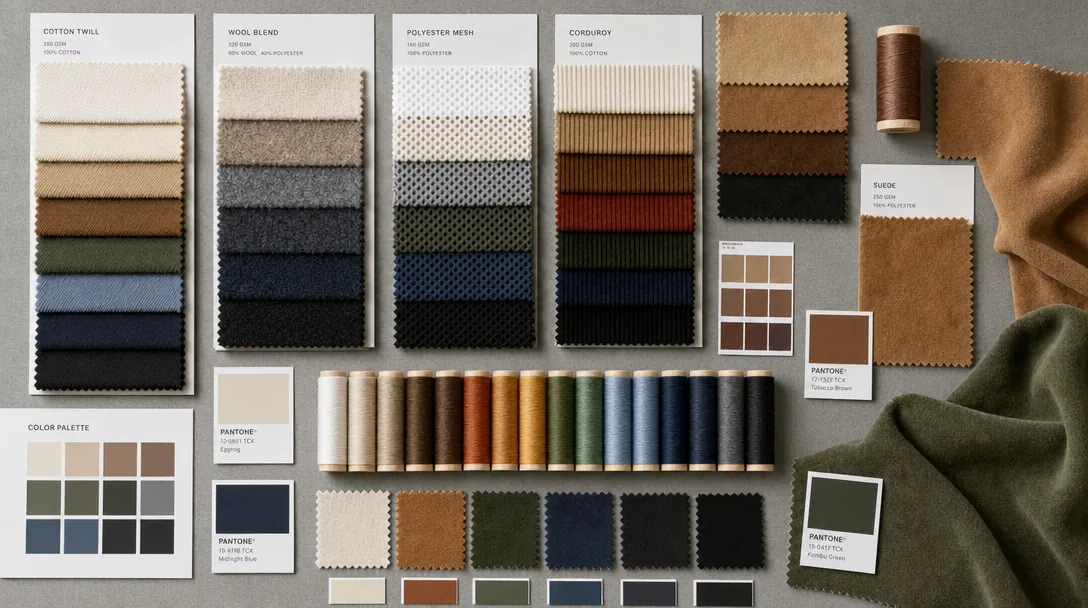
Merino Wool Beanie: Properties, Costs and How to Spec It Right - 2026 Buyer's Guide is one of the most-asked questions we receive from international buyers, and for good reason. With dozens of factories competing for your order and an alphabet soup of technical terms in every supplier quote, even experienced importers can feel lost. This guide consolidates what we have learned producing custom hats for clients in 40+ countries.
Acrylic Beanie
Acrylic remains the fallback when a buyer starts with a merino wool beanie but cannot support the fiber cost. The reason is simple: acrylic is predictable, cheap, and easy to shade-match at scale. In Zhejiang, most factories knit basic cuff styles in 28/2, 32/2, or 36/2 acrylic on 7G, 9G, or 12G computerized flat machines, depending on whether the target is a bulky promo look or a tighter retail face. A 100% acrylic spec is still the market standard, but the better yarns are often acrylic/nylon or acrylic/polyester blends because they wear cleaner at the cuff edge and feel less harsh than low-grade bright acrylic. On the floor, the quality difference is rarely visible in a sales photo; it shows up in finished weight, crown linking, and steam setting. A beanie at 60-65 g usually feels insubstantial and loses shape faster, while a properly built adult cuff style is more often 75-95 g. For logos on rib cuffs, knitted jacquard generally gives sharper edges than low-density embroidery, which can sink into the ribs and skew once the cuff stretches on head.
The spec sheet has to close every loophole a factory would otherwise leave open. “100% acrylic, black, one size” is not a production spec. Lock in yarn composition, yarn count, machine gauge, stitch structure, finished weight, cuff height, body height, lay-flat width, and post-conditioning tolerances such as ±1 cm for height and width. For color approval, use Pantone TCX as the reference and require either a lab dip or a knit-down before bulk because black, navy, charcoal heather, and saturated red are where drift usually shows first. A realistic shade approval standard is typically Delta-E 1.5-2.0, not a fantasy perfect match across different dye lots. MOQ for a plain cuff beanie is often 100-300 pieces per color, but jacquard logos, custom pom-poms, or space-dye yarns usually push the mill to 300-500 pieces. In Zhejiang, 500 pieces commonly price around $1.10-$2.20 EXW for a basic solid acrylic beanie and $1.60-$3.20 for jacquard with standard trims. Inspect to AQL 2.5, then specifically check cuff recovery, twisted seams after linking, needle lines, pilling after rub, and deformation from over-compressed vacuum packing. If the brief truly requires thermoregulation, odor management, and softer next-to-skin comfort, a merino wool beanie is the right spec; acrylic is the cost-driven alternative, not the equivalent.
Cotton Beanie
Cotton is the right control sample when you are deciding whether a merino wool beanie premium is commercially justified, because cotton programs are easier to stabilize in bulk. In Zhejiang, the most reliable constructions are 100% combed cotton jersey, 95/5 cotton-spandex 2x2 rib, and cotton-acrylic blends where recovery after laundering matters. For a close skull fit, 180-240 gsm usually holds shape without feeling heavy; a cuffed winter style is safer at 280-340 gsm. If surface quality matters, specify combed yarn in 21s, 26s, or 32s rather than open-end cotton, and write shrinkage limits into the spec: maximum 5% lengthwise and 4% widthwise after one home-laundry cycle. Color control also needs to be tighter than many buyers assume. Black, white, and navy are routine piece-dyed shades, but custom colors should be approved by lab dip under D65 light with a Delta-E target below 1.5 to the signed standard, otherwise repeat orders drift fast.
Most cotton beanie problems start with a weak tech pack, not the sewing line. Lock fiber-content tolerance, finished weight, washed measurements, cuff height, stitch gauge, seam construction, stretch-and-recovery targets, and trim positions before sampling. Decoration needs restraint: embroidery density that works on a structured cap will tunnel a knit face and distort the logo edge. On Tajima or Barudan heads, I would rather open the fill density and add proper backing than try to steam out puckering after production. Typical MOQ is 300-500 pieces per color for a plain private-label cotton beanie, while jacquard, yarn-dyed stripe, or applique usually needs 800-1,200 pieces to price correctly. For 2026 FOB, basic cut-and-sew cotton beanies generally sit around $1.10-$1.90, better rib styles with custom labels at $1.80-$2.80, and $3.20+ once you add dense embroidery, garment wash, or branded packaging.
Inspection should be built around wash and handling failures, because that is where cotton exposes its weaknesses against a merino wool beanie. The defects that matter are spirality, side-seam grin, needle lines, cuff-depth variance, fabric skew above 3%, lot-to-lot shade banding, and embroidery distortion caused by over-tensioning. Dark shades also need test-backed colorfastness and crocking results, especially when bulk-packed next to light trims or adjacent garments that can pick up transfer during transit. AQL 2.5 is a sensible workmanship baseline, but measurements should be checked after wash on the main fit points, not only in unwashed final inspection. Commercially, the tradeoff is simple: cotton is cheaper, easier to source, and less sensitive to yarn-lot variation than a merino wool beanie, but it cannot match merino on warmth-to-weight, odor resistance, or premium positioning. For fashion basics and promotional volume, cotton usually wins; for outdoor, travel, or elevated gifting, merino generally earns the higher landed cost.
Black Beanie Hat
A black beanie is where loose knit specs get expensive fast: black amplifies needle lines, barre, oil contamination, and shade variation that lighter colors hide until the goods hit retail lighting. For a merino wool beanie, lock the construction before sampling instead of approving by “nice handfeel.” A practical spec starts with gauge and yarn count: 7GG with 2/30 Nm for a heavier winter hand, or 12GG with 2/48 Nm for a cleaner, denser face. Call out stitch structure as well—1x1 rib for stretch and recovery, half-cardigan if you want more loft, plain jersey only if you accept more edge movement and less dimensional stability. Then write the measurements like a factory can actually run them: finished weight around 280-420 gsm, body height 21-23 cm, cuff depth 6-8 cm, relaxed opening 19-22 cm, plus tolerance by point. If the PO just says “black beanie,” you will spend bulk production arguing about fit, rebound, and whether the hand is soft enough.
Color control is the part most buyers under-spec. “Black” is not one color in wool; one yarn lot can read neutral black, the next blue-black, and another slightly charcoal after wash and steaming. Use a signed yarn standard for bulk and a Pantone TCX reference only for labels or woven trims, then state tolerance in the PO: Delta-E under 1.0 for trims and under 1.5 lot-to-lot on the knitted body is realistic if the dyer is disciplined. Also specify whether the merino must be mulesing-free or RWS-certified, because that affects spinner choice, yarn availability, and usually adds 7-14 days to sourcing. In Zhejiang, a custom black merino wool beanie generally makes commercial sense from 500-1,000 pieces per color, with EXW pricing around $2.80-$5.50 depending on merino percentage, gauge, wash finish, and branding method; a 100% acrylic version often lands at $1.10-$1.90 at 500 pieces, but it will not match merino for moisture buffering, thermal regulation, or premium hand.
Black knitwear is also where weak QA shows up immediately. The predictable failure points are needle lines, uneven cuff depth, spiraling after wash, harsh hand from over-resin finishing, crocking onto skin or tissue, and torque caused by poor linking or inconsistent steam blocking. Bulk should be checked under a D65 light box, not warehouse fluorescents, with carton-by-carton shade continuity and AQL 2.5 inspection on body height, cuff depth, opening width, and panel symmetry. For a merino wool beanie, I would also write performance gates into approval: pilling after Martindale testing, dimensional stability after at least one care-label wash, and stretch-recovery on the opening and cuff over five pull cycles. If branding is embroidered, stitch density matters more than buyers think; a dense logo on Tajima or Barudan heads can pucker a 12GG body and distort how the cuff sits on head.
Slouchy Beanie
Slouchy beanies fail at the spec stage, not the knitting stage. If a tech pack only says "slouchy," the mill will guess crown drop, opening recovery, and body volume, and your first two samples can fit like different SKUs. For a commercial merino wool beanie, lock four numbers up front: finished height after wash, laid-flat width, opening circumference, and target finished weight. A clean everyday slouch usually sits at 28-30 cm finished height and 24-26 cm laid-flat width; a deeper streetwear profile is typically 31-32 cm with a looser opening recovery. On 7GG versus 12GG, that silhouette changes fast because yarn count and stitch density drive drape more than sketch artwork does. Practical yarns are 19.5-21.5 micron merino in 2/48Nm or 2/60Nm, but I would not approve bulk without confirmed courses per cm, wales per cm, ply construction, and wash standard. If the finishing house is loose on compaction, bulk can come back 5-8% smaller than the sales sample and lose the intended back-fall completely.
Construction choice shows immediately on a slouch fit because any weak top closure creates a pointed crown or visible roping when worn. Fully fashioned knitting gives the cleanest silhouette and best yarn efficiency, while cut-and-sew panels are cheaper but less stable if tension control drifts lot to lot. Specify the crown-closing method in black and white: hand linked, machine linked, or overlocked. A low-cost 4-thread overlock is where many cheap slouch styles start looking like promo beanies instead of retail product. In China, MOQ is usually driven by yarn booking rather than sewing capacity, so a plain slouchy merino wool beanie normally starts around 300-500 pcs per color if you need custom-dyed yarn; stock shades can sometimes bring that down. For 2026, realistic FOB pricing is about US$4.20-6.80 for a single-layer style and US$5.80-8.50 with RWS-certified yarn, Pantone TCX approval, wash-after-knit finishing, woven labels, or rib-to-jersey structure changes. Final inspection should not stop at visual checks: use AQL 2.5, then pull 10-20 pcs per lot for weight, recovery, crown symmetry, and post-stretch opening stability. For this category, washed measurement tolerance should be held at ±1 cm on height and width; anything looser creates obvious carton-to-carton drift.
Cotton Beanie Men
When a buyer asks for a cotton option while benchmarking a merino wool beanie, the spec has to move past fiber name and into knit engineering. "Cotton beanie" can mean a light 180-220 gsm combed cotton jersey with a soft hand and low bulk, or a heavier 2x2 rib built in 7G to 12G using 26s or 32s combed yarn for better recovery and shape retention. Those are completely different products on fit, warmth, and decoration behavior. If the tech pack is loose, the factory will usually backfill to the target FOB, which is exactly how one sample fits cleanly and the production lot comes out shallow, loose, or overweight. Lock the measurable points early: body height 26-28 cm, cuff depth 6-8 cm, relaxed opening and stretch range, finished weight tolerance at +/-5%, and color to approved Pantone TCX with Delta-E below 1.5 against the lab dip. Cotton is cooler, less staticky, and usually more comfortable indoors, but it will not deliver the insulation, resilience, or odor management of a merino wool beanie once wear conditions drop below roughly 10°C.
The failure points on cotton beanies are predictable: spirality after wash, vertical growth in wear, and surface distortion after embroidery. Most programs are either cut-and-sew from tubular knit or fully fashioned on flat machines, then linked, washed, boarded, trimmed, and needle- or metal-checked if trims are added. Decoration needs discipline. A dense logo run on Tajima or Barudan heads can tunnel or pucker a lightweight rib unless the digitizing, underlay, backing weight, and stitch density are set for knit stretch rather than for a sweatshirt standard. On quality control, AQL 2.5 is common, but knitted headwear needs measured data, not just a visual final. I would require at least 10 units per colorway for point measurement, plus checks on crown seam grin, needle lines, shade banding by dye lot, and colorfastness to wash and crocking at minimum grade 4. Commercially, stock-yarn cotton programs usually start around 300-500 pcs per color, while custom-dyed yarn often moves MOQ to 1,000 pcs. In Zhejiang, a basic cotton beanie is typically $1.20-$2.40 FOB Ningbo at 500-1,000 pcs; a fully fashioned build with custom labels, wash testing, and tighter tolerances is more like $2.80-$4.20. For premium winter retail or team issue, keep the benchmark tied to a merino wool beanie, because the higher raw-material cost usually buys a much stronger performance story.
100 Acrylic Beanie
A 100% acrylic beanie is the price-floor reference, but it is not a true substitute for a merino wool beanie when the brief includes moisture buffering, odor control, or a premium handfeel. On the factory floor, the biggest variable is not the fiber label but the yarn spec: 28/2 or 32/2 spun acrylic on 7GG, 9GG, or 12GG machines behaves very differently in stretch recovery, cover, and pilling. A sample can feel soft because the spinner used longer staple and a looser twist, then the bulk lot pills fast if the mill swaps to a cheaper feedstock. Lock the tech pack early: gauge, yarn count, stitch structure like 1x1 rib, full cardigan, or single jersey, finished weight in grams, cuff height, body height, relaxed width, and dimensional tolerance after steaming. If the color must align with a broader cold-weather program, call out Pantone TCX and set a Delta-E tolerance of 1.0-1.5 for lab dip approval, because acrylic usually matches shade better than wool but can still drift when stock colors are blended instead of piece dyed to order.
The commercial advantage is straightforward: acrylic gives buyers easier MOQ planning and cleaner FOB math. A plain cuffed beanie with a woven loop label typically lands around $1.10-$1.85 FOB China at 500 pieces; add jacquard artwork, a pom-pom, reflective filament, or post-knit embroidery and the range moves to roughly $2.20-$3.40, depending on machine time, trim count, and hand-finishing minutes. Stock-service yarns in Zhejiang or Jiangsu can support 200-300 pieces per color, while custom-dyed acrylic usually adds 7-12 days and pushes the spinner to higher minimums. Inspection needs to go beyond appearance, because acrylic often hides problems until wear: check barré, crown seam grin, cuff torque, uneven take-down tension, finishing odor, and pilling performance after abrasion testing. For retail programs, AQL 2.5 is standard, but if the item sits beside a merino wool beanie in the same assortment, tighten weight tolerance to plus or minus 5 g, confirm shade consistency under D65 light, and approve bulk against a sealed wash-hand standard rather than against the salesman sample alone.
Working with CrownsForge for merino wool beanie programs
Lock the yarn spec before you talk about patches, hangtags, or retail cartons; that is where most merino wool beanie programs go off track. A brief that says only “soft merino” is useless on a knitting floor. Specify fiber content, micron range, yarn count, ply, gauge, finished weight, and wash target up front: for example, 100% extrafine merino at 19.5 micron in 2/48Nm behaves very differently from 21.5 micron 2/60Nm or a 50/50 merino-nylon blend when you knit, steam, and recover the cuff. For commercial sampling, 7 to 10 calendar days is realistic only after yarn, Pantone TCX references, artwork, and measurement chart are approved; if custom dyeing or lab dips are still open, add 5 to 7 days. In current China sourcing terms, a basic 100% merino wool beanie usually sits around $4.80 to $7.50 FOB at 500 to 1,000 pcs per color, while merino blends typically reduce cost by 8% to 18%, depending on nylon or acrylic ratio, yarn origin, and whether the structure is single jersey, 1x1 rib, or a heavier fisherman rib.
MOQ discipline matters because setup loss on knitted headwear is not theoretical; it shows up immediately in yarn waste, knit-down time, linking, wash testing, and trim changeovers. For a new merino wool beanie style, 100 to 300 pcs per color is possible if the factory is already running the same gauge and yarn family, but below that the unit price climbs fast. Meaningful price breaks usually start at 500, 1,000, and 3,000 pcs, when yarn utilization, carton fill, and decoration throughput improve. Decoration also needs to respect the substrate: a cuffed beanie with a woven fold label is usually safer than dense direct embroidery, because soft merino ribs distort under excessive stitch density. On Tajima or Barudan heads, 6,000 to 8,000 stitches is a sensible ceiling for most rib cuffs; push toward 12,000 and you start seeing tunneling, edge waviness, and weaker stretch recovery after steaming.
Process control matters more than any sustainability claim. A serious supplier should be able to show current sedex-audit-cap-supplier-guide.html">BSCI 2.0 or Sedex SMETA 4-Pillar audit records, yarn content declarations, needle-control logs, and a written bulk inspection standard before production starts. Final inspection for a merino wool beanie program should run to AQL 2.5, with checkpoints for body height, cuff depth, stitch consistency, oil marks, label placement, barcode accuracy, and carton drop performance. Color approval needs the same discipline: trims can usually be held to a visible Delta-E of about 1.0 to 1.5 against Pantone TCX, but knitted merino bodies often need a slightly wider commercial tolerance because dye lots shift after washing and steaming. The safest workflow is tech pack review, yarn confirmation, knit-down, pre-production sample, bulk knitting, linking, washing, decoration, finishing, packing, and final QA. If a factory cannot explain its shrinkage allowance, steaming standard, and lot-to-lot shade control, scaling from 300 test units to 3,000 seasonal pieces is a gamble.
Frequently Asked Questions
How long does production take?
Sampling takes 7 to 12 days. Bulk production runs 20 to 30 days depending on quantity, fabric availability and decoration complexity. Inspection and packing adds another 3 to 5 days before shipment.
Do you support sustainability certifications?
Yes. We work with GOTS organic cotton, GRS-certified recycled polyester, OEKO-TEX Standard 100 fabrics, and are BSCI and Sedex audited. Certification documentation can be provided per order.
What logo decoration techniques do you offer?
3D puff embroidery, flat embroidery, woven patch, leather patch, PVC patch, screen printing, sublimation, applique and laser etching, all in-house with no subcontracting.
Can I order a sample before bulk production?
Yes. We strongly recommend approving a pre-production sample before mass production. Samples are charged at 35 to 60 USD each plus express shipping, fully refundable against confirmed bulk orders over 500 pieces.
Which shipping methods do you support?
We support FOB, CIF and DDP shipping. Air express for samples and small orders, sea LCL for 100 to 500 pieces, sea FCL for 5,000+ pieces. Door-to-door DDP available for US, EU, UK, Canada and Australia.
What should buyers know about black bucket hat men?
When evaluating black bucket hat men, the key considerations are construction quality, decoration capability, MOQ flexibility and lead time. Cover everything buyers ask about black beanie hat: how it's manufactured, what specs to request from a factory, typical MOQ and pricing, common quality issues to inspect for, and how this ties back to the broader merino wool beanie sourcing decision. Cover everything buyers ask about cotton beanie men: how it's manufactured, what specs to request from a factory, typical…
What should buyers know about kangol bucket hat mens?
When evaluating kangol bucket hat mens, the key considerations are construction quality, decoration capability, MOQ flexibility and lead time. Cover everything buyers ask about black beanie hat: how it's manufactured, what specs to request from a factory, typical MOQ and pricing, common quality issues to inspect for, and how this ties back to the broader merino wool beanie sourcing decision. Cover everything buyers ask about acrylic beanie: how it's manufactured, what specs to request from a factory, typical MOQ…
What should buyers know about corduroy hat womens?
When evaluating corduroy hat womens, the key considerations are construction quality, decoration capability, MOQ flexibility and lead time. Cover everything buyers ask about black beanie hat: how it's manufactured, what specs to request from a factory, typical MOQ and pricing, common quality issues to inspect for, and how this ties back to the broader merino wool beanie sourcing decision. Cover everything buyers ask about acrylic beanie: how it's manufactured, what specs to request from a factory, typical MOQ…
What should buyers know about acrylic beanie hat?
When evaluating acrylic beanie hat, the key considerations are construction quality, decoration capability, MOQ flexibility and lead time. Cover everything buyers ask about acrylic beanie: how it's manufactured, what specs to request from a factory, typical MOQ and pricing, common quality issues to inspect for, and how this ties back to the broader merino wool beanie sourcing decision. Cover everything buyers ask about black beanie hat: how it's manufactured, what specs to request from a factory, typical MOQ…
Are merino beanies worth it?
If you value sustainability, comfort, durability, and superior thermal performance, a merino wool beanie is a smart and stylish investment. Despite the higher upfront cost, the long-term benefits—including shape retention, moisture management, and odour resistance—make it a practical addition to your wardrobe.
Is merino good for a beanie?
Made for all your outdoor adventures, merino is soft on skin, easy to layer and naturally temperature regulating and odour resistant. A fitted beanie, it's perfect for wearing under hoods or helmets while out hiking, climbing, skiing or mountain biking.
Are merino wool beanies worth it?
A: Yes, Merino wool is excellent for hats because it is breathable, quick drying, and temperature-regulating, providing comfort in various weather conditions.
Is merino yarn good for beanies?
Additionally, wool has a certain level of stretch to it, making it great for beanies. However, there are different types of wool you can choose from: - Merino wool comes from merino sheep and is known to be very fine and soft. It can be used for anything from socks to hats.
Is a merino wool beanie itchy?
Merino wool is finer and softer than other kinds of wool, which makes it less itchy. Its fibers are very short in length and smaller in diameter, which makes it a whole lot softer and gentler on the skin.
Looking for a reliable hat manufacturer in China?
CrownsForge has produced custom hats for 800+ brands across 40 countries. From 100-piece launches to 100,000-piece retail programs, we deliver on time and on spec.
Get in touchRelated guides
Corduroy Hat Men's: Properties, Costs and How to Spec It Right - Cost & MOQ Breakdown
Read article →
Bulk Trucker Hats Export Shipping Checklist for Custom Hat Buyers
Read article →Camouflage Bucket Hat: Properties, Costs and How to Spec It Right
Read article →We hope this guide demystifies merino wool beanie: properties, costs and how to spec it right - 2026 buyer's guide and helps you move forward with confidence. If you have questions specific to your project, our English-speaking sales engineers are one message away.