
Kids' & Children's Cap Manufacturing: CPSIA Compliance and Sizing (2026 Update)
Every week, our sales team answers detailed questions about kids' & children's cap manufacturing: cpsia compliance and sizing (2026 update). We wrote this guide so that wholesalers, streetwear brands, corporate buyers and promotional resellers can compare options with full information, and avoid the traps that show up only after production has started.
Sizing tiers for kids' headwear
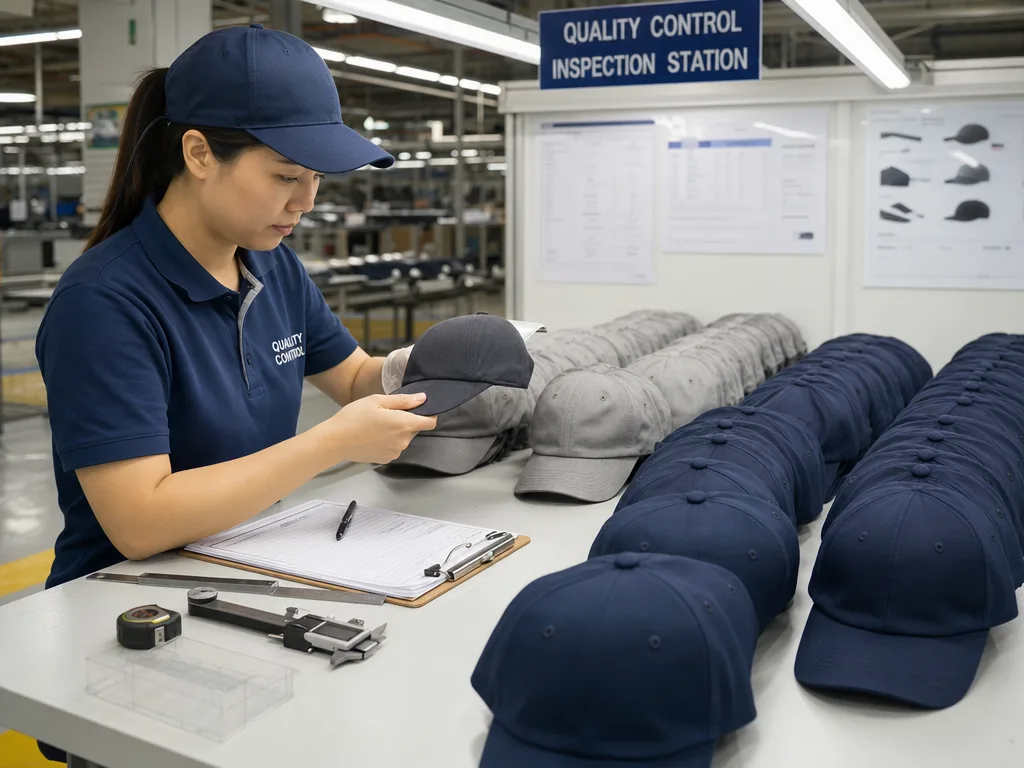
Start with tape-measured head circumference, not age brackets lifted from retail packaging. In production, the ranges that actually work are usually infant 38-44 cm, toddler 46-50 cm, kids 52-56 cm, and youth 54-58 cm, with 1-2 cm overlap because school-age growth is uneven across markets. A competent kids custom cap manufacturer builds the spec around finished inside circumference, crown depth, visor length, and closure adjustment span, then uses age only as a selling label. On export orders, I would hold finished inside circumference to ±0.5 cm and visor length to ±0.3 cm; looser tolerance than that tends to come back as size-chart complaints, especially in DTC and marketplace sales where parents buy from one measurement table. The key control point is after sweatband setting, not just at final AQL 2.5 inspection, because that seam operation commonly steals usable opening size on smaller caps. The measurement method also has to be standardized or the numbers are meaningless. Measure the finished cap on a circumference tape at the sweatband line, record the closure at its stated reference position, and lock that position into the tech pack and PPS comments. For snapbacks, specify hole-to-post range and recommended wear setting; for hook-and-loop, define both minimum and maximum overlap, otherwise two approved samples can differ by more than 1 cm in real fit. Our standard practice is to check sizing at sample approval, PPS, inline after sweatband attachment, and final random inspection, because once binding, seam tape, and closure are set, correction costs jump fast. If the brand sells across the U.S., EU, and Japan, separate size charts by market are often smarter than pretending one age label fits all.
Construction has to change by tier or the cap will measure correctly and still wear badly. Infant and small toddler caps need lower crown height, shorter peak projection, softer hand, and less aggressive front-panel support; that usually means unstructured panels or low-density EVA instead of adult-weight buckram. A youth 6-panel baseball cap can comfortably carry a 6.5-7.0 cm visor, but an infant version is usually better at 4.5-5.0 cm, with reduced crown depth so the brim does not dominate the face or drop into the child’s sightline. Fabric weight matters too: 200-240 gsm brushed cotton twill or lightweight washed chino is easier to balance in small sizes than a stiff 300 gsm canvas that forces the cap to sit high and hard. Artwork scaling is another place factories get lazy and create avoidable fit problems. A logo digitized for a 58 cm cap will pucker or tunnel on a 42 cm crown unless underlay, stitch density, and pull compensation are reworked for the tighter curvature; on Tajima or Barudan heads, that usually means separate digitizing files by size tier rather than one master file stretched across all patterns. Compliance also intersects with sizing more than buyers expect. On U.S. children’s programs, infant tiers deserve separate trim review for top buttons, metal eyelets, hook-and-loop cut edges, seam tape bulk, and any detachable decoration, because fit architecture and CPSIA risk sit in the same build. Adult-derived patterns with shared SOPs are one of the fastest ways to create retailer claims, comfort complaints, and failed lab reviews in bulk production.
CPSIA lead and phthalate testing — when required
If the cap is clearly intended for children age 12 or under and will be sold in the US, CPSIA testing is not optional; it is triggered by the product’s intended age grading, not by whether the style looks small. That means a toddler bucket hat, youth snapback, or school-uniform baseball cap all fall under the same framework if the labeling, marketing, or size spec points to kids. The hard limits are straightforward but buyers still get tripped up on the details: lead must be below 90 ppm in any surface coating such as printed logos, painted eyelets, or decorative heat-transfer films, and below 100 ppm in the substrate materials themselves, including metal trims, plastic buckles, PVC patches, and dyed components. For a kids custom cap manufacturer, the real risk is rarely the cotton twill body; it is the ink, soft PVC badge, metallic button, or low-cost zipper pull sourced from a secondary vendor without material declarations.
Phthalate control matters most when the cap includes plasticized parts. Under CPSIA, six regulated phthalates are limited to 1,000 ppm each in accessible plastic materials: DEHP, DBP, BBP, DINP, DIBP, and DPENP-equivalent coverage now gets checked through accredited lab screening depending on the component profile used for the test plan. In practice, embroidered caps with woven labels and metal-free closures are much easier to keep compliant than styles using rubber patches, silicone prints, foam-backed transfers, or PVC brims. That is why childrens hat compliance should be managed at component level before bulk production, not treated as a paperwork exercise after the goods are finished. Our standard practice is to lock approved BOMs by trim code and resin type, because one substituted patch compound can turn a cpsia compliant cap into a failed lot overnight.
Testing is generally required before the product enters US commerce unless you qualify under a valid component-part testing program with full traceability from raw material to finished cap. Most serious buyers handling kids baseball cap wholesale ask for CPSIA test reports from a CPSC-accepted lab, plus a Children’s Product Certificate tied to the exact style, colorway, and production date. If you are buying from an infant cap manufacturer or developing a toddler hat custom line, do not rely on a past report from a visually similar item; colorants, coatings, and trims change the compliance status. In the factory, the practical threshold is simple: any youth style with screen print, transfer, silicone badge, PVC label, coated metal hardware, or unknown decorative accessory should be sent for lead and phthalate review before shipment. A failed report after packing usually costs far more than the lab fee, especially once relabeling, remake time, and airfreight recovery are added.
Small-parts inspection: what passes, what fails
For children under 3, the line is brutally simple: if a detached component fits through the 31.7 mm small-parts cylinder, it fails. On the factory floor, that instantly rules out loose decorative beads, rivets, metal charms, detachable hook-and-loop logo patches, and most plastic snapback closures on infant and toddler programs. A proper childrens hat compliance review does not stop at the BOM; you test the finished cap after pull, torque, seam-stress, and wash conditioning, because parts that look secure at sewing can still release in use. On infant styles, the highest-risk zones are top buttons, visor stickers left on retail samples, chin-strap hardware, and heat-transferred ornaments that crack and peel into bite-size fragments.
What usually passes is boring by design: self-fabric straps, low-profile hook-and-loop adjusted to the age grade, stitched eyelets instead of metal eyelets, and direct embroidery instead of applied trims. For a cpsia compliant cap, I would rather specify a sewn fabric back strap or soft elastic enclosure than argue about whether a PP snap tab survives abuse testing. On Tajima and Barudan embroidery runs, dense logos are safer than adding PVC badges, but the digitizing has to be controlled so the reverse side does not create scratch risk for infants. For toddler hat custom orders, we also avoid detachable faux-fur poms and zipper pulls, even when the customer insists they are "just decorative".
The practical standard is to engineer out the failure points before sampling, because fixing them after lab review wastes 3 to 5 weeks and usually adds $0.18 to $0.60 per cap in rework, trim replacement, and retesting. Our standard practice is to age-grade caps at development: under-36-month styles get no removable ornamentation, no brittle plastic trims, and no snap closures unless a certified design clearly passes tension and small-parts criteria. That is especially important for a kids custom cap manufacturer handling kids baseball cap wholesale volume, where one weak trim affects thousands of units. An experienced infant cap manufacturer will push clients toward embroidery, appliqué fully edge-stitched into the seam, and fabric-only adjustment systems, because those are the options that keep both compliance files and production lines clean.
EU REACH and toy safety standards for kids' caps
For kids’ caps sold into the EU, REACH is the real compliance filter, not a generic “children’s product” label. A 6-panel cotton twill cap, brushed chino bucket hat, or soft-crown toddler style is typically treated as an article under Regulation (EC) No 1907/2006, so the risk sits in the full bill of materials: shell fabric, sweatband, sewing thread, visor board, metal trim, ink, patch adhesive, and packaging components that stay with the product. The usual failure points are predictable—azo colorants from dyed fabric or prints, phthalates in PVC badges and faux-leather straps, lead or cadmium in surface coatings, PAHs in rubberized applications, and nickel release from buckles, eyelets, or adjusters. A finished-cap test matters because the lab does not care that the 220 gsm cotton twill passed on its own if the hook-and-loop tape, silicone logo, or plastisol print pushes the article out of spec. The cleanest approach is to control REACH at component level before bulk, then verify the finished cap once trims are locked. I would not accept a supplier statement that only covers “fabric passed”; a competent kids custom cap manufacturer should be able to show declarations and test support for each material family, especially for PVC, PU, TPU, foam, inks, coatings, and metal hardware. In practice, buyers usually screen high-risk inputs first, then run confirmatory testing on the final article by colorway when Pantone-matched dyes, mixed trims, or special finishes are involved. If you change a buckle factory, patch adhesive, or even a dyed sweatband lot, you have changed the compliance profile. That is exactly how shipments get flagged at EU customs despite an approved pre-production sample.
EN 71 becomes relevant when the cap stops behaving like apparel and starts behaving like a toy. If the design includes plush ears, squeezable horns, dangling character parts, rattles, or detachable ornaments that invite handling and play, labs may assess it under EN 71-1 for mechanical and physical hazards, EN 71-2 for flammability, and EN 71-3 for migration of certain elements. That distinction matters because a cap that is perfectly acceptable as headwear under REACH can trigger a different risk review once it contains parts that can detach, twist loose, or fit into the small-parts cylinder. U.S. CPSIA compliance does not automatically cover that European toy-safety question; they overlap on chemical discipline, but they are not interchangeable standards. Most preventable failures come from decorative add-ons engineered like novelties instead of sewn products. For infant and toddler caps, I would keep character features integral to the construction: folded shell-fabric ears caught into the crown seam, embroidered facial details instead of glued plastic trims, and no hard snapped ornaments on the visor or front panel. Pull-force and seam security need to be treated as production controls, not design afterthoughts, especially when the cap uses plush, EVA foam, or stuffed elements. Our standard practice is to review any 3D feature as if it will be chewed, twisted, and yanked repeatedly; that factory-floor assumption eliminates a lot of recall risk before the first lab submission. A conservative build is usually cheaper than a failed test, a remake, and dead stock sitting in a bonded warehouse.
Decoration techniques safe for kids' caps
Flat embroidery is still the safest default for children’s headwear because it puts color and branding into thread, not into a coating that can crack, migrate, or flake off after washing. On the factory floor, I would choose a low-profile fill on brushed cotton twill or recycled poly-cotton, run on Tajima or Barudan heads with 40 wt polyester thread, and keep the stitch density around 0.38 to 0.42 mm so the logo stays clean without turning the front panel into cardboard. For a cpsia compliant cap, the real risk is not the embroidery itself but the supporting trims: backing, edge tape, sweatband foam, and any metallic thread coating all need to be screened against lead and other restricted substances under CPSIA limits. A serious kids custom cap manufacturer will also check that the reverse side of the embroidery is covered or softened for infant and toddler programs, because rough bobbin thread and exposed jump stitches become comfort complaints fast.
PVC patches are not automatically disqualified, but they are where childrens hat compliance usually gets sloppy. If a buyer wants a soft molded badge on a kids baseball cap wholesale program, the patch compound needs phthalate testing from an accredited lab, and the attachment method matters just as much as the material. I have seen compliant PVC badges fail the program because the glue film or stitching reinforcement introduced a non-compliant component. For U.S.-bound children’s product runs, you want a component-level test report covering the actual finished patch, then confirm the sewn cap still matches the tested bill of materials. Our standard practice is to avoid thick, hard-edge PVC on under-3 styles and instead shift those orders toward stitched twill appliqué or satin-label-based branding, which reduces both compliance risk and scratch risk.
Heat-transfer print is acceptable on older kids’ caps, but for under-3 SKUs I would only approve water-based systems, not solvent-based inks, because migration, odor, and chemical screening are tighter concerns on infant products. That matters especially when an infant cap manufacturer or toddler hat custom supplier is building jersey or interlock cotton caps where the print sits close to the skin. You also need to watch curing temperature so the transfer film bonds without scorching lightweight 180 to 220 gsm fabrics or distorting the crown shape. Sublimation is generally clean from a safety standpoint because the color becomes part of the polyester surface rather than sitting on top as a separate layer, but it only works properly on high-poly content fabrics, usually above 85 percent polyester. The tradeoff is technical, not regulatory: sublimated panels can show seam misalignment if the cut parts shift even 2 to 3 mm before sewing, so artwork registration has to be controlled tightly.
What a kids'-cap buyer's compliance pack contains
A credible compliance pack lives or dies on BOM-level matching, not generic “passed CPSIA” language. For a U.S.-bound children’s cap, the core file should include a current CPSC-accepted third-party lab report tied to the exact style number, colorway, and approved bill of materials: shell fabric, sweatband, brim insert, eyelets, top button, closure, woven label, print ink, patch substrate, and embroidery thread. The report needs to show total lead in accessible substrates under CPSIA Section 101, lead in surface coatings under 16 CFR 1303, and phthalates if any PVC, TPU, silicone, or other plasticized trim is used. I do not accept a report for a “similar 6-panel cap” because one substituted snap, rubber badge, or ink system can change the result. A serious kids custom cap manufacturer will cross-reference sample photos, material specs, Pantone callouts, and revision dates so the lab PDF matches the live tech pack, not last season’s development sample. For infant and toddler programs especially, out-of-scope carveouts on silicone logos, PVC labels, rubber pull-tabs, or heat-transfer films are where bad files usually hide.
Chemistry is only half the pack; the other half is physical safety and traceability. The file should include an age-grade assessment, small-parts determination, sharp-point and sharp-edge checks, and attachment testing for any sewn-on or riveted component. On 0-3 years product, trims such as buttons, pom elements, metal studs, and decorative patches should have actual pull or torque records, not a line in the QC sheet saying “visually inspected.” Closures need specific review for burrs, accessible metal edges, and pinch points, especially on snapbacks, D-ring straps, and buckle systems. I also expect fiber-content verification against the bulk spec—say 100% cotton twill at 220 gsm or 65/35 poly-cotton at 240 gsm—and final tracking-label artwork compliant with CPSIA Section 103. That label should identify the manufacturer or private-label owner, production month, and a lot code that traces back to cutting date, sewing line, and inspection lot. If the code stops at carton level, a retailer QA hold can escalate from 12 suspect cartons to a quarantine on the full 5,000-piece shipment.
Frequently Asked Questions
What is the minimum order quantity (MOQ) for custom hats?
Our standard MOQ is 100 pieces per design and color, with sampling available from 1 piece. For complex multi-color logos or premium fabric upgrades, the MOQ can be lowered with a small per-piece surcharge.
Do you support sustainability certifications?
Yes. We work with GOTS organic cotton, GRS-certified recycled polyester, OEKO-TEX Standard 100 fabrics, and are BSCI and Sedex audited. Certification documentation can be provided per order.
How long does production take?
Sampling takes 7 to 12 days. Bulk production runs 20 to 30 days depending on quantity, fabric availability and decoration complexity. Inspection and packing adds another 3 to 5 days before shipment.
What logo decoration techniques do you offer?
3D puff embroidery, flat embroidery, woven patch, leather patch, PVC patch, screen printing, sublimation, applique and laser etching, all in-house with no subcontracting.
Can I order a sample before bulk production?
Yes. We strongly recommend approving a pre-production sample before mass production. Samples are charged at 35 to 60 USD each plus express shipping, fully refundable against confirmed bulk orders over 500 pieces.
What's the MOQ for custom embroidered baseball caps no minimum?
When evaluating custom embroidered baseball caps no minimum, the key considerations are construction quality, decoration capability, MOQ flexibility and lead time. Anything that can fit through a 31.7 mm small-parts cylinder fails for kids under 3. That means: no decorative beads, no detachable patches, no plastic snap closures on infant caps. Use Velcro or fabric strap. EU treats kids' apparel under REACH; toys (with structural play function) under EN 71. Embroidered logos, sewn-on patches, fabric straps — all REACH. Hats with…
How does ordering high quality custom baseball caps work?
When evaluating high quality custom baseball caps, the key considerations are construction quality, decoration capability, MOQ flexibility and lead time. Anything that can fit through a 31.7 mm small-parts cylinder fails for kids under 3. That means: no decorative beads, no detachable patches, no plastic snap closures on infant caps. Use Velcro or fabric strap. Infant (0-12 months, 38-44 cm), toddler (1-3 years, 46-50 cm), kids (4-12 years, 52-56 cm), youth (12-16 years, 54-58 cm). Manufacturing tooling differs at each tier.
How does ordering baseball cap with custom logo work?
When evaluating baseball cap with custom logo, the key considerations are construction quality, decoration capability, MOQ flexibility and lead time. CPSIA test report (current, under 12 months old), small-parts inspection certificate, fabric content label confirmation, BSCI/Sedex social audit, tracking-label compliance (CPSIA requires manufacturer + production date on the cap). Infant (0-12 months, 38-44 cm), toddler (1-3 years, 46-50 cm), kids (4-12 years, 52-56 cm), youth (12-16 years, 54-58 cm). Manufacturing tooling…
What's the MOQ for custom hat embroidery no minimum?
When evaluating custom hat embroidery no minimum, the key considerations are construction quality, decoration capability, MOQ flexibility and lead time. Flat embroidery is universally safe. PVC patches must be phthalate-tested. Heat-transfer print must use water-based ink (not solvent-based) for the under-3 segment. Sublimation is fine. Infant (0-12 months, 38-44 cm), toddler (1-3 years, 46-50 cm), kids (4-12 years, 52-56 cm), youth (12-16 years, 54-58 cm). Manufacturing tooling differs at each tier.
Ready to start your custom hat project?
Send us your tech-pack, sketch or even just an inspiration photo. We will respond with a detailed quotation and digital mock-up within 24 hours.
Request a free quoteRelated guides
Refreshing a Hat Collection: A Repeat-Order Playbook for Established Brands
Read article →
Ball Caps for Women: A 2026 Sourcing Playbook for International Buyers - 2026 Buyer's Guide
Read article →
Festival Bucket Hats Reorder Planning Guide for Custom Hat Buyers
Read article →We hope this guide demystifies kids' & children's cap manufacturing: cpsia compliance and sizing (2026 update) and helps you move forward with confidence. If you have questions specific to your project, our English-speaking sales engineers are one message away.